




Metal Building Construction — Complete Project Guide for Pre-Engineered Metal Building Construction
The 45-day installation figure is accurate for on-site erection of a standard single-span building. It is not the total project duration. This metal building construction guide covers the complete sequence — four phases, two responsible parties, the coordination points between them, and the sequence errors that cause most metal buildings construction delays in African and Southeast Asian markets.
KAFA Scope
Metal Frame Building Construction Scope — What KAFA Manages and Where the Client Begins
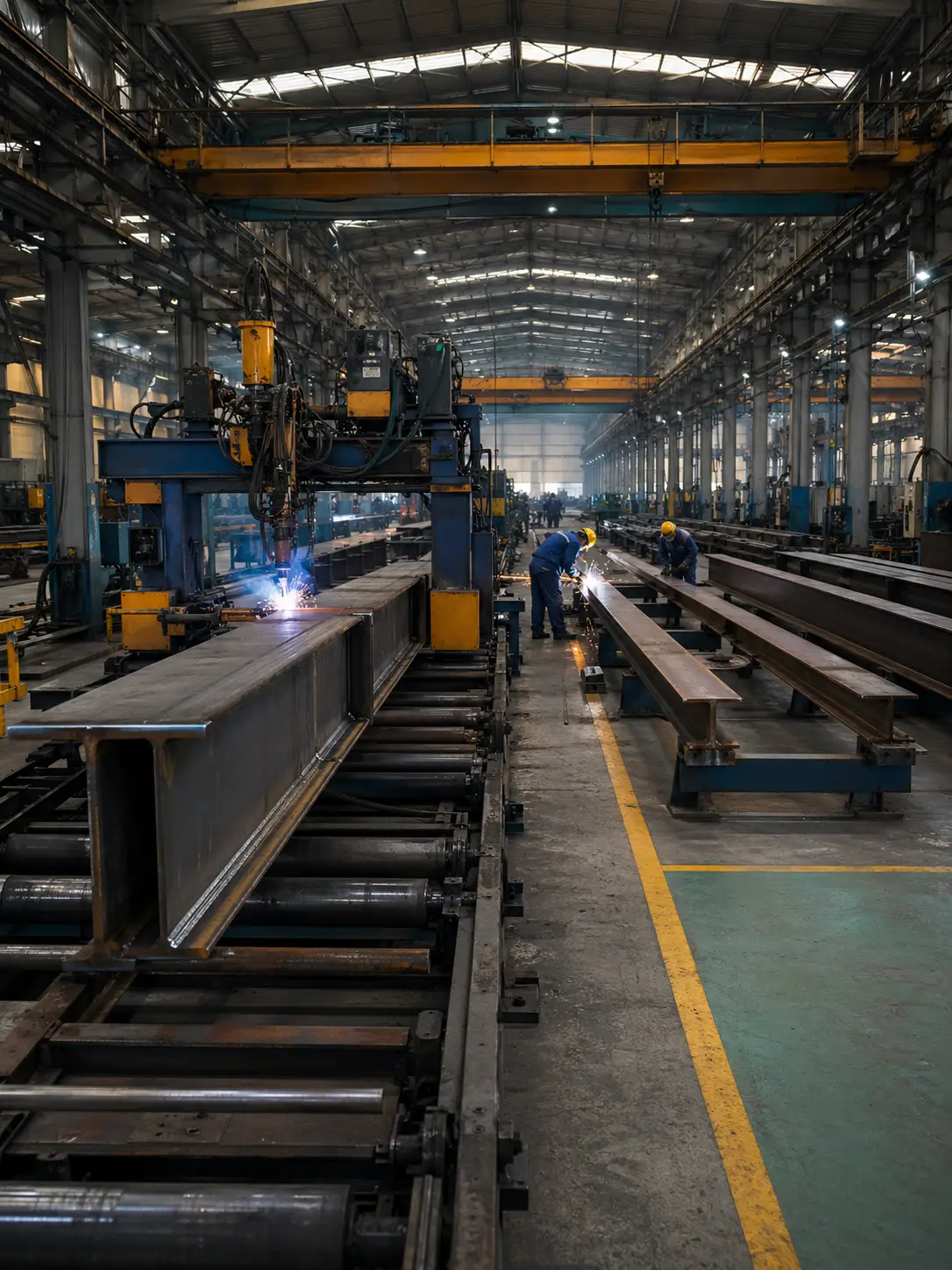
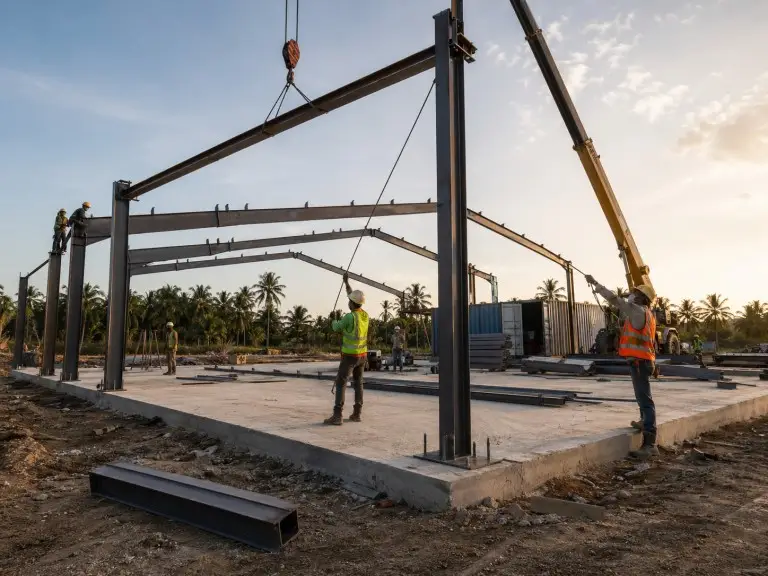
KAFA’s scope covers structural engineering, factory fabrication, surface treatment, and export delivery as a single integrated process. The same engineering team that produces the drawings produces the production instructions for the same factory floor — with no handoff between a design firm and a fabricator. This scope boundary is stated at project start, not discovered mid-project.
01 · Engineering Documents
Structural drawings, anchor bolt plan, erection manual, and component identification schedule — issued with every project.
02 · Factory to Port
Fabrication, surface treatment, container loading, and export documentation — KAFA managed end-to-end.
03 · Client Manages Local
Site preparation, permits, customs, erection, and fit-out — client + local contractors.
04 · Stated at Project Start
Scope boundary confirmed at the outset — discovering it mid-project creates programme & cost problems we prevent.
Construction Timeline
Metal Building Construction Details — Four Phases, Two Responsible Parties
Total programme from confirmed order to weather-tight structure: approximately 14–20 weeks for a standard project where pre-construction preparation has already begun. Add Phase 1 duration if site preparation is starting from zero.
Pre-Construction Preparation
Site survey and geotechnical investigation, foundation design by a local civil engineer using KAFA’s anchor bolt plan as structural input, local authority permit application and approval, and selection and mobilisation of a local installation contractor.
The most variable phase in international projects. In markets with efficient municipal authorities, permit approval can take 2–3 weeks. In markets where approval involves multiple agencies, it can take 2–3 months. Buyers with a fixed operational start date should begin this phase before placing the fabrication order, not after.
Structural Design & Factory Fabrication
Structural drawing production (initial layout within 3 business days of confirmed parameters), client review and drawing sign-off, and factory fabrication. Fabrication runs 20–30 days from confirmed design sign-off for standard single-span buildings. Surface treatment, quality inspection, and container loading follow fabrication.
Multi-bay complexes, crane-integrated structures, or cold storage buildings with insulated panel specifications may require additional design time, confirmed at the initial engagement stage.
Container Export & Ocean Freight
Export documentation preparation, container shipment departure, ocean freight in transit, and arrival at destination port. In-country customs clearance, import duty payment, and port-to-site transport after arrival are the client’s responsibility and can take 1–3 weeks depending on port, commodity code, and customs broker arrangements.
On-Site Installation
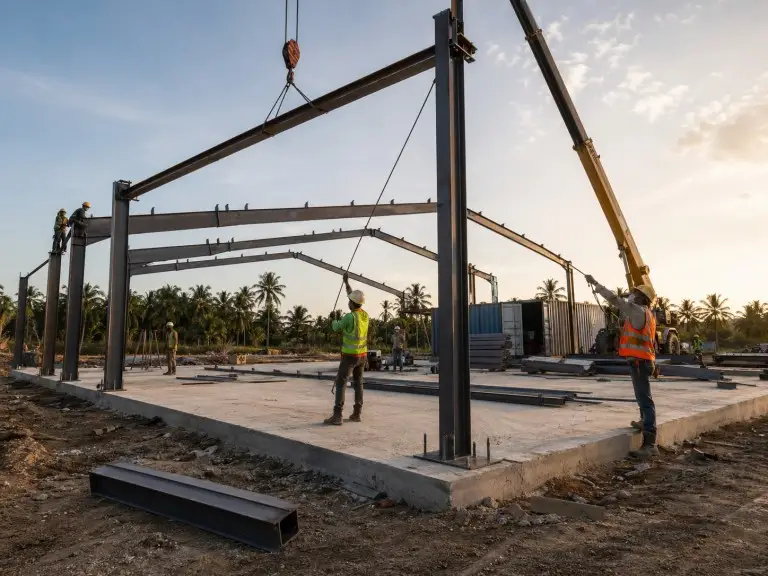
Foundation inspection and anchor bolt verification, primary frame erection, secondary steel installation, roof and wall panel installation, door and window installation, and final inspection. The 45-day erection figure applies to the erection phase of a standard single-span building under 5,000 m² — the full on-site phase including pre-erection preparation runs 6–8 weeks.
KAFA provides erection drawings, bolt torque specifications, panel installation sequence guide, and component identification schedule. For clients who require on-site technical support, a KAFA Technical Supervisor can be arranged at terms confirmed at the contract stage.
Total programme summary: 14–20 weeks from confirmed order to weather-tight structure, where Phase 1 pre-construction preparation is already underway. If starting from zero: add 4–8 weeks. Total to operational occupancy including interior fit-out: 5–7 months for a standard building in African or Southeast Asian markets.
Critical Path
Foundation & Anchor Bolts — The Phase That Most Commonly Delays Projects
The single most consistent source of project delay in KAFA’s international delivery experience is not fabrication, ocean freight, or installation complexity. It is foundation construction — specifically, the sequencing of foundation work relative to steel fabrication and shipping.
Start Foundation Construction When the Anchor Bolt Plan Is Issued — Not When the Steel Ships
The anchor bolt plan is issued at the same time as the structural drawings — typically within 1–2 weeks of confirmed project parameters. At that point, the foundation contractor has everything needed to begin foundation design and construction.
Foundation construction including cure typically takes 4–6 weeks in African and Southeast Asian markets. Fabrication plus ocean transit from China is typically 7–11 weeks. Both can run in parallel. When foundation construction is deferred until after the steel ships, the foundation will not be complete when the steel arrives — and the installation team waits on-site while foundation work finishes.
We issue the anchor bolt plan concurrently with the structural drawings and specifically ask clients to confirm that their foundation contractor has received and reviewed it before the fabrication period ends. This is the coordination checkpoint that, when missed, causes the most avoidable project delays we observe.
Anchor Bolt Tolerance
Position tolerance: ±3 mm within the bolt group; bolt group position relative to column centre: ±5 mm. Deviations beyond these tolerances prevent base plate installation and require remediation — adding cost and programme time. Verify anchor bolt positions immediately after the foundation is poured, while correction is still practical.
✓ Correct Sequence
Week 1–2
Anchor bolt plan issued → Foundation construction begins
Parallel
Foundation complete + cured / Steel fabricated + shipped
Steel arrival
Installation begins immediately — no wait
✗ Common Mistake
Week 1–2
Fabrication ordered — foundation deferred
7–11 weeks later
Steel arrives — foundation still incomplete
+4–6 week delay
Steel waits on-site — crane and crew on standby
Common Sequence Errors
Three Metal Buildings Construction Sequence Errors That Cause Most Project Delays
These are not edge cases — they are the consistent patterns observed across international projects in African and Southeast Asian markets. Each is preventable with the correct sequencing.
Treating the 45-Day Installation Figure as the Total Project Timeline
Announce opening date based on 45-day figure alone
The 45-day installation phase is one phase in a sequence that includes design confirmation, fabrication, ocean transit, customs, port-to-site transport, and foundation construction. Opening date based on this single number is consistently not achievable.
Build full programme schedule at proposal stage
Full programme covers all 4 phases, both responsible parties, and the variables that affect each. Total to operational occupancy: 5–7 months for a standard building in African or Southeast Asian markets.
Deferring Foundation Construction Until the Steel Arrives
Wait for steel to ship before pouring foundation
When foundation construction begins after the shipping container has departed China, it will not be complete when the steel arrives — foundation cure takes 4–6 weeks; fabrication plus transit is 7–11 weeks. Result: steel waiting on-site, crane and crew on standby.
Issue anchor bolt plan in week 1–2 of fabrication
Foundation work and steel fabrication run in parallel. Steel arrives at site after foundation has cured. Installation begins immediately on arrival — no on-site wait, no standby costs.
Assuming Installation Documentation Is Sufficient for Any Team
Hire general construction labour for steel erection
Without H-section experience, teams risk misorienting members, under-torquing structural bolts, or removing temporary bracing prematurely — errors that aren’t immediately visible but create structural deficiencies under load.
Confirm erection experience before steel ships
We provide erection drawings, bolt torque specifications, panel installation sequence, and component schedule. For projects requiring on-site technical support, a KAFA Technical Supervisor can be arranged at contract stage.
Scope Division
Commercial Metal Building Construction — What KAFA Supplies and What the Client Manages
This scope division is the standard model for KAFA’s international project engagements — from steel structure warehouses and steel industrial buildings to commercial and office facilities across Nigeria, Kenya, Ghana, the Philippines, Vietnam, Indonesia, and other markets.
Factory to Destination Port
Engineering, fabrication, treatment, export
Local Execution & Coordination
Site, permits, customs, erection, fit-out
Building Applications
Metal Building Construction Programme Across Every KAFA Building Type
The four-phase construction sequence applies to all pre-engineered building types — from standard warehouses and commercial metal building construction to crane-integrated workshops and multi-bay industrial complexes. Specific phase durations vary by building type. Programme durations are confirmed at the initial engagement stage for each project.
01 · Application
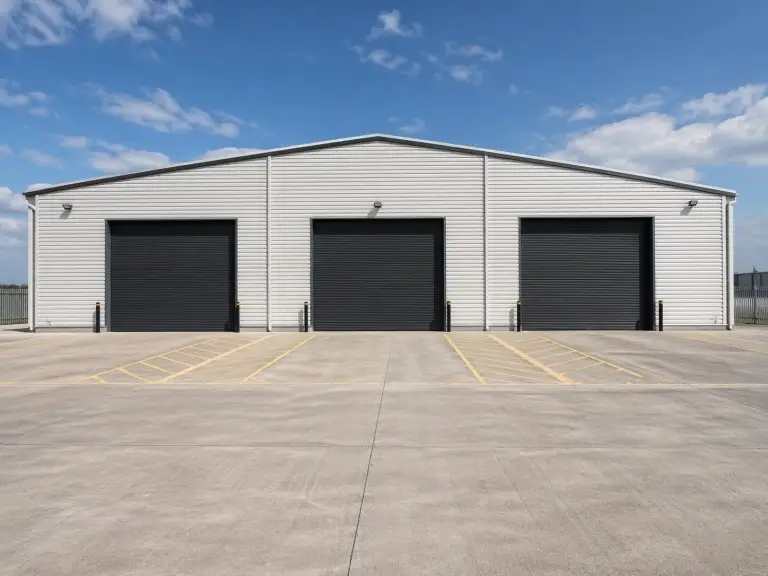
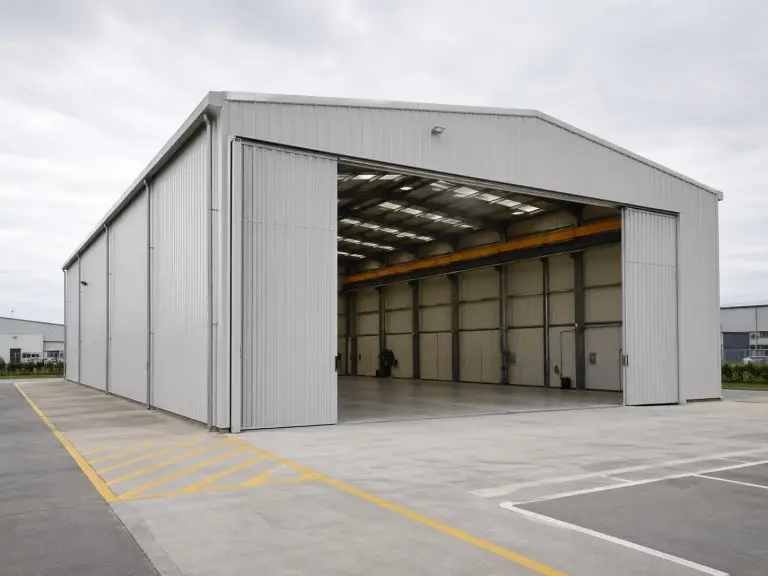
Steel Warehouse Buildings
ISO 9001:2015 Certified · IAS AC472 Accredited · 24+ Years Delivery Prefabricated Steel Warehouse Buildings for Industrial, Logistics & Commercial Projects KAFA designs, fabricates,…
Common Applications
- Logistics & 3PL distribution centres
- Manufacturing & industrial processing
- Agricultural commodity bulk storage
02 · Application
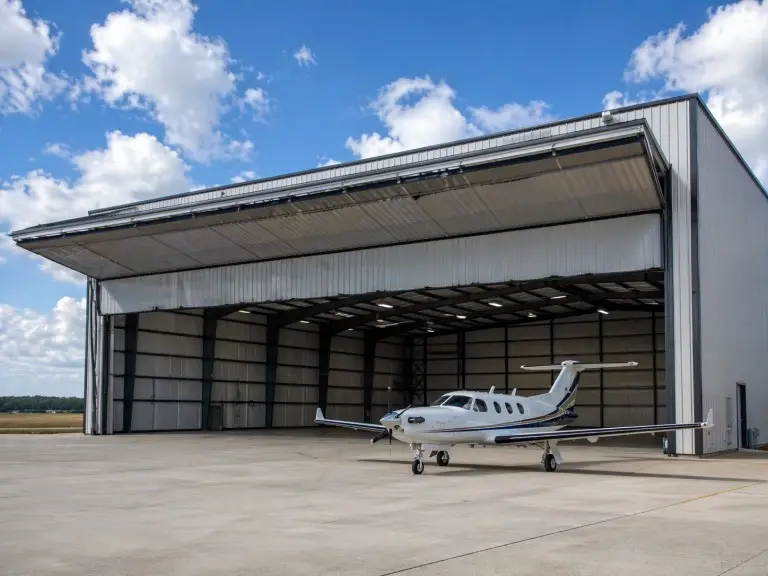
Steel Structure Workshop
ISO 9001:2015 Certified · IAS AC472 Accredited · 24+ Years Delivery Pre-Engineered Metal Workshop Buildings & Prefab Steel Workshop Structures KAFA designs, fabricates, and…
Common Applications
- Automotive fabrication & assembly shops
- Heavy manufacturing & metal processing
- Industrial park multi-tenant units
03 · Application
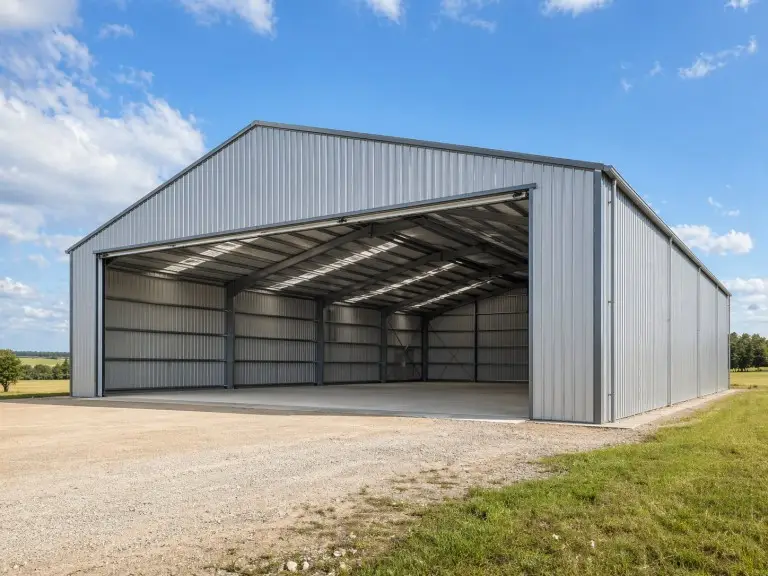
Metal Airplane Hangars
ISO 9001:2015 Certified · IAS AC472 Accredited · 24+ Years Delivery Pre-Engineered Metal Airplane Hangars & Aircraft Hangar Buildings KAFA designs, fabricates, and delivers…
Common Applications
- Aircraft MRO & maintenance facilities
- General aviation storage hangars
- Airport maintenance & operations bases
04 · Application
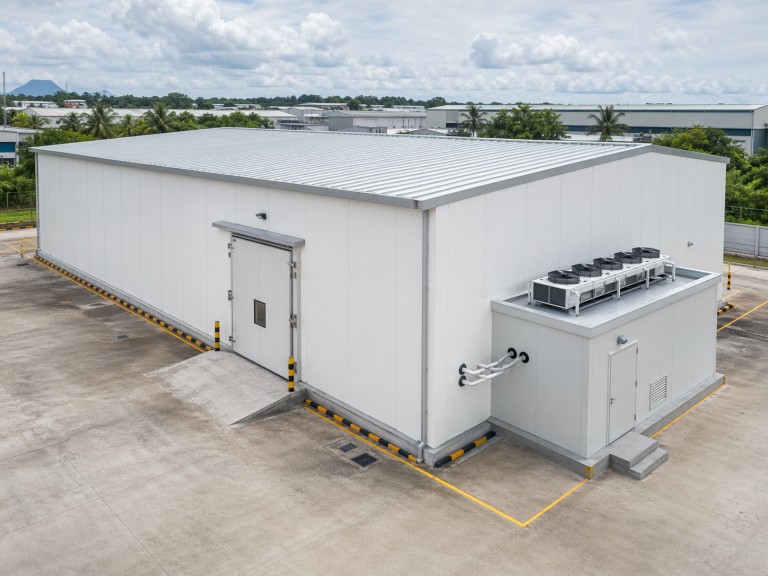
Agricultural Steel Buildings
ISO 9001:2015 Certified · IAS AC472 Accredited · 24+ Years Delivery Pre-Engineered Agricultural Steel Buildings for Commercial Livestock, Grain Storage & Farm Operations KAFA…
Common Applications
- Grain & bulk commodity storage
- Livestock & poultry housing
- Produce export & pack-house facilities
05 · Application
Steel Cold Storage Buildings
ISO 9001:2015 Certified · IAS AC472 Accredited · 24+ Years Delivery Pre-Engineered Steel Cold Storage Buildings & Industrial Cold Storage Warehouses KAFA designs and…
Common Applications
- Food processing chill & freezer stores
- Pharmaceutical cold chain facilities
- Blast freezer & frozen food storage
06 · Application
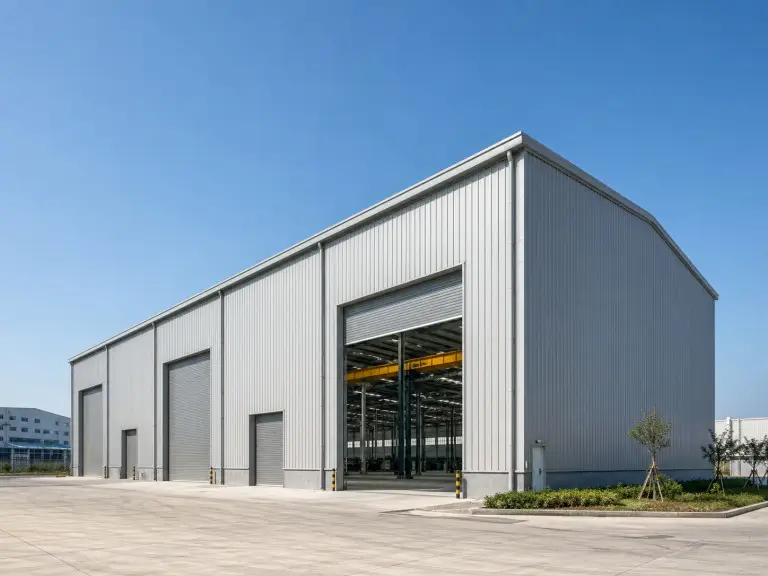
Steel Industrial Buildings
ISO 9001:2015 Certified · IAS AC472 Accredited · 24+ Years Delivery Pre-Engineered Steel Industrial Buildings & Prefab Industrial Metal Structures KAFA designs, fabricates, and…
Common Applications
- Manufacturing complexes & processing plants
- Heavy industry & fabrication operations
- Chemical & industrial processing facilities
07 · Application
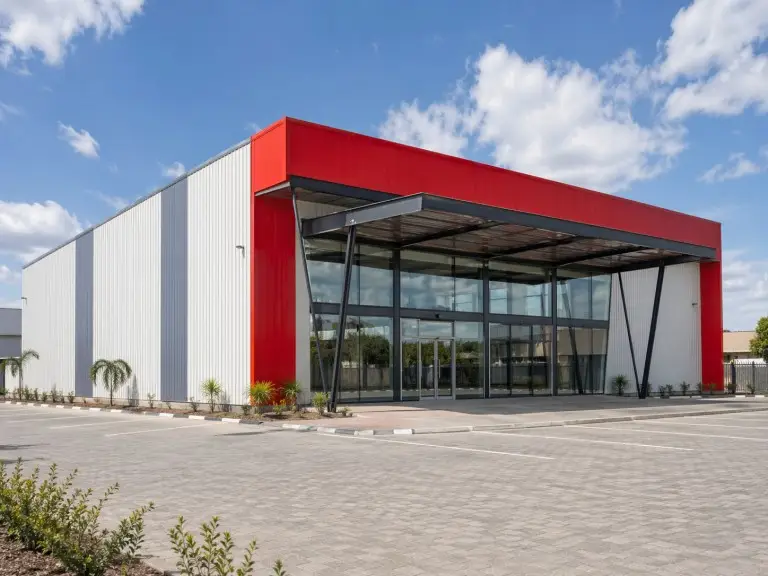
Commercial Metal Buildings
ISO 9001:2015 Certified · IAS AC472 Accredited · 24+ Years Delivery Pre-Engineered Commercial Metal Buildings for Retail, Office & Mixed-Use Development KAFA engineers, fabricates,…
Common Applications
- Retail & e-commerce distribution centres
- Industrial park development projects
- Mixed-use commercial warehouse facilities
08 · Application
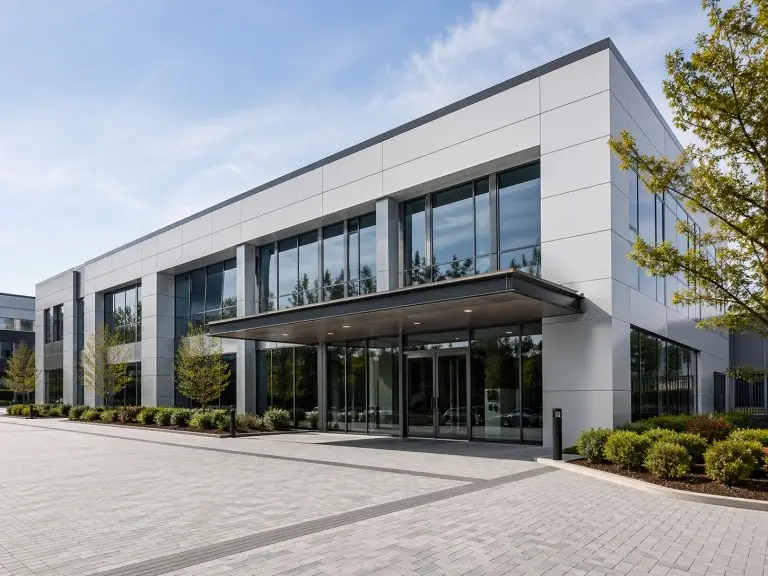
Metal Office Buildings
ISO 9001:2015 Certified · IAS AC472 Accredited · 24+ Years Delivery Pre-Engineered Metal Office Buildings for Corporate, Industrial & Government Projects KAFA engineers, fabricates,…
Common Applications
- Corporate headquarters & admin buildings
- Industrial park office complexes
- Government & institutional facilities
09 · Application
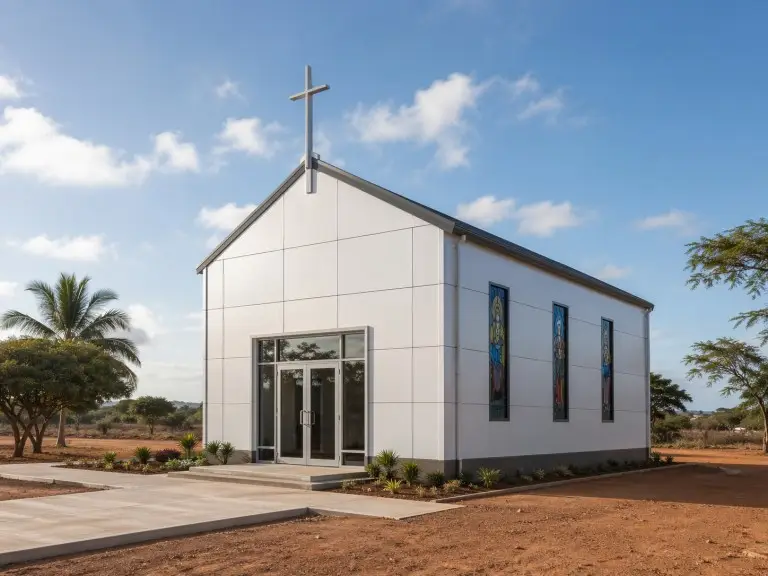
Steel Church Buildings
ISO 9001:2015 Certified · IAS AC472 Accredited · 24+ Years Delivery Pre-Engineered Steel Church Buildings & Prefab Worship Structures KAFA engineers, fabricates, and ships…
Common Applications
- Worship centres & assembly halls
- Multi-purpose community facilities
- Educational & institutional buildings
Frequently Asked Questions
Metal Building Construction Questions, Answered Directly
For a standard single-span steel building project in Africa or Southeast Asia, the realistic total programme from confirmed order to weather-tight structure is approximately 14–20 weeks — roughly four to five months — provided that pre-construction site preparation has already begun. If site survey, permit application, and foundation contractor selection are starting from zero at the same time as the fabrication order, add 4–8 weeks for pre-construction preparation. Total programme to operational occupancy, including interior fit-out, is typically five to seven months. These figures assume a standard building and efficient customs clearance — complex buildings, slow permit processes, or extended customs clearance extend the total programme accordingly.
Foundation construction should begin as soon as the anchor bolt plan is issued by KAFA — which happens at the same time as the structural drawings, typically within 1–2 weeks of confirmed project parameters. Starting foundation construction in parallel with the fabrication period means the foundation will be complete and cured before the steel arrives on-site. Foundation construction including cure takes 4–6 weeks. Fabrication plus ocean transit from China to African or Southeast Asian ports is typically 7–11 weeks. Both can run in parallel with time to spare.
KAFA provides a complete technical documentation package with every building — erection drawings, anchor bolt installation guide, bolt torque specifications, panel installation sequence, and component identification schedule. This documentation enables an experienced local structural steel erection team to proceed without on-site supervision. For clients who require on-site technical support, KAFA can arrange a Technical Supervisor — an experienced KAFA engineer present on-site during the erection phase to guide the installation team, verify critical structural connections, and respond to field queries. Availability, cost, and scheduling are confirmed at the contract stage and depend on project location, duration, and visa arrangements. This is not a standard inclusion — it is a separately confirmed service.
Anchor bolt position tolerance in KAFA’s foundation plans is ±3 mm within the bolt group, and ±5 mm on the bolt group position relative to the column centre line. If anchor bolt positions deviate beyond these tolerances, the primary frame base plates cannot be installed without modification. Remediation options include cutting and repositioning bolts before the concrete fully cures, drilling new positions in the completed foundation, or modifying the base plate slotting with structural engineering sign-off. All remediation options add cost and programme time. The most effective approach is to verify anchor bolt positions immediately after the foundation is poured, before it reaches full cure, so that corrections are still practical.
For single-storey and low-rise buildings up to approximately 5,000 m², pre-engineered steel construction reaches weather-tight structure faster than concrete frame construction in virtually all markets. Concrete construction requires sequential on-site pours, cure periods, and formwork cycles that typically add four to eight months to the structural programme compared to the fabrication-plus-installation sequence for a steel building. The programme advantage of steel narrows when pre-construction preparation time is equal for both systems, but the on-site construction phase of a steel building is substantially faster. For buyers with a defined operational start date, the programme predictability of pre-engineered steel — where fabrication happens off-site under controlled conditions — is an additional advantage over on-site concrete construction where weather, labour, and material delays are harder to manage.
Primary frame erection requires a mobile crane rated for the heaviest structural member in the building. For standard single-span portal frames in the 18–30 m span range, a 25–50 tonne mobile crane is typically appropriate. Heavier frames for wide-span or crane-integrated industrial buildings require larger capacity equipment. Secondary steel and panel installation does not typically require crane equipment but does require scaffolding or elevated work platforms for roof and upper wall work. The erection manual supplied with the building package includes recommended crane capacity for the primary frame lift sequence. The client is responsible for sourcing and scheduling the crane and other installation equipment, coordinated with the installation contractor and the steel delivery date.
Pre engineered metal building construction is a factory-to-site delivery model where all structural members are designed, fabricated, and surface treated before shipping. On-site work is limited to foundation preparation and bolted assembly of pre-cut, pre-drilled components. This delivers faster programme and better quality control than conventional site-fabricated steel construction.
Get a Full Project Programme
Construction Timeline Built Into Every Project Proposal
We build a full programme schedule as part of every initial project proposal — covering all four phases, responsible parties for each, and the variables that affect duration in your specific market. Share your building type, site country, and target operational date and we will confirm a realistic programme from the initial engagement.
Ready to Start?
Submit Your Project Brief and Get Started
If your building type, site dimensions, site location, and target date are confirmed, submit your project brief directly. Our engineering team responds with an initial structural layout, programme schedule, and price proposal within 3 business days.