




Metal Building Erection — Steel Erection Sequence, Technical Requirements & Field Coordination
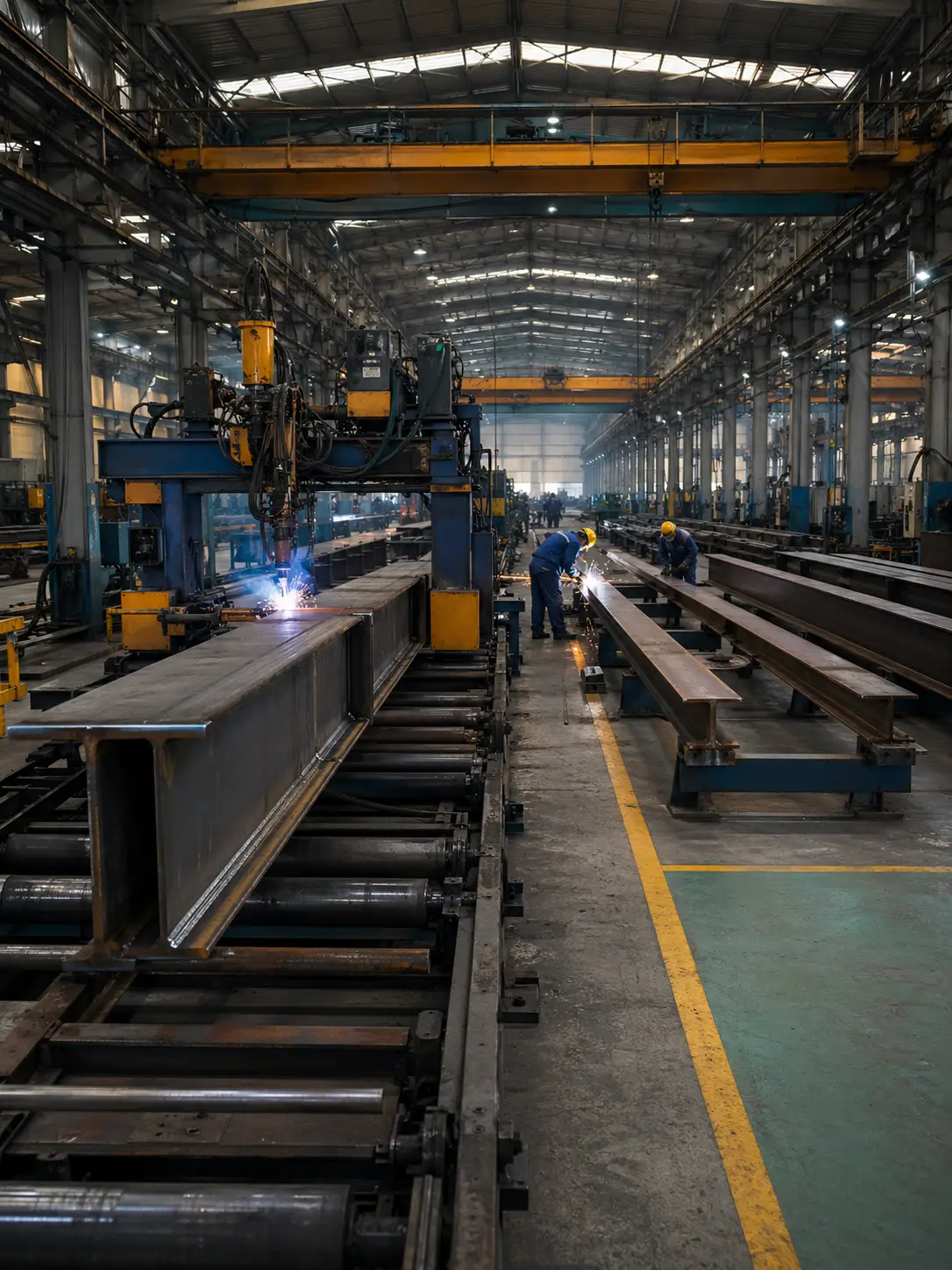
Pre-engineered metal building erection is a sequenced structural steel erection process. Each phase depends on the previous one being completed correctly. This page covers the correct steel frame erection sequence for KAFA buildings, the technical documents that govern every field decision, and the verification steps that must be completed before erection begins — as part of the broader metal building construction programme.
Why Sequence Matters
Erection Sequence Is a Structural Stability Issue — Not a Scheduling Preference
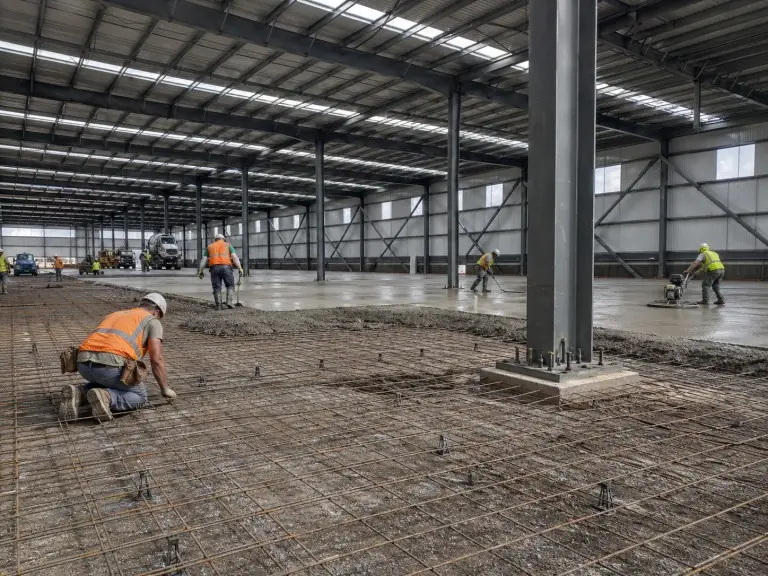
Each frame element achieves lateral stability only after specific connections and temporary bracing are in place. A column in its anchor bolts without bracing has no lateral resistance. A bay of columns and rafters without diagonal bracing behaves as a mechanism, not a stable structure. Correct metal building foundation positioning is a prerequisite before any steel leaves the ground.
Wind Suspension Threshold
40 km/h on unsupported frame sections
Pre-Erection Checks
Required before steel leaves the ground
Erection Phases
Primary frame · Secondary & bracing · Cladding
01 · Drawing-Defined Sequence
The erection sequence in KAFA’s drawings reflects structural stability thresholds — not administrative preference that experienced crews can adjust for site convenience.
02 · Tropical Wind Risk
Unbraced frame sections in tropical coastal markets face documented seasonal wind events that exceed the 25 mph suspension threshold.
03 · Phase Dependency Chain
Primary frame cannot be plumbed without temporary bracing; secondary framing cannot be finalised before primary frame is torqued; cladding cannot begin before permanent bracing is complete.
04 · Pre-Sorted by Bay
KAFA supplies all components with number markings pre-sorted by bay — erection decisions must be made against the drawings, not against prior experience on different structural systems.
Pre-Erection Verification
Four Pre-Erection Checks for Steel Frame Erection Before Any Steel Leaves the Ground
Findings from each check must be recorded before the installation crew mobilises. Erection cannot begin with any of these checks outstanding.
Anchor Bolt Re-Measurement
The installed anchor bolt pattern must be measured against KAFA’s anchor bolt plan before any column is lifted. Column base plates are machined to precise hole dimensions — position errors beyond allowable tolerance cannot be corrected by shimming or forcing the base plate. This check must use the same datum and reference points as the original setting-out. A visual confirmation is not sufficient.
Concrete Cure Confirmation
Columns must not be landed and torqued before foundation concrete has reached sufficient design strength at the anchor bolt zone. In tropical climates, high ambient temperature accelerates surface set but does not accelerate strength gain at depth. Minimum cure period must be confirmed with the local structural engineer, referencing the actual mix design and curing conditions — not calendar days from pour date alone.
Component Inventory & Shakeout
All components must be verified against KAFA’s packing list before erection begins. Components are pre-sorted by bay and labelled with numbers matching the erection drawings. Any missing, damaged, or incorrectly labelled item must be reported to KAFA before the installation schedule is finalised. Components should be staged near their intended position, grouped by frame bay along the building’s longitudinal axis.
Crane Positioning & Ground Bearing
The crane must be positioned so its working radius covers the full erection arc for each bay without repositioning during a lift sequence. Ground beneath outrigger pads must be firm, level, and capable of supporting outrigger bearing pressure for the selected crane class. On sites where tropical rainfall has occurred recently, outrigger pad ground conditions must be inspected before each lift — not only at the start of mobilisation day.
Erection Sequence
Three-Phase Structural Steel Erection Sequence — Each Phase Depends on the Previous
Phases must not overlap. Secondary framing begins only after primary frame is fully plumbed and torqued. Cladding begins only after permanent bracing is complete.
Phase One
Primary Frame Erection
Start at the designated braced bay. Each frame must be individually plumbed, braced, and torqued before advancing to the next bay. Temporary bracing must remain in place until permanent bracing is installed and tensioned.
Phase Two
Secondary Framing & Permanent Bracing
Begin only after primary frame is fully erected, plumbed, torqued, and verified against KAFA’s drawing tolerances. Purlin lap direction, flange brace positions, and permanent bracing tension must all match the erection drawings.
Phase Three
Cladding & Enclosure
Begin only after permanent bracing system is complete and tensioned. Installing cladding before permanent bracing is complete conceals the deficiency and prevents access for correction without stripping completed sheeting.
Braced Bay Protocol
Why Erection Must Start at the Braced Bay
Starting at the braced bay is the structural logic of the erection sequence. Deviating from it consistently produces frame geometry problems that become visible only after multiple bays are standing.
The Braced Bay Provides the First Stable Structural Unit
When erection starts at an end bay or arbitrary intermediate position, each newly erected frame has no fixed anchor point and must be held by mechanical guys or additional temporary supports until the braced bay is completed — multiplying temporary bracing requirements and extending the window of structural vulnerability.
In engagements where local installation teams begin from an end bay, frame geometry problems become visible only after multiple bays are standing — at which point correction requires partial dismantling of completed primary structure. Starting at the braced bay eliminates this entirely.
Wind speed at which erection on unsupported frame sections must be suspended. Tropical coastal markets — West Africa, the Philippines, Vietnam — have documented seasonal wind events that exceed this threshold. Wind monitoring must be continuous with a defined suspension plan before the crew mobilises.
Land column into anchor bolts
Thread levelling nuts to approximate position. Do not tighten.
Set column to approximate vertical
Using plumb bob or theodolite in both principal axes.
Connect rafter — first complete frame
Do not advance without completing the full frame unit.
Install temporary bracing
Before advancing to next bay. Must remain until permanent bracing is in place.
Verify and adjust column verticality
Final plumb check in both axes before torquing begins.
Torque to final values per KAFA table
Frame by frame. Not batched after full primary structure is standing.
Critical Secondary Elements
Secondary Framing Elements Most Frequently Missed or Misinstalled
Three secondary framing elements have structural consequences when incorrectly installed — and are the components most consistently mishandled by crews without PEMB-specific experience.
Flange Braces
Short diagonal members connecting purlins or girts to the adjacent primary frame rafter or column flange. They prevent lateral-torsional buckling of the primary frame’s compression flange. Physically small, frequently skipped by crews who classify them as optional stiffeners.
Every flange brace position is identified in KAFA’s erection drawings. When flange braces are omitted, the building may pass visual inspection but carries reduced load capacity under wind or roof load conditions — a deficiency invisible during normal use but significant during an extreme loading event.
None may be omitted or moved without KAFA sign-offPurlin Lap Direction
Roof purlins and wall girts are Z or C section members installed with a specified lap direction at multi-bay conditions — the lap direction is shown in KAFA’s erection drawings and must be followed exactly. Reversing the lap changes the load path at the connection zone and reduces the member’s effective design capacity under the loading combinations the building was designed for.
This is a dimensionally invisible error — reversed laps look identical to correct laps from ground level. The consequence is only apparent under structural analysis or extreme load.
Lap direction is drawing-controlled — not crew discretionPermanent Bracing Sequence
Permanent X-bracing (rod or cable) is installed at the designated braced bays. Portal frame bracing replaces X-bracing at bays where a large opening requires a clear span. The permanent bracing system must be fully installed and tensioned before any temporary brace is removed and before cladding begins.
Installing cladding before permanent bracing is complete conceals the deficiency and prevents access for correction without stripping completed sheeting — a substantial rework cost that is entirely avoidable.
Cladding cannot begin before bracing is completeThe Field Modification Rule — Applies to All Primary Members
No primary structural member may be cut, welded, drilled, or otherwise modified on site without written authorisation from KAFA’s engineering team. Primary members are designed to specific cross-section geometry, connection hole patterns, and material grades. Modifying a member in the field changes the section properties the structural calculations depend on. In practice, modification requests arise when a component appears not to fit — in nearly every such case, the misfit traces to an anchor bolt placement error, an out-of-sequence erection step, or a component staged at the wrong bay. The correct response is to stop erection, identify the source against the erection drawings, and contact KAFA’s technical team.
Pre-Mobilisation Checklist
Erecting a Metal Building — What to Confirm Before Your Erection Crew Mobilises
Erection is not ready to begin if any of the following remain unresolved. Each item must be confirmed and documented before the installation crew arrives on-site.
Anchor bolt re-measurement completed and recorded
RequiredAgainst KAFA’s anchor bolt plan using original datum points. Visual confirmation not sufficient.
Foundation concrete cure confirmed
RequiredAgainst mix design and curing conditions — not calendar days from pour date alone.
Complete KAFA erection drawing set reviewed
RequiredBy installation supervisor. Component numbering understood before crew arrives.
Component inventory verified against KAFA packing list
RequiredAny discrepancies reported to KAFA before schedule is locked.
Crane specification confirmed for heaviest single lift
RequiredWorking radius and ground bearing requirements confirmed for each crane position.
Braced bay start sequence confirmed with installation supervisor
RequiredAs a non-negotiable sequence rule. Not adjustable based on delivery timing or site convenience.
Temporary bracing materials on site
RequiredCrew briefed on no-unbraced-frame rule including end-of-day requirements.
Wind speed monitoring plan in place
RequiredOperations suspended threshold set at 25 mph (40 km/h) for unsupported frame sections.
Building Applications
Erection Requirements Across Every KAFA Building Type
The three-phase erection sequence applies to all pre-engineered building types. Steel industrial buildings with crane runway beams and steel structure workshops require crane beam installation coordination. Wide-span structures such as metal airplane hangars with 60m+ clear spans require different crane configurations. All erection drawing packages are project-specific.
01 · Application
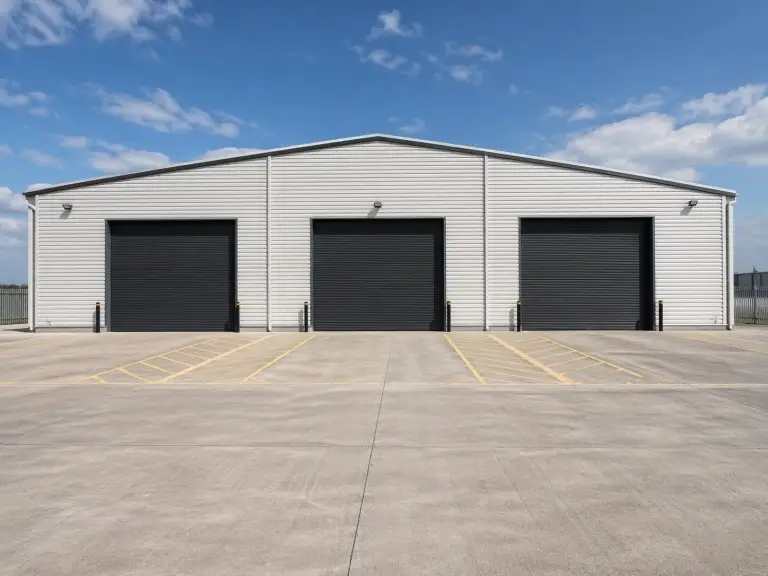
Steel Warehouse Buildings
ISO 9001:2015 Certified · IAS AC472 Accredited · 24+ Years Delivery Prefabricated Steel Warehouse Buildings for Industrial, Logistics & Commercial Projects KAFA designs, fabricates,…
Common Applications
- Logistics & 3PL distribution centres
- Manufacturing & industrial processing
- Agricultural commodity bulk storage
02 · Application
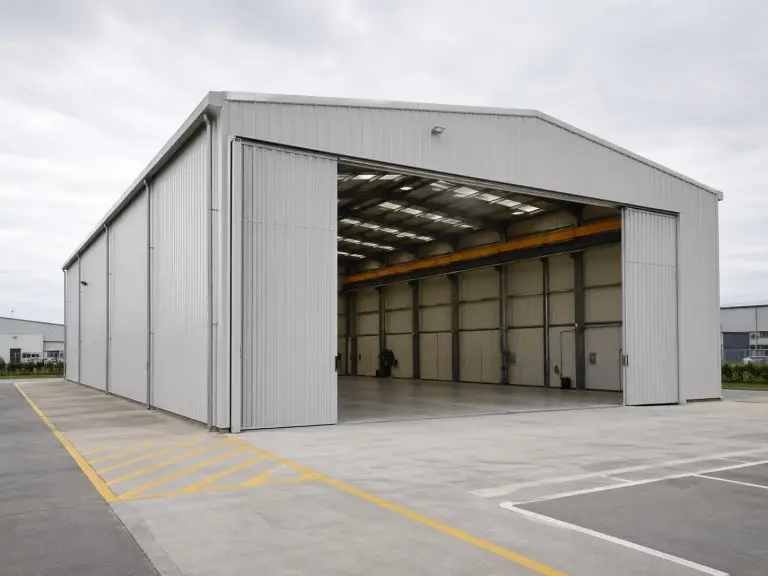
Steel Structure Workshop
ISO 9001:2015 Certified · IAS AC472 Accredited · 24+ Years Delivery Pre-Engineered Metal Workshop Buildings & Prefab Steel Workshop Structures KAFA designs, fabricates, and…
Common Applications
- Automotive fabrication & assembly shops
- Heavy manufacturing & metal processing
- Industrial park multi-tenant units
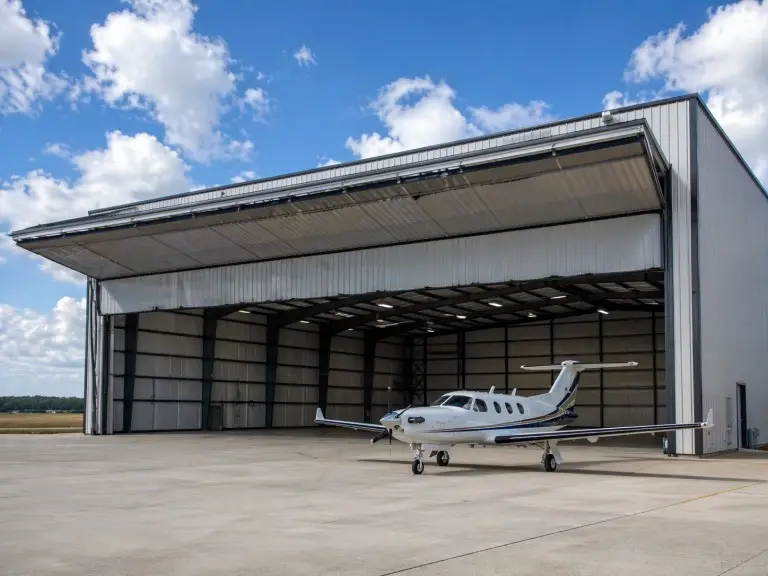
03 · Application
Metal Airplane Hangars
ISO 9001:2015 Certified · IAS AC472 Accredited · 24+ Years Delivery Pre-Engineered Metal Airplane Hangars & Aircraft Hangar Buildings KAFA designs, fabricates, and delivers…
Common Applications
- Aircraft MRO & maintenance facilities
- General aviation storage hangars
- Airport maintenance & operations bases
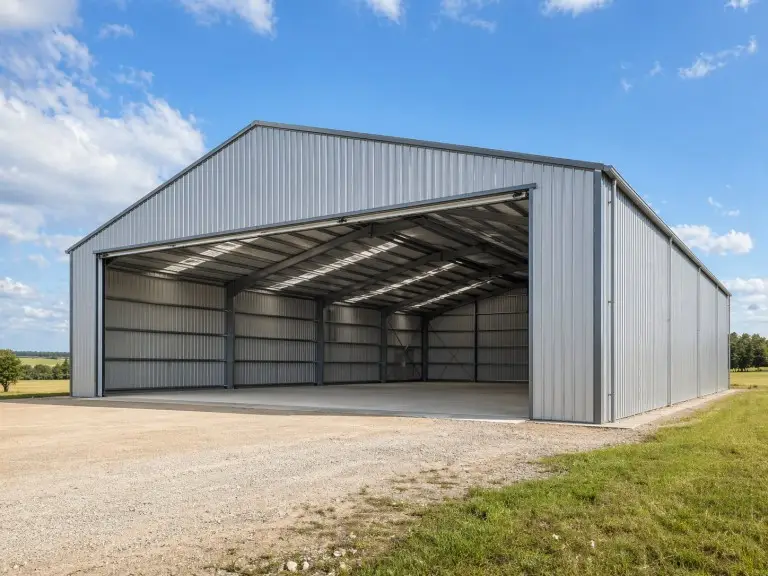
04 · Application
Agricultural Steel Buildings
ISO 9001:2015 Certified · IAS AC472 Accredited · 24+ Years Delivery Pre-Engineered Agricultural Steel Buildings for Commercial Livestock, Grain Storage & Farm Operations KAFA…
Common Applications
- Grain & bulk commodity storage
- Livestock & poultry housing
- Produce export & pack-house facilities
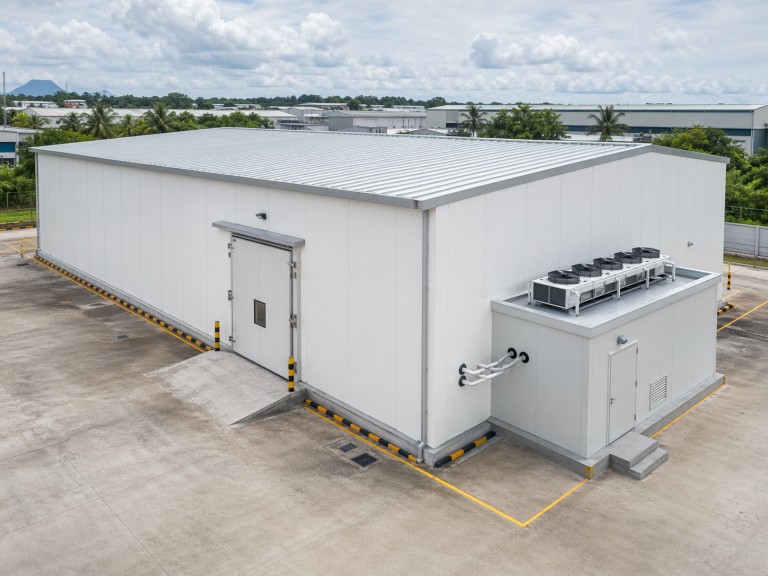
05 · Application
Steel Cold Storage Buildings
ISO 9001:2015 Certified · IAS AC472 Accredited · 24+ Years Delivery Pre-Engineered Steel Cold Storage Buildings & Industrial Cold Storage Warehouses KAFA designs and…
Common Applications
- Food processing chill & freezer stores
- Pharmaceutical cold chain facilities
- Blast freezer & frozen food storage
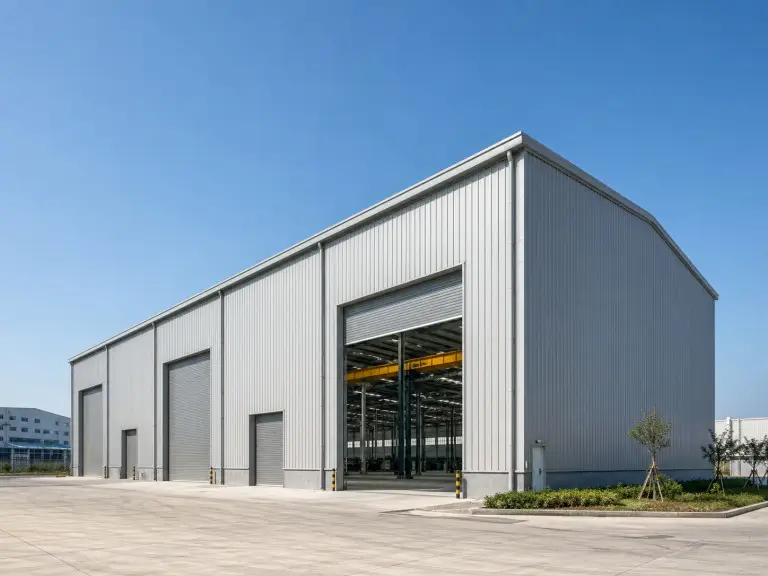
06 · Application
Steel Industrial Buildings
ISO 9001:2015 Certified · IAS AC472 Accredited · 24+ Years Delivery Pre-Engineered Steel Industrial Buildings & Prefab Industrial Metal Structures KAFA designs, fabricates, and…
Common Applications
- Manufacturing complexes & processing plants
- Heavy industry & fabrication operations
- Chemical & industrial processing facilities
07 · Application
Commercial Metal Buildings
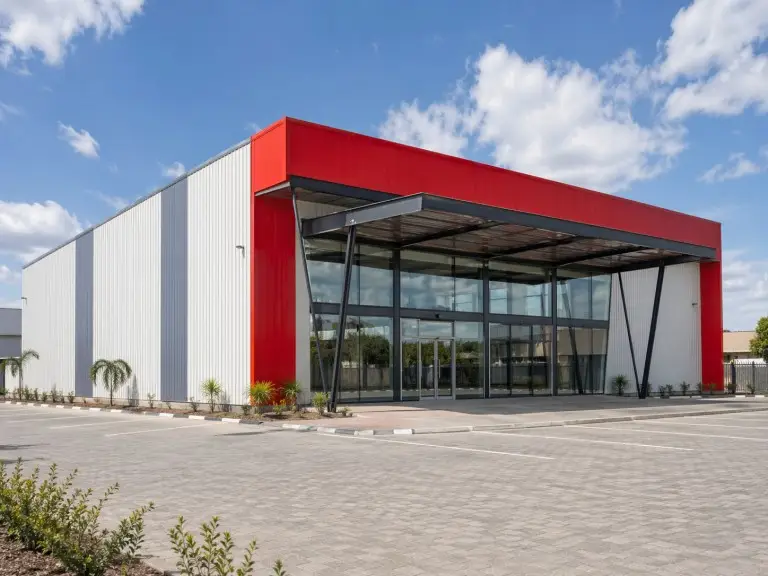
ISO 9001:2015 Certified · IAS AC472 Accredited · 24+ Years Delivery Pre-Engineered Commercial Metal Buildings for Retail, Office & Mixed-Use Development KAFA engineers, fabricates,…
Common Applications
- Retail & e-commerce distribution centres
- Industrial park development projects
- Mixed-use commercial warehouse facilities
08 · Application
Metal Office Buildings
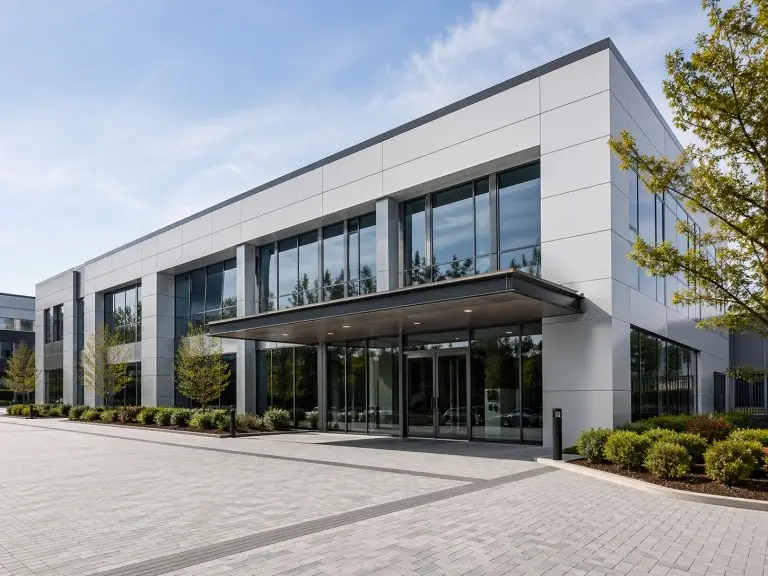
ISO 9001:2015 Certified · IAS AC472 Accredited · 24+ Years Delivery Pre-Engineered Metal Office Buildings for Corporate, Industrial & Government Projects KAFA engineers, fabricates,…
Common Applications
- Corporate headquarters & admin buildings
- Industrial park office complexes
- Government & institutional facilities
09 · Application
Steel Church Buildings
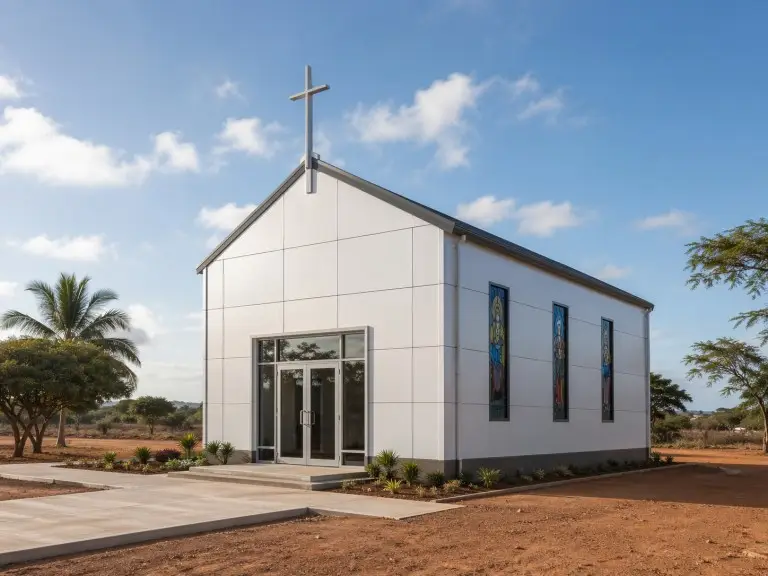
ISO 9001:2015 Certified · IAS AC472 Accredited · 24+ Years Delivery Pre-Engineered Steel Church Buildings & Prefab Worship Structures KAFA engineers, fabricates, and ships…
Common Applications
- Worship centres & assembly halls
- Multi-purpose community facilities
- Educational & institutional buildings
Frequently Asked Questions
Metal Building Erection Questions, Answered Directly
KAFA provides erection drawings, component documentation, bolt specifications, and remote technical support as standard. On-site technical presence from KAFA is not included by default and should be requested during the project scoping stage. Availability depends on project location and schedule, and the scope of on-site support should be confirmed in the project agreement before fabrication begins.
Duration depends on building footprint, number of frames and bays, crew size, crane configuration, and site access conditions. For a standard single-span industrial building of 1,000–3,000 m² with a four-person crew and one crane, two to four weeks for primary and secondary framing is a common planning range. Cladding and enclosure adds further time that depends on panel type, trim complexity, and weather conditions. These ranges should be confirmed during pre-erection planning based on KAFA’s drawing package and the appointed contractor’s crew capacity.
Local contractors with general steel experience can erect a KAFA building if they receive KAFA’s erection drawings in advance and are briefed on PEMB-specific requirements before mobilisation: braced bay start sequence, temporary bracing protocol, purlin lap direction, flange brace placement, and bolt torquing procedure. General steel construction experience does not substitute for familiarity with pre-engineered building conventions. We recommend a pre-erection drawing review session with the installation supervisor before any crew mobilises.
Out-of-tolerance anchor bolts must not be compensated by modifying the base plate, adding shims beyond the engineered specification, or forcing the column into position. The deviation magnitude and direction should be documented and shared with KAFA’s engineering team. Options — which may include revised base plate connection details or localised foundation remediation — must be assessed by the engineering team before erection proceeds. The extent of remediation required depends on the specific deviation and its location within the bolt pattern.
Erection can continue during rainfall provided foundation concrete has reached full design strength, crane outrigger ground conditions are confirmed before each lift, and the installation sequence follows KAFA’s drawings. Roof sheeting should not be installed during active rainfall. Setting-out and foundation-level work should not proceed when standing water is present in the building footprint. Wind speed must be monitored continuously, with erection on unsupported frame sections suspended when site wind exceeds 25 mph (40 km/h).
All bolts are first set to snug-tight — fully engaged with contact faces in bearing. After each frame is plumbed in both principal axes and temporary bracing is in place, bolts for that frame are taken to final torque values per KAFA’s torque table for the applicable bolt grade and connection type. Final torquing proceeds frame by frame as erection advances. Torquing all connections as a single pass after the complete primary structure is standing is a sequencing error that compromises the ability to achieve accurate final plumbing.
(1) Complete four pre-erection checks; (2) Erect braced bay first; (3) Install permanent diagonal bracing before next frame bay is lifted; (4) Plumb and torque each primary frame before secondary framing begins; (5) Begin purlins and girts only after primary frame is fully plumbed, torqued, and permanently braced; (6) Begin cladding only after permanent bracing is complete.
Pre-engineered metal building erection uses pre-cut, pre-drilled, pre-labelled members connected by bolting — no field cutting or welding. The primary risk is temporary instability of unbraced frames requiring strict braced-bay-first sequence. Conventional steel erection challenges centre on field welding and fit-up tolerances.
Confirm Technical Readiness
Erection Drawing Package Issued With Every KAFA Building
Share your building size and number of bays, project location and target mobilisation date, current foundation status including anchor bolt re-measurement results, and your erection crew’s crane type and rated capacity. Our team confirms technical readiness and identifies any drawing review items before your crew mobilises.
Construction Programme?
How Erection Fits the Full Four-Phase Construction Timeline
Erection is Phase 4 of a four-phase construction programme — starting from confirmed order, through fabrication, ocean transit, and foundation completion. Full programme details on our Metal Building Construction page.