




Metal Building Foundation — Steel Building Foundation Requirements, Footing Types & Anchor Bolt Specs
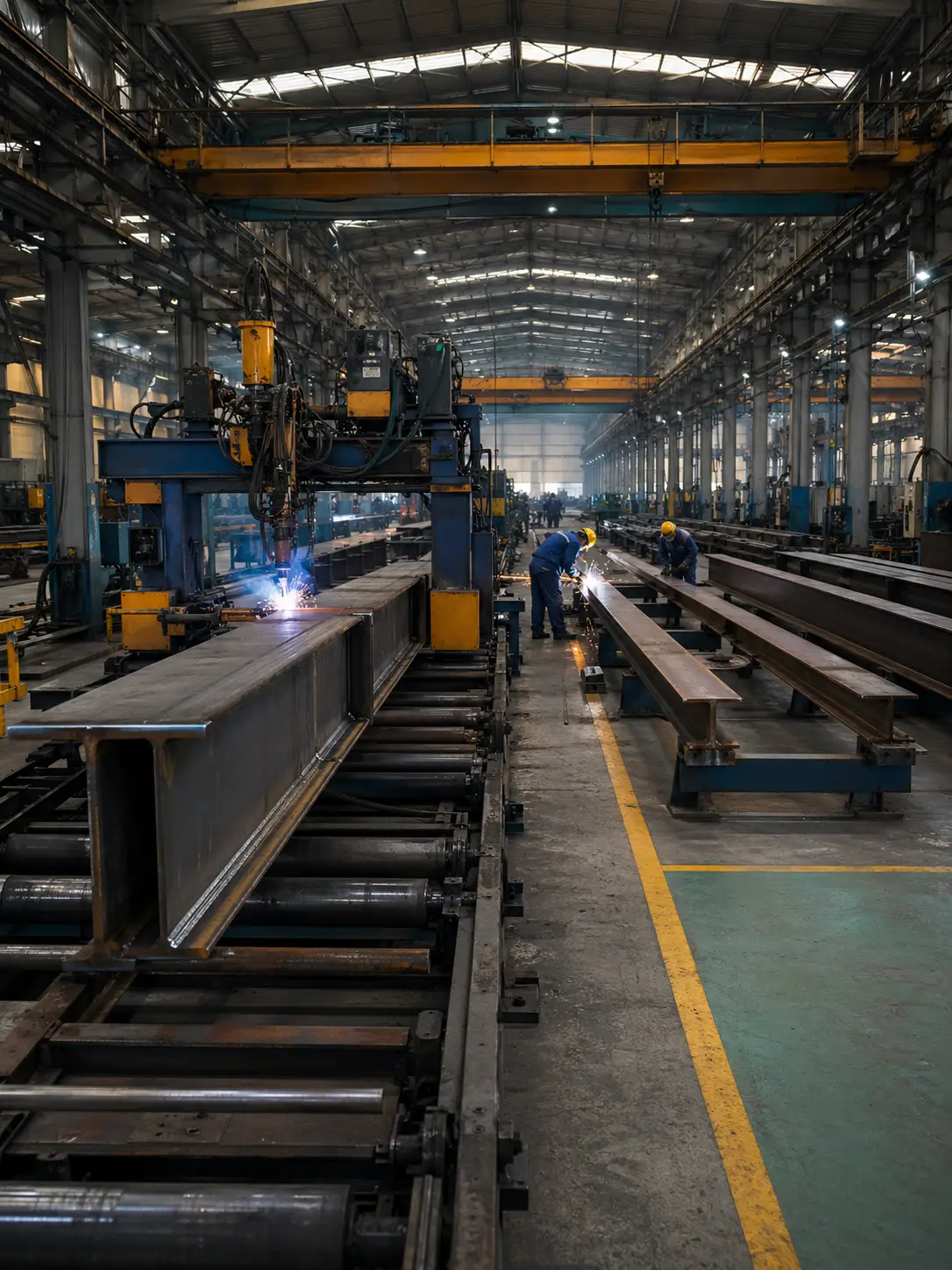
KAFA does not design or construct foundations — but we provide every technical document the foundation engineer needs: anchor bolt plans, column reaction loads, base plate dimensions, and foundation notes to GB, EN, AISC, or AS/NZS standards. Steel building foundation documents are issued on the same day as structural drawings so foundation building construction can begin in parallel with fabrication.
Foundation Scope
What KAFA Provides and What the Client’s Engineer Designs
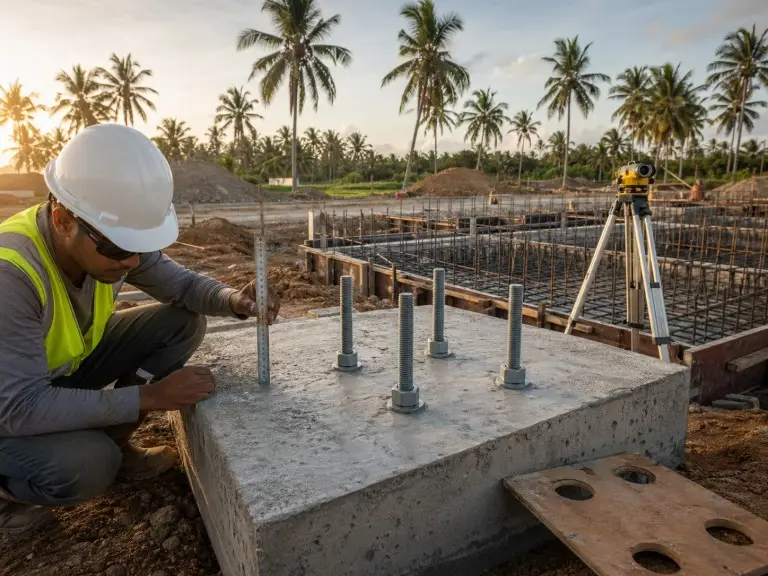
KAFA does not design or construct foundations. We provide the structural steel interface requirements — the technical documents that make foundation design possible. Foundation design and construction are the client’s responsibility, carried out by a local civil and structural engineer experienced with the soil conditions of the project site.
01 · Issued Same Day
Anchor bolt plan, column reactions, base plate dimensions & foundation notes — issued the same day as structural drawings.
02 · Local Engineering Practice
Load combination tables & column reaction forces in the unit system compatible with the local engineer’s design practice.
03 · Client Manages Locally
Foundation design, geotechnical investigation & construction managed locally — engineers and contractors selected by client.
04 · Verified Before Shipping
Surveyed anchor bolt position confirmation requested before container departs — catching deviations before steel leaves China.
Foundation Documents
Four Technical Documents Issued With Every Building Package
These are not advisory references — they are the technical inputs without which foundation design cannot be completed correctly. Issued at the same time as the structural drawings.
Anchor Bolt Plan
Dimensioned drawing showing the position of every anchor bolt relative to the structural column grid lines, with bolt projection height above finished concrete level and bolt spacing within each bolt group.
Used By
Foundation contractor — to set anchor bolts in correct position before concrete is poured. Also used to verify installed bolt positions before concrete reaches full cure.
Column Reaction Loads
Table giving the calculated axial force, shear force, and bending moment at each column base for the governing load combinations in the structural design — the actual calculated reactions, not conservative assumed loads.
Used By
Local civil engineer — to size the foundation footing beneath each column: footing plan dimensions, depth, reinforcement area, and concrete strength grade. Without actual reactions, engineer must use assumed loads producing over-sized or under-designed footings.
Base Plate Dimensions
Length, width, and thickness of the steel base plate at each column, and the bolt hole pattern within the plate — confirming that the footing top surface area is adequate to receive the base plate.
Used By
Foundation engineer — to confirm footing top surface area. Foundation contractor — to verify installed anchor bolt positions fall within tolerances the base plate holes can accommodate.
Foundation Notes
Load combination methodology, design standard reference (GB / EN / AISC / AS·NZS), concrete strength grade specified for column footings, and grouting requirements beneath the base plate after column installation.
Used By
Local civil engineer — prevents foundation design using a different load combination assumption than KAFA’s structural model uses, which would produce incompatible load inputs and potentially non-compliant footings.
Foundation Types
Types of Building Foundations for Metal Buildings — Four Options Based on Soil and Column Loads
Foundation type is determined by the column reaction loads from KAFA’s structural design, the bearing capacity and character of the soil, and local construction practice. Metal building footings for steel structure warehouses and steel industrial buildings typically use isolated column footings on well-compacted soils — the local civil engineer confirms the type based on a geotechnical investigation report.
Isolated Column Footings
The standard foundation type for steel buildings on soils with adequate bearing capacity — typically 100 kN/m² or above. A reinforced concrete pad is cast beneath each column position, sized in plan and depth to distribute the column load within the allowable soil bearing stress. The simplest and most economical foundation type, appropriate for the majority of steel building projects on naturally well-compacted soils.
Site Conditions
Strip & Perimeter Wall Foundations
Continuous foundation running along the building perimeter, providing a combined foundation and base wall to which wall panels attach at grade. Common for buildings with masonry infill walls, or in markets where perimeter strip foundations are standard construction practice. Also used where security or flood resilience requires a solid masonry perimeter base.
Site Conditions
Raft Foundations
Reinforced concrete mat covering the full building footprint, distributing column loads across the entire foundation area. Used where soil bearing capacity is low and variable — where differential settlement between isolated footings would be unacceptably large. Also provides the building floor slab as an integrated element. Cost is higher than isolated footings but lower than piling in moderately poor soils.
Site Conditions
Pile Foundations
Required where soil bearing capacity at the level of practical excavation is too low to support isolated or raft foundations economically, or where seismic liquefaction or slope instability requires transferring loads to competent soil at depth. For coastal soft alluvial soils in Lagos, Manila Bay, Mekong Delta, pile foundations are often the only viable option. Large structures such as metal airplane hangars with high column loads may require piles on soft-soil sites. Pile design requires a full geotechnical investigation with in-situ testing.
Site Conditions
Quality Control
Anchor Bolt Positioning — The Critical Quality Variable in Foundation Construction
Anchor bolt positioning accuracy is the most consequential quality variable in the foundation construction process and the variable most consistently underestimated by concrete contractors who do not regularly work on steel building foundations.
Required Positioning Accuracy — and What Happens When It Is Not Achieved
KAFA’s primary frame base plates are drilled with bolt holes at positions corresponding precisely to the anchor bolt pattern in the anchor bolt plan. When installed bolt positions exceed the specified tolerance, the base plate holes and bolt positions do not align — and the frame cannot be installed without modification.
The correct approach is to use a bolt-setting template — a steel or plywood plate drilled to the exact bolt group pattern from the anchor bolt plan — to hold the bolt assembly in position while concrete is placed. The template is secured to formwork and checked with survey equipment before the pour begins. A mandatory position check immediately after the pour and before full cure is the last practical point at which corrections can be made economically.
We request a surveyed anchor bolt position check report before confirming the shipping container departure date — so that any discrepancy is resolved before the steel leaves China, not after it arrives on-site.
Maximum deviation of each bolt from its specified position within the bolt group. Exceeding this prevents the base plate from seating correctly against the concrete surface.
Maximum deviation of bolt top height above finished concrete surface. Affects nut engagement length and grout pad thickness at base plate installation.
Regional Soil Conditions
Soil and Climate Conditions in African and Southeast Asian Markets
Several conditions prevalent across African and Southeast Asian markets affect foundation design and are not typically addressed in guidance produced for North American or European contexts. A geotechnical investigation at the project site is essential before foundation design commences in any of these conditions.
Expansive Soils
High smectite clay content (black cotton soils) causes substantial volume change with moisture variation — shrinking when dry, swelling when wet with significant upward pressure on shallow foundations. Isolated footings must extend below the depth of seasonal moisture fluctuation — typically 1.5–2.5 m. Soil stabilisation with lime or cement is an alternative.
Soft Alluvial Soils
Recent marine and river deposits with low and variable bearing capacity — typically 30–80 kN/m² undisturbed. Isolated footings at shallow depth often exceed allowable bearing stress at practical footing sizes, necessitating ground improvement (cement column, dynamic compaction) or pile foundations. Geotechnical investigation with SPT or CPT to depth is required before foundation design.
Seismic & Elevated Wind Zones
Parts of the Philippines, Indonesia, and the Pacific are in high seismic zones requiring seismic load combinations in the structural design and foundation design. West African coastal and island markets and Southeast Asian typhoon belt locations have elevated wind load requirements. Both conditions are reflected in KAFA’s column reaction load tables when the applicable standard and load zone are confirmed at the design stage.
Tropical Concrete Curing — A Quality Control Issue Affecting Anchor Bolt Performance
In high-temperature tropical environments, concrete hydration accelerates and the surface dries rapidly, limiting strength development. Uncovered concrete in direct tropical sunlight can lose surface moisture within hours of placement. Standard curing practice requires covering with burlap, plastic sheeting, or wet sand immediately after bleed water evaporates, maintained for a minimum of seven days. A foundation poured at C25 but inadequately cured may achieve only C15–C18 in practice, which can be insufficient for the design anchor bolt pullout capacity. We include curing practice guidance in our foundation notes for all tropical climate projects.
Floor Slab Design
Warehouse and Industrial Floor Slab — a Structural Element, Not a Finished Floor
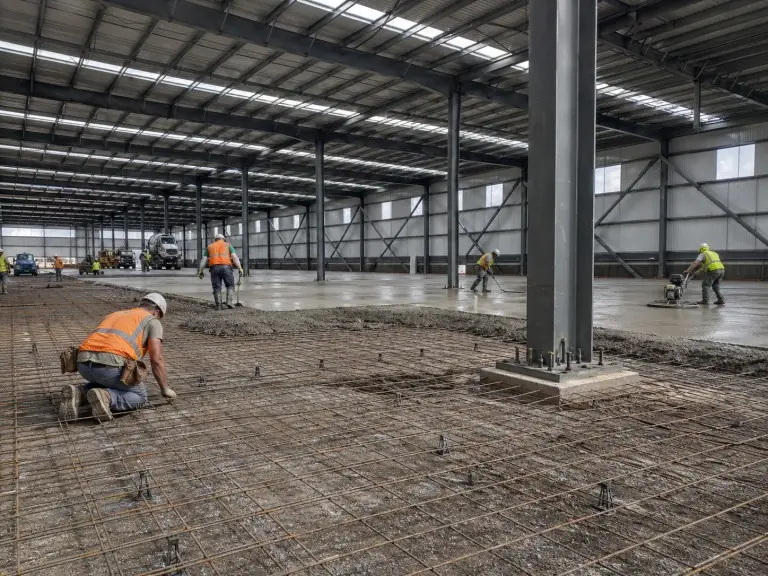
The concrete slab on grade inside a warehouse or industrial building must be designed for specific imposed loads before it is poured. These parameters cannot be changed retrospectively.
- Counterbalanced forklift front axle load can exceed 60 kN per wheel when loaded at rated capacity — a lightly reinforced 100 mm slab cannot safely carry this without cracking
- Standard warehouse forklift slab specification: minimum 150 mm thick, reinforcement designed for the specific forklift loads and racking point loads anticipated
- Industrial equipment foundations — designed as isolated pads separate from the general slab, for the specific load combination and vibration characteristics of the equipment
- Slab must be thickened and reinforced at the column base plate area — coordinated with anchor bolt projection height so bolt tops protrude correctly above the finished slab surface
Floor slab design parameters should be confirmed at the same time as column footing design — the slab design and footing design interact at the column base, and both must be coordinated with the anchor bolt projection height from KAFA’s anchor bolt plan.
Building Applications
Metal Building Foundation Requirements Across Every KAFA Building Type
Foundation type and specifications vary by building type — hangar foundations for wide-span structures carry different column reactions than warehouse foundations, and cold storage buildings have specific requirements for slab thermal breaks. All foundation documents are produced to the confirmed design standard for the project.
01 · Application
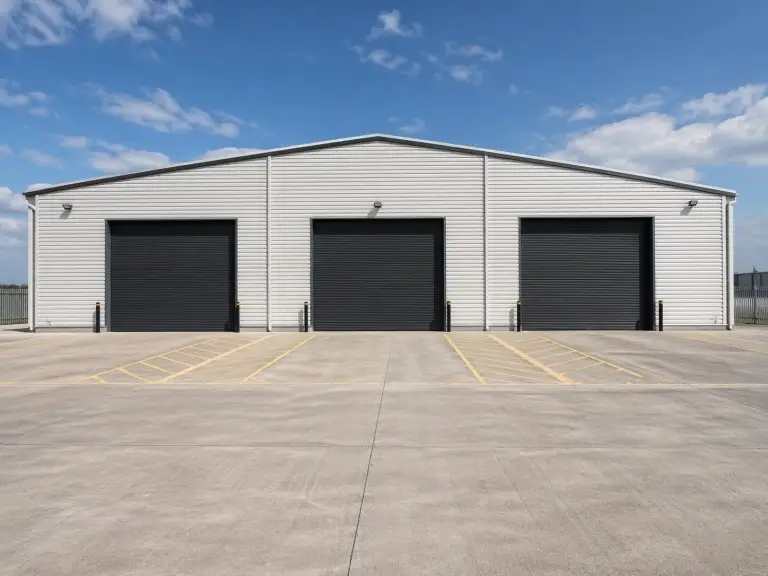
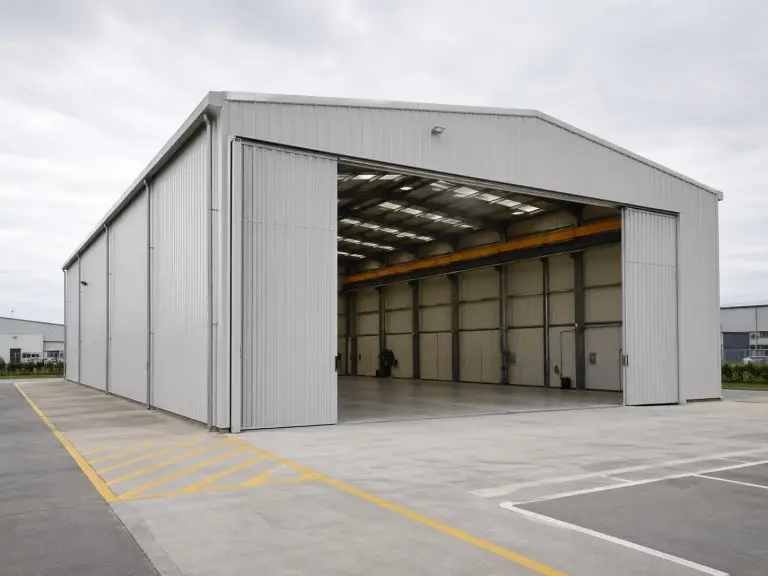
Steel Warehouse Buildings
ISO 9001:2015 Certified · IAS AC472 Accredited · 24+ Years Delivery Prefabricated Steel Warehouse Buildings for Industrial, Logistics & Commercial Projects KAFA designs, fabricates,…
Common Applications
- Logistics & 3PL distribution centres
- Manufacturing & industrial processing
- Agricultural commodity bulk storage
02 · Application
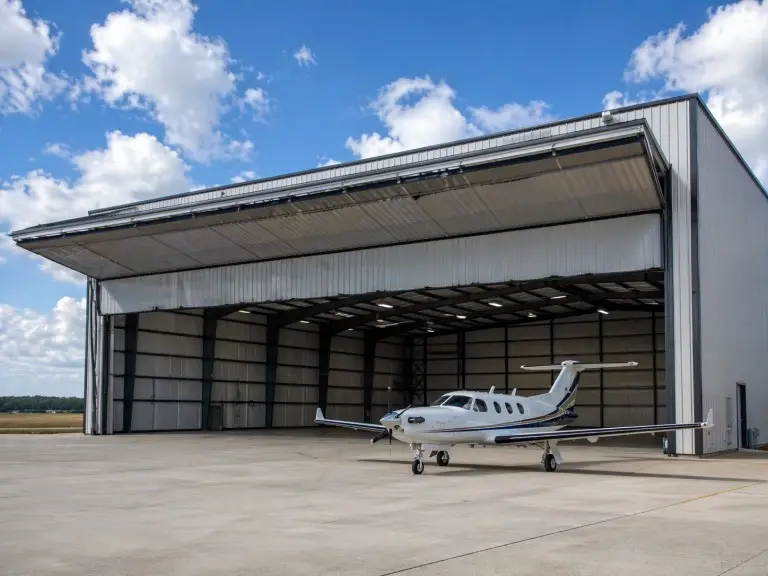
Steel Structure Workshop
ISO 9001:2015 Certified · IAS AC472 Accredited · 24+ Years Delivery Pre-Engineered Metal Workshop Buildings & Prefab Steel Workshop Structures KAFA designs, fabricates, and…
Common Applications
- Automotive fabrication & assembly shops
- Heavy manufacturing & metal processing
- Industrial park multi-tenant units
03 · Application
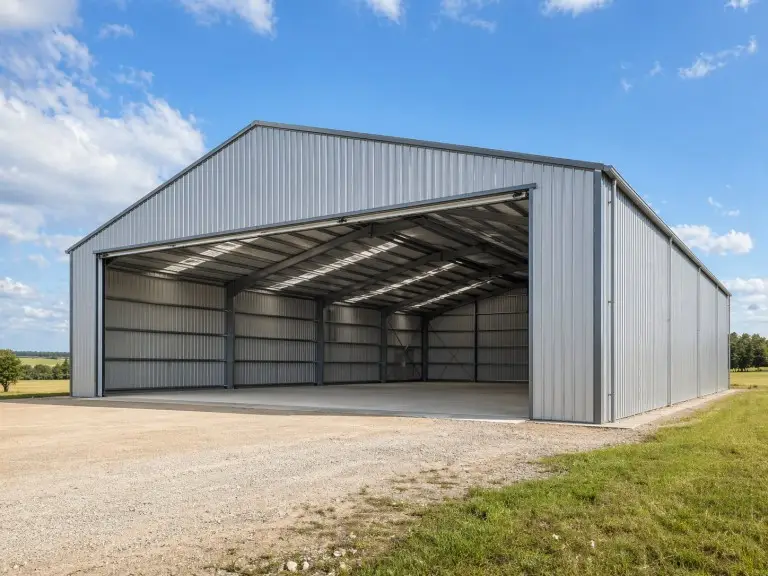
Metal Airplane Hangars
ISO 9001:2015 Certified · IAS AC472 Accredited · 24+ Years Delivery Pre-Engineered Metal Airplane Hangars & Aircraft Hangar Buildings KAFA designs, fabricates, and delivers…
Common Applications
- Aircraft MRO & maintenance facilities
- General aviation storage hangars
- Airport maintenance & operations bases
04 · Application
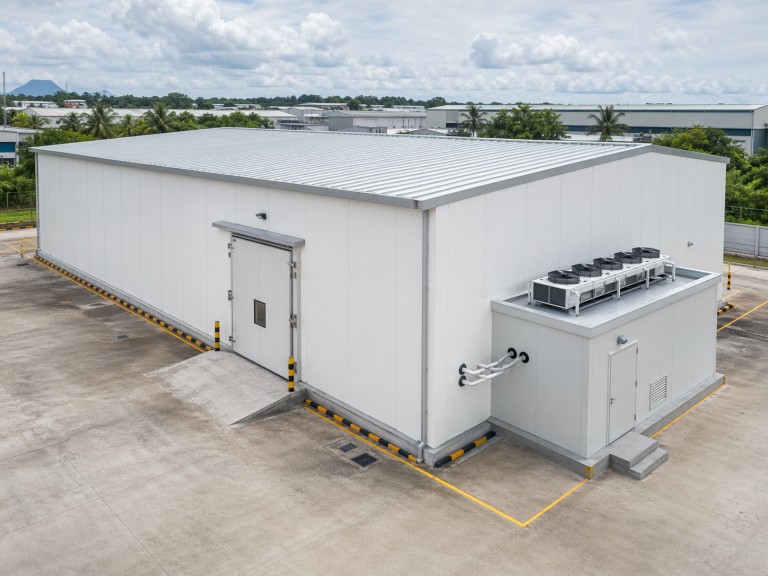
Agricultural Steel Buildings
ISO 9001:2015 Certified · IAS AC472 Accredited · 24+ Years Delivery Pre-Engineered Agricultural Steel Buildings for Commercial Livestock, Grain Storage & Farm Operations KAFA…
Common Applications
- Grain & bulk commodity storage
- Livestock & poultry housing
- Produce export & pack-house facilities
05 · Application
Steel Cold Storage Buildings
ISO 9001:2015 Certified · IAS AC472 Accredited · 24+ Years Delivery Pre-Engineered Steel Cold Storage Buildings & Industrial Cold Storage Warehouses KAFA designs and…
Common Applications
- Food processing chill & freezer stores
- Pharmaceutical cold chain facilities
- Blast freezer & frozen food storage
06 · Application
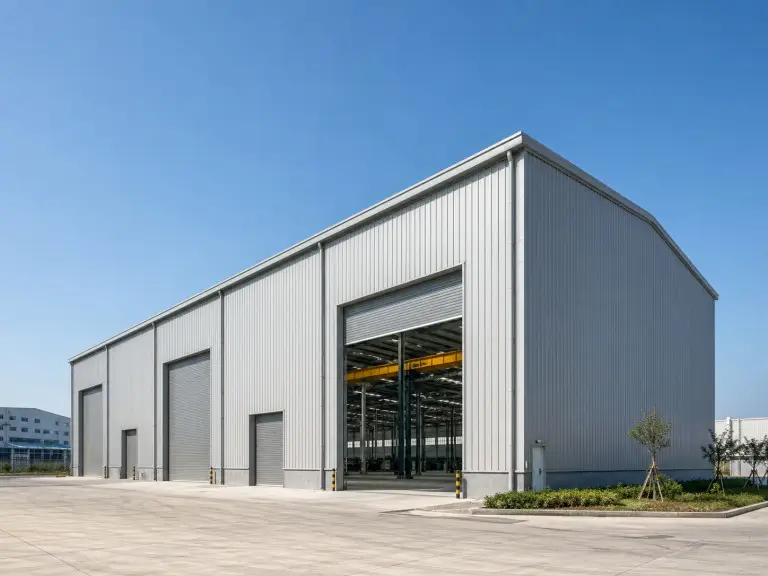
Steel Industrial Buildings
ISO 9001:2015 Certified · IAS AC472 Accredited · 24+ Years Delivery Pre-Engineered Steel Industrial Buildings & Prefab Industrial Metal Structures KAFA designs, fabricates, and…
Common Applications
- Manufacturing complexes & processing plants
- Heavy industry & fabrication operations
- Chemical & industrial processing facilities
07 · Application
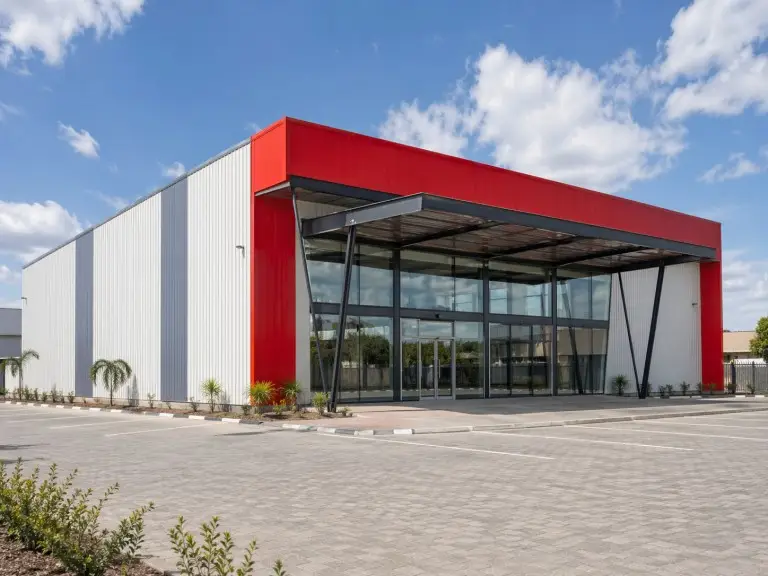
Commercial Metal Buildings
ISO 9001:2015 Certified · IAS AC472 Accredited · 24+ Years Delivery Pre-Engineered Commercial Metal Buildings for Retail, Office & Mixed-Use Development KAFA engineers, fabricates,…
Common Applications
- Retail & e-commerce distribution centres
- Industrial park development projects
- Mixed-use commercial warehouse facilities
08 · Application
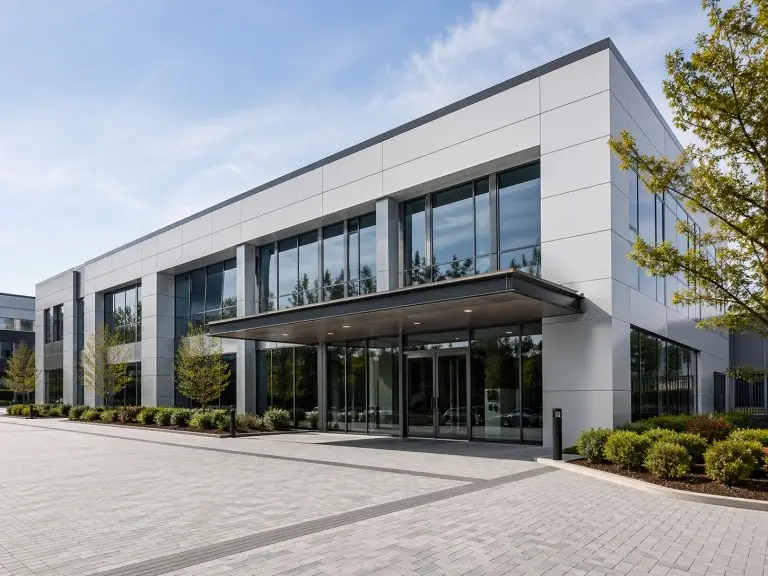
Metal Office Buildings
ISO 9001:2015 Certified · IAS AC472 Accredited · 24+ Years Delivery Pre-Engineered Metal Office Buildings for Corporate, Industrial & Government Projects KAFA engineers, fabricates,…
Common Applications
- Corporate headquarters & admin buildings
- Industrial park office complexes
- Government & institutional facilities
09 · Application
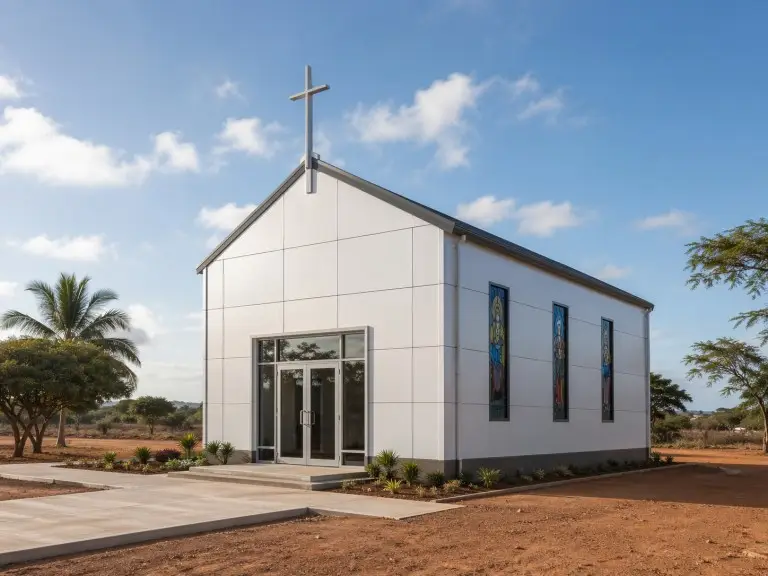
Steel Church Buildings
ISO 9001:2015 Certified · IAS AC472 Accredited · 24+ Years Delivery Pre-Engineered Steel Church Buildings & Prefab Worship Structures KAFA engineers, fabricates, and ships…
Common Applications
- Worship centres & assembly halls
- Multi-purpose community facilities
- Educational & institutional buildings
Frequently Asked Questions
Metal Building Foundation Questions, Answered Directly
KAFA provides four foundation-related technical documents: the anchor bolt plan showing precise bolt positions and projection heights, the column reaction load table giving axial force, shear force, and bending moment at each column base for the governing load combinations, base plate dimensions for each column type in the building, and foundation notes covering the design standard reference, concrete strength specification, and grouting requirements. These documents are issued at the same time as the structural drawings, giving the client’s civil engineer and contractor everything needed to begin foundation design and construction in parallel with the fabrication period.
Foundation design is the responsibility of a local licensed civil or structural engineer engaged by the client. KAFA provides the structural loads and anchor bolt geometry — the interface requirements — but does not perform geotechnical assessment, foundation structural design, or on-site foundation construction. This division of scope is stated explicitly in our project engagement terms. Clients in markets without established local civil engineering services should identify a foundation engineer before placing the fabrication order, because foundation design must begin before fabrication ends to keep the construction programme on schedule.
When anchor bolt positions exceed the ±3 mm plan tolerance or ±5 mm elevation tolerance, the primary frame base plates cannot be installed without modification. Remediation options include slotting or enlarging the base plate holes (which reduces structural capacity and requires engineering sign-off), drilling and epoxy anchoring replacement bolts into hardened concrete, or in severe cases, breaking out and re-pouring the affected footing section. The most cost-effective approach is to verify anchor bolt positions immediately after the pour and before the concrete reaches full cure — when correction is still practical. We request a surveyed position check report before confirming the shipping departure date.
The floor slab on grade is a structural element and must be designed for the specific imposed loads of the building’s intended use. For warehouses using forklifts, the governing load is typically the wheel load of the loaded forklift — for a 3-tonne capacity machine this can exceed 60 kN per wheel. For industrial buildings with heavy equipment, the equipment base reaction forces are the governing input. These design loads must be established before the slab is poured. The local civil engineer designs the slab in conjunction with the column footing design, coordinating slab thickness, reinforcement, and joint layout with the anchor bolt projection heights so the slab surface and bolt tops are at the correct relative levels.
Yes, for certain ground conditions. Expansive soils in East and Southern Africa can exert upward pressure on shallow foundations during wet seasons. Coastal soft alluvial soils in Lagos, Ho Chi Minh City, Manila, and similar locations have low bearing capacity that typically requires ground improvement or piling. In all tropical markets, concrete curing quality is more critical than in temperate climates — inadequate curing in high-temperature conditions limits strength development and reduces anchor bolt pullout capacity. We flag these conditions in our foundation notes for projects in affected regions and recommend that clients confirm the geotechnical investigation scope with their local engineer before committing to a foundation design approach.
Yes. For projects on good bearing soils, isolated column footings are straightforward and relatively low in cost. For projects on soft coastal soils requiring pile foundations, the foundation cost can equal or exceed the cost of the steel building structure itself. This is why we recommend completing a geotechnical investigation before finalising the project budget — a soil investigation typically costs a small fraction of the total project cost but identifies whether the foundation approach assumed in the budget estimate is achievable at the project site. We include a note to this effect in every project proposal for sites in coastal lowland or known problem soil areas.
Isolated reinforced concrete column footings are standard for sites with bearing capacity of 100 kN/m² or above. Each footing is sized by the local civil engineer from KAFA’s column reaction load documentation. Variable or lower-capacity sites may require raft or pile foundations confirmed by geotechnical investigation.
Get the Foundation Documentation
Anchor Bolt Plan Issued Same Day as Structural Drawings
To receive the anchor bolt plan and column reaction load table for your project, share your building type and approximate size, project country and city, whether a geotechnical investigation report is available, and whether the structural calculation report needs to include column reaction loads in a format compatible with your local civil engineer’s design software.
Construction Programme?
See How Foundation Timing Fits the Full Project Schedule
The anchor bolt plan is issued at the same time as structural drawings — giving the foundation contractor a 4–6 week head start while fabrication runs in parallel. Full construction programme details are on our Metal Building Construction page.