




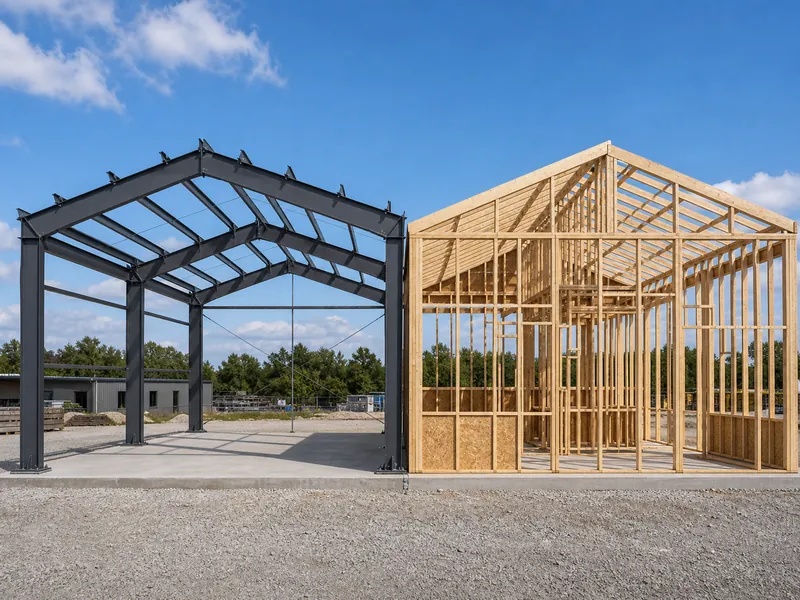
Steel frame and wood frame buildings can carry the same loads and pass the same codes, yet they pull ahead in different situations. For large-span, fire-sensitive, or low-maintenance commercial and industrial buildings, a steel frame usually wins; for low-rise residential work and projects judged mainly on upfront price, wood framing is hard to beat. The real decision is which set of trade-offs matches your span, your fire and insurance exposure, and how long you intend to own and maintain the structure.
This comparison sets the two systems against each other on cost, strength, fire and durability, energy, and sustainability. The aim is a choice you can make for a specific project rather than in the abstract. It assumes a building-scale frame rather than interior partition studs, and it does not cover foundation design or local permitting, both of which apply whichever material you pick.
How Steel and Wood Framing Work as Systems
Steel framing and wood framing each cover two different product families, so a fair comparison starts with matching like for like. A light-gauge steel wall and a heavy structural frame are not the same product, and neither are a stick-built wall and a glulam beam.
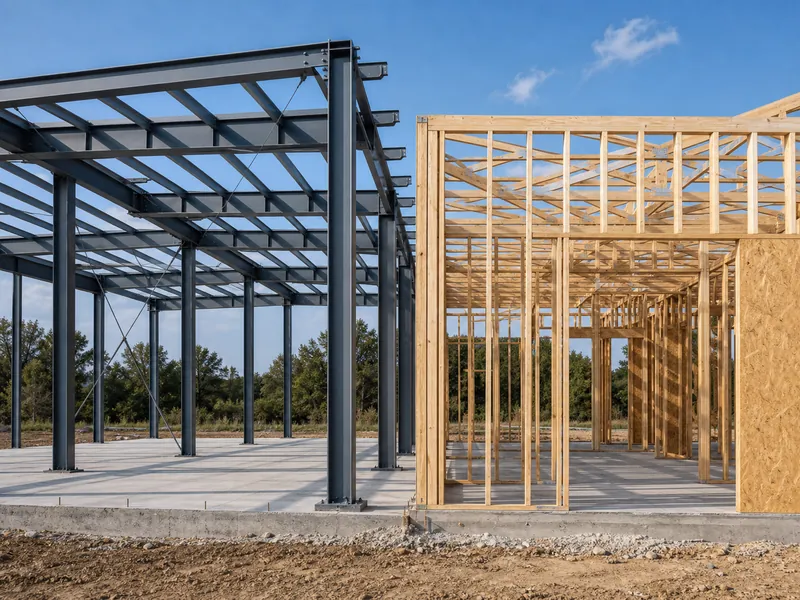
Steel framing: light-gauge versus structural
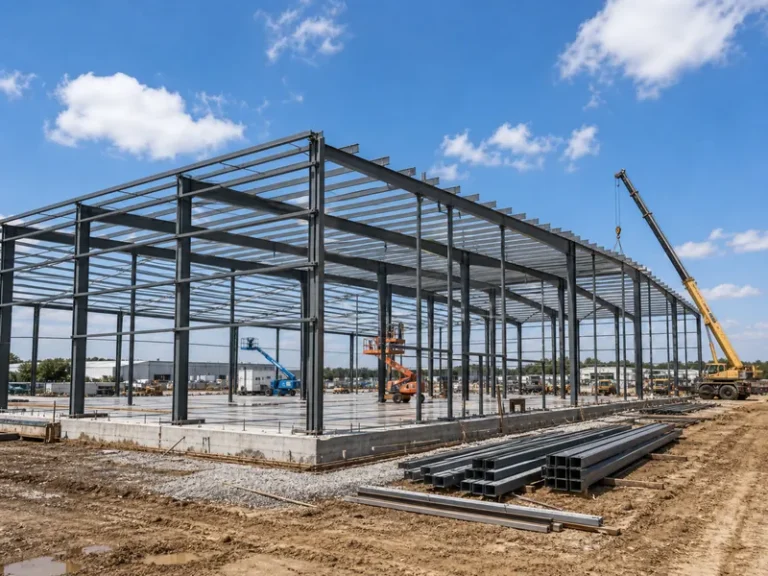
Cold-formed, light-gauge steel is roll-formed from thin galvanized sheet into C-shaped studs and tracks, and it competes most directly with wood studs in walls, floors, and light roofs. Structural steel, the hot-rolled wide-flange sections often called red iron, drives the rigid frames and long-span beams of steel frame construction used in multi-story and industrial buildings where wood cannot reach. Confusing the two produces a lot of bad cost comparisons, because a light-gauge wall and a red-iron rigid frame sit at very different price and capability points.
Wood framing: dimensional lumber versus engineered wood
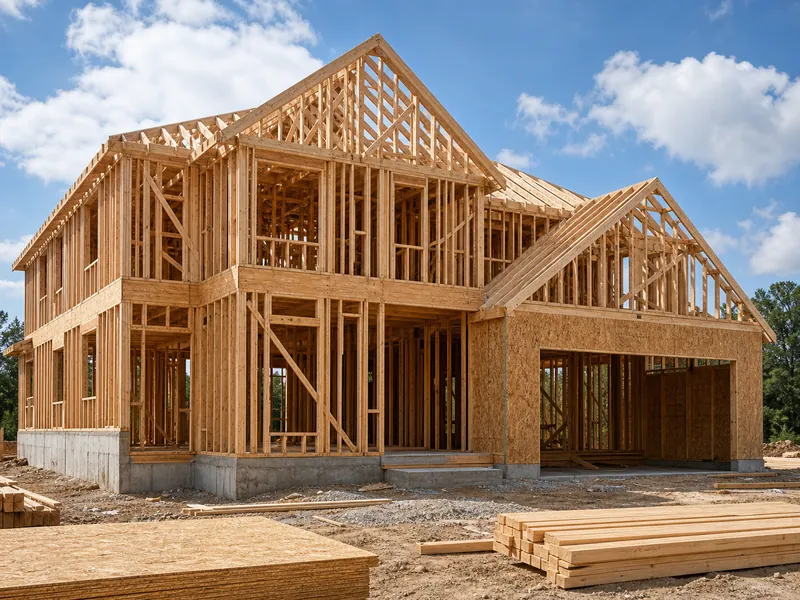
Wood framing usually means stick-built dimensional lumber, the 2×4 and 2×6 studs, joists, and rafters cut and nailed on site, which keeps tooling simple and skilled labor easy to find. Engineered wood such as LVL, glulam, and I-joists extends timber to longer spans and steadier dimensions, at a higher price that narrows the gap with steel. Most residential framing still leans on dimensional lumber, while engineered members show up where spans or loads outgrow standard sticks.
Cost: Upfront Price Versus Total Cost of Ownership
On upfront material price wood framing almost always comes in cheaper, but that lead shrinks, and sometimes disappears, once labor, lifespan, insurance, and waste enter the math. The headline price favors wood; the lifetime price often does not.
| Framing system | Typical framing cost | Where it fits best |
|---|---|---|
| Stick-built dimensional lumber | ~$6–$12 / sq ft | Low-rise homes, short spans, tight upfront budgets |
| Light-gauge (cold-formed) steel | ~$10–$18 / sq ft | Mid-rise walls and floors, fire-sensitive or low-maintenance builds |
| Structural (red-iron) steel | ~$18–$30 / sq ft | Long clear spans, multi-story loads, industrial buildings |
Those bands move with the market more than most buyers expect. Lumber-only costs can fall below the wood range, but lumber prices swing hard from season to season, so the spread between wood and steel is never fixed. Labor tilts on availability as much as price. Carpenters are easier to find, with skilled wood crews commonly billed around $35–$60 an hour against $50–$90 for steel erectors. Light-gauge steel framing labor, by contrast, is often quoted near $3 per square foot once a crew is set up for it.
At the whole-building level the gap narrows further. In one widely cited side-by-side study of two identical mid-rise buildings, framing alone ran roughly 20% more in cold-formed steel than in wood. Yet the total project cost difference fell under 3%, and under 1% once insurance entered the comparison. Non-combustible construction can cut premiums enough to offset much of the framing premium; that study put the insurance saving above $100,000 on a single mid-rise.
Over the life of the building the accounting shifts again. Steel does not warp, rot, or feed termites, so it tends to avoid the callbacks and member replacement that wood can accumulate. Light-gauge framing also generates about 2% scrap on site against 10–20% for stick-built wood. Wood keeps more cash in the project early; steel moves more of the cost into a frame that asks for less attention later.
What these framing numbers include, and what they don’t: the ranges above are for the structural frame only, meaning studs, tracks, beams, or rigid frames plus basic connections. They exclude foundation and slab, sheathing and cladding, insulation, mechanical and electrical work, finishes, permits, and freight. Complex loads such as high snow, wind, or seismic demand, tall walls, or long clear spans push steel toward the top of its range; simple low-rise layouts keep wood near the bottom of its own.
Strength, Span, and Load-Bearing Performance
Steel carries more load per pound than wood, so steel frames can span farther and rise higher without intermediate columns. That strength-to-weight advantage is the structural reason steel dominates large and tall buildings.
For a comparable load a steel frame typically weighs 20–30% less than the equivalent wood frame, and the per-member difference can be larger still. In one published stud-to-stud comparison, a cold-formed steel stud carried roughly twice the axial load of a similarly sized timber stud while weighing less. That illustration holds even though real assemblies depend on grade, spacing, and bracing rather than any single member.
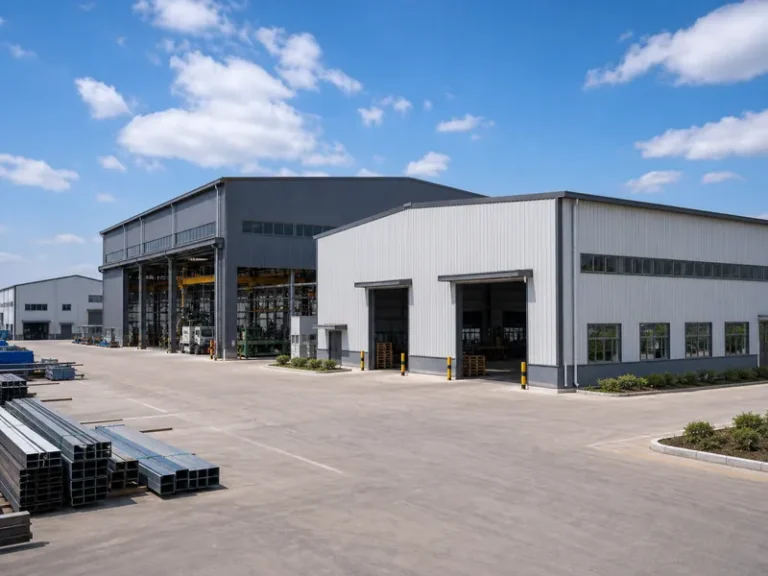
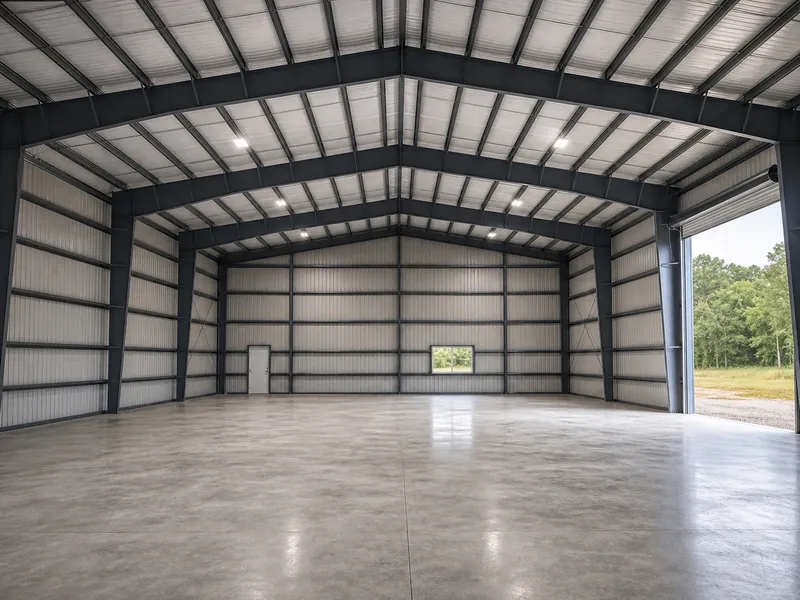
Span is where the two systems diverge most. Dimensional lumber is happiest over short, repetitive spans, and once a design needs a wide floor without mid-span supports, wood has to reach for engineered members or added columns. A steel rigid frame, by contrast, can clear-span 50 to 150 feet in a single pre-engineered bay. That column-free reach is why industrial steel construction favors open, obstruction-free interiors for warehouses, workshops, and production floors, where mid-floor columns would block racking, cranes, or vehicle paths.
Fire, Corrosion, and Long-Term Durability
Steel is non-combustible and wood is not, though treating steel as automatically fireproof is a costly misread. The fire advantage is real, but it is conditional on detailing.
Steel does not ignite or add fuel to a fire, so a steel frame will not feed the flames the way exposed wood can. It does lose strength as temperatures climb, which is why fire-rated steel assemblies still need protection. Intumescent coatings that swell into an insulating char, or spray-applied fire-resistive material (SFRM), hold their rating long enough for safe egress. Heavy timber behaves differently again, charring at a fairly predictable rate while keeping a structural core intact, whereas light wood framing fails quickly once it ignites. Planning steel building fire protection around code-required ratings, rather than assuming the steel is covered because it cannot burn, keeps a project out of trouble at inspection.
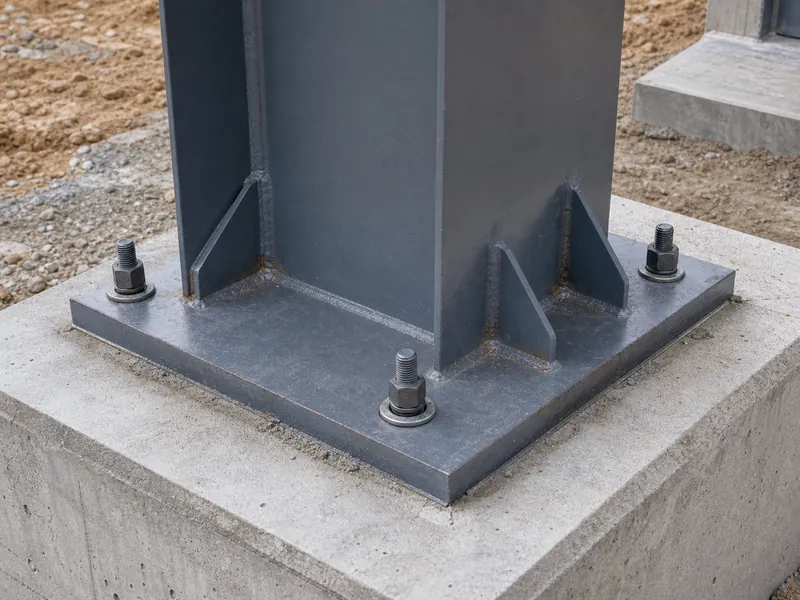
Moisture flips the durability story. Steel shrugs off termites and rot but will rust where water lingers, so galvanized coatings and sound drainage detail matter on humid or coastal sites. Wood resists corrosion but needs treatment and ventilation to hold off rot and insects. In a damp environment the first places to check on a steel frame are fasteners, base plates, and any spot where trapped condensation can start corrosion.
Service life follows from that maintenance picture. Light-gauge steel framing is commonly cited around 50–75 years and structural steel at 75–100 years or more, against roughly 40–60 years for wood framing kept in good repair. Exposure, detailing, and upkeep move all three more than the headline numbers suggest. How long do metal buildings last in practice depends far more on coating, drainage, and climate than on the steel itself.
Energy, Insulation, and Thermal Bridging
Wood frames insulate themselves; steel frames do not, and missing that difference shows up later on heating and cooling bills. This is the one area where wood holds a clear, built-in edge.
Wood is a natural insulator at roughly R-1.25 per inch, so a wood stud acts as its own thermal break. Steel conducts heat readily, so every steel member becomes a thermal bridge that carries energy straight through the wall. Without continuous exterior insulation or an engineered thermal break, steel studs can cut a wall’s effective R-value by a third or more in many assemblies.
Specifying insulation for a metal building, whether continuous rigid board outboard of the framing, thermal-break strips, or insulated panels, closes most of that gap. Even so, it is a real line item that belongs in the steel budget rather than an afterthought. A steel frame and a wood frame specified to the same energy target will not cost the same to insulate, and leaving that out is how steel projects surprise their owners later.
Sustainability and Jobsite Waste
Steel wins on recyclability and jobsite waste while wood wins on renewability and stored carbon, so the greener choice depends on which metric a project weighs. Steel is fully recyclable and made with high recycled content, with roughly 88% of steel in the US recovered, and light-gauge framing generates about 2% scrap on site against 10–20% for stick-built wood. Wood, in turn, is a renewable resource that stores carbon for the life of the building, and responsibly sourced timber carries a lower embodied-energy figure up front. Neither answer is universal: a project chasing low operational energy leans toward whichever frame insulates best for its climate, while one chasing low waste and end-of-life recovery leans toward steel.
How to Choose Between Steel and Wood Framing
The choice gets easier once you rank four variables in order: span, fire and insurance exposure, climate, and how long you plan to hold the building. Take them one at a time, because the first that returns a hard answer usually settles the frame.
Start with span and scale. Long clear spans, multi-story loads, cranes, or wide column-free floors push hard toward steel, often structural red-iron rigid frames, while short, repetitive residential spans stay comfortably in wood. When a wide, uninterrupted floor is non-negotiable, steel usually settles the question before cost is even discussed.
Weigh fire and insurance next. In fire-sensitive occupancies, or wherever non-combustible construction earns a meaningful insurance break, steel can recover its upfront premium over the life of the building. Where codes are easily met in wood and premiums are already low, that lever mostly disappears.
Then read the climate. Humid and coastal sites reward steel’s immunity to rot and termites but demand galvanizing and careful drainage detail, while cold climates reward wood’s built-in insulation unless the steel design already budgets for thermal breaks.
Finally, set the time horizon. Owners optimizing upfront cost and planning to build, sell, or remodel often favor wood, which is also easier to cut and reframe later. Owners holding a building for decades usually find the benefits of steel buildings, namely low maintenance, long life, and stable dimensions, outweigh the higher start. For mixed cases, hybrid framing is both common and legitimate: a steel structural frame or long-span steel roof over wood-framed interior walls captures span and fire performance where they matter while keeping wood’s flexibility inside.
The Bottom Line on Steel Versus Wood Framing
For most large-span, fire-rated, or long-hold commercial and industrial buildings, a steel frame is the stronger default; for low-rise, budget-led, and frequently modified projects, a wood frame still makes the most sense. The two materials are not really competing for the same job.
If the decision is close, three variables move it more than the rest: the clear span you actually need, whether non-combustible construction buys a real insurance reduction in your market, and how many years you plan to own the structure. Settle the span first, since it can rule out wood before cost ever enters the picture, then price the insurance difference, because that often decides whether steel’s premium is real or only apparent.
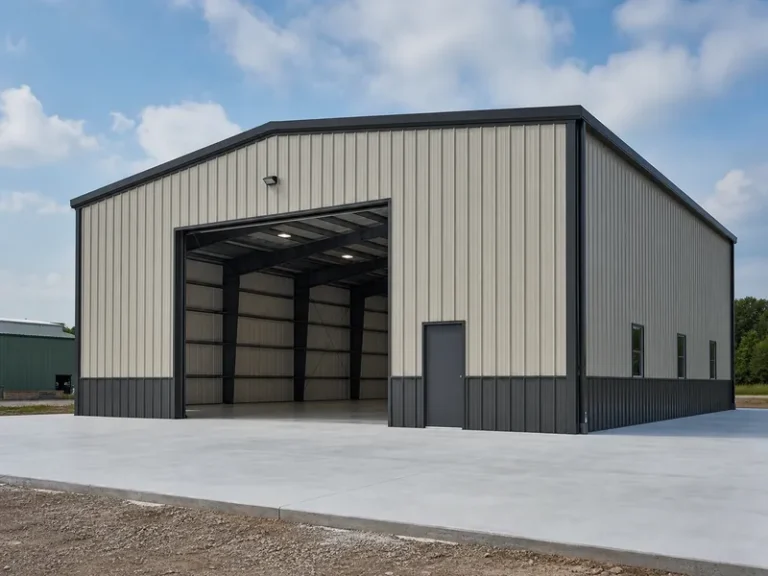
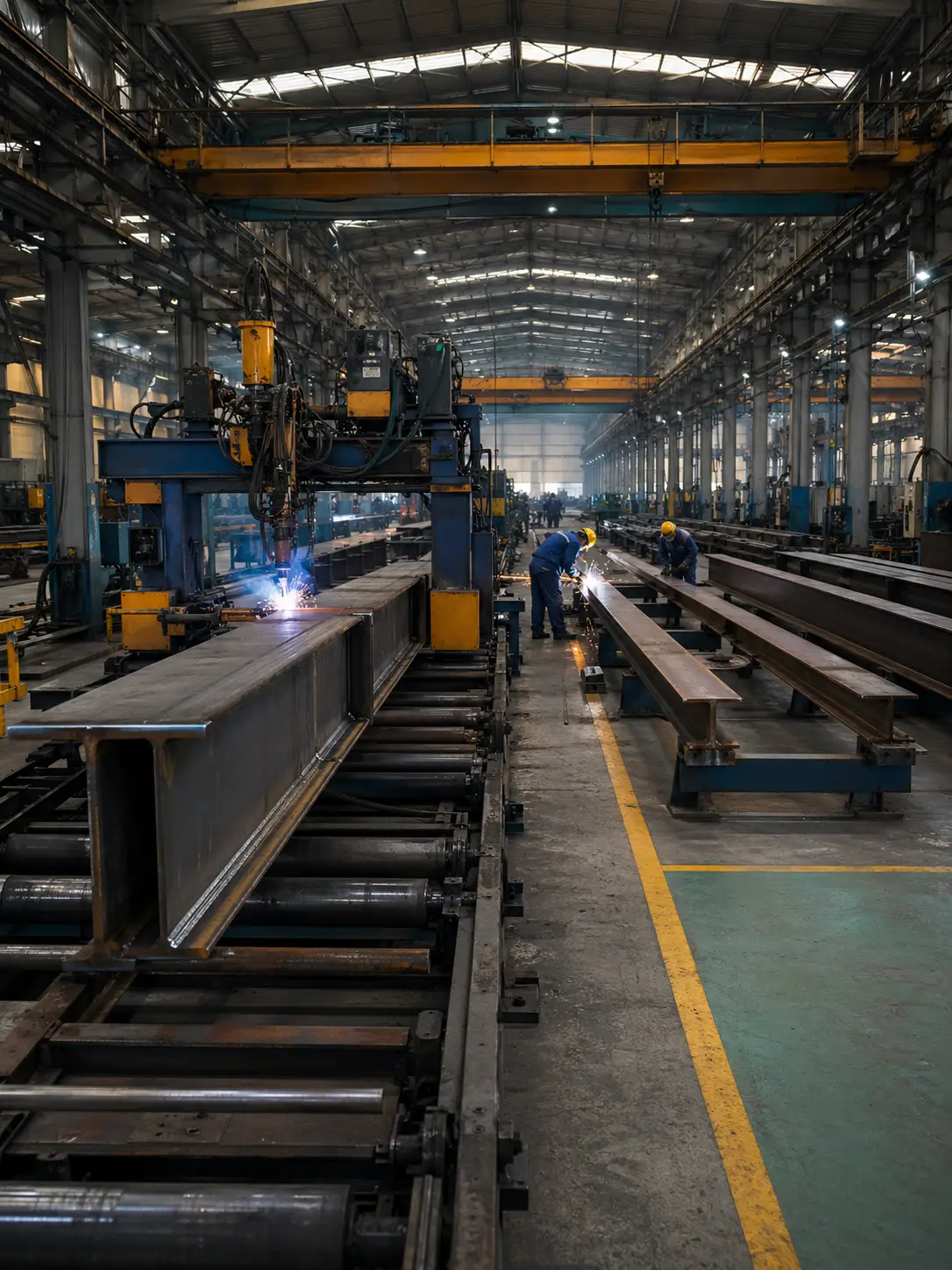
For the steel side of that call, the inputs that decide a steel building design are concrete: the required clear span and bay spacing, the design loads, and the coating spec for the site’s exposure. As a steel structure manufacturer handling light and heavy steel design, fabrication, and installation, KAFA works from those inputs, meaning span, load, and corrosion class, rather than from a generic frame. That is the point where a steel-versus-wood decision is either confirmed or sent back to wood.
FAQ
Is steel framing more expensive than wood?
Steel framing usually costs more upfront, but the lifetime gap is often small. Wood typically wins on material and labor at the start, while steel narrows or erases the difference through lower insurance premiums, near-zero framing waste, and fewer repairs. The premium is largest for structural red-iron systems and smallest for light-gauge steel competing directly against wood studs.
Does a steel frame building last longer than a wood frame?
A steel frame generally outlasts a wood frame, but maintenance and climate matter more than the material label. Steel resists rot, warping, and termites, while wood can match a long life if kept dry and treated and can fail early if it is not. In a steel frame the deciding factor is corrosion control, meaning coating and drainage, not the steel’s inherent strength.
Is steel really better than wood for fire?
Steel is non-combustible, which is a genuine advantage, but it is not self-sufficient in a fire. Because steel weakens as it heats, rated assemblies still rely on intumescent coatings or SFRM to keep their strength during egress, whereas heavy timber chars slowly and light wood framing fails fast. The fire advantage shows up mainly when the steel is detailed and protected to its required rating.
Can you combine steel and wood framing?
Yes, hybrid framing is common and code-compliant when each material is used where it performs best. A frequent pattern puts a steel structural frame or long-span steel roof over wood-framed interior partitions, capturing span and fire performance while keeping wood’s easy interior changes. The connection details and the differential movement between the two systems are what need engineering attention.
Does a steel frame building need more insulation?
A steel frame needs more deliberate insulation than wood to hit the same energy target, because steel conducts heat and bridges the wall. Continuous exterior insulation, thermal-break strips, or insulated panels close most of the gap, but they belong in the budget from the start. Thermal bridges are also where condensation tends to form, so a vapor strategy belongs in that budget too.
Which is better for a large clear-span building?
Steel is the clear choice for large clear-span buildings. Wood can reach moderate spans with engineered members or trusses, but steel rigid frames clear 50 to 150 feet column-free in a single pre-engineered bay, which wood cannot match economically at that scale. For warehouses, workshops, hangars, and arenas, the span requirement usually decides the frame before cost does.
Further Reading
- American Wood Council (AWC) — publisher of the National Design Specification and the Wood Frame Construction Manual; the standards body behind the wood-framing side of this comparison, including span and fire provisions.
- International Code Council (ICC) — develops the International Building Code and energy code that set the fire-resistance ratings and framing requirements behind most steel-versus-wood decisions.
- World Steel Association (worldsteel) — global steel industry data on recycling rates and sustainability, behind the recyclability and jobsite-waste figures cited above.