



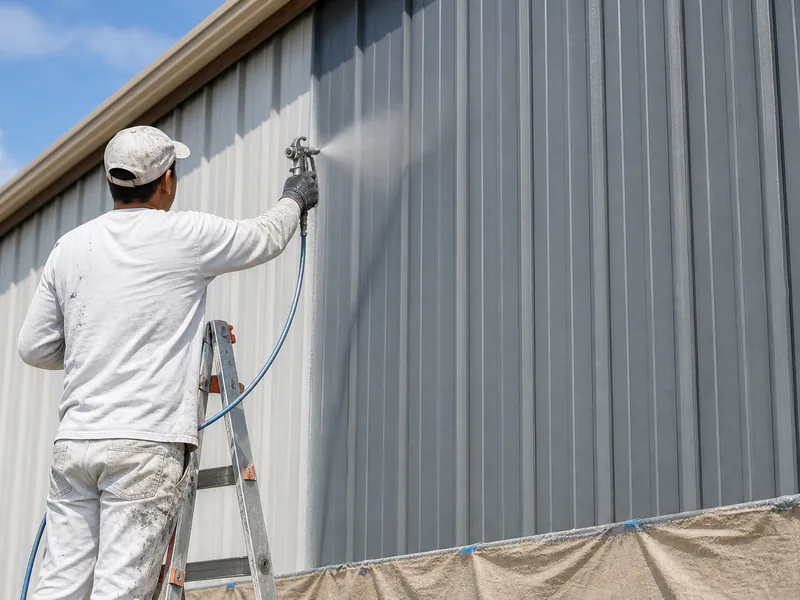
Metal building paint falls into two distinct categories, and knowing which one you are dealing with decides almost everything that follows. Panels that arrive from the factory already carry a baked-on coil coating, usually a silicone-modified polyester (SMP) or, on premium lines, a fluoropolymer (PVDF) finish over galvanized or Galvalume steel. Anything applied later, on site, is a field repaint: either a direct-to-metal (DTM) product or a separate primer-and-topcoat system. New construction rarely needs field paint at all, because the finish is already on the steel; repainting becomes a question once the original coating fades or chalks, or when an owner wants a different color. Whichever category you are in, surface preparation, not the paint itself, is what determines how long the result holds.
What Kind of Paint Works on a Metal Building
The right coating for a metal building depends less on brand and more on whether you are protecting bare steel, recoating an aged factory finish, or refreshing color on sound panels. Those three situations point to three different products, so it helps to separate what comes from the mill from what you can apply on site.
Factory coil coatings: SMP and PVDF
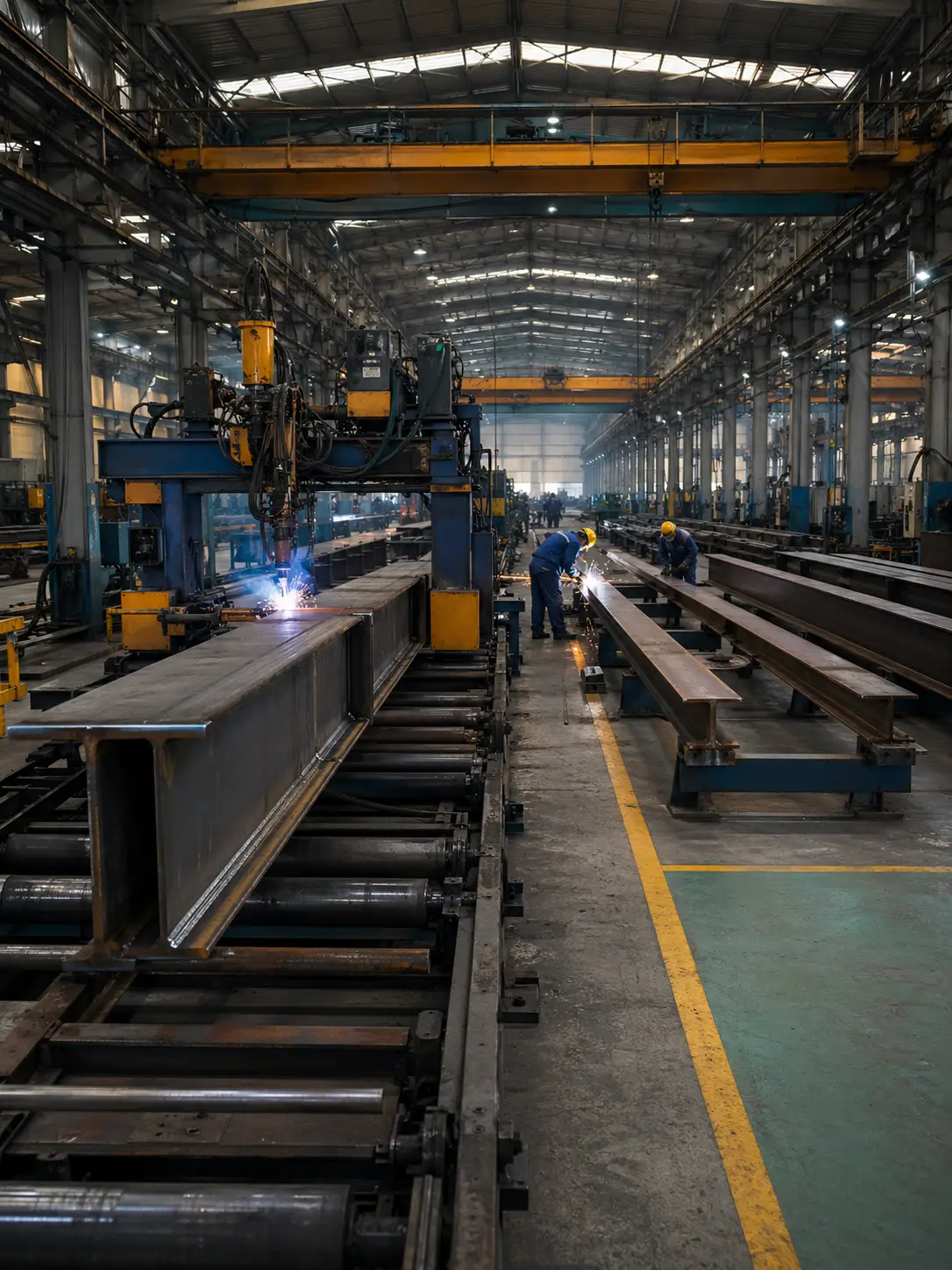
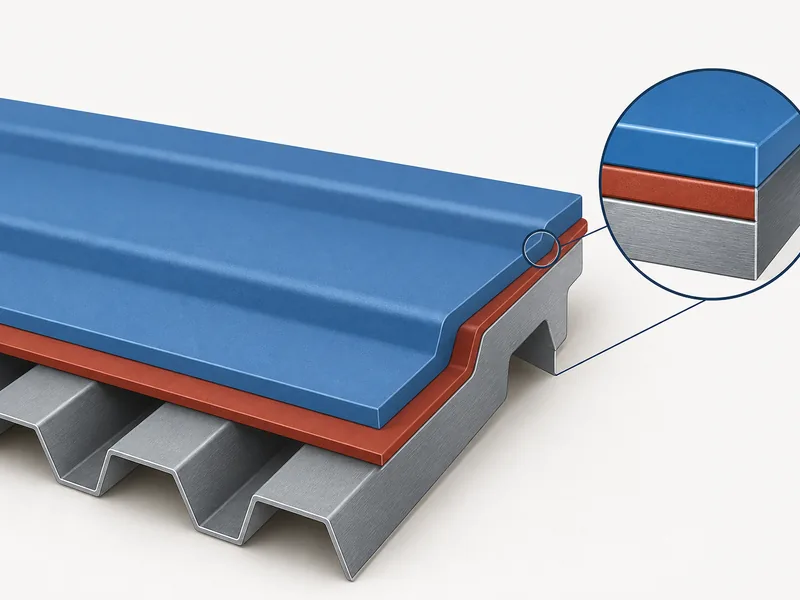
Coil coatings are applied at the mill, not on the job site, and they set the benchmark every field repaint is measured against. The steel coil is cleaned, pretreated, and roll-coated with a uniform primer and finish before it is ever formed into a panel. That mill process is why factory finishes stay more consistent than anything brushed or sprayed on later. Two resin families dominate: silicone-modified polyester (SMP), a strong general-purpose finish, and polyvinylidene fluoride (PVDF, often sold as fluoropolymer), the premium tier for color and gloss retention. The industry grades these architectural finishes against AAMA performance specifications, 2603, 2604, and 2605, a good-better-best ladder where salt-spray and weathering resistance climb at each step. The panels are not the only painted part. Structural frames usually ship with a red-oxide shop primer—the rust-colored look behind the term red iron buildings—which guards steel in transit but is a primer, not a weather-resistant finish. As a steel building manufacturer, KAFA applies shop primer and factory finishes to the metal building components it fabricates—H-beam frames, box sections, and C/Z purlins—on dedicated lines, so the coating is part of each member before it ships.
Field repaint systems: DTM vs primer-plus-topcoat
Field repaints split into two approaches, and the choice hinges on the condition of the metal underneath. A direct-to-metal (DTM) paint combines primer and topcoat in one product and works well on clean, sound panels. An acrylic-latex DTM stays flexible and UV-stable, while an alkyd or oil-based DTM enamel trades some flexibility for a harder, more rust-resistant film. What DTM cannot do is rescue a failing surface. Applied over heavy rust, mill scale, or chalking old paint, it lifts within a season or two. For bare, corroded, or industrial-exposure steel, a separate system earns the extra step: a rust-inhibiting or zinc-rich epoxy primer to lock down the substrate, followed by a polyurethane topcoat for weathering. Choosing a coating is partly a corrosion-control decision, and how paint compares with metallic zinc protection is its own trade-off, covered in galvanizing vs painting steel.
| System | Best for | Trade-off |
|---|---|---|
| Factory coil coating (SMP / PVDF) | New or sound panels; longest factory durability | Applied at the mill only, not a field option |
| DTM (acrylic-latex or alkyd) | Clean, sound metal needing a refresh | Cannot cover heavy rust or failing paint |
| Primer + topcoat (epoxy / urethane) | Bare, rusted, or harsh-exposure steel | More labor, longer schedule |
Surface Prep Decides Whether the Paint Lasts
Surface preparation is the single step that separates a metal building paint job lasting a decade from one that peels within a year, and it is the easiest step to underestimate. The goal is a clean, dry, dull surface with no loose material and no grease. Start by washing the panels to strip dirt, chalk, and mildew; a pressure washer does this well kept to a moderate setting, roughly 2,500 psi or below, so it cleans without denting light-gauge steel. Treat mildew with a diluted bleach solution or a commercial biocide, then rinse. Knock back rust and flaking paint with a wire wheel or abrasive pad, and scuff glossy areas with 120-grit or finer paper so the new coating has something to grip.
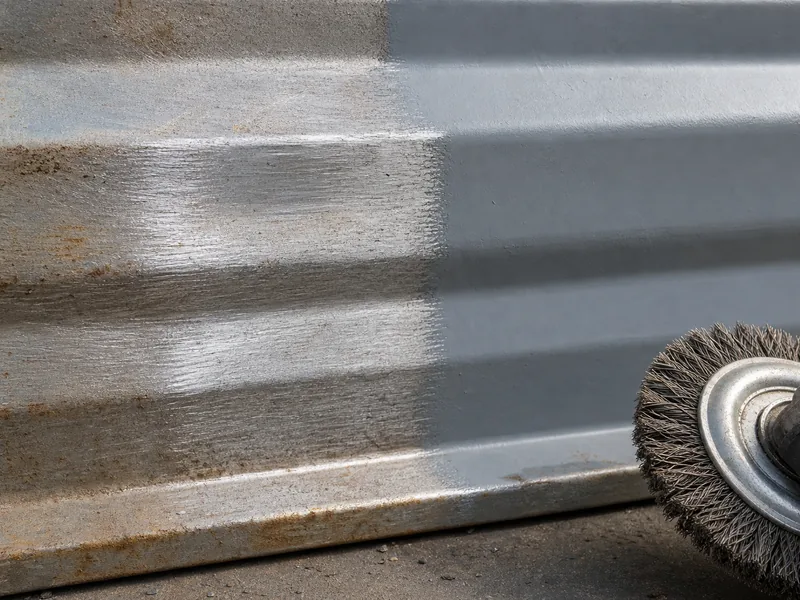
One detail crews learn the hard way: once bare steel is clean, prime it the same day. Exposed metal left overnight pulls moisture from the air and grows a thin film of flash rust that undermines adhesion from underneath. For specification work, the industry describes these cleanliness levels with SSPC surface-preparation standards, from solvent and hand- or power-tool cleaning up to abrasive blasting, so a coating warranty can state exactly how the steel was prepared.
Repainting galvanized or Galvalume panels
Galvanized and Galvalume panels need their own prep logic, because paint does not bond to fresh zinc the way it bonds to plain steel. A new zinc surface is smooth and chemically reactive, so a coating applied straight over it can peel in sheets. The fix is the right surface treatment plus a primer rated for galvanized steel, an approach the industry formalizes in ASTM D6386. Done correctly, paint over hot-dip galvanizing forms what is called a duplex system, where the two layers together protect far longer than either alone. The American Galvanizers Association puts the gain at roughly 1.5 to 2.3 times the sum of the two separate coating lifetimes. Repainting also overlaps with broader upkeep, so planning it alongside other steel building maintenance keeps panel coatings, fasteners, and sealants on one schedule.
How to Apply Paint to a Metal Building
Application method and weather window matter as much as the paint in the can, because even a premium coating fails if it goes on too thick, too cold, or onto a damp panel. Two methods cover most metal buildings. An airless sprayer is the efficient choice for large wall and roof areas; it lays down a smooth, even film quickly and reaches the profiled ribs a roller skips. Brushing and rolling give more control on trim, fasteners, and small outbuildings and waste less paint, but they are slow on big elevations and can leave texture. Many crews combine the two, spraying the field and then back-brushing edges and seams so the coating works into the joints.
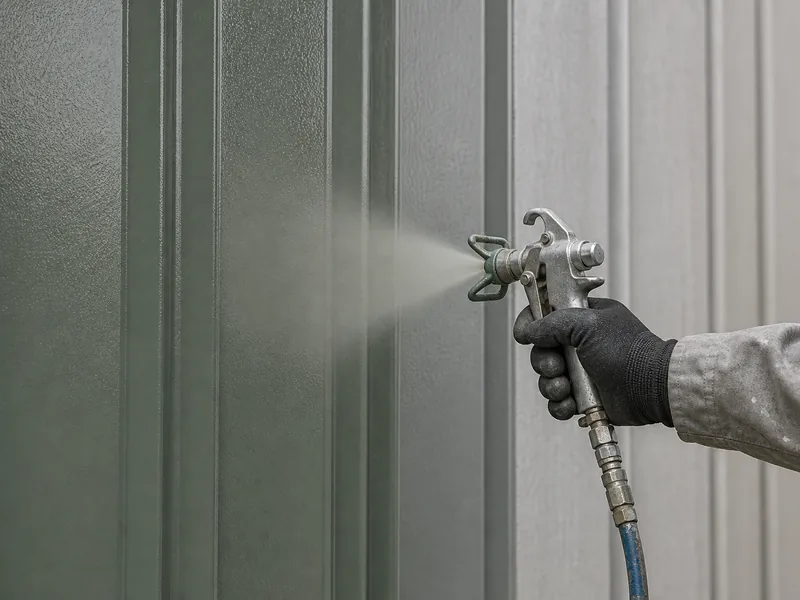
Conditions decide the rest. Most coatings want a moderate, dry window, commonly around 50 to 85°F with relative humidity under about 70 percent, though the product label sets the real limits. Avoid the heat of a midsummer afternoon, when film can flash off before it levels, and skip any day with rain in the forecast. Many products ask for a dry spell of roughly 24 to 48 hours after the last coat. Recoat and full-cure times shift with temperature and humidity, so treat the can’s stated intervals, not the clock on one afternoon, as the schedule. This article covers exterior architectural coatings on panels and frames; it does not cover intumescent fire-resistive coatings or interior finish systems, which follow separate specifications.
Color, Sheen, and Heat Reflectivity
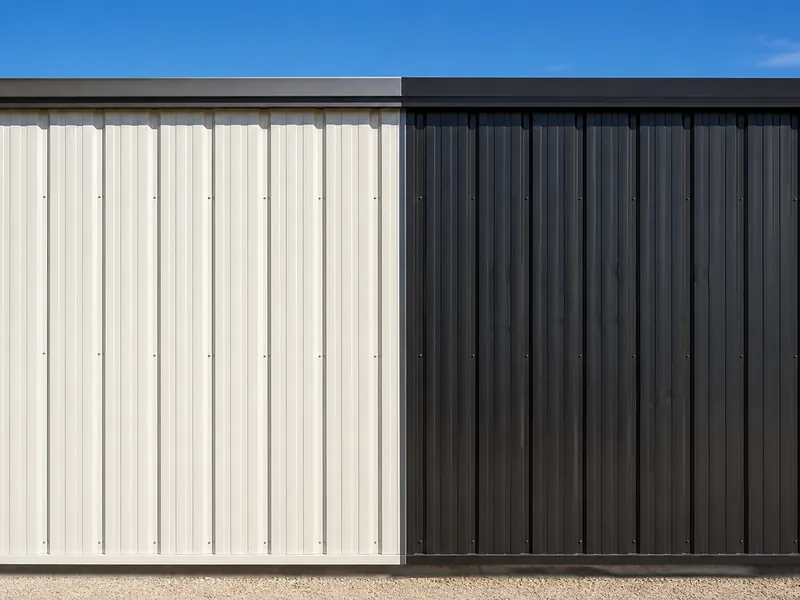
Color and sheen are not only an aesthetic call on a metal building; they change how the surface handles heat and how forgiving it is over time. Lighter colors reflect more solar energy, so a light roof or wall runs cooler and puts less thermal stress on the panels and their coating, while darker tones absorb more heat and tend to show movement and fade sooner. Sheen carries a practical role too: a satin or semi-gloss finish sheds dirt and washes down more easily than a flat finish. That is why it is the usual pick for walls that need to stay presentable. The palette itself is a separate design decision, and pairing roof, wall, and trim into a scheme that suits the building’s use and setting is its own topic. KAFA’s guide to metal building colors walks through the combinations.
When to Repaint, and How Long the Paint Lasts
A metal building shows when it needs repainting well before the steel is at risk, if you know the signs to read. The early signals appear in the finish, not the structure: chalking, a powdery film that rubs off on your hand, along with noticeable fading, loss of gloss, and small rust blooms at scratches, fastener heads, or cut edges. Catching those is the whole point of repainting—you renew the protective layer before bare steel is exposed, not after corrosion sets in.
How long the existing finish lasts depends on the coating tier, orientation, and climate rather than a fixed number. A factory finish commonly holds its look for years before it begins to chalk or fade, with premium PVDF outlasting standard SMP, while a quality field repaint on well-prepared steel typically gives roughly a decade of service before it needs attention. South- and west-facing walls, and anything in a coastal, high-UV, or industrial setting, age faster. On those sites the fasteners and panel seams are where coating breakdown and rust appear first, so check them before the broad wall faces.
Conclusion
The order of decisions matters more than any single product choice. First identify what you are painting, an intact factory coil coating, sound bare-metal panels, or rusted and galvanized steel, because that, not brand, points you toward a DTM, a primer-plus-topcoat system, or a duplex approach. Then commit to the surface prep the substrate demands; it is the one step no premium coating can compensate for. Color, sheen, and application method follow from there. For a new building, the most reliable paint is the one already baked onto the steel at the mill, so choosing panel finishes and shop priming up front, as KAFA does on its production lines, spares an owner the harder economics of field recoating later.
FAQ
Can you paint a metal building yourself?
A sound, clean metal building is well within reach of a careful DIY repaint, as long as you handle prep and weather correctly. The realistic limits are access and scale: a tall commercial wall or a full roof is faster and safer with an airless sprayer and proper fall protection, which is where many owners bring in a contractor.
Do you have to prime a metal building before painting?
Bare metal, rust spots, fastener heads, and cut edges always need a metal primer, while an intact, sound factory finish often does not. A direct-to-metal paint can skip a separate primer on clean, sound panels, but it is not a substitute for priming exposed steel; that is the difference between a coating that bonds and one that flakes.
Can you paint over a galvanized metal roof or panels?
You can, but not straight over fresh zinc: galvanized and Galvalume need a surface treatment and a primer rated for them, per ASTM D6386. Skip that and the paint peels; do it correctly and you get a duplex system that outlasts either layer on its own.
How often does a metal building need repainting?
Most metal buildings go many years between repaints, with the trigger being condition rather than a set interval. Watch for chalking, fading, and rust blooms at edges and fasteners; a well-prepped repaint generally lasts about a decade, and premium factory finishes longer.
What kind of paint sticks best to metal?
Coatings formulated for metal, such as acrylic-latex or alkyd DTM products and epoxy primers under polyurethane topcoats, bond far better than standard architectural latex. The bond depends as much on preparation as on chemistry: even the best metal paint fails on a dirty, glossy, or damp surface.
Further Reading
- AMPP — Surface Preparation Standards: A Quick Summary — AMPP (formerly SSPC/NACE). Explains the SSPC surface-prep levels, from solvent and tool cleaning to abrasive blasting, that decide whether a coating bonds to steel.
- American Galvanizers Association — Painting Over Galvanizing — AGA. Covers how duplex systems (paint over hot-dip galvanized steel) are prepared and why they extend corrosion protection.
- FGIA — AAMA 2605 Superior-Performing Organic Coatings — FGIA (formerly AAMA). The performance benchmark for high-end fluoropolymer (PVDF) architectural metal finishes, with a coil-coating appendix.