An agricultural building does not have a use class. In England, agriculture sits outside the Town and Country Planning (Use Classes) Order altogether. A working farm building is never assigned to Class E, B8 or C3 the way a shop, a warehouse or a house is. That answers the question, but it raises a more useful one: if a barn has no use class, how is it controlled, and what happens when you want it to do something else? This guide explains where agricultural buildings sit in the planning system, why they are treated this way, and where use classes finally come into play.
The scope here is England. Scotland, Wales and Northern Ireland run their own planning regimes, and the class references below do not transfer directly to them. Planning rules also change over time and turn on site-specific facts, so treat this as general guidance and confirm the current position with your local planning authority before acting.
Where Agricultural Buildings Sit in the Use Classes Order
An agricultural building does not occupy a use class because agriculture is left out of the Use Classes Order entirely. The Order exists to group ordinary uses so that switching between similar ones does not count as development. After the 2020 reforms, the main categories are Class E for commercial, business and service uses, Class B2 for general industry, Class B8 for storage and distribution, Class C3 for dwellinghouses, and Classes F.1 and F.2 for learning and local community uses. A handful of uses are deliberately ungrouped and labelled sui generis, including pubs, petrol stations, hot food takeaways and casinos.
Farming appears nowhere on that list. An agricultural building is not Class E, it is not B8 even though it stores feed and machinery, and it is not sui generis in the strict sense that applies to a petrol station. It simply has an agricultural use that the classification system never tried to capture. This is why searching for the “class” of a barn returns no clean answer: there is no letter to quote, only a recognised agricultural use. The same logic applies across the types of farm buildings you find on a holding, from grain stores to cattle housing.
Why Agricultural Use Falls Outside the Order
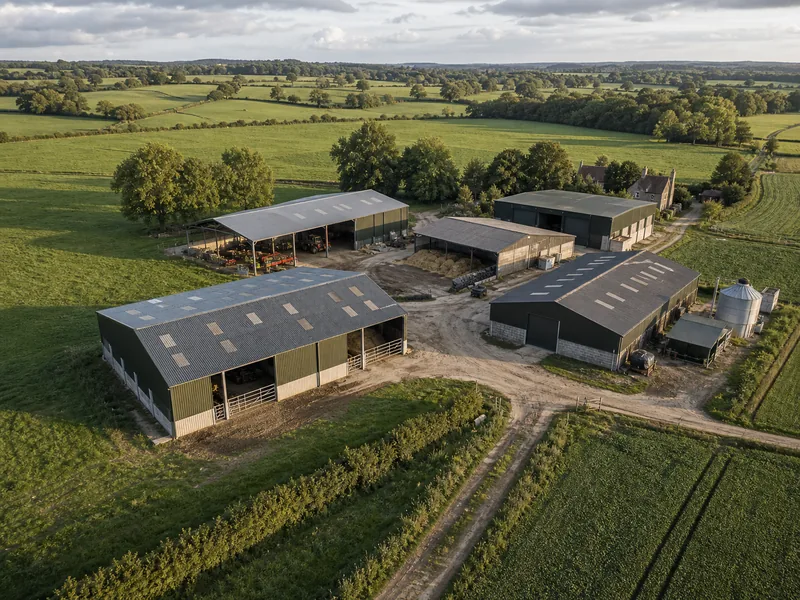
Agricultural use falls outside the Order because using land and farm buildings for agriculture is not classed as “development” under section 55 of the Town and Country Planning Act 1990. Section 55(2)(e) states that the use of land for agriculture or forestry, and the use for those purposes of any building occupied together with that land, does not involve development. If a use is not development, it generally needs no planning permission, and there is no reason to slot it into a use class designed to manage changes of use.
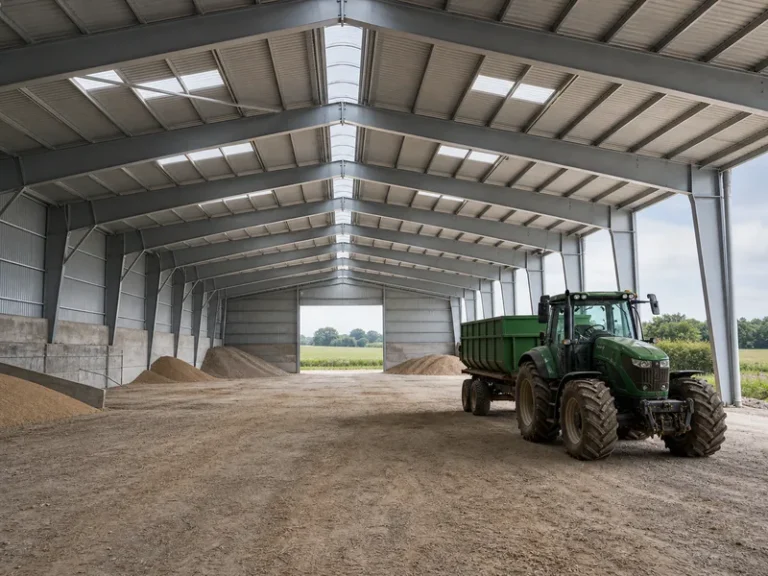
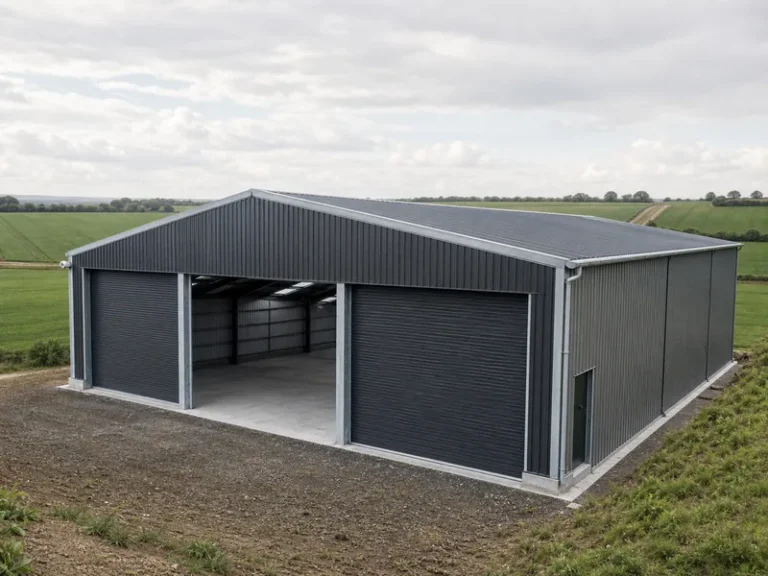
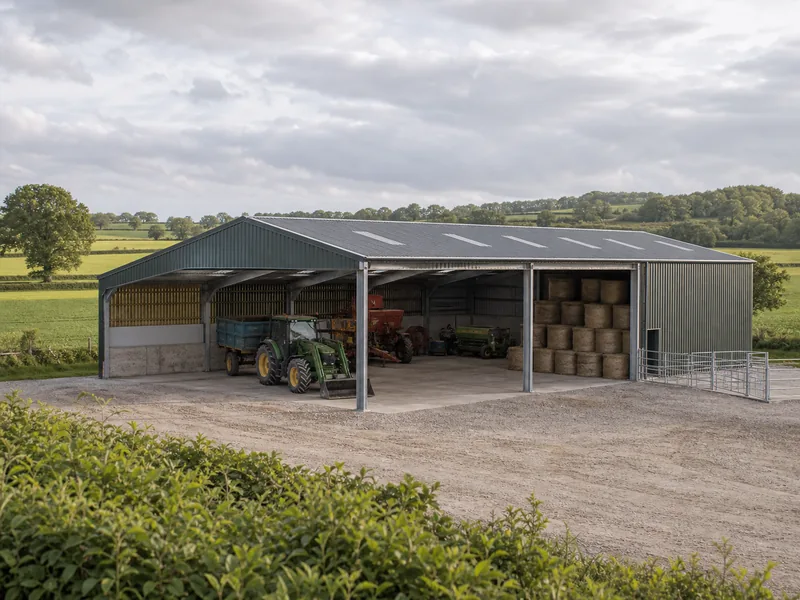
What matters in practice is the use actually taking place on the ground, not the label on a drawing or the material the frame is built from. A steel-framed shed and a timber barn carry the same agricultural status if both are genuinely used for farming. For planning purposes, metal building construction and traditional farm construction are judged by use, not material, while the use stays agricultural. The flip side is that the status is conditional: it holds only while the building serves agriculture. Stop farming from it and start running an unrelated business, and the protection that kept it outside the use classes begins to fall away, even though no brick has moved.
What Counts as Agricultural Use
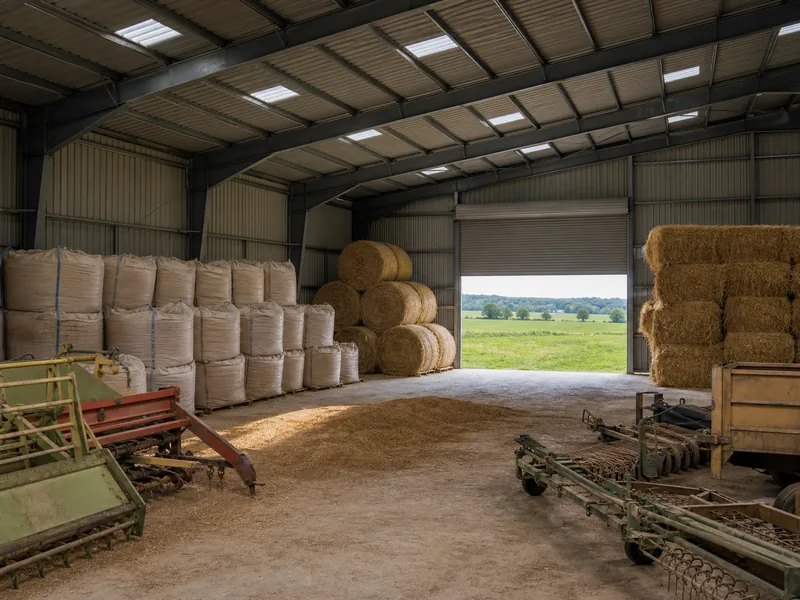
Agricultural use covers a defined set of activities, and a building keeps its agricultural status only while it is genuinely used for them. In planning terms, agriculture includes horticulture, fruit and seed growing, dairy farming, the breeding and keeping of livestock, grazing and meadow land, and market gardens. A building counts as agricultural when it is occupied together with agricultural land and used for one of those purposes, which is the test that decides whether the section 55 position applies at all. If you need the broader definition of the structure itself, our explainer on what counts as an agricultural building sets out the physical and functional side in more detail.
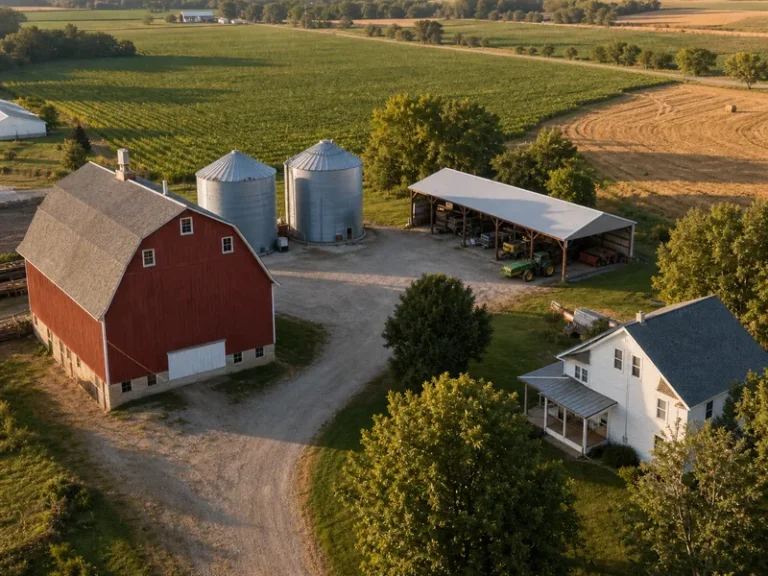
The boundary is stricter than many owners expect. Storing a neighbour’s caravans, running a contracting business from the yard, or letting part of a shed to a non-farming tenant are not agricultural uses, and they can erode the building’s standing as part of the agricultural unit. Keeping clear records of how each building is used is the simplest way to defend its position if the local planning authority ever asks. The mix of structures on a typical holding, covered in our guide to the buildings you find on a farm, shows how easily a single shed can drift into mixed use without anyone noticing.
When a New Agricultural Building Needs Planning Permission
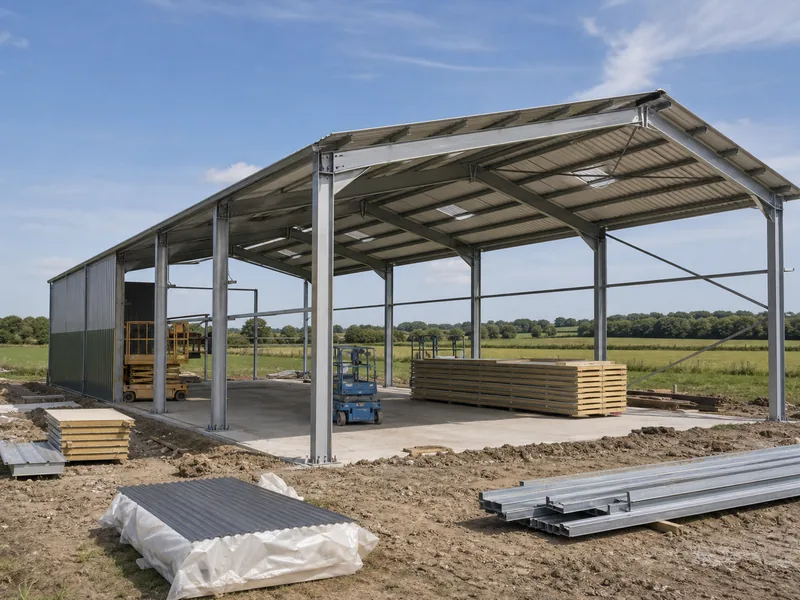
A new agricultural building can often go up without a full planning application, but only within the conditions of permitted development rights. Part 6 of the General Permitted Development Order covers agricultural development on units above a minimum size, and it allows certain new buildings and works provided they are reasonably necessary for farming. Those rights come with limits on size, height, siting and proximity to roads, and larger or more sensitive projects trigger a prior approval step where the council checks specific impacts before work starts. Above the thresholds, or on smaller plots that fall outside the right, a full application is the route.
The frame material does not change the planning position. A new steel agricultural building raised for genuine farm use takes the same agricultural standing as any other farm structure, so the questions to settle are about use, size and siting, not about steel versus timber. The expensive mistake to avoid is treating agricultural permitted development as a shortcut to a building you actually intend to use for something else. Putting up a shed under agricultural rights and then running storage-for-hire or a workshop from it is a change of use, and it can need its own permission even though the structure was lawfully built. Planning enforcement looks at the real use, so the cleanest path is to match the consent to the genuine purpose from the start.
Changing an Agricultural Building to Another Use
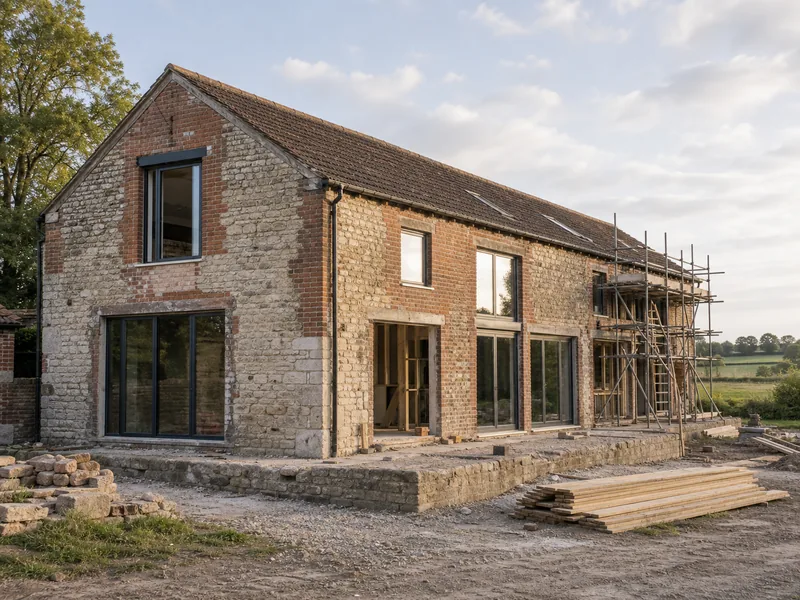
Use classes finally matter the moment you want an agricultural building to do something other than farming. Because the building has no use class to switch within, almost any non-agricultural use is a change of use that needs either a full application or one of the permitted development rights written specifically for farm buildings. Three of those rights do most of the work, and each lands the building in a different position once the conversion is done.
| Right | Change of use allowed | Indicative current limits (subject to prior approval) | Status after conversion |
|---|---|---|---|
| Class Q | Agricultural building to one or more dwellinghouses | Up to around 1,000 m² and up to 10 homes under the rules introduced in 2024 | Use Class C3 (residential) |
| Class R | Agricultural building to flexible commercial use, now including shop, business, storage, general industrial and outdoor sport or recreation uses | Up to around 1,000 m² of floorspace | Treated as sui generis |
| Class S | Agricultural building to a state-funded school or registered nursery | Set by the right and local assessment | Educational use |
Every one of these routes requires prior approval from the local planning authority before work begins. The authority reviews matters such as transport and highway impact, noise, contamination and flood risk, and whether the building is structurally suitable for conversion, then has a set period to respond. Starting work before that decision is issued, or assuming the limits in the table are fixed, are two mistakes that regularly unravel a conversion. The floorspace and unit figures in particular have changed more than once, so the current Order and a conversation with the council should set the numbers, not an old article.
Common Misconceptions About Agricultural Use Classes
A few persistent misconceptions push owners toward costly planning mistakes. The first is the belief that there is a “Class A” or numbered agricultural class to point to; there is not, and chasing one wastes time. The second is the assumption that any barn can become a house because conversions are common: Class Q is conditional and capped, and many buildings fail to qualify on access, structure or location grounds. The third is reading the label as the use, when planning looks the other way round and treats the genuine, current activity as what defines the building. Clearing these three up early saves the trouble of designing a project around a status the building does not have.
Conclusion
Before treating a farm building as an asset you can repurpose, confirm three things in order: that its current use is genuinely agricultural, whether any new structure qualifies under agricultural permitted development or needs a full application, and which prior approval route a change of use would follow. The label “agricultural building” carries no use class on its own, which is the part owners tend to get wrong. Its planning position rests on lawful agricultural use and the right consent for any change, not on the type of structure or the steel it is built from. Use this as a starting point rather than legal advice, settle the genuine use first, and confirm the route with your local planning authority before committing.
FAQ
Do agricultural buildings need planning permission?
Genuinely agricultural use of a farm building does not need planning permission, because that use is not classed as development under section 55 of the 1990 Act. New structures and changes of use are different. They may rely on permitted development rights with conditions and prior approval, or need a full application, depending on the size of the holding, the scale of the building and the location.
Can you live in an agricultural building?
Living in an agricultural building is not lawful without first changing its use to residential. The usual route is Class Q permitted development, which converts a qualifying farm building into one or more dwellinghouses in Use Class C3, subject to prior approval and the current limits on floorspace and number of homes. Buildings that fail the access, structural or location tests cannot use this route and need a full application instead.
Is a barn classed as sui generis?
A barn in agricultural use is not sui generis; it sits outside the use class system rather than inside a named “other” category. Sui generis is reserved for specified uses such as pubs, petrol stations and takeaways. A barn can only become sui generis after certain conversions, most clearly a Class R change to flexible commercial use, which the rules treat as sui generis once complete.
What is Class Q permitted development?
Class Q is a permitted development right that lets a qualifying agricultural building change use to a dwellinghouse without a full planning application. It still requires prior approval from the local planning authority and is capped by the current limits on floorspace and the number of homes. It does not apply to every farm building, and the council can refuse prior approval on several specific grounds.
Does a converted agricultural building gain a use class?
A converted agricultural building takes the use class of its new use rather than any agricultural one. A Class Q conversion becomes C3 residential and a Class S conversion takes an educational use, while a Class R commercial conversion is treated as sui generis. Until a lawful change of use happens, though, the building stays in agricultural use and outside the classes.
Further Reading
- GOV.UK Planning Practice Guidance: When is permission required — UK Government guidance setting out what counts as development, how the use classes and sui generis work, and the permitted development position for agricultural buildings.
- Town and Country Planning Act 1990, Section 55 — The primary legislation stating that agricultural use of land and farm buildings is not “development”, which is why agriculture sits outside the use classes.
- Planning Portal: Use Classes — The official planning information service’s current list of use classes in England, confirming agriculture is not one of them.