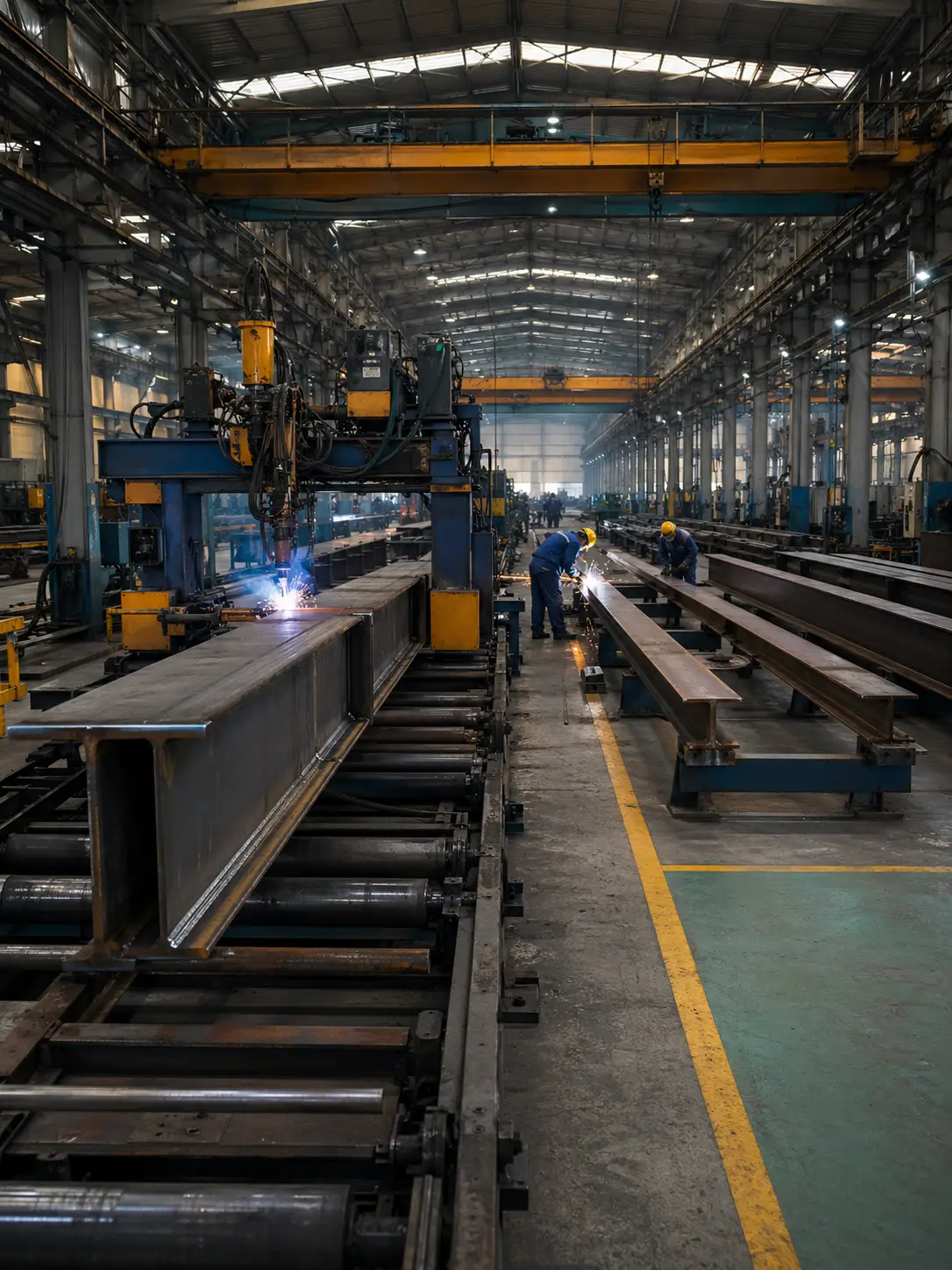





Pre-Engineered Steel Cold Storage Buildings & Industrial Cold Storage Warehouses
KAFA designs and fabricates prefab steel cold storage buildings for food processors, agricultural exporters, seafood processors, and pharmaceutical cold chain operators. Steel frame and complete PU/PIR insulated envelope — thermal calculation included. Initial drawings within 3 business days.
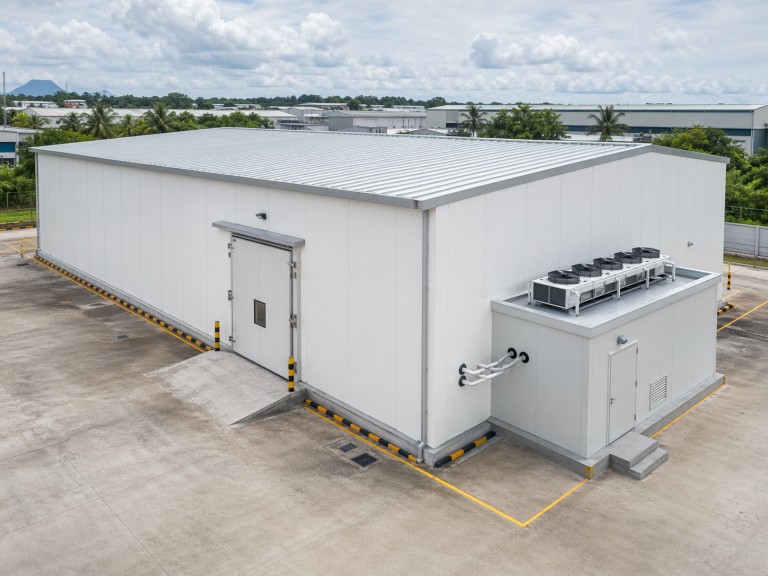
The Defining Design Challenge
Why Target Temperature Must Be the First Design Input for Cold Storage Buildings
A cold storage building performs to specification only when the insulated envelope is designed for the combination of internal target temperature and external ambient conditions at the project site. This interaction is more demanding in tropical markets than in temperate ones — and it is the variable most frequently left unconfirmed at the procurement stage.
For a deep freeze facility (−18°C to −25°C) in Lagos, Manila, or Ho Chi Minh City, the envelope temperature differential can reach 55–63 K. Panel thickness adequate for a European chill store is frequently insufficient — the correct specification must be calculated from local climate data, not estimated from a generic table.
Envelope temperature differential for a standard chill store (0°C to 8°C) against a 30°C summer ambient.
Same chill store facing 38°C ambient + high humidity — substantially higher thermal load requiring thicker panel and higher insulation U-value.
Deep freeze (−25°C) against a 38°C tropical ambient — the highest envelope thermal load in standard cold store construction. European panel specs are structurally inadequate.
Five envelope parameters that must be confirmed before any dimension or panel specification is fixed.
- Target storage temperature confirmed before any dimension or section is fixed
- Local ambient design temperature and wet-bulb humidity confirmed for tropical thermal calculation
- Panel thickness calculated per project — not selected from a generic table
- Continuous vapour barrier and thermal bridge elimination designed from the outset
- Floor insulation and frost protection system designed for every freezer application
Scope of Supply
What KAFA Provides for Cold Storage Construction — and What the Client Procures Separately
A cold storage building consists of three distinct engineering systems. KAFA’s scope covers the structural envelope and insulation. Mechanical refrigeration must be procured separately — and coordinated with our structural design before fabrication begins.
Structural Envelope & Insulation System
-
Insulated Envelope System
PU or PIR insulated sandwich panels for roof and wall envelope, calculated from target temperature and local ambient conditions. Panel joints inspected for thickness tolerance, face sheet adhesion, and cam-lock integrity before container packing.
PU panels: chill stores and standard freezer (−18°C to −25°C). PIR panels: blast freezer rooms, pharmaceutical facilities, coastal high-humidity sites.
-
Floor Insulation & Vapour Barrier
For freezer buildings at −18°C or below, floor insulation and sub-slab frost protection is a structural safety prerequisite. Without it, ground moisture freezes and heaves the slab — typically within two to three years of commissioning.
Continuous vapour barrier on the warm side of insulation is required throughout. Thermal bridge elimination detailed at all panel joints, door frames, and column penetrations.
-
Plant Room Structural Provisions
Equipment base sizing, roof loading for rooftop condensers, refrigerant pipe penetrations with correctly detailed thermal break sleeves, and electrical conduit routes — designed into the frame and coordinated with confirmed refrigeration layout.
Plant room provisions cannot be cost-effectively modified after fabrication — confirmed at requirements intake.
Mechanical Refrigeration
-
Compressors & Condensing Units
Selection and sizing by the refrigeration contractor based on heat load calculations, refrigerant choice, and operating duty cycle.
-
Evaporators & Refrigerant Pipework
In-room evaporator coils, suction and liquid lines, insulation of refrigerant piping, and expansion device installation.
-
Controls & Monitoring
Temperature control logic, defrost scheduling, alarms, and any validation-grade monitoring required for pharmaceutical or GMP applications.
Delivery Process
From Thermal Brief to Installed Insulated Structure
Five defined stages — requirements intake through container export — managed by a single team. The thermal specification confirmed at inquiry is the envelope performance delivered to your site.
Requirements Intake
Stored product type, target temperature, storage capacity, blast freeze requirement, refrigeration supplier status, site country, and target commissioning date.
Thermal Calc & Quotation
Thermal calculation, structural design, panel specification, floor insulation design, plant room provisions, and detailed price proposal within 3 business days of confirmed parameters.
Fabrication
Structural steel and insulated panel systems manufactured under ISO 9001:2015 QMS. Panels inspected for thickness, face sheet adhesion, and cam-lock joint integrity before container packing.
Container Export
Modular container packing and export documentation coordinated to your destination port — Nigeria, Kenya, Vietnam, Indonesia, Thailand, Philippines, and beyond.
Installation
Structural erection and panel envelope installation. Refrigeration equipment installation by client’s contractor follows as a separate phase. Multi-zone projects may require extended installation time.
Timelines confirmed in writing at scoping based on project scale, production queue, and site conditions.
Specification Errors to Avoid
Where Cold Storage Warehouse Projects Fail — Three Errors with Predictable Consequences
All three errors stem from treating a cold store as a variant of a standard warehouse rather than a purpose-engineered temperature-controlled facility with distinct envelope and floor requirements.
Converting a Warehouse into a Cold Store
A standard warehouse envelope has thermal transmittance many times higher than a correctly specified cold store envelope. Refrigeration equipment installed in an uninsulated warehouse must run continuously at maximum capacity — and typically cannot achieve the temperature uniformity required for food safety. Operating energy cost is commercially prohibitive; food safety outcome is unreliable.
A cold store requires a purpose-built insulated envelope from the foundation slab to the roof — not a retrofittable specification. Where a project starts with an existing warehouse, we flag it at scoping rather than accept a configuration that cannot deliver temperature.
Standard Concrete Floor in a Freezer Building
In a freezer facility at −18°C or below, moisture beneath an uninsulated floor slab freezes, expands, and causes the concrete to heave and crack. This structural failure typically becomes visible within two to three years of commissioning — and requires costly floor reconstruction with the facility out of service.
Floor insulation and sub-slab frost protection must be designed and installed as part of original foundation construction — it cannot be added after the slab is poured. We produce a floor insulation design for every cold storage project as part of the structural proposal.
Estimating Panel Thickness Instead of Calculating
In tropical markets, a panel thickness adequate for a European chill store is frequently insufficient to achieve the energy efficiency target in local ambient conditions. Applying a European standard thickness to a tropical cold store results in underperformance against target temperature or higher-than-planned refrigeration energy consumption.
We produce a thermal calculation for every project before issuing a panel specification — based on confirmed target temperature, local design ambient temperature, wet-bulb humidity, and required refrigeration energy efficiency. See the panel specification reference table below.
Panel specification reference — by temperature zone and application
| Temperature Zone | Target Range | Typical Applications | Panel Type | Indicative Thickness (Tropical) |
|---|---|---|---|---|
| Chill Store | 0°C to 8°C | Fresh produce, dairy, beverages, pharmaceuticals (non-frozen) | PU | 80 – 100 mm |
| Standard Freezer | −18°C to −25°C | Frozen food, fish & seafood, meat, ice cream | PU or PIR | 100 – 150 mm |
| Blast Freezer Room | −30°C to −40°C | Rapid product freezing prior to frozen storage | PIR | 150 – 200 mm |
| Pharmaceutical Cold Store | 2°C to 8°C | Vaccines, biologics, temperature-sensitive medicines | PIR (fire rated) | 100 – 120 mm |
| Controlled Atmosphere | 0°C to 4°C | Long-term fresh fruit & vegetable storage | PU or PIR | 100 – 130 mm |
All thickness figures are indicative planning references only. Actual panel thickness calculated per project from confirmed target temperature, local ambient conditions, and required energy efficiency.
Our Delivery Process
Steel Building Design
Structural drawings and load calculations delivered within 3 business days from confirmed site dimensions, location, and intended use.
Metal Building Plans
Standard and custom floor plan configurations for warehouses, workshops, hangars, and industrial facilities across common clear-span ranges.
Metal Building Colors
Colour coating options for wall panels and roof sheets — including Colorbond-equivalent finishes and custom RAL matching for commercial projects.
Metal Building Components
Primary frames, secondary members, roof and wall cladding, gutters, doors, and windows — all fabricated in-house to ISO 9001:2015 standards.
Metal Building Insulation
PU, PIR, rock wool, and glass wool systems specified by climate zone — from tropical ambient buildings to cold storage facilities at −25 °C.
Metal Building Construction
45-day on-site erection programme from foundation handover to structural completion, covering anchor bolt setting, frame erection, and cladding.
Metal Building Foundation
Anchor bolt layout drawings, concrete grade and dimension requirements, and ±3 mm placement tolerances provided with every structural package.
Site Preparation
Ground levelling, drainage gradient, access road, and temporary power requirements confirmed before steel components leave the fabrication facility.
Metal Building Erection
6-stage installation sequence: foundation verification, column erection, rafter setting, bracing installation, cladding, and final handover inspection.
Projects Delivered
Steel Cold Storage Building Projects Across Food Processing, Agricultural Export and Pharmaceutical
Representative examples across temperature zones and markets. Client-specific details withheld where confidentiality applies.
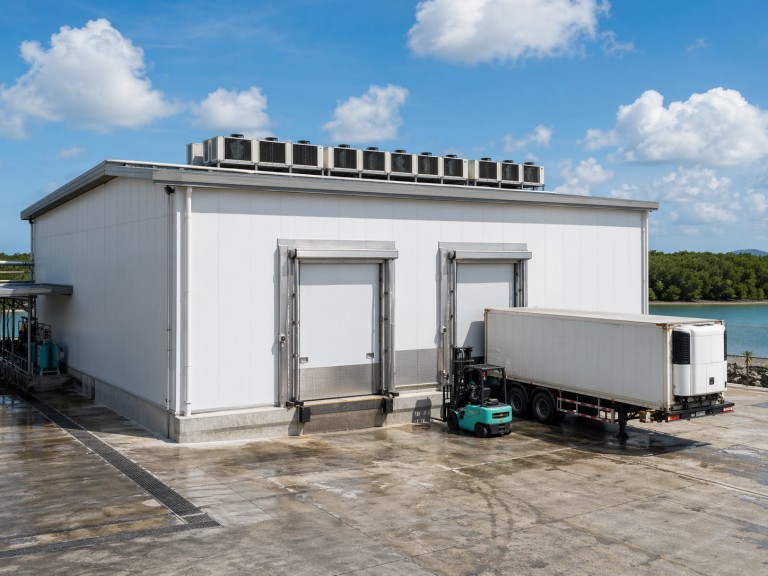
Seafood Processor — Blast Freeze & Frozen Storage
Two-zone facility for a coastal seafood exporter. PIR panels specified for both zones due to coastal high-humidity environment and ultra-low blast temperature. Thermal calculation based on local wet-bulb temperature of 29°C. Floor insulation and frost protection coordinated with foundation design before slab pour.
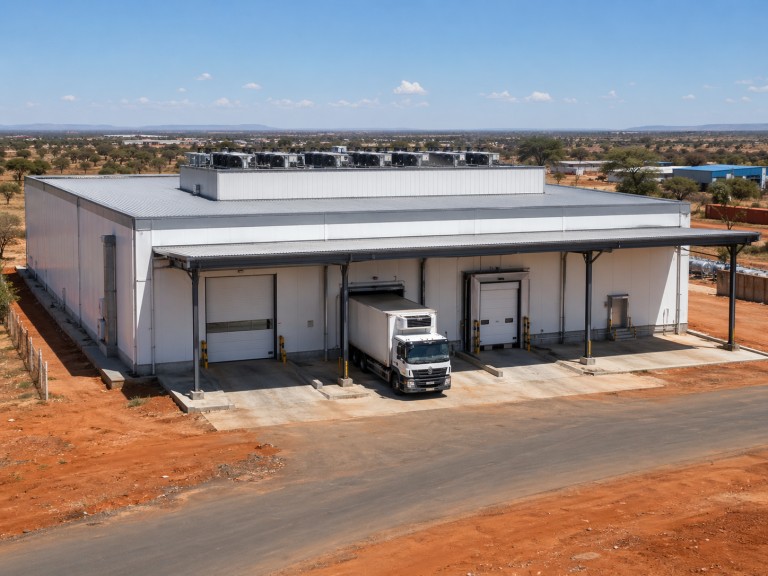
Agricultural Export Cold Chain Hub — Multi-Temperature
Three-zone cold chain facility: chill zone at 4°C for fresh produce, frozen zone at −20°C for processed goods, and a loading antechamber at 12°C. PU panels throughout. Refrigeration plant room provisions coordinated with confirmed equipment layout before fabrication. Frost heave protection designed for the freezer zone floor slab.
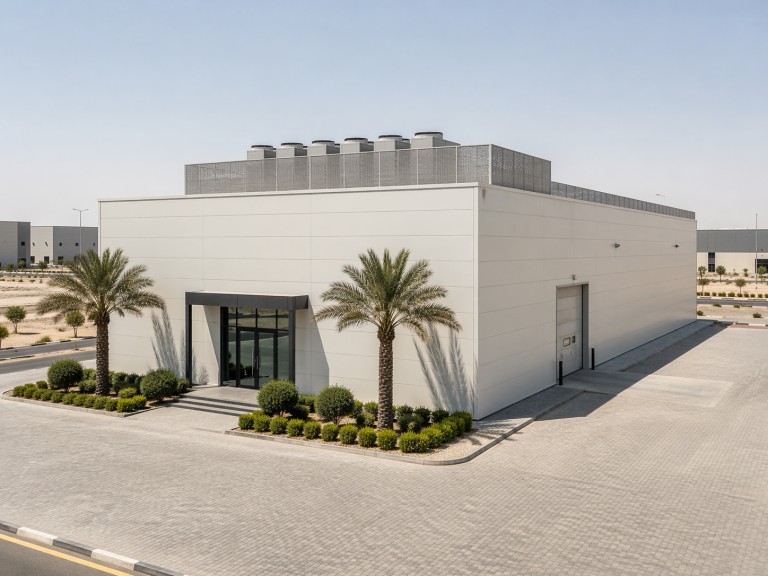
Pharmaceutical Cold Chain Storage Facility
Cold store at 2°C to 8°C for a vaccine and biologics distributor. PIR fire-rated panels for pharmaceutical fire safety compliance. Structural drawings submitted to local civil authority with load calculations. Plant room provisions designed around the client’s confirmed GMP-compatible refrigeration system layout before fabrication.
Project Fit
Who This Service Is Designed For — and Where It Is Not the Right Fit
- Food processors, agricultural produce exporters, and cold chain logistics operators requiring chill stores (0–8°C) to standard frozen stores (−18°C to −25°C)
- Agribusiness operators combining cold storage infrastructure with adjacent agricultural steel buildings for integrated farm-to-cold-chain operations on the same site
- Fish and seafood processors requiring blast freezer rooms (−30°C to −40°C) and frozen storage — 500 m² to 5,000 m²
- Pharmaceutical cold chain facilities requiring 2°C to 8°C PIR fire-rated panel envelopes
- Multi-temperature cold store complexes with separate chill and freezer zones under one roof or in adjacent bays
- Clients who have a qualified refrigeration contractor engaged or in the process of engagement — plant room provisions coordinated with confirmed equipment layouts
- Projects in Africa, Southeast Asia, and the Middle East where container shipping to a major port is viable and local foundation contractors are available on-site
- Mechanical refrigeration equipment — compressors, condensers, evaporators, refrigerant pipework, and control systems — must be procured and installed by a qualified refrigeration contractor engaged separately
- Retrofitting refrigeration into an existing standard warehouse — this is not a viable configuration regardless of refrigeration plant capacity
- Ultra-low temperature pharmaceutical cold chain requiring validated temperature monitoring systems, GMP-grade internal finishes, and regulatory audit documentation — confirm specific requirements before finalising scope
Verified Project Outcomes
What Cold Chain Clients Say — and What the Projects Delivered
Every quote below is drawn from a completed cold storage project. Engineering challenge, structural outcome, and client response are presented together so you can assess the result, not just the sentiment.
Coastal high-humidity site with wet-bulb ambient of 29°C. Two temperature zones required simultaneous commissioning. Refrigeration contractor’s equipment layout needed structural coordination before fabrication could begin. Standard panel thickness insufficient for local thermal conditions.
“At 29°C wet-bulb, the vapour pressure differential across a standard PU cam-lock joint is high enough to risk condensation at the panel interface over time. We specified PIR across both zones not primarily for temperature performance — the thermal calculation would have accepted 150 mm PU — but for the joint’s long-term moisture resistance at this corrosivity class. That decision is made at the panel selection stage or not at all.”
“KAFA confirmed target temperature, produced the thermal calculation, and coordinated plant room provisions with our refrigeration contractor before a single panel was fabricated. The facility commissioned at temperature on the first day — no thermal bridging issues, no floor heave.”
Three separate temperature zones — chill, frozen, and loading antechamber — under one structural roof, each requiring its own panel specification and insulated partition wall. Frost heave protection required for the freezer zone floor. Refrigeration plant room provisions designed around confirmed GMP-compatible equipment layout.
“The partition wall between the −20°C zone and the 4°C chill zone is the detail most commonly under-specified in multi-zone projects. The temperature differential across that internal wall is 24 K — enough to drive condensation into an under-insulated partition over time. We treated it as a full envelope element: 100 mm PU with a continuous vapour barrier on the warm face. That’s not a default specification — it’s calculated for each zone boundary individually.”
“The quality of their steel structures is outstanding. We would not hesitate to engage them for future projects. The multi-zone cold chain hub has operated within temperature specification through two full export seasons.”
Manufacturing Credentials
Certifications, Accreditations, and Production Capacity
All certifications independently audited and publicly verifiable. Documentation provided on request at the scoping stage.
ISO 9001:2015 Certified
Certified quality management system covering structural fabrication, insulated panel manufacture, thickness and adhesion inspection, and component quality controls across our 20,000 m² fabrication facility. Certification documentation provided on request.
IAS AC472 Accredited
International Accreditation Service accreditation — independently audited confirmation that our production and engineering meet defined benchmarks for metal building system manufacturers. Accreditation documentation provided on request.
24+ Years International Delivery
Engineering team experience across food processing, fisheries, pharmaceutical, and agricultural export projects in Africa, Southeast Asia, and the Middle East. Tropical thermal loads accounted for in design calculation — not discovered after commissioning.
Frequently Asked Questions
Technical and Commercial Questions, Answered Directly
No. KAFA’s scope of supply covers the steel structural frame and the complete insulated building envelope: primary steel frame, PU or PIR insulated wall and roof panels, floor insulation system, specialist cold store door provisions, and refrigeration plant room structural provisions. Mechanical refrigeration equipment — compressors, condensers, evaporators, refrigerant pipework, and control systems — must be procured and installed by a qualified refrigeration contractor engaged separately by the client. We strongly recommend confirming the refrigeration supplier and sharing their equipment layout with our team before structural design is finalised.
A standard warehouse envelope has thermal transmittance many times higher than a correctly specified cold store envelope. Refrigeration equipment installed in an uninsulated warehouse must work continuously at maximum capacity to partially compensate for the heat gain — and typically cannot achieve the temperature uniformity required for food safety. The operating energy cost is commercially prohibitive, and the food safety outcome is unreliable. A cold store requires a purpose-built insulated envelope from the foundation slab through to the roof. This is not a retrofittable specification.
In a freezer facility operating at −18°C or below, moisture in the ground beneath an uninsulated floor slab freezes, expands, and causes the concrete to heave and crack — a structural failure that typically becomes visible within two to three years of commissioning and requires costly floor replacement. The floor insulation and sub-slab frost protection system must be designed and installed as part of the original foundation construction. We produce a floor insulation design for every cold storage project as part of the structural proposal.
PU (polyurethane) panels are the standard specification for chill stores and conventional freezer stores (−18°C to −25°C) in most operating environments — good thermal performance at lower panel cost. PIR (polyisocyanurate) panels offer higher fire resistance — required for pharmaceutical cold stores with fire safety regulations and for large food processing cold stores — and better dimensional stability at ultra-low temperatures below −30°C, making them the specification for blast freezer rooms. PIR also performs better in high-humidity coastal environments. We specify panel type based on temperature zone, fire safety requirements, and operating environment, and include the recommendation in every design proposal.
Panel thickness must be calculated for each project, not selected from a generic table. The correct thickness depends on the target temperature zone, the local outdoor design temperature and humidity at the project site, the required refrigeration energy efficiency, and the operating pattern of the facility. In tropical markets — where outdoor ambient temperatures are significantly higher than in Europe or North America — the panel thickness required to achieve the same thermal performance is greater than the equivalent European specification. We produce a thermal calculation for every project before issuing a panel specification.
Yes. Multi-temperature cold store complexes with separate chill and freezer zones under one structural roof, or in adjacent bays, are within our standard delivery scope. Each temperature zone requires its own insulated panel specification matched to its target temperature, and the internal partition wall between temperature zones must also be insulated to prevent heat transfer between zones. Zone partition wall specification, door systems at zone interfaces, and refrigeration plant room arrangement for multiple zones must all be declared at requirements intake.
KAFA does not sell standard off-the-shelf cold storage buildings. Every steel cold storage building is custom-engineered to the confirmed target temperature zone, site ambient conditions, footprint, and panel specification. This ensures the insulation performance, floor system, and structural envelope are correct from the outset — not a generic structure adapted after manufacture. A detailed price proposal is delivered within 3 business days of confirmed temperature zones, floor area, and site location.
The terms are often used interchangeably, but in practice an industrial refrigerated warehouse typically refers to a large-scale facility — usually 2,000 m\u00b2 or more — used for bulk storage of chilled or frozen goods in a logistics or food processing context, often with forklift racking systems and dock levellers. A cold storage building can refer to any scale of insulated cold store, from a single pharmaceutical cold room to a large multi-temperature complex. KAFA’s delivery scope covers both, from single-zone cold rooms to large industrial refrigerated warehouse complexes with multiple temperature zones.
Start Your Project
Thermal Calculation & Proposal in 3 Business Days
Share your stored product type, target temperature zone, storage capacity, blast freeze requirement, refrigeration supplier status, site country and city, and target commissioning date. Our engineering team responds with a thermal calculation and detailed price proposal within 3 business days.
Submit Requirements Directly
Ready to Send Your Cold Storage Brief?
Facilities that commission cleanly are the ones where target temperature, floor insulation requirements, and refrigeration plant room provisions were all confirmed in the first design exchange. Submit your requirements now.