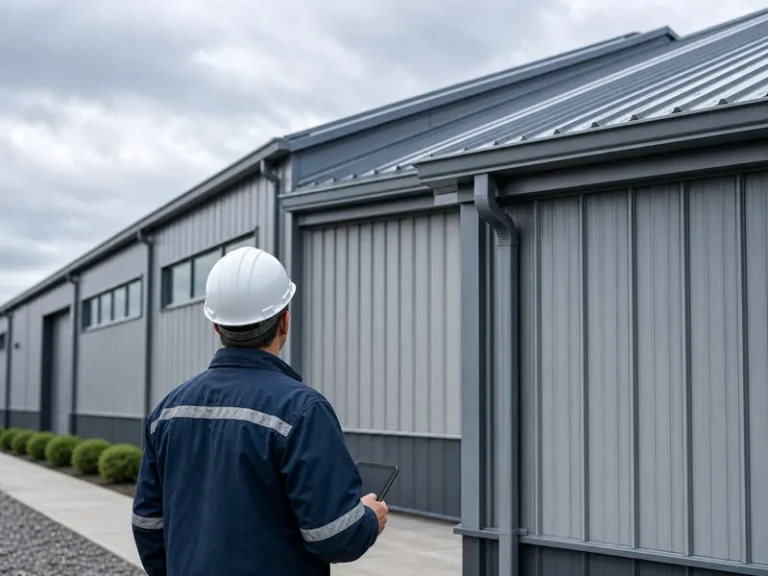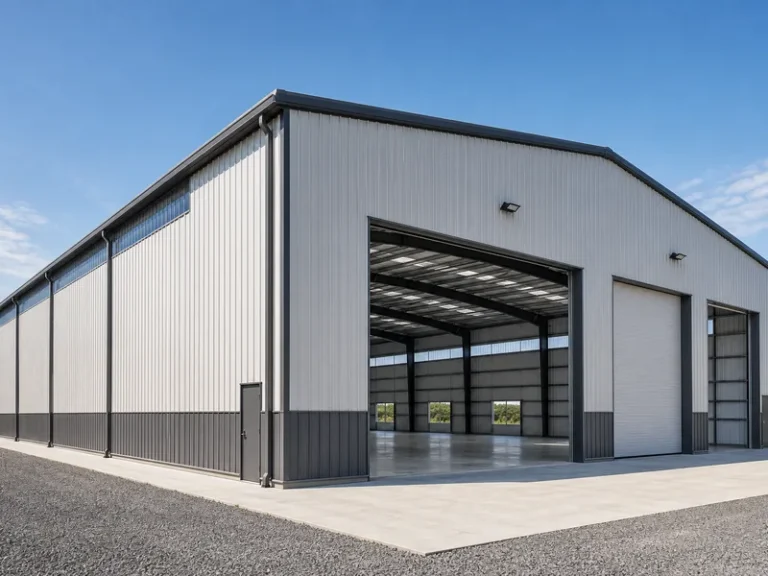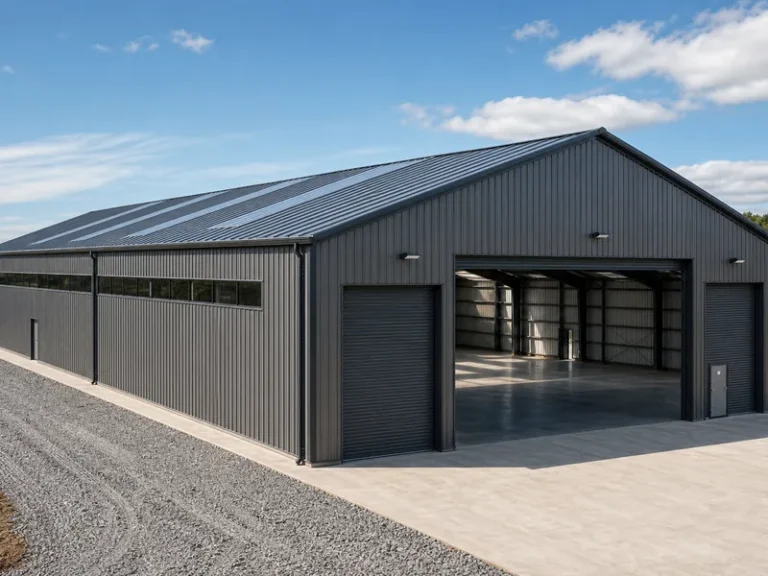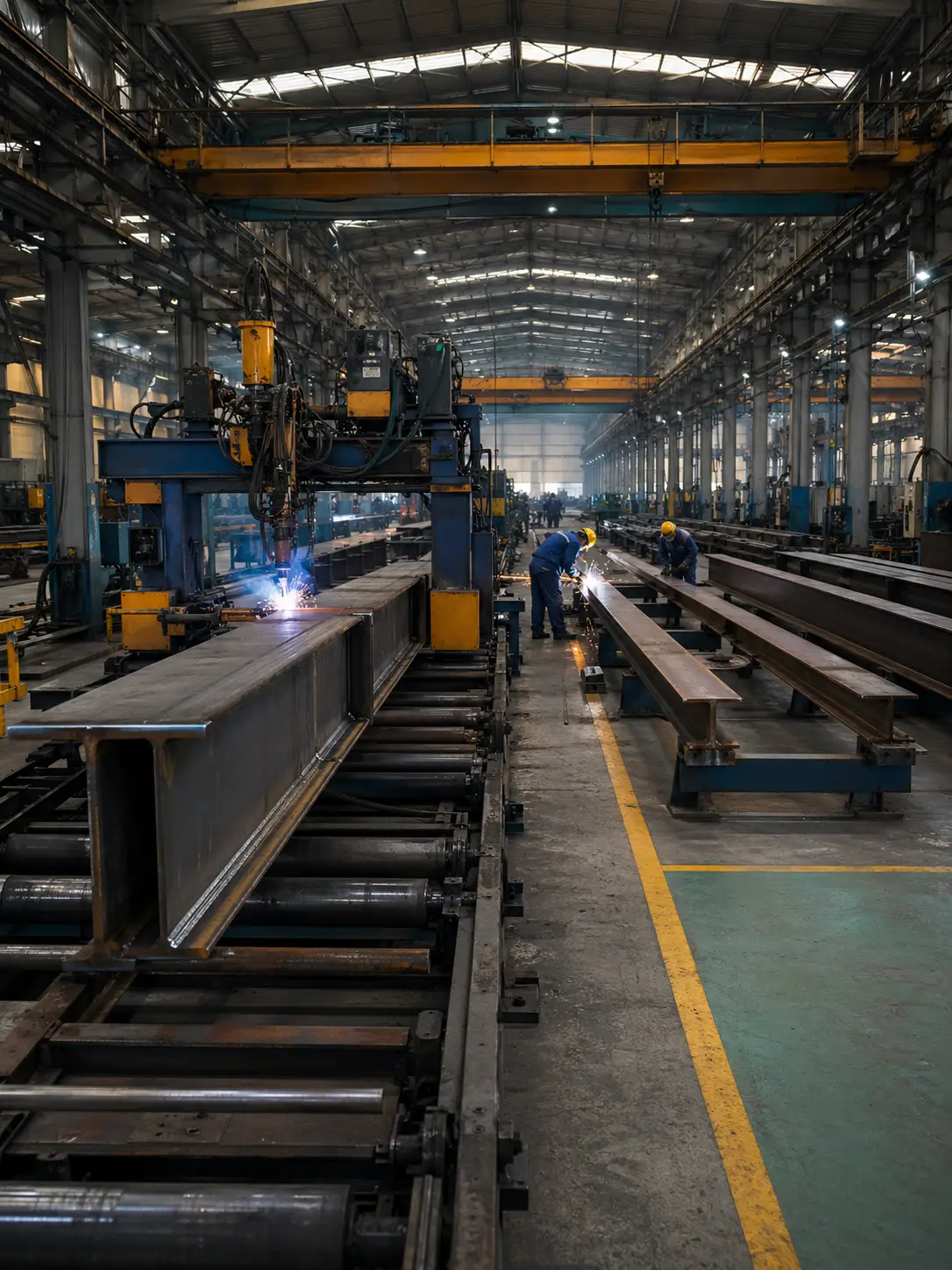





Choosing between steel and concrete for a poultry house is a decision about how the building will justify its cost over the next twenty or thirty years. The upfront price is only part of it. The right answer changes with your climate, your budget horizon, the birds you raise, and how much you expect to modify the house later. This guide compares the two systems the way a builder actually weighs them: by decision factor, with the trade-offs and conditions that move each one. It does not cover interior equipment, ventilation engineering, or flock management, which are separate decisions layered on top of the shell.
For poultry operations, the building shell should be evaluated as part of agricultural steel buildings that handle ventilation, sanitation, and equipment traffic.
What a Steel or Concrete Poultry House Actually Involves
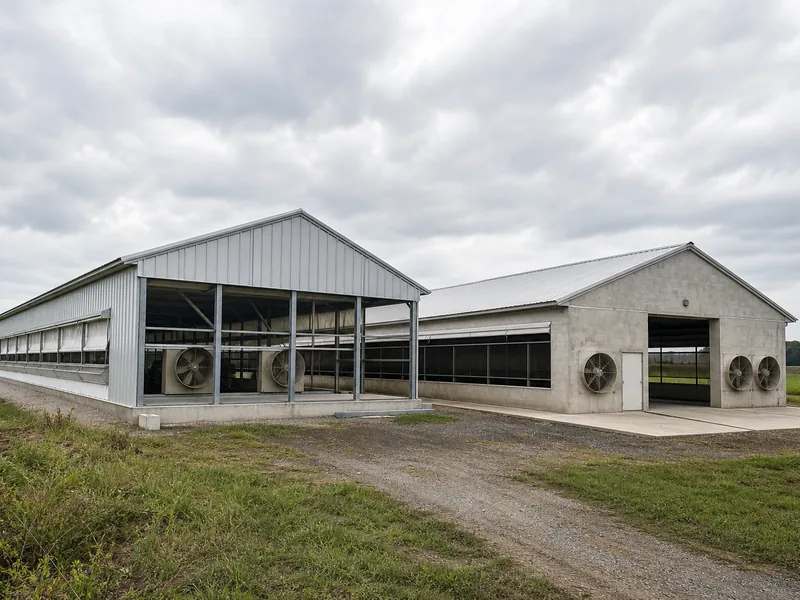
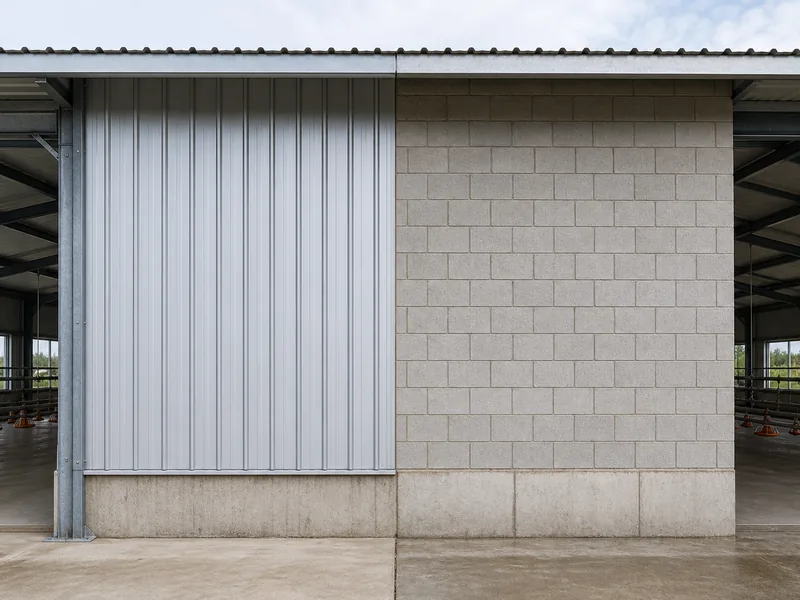
A modern poultry house is rarely all steel or all concrete. In practice, “steel” usually means a prefabricated steel frame with metal wall and roof cladding, while “concrete” means load-bearing masonry or cast-in-place walls. Both almost always sit on a concrete slab, and many houses are hybrids: a steel frame on a concrete knee wall, or masonry sidewalls under a steel roof structure. Treating the choice as strictly either/or is the first mistake to drop, because the most cost-effective design often borrows from both.
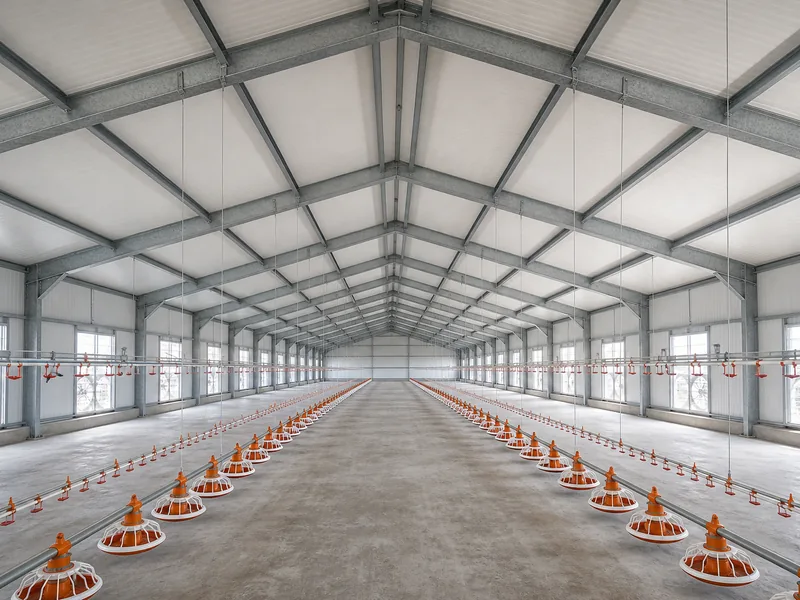
The distinction that matters is which material carries the load and shapes the envelope. A steel frame spans wide and clear, so the floor stays open for cages, feed lines, and cleaning equipment with no interior columns in the way. Masonry carries load in its walls, which keeps spans shorter and large openings more constrained. If you have already looked at a dedicated steel structure chicken house layout, you have seen the clear-span logic that drives most steel poultry builds.
Upfront Cost vs Total Cost of Ownership
Upfront price and lifetime cost point in different directions, which is why “cheaper” is the wrong first question. A steel frame with insulated metal cladding usually carries a higher initial price than basic block walls. Figures of roughly 20–30% more are commonly cited in the trade, though the real gap depends on span, specification, and region, and excludes interior equipment entirely. Concrete often wins the day-one invoice, especially where block and labor are local and inexpensive.
Total cost of ownership tells a different story once maintenance, lifespan, and changes are counted. Steel saves on labor during erection and is straightforward to extend or re-bay later, while concrete resists that kind of alteration and can be slow and costly to modify. One caution on the numbers: general construction studies that show steel cheaper than concrete are based on commercial buildings, not poultry houses, so they signal direction rather than a figure you can bank on. There is also a scale effect useful to name. Feeding, watering, ventilation, and lighting systems frequently cost more than the structural shell itself, so the frame premium may become a smaller share of the total turnkey budget once equipment is included. A practical check is to price two scenarios, shell-only versus turnkey, and decide which figure your budget is built around before comparing quotes.
Construction Speed and Site Logistics
Construction speed separates the two systems more sharply than almost any other factor. A pre-engineered steel frame arrives as a metal buildings kit, with columns, rafters, purlins, and fasteners cut and punched at the plant, so site work is mostly bolted assembly measured in weeks. A cast-in-place concrete shell is built in sequence on site, with formwork and curing that push the timeline into months. Masonry adds another constraint: wet trades slow down or stop in cold and wet weather.
Speed becomes a deciding variable when the building’s calendar drives revenue. Broiler operations that turn multiple flocks a year feel every week of delay, and financing costs accrue while a house sits unfinished. One detail crews learn quickly: the slab is usually the real schedule driver, not the frame. Once the slab and anchors are ready, a bolt-up frame can go up fast, but everything still waits on concrete to cure before cladding and fit-out proceed. Site sequencing and slab readiness matter as much as the wall material you pick. Labor availability tilts the same way in many regions, since prefabricated steel needs a smaller, less specialized crew than skilled masonry does.
Lifespan, Corrosion, and the Ammonia Factor
A steel poultry house can last several decades, with 30 years or more commonly cited, but only if its coating and detailing are matched to an ammonia-heavy environment. This is where steel’s honest weakness lives. Manure releases ammonia and hydrogen sulfide. In the warm, humid air of an occupied house those gases attack bare or thinly coated steel, while concrete shrugs them off. The lifespan figure is a condition, not a promise: it assumes the protection holds for the life of the building.
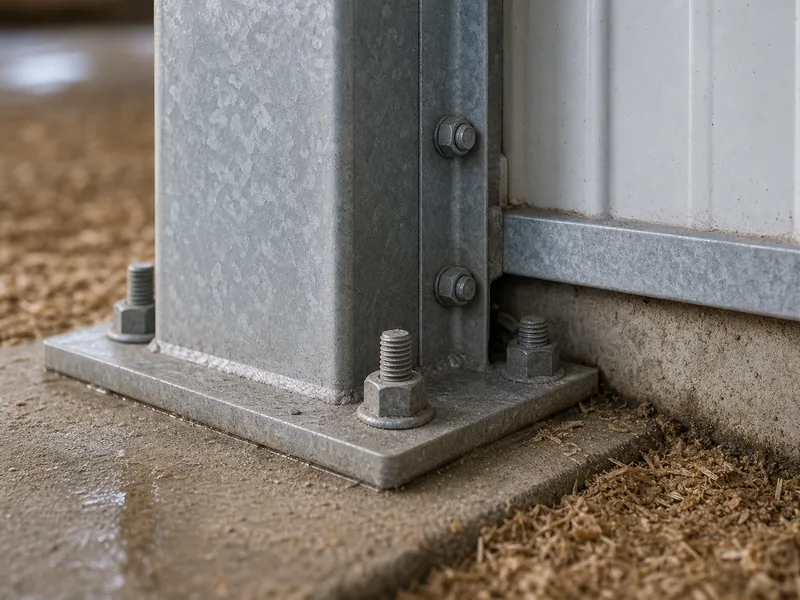
The fix is specification, not hope. Corrosion-resistant coatings such as hot-dip galvanizing or Galvalume (aluminum-zinc) are standard for agricultural exposure, and heavier coating classes are chosen for the most aggressive interiors. The trade-off between coating systems is its own decision, covered in galvanizing vs painting steel. On a steel build, the first places to check are not the main columns but the fastener heads, base plates, and panel laps just above the litter line. That warm, gas-rich zone is where pitting starts long before the frame shows anything. Plan for inspection there, and keep ventilation moving moisture out so condensate does not sit on metal. Do that, and the durability behind how long do metal buildings last becomes realistic rather than optimistic.
Concrete’s durability is more passive but not maintenance-free. Concrete does not corrode from ammonia, yet it can spall, crack at control joints, and trap moisture where drainage is poor. It is also far harder to alter once cured. A sensible steel building maintenance routine covers periodic coating checks, sealing penetrations, and clearing condensation paths. That routine is what actually closes the lifespan gap between the two materials, and skipping it is the fastest way to make a steel house age like a cheap one.
Climate, Insulation, Fire, and Biosecurity
Climate shapes this comparison more than supplier brochures usually suggest. In hot, humid regions, uninsulated steel panels heat up and sweat. That condensate dripping onto litter does more day-to-day damage than most operators expect, so insulated panels and a deliberate vapor strategy should be specified early and may be necessary in enclosed humid houses. Concrete’s thermal mass buffers temperature swings on its own but reacts slowly, which can work against the tight, fast ventilation control that modern controlled-environment houses need. In cold regions, freeze-thaw makes foundation detailing the priority for either system. Wind and snow loads should be engineered to the relevant load standard, such as ASCE 7 or the local equivalent where applicable, rather than a supplier’s default span chart.
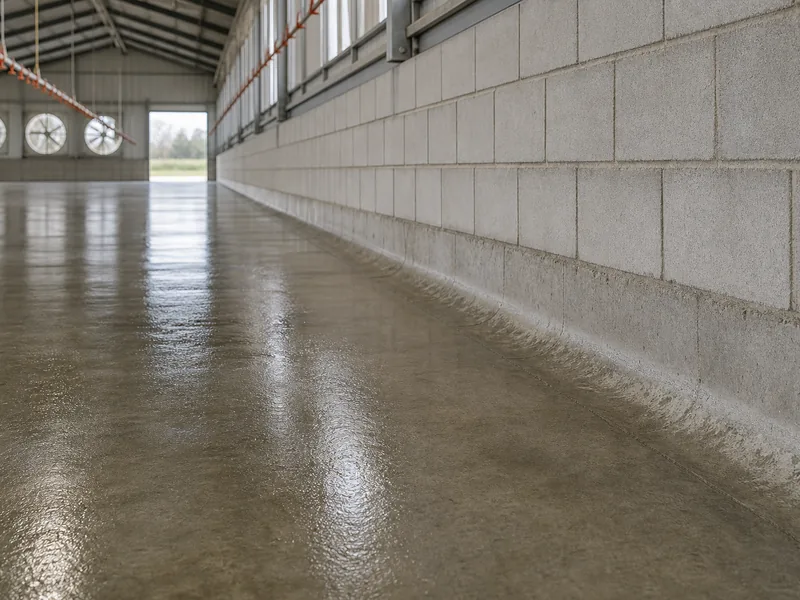
Fire and biosecurity pull in concrete’s favor on specific points. Concrete is non-combustible and offers a clear advantage where fire separation between houses or from neighboring property matters. Steel, by contrast, keeps its strength only up to a point in a fire and may need protective measures depending on code. For cleaning between flocks, hard concrete and smooth metal cladding both wash down well, but porous, pitted, or damaged surfaces in either material harbor pathogens. The finish and its upkeep matter more than the base material in a biosecurity audit. Permitting, setbacks, and structural review follow local building codes such as the IBC or the local equivalent where applicable. Confirm those requirements before the design is frozen, because a setback rule or fire-separation distance can rule one material in or out.
Choosing the Right Structure: A Practical Checklist
The cleanest way to choose is to settle the variables in order, starting with the one that is hardest to reverse. The table below sums up where each system lands; the checklist after it turns those differences into a sequence of decisions.
| Decision factor | Steel frame + metal cladding | Concrete / masonry |
|---|---|---|
| Upfront shell cost | Higher; premium varies by span, spec, region | Usually lower where block and labor are cheap |
| Build speed | Weeks; prefabricated bolt-up | Months; on-site formwork and curing |
| Clear span and layout | Wide clear span, open column-free floor | Shorter spans, load-bearing walls |
| Corrosion from ammonia | Vulnerable; needs a specified coating | Resistant; not attacked by ammonia |
| Lifespan | 30+ years commonly cited, coating-dependent | Long service life, though cracks and later alterations need planning |
| Modify or expand later | Straightforward to extend or re-bay | Difficult once cured |
| Fire | May need protection measures to meet fire code | Non-combustible advantage |
Work down this order and the material usually selects itself:
- Corrosion exposure first. High-humidity, high-ammonia houses push toward concrete walls or steel with a properly funded coating budget; if you cannot fund the coating, do not buy bare steel.
- Budget basis second. Decide whether your number is shell-only or turnkey, then compare like for like; concrete often wins shell-only, steel often wins on lifetime and labor.
- Schedule and expansion third. If flock turnover or financing rewards speed, or you expect to extend the house, steel’s prefabricated, clear-span frame is the stronger fit.
- Fire and biosecurity last. Where fire separation or specific code requirements dominate, concrete’s non-combustibility can be decisive.
Concrete is the better choice in several common cases: tight upfront budgets, intensely corrosive interiors without a coating budget, and fire-driven requirements all point that way. Steel earns its premium when speed, span, and future flexibility carry real operating value.
Conclusion
There is no universal winner between steel and concrete for poultry houses; there is only the structure that fits your corrosion risk and your budget basis. Choose concrete when the interior is aggressively humid and you have no coating budget, when local block and labor make the shell genuinely cheap, or when fire separation drives the design. Choose a properly coated steel frame when build speed, clear span, and the ability to extend the house later are worth a higher day-one price. Before you compare any two quotes, lock down two things: your honest ammonia-and-humidity exposure, and whether your budget figure is shell-only or turnkey. With those two settled, KAFA can help review span and frame-component requirements and align requested coating specifications with the project brief. Our H-beam, box-section, and C/Z-purlin production lines run under documented quality procedures.
Frequently Asked Questions
Is steel or concrete cheaper for a poultry house?
Concrete is usually cheaper on the day-one shell, while steel often costs less over the building’s life once labor, lifespan, and modifications are counted. The gap depends heavily on span, specification, region, and local material prices, so compare a shell-only figure against a turnkey figure rather than a single headline number.
Does steel corrode in a chicken house?
Steel can corrode in a poultry house because ammonia and hydrogen sulfide from manure attack metal in warm, humid air. A properly specified coating such as hot-dip galvanizing or Galvalume, combined with good ventilation and routine inspection of fasteners and base plates, is what keeps corrosion under control.
How long does a steel poultry house last?
A well-built steel poultry house commonly lasts 30 years or more, provided the coating is matched to the interior environment and maintenance keeps pace. Lifespan is conditional on protection and upkeep, not an automatic property of the steel itself.
Is a steel poultry house faster to build than concrete?
Steel is generally faster because a prefabricated frame is bolted together on site in weeks, whereas a cast-in-place concrete shell needs formwork and curing measured in months. The concrete slab is often the real schedule driver for either system, so plan the groundworks early.
Can you combine steel and concrete in one poultry house?
Combining the two is common and often the most practical option. Many houses use a steel frame on a concrete knee wall or slab, pairing concrete’s wash-down durability at floor level with steel’s clear span and fast erection above.