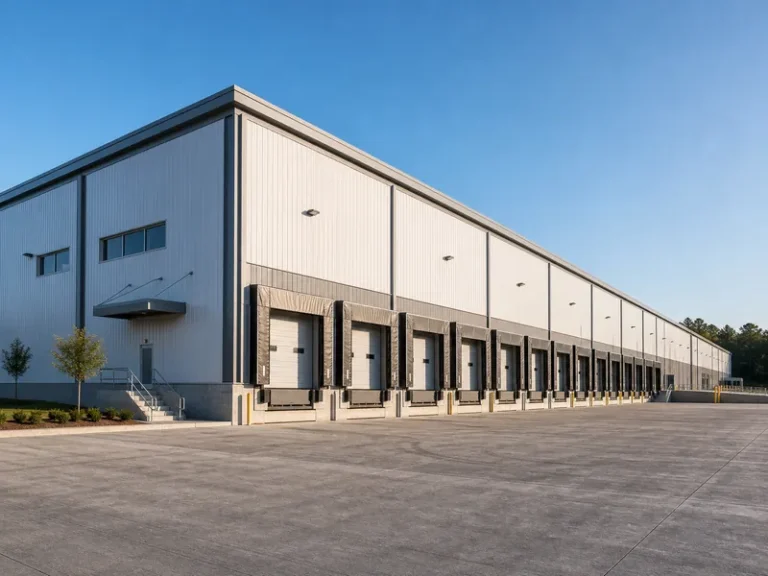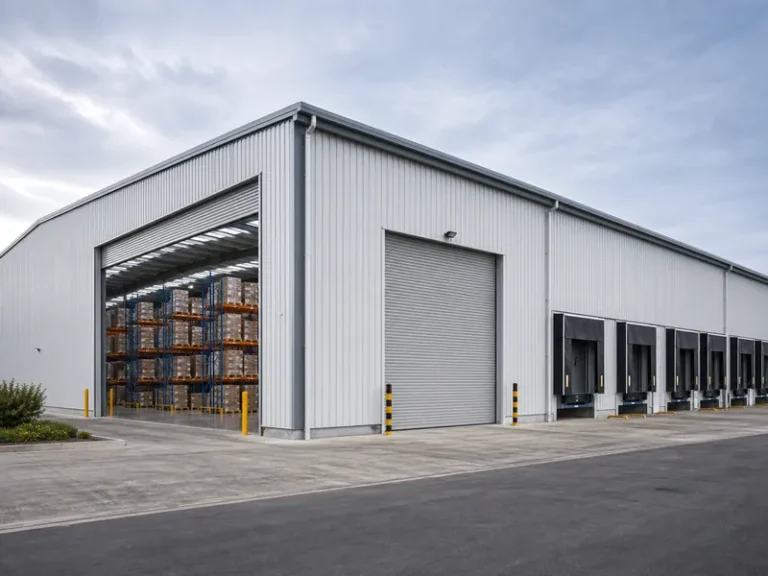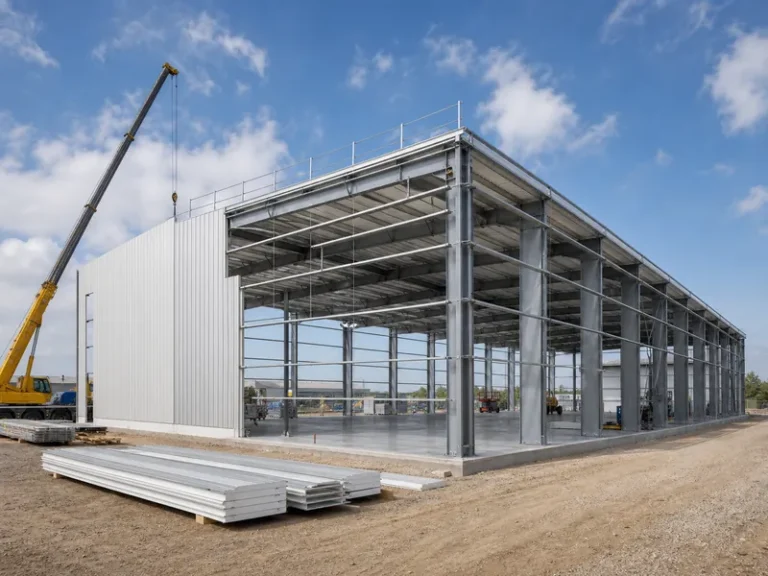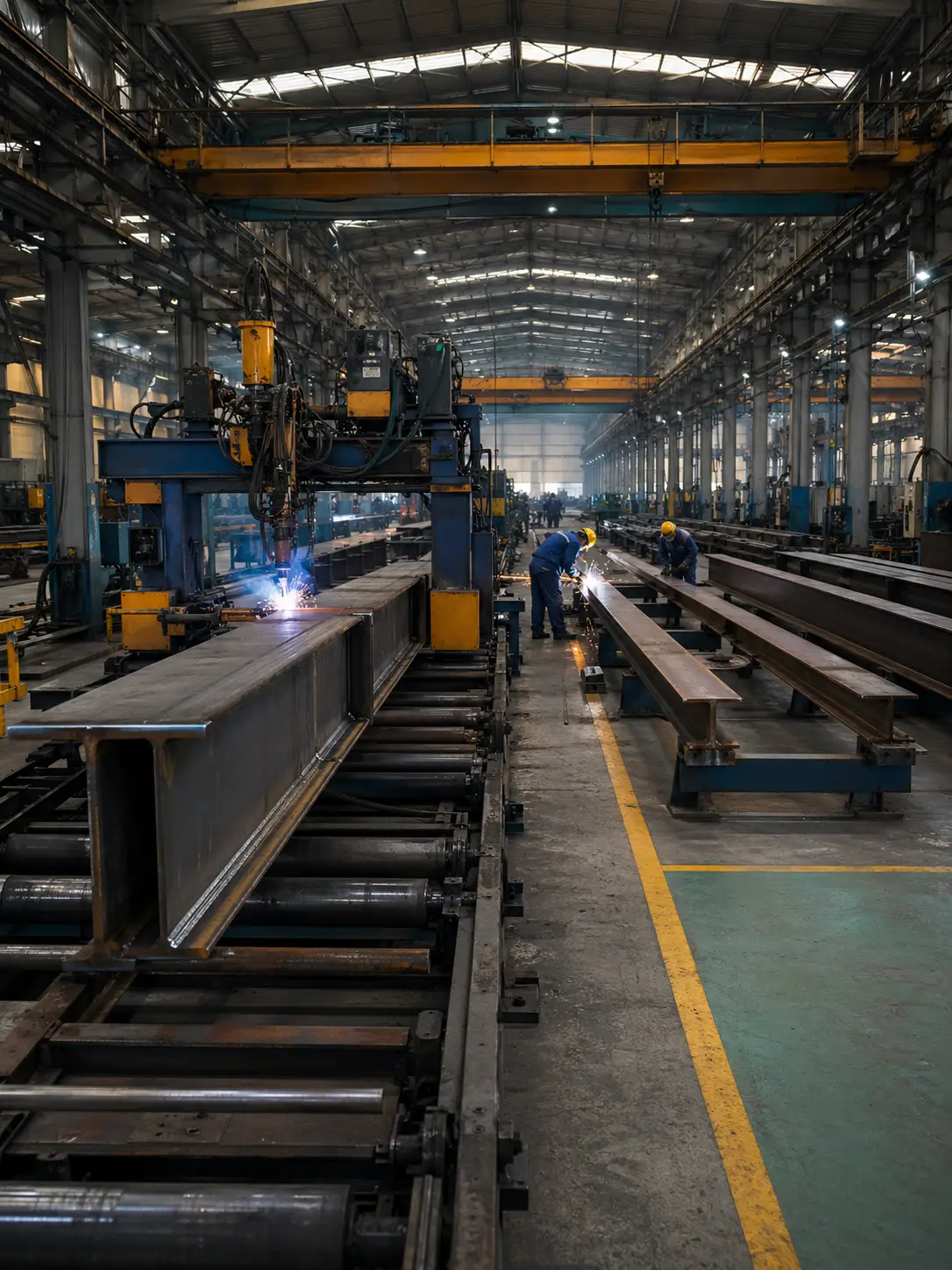





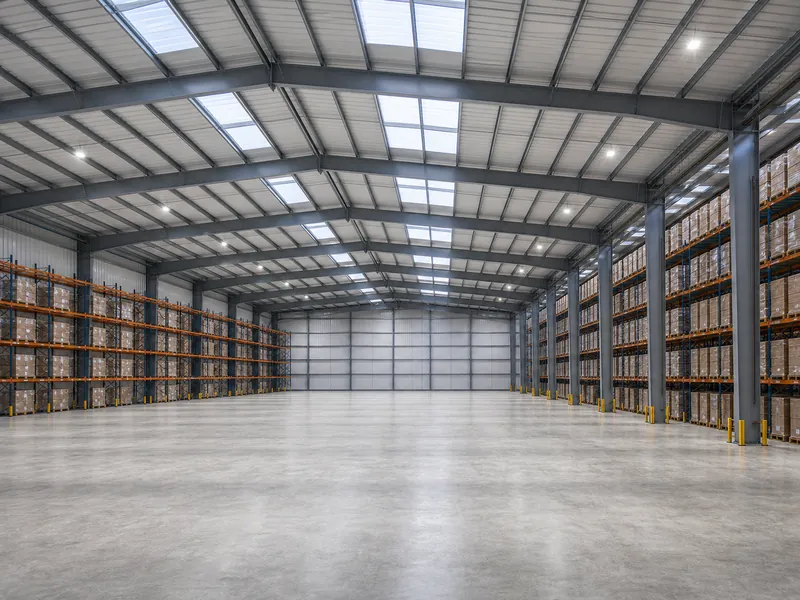
The main advantages of a steel warehouse are concrete and practical: column-free floor space that storage and material handling can use, a shell that goes up in a fraction of the time concrete takes, lower lifetime cost, a frame that resists fire spread, pests, and severe weather, and the freedom to expand later. For most distribution, manufacturing, and storage operations, those five points decide how the building performs on day one and how much it costs to run for decades.
Steel has become the default frame for new warehouse buildings, and the reasons are practical. This guide weighs those advantages for storage and industrial use; it does not price out a specific project or cover foundation design in detail, since both depend on your site and loads.
Clear-Span Space With No Interior Columns
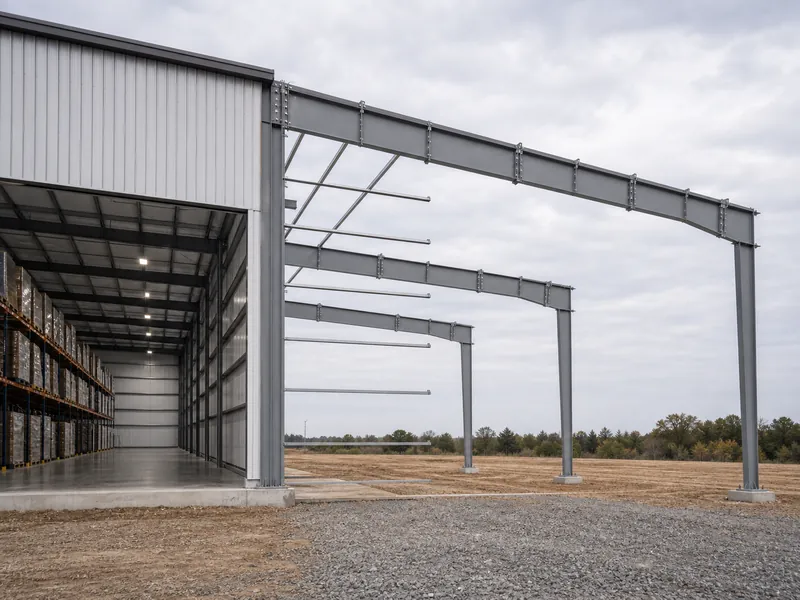
A steel frame can carry a roof across a wide bay without interior columns, and that open floor is the advantage most warehouse operators notice first. Rigid frames and steel trusses transfer roof and snow loads out to the perimeter, so the interior stays clear for racking, forklift aisles, conveyor lines, and automation.
How wide that clear-span can go depends on the snow, wind, and seismic loads, the clear height you need, and the frame type. Column-free spans up to about 300 feet (90 m) sit at the achievable upper end, not a standard default. They usually pair with high eave heights that open up vertical storage and mezzanines. A regular bay grid also keeps rack rows and aisles aligned, which pays off when you square up forklift travel or add an automated storage-and-retrieval system later. A column in the wrong place forces narrower aisles or wasted bays, so the span you can carry directly shapes pallet positions and throughput. Before you settle on a layout, have the supplier confirm the clear-span against your local loads, not a catalog figure; the same principle drives most warehouse building design decisions.
Faster Construction and Earlier Operation
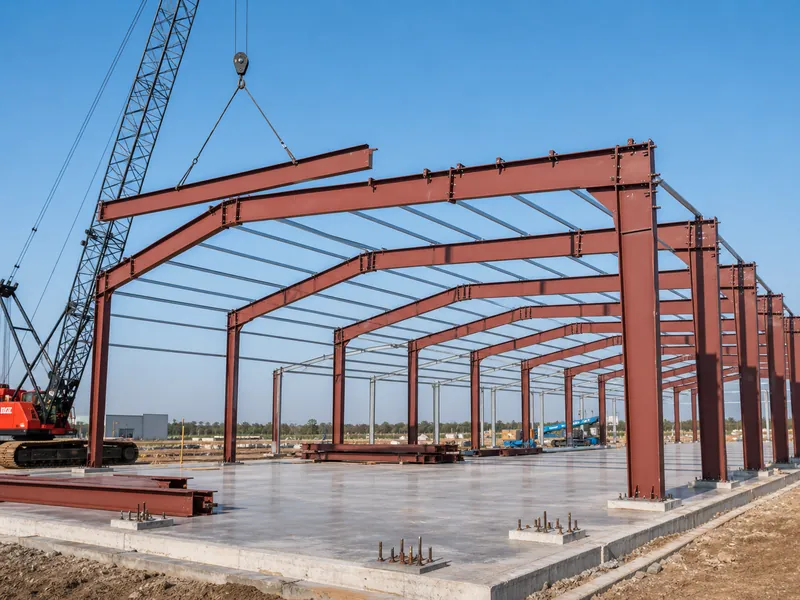
A steel warehouse goes up faster than a concrete one because the frame is fabricated in a shop while site work proceeds, then bolted together on site. There is no formwork to set or cure, which removes the weather delays and wait times that stretch concrete schedules. Erection is also less exposed to weather than concrete pours, and on a larger site a finished bay can be put to use while the next one goes up, so occupancy need not wait for the entire shell.
In practice, a pre-engineered steel shell is often completed in roughly a third to half the time of a comparable concrete build. Mid-size warehouses are measured in weeks to a few months, not whole seasons. Earlier completion is not just convenience: every week the building is operating is a week of revenue, so faster erection improves the return on the whole project. The variable that most often slips is the lead time for shop drawings, fabrication, and freight, so confirm those windows sit inside the quoted schedule, not on top of it.
Lower Lifetime Cost and Minimal Maintenance
The cost advantage of a steel warehouse shows up less in the sticker price than over the building’s working life. Up-front, a steel shell often runs lower than concrete for an equivalent footprint, commonly on the order of 10% to 30% depending on scale, region, and steel prices, helped by a lighter frame that needs a smaller foundation.
The larger saving is maintenance. Galvanized or coated steel resists rust and wear, and a steel frame does not crack, settle, or spall the way concrete can, so repair bills stay low across the decades. Fewer repairs also mean fewer interruptions to picking and shipping, which is its own saving in an active warehouse. As a rough guide, a steel shell quote usually covers the frame and cladding only, not the foundation, freight, permits, insulation, or fire protection. Compare bids on the same full scope, not one shell price against another. Steel is not automatically the cheapest option in every case; its cost advantage is most reliable once maintenance and operating disruption are counted over the building’s life. For a line-by-line breakdown of what drives the total, the cost to build a warehouse covers the variables this article only summarizes.
Built to Resist Fire, Pests, and Severe Weather
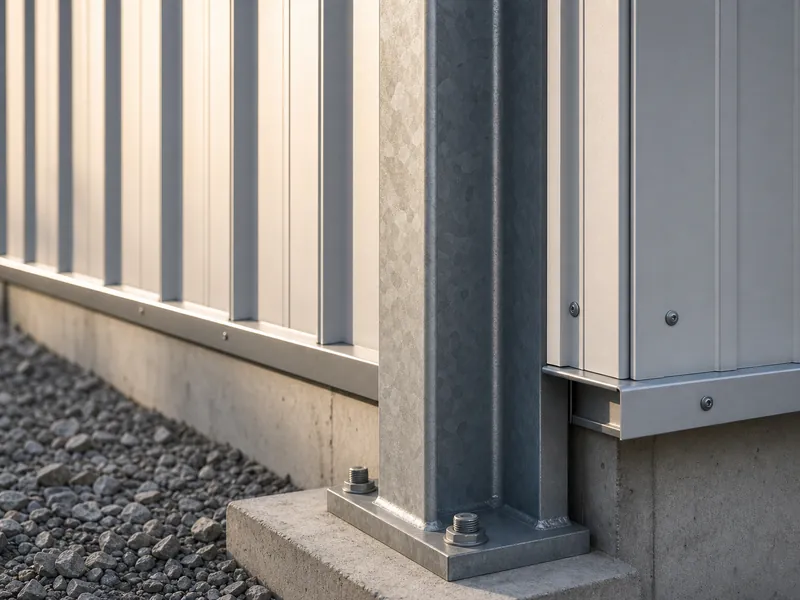
Pests, mold, rot, and fire behave very differently around a steel frame than around wood. Termites and rodents find nothing to eat in steel, and the frame will not absorb moisture, warp, or grow mold, which protects both the structure and the goods stored inside. Corrosion is the one threat steel has to answer for, and on coastal or high-humidity sites the fasteners, base plates, and panel seams are the places to inspect first, since moisture collects there before the main frame ever shows it.
Steel is often called fireproof, and that is not quite right. Steel is non-combustible, so it adds no fuel, smoke, or flame spread, but it does lose strength at sustained high temperatures. That is why a rated assembly relies on intumescent coatings or spray-applied fire-resistive material (SFRM), not the bare frame. Treat the fire rating as a design requirement to verify against your occupancy and local code, not a property the metal supplies on its own. The same engineered approach handles snow, wind, and seismic loads, where steel’s ductility and light weight work in its favor and feed directly into how long do metal buildings last under real conditions.
Room to Expand and Reconfigure
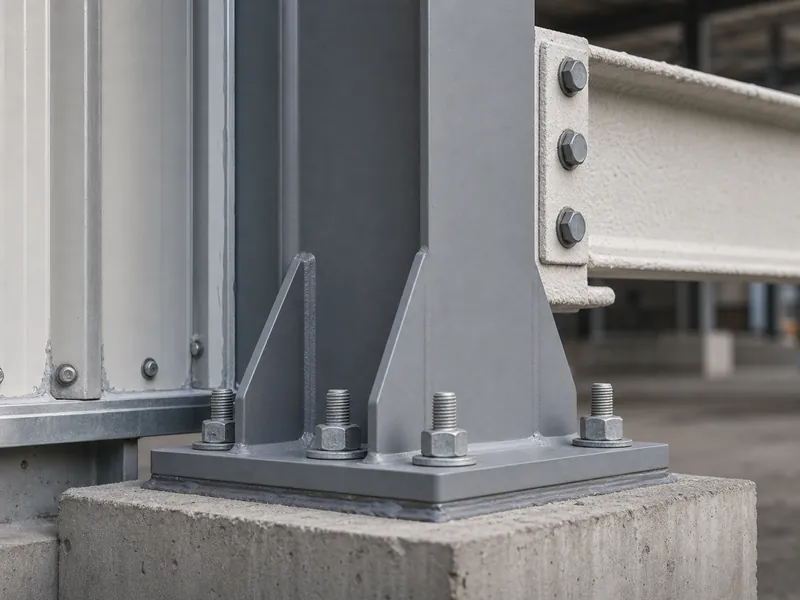
Extending or reconfiguring a steel warehouse is easier than altering a load-bearing concrete or masonry building. Because the structure is bolted modular framing on a regular bay grid, adding length at an end wall or inserting bays is a planned operation rather than demolition.
The column-free interior helps just as much when needs change inside the existing footprint: racking can be re-laid, a mezzanine added, or a production line moved without working around structural walls. That flexibility matters when a building changes hands or purpose, since the same shell can shift from bulk storage to mixed storage-and-distribution without structural demolition. The catch is that easy expansion is mostly designed in, not bolted on later. Name the likely growth direction and any future loads at the design stage, and leave the expansion end ready; that foresight keeps a later addition from turning into a partial rebuild.
How Steel Compares With Concrete and Wood
Against concrete and wood, steel leads on construction speed, clear-span width, and recyclability, while up-front cost lands closer depending on scale. The table below sets the main warehouse decision factors side by side.
| Factor | Steel | Concrete | Wood |
|---|---|---|---|
| Up-front shell cost | Lower to mid | Higher | Lowest, but size-limited |
| Construction speed | Fastest (shop-fabricated) | Slowest (forming, curing) | Moderate |
| Max clear span | Widest (column-free, ~300 ft) | Limited | Short spans |
| Maintenance | Low (coated/galvanized) | Cracking, sealing | High (rot, pests) |
| Fire behavior | Non-combustible, needs rated coatings | Non-combustible | Combustible |
| Lifespan | 50+ years with upkeep | Long, if crack-managed | Shortest |
| Recyclability | ~90%+ recovered | Under ~30% | Low |
Steel’s edge is largest where the project needs wide column-free space, a fast schedule, long service life, or seismic performance, which describes most industrial warehouses and industrial steel buildings. The gap narrows for very small structures or where an owner already runs a concrete operation. Concrete does hold one genuine edge in thermal mass, which steadies interior temperature. A steel warehouse reaches the same comfort with metal building insulation matched to the climate, a design choice rather than a limitation. One factor that is easy to overlook is end-of-life value. Steel is among the most recycled materials, with recovery rates on the order of 90% or more, so the frame retains scrap value instead of becoming demolition waste.
Conclusion
Choosing a steel warehouse is mostly about matching its strengths to the constraints that actually limit your operation. The clear-span and eave height your storage layout demands are the place to start, since that is where steel separates most from concrete and wood. From there, weigh how much an earlier opening date is worth to you, and weigh full lifetime cost, not the shell quote alone. If your project needs wide column-free bays, a quick schedule, and decades of low upkeep, steel answers all three at once. For a very small building with no real span demands, the advantages matter less.
A manufacturer that handles design, fabrication, and installation can size the rigid frames and C/Z purlins to your loads and confirm the fire rating before anything ships, which is the kind of check that prevents an expensive change order later. KAFA fabricates clear-span steel warehouses on dedicated H-beam, box-section, and purlin lines for exactly that purpose; if you want those numbers run for your site, get a free quote with your span, height, and load requirements.
FAQ
How long does a steel warehouse last?
A well-built steel warehouse can last 50 years or more with proper maintenance and corrosion protection. Service life depends on the coating or galvanizing, the local environment, and how diligently fasteners and panel seams are inspected, so the figure assumes upkeep, not neglect.
Is a steel warehouse cheaper than a concrete one?
A steel warehouse is usually cheaper to build than an equivalent concrete one, commonly by around 10% to 30% depending on scale, region, and steel prices. The larger and more reliable saving is lower maintenance over the building’s life, so compare options on full lifetime cost, not the shell price alone.
How wide can a steel warehouse span without interior columns?
Column-free clear-spans up to about 300 feet (90 m) are achievable in a steel warehouse, at the upper end of what the frame type allows. The practical limit depends on snow, wind, and seismic loads, so the maximum for your building should be confirmed by the supplier against local design loads.
Are steel warehouses fireproof?
No. Steel is non-combustible and adds no fuel or smoke to a fire, but it loses strength at sustained high temperatures, so it is not fireproof on its own. A fire-resistance rating comes from intumescent coatings or spray-applied fire-resistive material, specified to match the occupancy and local code.
Can a steel warehouse be expanded later?
Yes. Bolted modular framing makes end-wall extensions and added bays straightforward, provided the expansion is planned at the design stage. Naming the likely growth direction and future loads up front lets you leave one end ready and avoid structural rework.
Further Reading
- Metal Building Manufacturers Association (MBMA) — Industry association for metal building systems; background on the pre-engineered framing and recyclability advantages described above.
- NAIOP — Industrial research and warehouse design resources — Commercial real estate association; demand data and distribution/warehouse facility design guidance that frame the operational case for clear-span space.
- AISI “Build Using Steel” — American Iron and Steel Institute program; technical and sustainability resources on steel in construction, including recycled content and end-of-life recovery.