




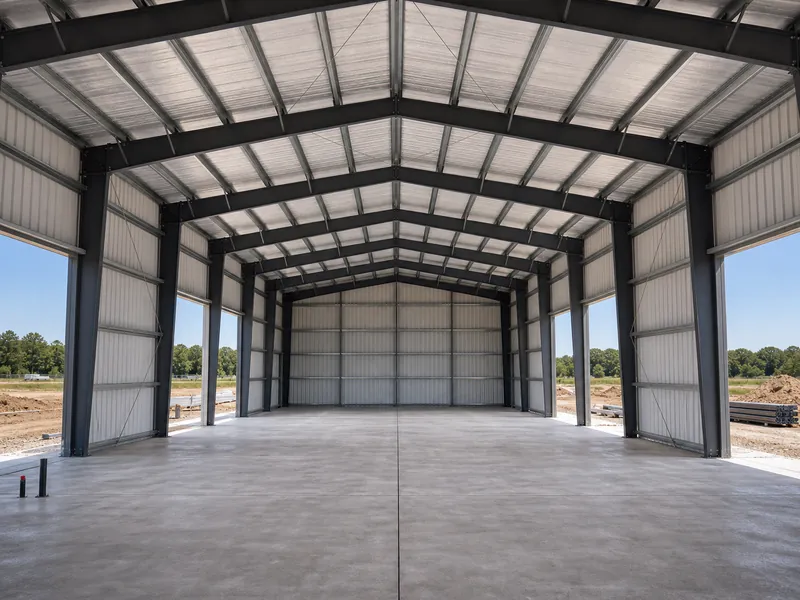
Pricing a warehouse gets confusing because two very different numbers both get called “the cost.” A bare steel shell — the rigid frame, roof and wall sheeting, and a basic concrete slab — usually runs about $20 to $40 per square foot. A finished, turnkey warehouse you can operate in, with insulation, lighting, fire protection, dock equipment, and an office build-out, more often lands between $85 and $200 per square foot. Everything below explains what sits between those two figures, so you can attach a price to the building you need instead of to someone else’s spec.
Most of what follows assumes a single-story industrial warehouse on a pre-engineered steel frame, the system that anchors the low end of the range. Specialty buildings such as cold storage sit well above it, and this guide flags where.
What a Warehouse Costs per Square Foot
Warehouse pricing splits into three tiers, separated by how much of the building is included in the quote. Reading a number without knowing its tier is how a shell estimate gets mistaken for a finished budget, or the reverse.
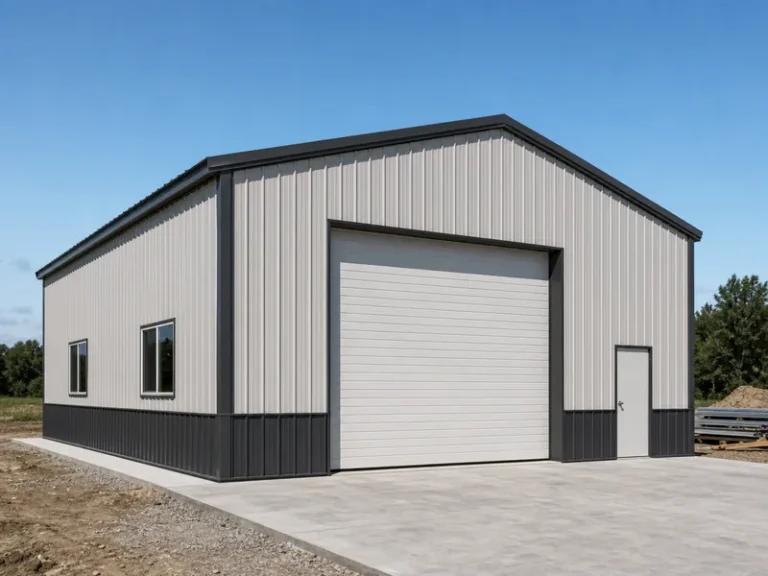
- Steel shell only — $20 to $40 per square foot. The rigid frame, roof and wall sheeting, anchor bolts, and a standard slab. No climate control, no interior, no mechanical or electrical systems.
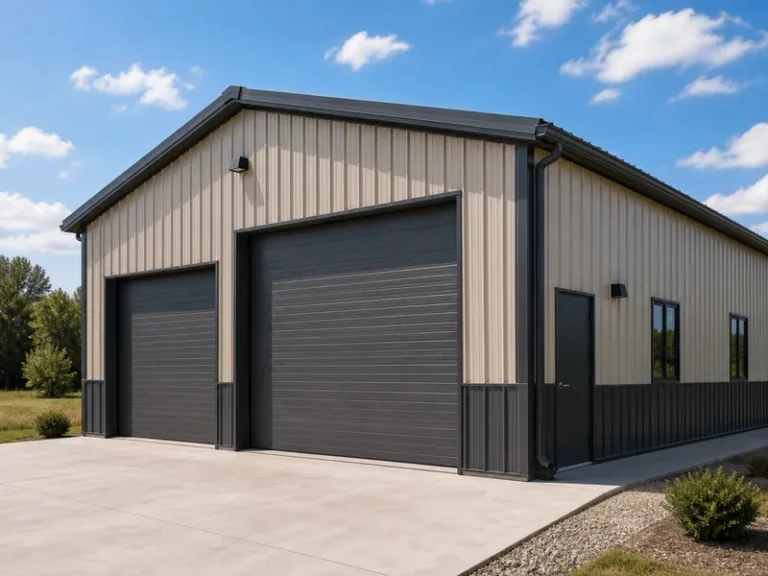
- Basic enclosed warehouse — $40 to $80 per square foot. A shell plus insulation, basic power and lighting, a few dock doors, and a minimal office. A welded structural-steel shell, which uses heavier members than a bolt-up kit, also falls in this band.
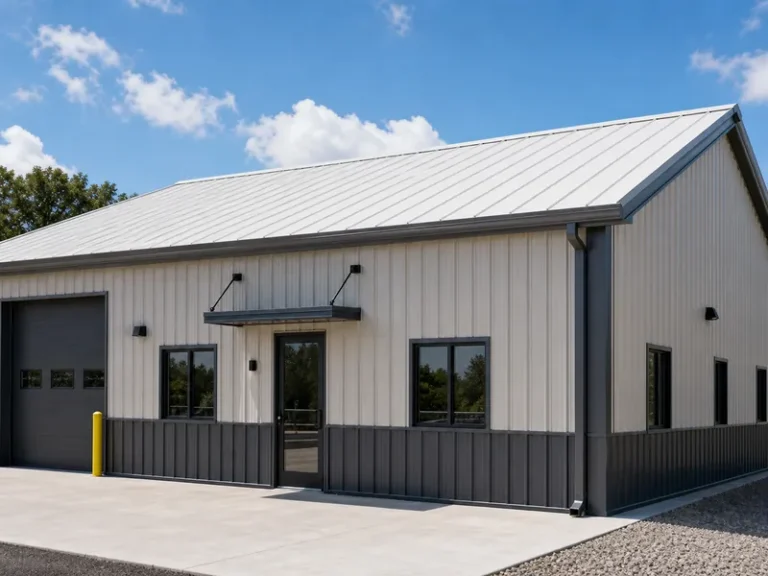
- Turnkey, distribution-grade — $85 to $200 per square foot. Everything the operation needs: full mechanical, electrical, and plumbing systems, fire protection, climate control, dock packages, office build-out, site work, and soft costs. Smaller buildings run higher per square foot; large ones drop lower.
A quick way to keep quotes honest is to ask what the price does and does not cover before comparing it to anything:
What a shell quote usually includes — and doesn’t
- Included: rigid steel frame, primary and secondary framing (columns, rafters, purlins, girts), roof and wall sheeting, anchor bolts, and a standard concrete slab.
- Not included: insulation, interior partitions, HVAC, sprinklers, electrical and plumbing, dock levelers and doors, paving and site work, permits, and design fees.
- Pushes the number up: added clear height, heavier floor loads, wide column-free spans, high snow or wind demand, and a more finished interior.
Cost by Construction Method: Steel, Tilt-Up, and Structural Frames
The framing method sets the floor for your per-square-foot cost more than any finish you choose later. Three approaches cover almost every warehouse built today.
A pre-engineered metal building (PEMB) is the lowest-cost enclosed square footage for most storage and distribution. The steel kit alone — frame, purlins, and girts — runs roughly $10 to $20 per square foot; add sheeting and a slab and a complete bolt-up shell reaches about $20 to $35 per square foot. It also goes up faster than any poured system, which is part of why metal building systems dominate low-rise industrial work. The same logic scales down to smaller buildings, where it drives the cost to build a shop as much as a warehouse.
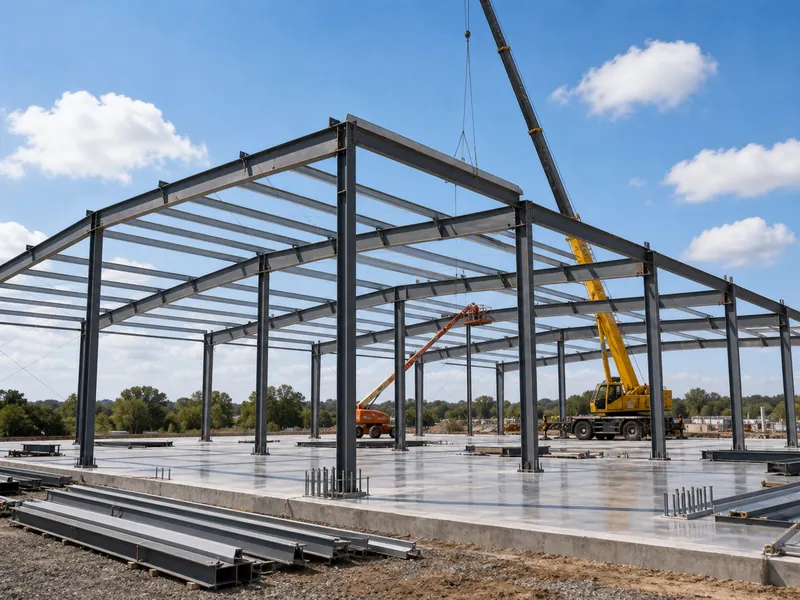
Structural steel — heavier, field-welded members — costs more, around $45 to $60 per square foot for the shell. It makes sense when the building carries heavy bridge cranes, a structural mezzanine, or geometry a standard rigid frame can’t handle.
Tilt-up concrete, where wall panels are cast on the slab and tilted into place, lands roughly between $25 and $55 per square foot depending on size. Concrete becomes competitive above about 50,000 square feet, where the panels double as structure and fire separation and the per-foot premium shrinks. For most dry storage under a clear-span roof, though, a PEMB frame stays the cheapest path to an enclosed, column-free floor.
Warehouse Cost by Size: Sample Steel Shell Budgets
Per-square-foot shell pricing drops as a warehouse gets bigger, because fixed costs like mobilization, engineering, and crane setup spread across more floor area. The table below shows representative shell budgets — frame, sheeting, and a standard slab, before any fit-out.
| Footprint | Floor area | ≈ $/sq ft (shell) | Shell budget |
|---|---|---|---|
| 30 × 40 | 1,200 sq ft | ~$30 | ~$36,000 |
| 40 × 60 | 2,400 sq ft | ~$28 | ~$67,000 |
| 60 × 100 | 6,000 sq ft | ~$26 | ~$156,000 |
| 100 × 100 | 10,000 sq ft | ~$25 | ~$250,000 |
| 100 × 200 | 20,000 sq ft | ~$24 | ~$480,000 |
| 200 × 250 | 50,000 sq ft | ~$23 | ~$1.15M |
A 40 × 80 footprint (3,200 sq ft) sits between the first two rows; for a closer teardown of that size, see a 40×80 metal building. These are shell numbers, and they shift with region and finish — a finished build on the same footprint typically costs several times the figure shown once mechanical systems, fit-out, and site work are layered on.
What Moves Warehouse Cost Up or Down
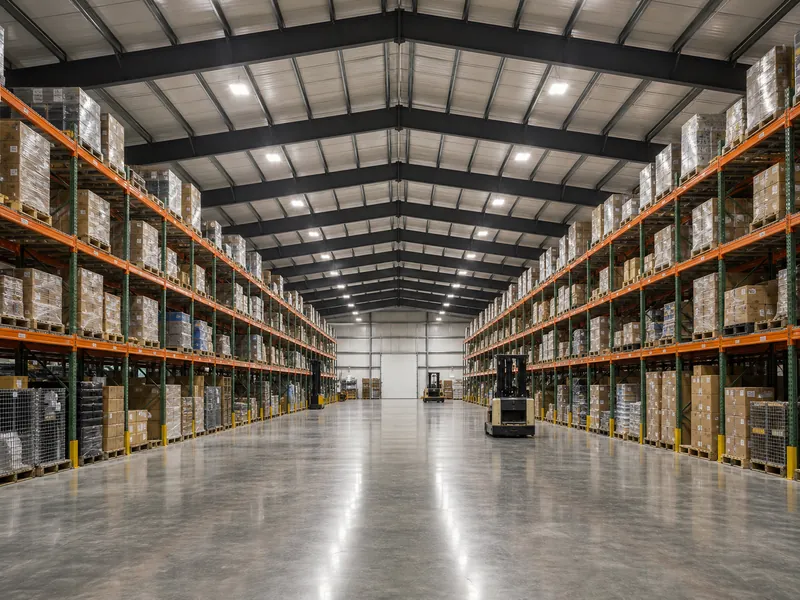
A handful of design choices — clear height, span, floor loading, dock count, and finish — explain most of the distance between a cheap shell and an expensive one. Each is a place where a decision made early controls a number you pay later.
Clear and eave height. A taller building catches more wind and seismic load, so frame steel tonnage climbs with every added foot of clearance; pushing usable clear height from roughly 8 to 12 meters can raise frame weight on the order of 20 to 30%. Check your racking and lift-truck mast heights before fixing the eave height, because clearance you never stack into is tonnage you paid for and don’t use.
Span and columns. A column-free, clear-span roof keeps the floor open for racking and forklift traffic, but a wide clear span needs deeper, heavier rigid frames than a building broken up by a line of interior columns. Adding one interior column line lowers frame weight; whether that trade pays off depends on whether a column would land in an aisle or a rack run.
Floor loading. The concrete slab is where heavy-storage costs hide. A standard 4-to-6-inch slab for light storage runs about $5 to $7 per square foot. A thicker, more heavily reinforced slab built for loaded racking and forklift point loads is closer to $8 to $15, and rack loads above 40,000 pounds add roughly $0.75 per square foot for every extra 2 inches of concrete. Confirm your heaviest point load before the slab is designed and the steel building foundation is sized — it is the one line item you cannot revise cheaply after the pour.
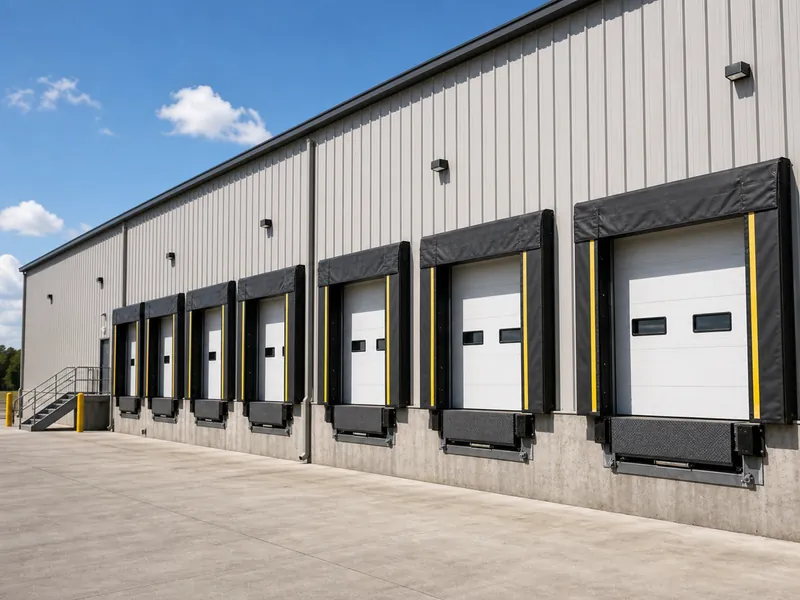
Dock doors and access. Each loading dock — door, leveler, seal, and bumpers — adds about $6,000 to $11,000, and one dock per 10,000 square feet of floor is a reasonable starting ratio. Over-docking a low-throughput building buys equipment that mostly sits idle.
Insulation and fire protection. Insulation is a fit-out line rather than part of the shell, adding $1.50 to $4 per square foot depending on R-value and method; good metal building insulation is also what turns a steel box into a workable, energy-efficient space. Sprinklers add another $1 to $4 per square foot, with high-pile and rack storage often triggering an ESFR system at the top of that range — a requirement driven by code and your insurer, not preference.
Loads and location. Snow, wind, and seismic demands set by the ASCE 7 load standard vary by site and feed straight into steel tonnage, which is part of why the same warehouse costs more in the seismic Pacific Northwest than in the desert Southwest. Steel prices and tariffs on imported steel and aluminum have kept shell costs elevated lately, and skilled-trade wages have been rising around 4 to 5% a year, so a quote collected a while ago is probably low today.
Beyond the Shell: Fit-Out, Soft Costs, and Site Work
On a finished warehouse, hard costs — the shell plus everything bolted, wired, or poured into it — run about 70 to 80% of the budget, and the rest is easy to underestimate. Soft cost and contingency take 20 to 30%, and site work alone can absorb a fifth of the total before the frame ever arrives.
Soft costs are the paperwork side of the build: design and structural engineering at roughly 4 to 6% of hard costs, and permits and impact fees from about 0.5 to 3% depending on the jurisdiction. On top of those sit builder’s-risk insurance and a contingency of 7 to 10% for the surprises every project turns up. Site work covers grading, compaction, utilities, and paving, and a sloped lot or poor soil can move it from a modest line item to a major one.
Erection is its own budget line. A bolt-up frame goes up quickly, but erection labor still scales with building height, span, and how tight the site is for a crane. Interior fit-out — offices, restrooms, HVAC, lighting, and a sealed or coated floor that adds about $4 to $7 per square foot — then tracks how much of the building people actually occupy rather than just store goods in.
Cold Storage and Other Specialty Warehouses
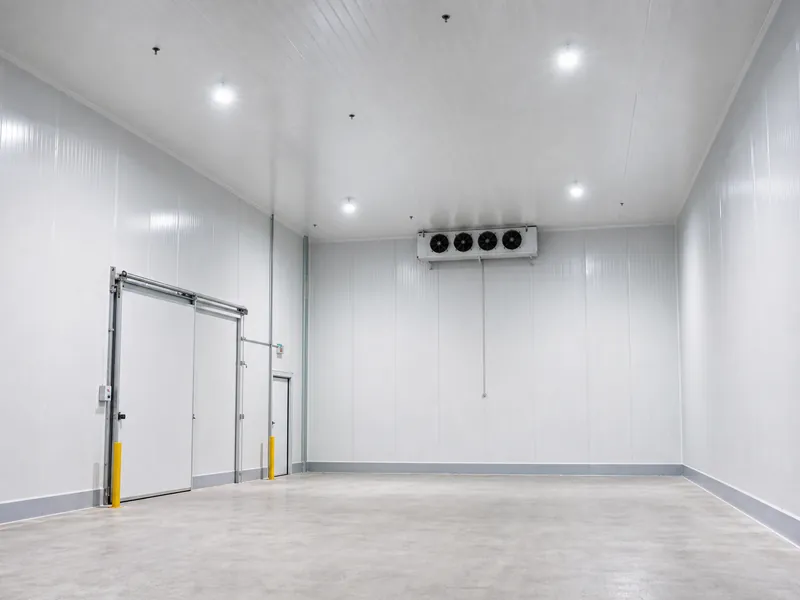
Cold storage breaks the pricing model above, because refrigeration rather than steel becomes the largest line on the budget. A refrigerated warehouse commonly runs $130 to $350 or more per square foot, with cooling equipment, insulated panels, and vapor control making up something like 30 to 40% of the build. Automated fulfillment buildings climb for a different reason — conveyors, mezzanines, and the power to run them. The budgeting takeaway is narrow: if a building has to hold temperature or run automation, price it as its own category instead of scaling a dry-storage number upward. Sizing the refrigeration or material-handling system itself is a separate exercise beyond this cost overview.
Conclusion
Before you trust any warehouse estimate, settle which of the three tiers it describes — a bare shell, a basic enclosed building, or a finished facility — because comparing a shell quote against a turnkey budget is how projects end up underfunded. The figures most likely to swing your number are the ones tied to how you will use the floor: clear height and structural loads, which set steel tonnage; the slab spec for your heaviest racking; and the depth of the interior fit-out. Decide those three before you collect quotes, and the per-square-foot figure stops being a guess.
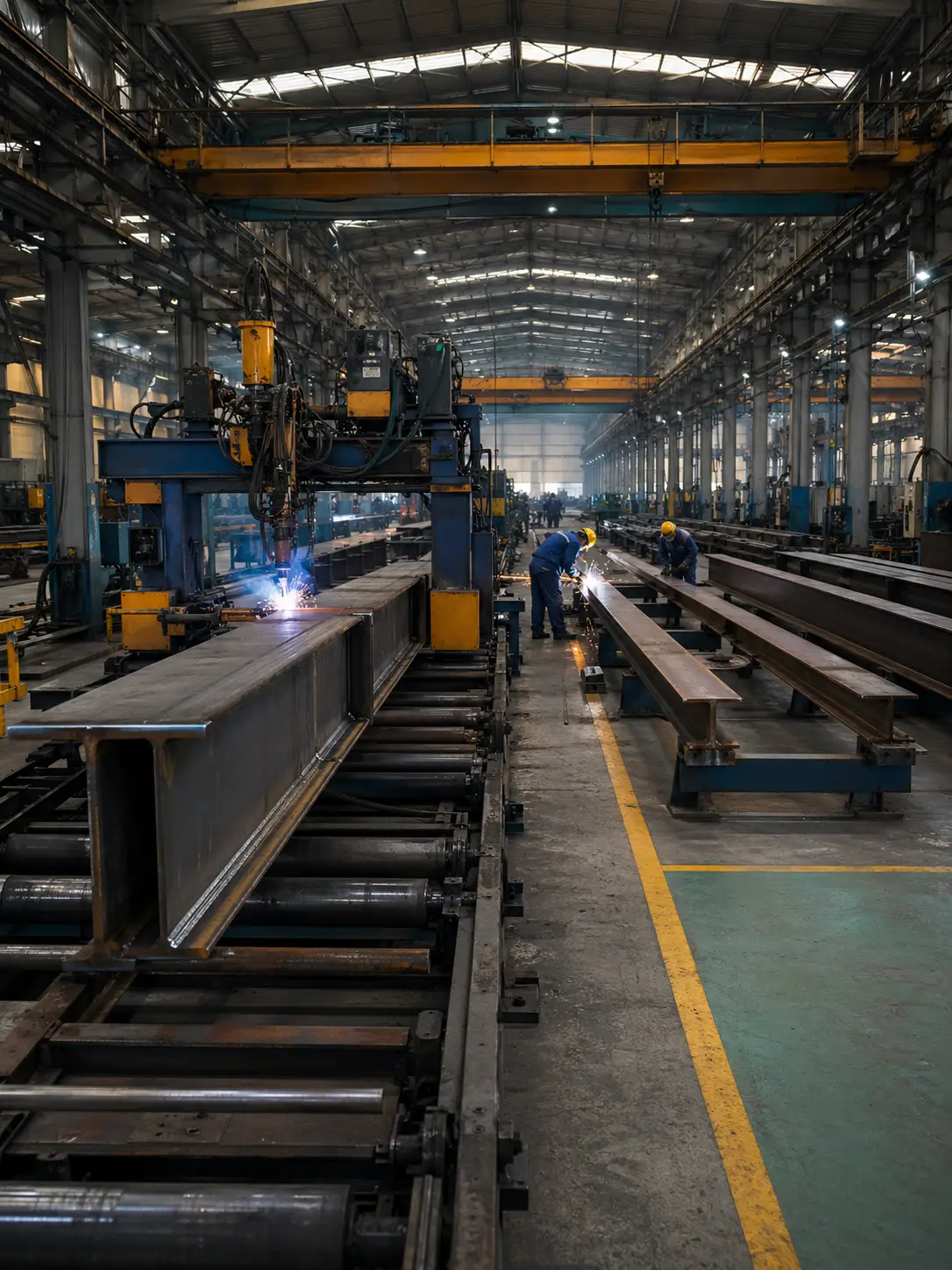
One lever that genuinely lowers the shell number is buying the steel package directly from the fabricator rather than through a layer of markup. As a steel structure manufacturer running its own H-beam, box-section, and C/Z purlin lines, KAFA quotes and builds the frame to your spans and loads, which is the part of the budget where a warehouse is won or lost. If you already have a footprint, clear height, and load targets in mind, request a quote on the shell first — that gives you a firm anchor to build the rest of the budget around.
FAQ
How much does it cost to build a 10,000 sq ft warehouse?
A 10,000-square-foot steel shell runs roughly $240,000 to $270,000, while the same building finished as a turnkey warehouse is closer to $1.25 to $2 million. The difference is fit-out, mechanical systems, and site work — not the steel itself.
Is a steel warehouse cheaper than a concrete (tilt-up) warehouse?
For most dry-storage buildings under about 50,000 square feet, a pre-engineered steel frame is the cheaper enclosed square footage and goes up faster. Tilt-up concrete becomes competitive on very large footprints, where poured wall panels double as structure and fire separation and the cost gap narrows.
What is the cheapest way to build a warehouse?
The lowest-cost route is a bolt-up pre-engineered metal building on a standard bay spacing, with a clear-span roof only as wide as the operation needs. Right-sizing clear height and span saves more than swapping materials, since both directly drive steel tonnage.
How much does the concrete slab or foundation cost?
A standard 4-to-6-inch warehouse slab costs about $5 to $7 per square foot, and a heavy-duty slab engineered for loaded racking and forklifts runs $8 to $15. Because the slab is poured early and is expensive to alter, confirm the heaviest point load it must carry during design rather than after.
Do I need fire sprinklers, and how much do they add?
Sprinklers typically add $1 to $4 per square foot, and whether you need them — and at what density — is dictated by building code and your insurer based on what you store and how high you stack it. High-pile and rack storage usually require an ESFR system at the upper end of that range.
How long does it take to build a warehouse?
A straightforward pre-engineered steel warehouse can move from foundation to enclosed shell in a matter of weeks once materials arrive, with total project time driven more by permitting and site work than by the steel. Schedules stretch when difficult soil, utility extensions, or specialty systems enter the picture.
Further Reading
- U.S. Census Bureau — Construction Spending — federal Value of Construction Put in Place data; track how nonresidential construction spending is trending before locking a budget.
- MBMA Design Resources — technical guidance from the Metal Building Manufacturers Association on pre-engineered steel building systems, including how loads are applied under the IBC and ASCE 7.
- NAIOP Industrial Space Demand Forecast — national forecast of demand for industrial and warehouse/distribution space, useful context before committing capital to a build.