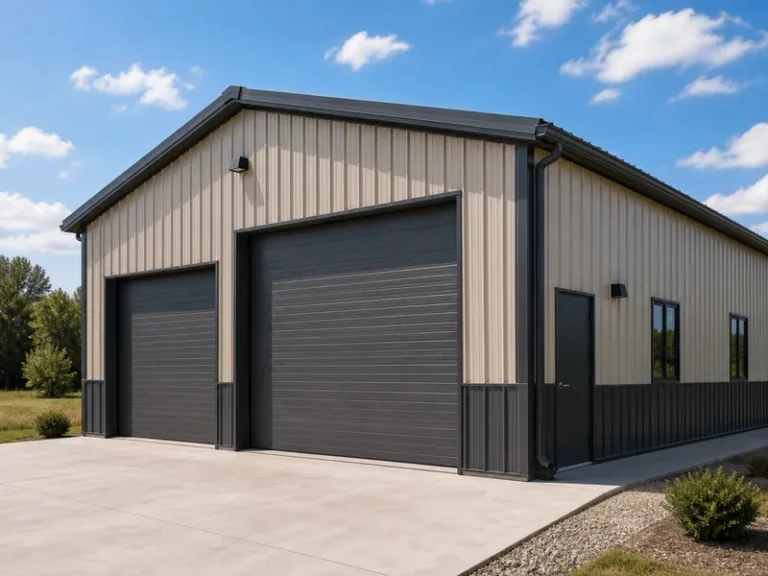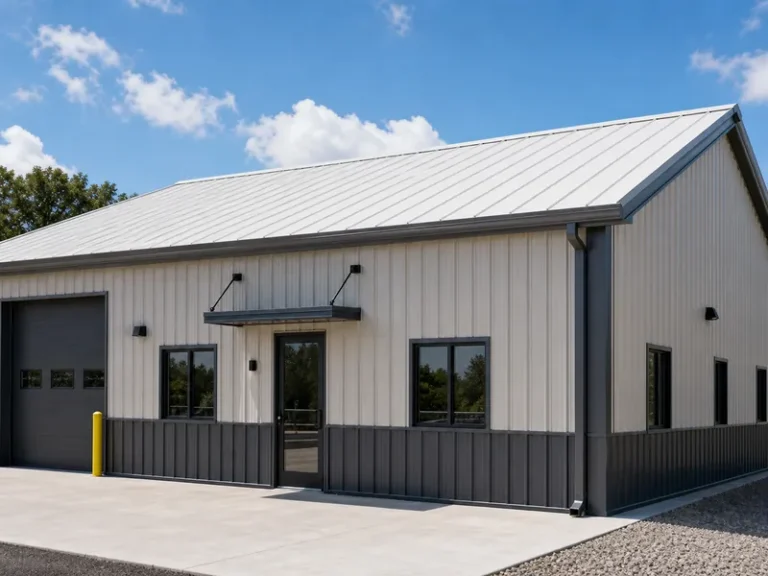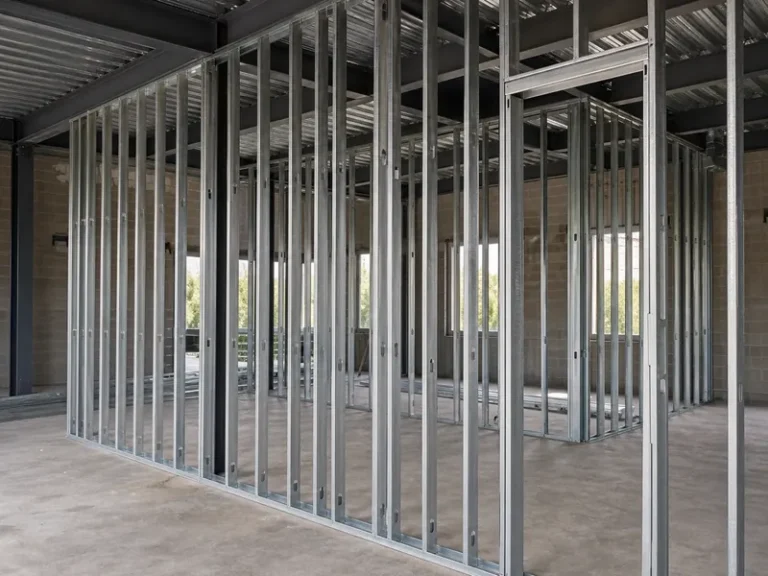





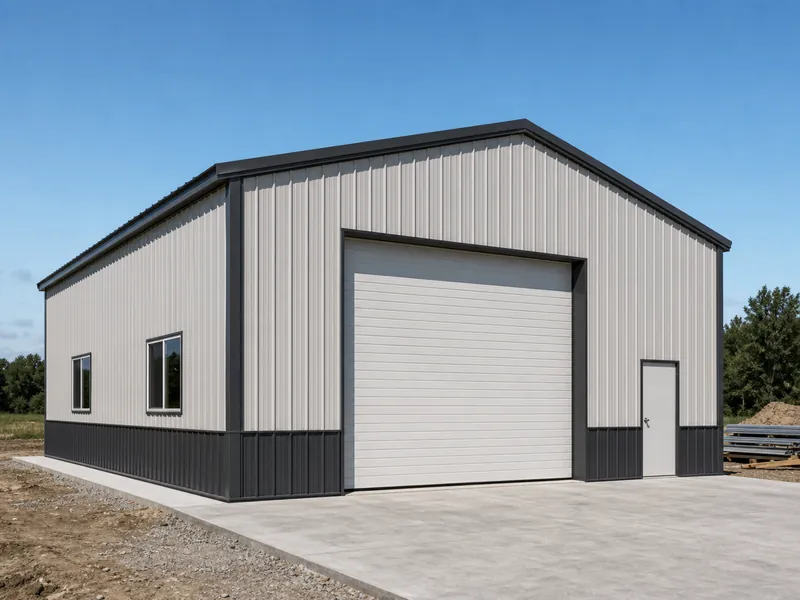
Building a metal shop usually costs $15 to $45 per square foot. The bare kit runs about $15 to $25 per square foot, and a turnkey shell runs $25 to $45 per square foot once a concrete slab, delivery, and erection are priced in. For a common 30×40 shop, that is roughly $18,000 to $30,000 as a kit, or $30,000 to $54,000 standing on a slab, before any interior finish. The spread is wide because a “shop” can mean an unheated storage barn or a wired, insulated working space, and those price differently. A number you can trust starts with one decision: which scope you are buying — kit, turnkey shell, or finished interior.
What a shop building costs per square foot
The per-square-foot price of a shop depends mostly on how much of the building the quote includes, not on the steel itself. A kit quote covers the structural steel, roof, and wall panels, plus trim, fasteners, and anchor bolts, and nothing below or inside them. A turnkey quote keeps that kit and adds the foundation, freight, and the labor to erect and skin the frame. A finished quote then layers on insulation, electrical, doors, and interior build-out, which is where a working shop separates from a cold shell.
Three scopes produce three different per-square-foot numbers:
- Kit / shell only — $15 to $25 per sq ft. Steel frame, roof and wall panels, trim, and basic engineering. No slab, no interior.
- Turnkey shell — $25 to $45 per sq ft. The kit plus a concrete floor, delivery, and erection: standing and weather-tight, but bare inside.
- Finished / conditioned — add $50 to $150 per sq ft for the finished areas, because insulation, wiring, and interior walls are priced like a building, not a metal envelope.
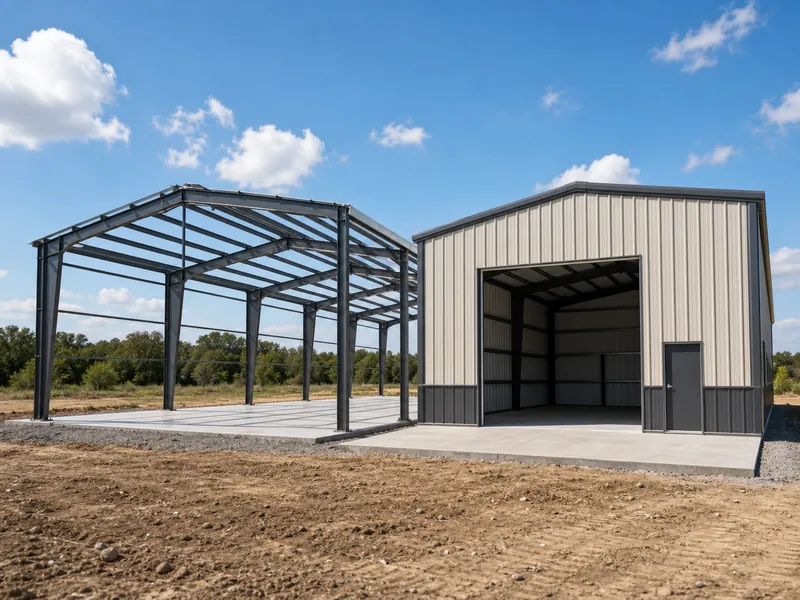
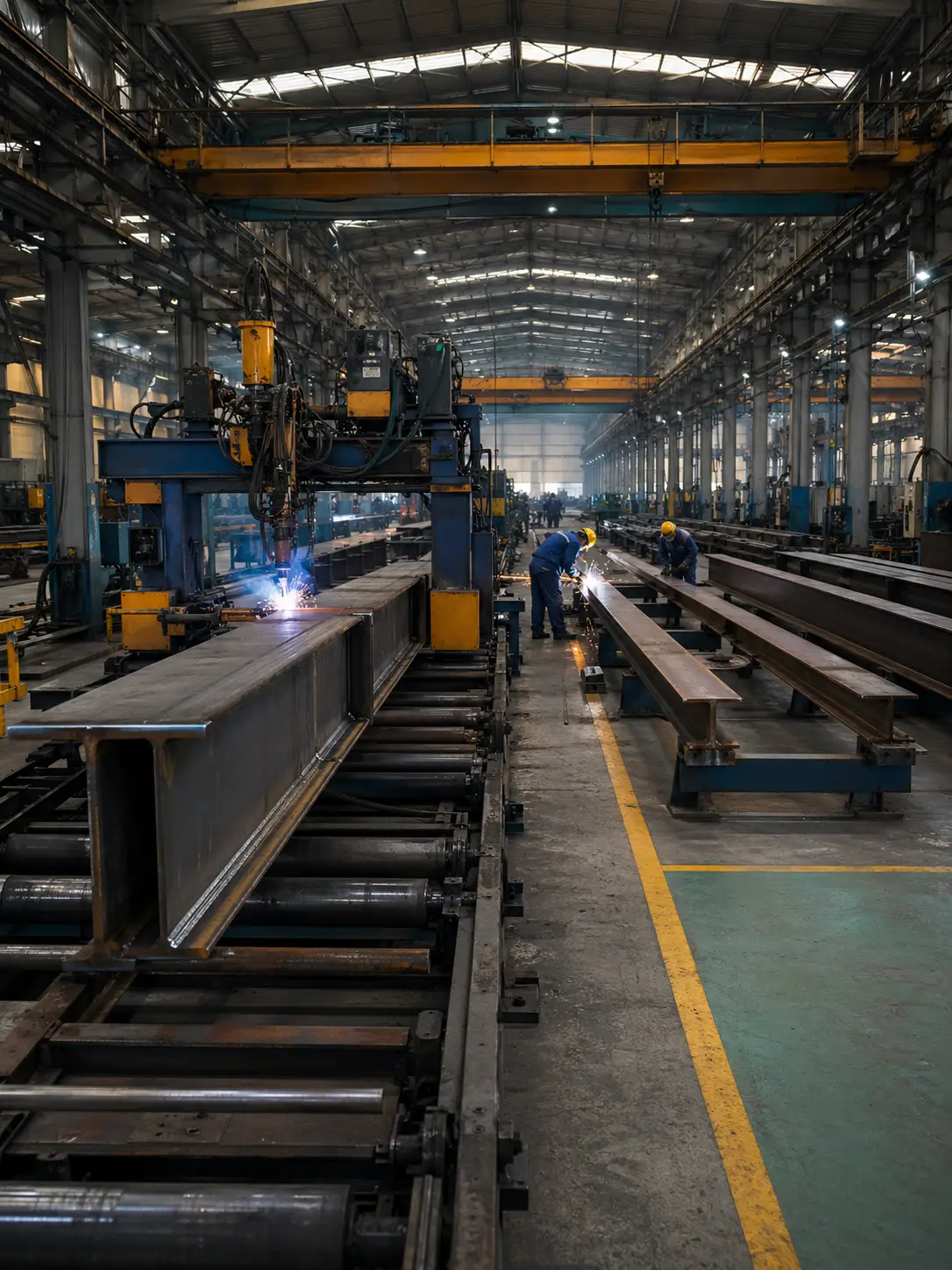
Because the parts are cut, punched, and pre-drilled in a plant, prefabricated commercial steel building kits sit near the bottom of the per-square-foot band as a frame. The cost then climbs with everything that happens after the kit lands on site. Smaller workshop buildings usually price in the kit range before finish, while a multi-bay commercial shop with offices moves toward the turnkey and finished numbers.
What a shop quote includes, and what it usually doesn’t. A kit or turnkey number generally covers the steel package, plus the slab and erection on a turnkey quote. It typically excludes site grading, permits and engineering stamps, utility hookups, HVAC, and interior finish. A quote rises above the bands here when the site needs heavy grading, the slab is thickened for equipment, snow or wind ratings increase, or doors and insulation are upgraded.
Shop building cost by size
Shop cost scales with floor area, but the price per square foot drops as the building gets bigger, so a small shop and a large one are not simple multiples of each other. The bands below assume a standard gable shop with a basic roof and eave height. Smaller shops sit near the top of each per-square-foot band and larger shops near the bottom, because fixed costs like engineering and mobilization spread across more area.
| Shop size | Floor area | Kit only ($15–$25/sq ft) | Turnkey shell ($25–$45/sq ft) |
|---|---|---|---|
| 24×30 | 720 sq ft | $11,000–$18,000 | $18,000–$32,000 |
| 30×40 | 1,200 sq ft | $18,000–$30,000 | $30,000–$54,000 |
| 40×60 | 2,400 sq ft | $36,000–$60,000 | $60,000–$108,000 |
| 50×80 | 4,000 sq ft | $60,000–$100,000 | $100,000–$180,000 |
These are shell numbers. The turnkey column already carries a basic slab and erection, so in a worked example like a 30×40 metal building with slab cost broken out line by line, the slab is the line that moves the total most. At the small end, a home or hobby shop overlaps heavily with a metal garage cost at the same footprint; the difference is door size, eave height, and how the interior is used, not the shell price.
The cost drivers that move a shop budget most
Five items move a shop budget more than the rest: the slab, erection labor, doors, insulation, and the roof-and-height pairing, with location setting the baseline beneath them.
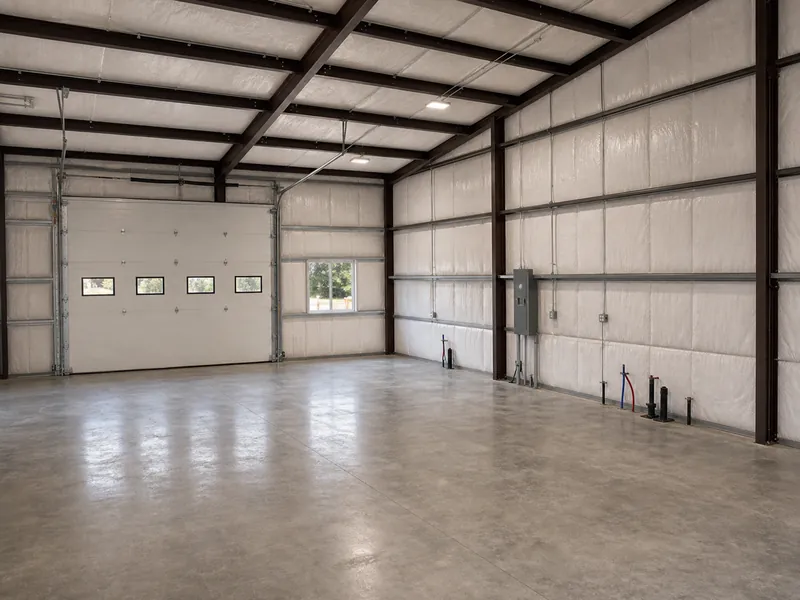
Foundation and slab. A standard four-inch concrete floor runs $4 to $8 per square foot. The number climbs toward $10 per square foot when the slab is thickened and reinforced for vehicle lifts, machinery, or point loads, which is common in a working shop. Before you accept a slab line, confirm the thickness, the rebar, and whether the price includes grading or assumes flat, compacted ground. A sloped or soft site adds excavation and fill that no metal building slab quote covers by default.
Erection labor. Standing and skinning the frame typically costs $5 to $10 per square foot, and kit prices routinely exclude it. Crew rates, building height, and site access drive the figure, so a tight lot or a tall eave pushes it toward the top. If you are weighing DIY against a crew, the labor cost for erecting a metal building is the figure to weigh against your own time and equipment.
Doors. A working shop needs wide, frequently used openings, so doors carry more of the budget than they would on a plain storage building. A sectional overhead door runs $900 to $4,000 installed depending on size and insulation, a roll-up door $1,200 to $5,000, and a walk door $450 to $850. A shop with three drive-through bays can carry more door cost than its insulation and electrical combined, so count and size the openings before comparing quotes.
Insulation. Insulation decides whether the shop is usable year-round and how much it costs to condition. Fiberglass batts run $0.70 to $2.50 per square foot; closed-cell spray foam runs $2.50 to $4.50 and doubles as vapor and condensation control, which matters in a metal building where panel sweat can rust tools and spoil stored goods. Match the R-value to how you heat the space, not to a default spec.
Roof, height, and location. A simple gable roof at a low pitch is the most economical profile; vertical roofs, steeper pitches, and taller eaves all add steel and labor. Underneath every line, local wind and snow ratings, labor rates, and permit rules set the floor, so the same shop prices differently across two zip codes. Permits commonly run $300 to $2,500, and denser metro areas run higher.
Metal shop vs. pole barn vs. wood-framed
For a working shop that needs a clear, column-free floor and big doors, a steel building is usually the better long-run value, even though a post-frame pole barn often quotes lower for the bare shell. A pole barn typically comes in roughly 10% to 30% below a comparable steel shell, because it uses wood posts on wider spacing and less steel. The trade-off is interior posts and shorter clear spans, which get in the way when you move vehicles or equipment across the floor.
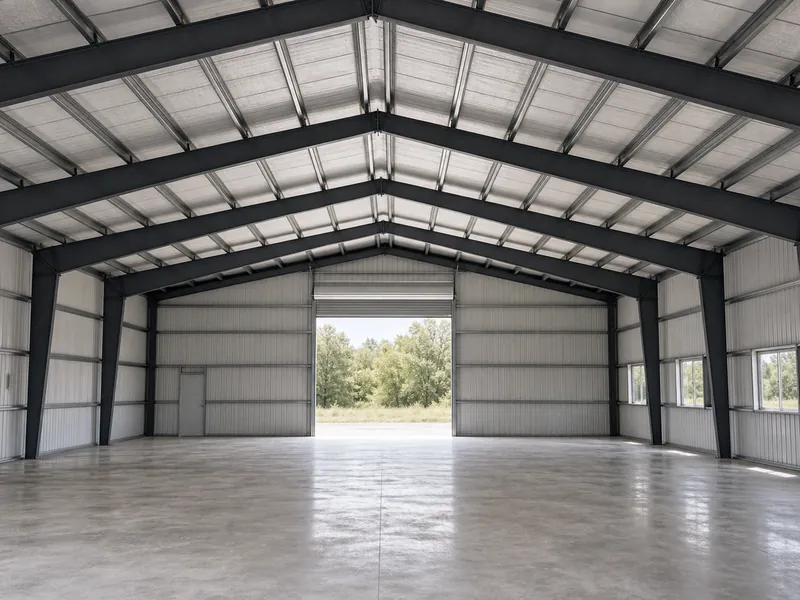
A rigid-frame steel shop gives a column-free interior and a longer maintenance life, and it carries wide door openings and heavier roof loads without extra framing. Stick-built wood shops land at the high end once finished, since framing, sheathing, and finish labor run $50 to $150 per square foot, similar to a finished steel shop but with more upkeep. Choose a pole barn when the budget is tight, the span is modest, and a few interior posts are acceptable. Choose steel when you want a clear-span floor, plan to add a slab and large doors for real equipment, or expect the shop to work hard for decades. This article covers shell and finish economics, not the structural engineering behind each system.
Adding living quarters or a finished interior
A shop with living quarters costs like two buildings on one slab: a cheap shell and an expensive home. The shell follows the kit and turnkey numbers above, but the living area is priced like residential construction, not a metal envelope. Finished interior space runs $50 to $150 per square foot on top of the shell, and a heated, plumbed living quarter with a kitchen and bath sits at the upper end. A 40×60 build with a finished 1,200-square-foot residence inside commonly lands around $150,000 and climbs past $200,000 with higher-end finishes.
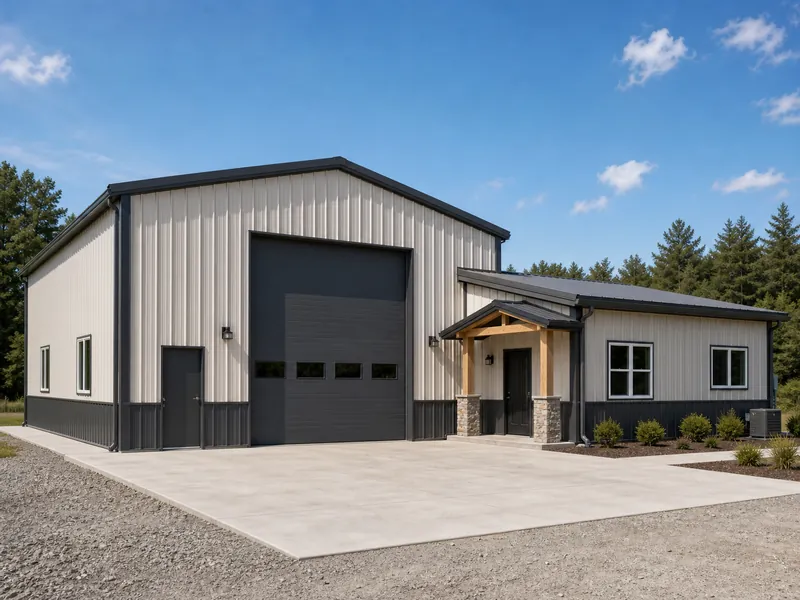
The total jumps because plumbing, HVAC, drywall, cabinetry, and fixtures do not scale with steel; they scale with finish level, so the same footprint can double in price between a bare shop and a “shouse.” If living space is the goal, budget the residence and the shop as separate line items, and confirm your local code treats the combined structure the way you expect before you commit to a layout.
What a shop quote usually leaves out
A kit price is not the price of a finished building, and the gap between them is where shop budgets tend to break. Several real costs rarely appear on the headline number, and each is easy to forget until the invoice arrives:
- Site preparation and grading: $1,000 to $5,000 or more, depending on slope and soil.
- Permits and engineering: commonly $300 to $2,500 for the permit, plus stamped drawings where local code requires them.
- Delivery and freight: roughly 4% to 7% of the package price, set by distance from the plant.
- Utility hookups: electrical service and panel, plus any plumbing run; electrical rough-in alone often costs $2 to $6 per square foot.
- Interior finish: insulation, walls, lighting, and climate control, none of which come with a shell.
Add these in before comparing two quotes, because a low kit price with none of them included will lose to a higher turnkey price that does. The cleanest comparison puts every quote on the same scope: same slab spec, same doors, same insulation, same delivery.
The bottom line on shop costs
The hardest part of a shop budget is making sure you are comparing the same building twice. A per-square-foot kit number and a turnkey number describe different deliverables, so set the scope first: decide whether you are buying a kit, a turnkey shell on a slab, or a finished, conditioned shop. Once the scope is fixed, two or three drivers swing the total more than anything else — the slab specification, the door package, and, for a working space, the insulation and electrical. Price those in detail and the rest of the estimate falls within a predictable band.
For most buyers, requesting an itemized kit quote alongside a turnkey quote keeps the slab, freight, and erection visible rather than buried in a single number. A fabricator that cuts its own H-beam frames and purlins, as KAFA does, can break the kit scope out line by line, which makes the turnkey jump easy to see and easier to budget. Settle the scope and the slab before the steel, and a shop estimate stops being a guess.
FAQ
How much does it cost to build a 30×40 shop?
A 30×40 shop (1,200 square feet) typically costs $18,000 to $30,000 as a kit and $30,000 to $54,000 turnkey on a basic slab. Adding insulation, several doors, and electrical can push a finished 30×40 toward $60,000 or more, depending on how the interior is outfitted.
Is a metal shop cheaper than a pole barn?
A steel shop usually costs more than a post-frame pole barn for the bare shell, by roughly 10% to 30%, but it returns a column-free interior and lower long-term maintenance. For a shop that stores vehicles or runs equipment across an open floor, the clear span often offsets the higher shell price.
What’s the cheapest way to build a shop?
The cheapest usable shop is a prefabricated steel kit erected on a basic slab, with insulation and interior finish added later as the budget allows. Owners who handle their own erection save the $5 to $10 per square foot that labor would cost, though a tall or large frame is hard to raise safely without a crew.
How much is a concrete slab for a shop?
A standard four-inch shop slab runs $4 to $8 per square foot, and a thicker, reinforced slab for lifts or heavy machinery runs closer to $10. Site condition is the wild card: a level, compacted pad pours at the low end, while a sloped or soft site adds grading and fill that the slab price alone does not include.
Do I need a permit to build a shop?
Most jurisdictions require a building permit for a permanent shop, and it commonly costs $300 to $2,500, more in dense metro areas. Permanent foundations, electrical, and plumbing usually trigger inspections, so confirm local setback and height limits before you order steel, since they can change the building you are allowed to put up.
Further Reading
- Metal Building Manufacturers Association (MBMA) — Industry association for metal building systems. Useful background on what a steel shop package includes and how the structure is engineered.
- U.S. Census Bureau — Construction Price Indexes — Government construction-cost data that tracks how building prices move over time, the backdrop for shifting steel and labor costs.
- International Code Council (ICC) — The body behind the IBC. Explains the permitting and code requirements that drive the local cost and approval differences noted above.