




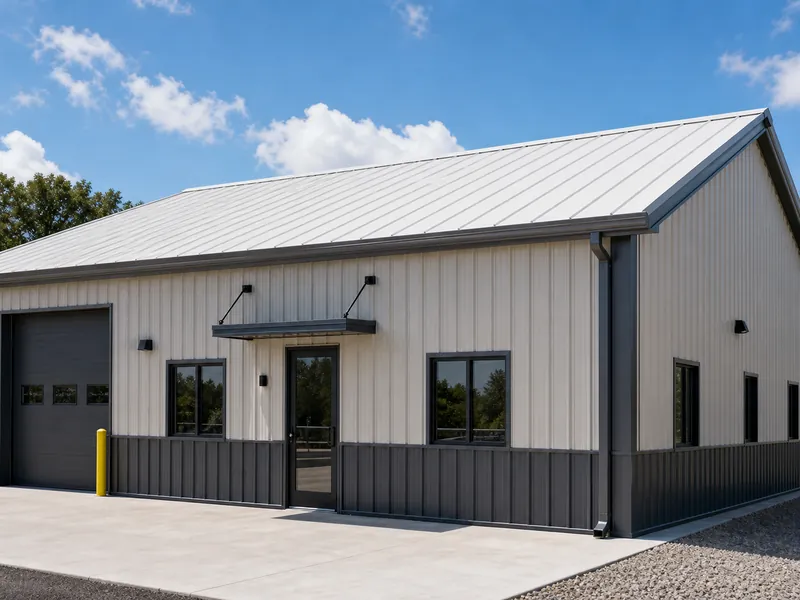
Energy efficiency in metal buildings is won or lost at the building envelope, not at the thermostat. Most of the gains come from four places: insulation and its R-value, control of thermal bridging at the steel frame, a reflective or cool roof, and tight air sealing. Mechanical systems—HVAC, daylighting, and efficient lighting—then ride on top of an envelope that is already doing its job. The sections below take each lever in roughly the order it pays off, and show how climate zone and energy code decide how far to push each one.
Why Metal Buildings Start With an Energy Advantage
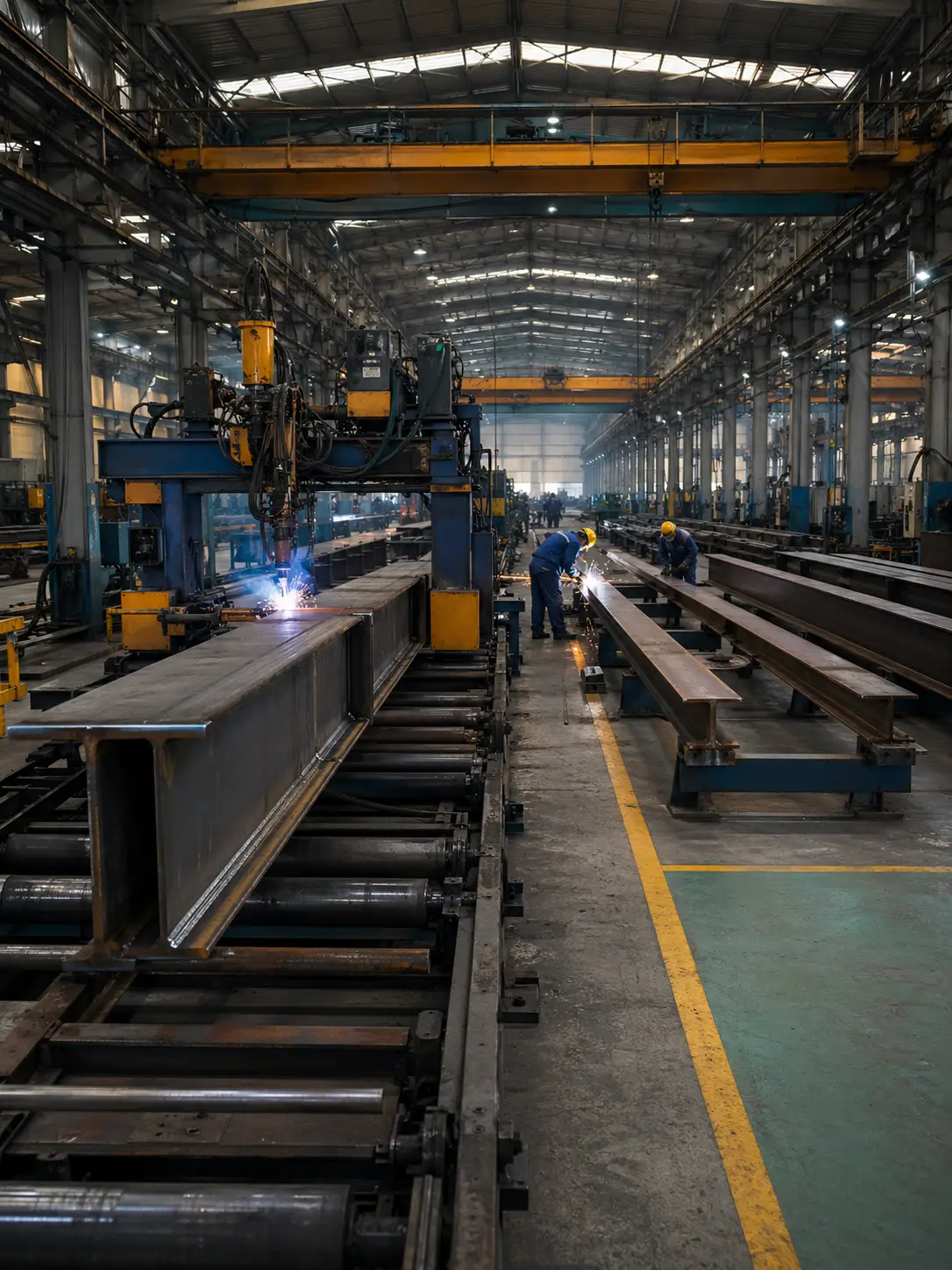
Steel framing gives a building a head start on efficiency through manufacturing precision, not through the metal itself. Components for a pre-engineered frame are cut, punched, and welded to tight factory tolerances, so panels and secondary members line up with fewer gaps for air to leak through. That same steel is also a fast conductor of heat, which is the honest catch: a bare metal shell heats and cools quickly, and every efficiency claim below depends on how the envelope is detailed, not on the frame alone. The rigid frame, purlins, and girts also create a regular, predictable cavity that an insulation system can be designed around from the start. That is one reason energy performance is easier to engineer into prefab commercial buildings than to retrofit later. As a steel fabricator, we see the payoff when insulation supports and thermal breaks are planned at the detailing stage rather than improvised on site.
Insulation and R-Value: the Core of the Envelope
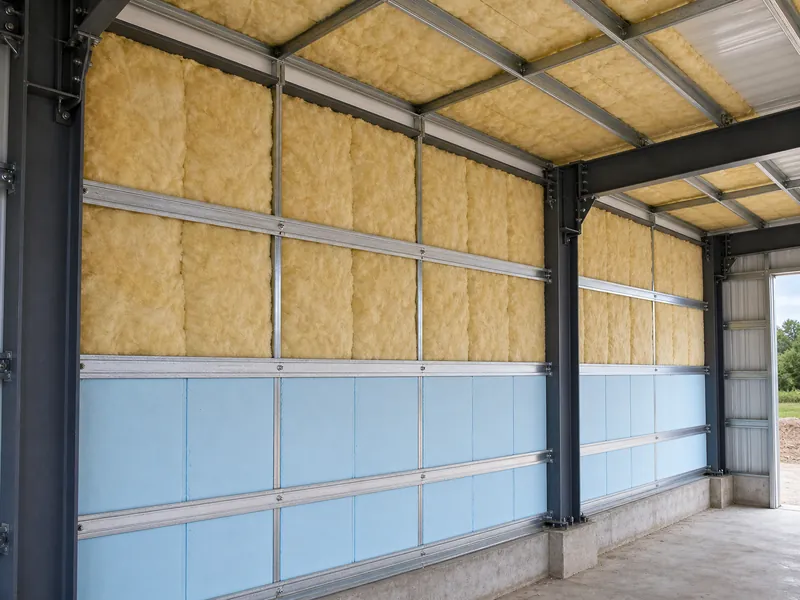
Insulation is the core of the envelope, and the right amount is set by climate zone and energy code rather than by a single universal number. In practice, assemblies for metal buildings span roughly R-8 to R-30, depending on the climate zone, whether the surface is a wall or a roof, and which code cycle applies. Commercial work is typically benchmarked against ASHRAE 90.1 or the IECC, both of which raise requirements as the climate gets colder. Roofs generally carry the higher R-value of the two, since a large share of heat moves through the top of a tall, open metal building. The larger decision is how the insulation is delivered, not only how much of it there is. Metal building insulation comes in a few common forms, each with a different strength:
| Insulation type | Where it fits | Trade-off to weigh |
|---|---|---|
| Faced fiberglass blanket | Draped over purlins and girts; the default for walls and roofs | Low cost, but it compresses at framing lines and loses R-value there |
| Closed-cell spray foam | Sprayed to the underside of the deck or sheeting | High R-value per inch and air sealing in one step; higher cost |
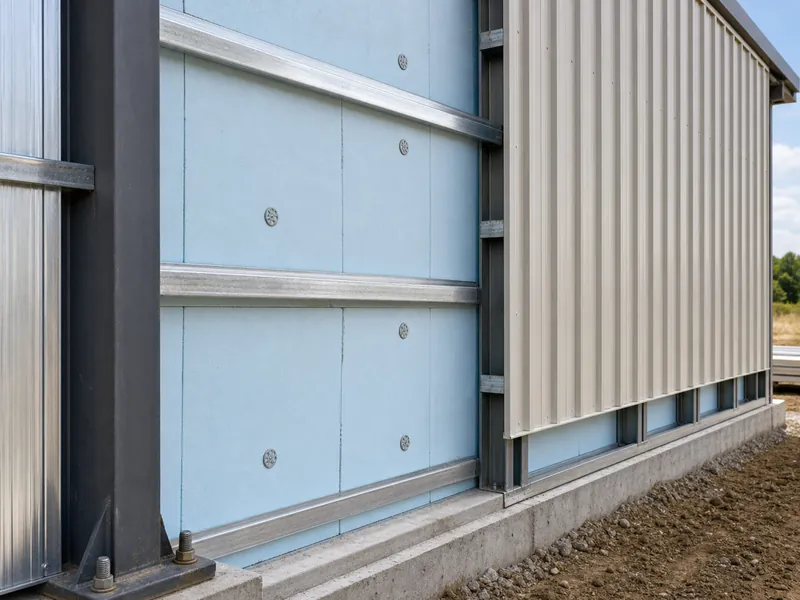
| Rigid foam board (continuous insulation) | Run outboard of the framing | Cuts thermal bridging because it spans steel members unbroken |
| Insulated metal panels (IMPs) | Factory-built wall or roof panel | Consistent R-value and a tight joint, at a higher material cost |
For colder climates, pairing a blanket system with continuous insulation usually outperforms a thicker blanket alone, since extra blanket does little where the framing already interrupts it.
Stopping Thermal Bridging at Steel Framing
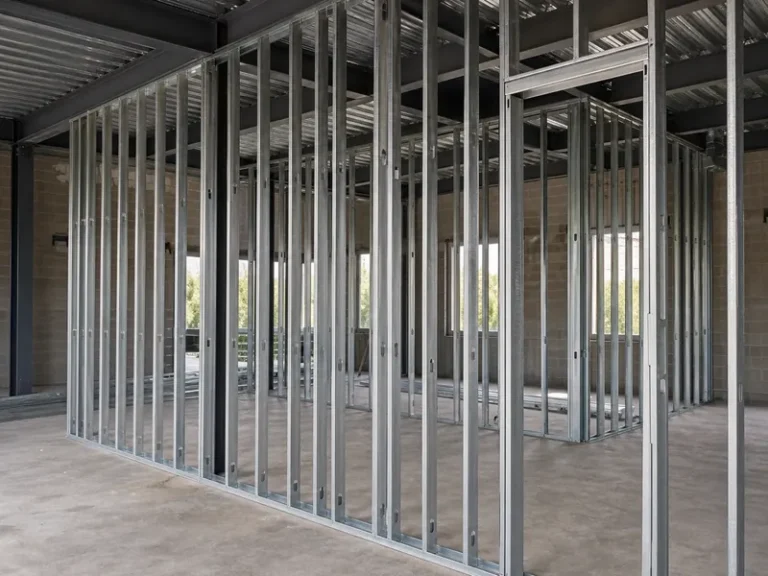
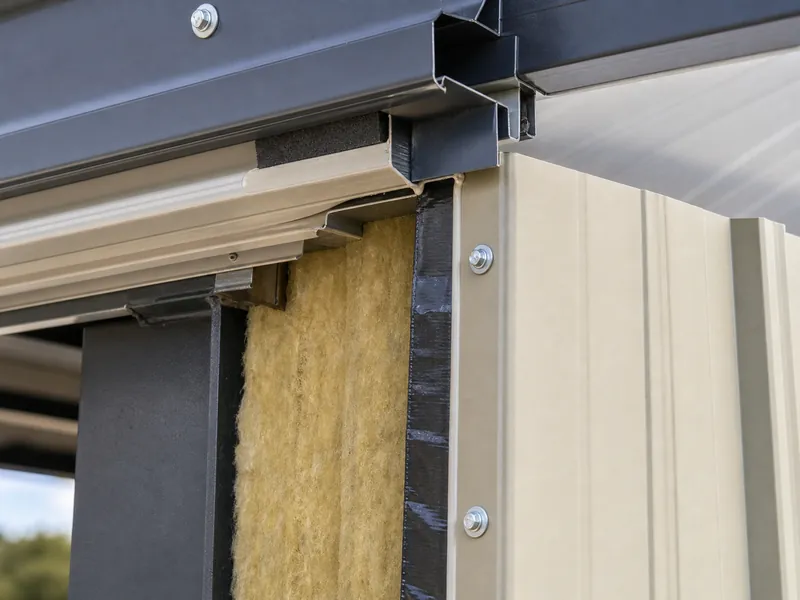
Filling the cavity with insulation is not the finish line, because steel conducts heat straight through that insulation wherever a member touches the panel. Each purlin and girt becomes a thermal bridge—a continuous metal path that shorts past the surrounding R-value—and draped blanket insulation is thinnest at exactly those contact points. The fixes are physical: a thermal block or spacer between the steel and the panel, or a layer of continuous insulation run outboard of the frame so it is never interrupted. This matters most with light gauge metal framing, where closely spaced studs multiply the number of bridges. Skip it and the cost is not only lost heat: cold steel inside humid air drives condensation, which shows up as streaks or ghosting on the ceiling and, over time, as corrosion and stained insulation. Checking the assembly for unbroken thermal paths is a quick design review that prevents an expensive moisture problem.
Reflective and Cool Roofing
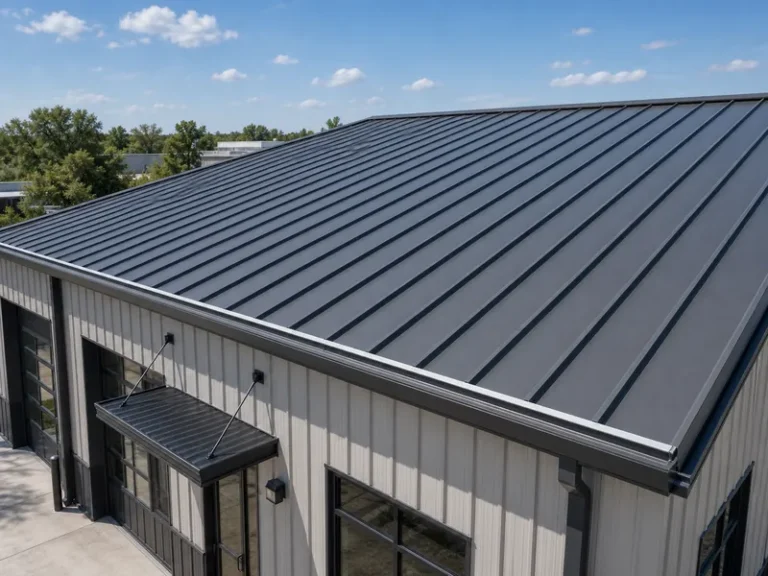
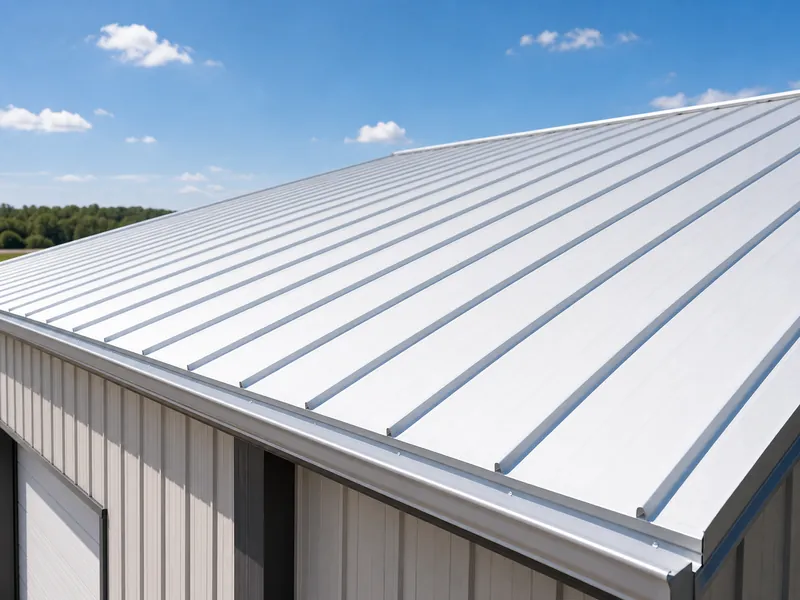
A reflective or cool-coated roof targets cooling load, which makes it most valuable in hot, cooling-dominated climates and far less so where heating dominates. A light or cool-rated metal roof can reflect well over 70 percent of incoming solar energy depending on its coating and color, and industry data from the Metal Construction Association and AISI links cool metal roofing to cooling-energy reductions of up to roughly 40 percent in the right applications. The mechanism is two-part: high solar reflectance bounces sunlight away, and high thermal emittance—up to around 90 percent for quality coatings—lets the surface release the heat it does absorb. Because reflectance and emittance vary widely between products, the dependable figures come from a roof’s published cool-roof rating rather than from its color alone. Standing seam is the usual carrier for these coatings on commercial roofs, and the panel profile keeps fasteners out of the weather. That makes the choice of a standing seam metal roof as much an energy decision as a waterproofing one. In a heating climate, put the roof budget into insulation depth before reflectivity.
Air Sealing and a Tight Building Envelope
Air leakage can undo a well-insulated metal building, because uncontrolled airflow moves both heat and moisture through gaps that insulation alone does not close. The leak-prone spots are predictable in a steel structure, and they are where sealing pays back the most:
- The eave and base, where wall panels meet the slab and the roof
- Panel side-laps and end-laps
- Penetrations for doors, windows, pipes, and conduit
- Framed openings that were cut in the field
Sealing these with the right tapes, closures, and sealants keeps conditioned air in and humid air out. The vapor retarder is positioned for the climate, toward the warm-in-winter side in heating regions, so moisture is stopped before it reaches cold steel and condenses. There is a sizing payoff as well: a tight envelope lowers the peak heating and cooling load, so the HVAC equipment can be specified smaller, trimming both first cost and running cost. A blower-door or smoke test is the practical way to confirm the envelope performs as drawn rather than assuming it does.
HVAC, Daylighting, and Lighting Efficiency
Once the envelope is tight, mechanical and lighting choices decide how efficiently the remaining load is met. The first move is sizing: a right-sized HVAC system matched to the now-lower load runs more efficiently than an oversized unit that short-cycles, so the load calculation should follow the envelope work rather than precede it. Daylighting helps on the lighting side, since translucent wall or roof panels and skylights cut daytime electric lighting. But the same openings add solar heat gain, so they are sized and placed as a trade-off, not scattered across the roof. Efficient lighting is a straightforward upgrade: LED fixtures draw at least about 75 percent less energy than incandescent equivalents, and occupancy sensors with programmable controls keep them off when a bay is empty. On-site solar is a reasonable next step once consumption is low, but it is a generation question that sits outside the envelope decisions covered here.
Conclusion
The order of investment matters as much as the list of measures. Start with the envelope—insulation to the R-value your climate zone and energy code require, thermal breaks at the steel framing, and air sealing at the eaves, laps, and penetrations—because those gains are permanent and feed every system above them. Add a reflective roof where cooling dominates the year, and weight the budget toward insulation depth where heating does. Use HVAC sizing, daylighting, and LED lighting as the layer that optimizes an already-tight building, and treat on-site solar as the step after consumption is low. Two checks keep the plan honest: confirm the assembly R-values against the current code cycle, and verify air-tightness by testing instead of assuming it. A steel fabricator can detail the insulation supports, thermal breaks, and panel laps into the design from the start, which is far cheaper than correcting a cold, leaking envelope later. If you want that built into your next project, get a free quote with the climate zone and intended use in hand.
FAQ
Are metal buildings energy efficient?
Metal buildings are as energy efficient as their envelope is detailed, not inherently more or less so than other materials. The steel frame conducts heat, so real-world performance depends on insulation, thermal-bridge control, and air sealing. A well-insulated, tightly sealed metal building performs on par with other construction types and benefits from the tight factory tolerances of its frame.
What R-value does a metal building need?
The required R-value depends on the climate zone and the energy code in force, not on a single recommended figure. Assemblies commonly fall in the R-8 to R-30 range, with colder zones and roof assemblies sitting at the higher end. Commercial projects are usually checked against ASHRAE 90.1 or the IECC, so confirm the target with the current code cycle for your location.
Does a cool roof actually lower energy bills?
A cool roof lowers cooling bills in hot climates but offers little benefit, and can slightly raise heating use, where winters dominate. Reflective metal roofing can cut cooling energy by up to roughly 40 percent in cooling-dominated applications by reflecting over 70 percent of incoming solar energy. In heating-dominated regions, insulation depth is the better place for the budget.
Why does a steel building sweat or show ceiling ghosting?
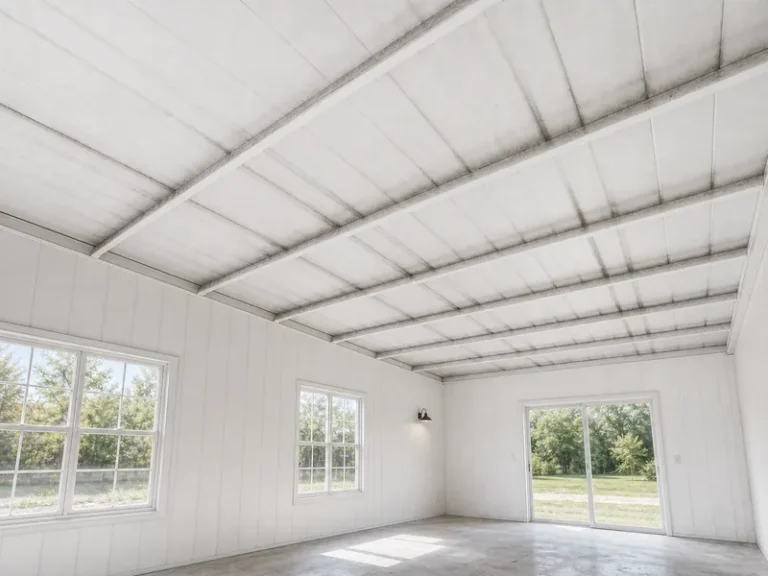
Sweating and ceiling ghosting trace back to thermal bridging and air leakage, where warm humid air meets cold steel and condenses. Uninsulated purlins and girts stay cold and pull moisture out of the surrounding air, leaving streaks, drips, or stains over time. Continuous insulation, thermal breaks, and air sealing are the corrective measures.
Should you insulate an existing metal building?
Retrofitting insulation into an existing metal building usually pays off, especially if the original shell was bare or under-insulated. Closed-cell spray foam and rigid board are common retrofit choices because they add R-value and air sealing without a full teardown. The payback is fastest where current air leakage and thermal bridging are worst, so a blower-door test or thermal scan helps target the spend.
Further Reading
- U.S. Department of Energy — Insulation (Energy Saver) — U.S. DOE. Consumer-facing guidance whose R-value and climate-zone principles set the insulation targets used in the envelope sections above.
- Cool Roof Rating Council — Rated Products — CRRC, an independent ANSI-accredited nonprofit. Third-party ratings of solar reflectance and thermal emittance, the basis for comparing actual cool-roof performance between products.
- ANSI/ASHRAE/IES Standard 90.1 — ASHRAE. The energy standard most commercial metal buildings are designed against; defines minimum envelope and system efficiency requirements.