




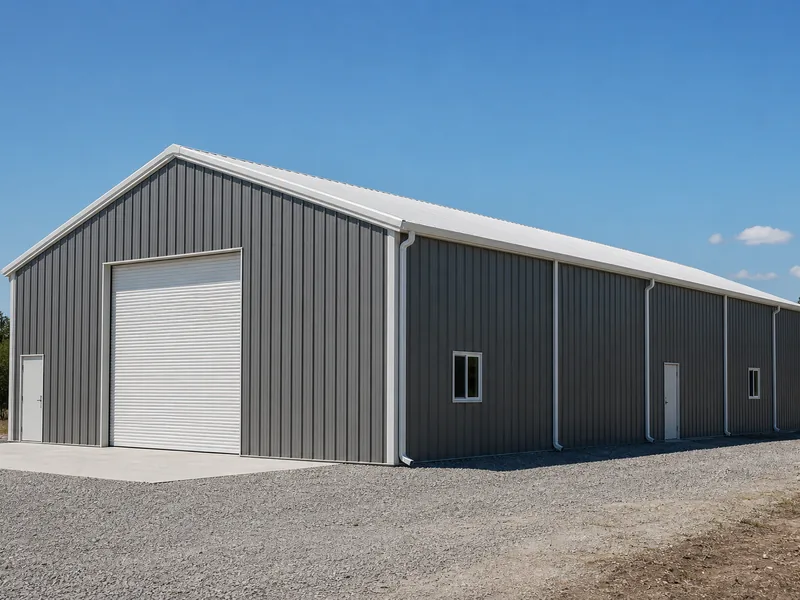
A 40×80 metal building encloses 3,200 square feet, and its price turns almost entirely on what a given quote actually includes. A bare steel kit runs roughly $48,000 to $70,000, while a turnkey building raised on a finished slab usually lands between $86,000 and $129,000. That gap is where most budgets slip, because a kit price and a finished-building price answer different questions. These are current planning ranges rather than fixed quotes, so recheck them against live steel, concrete, labor, and freight pricing before you commit.
A 40×80 quote should isolate the metal building concrete slab from the steel shell so site and reinforcement assumptions are visible.
Cost scope note: Treat the ranges below as scope-specific planning numbers. Kit or shell figures exclude the slab, site work, delivery, permits, insulation, utilities, and interior finish unless the line item says otherwise. Heavy loads, poor soil, tight access, and custom openings can move a quote above the base band.
A 40×80 sits toward the larger end of the single-span custom steel structures that owners buy as kits, so its pricing follows the same logic as smaller footprints at a higher base. If your plans are tighter, the breakdown of 30×50 metal building cost shows how the same line items scale down.
How Much a 40×80 Metal Building Costs
The single most useful thing to settle before reading any 40×80 quote is whether the figure describes a kit or a finished building. A steel kit covers the primary frame, secondary framing, wall and roof panels, trim, and fasteners at about $15 to $22 per square foot, which works out to $48,000 to $70,000 for 3,200 square feet. It does not include the slab, the crew to erect it, or any site work, so a kit price on its own never represents a building you can occupy.
Turnkey pricing folds those costs back in. With the foundation, erection labor, and basic site preparation included, installed costs run about $27 to $40 per square foot, or roughly $86,400 to $128,600. Some published guides quote figures well above that range, into the low hundreds of thousands. Those describe a fully finished commercial space with full electrical, HVAC, and interior buildout, not the weather-tight shell most buyers price first. Read the high numbers as a ceiling for heavy fit-outs, then confirm which scope a quote is built on before comparing it to another. One question is useful to ask up front: do delivery and engineered drawings sit inside the kit price, or get billed separately? Freight on 3,200 square feet of steel is not a rounding error.
40×80 Cost Breakdown by Component
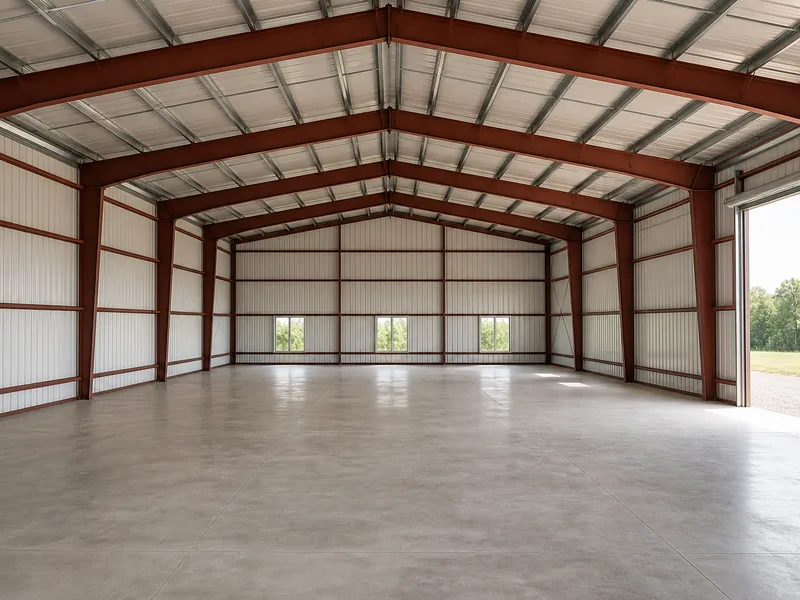
Four line items account for nearly every dollar in a 40×80 project: the kit, the foundation, the erection labor, and site preparation. On a typical build the kit is about 55 percent of cost, the foundation close to 20 percent, and labor around 25 percent, with site work added on top depending on the lot.
| Component | Typical cost per sq ft | 40×80 total (3,200 sq ft) | What it covers |
|---|---|---|---|
| Steel kit (shell) | $15–22 | $48,000–70,000 | Primary frame, purlins and girts, wall and roof panels, trim, fasteners |
| Concrete slab | $4–10 | $13,000–32,000 | 4–6 inch reinforced slab; confirm whether vapor barrier and anchor-bolt layout are included |
| Erection labor | $5–10 | $16,000–32,000 | Crew to assemble and raise the structure |
| Site preparation | Varies by lot | Quoted per parcel | Clearing, grading, drainage, utility connections |
Read those lines as a stack, not a menu. A 40×80 budget builds up in steps: kit only at $48,000 to $70,000, then plus the slab, then plus erection labor, which brings a turnkey shell to roughly $86,000 to $129,000 before any interior finish. Seeing the stack is what explains how a $50,000 kit becomes a $120,000 building.
The kit is often the more predictable line once the engineered drawings and scope are fixed, since steel packages price from those drawings rather than local conditions. The foundation and labor lines are where quotes diverge most, because both track the site rather than the building. A standard slab covers 4 to 6 inches of reinforced concrete; heavier reinforcement, thickened edges, or site correction can push the slab line above the basic $4-to-$8 band. Whether it also includes the vapor barrier and the anchor-bolt layout that ties the frame down varies by quote, so confirm that rather than assume it. Expansive clay, rock, or a sloped lot can push the slab well past its base range.
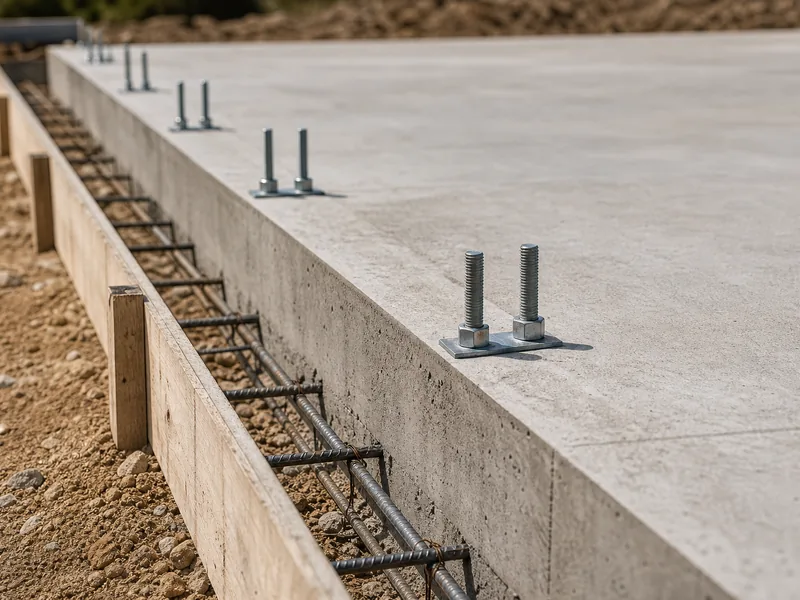
Erection labor swings with region and crew availability more than with building size; the detailed labor cost for erecting a metal building breaks down what affects it. One field detail owners underestimate is the anchor-bolt layout cast into the slab. Misaligned bolts can delay erection and force field correction, which is why the slab and the frame have to be dimensioned together rather than poured first and matched later. Site preparation depends on the parcel, covering clearing, grading, drainage, soil testing, and utility runs. A flat, cleared lot with utilities at the road sits near the bottom; a wooded or sloped site that needs excavation and a new access road costs considerably more.
What Drives a 40×80 Building’s Price Up or Down
Two buildings with identical 40×80 footprints can differ by tens of thousands of dollars once height, loads, design, and location are accounted for. The primary frame is the heaviest single cost in any kit, so anything that adds steel to it moves the price first.
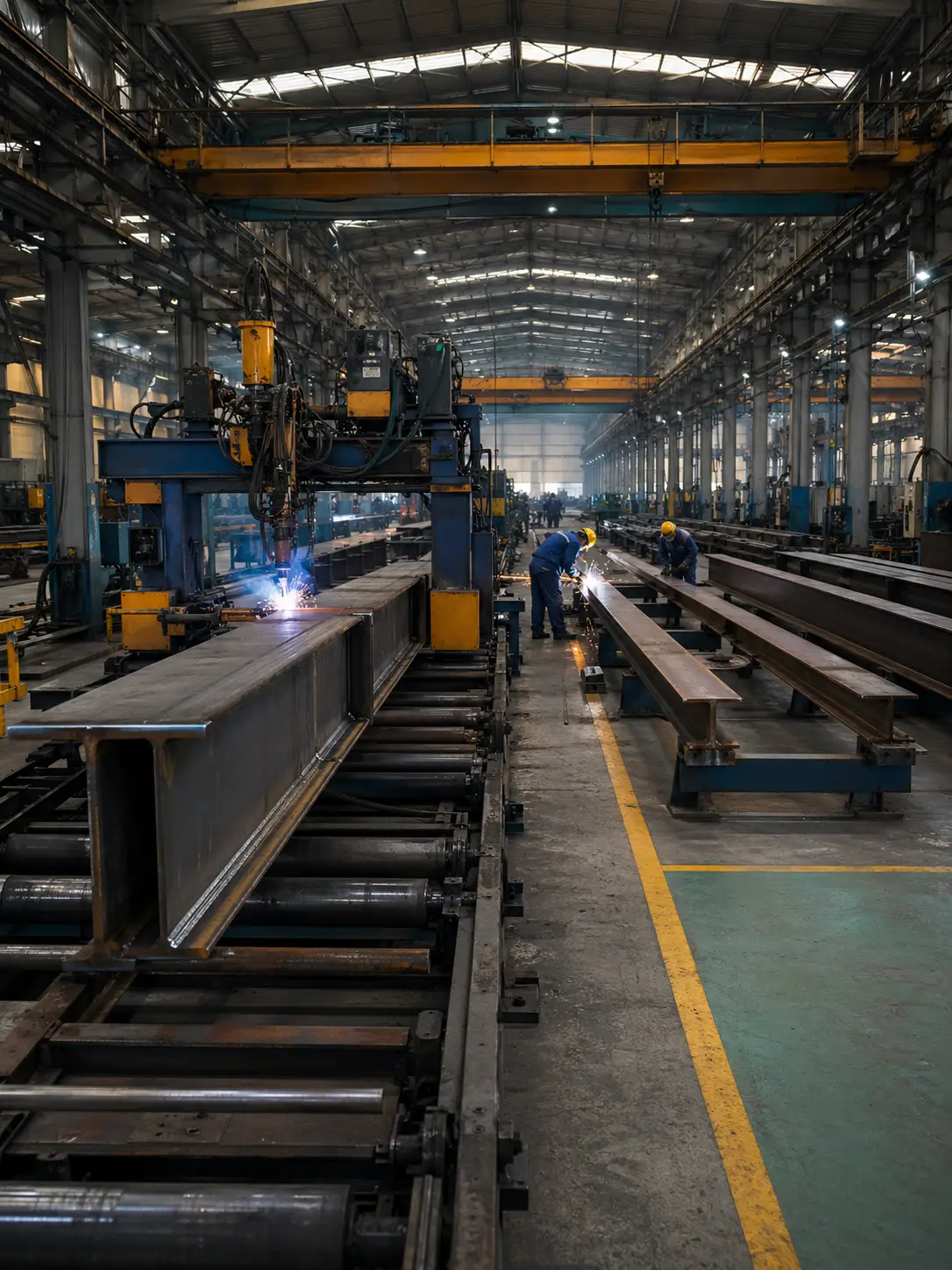
Clear height is the clearest example. Raising the eave adds material to every column and rafter, so each step up carries more tonnage and more cost without changing the floor area at all. Snow and wind loads work the same way, sizing both the main frame and the secondary C and Z purlins that carry the panels. At our 20,000 m² Qingdao plant, those load decisions are what the H-beam and C/Z purlin lines turn into steel. A quote cannot firm up until the design loads for your site are set.
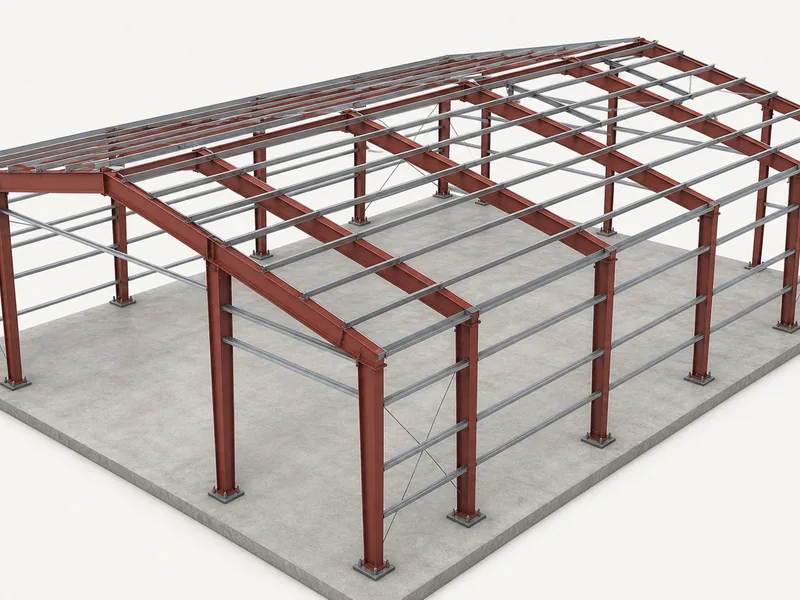
Design complexity adds the next layer. Wider clear spans, extra framed openings for oversized doors, and any mezzanine all concentrate more load into the frame and raise the kit accordingly.
Engineering upgrades are a related driver that owners often meet only at the quoting stage. Raising the wind rating for a hurricane-prone county, increasing the snow-load rating for a northern site, stepping up to a heavier panel gauge for hail, or switching to a standing-seam roof each adds steel or material to the package. How much they add depends on the local loads, the panel gauge, the roof system, and the engineering scope. These are rarely optional extras: the code and your climate set most of them, which puts them in the base budget rather than the wish list.
Location then sets the labor and durability terms. Regional rates can shift erection from the low end in parts of the South to roughly double that on the coasts. High-humidity coastal sites are also where fasteners and panel seams should be specified for corrosion resistance first, since cutting that corner surfaces as rust years later rather than on the invoice. Comparing a 40×80 against other metal building sizes helps clarify how span and height drive these trade-offs.
Add-Ons and Finishing That Change the Final Number
The shell price assumes an empty building, so insulation, openings, and climate control are priced separately on top of every range above. For a conditioned shop, office, or year-round workspace these items are not really optional, though a bare storage or agricultural shell may skip most of them.
| Add-on | When it matters | How it is priced |
|---|---|---|
| Insulation | Any conditioned or climate-sensitive space | Layered by system: basic double-bubble or blanket sits at the low end; fiberglass and higher R-value systems cost more; spray foam or a fully conditioned use needs a separate quote |
| Doors & windows | Drive-through access, daylight, egress | By grade and schedule, from light residential units to heavy commercial assemblies; price against an actual door and window schedule |
| Electrical service | Powered equipment, lighting, outlets | Scales with load, from a 200-amp service for a simple shop to 400 amps or more for commercial use |
| HVAC | Heating or cooling a conditioned volume | Scales with the volume you choose to condition and the local climate |
| Permits | Every jurisdiction | Confirmed locally, often arriving as several separate fees rather than one |
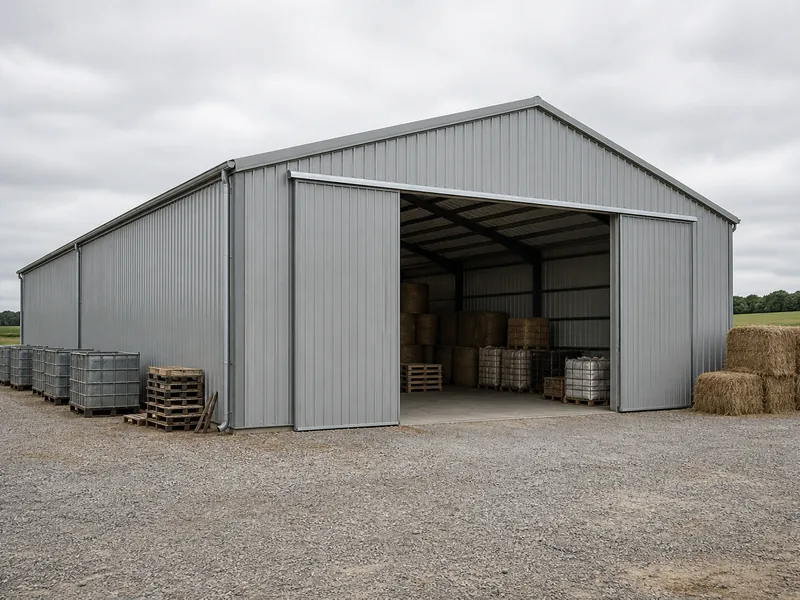
This guide covers the building envelope and its systems. It does not price the land, interior office or living buildout, or specialized process equipment, each of which is estimated on its own and can easily rival the shell.
Budgeting a 40×80 Build Before You Request Quotes
A comparable quote starts with a fixed scope, not a fixed number. Work through four steps before you compare prices:
- Fix the scope. Decide whether you are pricing a kit, a turnkey shell, or a fully finished building, because numbers built on different scopes cannot be lined up side by side.
- Check the split. The rough 55/20/25 ratio across kit, foundation, and labor flags whether a quote has left out a line item.
- Add a contingency. A 10 to 15 percent reserve absorbs the site-work and permitting surprises common on a build this size.
- Confirm exclusions. Confirm freight, engineered drawings, and quote validity, since steel pricing moves with the market and quotes carry short windows.
Sourcing affects predictability too. KAFA has qualifications for light and heavy steel structure design, fabrication, and installation, and operates under documented quality procedures. When one contracted scope covers design, fabrication, and erection, it can make scope gaps easier to spot early rather than after they turn into change orders. Whatever the supplier, the discipline holds: send one written scope to two or three of them, then compare line by line. A bid far below the rest more often signals a missing item than a better deal.
Putting Your 40×80 Budget Together
The widest swings in a 40×80 budget come from three places: the foundation and site work your specific lot demands, the load and height upgrades your use and climate require, and how far you finish the interior. None of the three can be read off a per-square-foot average, which is why a kit price and a finished building price describe different projects.
Settle which estimate you are working toward before comparing a single quote, then confirm the slab and load requirements first. Those two decisions move the number more than any add-on, and they are the hardest and most expensive to reverse once the steel is cut and the concrete is poured.
Frequently Asked Questions
How much does a 40×80 metal building cost per square foot?
A steel kit runs about $15 to $22 per square foot, while a turnkey building runs roughly $27 to $40 per square foot installed. The kit figure covers only the steel package; the turnkey figure adds the foundation, erection, and basic site work, so the two are not interchangeable.
What’s the difference between kit and turnkey pricing for a 40×80?
Kit pricing covers the steel shell alone, around $48,000 to $70,000 for a 40×80. Turnkey pricing adds the slab, erection labor, and site preparation, which brings most projects to roughly $86,000 to $129,000 before any deep interior finishing.
How much does a concrete slab for a 40×80 building cost?
A reinforced slab for a 40×80 typically costs about $4 to $10 per square foot, or about $13,000 to $32,000. The spread is driven by soil conditions, site grading, and local concrete prices, and difficult soils or sloped lots push it higher.
How much does it cost to insulate a 40×80 metal building?
Insulation cost depends on the system. Basic double-bubble or blanket insulation sits at the low end per square foot, fiberglass and higher R-value systems cost more, and spray foam or a fully conditioned commercial fit-out should be quoted separately. Climate and whether the space is conditioned set the level you actually need.
How long does it take to erect a 40×80 steel building?
For a prepared site and a standard shell, a professional crew typically raises a 40×80 in a matter of weeks rather than months. Total project time runs longer once foundation curing, finishing, and inspections are added, and site readiness and crew availability move the schedule more than building size does.