




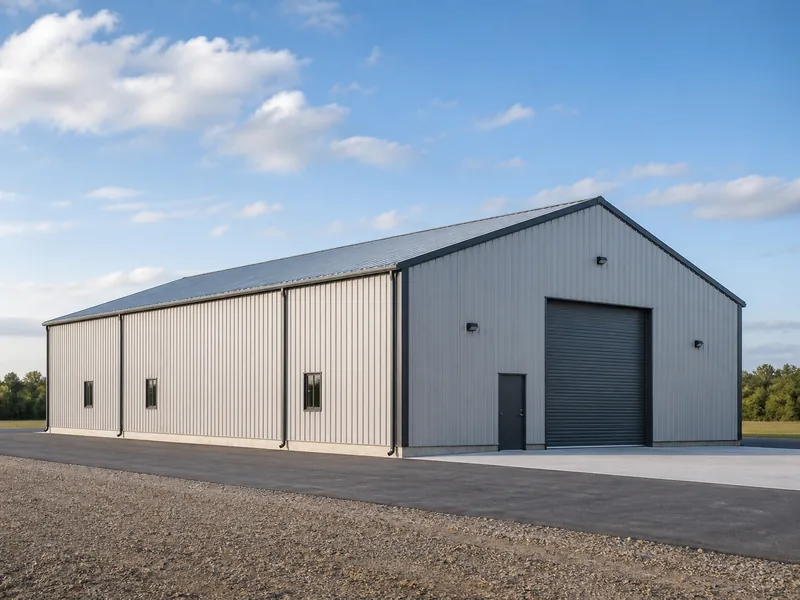
Metal building sizes are written as three numbers: width, length, and eave height, and each one is governed by a different decision. Reading a spec like 40×60×16 is easy enough once you know the order, but the harder question is rarely “what sizes exist.” It is which footprint and clearance actually fit your use, your site, and your budget.
This guide explains how standard sizes are measured, what the common dimensions and their floor areas are, how each dimension affects cost, and the order to work through when choosing. It does not cover foundation and slab design, insulation, or the line-by-line code review that a local engineer signs off on. Those are separate decisions that follow once the footprint is set.
How Metal Building Sizes Are Measured
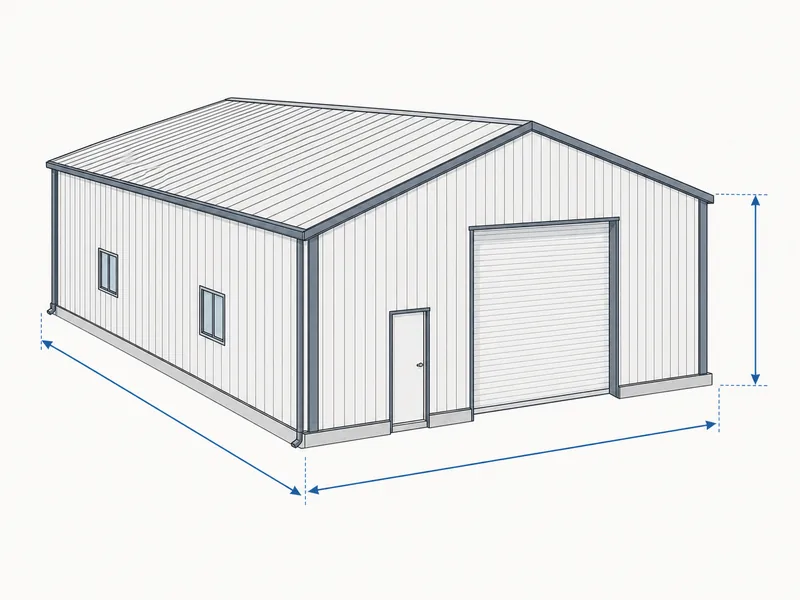
A metal building size is expressed as width × length × eave height, in that order and in feet. Width is the dimension across the gable (end wall), length runs along the sidewall, and eave height is the sidewall height where the roof meets the wall, not the height at the peak. A 40×60×16 building is therefore 40 feet wide, 60 feet long, and 16 feet to the eave.
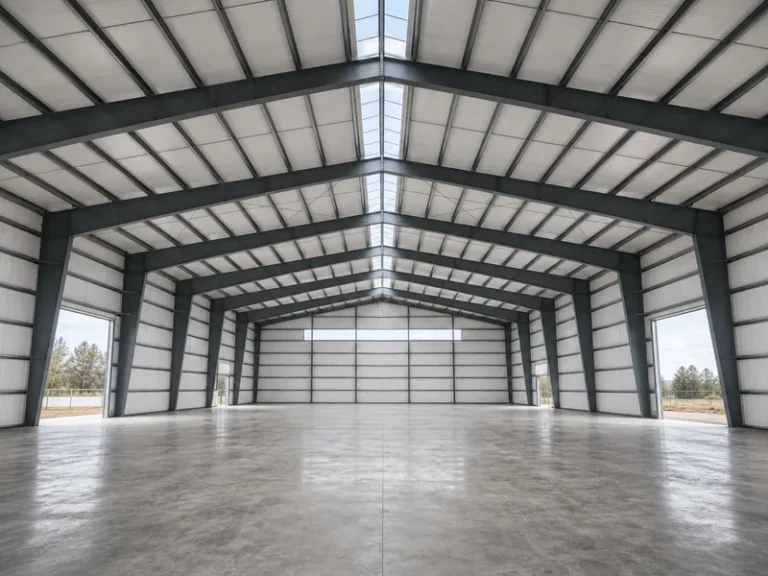
Floor area is simply width times length, so a 40×60 covers 2,400 square feet. The usable area, though, behaves differently from a house measured the same way: a clear-span steel frame has no interior load-bearing walls eating into the space, so the full footprint stays open. That is part of why buyers compare steel buildings by clear floor area rather than by room count.
Most manufacturers step width and length in 5-foot or 10-foot increments, and eave height in roughly 2-foot increments, though the exact options depend on the manufacturer’s framing system. The number that trips people up is eave versus peak. Buyers often quote the peak height they want and end up with less usable sidewall clearance than expected, because the roof slope pulls the ceiling down toward the walls. When clearance matters, the eave is the number to verify, measured against the tallest door or load that has to fit.
Standard Metal Building Sizes and Their Square Footage
Standard metal buildings run from compact 20-foot-wide structures up to industrial spans of 100 feet or more, grouped loosely into small, mid-size, and large footprints. The table below lists widely offered sizes with their floor area and typical uses; treat it as a starting map, not a fixed catalog, since most dimensions can be customized.
| Size (ft) | Approx. floor area | Common uses |
|---|---|---|
| 20×20 | 400 sq ft | Single garage, hobby space |
| 24×24 | 576 sq ft | Two-car garage |
| 30×40 | 1,200 sq ft | Large garage, small shop |
| 30×50 | 1,500 sq ft | Workshop, RV storage |
| 40×60 | 2,400 sq ft | Contractor shop, working barn |
| 40×80 | 3,200 sq ft | Equipment storage |
| 50×100 | 5,000 sq ft | Warehouse, agricultural |
| 60×100 | 6,000 sq ft | Commercial, light industrial |
| 80×100 | 8,000 sq ft | Industrial, manufacturing |
| 100×100 | 10,000 sq ft | Manufacturing, distribution |
| 100×200 | 20,000 sq ft | Large distribution, warehousing |
Small Metal Buildings
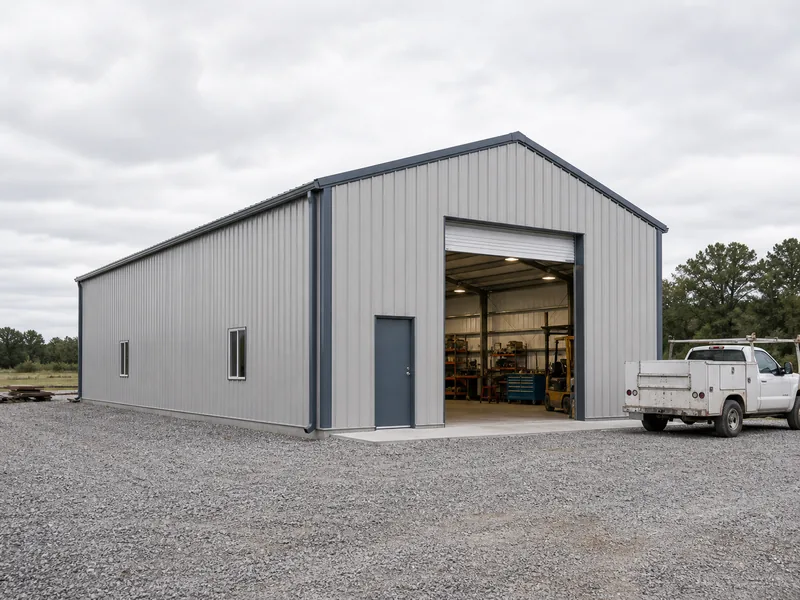
Small metal buildings, roughly 20 to 30 feet wide, cover single garages, hobby shops, and backyard storage. At this scale the building is usually a clear span by default, and the main sizing question is length: how many vehicles, and whether there is room to add a workbench or storage along the back wall.
Mid-Size Metal Buildings
Mid-size buildings in the 40-to-50-foot width range handle most contractor shops, working barns, and small commercial spaces. Width starts to matter here because a clear span in this range can suit multiple working bays depending on door layout, equipment, and circulation needs, and eave height climbs to suit lifts, mezzanines, or tall equipment.
Large Metal Buildings
Buildings 60 feet wide and up move into warehouse, manufacturing, and large agricultural territory, where clear interior width becomes the main design driver. At these spans the framing choice (open clear span versus interior columns) has a real effect on both usable layout and cost, which is covered in the next two sections.
Metal Building Sizes by Use
Matching a use to a footprint is faster than guessing at dimensions, because each application is driven by a different variable. The following uses show what sets the size in each case:
- Garages and RV storage: a single car needs only a modest width, while RVs and boats are driven by their own height and length, so eave height and building length usually matter more than floor width here.
- Workshops with lifts: a vehicle lift sets the clearance, so eave height has to suit the raised vehicle and any overhead work rather than the footprint, even in an otherwise compact shop.
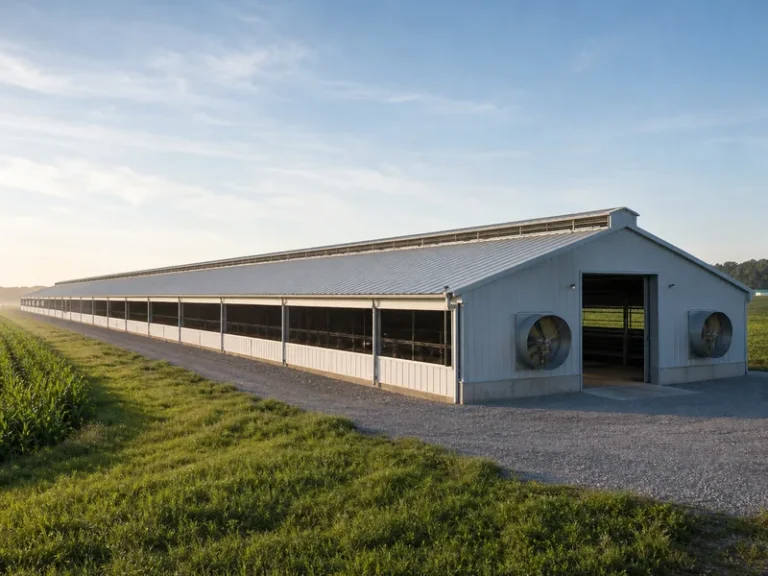
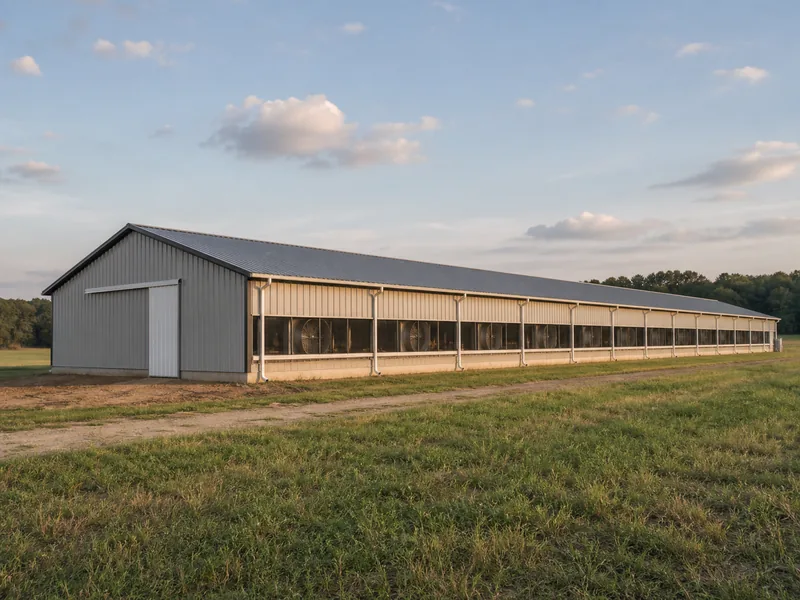
- Agricultural and livestock buildings: barns, pole-style sheds, and a steel structure chicken house are sized by animal count, ventilation runs, and equipment lanes rather than a round number, so length tends to be the dimension that grows.
- Commercial and warehouse space: racking layout, forklift aisles, and dock access set both width and eave height, so clearance and span are dictated by the handling equipment, not a standard size.
What Width, Length, and Eave Height Each Control
Each dimension answers a different question: width sets how the building is framed, length sets how far it extends, and eave height sets what fits inside. Treating them separately is what keeps a sizing decision from turning into guesswork.
Width is the dimension most constrained by structure. A clear-span frame leaves the interior column-free and is generally practical up to about 300 feet wide, but the steel weight (and therefore cost) rises quickly as the span grows. Beyond roughly 80 to 100 feet, a modular frame with interior columns usually becomes the more economical way to gain width, and modular framing can reach about 480 feet. Which approach suits a project depends on whether the layout can tolerate columns, so the trade-off between an open span and a column-supported one is worth settling early; the deeper comparison is covered in our guide to clear span buildings.
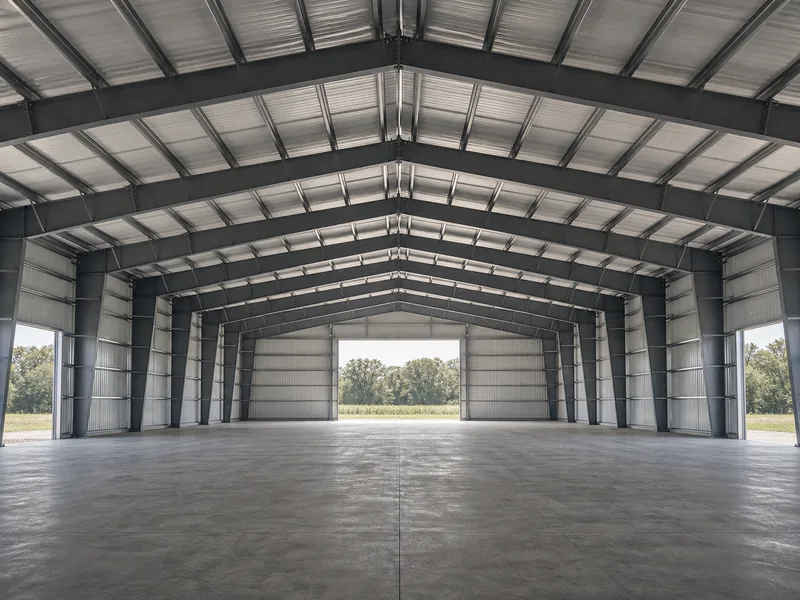
Length is the most flexible dimension to plan, because it extends in repeating bays. Reserving extra length at the design stage is usually straightforward, since the frame simply repeats down its length. Extending a building after it is up is still possible, but it involves structural review, matching components, added foundation, permits, and room on the site. Planning length generously up front is easier than adding it later.
Eave height is set by the tallest thing that has to fit, plus working clearance above it. Common eaves run 10 to 16 feet for garages and shops, climb to 20 feet or more for warehouses, and reach roughly 40 feet on some industrial systems. Doors are where eave height quietly fails: a 14-foot overhead door needs more than 14 feet of eave to frame and operate it, so the wall has to stand taller than the opening it carries. The reliable check is to size eave height against your tallest door, lift, or stacked load rather than a round number.
How Metal Building Size Affects Cost
Size drives cost unevenly, because widening a building costs more per foot than lengthening it. Adding width forces heavier rafters and a frame that has to carry a longer clear span, while adding length simply repeats the same frame in standard bays. A longer, narrower layout therefore often delivers more floor area per dollar than a short, wide one with the same square footage.
Eave height works the same way as a cost lever. Taller walls add sheeting and call for heavier columns to resist wind, so raising the eave increases cost even when the footprint stays the same. Mid-size buildings tend to land the lowest cost per square foot, while very small buildings pay a premium for fixed setup costs and very large clear spans pay for heavy steel. Where that balance falls depends on design loads, region, and current steel prices.
Accessories and finishes are priced on top of the bare shell, not inside it. Doors, windows, insulation, and the concrete slab can move the total significantly, which is why two buildings of identical size can quote very differently. For dollar figures tied to a specific footprint, a focused breakdown such as this 30×50 metal building cost guide is more useful than a generic price table, because it ties the numbers to one configuration and its variables.
How to Choose the Right Metal Building Size
Choosing a size works best as an ordered process rather than a single guess, because the dimensions depend on one another. Working through the steps below in order keeps each decision from forcing an expensive change to the one before it:
- Inventory what goes inside. List every vehicle, machine, rack, or animal lane along with its footprint and height before opening any size chart.
- Set the clear interior width. Decide whether the layout needs a column-free span or can accept interior columns, since that single choice caps how wide the building can economically be.
- Match eave height to the tallest use. Add working clearance above the tallest door, lift, or stacked load instead of copying a neighbor’s building.
- Plan length for growth. Reserving extra length at the design stage is usually the most straightforward way to allow for expansion, so size it a few years ahead and confirm the site has room for future bays. Adding length after the frame is up still calls for structural review and permits.
- Check site and code limits. Confirm setbacks, lot coverage, and permit limits with the local authority, since structural loads must meet applicable codes such as the IBC and ASCE 7.
The most common sizing mistake is buying exactly for today’s needs, then running short on width within a few years, and width is the one dimension that is hard and costly to add after the frame is up. Planning the clear span for where the operation is heading, not just where it is, avoids that trap.
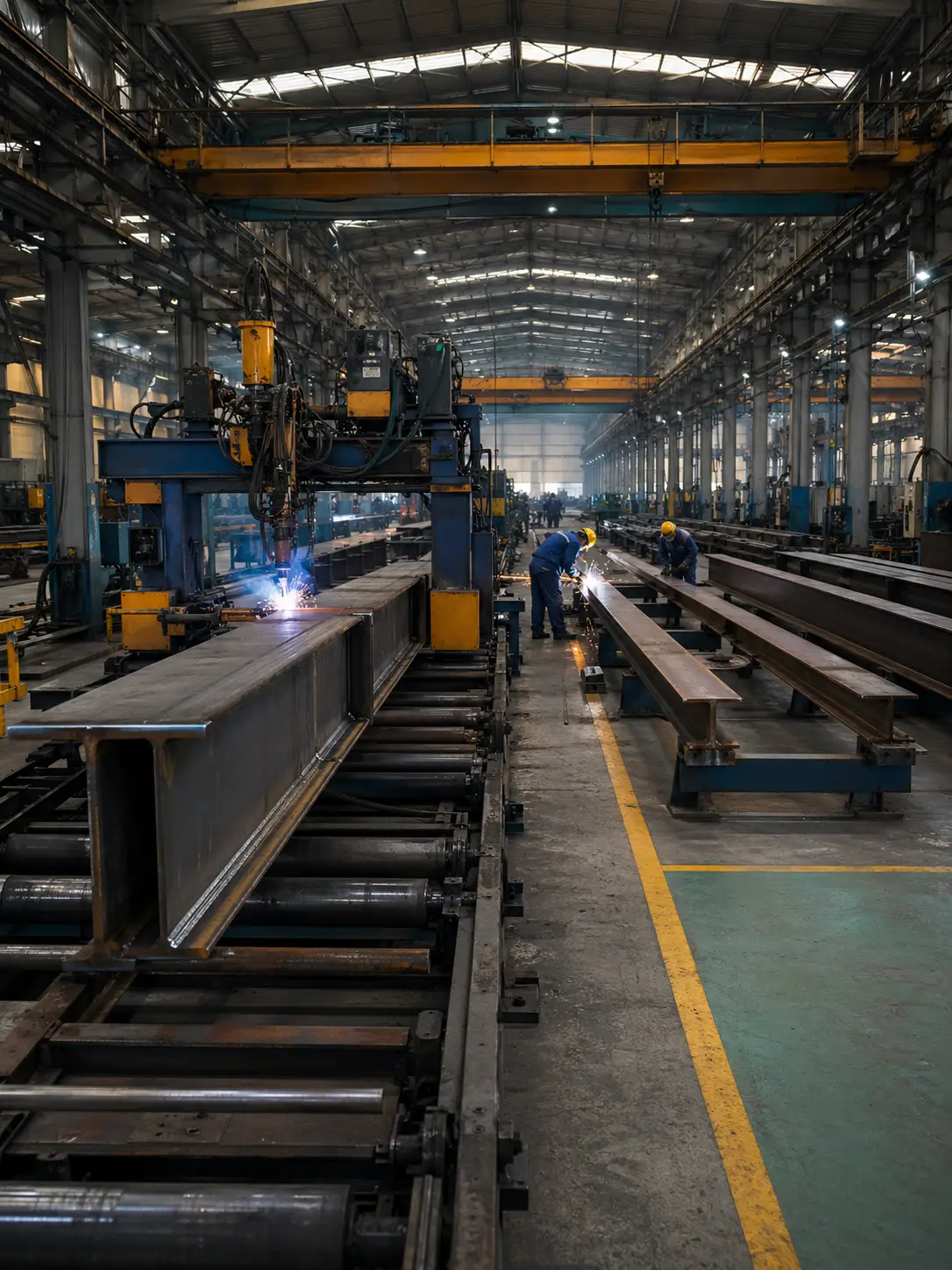
When a standard footprint does not fit, a custom size is usually available, because pre-engineered frames are detailed per project rather than pulled from a fixed catalog. Qingdao KAFA Fabrication is a steel structure manufacturer with qualifications for light and heavy steel structure design, fabrication, and installation. Its 20,000-square-meter Qingdao facility runs dedicated H-beam, box-section, C/Z purlin, and profile-steel-plate lines under an ISO 9001:2015 quality management system. That setup supports frames detailed to custom widths, lengths, and eave heights instead of a fixed size list. Bringing an experienced metal building company into the sizing conversation early helps confirm which spans and eave heights are practical for a given load and budget before the drawings are locked.
Locking In Your Building Size
The right metal building size is settled in order of constraint, not picked from a chart. Lock the interior use and the clear width it requires first, because that decides whether you need a clear span or a column-supported frame and caps the practical width. Set eave height next, to the tallest load plus working clearance. Then plan length for growth, since reserving it at the design stage is the most straightforward dimension to allow for, and finally confirm the footprint against site setbacks and local code before committing.
Get the clear width and eave height right at the start, and the remaining choices (length, bays, doors, and accessories) become adjustments rather than redesigns.
Frequently Asked Questions
What is the most common metal building size?
Mid-size footprints around 40×60 are among the most commonly requested, because they balance usable clear width with reasonable framing cost. That said, “common” is not the same as “right,” and the popular sizes only matter if they fit your specific use and clearance needs.
What size metal building do I need?
The size you need is driven by what goes inside, the clear width that layout requires, and the height of your tallest load, not by a single popular number. Start by listing your contents and their dimensions, then add working clearance and room for a few years of growth.
How wide can a metal building be?
Metal buildings can reach about 300 feet wide as a clear span and roughly 480 feet wide with interior columns. Wider spans add steel weight and cost quickly, so past roughly 80 to 100 feet a column-supported frame is often the more economical way to gain width.
What is a good eave height for a metal building?
A good eave height clears your tallest door, lift, or stacked load with working room to spare. For most shops and garages that lands between 10 and 16 feet, while warehouses and equipment buildings often need 20 feet or more.
Can I order a custom metal building size?
Custom metal building sizes are widely available, since pre-engineered frames are detailed per project rather than stamped from a fixed catalog. Widths, lengths, and eave heights can be tailored to a specific use and site. What is practical still depends on the frame system, design loads, site limits, and local approvals, so a custom size is confirmed against those constraints rather than assumed.