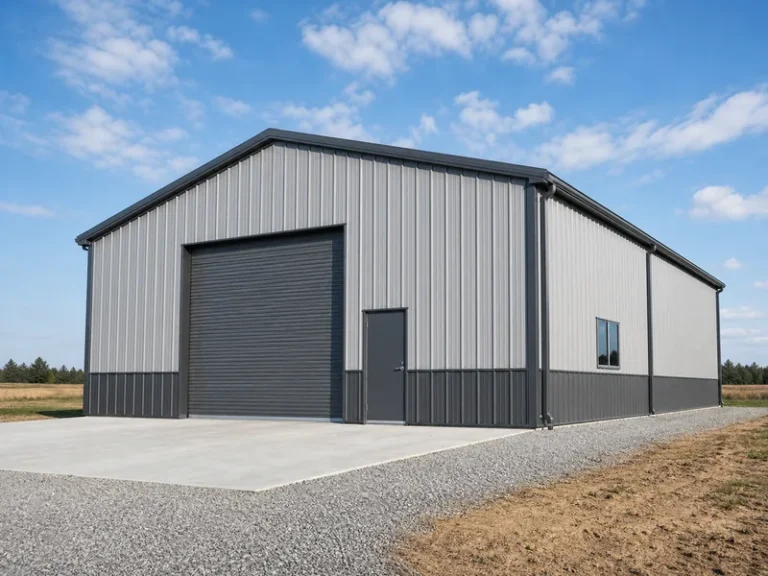





A clear span building gives you the full width of the structure as usable floor, with no interior columns breaking up the space. That single design choice shapes everything else that follows: how wide you can build, what frame the roof needs, how the foundation is sized, and where the cost lands. This guide explains how clear span framing carries a roof without interior support, what spans are realistic, how clear span compares with multi-span construction, and the variables that move the price. It does not walk through erection steps or quote a fixed price per square foot, because those depend on your site, your loads, and how the building is finished.
What Is a Clear Span Building?
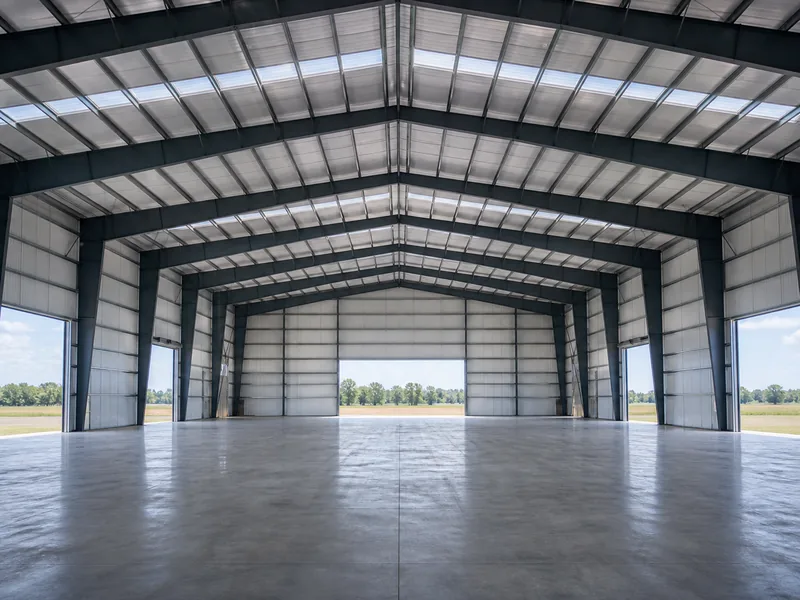
A clear span building is a structure whose roof crosses from sidewall to sidewall with no interior load-bearing columns, leaving the entire footprint open from wall to wall. The “span” is the clear distance the primary frame covers in one continuous run.
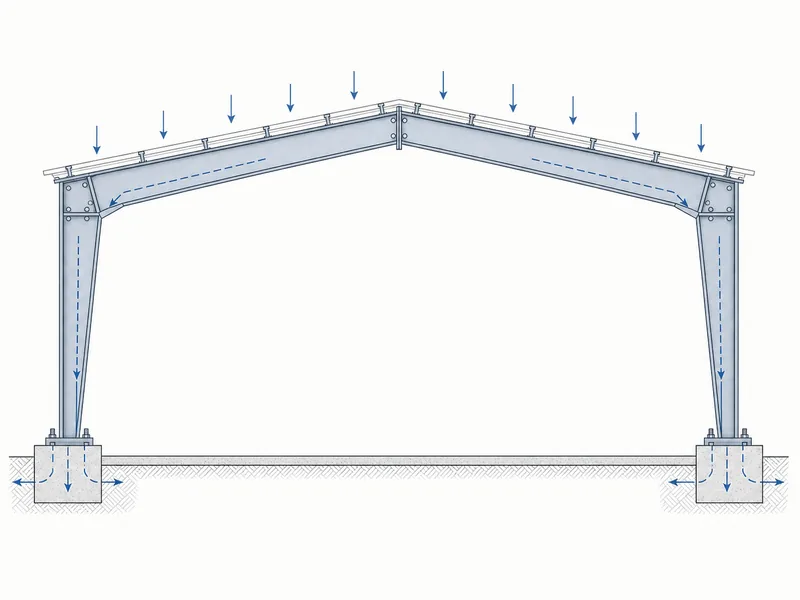
In this design, the rafters reach the full width of the building and tie into the sidewall columns, so roof loads travel out to the perimeter instead of down through posts planted in the middle of the floor. What you get is an uninterrupted interior you can lay out, re-partition, or move large equipment through without designing around fixed obstructions.
That open floor is the entire point. It is why clear span construction shows up wherever an interior has to stay flexible or clear tall, wide equipment. The trade-off is that the frame has to work harder than a posted structure does, which the next section gets into.
How Clear Span Framing Works, and How Wide It Can Go
Clear span framing carries the roof on rigid frames or trusses sized to cross the entire width in one unsupported run, and that is exactly what removes the interior columns. With no midspan post to share the load, the primary members have to resist the full bending moment across the opening on their own.
As the width grows, those members get deeper and heavier, and the increase is not linear. Doubling the clear width more than doubles the steel and connection demand, especially at the knees and ridge where the frame works hardest. Engineering can push clear spans into the range of roughly 300 feet for specialized structures, but that upper end is governed as much by cost and logistics as by what steel can physically do.
In practice, several variables set the limit before raw capacity ever does:
- Snow, wind, and seismic loads for the site, which raise the demand on long spans the fastest
- Eave height, since taller walls add to the load path and to bracing requirements
- Transport, because very deep or long frame sections still have to ship to site in haulable pieces
- Foundation, as heavier frames concentrate larger reactions that the footings and slab must carry
Structural and load design should follow the building codes in force at the site. In the United States that commonly means the International Building Code together with the ASCE 7 load standard, but the specific factors and load combinations are set by those codes and your engineer rather than by a rule of thumb. Treat any single “maximum width” figure as a starting point to verify, not a promise the frame will hold it on your site.
Clear Span Building Types and the Spans They Suit
Most clear span buildings use one of a few frame types, and the right one follows mainly from the clear width and eave height you need. Picking the frame is less about preference than about matching the structure to the opening it has to cover.
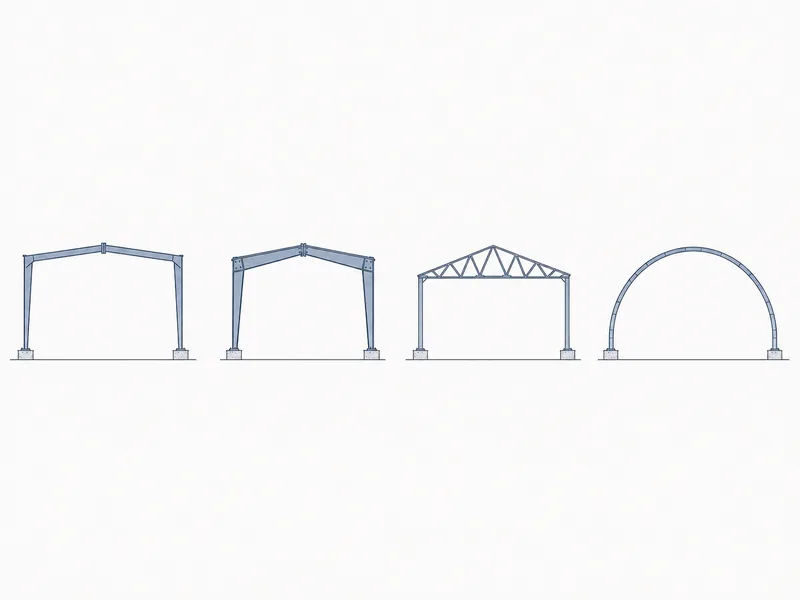
Tapered (built-up) I-beam frames
Tapered welded frames suit narrower, lower buildings, where the frame depth can be shaped efficiently along the span for the load it carries. They are common for shops, small warehouses, and agricultural buildings that do not need extreme width or height.
Single-span rigid frames
Single-span rigid frames cover the broad middle of the market, handling wider clear widths and a useful range of eave heights. This is the workhorse profile for column-free steel, and it is what most warehouses, gyms, and commercial buildings are built on.
Truss and open-web spans
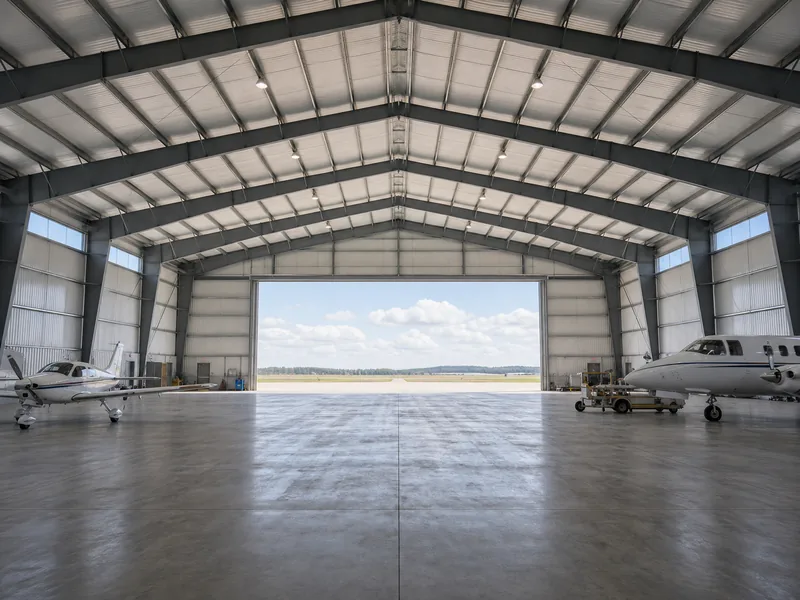
Trusses and open-web girders reach the longest spans by using depth efficiently, which is why they show up in aircraft hangars and large industrial roofs. They trade a deeper roof structure for reach, so they suit buildings where height is available and width is the priority.
Fabric and arch (Quonset) spans
Fabric-covered and arch structures span without interior columns as well, and they go up quickly, but their covering and shape suit storage and cover applications more than finished, conditioned space.
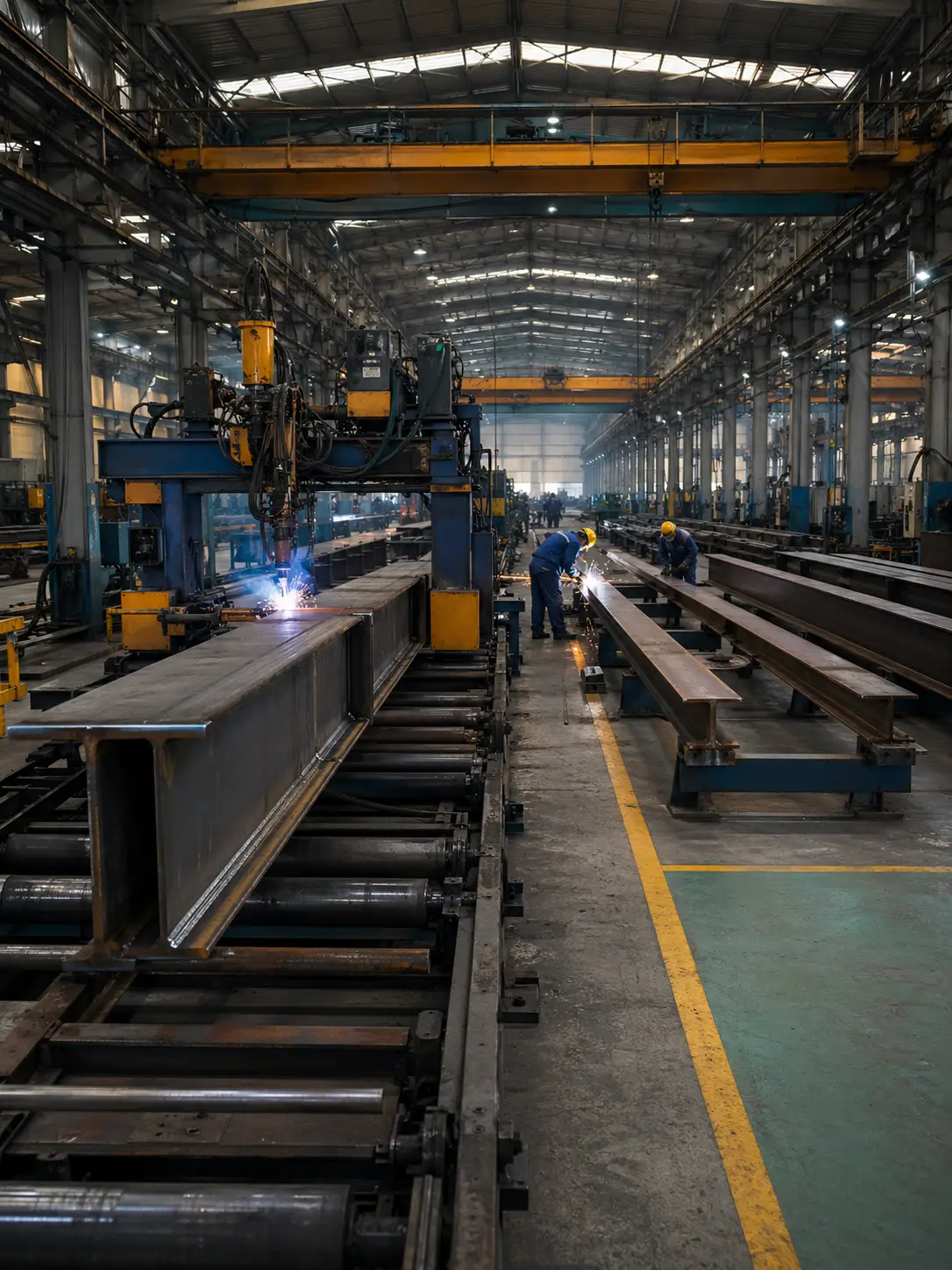
A clear span frame is only as strong as the members behind it: the primary H-section or box columns and rafters, and the C- or Z-section purlins that carry the roof and wall sheeting between frames. Some fabricators run these lines in-house. Qingdao KAFA Fabrication, for one, produces the H-beam, box-section, and C/Z purlin components for clear span work at its own Qingdao facility, where the primary and secondary members are fabricated from the same project drawings.
Common Uses for Clear Span Buildings
Clear span buildings fit any use where interior columns would get in the way, and the clear width a project needs usually tracks the application. The use sets the width, and the width sets almost everything downstream.
At smaller spans, the open floor suits workshops, equipment storage, and agriculture; a column-free steel structure chicken house, for instance, keeps the floor clear for ventilation lines and equipment to run uninterrupted. Mid-range spans cover warehouses, retail floors, and gymnasiums, where racking layouts or full-size courts cannot tolerate posts in the field. The widest spans go to aircraft hangars, sports arenas, and manufacturing halls that have to clear tall, wide equipment from end to end.
The pattern to take from this is straightforward: pin down the minimum unobstructed opening your operation actually needs before you start comparing frame systems, because that clear width, not the wall-to-wall footprint, is what the structure is really sized around.
Clear Span vs. Multi-Span: Choosing by Width and Budget
Clear span and multi-span buildings differ over one decision that drives the rest: whether you accept interior columns in exchange for lighter, cheaper framing. Getting that trade-off right matters more than any feature list.
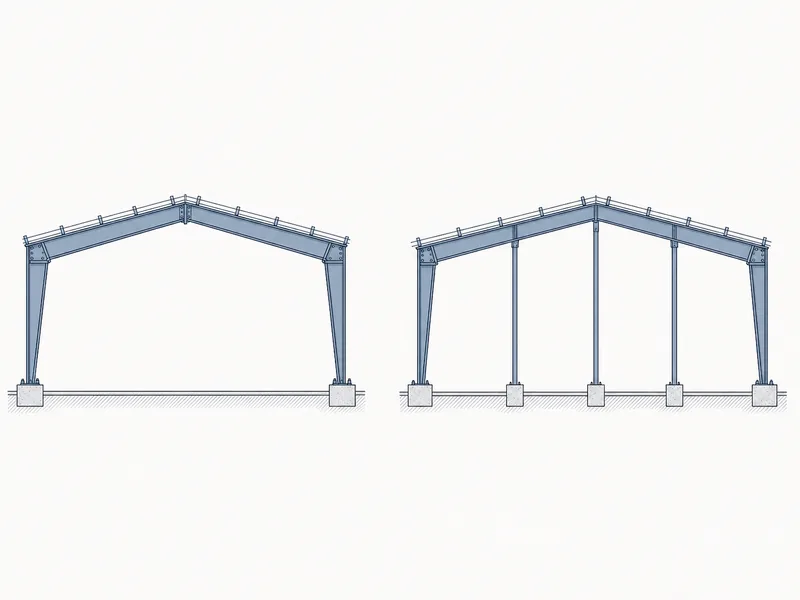
A multi-span, or modular, building adds one or more interior column lines so that each frame carries a shorter run. Shorter runs mean lighter steel and smaller foundations, which is why a multi-span is usually the more economical structure for very wide footprints. A clear span keeps the floor fully open, but it pays for that openness in heavier frames as the width climbs.
So the real question is not “which is better” but “where is your width.” Below the point where steel weight starts climbing sharply, a clear span often costs only a little more and buys full interior flexibility. Above it, the savings from a multi-span grow with every added foot, unless the use genuinely cannot tolerate a single interior post, as with hangars, arenas, or column-sensitive production lines. That crossover width is not a fixed number; it shifts with load zone, eave height, and how much you value the open floor, so it should be confirmed for your design rather than read off a chart.
Choose clear span when the interior has to stay unobstructed or easy to reconfigure. Lean toward multi-span when the footprint is very wide, the budget is tight, and a column grid is acceptable for the way the space will be used.
What Drives the Cost of a Clear Span Building
The cost of a clear span building is driven less by the label “clear span” and more by the clear width, the loads the frame must carry, and how the shell is finished. Naming the building type tells you almost nothing about the budget on its own.
Width and span sit at the top of the list, because steel demand rises faster than floor area once you move into long spans. Eave height, snow and wind loads, and seismic requirements all raise the frame and foundation demand for the same footprint. After the structure comes the envelope: roof and wall sheeting, insulation, and openings such as the large doors a hangar or a drive-through bay needs. The foundation carries its own share, since it has to absorb the concentrated reactions a heavy clear span frame delivers.
Because those variables move the number so much, a single price per square foot means little in isolation. For figures and worked examples, the detailed clearspan building cost breakdown is the place to start, and for one specific footprint the 30×50 metal building cost walkthrough shows how the same drivers play out at a single size.
Price a real configuration instead of a headline rate: settle the width, loads, and finish, then build the budget around those. Doing that with experienced metal building companies before you commit to a width keeps the estimate tied to a building you can actually order.
Confirming the Right Clear Span for Your Project
Choosing a clear span building comes down to settling one constraint before the others: the clear width your use actually requires. Lock that width first, because it sets the frame type, the foundation, and most of the budget in one move.
From there, confirm the eave height and the load zone for your site, since those decide how heavy the frame has to be and whether a long span is still the economical call. Only then is it worth weighing a clear span against a multi-span layout, and if the interior must stay open, the column-free option earns its heavier frame.
Where a project needs the design, fabrication, and erection handled together, KAFA’s qualifications across light and heavy steel structures cover that path from frame design through to the installed building. The step that protects the budget, though, is the plainest one: confirm your required clear width and eave height before you compare frame types or read a single cost figure.
FAQ
What is the maximum clear span for a steel building?
Steel clear spans can reach roughly 300 feet for specialized structures, but the practical maximum for any given project is set by loads, cost, and transport rather than by steel alone. Long spans raise the steel weight and foundation demand sharply, so the workable limit is the point where the open floor still justifies the frame, a figure your engineer confirms for the specific site and code requirements.
What is the most economical width for a clear span building?
The most economical clear span widths fall in the lower-to-middle range, before steel weight begins rising faster than the floor area you gain. Past that point each added foot costs more than the last, which is where a multi-span layout often becomes the cheaper way to cover the same footprint while still meeting the use.
Is a clear span building more expensive than a multi-span building?
A clear span building usually costs more than a multi-span of the same width once the span gets wide, because the column-free frame carries longer runs in heavier steel. At narrower widths the difference is small and the open floor can easily be worth it, so the crossover depends on your width, your load zone, and how much the clear interior actually matters to the operation.
What types of buildings use clear span construction?
Clear span construction suits any building that needs an open, column-free interior, with warehouses, gymnasiums, aircraft hangars, riding arenas, churches, and manufacturing halls among the common examples. The wider and taller the unobstructed space has to be, the more a clear span design earns the heavier frame it requires.