



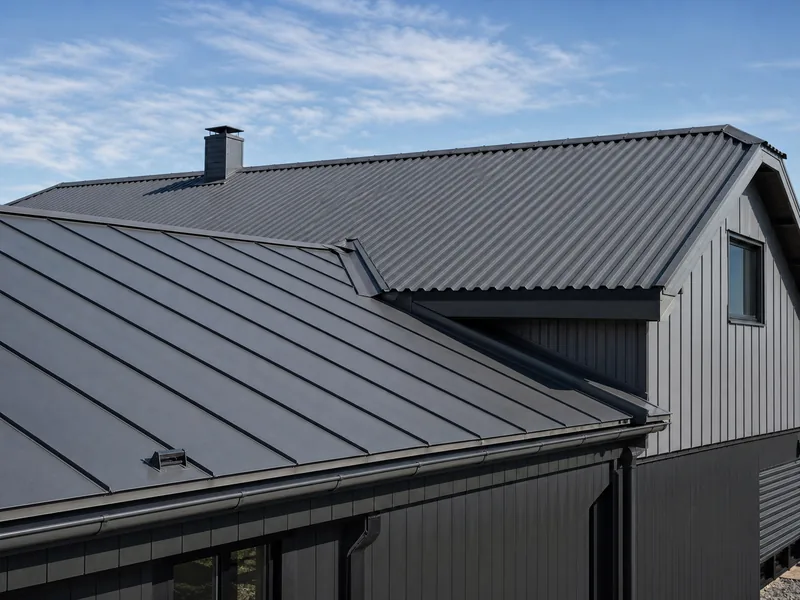
Metal roofing is not a single product but a stack of three separate decisions: the metal it is made from, the shape of the panel, and how that panel is fastened to the building. Most of the confusion in buying a metal roof comes from treating these as one choice. A homeowner ends up comparing “standing seam” against “steel” as if they were rivals, when the two actually describe different things.
This guide separates the three layers, walks through the common types under each, and closes with an elimination order for matching a type to your slope, climate, building, and budget. It does not cover step-by-step installation or full project pricing, both of which depend on your structure, region, and contractor.
How Metal Roofs Are Classified: Material, Profile, and Fastener
A metal roof is defined by three independent choices, not one: the base metal, the panel profile, and the fastening system. The same standing seam profile can be rolled from steel, aluminum, copper, or zinc, and the same steel coil can be formed into corrugated, standing seam, or a tile-look shingle. Treating “type” as a single flat list is where most buyers go wrong.
The base metal governs corrosion behavior, weight, price tier, and realistic lifespan. The panel profile decides how the roof sheds water, how it looks, and the minimum slope it can sit on. The fastening system, exposed screws versus concealed clips, determines where the roof is most likely to leak and how much maintenance it will demand over time.
Reading those three axes together is the actual skill. A barn and a low-slope commercial building might both end up in steel panels, yet land on opposite profiles and fastener systems because their slopes and exposure differ. The sections below take the axes one at a time.
Metal Roofing Materials and What They Trade Off
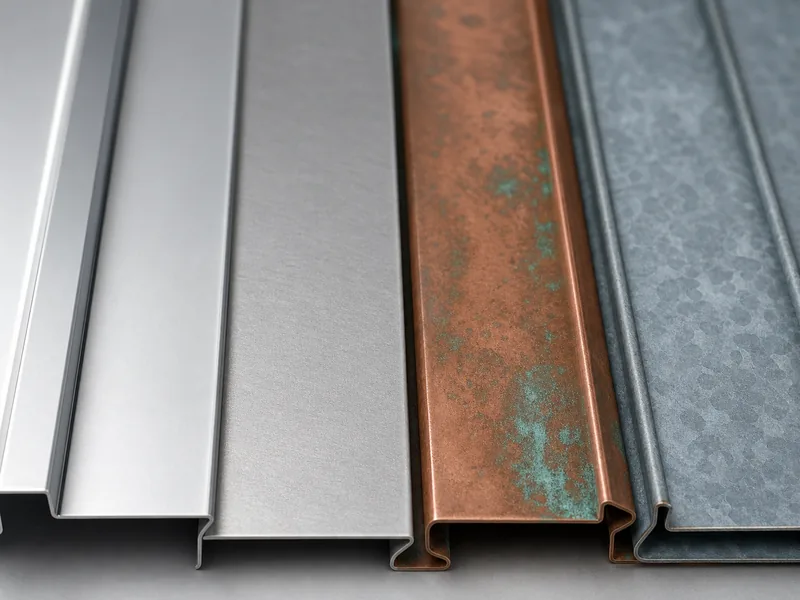
Material choice is where corrosion resistance, weight, cost tier, and realistic lifespan are actually decided. Four metals cover the vast majority of residential and commercial roofs, and the differences between them are practical rather than cosmetic.
Galvanized and Galvalume Steel
Steel is the most common and most affordable metal roofing material, which is why it dominates barns, sheds, commercial buildings, and budget-conscious homes. Bare steel rusts, so roofing steel is protected by a metallic coating, galvanized (zinc) or Galvalume (aluminum-zinc), usually with a paint system on top. A well-coated steel roof commonly lasts roughly 40 to 70 years, though that figure depends heavily on the coating, the gauge, and the environment. Coastal salt air is the classic case where a cheaper coating gets punished early.
Aluminum
Aluminum trades some raw strength for strong corrosion resistance and light weight, which is why it is often favored near salt water. It does not rust, weighs only a few pounds per square foot, and handles coastal humidity better than bare or lightly coated steel, though performance still depends on alloy, coating, and fastener compatibility. Against that, aluminum costs more than steel and has a softer surface that dents more easily under hail or foot traffic, so it rewards a slightly heavier gauge in exposed locations.
Copper
Copper is a premium, long-life material that can last well over 100 years and develops a protective patina instead of failing. It is chosen for visible roofs, bay windows, and historic work, and it stays relatively low maintenance when detailed and inspected properly. Cost and softness are the drawbacks: copper sits at the top of the price range, and the same malleability that makes it easy to form also leaves it dentable.
Zinc
Zinc behaves like a more affordable cousin of copper, forming a protective patina that can help minor surface marks weather over time. Service lives of 80 to 100 years or more are realistic with proper detailing, and zinc is highly recyclable. A premium price is the catch, along with a tendency to chalk or stain where water sits against it without ventilation, which makes underside drainage detail matter.
A quick term note: a “tin roof” almost never means tin today. The phrase survives from older buildings, but modern panels sold under that name are steel, usually galvanized or Galvalume.
At a glance, the four metals trade off like this:
| Metal | Main strength | Main risk | Relative cost | Best fit |
|---|---|---|---|---|
| Steel (galvanized / Galvalume) | Affordable, strong, takes any profile | Rust if the coating is breached | $ | Barns, commercial, budget homes |
| Aluminum | Light, strong corrosion resistance | Dents more easily; pricier than steel | $$ | Coastal and salt-exposed sites |
| Zinc | Long life, patina, recyclable | Premium price; needs ventilation and drainage | $$$ | Long-horizon, architectural roofs |
| Copper | Very long life, patina, low upkeep | Highest cost; soft and dentable | $$$$ | Visible, historic, premium roofs |
Metal Roof Panel Profiles and Styles
Panel profile decides how a metal roof sheds water, how it reads visually, and the minimum slope it can be installed on. Two roofs in the same metal and the same color can perform very differently because their profiles handle water and thermal movement in different ways.
Standing Seam
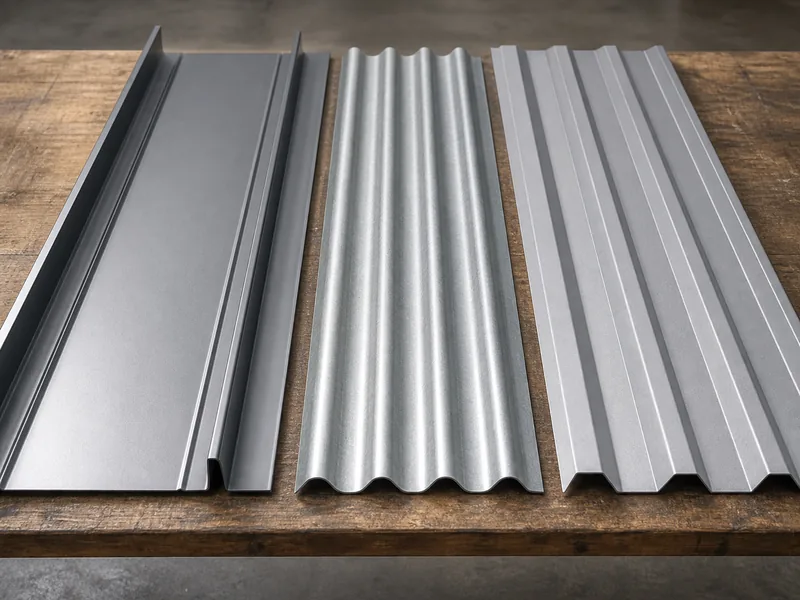
Standing seam is the concealed-fastener profile, with raised vertical seams that lock together and hide the clips underneath. Because no screw holes penetrate the flat of the panel, it is among the most weather-tight mainstream profiles, and it is often used on lower slopes and where panels must absorb thermal movement. That weather-tightness is what puts it on modern homes and architectural commercial work. The cost is the highest of the common profiles, and broad flat pans in light gauges can show “oil canning,” a cosmetic waviness that is not a defect.
Corrugated
Corrugated is the wavy, exposed-fastener profile most people picture on barns and sheds, valued for being cheap, fast to install, and forgiving to handle. Screws pass straight through the panel into the structure, which keeps it inexpensive but puts the long-term sealing burden on washers and overlaps. The ridges also collect debris, so it suits simple, well-sloped roofs more than complex or low-slope ones.
Ribbed and R-Panel (PBR)
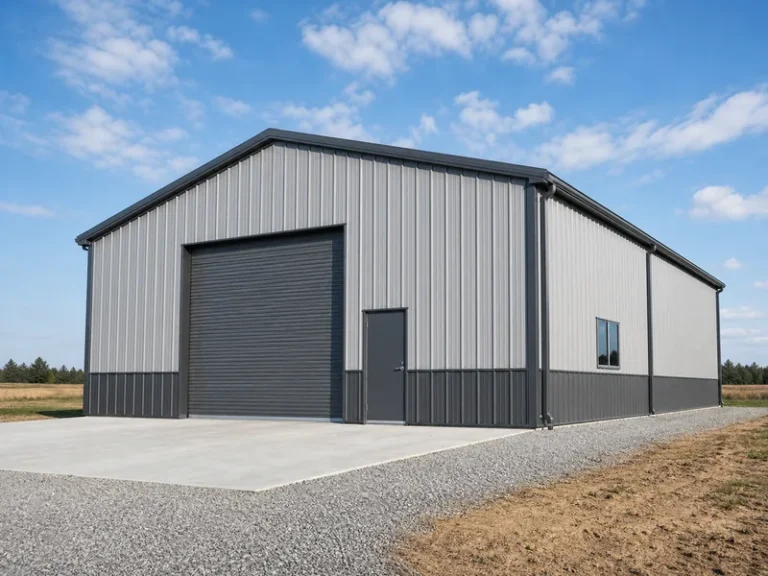
R-Panel, often labeled PBR, is the ribbed exposed-fastener workhorse of agricultural and commercial buildings. Tall, widely spaced ribs add stiffness and span capability, which is what lets these panels run economically over the purlin spacing of a steel building. It reads more utilitarian than residential, which is exactly why it fits shops, warehouses, and metal buildings.
Metal Shingles and Tiles
Metal shingles and tiles deliver the look of asphalt shingle, wood shake, slate, or clay tile at a fraction of the weight. They suit homeowners who want a traditional roofline with metal durability, and the lighter weight avoids the structural reinforcement that genuine clay or slate often demands. The downside is more seams and more individual pieces than a long standing seam pan, so detailing quality counts for more.
Stone-Coated Steel
Stone-coated steel is a steel panel finished with bonded stone granules to mimic tile or shake while keeping metal’s weight and fire performance. The granular surface hides minor oil canning and gives a textured, tile-like look that flat painted steel cannot. It tends to win where a regional style or an HOA expects a tile appearance but the structure favors a lighter roof.
Exposed vs. Concealed Fastener Systems
Fastener placement is one of the most common leak paths to plan for on a metal roof. Most exposed-fastener panels, corrugated and R-Panel included, rely on a rubber washer under each screw, and those washers can age, harden, and back out before the panel itself reaches the end of its service life. Re-torquing or replacing fasteners is a predictable maintenance line on these roofs, not a sign of failure.
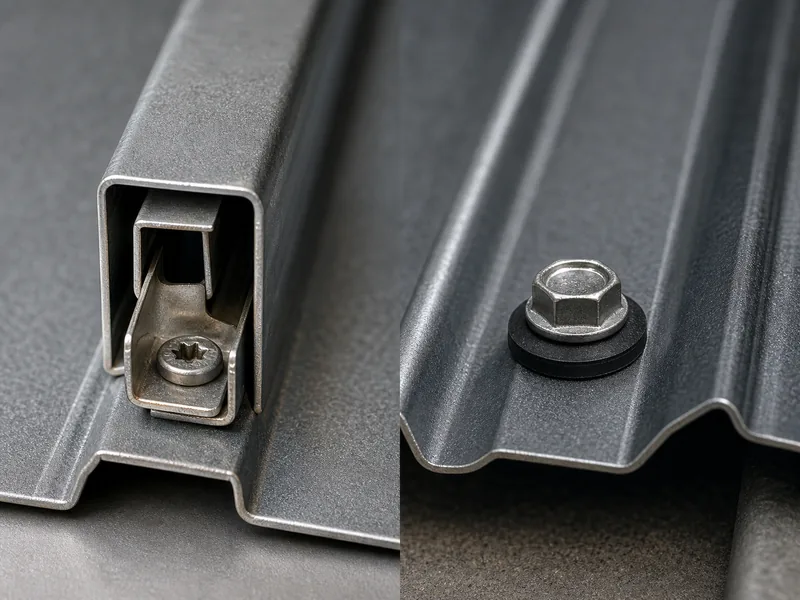
Concealed-fastener systems, standing seam above all, move the fasteners to hidden clips and let the panels expand and contract without tearing at a screw hole. That single detail is what allows them to perform on low slopes and through large thermal swings where exposed panels would slowly work their seals loose. The cost is higher up front, and the labor is more specialized.
The honest framing is a trade between budget and where you spend attention. Exposed fasteners cost less and install faster but commit you to a maintenance schedule; concealed fasteners cost more but push the leak risk far down the road. Matching that choice to roof slope and to how long you plan to own the building is more useful than asking which system is “better” in the abstract.
Durability, Lifespan, and Climate Fit by Type
A metal roof’s service life depends less on the catalog name and more on coating, gauge, and the climate it has to survive. Steel and aluminum systems commonly run 40 to 70 years, while copper and zinc can pass 100, but those ranges assume correct detailing and an environment the metal can tolerate. The same panel that lasts decades inland can corrode early a few blocks from the ocean.
Climate should steer the material as much as taste does. Salt air favors aluminum or heavily coated steel; high-debris or low-slope roofs favor concealed-fastener standing seam over exposed laps; hail country rewards a heavier gauge and a harder surface. Properly engineered and installed systems can resist wind in the range of 140 mph, and many metal assemblies can reach a Class A fire rating, but both claims hinge on the full assembly rather than the bare panel.
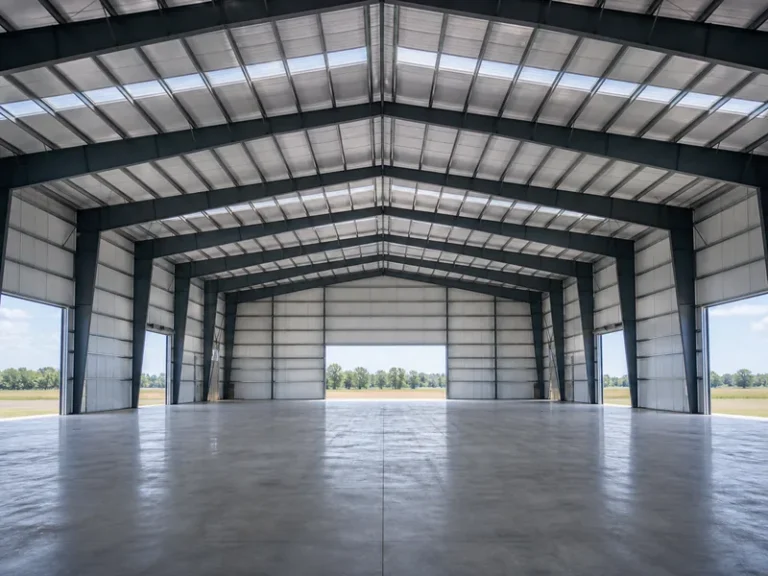
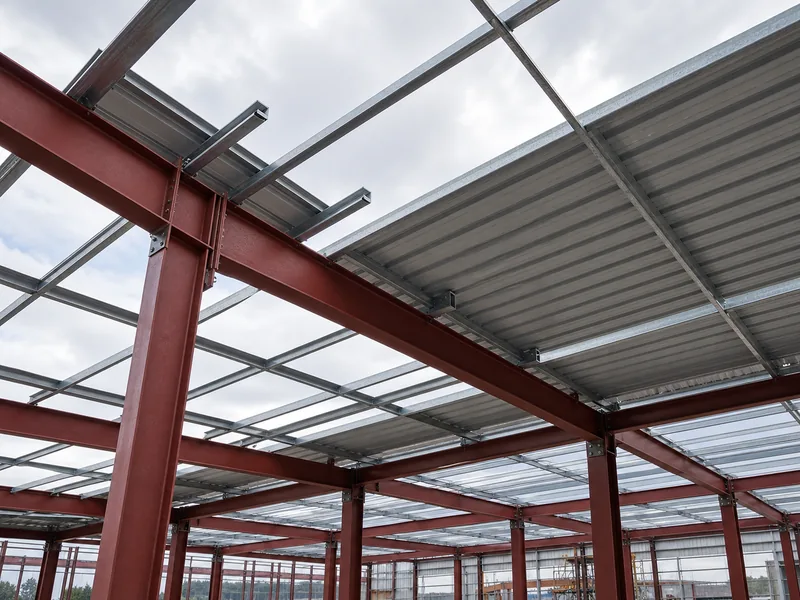
Gauge is the quiet variable behind all of this. Lower gauge numbers mean thicker steel, with residential panels commonly in the 24 to 26 range, and a step up in thickness buys dent and wind resistance at a higher price. On a steel-framed building the roof also has to match the structure beneath it, which is where panel profile, purlin spacing, and the work of steel building manufacturers come together instead of being chosen in isolation.
How to Choose the Right Metal Roof Type
Choosing a metal roof works best as an elimination sequence rather than a popularity contest. Each step removes options before you ever compare looks or price, which keeps you from falling for a profile your roof cannot actually carry. Run the constraints in this order:
- Slope first. Low or near-flat roofs eliminate most exposed-fastener corrugated and push you toward concealed standing seam.
- Climate second. Coastal and salt exposure narrow the metal to aluminum or well-coated steel; hail country pushes toward heavier gauge.
- Building type third. Barns, shops, and metal buildings lean to R-Panel economics; homes lean to standing seam, shingles, or stone-coated steel.
- Budget fourth. Steel anchors the affordable end, copper and zinc the premium end, with aluminum in between.
- Looks last. Only after the first four filters do color, profile shape, and tile-versus-seam aesthetics decide among the survivors.
Before committing, verify a short list: the substrate and coating system, the gauge, the fastener type against your slope, and whether the panel suits the structure and purlin spacing it will sit on. Locking those four removes most of the regret that comes from choosing on appearance first.
Matching Roof Type to Building, Slope, and Climate
The right type of metal roof is the one that survives your slope and climate first and looks the part second, not the profile that photographs best. In practice that means locking two constraints before anything else: the roof slope, which decides exposed versus concealed fastening, and the substrate and coating, which decide how the metal handles your environment. Price tier and panel appearance only matter among the options those two constraints leave standing.
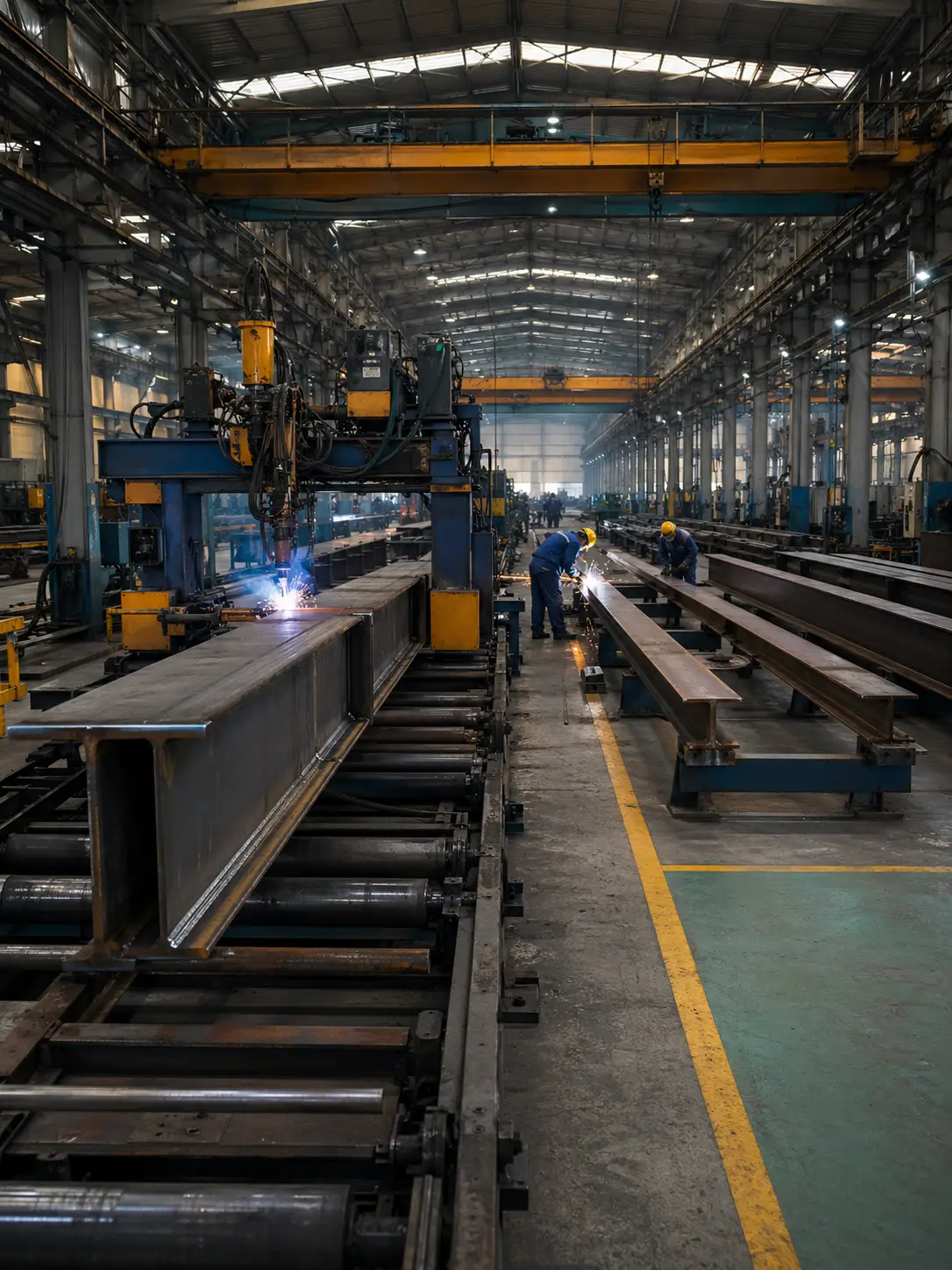
For steel-framed and prefabricated buildings, the roof is part of the structure rather than a separate purchase, so the panel profile, gauge, and coating are best coordinated with the framing and purlins. KAFA’s confirmed profile steel plate and C and Z purlin lines, run under ISO 9001:2015 quality management, make panel, profile, and purlin coordination a relevant specification point for steel-framed buildings. Settle the slope and the substrate first, and the type of metal roof usually narrows itself.
Frequently Asked Questions
What is the most common type of metal roof?
Coated steel panels are the most common type of metal roof, because steel is the most affordable metal and accepts almost every profile from corrugated to standing seam. Galvanized and Galvalume steel cover the bulk of barns, commercial buildings, and budget residential roofs, with the specific profile decided by slope and look.
Standing seam or corrugated, which should I choose?
Standing seam suits low slopes, long ownership, and weather-tight performance, while corrugated fits simple, well-sloped, budget-driven roofs. The deciding factors are slope and fastener exposure: corrugated’s through-panel screws cost less but need maintenance, whereas standing seam’s hidden clips cost more and lower the long-term leak risk.
Which type of metal roof lasts the longest?
Copper and zinc roofs last the longest, with copper capable of passing 100 years and zinc commonly in the 80 to 100 year range when detailed correctly, against roughly 40 to 70 years for coated steel and aluminum. Longevity tracks coating, gauge, and environment more than the metal alone, so a well-built steel roof can outlast a poorly detailed premium one.
What is the cheapest type of metal roof?
Exposed-fastener corrugated or ribbed steel is the cheapest type of metal roof, pairing the lowest-cost metal with the fastest, simplest installation. The savings come with through-panel fasteners that need periodic attention, so the lowest purchase price carries a maintenance cost a buyer should plan for.
Can any metal roof go on a low-slope roof?
Low-slope roofs generally favor concealed-fastener profiles such as standing seam over exposed-fastener corrugated or ribbed panels. Exposed laps and screw penetrations lean on gravity and sealant that a shallow slope stresses, so confirm each product’s minimum slope rating, seam design, underlayment, and local code or engineering requirements before committing.
Does a metal roof need a steel structure underneath?
A metal roof can sit on wood framing or a steel structure, but the panel has to match whatever supports it. On steel-framed and prefabricated buildings the profile and gauge are specified to the purlin spacing, so the roof and the structure are best planned together rather than separately.