




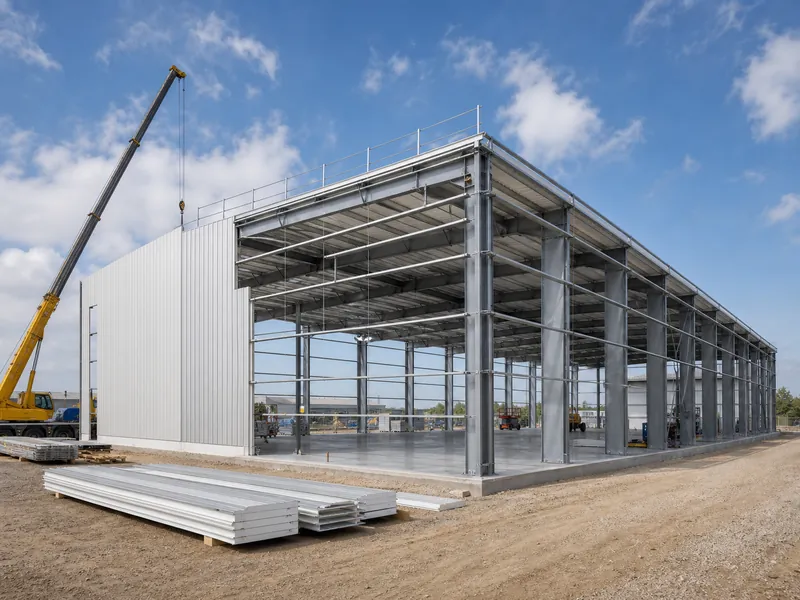
Building a warehouse turns a storage problem into a construction project, and the decisions that shape the outcome happen early, long before the first column is set. This guide maps the build itself, stage by stage, from defining the purpose through permitting, erection, and the day the space is ready to use. It does not cover interior racking layout or line-by-line cost estimating; those belong to their own playbooks. Some operators also weigh new construction against an existing warehouse building for sale before committing, and the trade-offs below help frame that call too.
The early calls, what the building is for, how tall the clear space needs to be, and whether the site can legally support it, drive nearly everything that follows. Get those settled first and the later stages run on rails. Skip them and the rework shows up at the worst time, usually after steel is already on order.
Before You Build: Purpose, Size, and Site
The use a warehouse is built for, whether bulk storage, high-throughput distribution, or temperature-controlled goods, sets the clearance, floor loading, and footprint that every later decision depends on. A cross-dock facility prioritizes dock count and yard space; a pallet-storage building prioritizes clear height so racking can go vertical. Start from the operation, then size the box around it rather than the reverse.
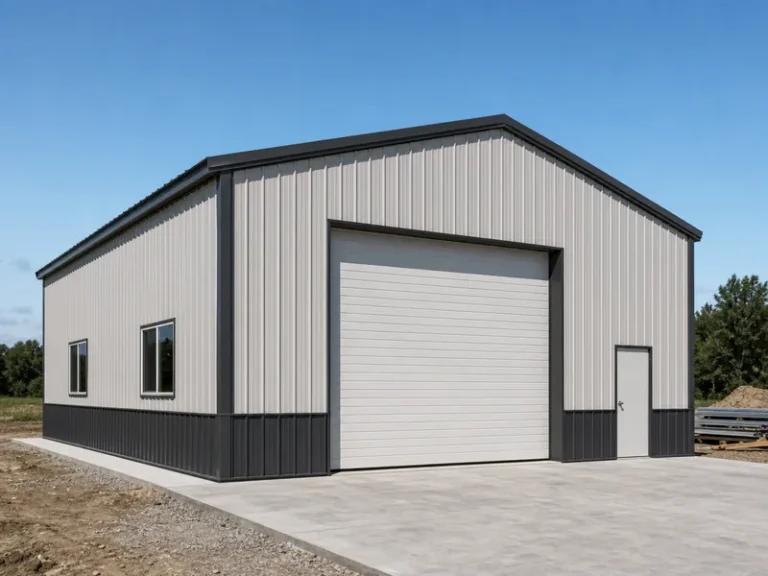
Translate the operation into numbers before talking to a builder. Count peak pallet positions, the tallest load you will lift, and the heaviest point load the slab must carry, then work backward to a footprint and clear height. The same square footage can serve very differently depending on how it is shaped, which is why a long, narrow multi-unit steel warehouse can outperform a square one for through-flow even at equal area. It also pays to size for the operation you expect in a few years, not only today’s. Extending a slab and frame after the fact costs far more than building in the headroom up front.
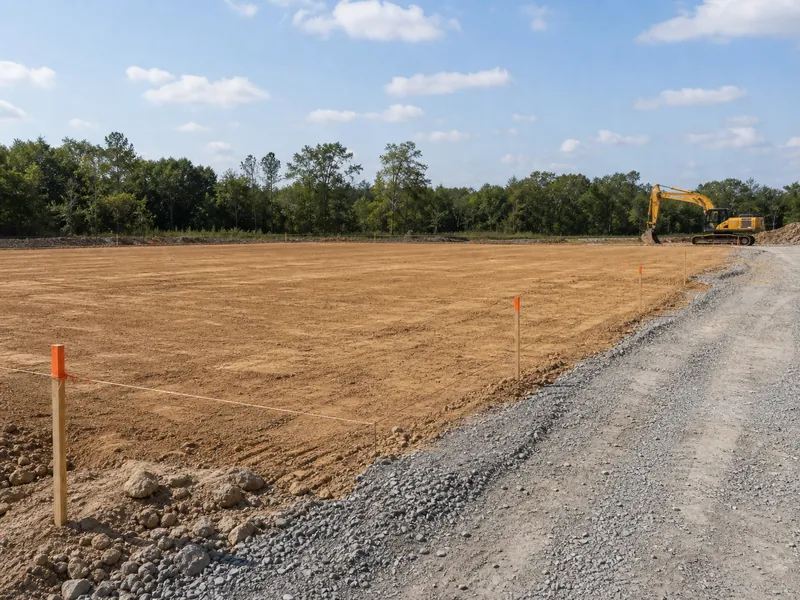
Site selection runs in parallel. Confirm the parcel’s zoning allows industrial use, check truck access and turning radius, and get a soil report before assuming the ground will hold a slab without expensive remediation. The same constraints apply to larger industrial buildings of any kind: the cheapest site on paper often carries the most expensive surprises underground.
Choosing a Construction Method Before Pricing
Method comes before money: whether a warehouse is framed as a pre-engineered metal building (PEMB), tilt-up concrete, or conventional structural steel changes the budget, the schedule, and the column layout more than any single feature choice. Comparing per-square-foot quotes across methods without first deciding which method suits the operation produces numbers that look precise and mean nothing.
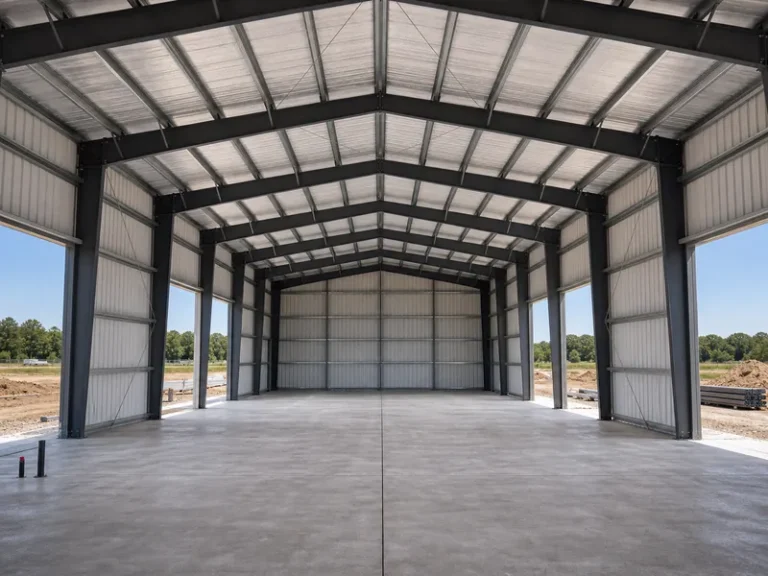
For most general-purpose warehouses, a PEMB is the practical starting point. The frame is engineered and fabricated in a shop, so field crews bolt up a kit rather than build from raw steel, which compresses the schedule and limits weather exposure. Wide bays come standard, and a clear-span design removes interior columns where forklift routes need the room.
Tilt-up concrete tends to overtake PEMB only at very large footprints, where casting wall panels on the slab and craning them upright spreads its setup cost across more area. Conventional structural steel is the stronger fit when loads are heavy, a crane runs overhead, or the geometry is non-standard. None of these is universally cheaper; the right call follows the size, loading, and clear-span the operation actually needs.
Design Choices That Decide How the Warehouse Works
Clear height and column spacing do more for daily throughput than any cosmetic feature, because together they fix how many pallet positions fit and how freely a forklift turns. A column-free, clear-span interior lets racking and aisles be laid out for the operation instead of around structural posts, and adding vertical clearance is far cheaper during design than after the frame is up.
Height has a ceiling of its own. Pushing eave and roof height higher to stack more pallets can cross fire-protection thresholds, where taller storage triggers more demanding sprinkler provisions and pushes cost up faster than the extra cube returns. Size clear height to the racking plan, not to the maximum the frame could reach. These early geometry decisions are where good steel building design pays off, because the frame, the roof pitch, and the bracing all follow from them.
Permits, Codes, and Site Approvals
Permitting is the path most likely to stall a warehouse schedule, because zoning, building, and fire approvals each run on their own clock and rarely move in step. Filing them late, or discovering a zoning restriction after design is locked, is a common and avoidable source of delay. Treat approvals as a parallel workstream that starts during design, not a box checked before construction.
The core approvals a warehouse build usually touches:
- Zoning and land use — confirms the parcel permits warehousing and the building’s height, setbacks, and lot coverage.
- Building permit — reviews engineered structural, foundation, and site plans against the adopted building code.
- Fire and life safety — covers sprinklers, egress, and access, and scales with storage height and occupancy.
- Workplace safety — OSHA requirements govern both the construction site and later warehouse operation.
Structural loads should follow ASCE 7, and the building code in force, typically a version of the IBC, governs the permit and structural review. Name the standards your jurisdiction adopts early; the specific provisions and load values come from the local code edition and the project engineer, not from a generic figure.
The Build Sequence: Foundation to Frame to Fit-Out
On-site work follows a fixed order, since the slab has to cure before steel can go up and the envelope has to close before interior systems run. Compressing the schedule means overlapping procurement with sitework, not skipping steps. The broad sequence on most projects looks like this:
- Site prep and foundation — grading, utilities, and pouring the metal building foundation and slab to the engineered design.
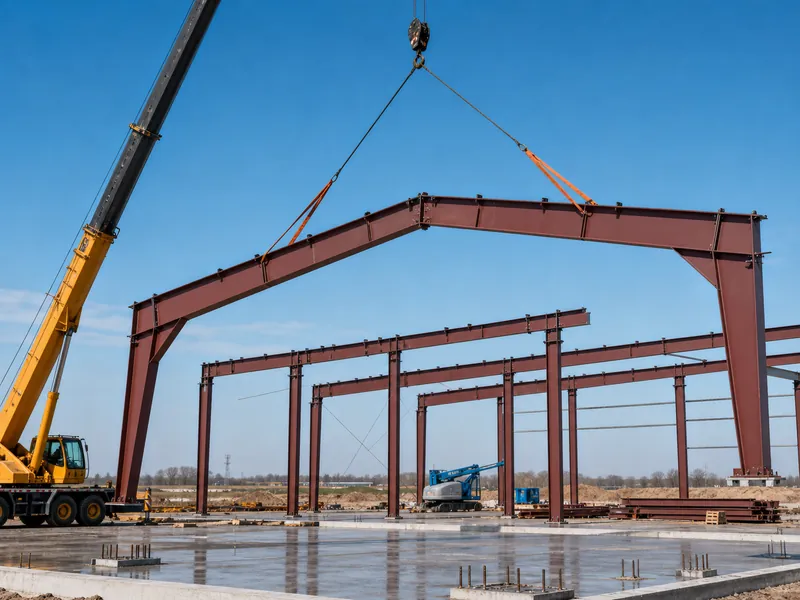
- Frame erection — anchoring and raising the primary frame, purlins, and girts once concrete has cured.
- Roof and wall envelope — installing cladding, insulation, and weatherproofing to close the building in.
- MEP systems — electrical, plumbing, lighting, and any HVAC, routed before interior finishing.
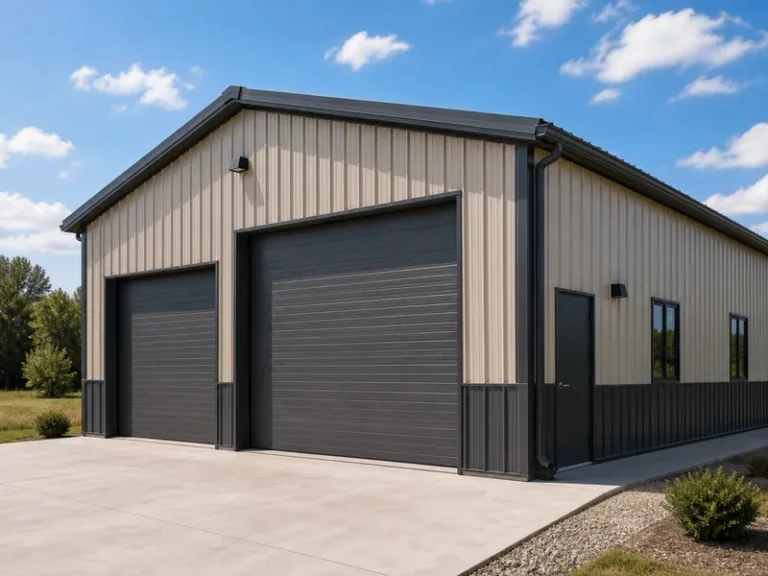
- Doors, docks, and fit-out — overhead and dock doors, hardware, and operational equipment.
- Inspection and handover — code inspections and sign-off before occupancy.
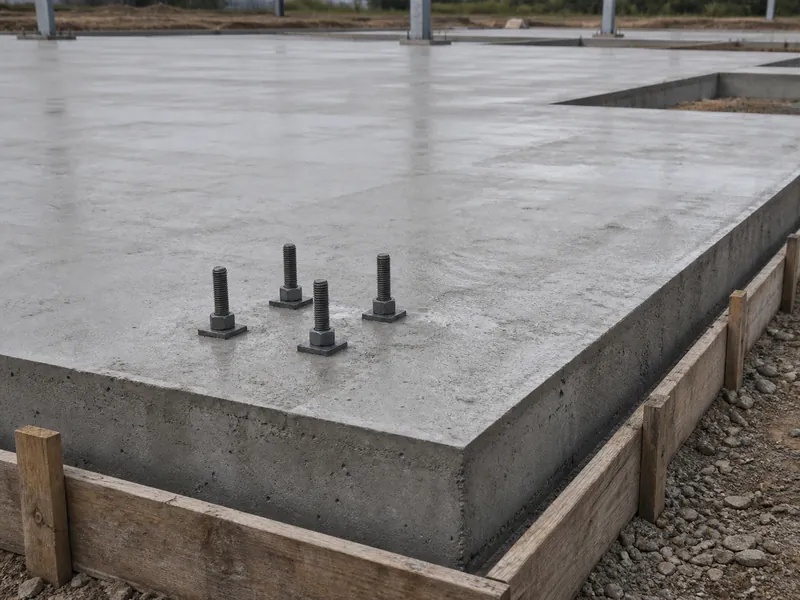
The steel frame also carries its own lead time, easy to forget when planning a schedule. Drawings are approved, the frame is fabricated, and only then does it ship to site for assembly, so the order date, not the erection date, sets the real start of the structure. This article keeps the sequence at an overview level; for the step-by-step mechanics, see how a steel building goes up, which this guide deliberately does not repeat.
Budget Range and Build Time
Warehouse construction usually lands between the low $20s and roughly $60 per square foot for the building shell, with the construction method setting where you fall in that band. These are industry ranges for the shell and erection, and they move with region, specification, and site conditions rather than holding to a single national figure.
| Method | Typical shell cost (per sq ft) | Where it fits |
|---|---|---|
| Pre-engineered metal (PEMB) | $20–35 | Most general-purpose warehouses; fastest to erect |
| Tilt-up concrete | $40–55 | Very large footprints where on-site casting pays off |
| Structural steel (weld-up) | $45–60 | Heavy loads, overhead cranes, or non-standard geometry |
What these ranges include and exclude: they cover the frame, envelope, and basic erection. They do not include land, site work, foundation upgrades for poor soil, utility connections, freight, permits, insulation, fire suppression, interior build-out, or racking. Complex loads, tight urban sites, or difficult ground push the figure above the ranges shown.
As a worked example, a 10,000-square-foot PEMB shell at $20–35 per square foot comes to roughly $200,000–350,000 for the shell only, before the excluded items above. For a full breakdown by size and component, see the detailed look at what it costs to build a warehouse.
On timeline, smaller warehouses under 10,000 square feet often finish in three to six months, while large distribution centers can run a year or more. Those are ranges, not guarantees: permitting, site work, steel fabrication lead time, utility connections, jurisdiction, and interior scope all move the date.
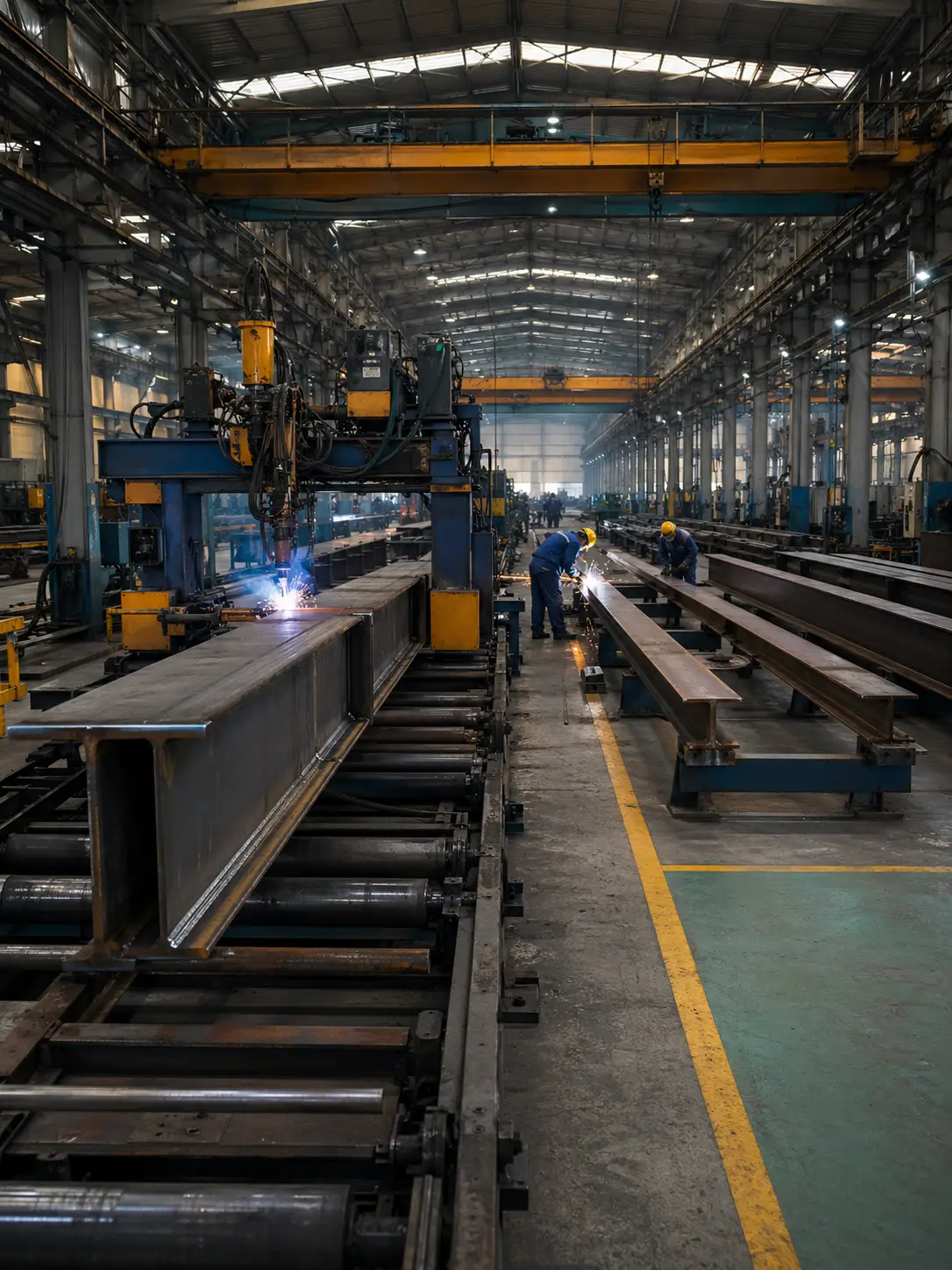
Where the structure is fabricated matters to both cost and schedule. As a steel structure manufacturer handling design, fabrication, and installation in-house, Qingdao KAFA Fabrication Co., Ltd. produces the H-beam frames, box sections, and C/Z purlins for a warehouse on dedicated lines under ISO 9001:2015 quality management, which keeps the frame package consistent from drawing to delivery.
Conclusion
A warehouse build rewards getting the order of decisions right more than chasing any single number. Settle the operation and the clear height first, confirm the site’s zoning and soil can carry the design, then choose the construction method, and compare prices only after that. A quote means little until the method and clear-span behind it are fixed. The most expensive mistakes are the early ones revisited late: a clearance too low for the racking, a site that needs remediation, or a fire-protection threshold crossed by an over-tall roof.
Once the operation, clear height, and method are settled, the frame can be priced against a real clear-span and load case instead of a generic per-foot number. That is the point to get a free quote for the footprint you have in mind.
FAQ
How long does it take to build a warehouse?
Smaller warehouses under 10,000 square feet often finish in three to six months, while large distribution centers can take a year or more. The timeline depends on design and permitting at the front end and on steel lead time, since the frame is fabricated before it ships to site.
How much does it cost to build a 10,000-square-foot warehouse?
A 10,000-square-foot PEMB shell runs roughly $200,000–350,000 at $20–35 per square foot, covering the frame, envelope, and basic erection. Land, foundation upgrades, permits, insulation, fire suppression, and racking are separate, so the all-in figure for a finished, equipped building is higher.
What permits do you need to build a warehouse?
A warehouse build typically needs zoning approval, a building permit tied to engineered structural and site plans, and fire and life-safety sign-off. Workplace safety rules apply throughout, and the exact list depends on the jurisdiction and the building code edition it has adopted.
Is a steel (PEMB) warehouse cheaper than tilt-up or concrete?
For most general-purpose warehouses, a pre-engineered metal building is the lower-cost and faster option, typically $20–35 per square foot for the shell. Tilt-up concrete usually becomes competitive only at very large footprints, where casting panels on site spreads its setup cost across more area.
What clearance height does a warehouse need?
Clear height should be sized to the racking plan rather than maximized by default, since taller storage can cross fire-sprinkler thresholds that raise cost. Many small-to-mid warehouses work well with 16 to 20 feet of clearance, but high-bay pallet storage needs more, set by how many rack levels the operation requires.
Further Reading
- Whole Building Design Guide — Warehouse building type — National Institute of Building Sciences. Reference on warehouse design objectives, layout, and building systems that informs the design and site decisions above.
- OSHA — Warehousing — U.S. Occupational Safety and Health Administration. Authority for the construction-site and operational safety requirements referenced in permitting and approvals.
- International Code Council — I-Codes — publisher of the IBC and related codes that govern the building permit and structural review for a warehouse.