




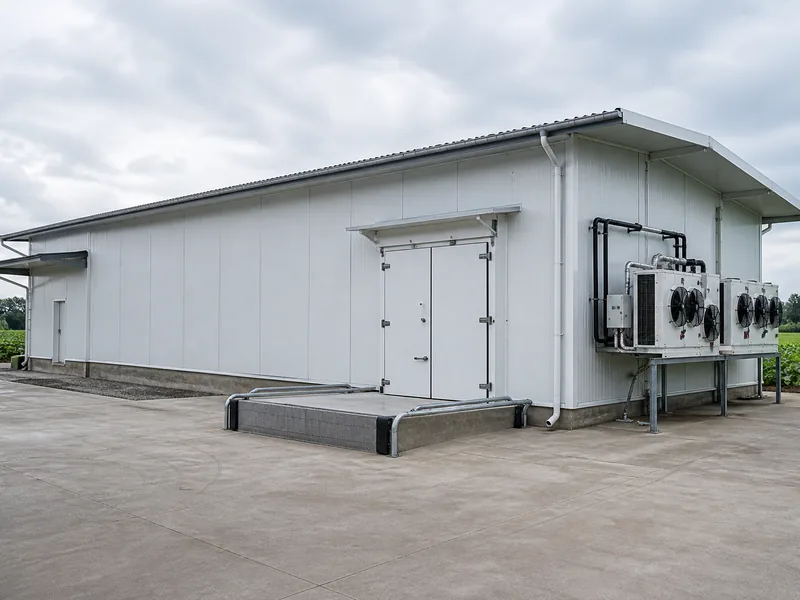
A vegetable cold storage project typically costs $110–$155 per square meter — roughly $10–$14 per square foot — for the installed cold-store scope: the insulated shell, the refrigeration system, and the electrical fit-out on a site that is already prepared. At that rate a 500 m² (about 5,400 sq ft) fresh-keeping room for produce lands near $56,000–$70,000, and the unit price eases as the building gets larger. Temperature is the second lever. A 0–5 °C fresh-keeping room sits at the bottom of the range, while a –18 °C freezer for processed or long-hold vegetables pushes both the equipment and the running cost up sharply. Built from the ground up in the United States, where land-side civil work and local labor sit inside the figure, the same capability costs far more — about $125–$275 per square foot.
Because a cold storage building for vegetables is really a refrigerated, vapor-sealed envelope rather than a plain shed, its budget behaves differently from ordinary construction. The figures below break the number down by size, by system, and by the storage temperature your crops actually need, and they flag what a supplier quote usually leaves out.
Vegetable Cold Storage Cost per Square Meter and Square Foot
Installed cold-store cost for vegetables runs roughly $110–$155 per square meter, and the unit price falls as the footprint grows. This range covers the insulated panels, refrigeration, doors, and electrical fit-out delivered onto a prepared slab; it excludes land, civil works, and deep foundations. The table below uses fresh-keeping (0–5 °C) rooms as the baseline.
| Floor area | Installed cost (USD/m²) | Approx. USD/sq ft | Indicative project total |
|---|---|---|---|
| 500 m² (~5,400 sq ft) | $110–$150 | $10–$14 | $56,000–$70,000 (fresh-keeping example) |
| 1,000 m² (~10,800 sq ft) | $120–$155 | $11–$14 | $120,000–$155,000 |
| 3,000 m² (~32,300 sq ft) | $125–$145 | $12–$13 | $375,000–$435,000 |
| 5,000 m² (~53,800 sq ft) | $125–$140 | $12–$13 | $625,000–$700,000 |
| 10,000 m² (~107,600 sq ft) | $120–$140 | $11–$13 | $1.2M–$1.4M |
Two things drive the per-meter slide. Larger rooms spread fixed items — the refrigeration plant, control panel, doors, and design — over more storage volume, and they have a lower ratio of expensive exterior wall to interior space. A 500 m² room therefore carries a higher unit cost than a 5,000 m² one even when both hold produce at the same temperature.
The United States benchmark is a different scope and a different number. Ground-up refrigerated construction there runs about $125–$200 per square foot for a cooler and $175–$275 for a freezer — close to $1,350–$2,960 per square meter. That price includes the full building, the slab, U.S. mechanical labor, and code compliance. A 30,000 sq ft refrigerated facility lands near $5 million all-in, and a 100,000 sq ft frozen warehouse runs $12.5–$20 million. The per-square-meter supply figures and the U.S. all-in figures answer two different questions: what a fabricated cold-store package costs, versus what a finished building costs on American soil.
Why Vegetable Cold Storage Costs Two to Three Times a Dry Warehouse
Refrigerated space costs two to three times as much per square foot as a dry warehouse of the same size. A standard dry warehouse runs about $78–$85 per square foot; the cold-store premium comes from systems a dry shed never installs. The refrigeration plant alone is a quarter to a third of total construction cost, and the insulated envelope, vapor barrier, freezer-rated doors, and humidity control account for much of the rest.
There is a running-cost tail as well. A freezer holding vegetables at –18 °C draws far more energy than a 2 °C cooler, so the build premium brings a permanent energy premium. We cover that side in detail under cold storage operating costs. Frozen rooms built on a converted dry warehouse also need sub-slab heating to stop the ground freezing and heaving, which adds roughly $8–$12 per square foot that a cooler never pays.
Where the Budget Goes: Envelope, Refrigeration, and Structure
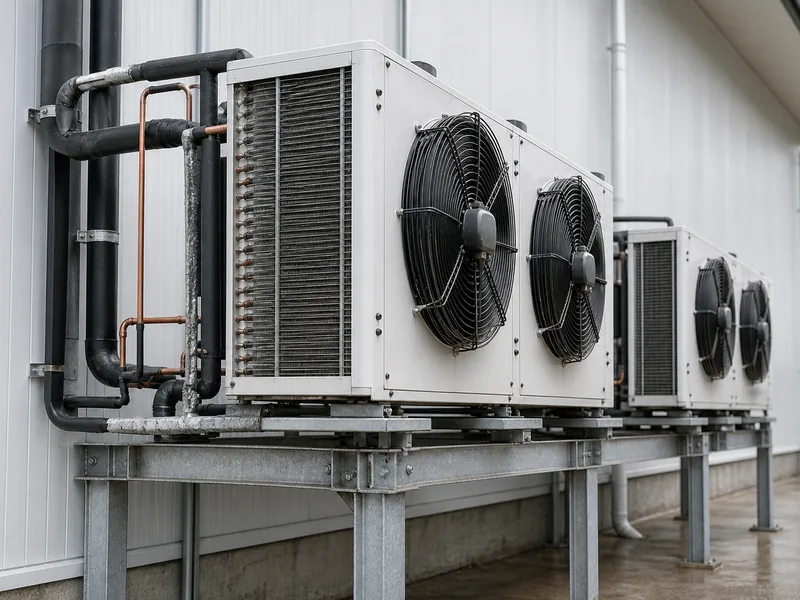
Three systems dominate a vegetable cold storage budget: the insulated envelope, the refrigeration plant, and the structural frame. Knowing the split helps you read a quote and see where a low bid has dropped scope.
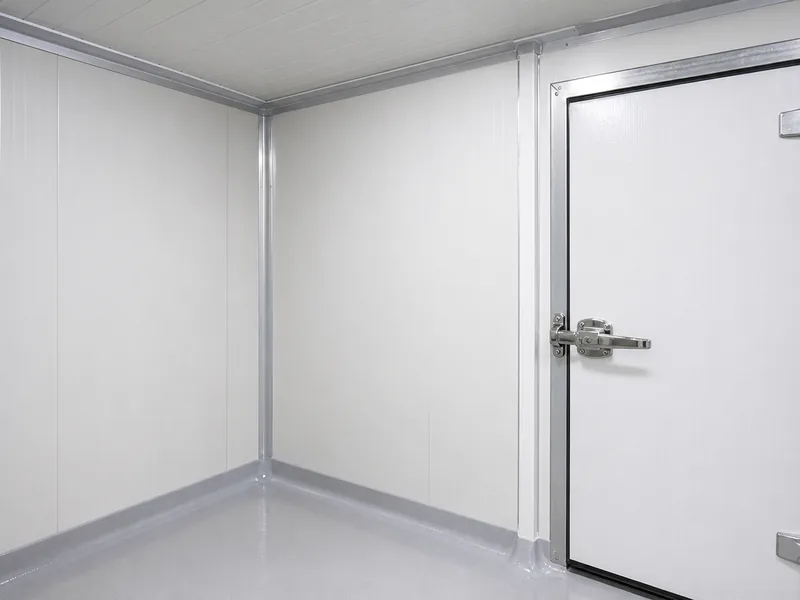
The insulated envelope is the single largest building element. Polyurethane (PU) or PIR sandwich panels — typically 100–200 mm thick depending on temperature — form the walls and ceiling, sealed with a continuous vapor barrier so warm, moist outside air cannot reach the cold face and condense. Panel thickness, not floor area, is what a freezer mainly adds over a cooler; for how thickness and R-value are specified, see our guide to metal building insulation.
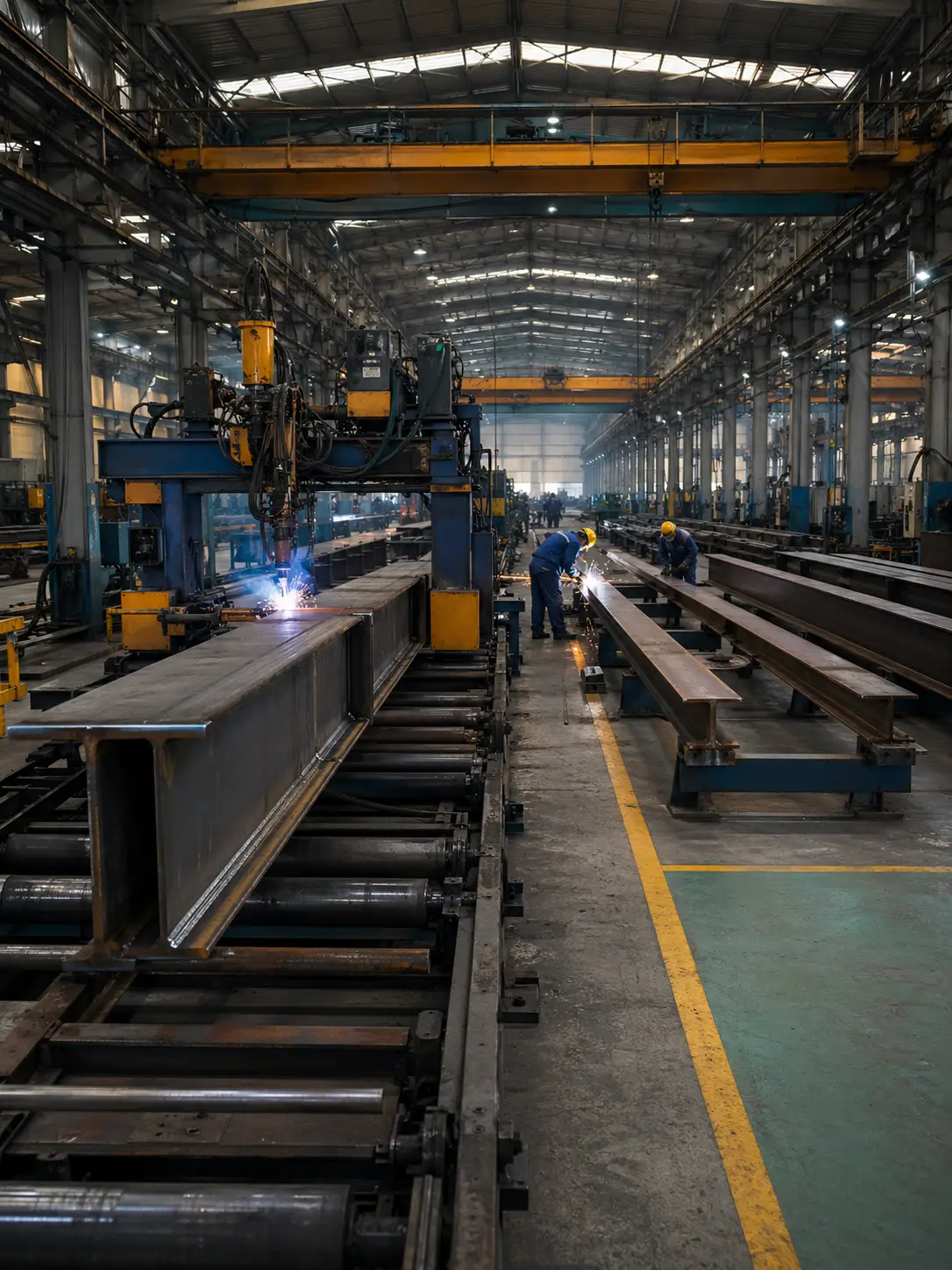
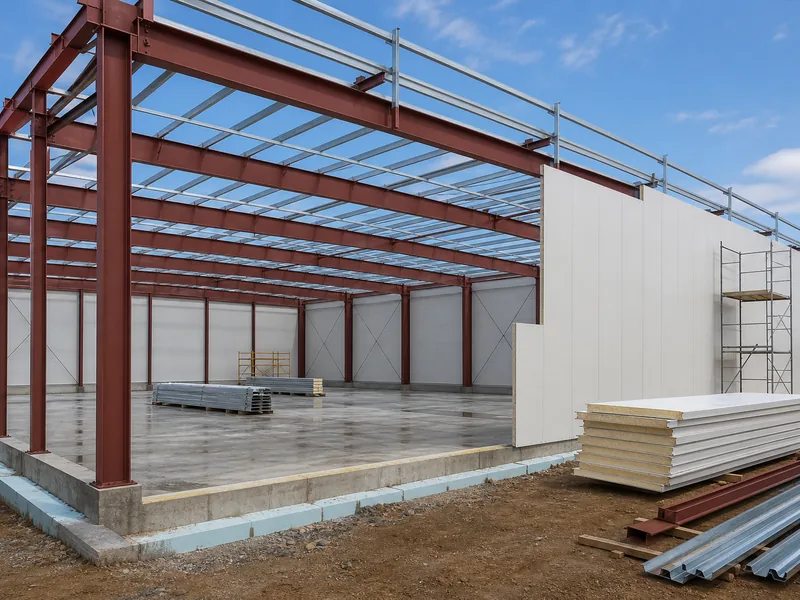
Refrigeration is the next line and the one most sensitive to temperature. Compressors, condensing units, and evaporator coils are sized to the heat load, which rises with a lower set-point, more frequent door openings, and warmer incoming produce. The structural frame is the third line. A steel-framed cold store uses hot-rolled H-beam or box-section columns and rafters with C- or Z-section purlins, plus the profiled steel plate that backs the panels. A clear-span, column-free interior keeps racking aisles clean but calls for heavier rafters, which nudges the frame cost up. Fabricators such as Qingdao KAFA Fabrication run dedicated lines for these sections, which is why the frame is usually quoted as a separate package from the refrigeration. Electrical work, controls, lighting, and installation round out the figure.
How Crop Type and Temperature Move the Cost
Storage temperature and crop type move the budget more than floor area once the shell is up, because they set the refrigeration load and the number of separate rooms you need. Vegetables do not all want the same conditions, and getting this wrong is both a cost problem and a spoilage problem.
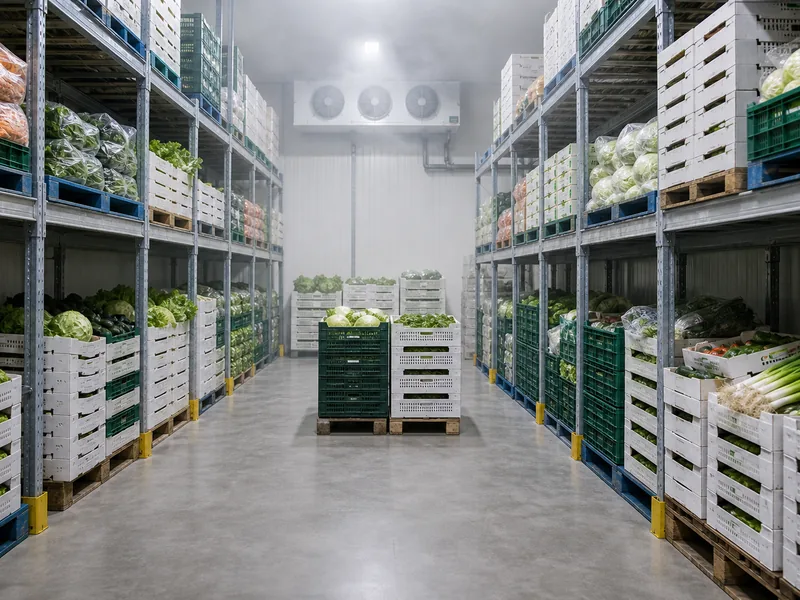
Most leafy and root vegetables hold best near 0–4 °C (32–39 °F) at 90–95 % relative humidity, which is a fresh-keeping design and the lower-cost option. Chilling-sensitive crops are the trap. Tomatoes, cucumbers, peppers, eggplant, and winter squash suffer chilling injury below about 7–13 °C (45–55 °F). A packer who mixes them with leafy greens then needs two temperature zones rather than one room — more refrigeration circuits, more doors, and a higher bill. Long-hold or processed vegetables move into freezer territory at –18 °C (0 °F) or below, which carries the freezer construction premium and the energy tail above.
Two design choices ride on top of temperature. The high 90–95 % humidity that keeps produce from wilting calls for larger evaporator coil surface and careful airflow. Both are set at design stage rather than bolted on later; our refrigerated warehouse design guidelines walk through that trade-off. Controlled-atmosphere (CA) storage lowers oxygen to slow ripening, which can extend shelf life two to three times for crops like apples. It adds roughly 30–50 % to the project cost, so it makes sense only where the longer storage window pays for itself.
What a Vegetable Cold Storage Quote Should Include
A vegetable cold storage quote is only comparable when it states scope — what sits inside the price and what is left for the buyer. The per-square-meter figures above are a supply-and-install scope: insulated panels, the refrigeration system, cold-store doors, interior lighting, and electrical fit-out, delivered and installed on a prepared slab. Several real project costs usually sit outside that number:
- Land, site grading, and the concrete slab or foundation.
- Permits, inspections, and local code compliance.
- Backup power and any standby generator.
- Sub-slab heating for frozen rooms, about $8–$12 per square foot.
- Freight and import duties for a shipped, prefabricated package.
The same scope also climbs when the temperature drops into freezer range, when controlled atmosphere is added, when chilling-sensitive crops force a second zone, or when the room is small enough to lose the scale discount. A usable estimate states the storage temperature, the panel thickness and refrigeration capacity behind the price, the floor area and clear stacking height, and the line between supplier and buyer scope. For the broader picture across cooler and freezer warehouses generally, our cold storage warehouse construction cost guide sets the wider range. When two quotes differ by 30 %, the gap is almost always scope — one has folded in the slab, doors, or controls that the other left for you to source.
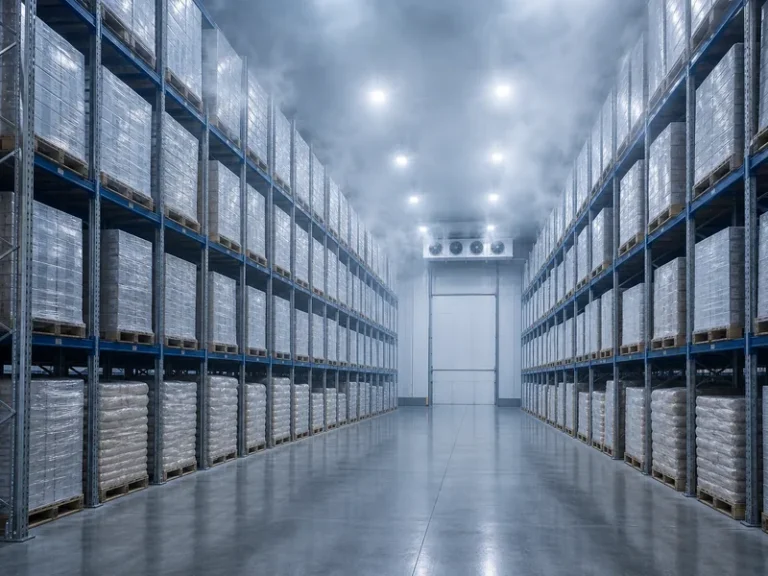
Capacity is the other figure to confirm against the price. A 500 m² fresh-keeping room with 4–5 m of clear height holds roughly 500–600 metric tons of palletized produce, depending on stacking height, packaging, and aisle width. A quote that promises far more is probably counting gross volume rather than usable pallet positions.
Budgeting Your Vegetable Cold Storage Project
Budgeting a vegetable cold storage project starts with two decisions: the storage temperature your crops actually need, and how much of the site work sits in the contract. Those two choices, not the headline per-meter rate, decide whether you land near $112 or $275 per square foot of equivalent space. Fix the temperature plan first — one fresh-keeping zone, a fresh-plus-chilling-sensitive split, or a freezer — then settle the scope line so every quote answers the same question.
From there, the variables that swing the estimate are panel thickness, refrigeration capacity, and whether controlled atmosphere is in or out; settle those three and the rest of the budget moves within a narrow band. KAFA fabricates the steel frame and insulated envelope for produce cold stores at its 20,000 m² Qingdao facility and quotes the structure and refrigeration scope separately, so each line stays visible. To turn a target capacity and temperature into a firm number, request a quote with your crop list, floor area, and clear height.
FAQ
How much does a small vegetable cold storage project cost?
A 500 m² (about 5,400 sq ft) fresh-keeping vegetable cold room costs roughly $56,000–$70,000 for the installed package on a prepared site. That is about $112–$140 per square meter; against a typical 500–600 ton capacity it works out near $95–$140 per metric ton, a useful cross-check when offers are quoted by area rather than by volume.
Is it cheaper to convert an existing warehouse into a cold store?
Converting a dry warehouse to cold storage runs about $100–$150 per square foot for the conversion scope, and it can approach the cost of building new once the building’s limits are counted. A low ceiling, an un-insulated slab, or columns in the wrong place can erase the saving, so conversion only wins when the existing shell already suits a refrigerated layout.
How much produce can a 500 m² cold store hold?
A 500 m² room with 4–5 m of clear height holds roughly 500–600 metric tons of palletized vegetables. Usable capacity drops when you need wide forklift aisles or extra airflow gaps for high-respiration crops, so confirm the figure as pallet positions rather than gross cubic volume.
Does controlled-atmosphere storage cost more?
Controlled-atmosphere (CA) storage adds about 30–50 % to a vegetable cold storage project over a standard refrigerated room. It pays back only for crops with a long marketing window — apples and some brassicas — where the two-to-three-times shelf-life extension lets you sell weeks after harvest at a better price.
What is usually excluded from a cold storage quote?
Land, civil works, the foundation slab, permits, and backup power usually sit outside a cold-store package price. Frozen rooms also need sub-slab heating at roughly $8–$12 per square foot, and a shipped prefabricated package adds freight and import duties; confirm all of these before you compare two bids.
Further Reading
- The Commercial Storage of Fruits, Vegetables, and Florist and Nursery Stocks (USDA Agriculture Handbook 66) — U.S. Department of Agriculture. Commodity-by-commodity storage temperatures, humidity, and chilling-sensitivity data behind the temperature-zone decisions in this article.
- ASHRAE Handbook—Refrigeration, 2018 (table of contents) — ASHRAE. Chapter 21 (Commodity Storage Requirements) and Chapter 23 (Refrigerated-Facility Design) are the engineering basis for sizing refrigeration load and the insulated envelope.
- Cold storage conditions for fruits and vegetables — International Institute of Refrigeration (IIR). Recommended temperature, relative humidity, storage time, and controlled-atmosphere conditions for more than 200 fruits and vegetables.