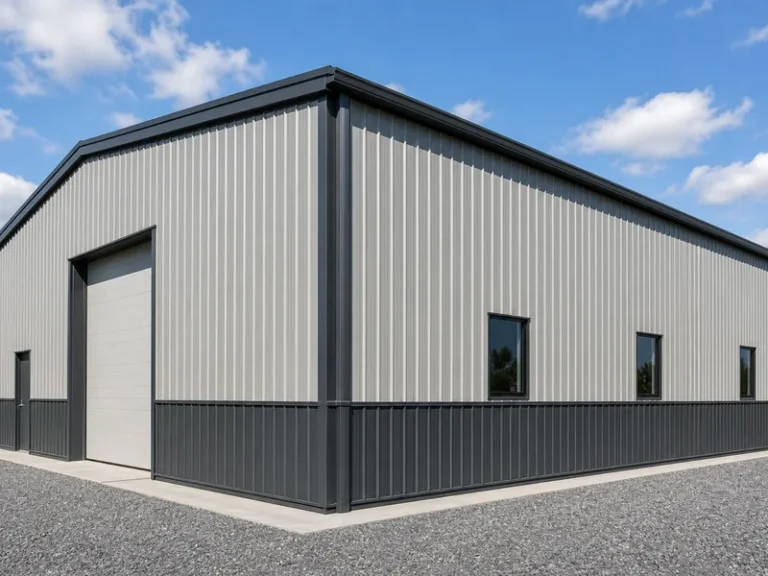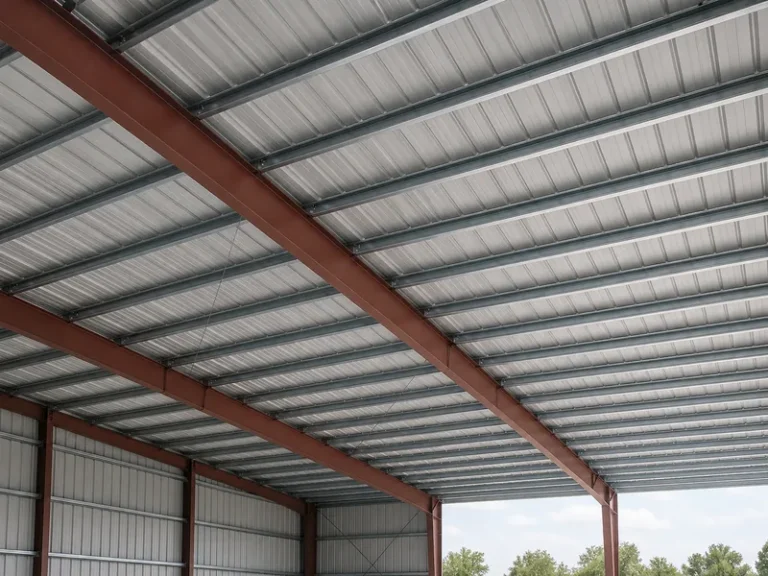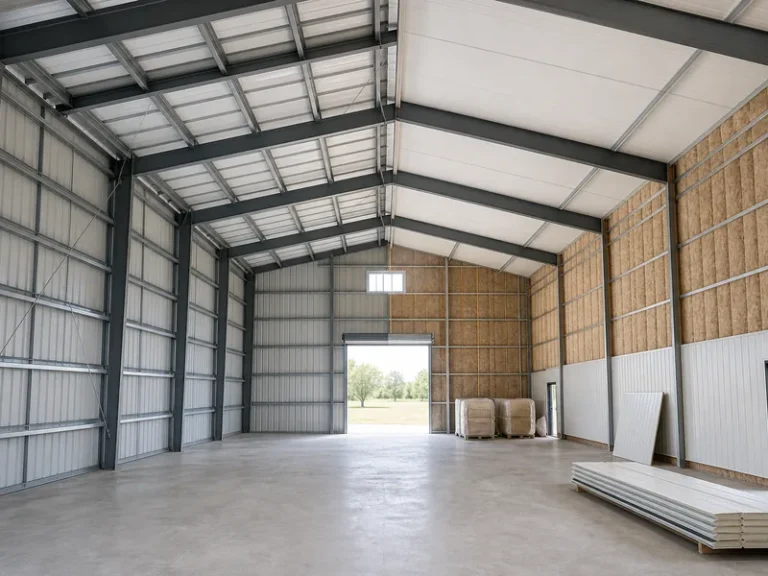




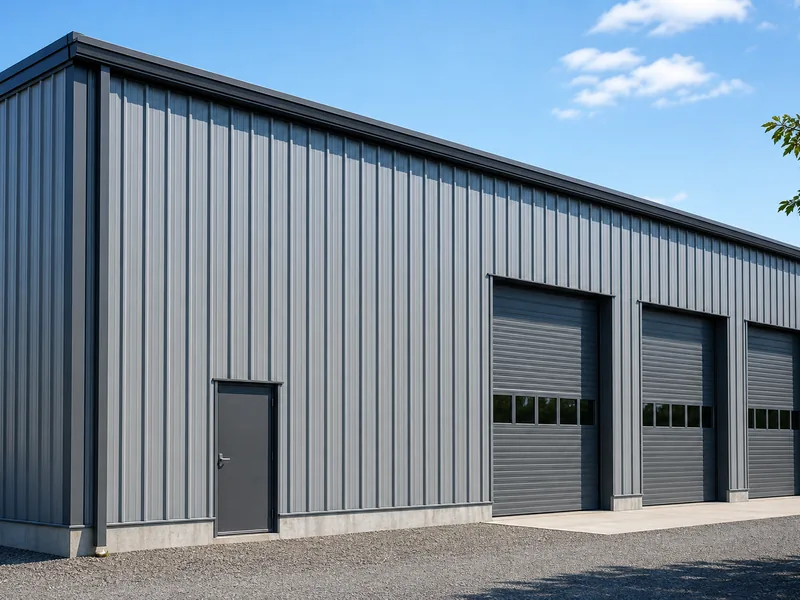
Steel siding for a metal building turns on three decisions: the panel profile, the steel gauge, and the coating on the sheet. Get those three matched to your use and climate, and the wall will shed weather for decades with little upkeep. Get them wrong, and you pay for it in dents, premature rust, or an exterior that looks cheaper than the building behind it. This guide walks the realistic choices for each of the three, then puts them together into a selection order you can take to a supplier. It stays focused on choosing panels; fastening patterns, trim, and full installation sequencing are a separate subject.
Siding is one of the visible components of a metal building, and unlike a wood-framed house, the panels attach to horizontal girts rather than closely spaced studs. That single difference shapes much of what follows, because the spacing of the supporting steel building wall framing decides how much spanning capacity a panel needs.
Steel Siding Panel Profiles and Where Each One Fits
Panel profile is the shape rolled into the steel sheet, and it sets both the look of the wall and how far the panel can span between girts. The practical menu narrows to a handful of profiles, each landing in a different place on the scale from utilitarian and cheap to architectural and premium.
Corrugated Panels
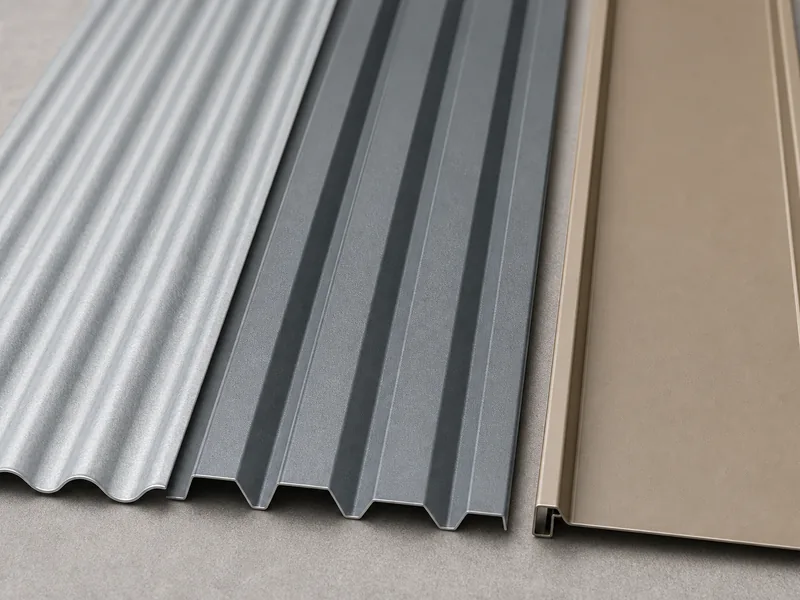
Corrugated panels use a rounded wave, usually the 7/8-inch pattern, and they sit at the low-cost end of steel cladding. The wave adds stiffness, so corrugated can carry roughly 5 to 8 feet of span between supports, depending on gauge and wind or snow load. The trade-off is exposed fasteners and a plain, industrial look, which is why corrugated shows up on agricultural buildings, pole barns, and workshop walls far more than on finished storefronts.
R-Panel and PBR
R-Panel and its PBR variant are trapezoidal profiles with a deeper rib, about 1-1/4 inches, that buys more spanning capacity than corrugated at the same gauge. PBR stands for Purlin Bearing Rib: the panel adds a small bearing leg that seats directly on the purlin or girt, which makes a tighter, better-sealed lap. With a typical 36-inch coverage width and exposed fasteners, PBR is the panel you will find in most pre-engineered building kits. It suits warehouses, commercial shells, and shops where strength and price outweigh the need for a flush face.
Standing Seam
Standing seam panels hide their fasteners under raised, interlocking seams, typically 1 to 1-3/4 inches tall, so nothing penetrates the weather surface. That concealed-fastener design gives standing seam its clean vertical lines and its long track record on roofs, where leaks tend to start at fasteners. On walls it reads as an architectural, premium finish; the higher cost and more involved installation are why it is specified selectively rather than across an entire utilitarian building.
Board and Batten, Flush, and Lap Panels
Board and batten, flush, and lap panels are the residential-looking end of the steel range, built on concealed-fastener systems for smooth walls without visible screws. Board and batten alternates wide flats with raised battens for a vertical, farmhouse look; flush panels give a tight modern plane for fascia, soffits, and accent walls; double-lap profiles imitate traditional horizontal wood siding. These profiles are pushing steel onto barndominiums and commercial facades, and many now ship in wood-look print finishes that hold color better than real cedar.
Insulated Metal Panels
Insulated metal panels sandwich a foam core between two steel skins, combining cladding and insulation for metal buildings in a single factory-made unit. Because the insulation is built in, IMPs replace the layered build-up of separate liner, blanket, and exterior panel, which speeds enclosure on cold-storage, food-processing, and climate-controlled buildings. They cost more per square foot than a single-skin panel, so they fit projects where temperature control, not only weather protection, is the goal.
Steel Gauge and How Panel Thickness Changes Performance
Gauge measures the thickness of the steel sheet, and on that scale a smaller number means a thicker, stronger panel, the reverse of what many first-time buyers expect. The common wall gauges break down like this:
| Gauge | Approx. thickness | Typical use |
|---|---|---|
| 29 | ~0.014 in | Budget and agricultural walls; thinnest common option |
| 26 | ~0.018 in | Standard wall panel for steel buildings |
| 24 | ~0.024 in | Commercial and high-exposure walls |
| 22 | ~0.030 in | Heavy-duty walls and demanding loads |
For most metal building walls, 26-gauge is the usual starting point, with 24-gauge stepping in for commercial work or sites that face hail, wind-blown debris, or frequent contact. The lighter 29-gauge saves money but dents and oil-cans more readily, so it belongs on low-traffic agricultural walls rather than anything seen up close.
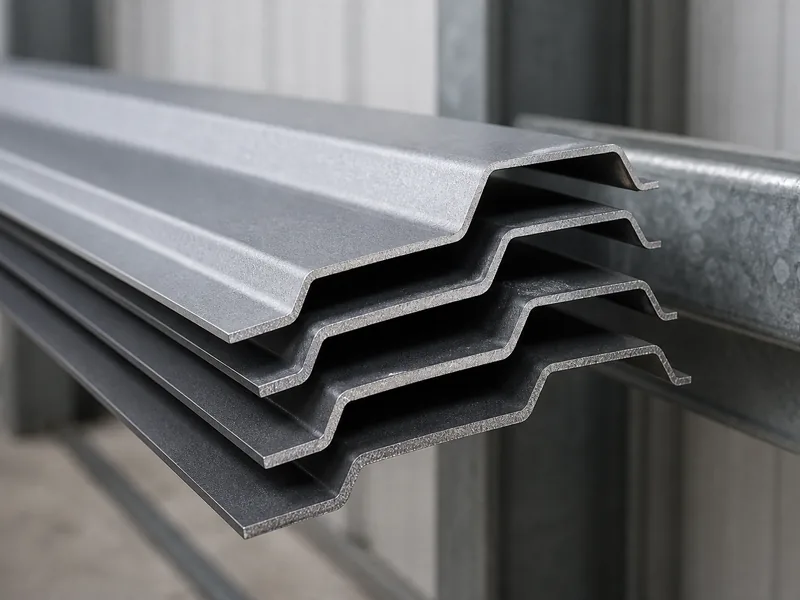
Thickness also has to be read against girt spacing. Metal building girts commonly sit about 5 to 7 feet apart, far wider than the 16-inch stud spacing of a wood wall, so a panel has to bridge that gap without buckling. A thin gauge on widely spaced girts is the pairing that flexes and oil-cans, which is why span capacity and gauge are specified together rather than one at a time.
Coatings and Finishes That Set How Long Siding Lasts
The coating on a steel panel, far more than the steel beneath it, decides how long the siding resists rust and holds its color. Bare structural steel would corrode outdoors, so siding steel always carries a metallic coating, and most carries a paint system on top of that.
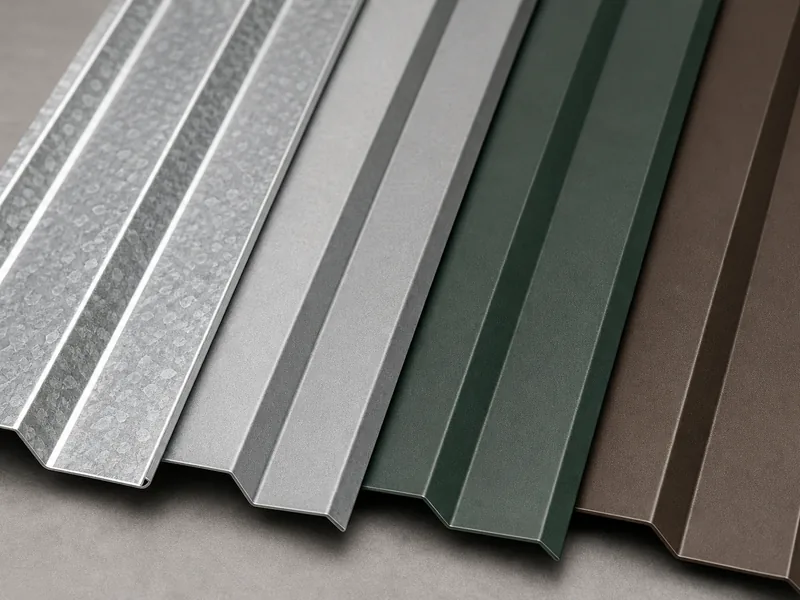
Two metallic coatings dominate. Galvanized steel uses a zinc layer that sacrificially protects the steel and serves as the proven, economical baseline. How it compares with a painted finish is covered in our guide to galvanizing vs painting steel. Galvalume, an aluminum-zinc alloy coating, generally outlasts plain galvanizing in most atmospheres, though it is more vulnerable at cut edges in heavy marine salt. Over the metallic layer, paint systems split mainly into SMP (siliconized modified polyester) and PVDF, also sold as Kynar. PVDF holds color and gloss longer and resists chalking, and it typically costs on the order of 30 to 40 percent more than SMP.
Color belongs to the finish decision too, not just to taste, because lighter metal building colors reflect more heat and some pigments resist fade better than others. A panel’s stated lifespan runs commonly 40 years or more, and longer in mild, dry climates with a premium coating. That figure assumes the finish was matched to the exposure and the fasteners and cut edges were detailed properly, not chosen on price alone.
What Steel Siding Costs, and What Drives the Range
Steel siding usually sits at the affordable end of metal cladding, but quoted numbers only make sense once you separate material-only prices from installed prices. On a material-only basis, plain Galvalume or galvanized steel panels generally fall in the range of roughly $1.50 to $2.50 per square foot, while painted panels run higher, around $2 to $5 per square foot depending on gauge and paint system. Installed, meaning material plus basic labor, steel siding commonly lands near $3 to $6 per square foot. Stepping from 26- to 24-gauge adds roughly a quarter to 40 percent in material cost, and PVDF carries the paint premium noted above over SMP.
Those figures are a planning starting point, not a quote. They cover the panels themselves and assume a straightforward rectangular wall. They exclude trim, fasteners, the girts and framing behind the panel, freight, openings, and the labor that a real site adds. For an estimate tied to your wall area and profile, our breakdown of metal siding cost walks through those variables. Steel still tends to undercut aluminum and copper, which sit several times higher per square foot.
How to Choose Steel Siding for Your Building
The reliable way to choose steel siding is to decide in order, starting from use and exposure and ending at color, rather than starting from a swatch. Working through these four steps keeps the decisions from fighting each other:
- Define the building’s job and exposure. A dry-climate storage shed, a coastal warehouse, and a customer-facing commercial front lead to different answers before any panel is named.
- Pick the profile that matches the look and the span. Corrugated or PBR for utilitarian strength and budget; standing seam, board and batten, or flush for a finished facade.
- Set the gauge against girt spacing and impact risk. Heavier 24-gauge for commercial, high-wind, or hail-prone walls; 26-gauge for typical use; 29-gauge only for low-stakes agricultural walls.
- Match the coating to the climate and the upkeep you want. Galvalume or a PVDF paint for harsh sun and long, low-maintenance service life; galvanized or SMP where budget leads and exposure is mild.
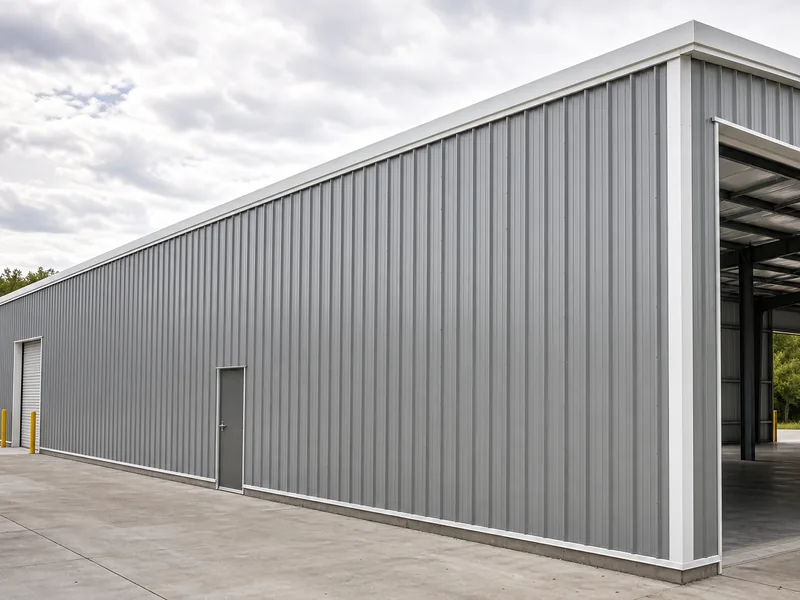
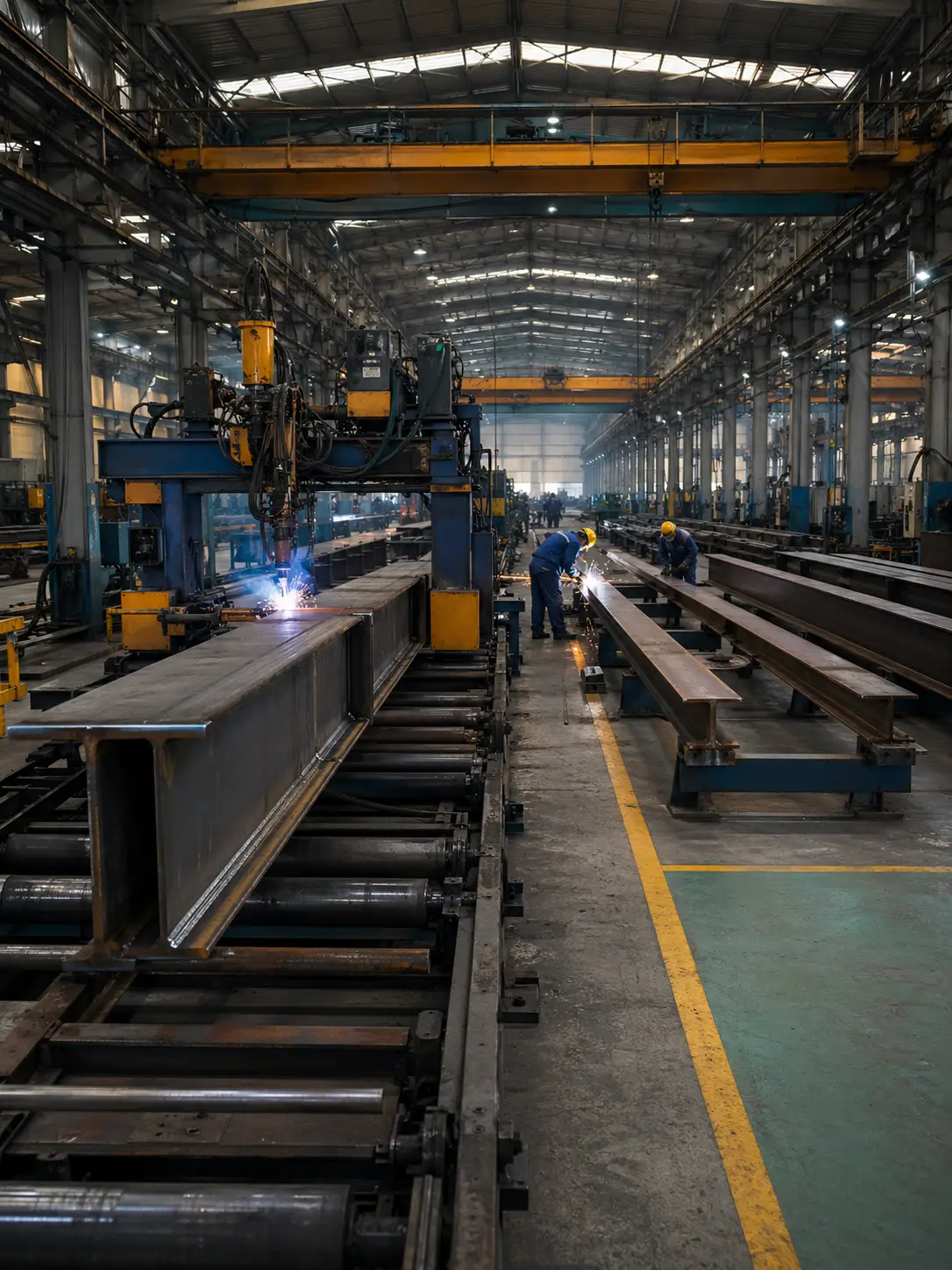
Because the panels and the girts behind them are one wall system, it helps to specify them together rather than sourcing cladding apart from the frame. At KAFA, the Qingdao facility that runs H-beam, box-section, and C/Z purlin lines also handles profile steel plate processing, so the wall panels and the girts they fasten to are produced under one ISO 9001:2015 quality system. If you are weighing profiles and gauges for a specific building, you can request a quote with your wall dimensions and exposure in hand.
Conclusion
Steel siding options reward a decision made in sequence over a panel picked for its photo. Settle the use and exposure first, and the profile, gauge, and coating each narrow to a short list instead of an open catalog. A coastal commercial wall and a dry-climate equipment shed can both be called steel siding, yet they rarely share a profile, a gauge, or a coating. Resolving those three in order, before falling for a particular panel, keeps a wall from being over-built in one place and under-built in another.
FAQ
What gauge is best for steel siding?
For most metal building walls, 26-gauge is the practical default, and 24-gauge is the step up for commercial, high-wind, or impact-prone walls. Because the lower number means thicker steel, confirm the panel maker’s minimum recommended gauge for your specific girt spacing before locking it in. The right gauge depends on how far the panel must span, not on a single universal number.
How long does steel siding last?
Steel siding commonly lasts 40 years or more, with premium coatings and mild climates pushing service life past 50 years before panels need replacing. The limiting factor is almost never the steel itself but the coating and the detailing at cut edges and fasteners. Repainting a sound panel late in the coating’s life can extend the wall well beyond the original finish without replacing steel.
Can steel siding go over an existing wall?
Steel siding can often be installed over an existing wall when furring strips or new girts are added to give the panels a true, properly spaced fastening plane. The existing surface has to be sound and reasonably flat, because steel panels telegraph waves and bulges underneath, so on a failing or uneven wall, stripping the old cladding first is the cleaner path.
What is the difference between exposed and concealed fastener panels?
Exposed-fastener panels such as corrugated and PBR are screwed through the face of the steel, which is fast and economical but leaves screws and rubber washers out in the weather where they age first. Concealed-fastener panels such as standing seam, board and batten, and flush hide the fixings under seams or clips, which costs more and installs slower but removes the leak and corrosion point that exposed fasteners create.
Does steel siding rust?
Coated steel siding resists rust for decades, but it is not immune, and rust shows up first at cut edges, scratches, and around fasteners rather than across the panel face. Galvalume in particular can develop edge creep in heavy marine salt, which is why coastal projects often favor a fully painted system with stainless or coated fasteners and why touching up field-cut edges matters.
Further Reading
- Metal Construction Association (MCA) — Industry association for metal wall and roof panels, including insulated metal panels and installation guidance; supports the profile and IMP sections above.
- Metal Building Manufacturers Association (MBMA) — Trade body for metal building systems, covering steel siding and cladding as part of the building envelope on low-rise steel buildings.
- American Galvanizers Association (AGA) — Authority on zinc and galvanized coatings and corrosion protection; supports the coatings and rust-resistance discussion.