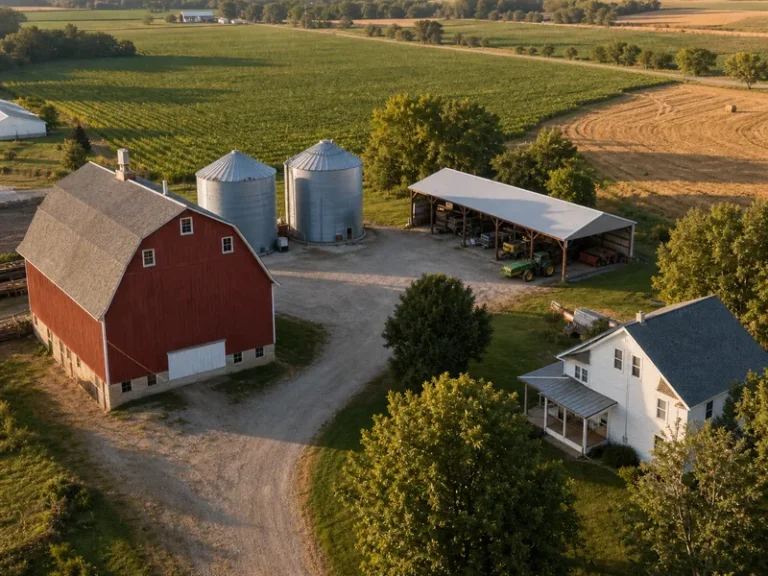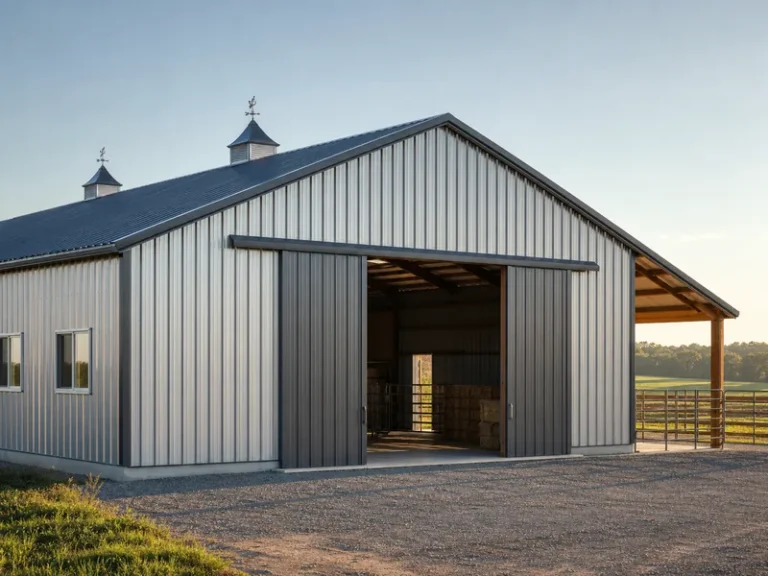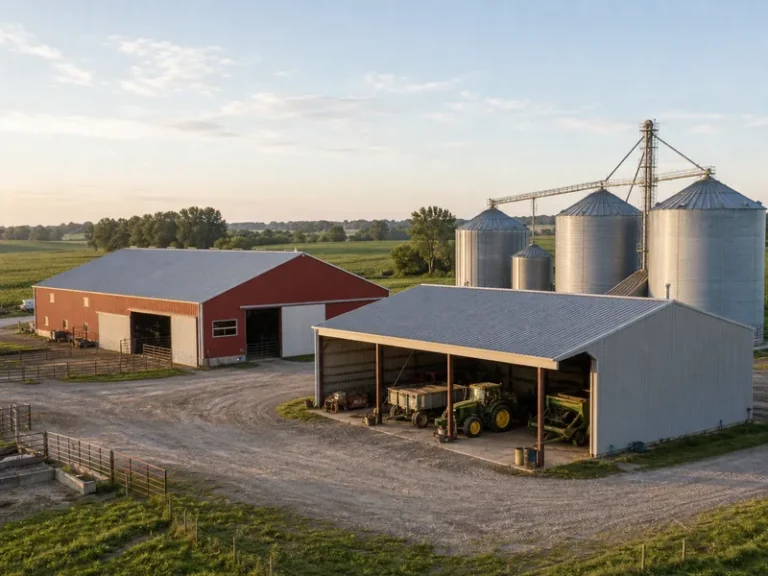





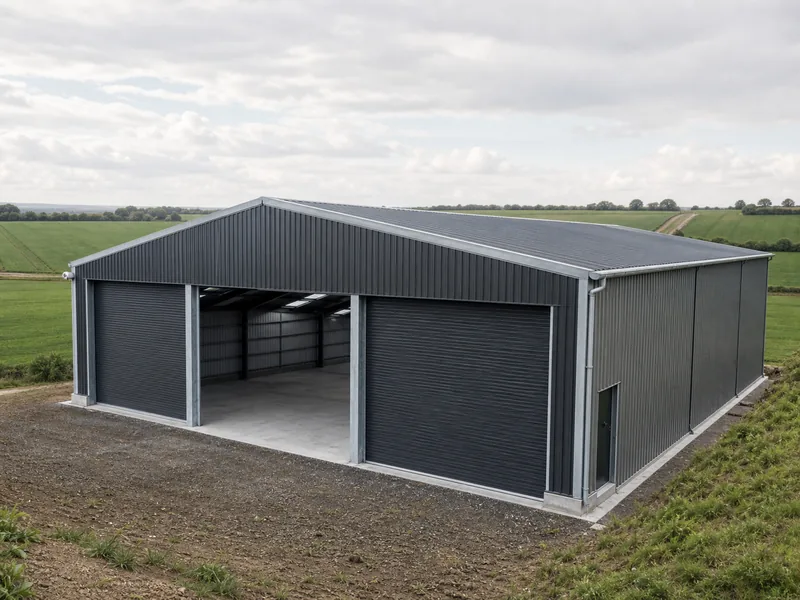
An agricultural building is a structure that shelters what a farm produces or works with, from crops, hay, and grain to livestock, poultry, and machinery. It is not a place for people to live or for a business open to the public. It sits on or beside farmland and serves the farming operation directly. That single test, what the building is used for, matters more than its shape, size, or material: a steel barn, a timber pole shed, and a greenhouse can all be agricultural buildings, while a farm shop selling to customers is not.
Because the label is tied to use, it carries real consequences. How a structure is classified affects which building-code rules apply, whether it needs a permit, and how it is taxed. The sections below cover what qualifies, the main jobs these buildings do, the traits that make them work, and where agricultural buildings part ways with commercial and residential ones.
What Counts as an Agricultural Building
A building qualifies as agricultural when it is used to house farm implements, hay, grain, poultry, livestock, or other horticultural products grown or raised on the land it serves. Building codes use almost exactly this language, and the definition is deliberately about function: the contents and the activity decide the category, not whether the walls are metal or wood.
Just as telling is what an agricultural building is not. Most code and legal definitions exclude three uses: human habitation, since a farmhouse is a dwelling rather than an agricultural building; employment where farm products are commercially processed, treated, or packaged; and any space open to the public. A shed storing your own harvested potatoes is agricultural, while a packing line where workers wash, grade, and box produce for sale generally is not. That line, between own-farm storage and shelter on one side and commercial processing or retail on the other, is where most classification questions are actually decided.
In the U.S. building code, agricultural buildings fall under Group U, the “utility and miscellaneous” occupancy that also covers barns, grain silos, greenhouses, stables, and sheds. Group U exists for structures with little or no regular human occupancy, which is why these buildings receive the least restrictive code treatment. The grouping is a useful signal: if a structure is meant to hold animals, crops, or equipment, and people are not living or working in it full-time, it usually belongs here. Local zoning and tax rules can draw the line slightly differently, so the use that actually governs is the one your local authority recognizes.
What Agricultural Buildings Are Used For
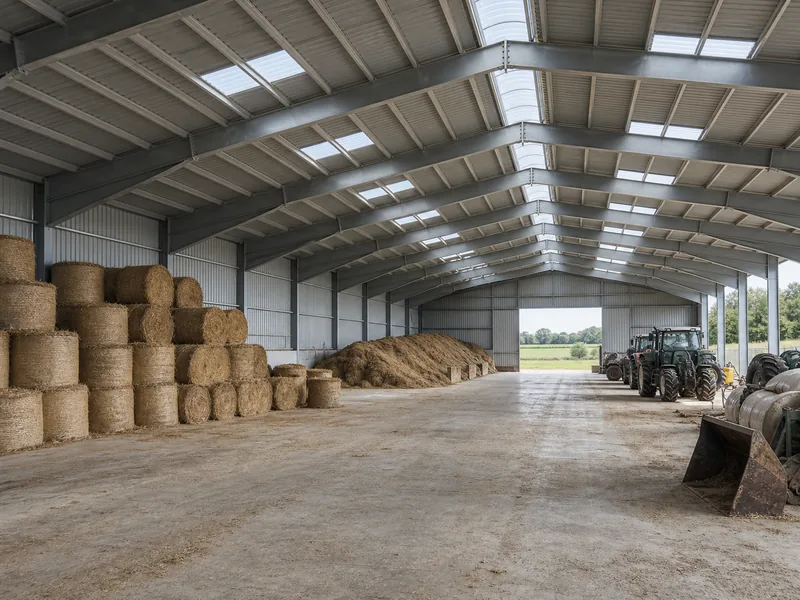
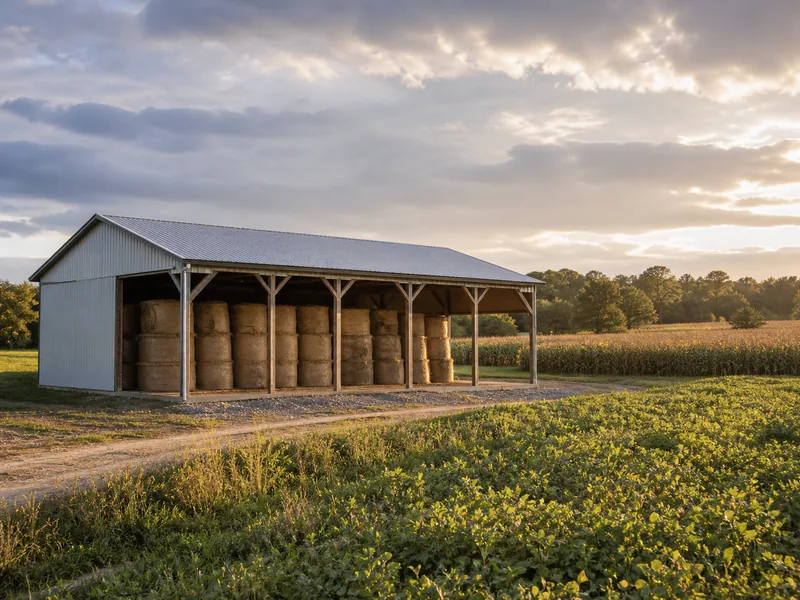
Agricultural buildings cluster into a handful of functional jobs, and almost every farm structure is a variation on one of them. Grouping them by job, rather than by name, is the clearest way to see why a building does or does not count as agricultural:
- Livestock housing: barns, poultry houses, stables, and loafing sheds that shelter animals and manage their environment.
- Crop and input storage: grain stores, hay barns, silos, and cool rooms that keep harvests, feed, seed, and fertilizer dry and protected.
- Equipment and machinery shelter: machine sheds and implement stores that keep tractors, harvesters, and tools out of the weather.
- On-farm processing and handling: milking parlors, grading areas, and workshops that prepare what the farm produces, kept within the farm’s own operation.
- Multi-purpose and support space: flexible buildings that combine storage, shelter, and a small farm office or workspace under one roof.
These categories overlap in practice, and many farms run one large clear-span shed that does several jobs at once. For the full breakdown of individual structures, the guide to farm building types and the overview of the buildings you’ll find on a working farm go deeper than the categories here. Storage is often the first need a farm outgrows, which is why a dedicated grain storage building is one of the more common early investments.
Structural Traits That Define an Agricultural Building
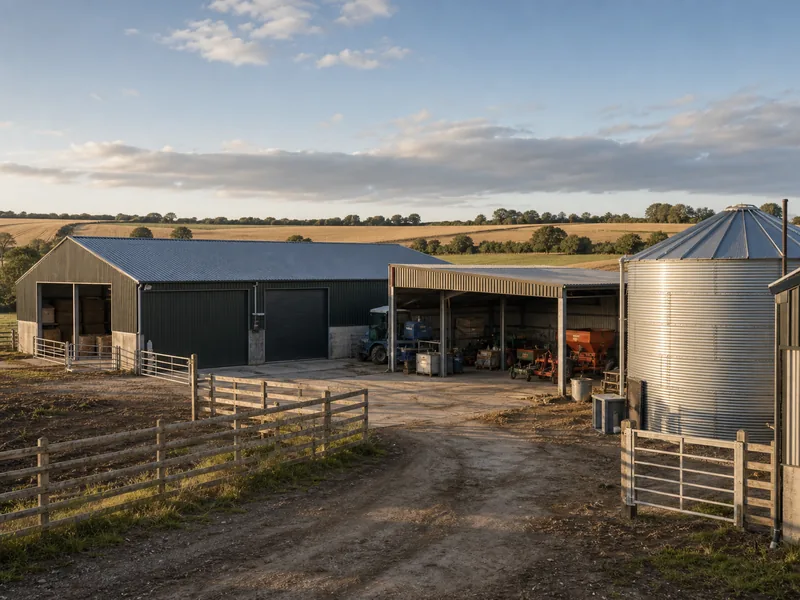
What makes a building work agriculturally is a set of structural priorities that put function ahead of finish. Four traits recur across almost every type, because they match how farms actually use space.
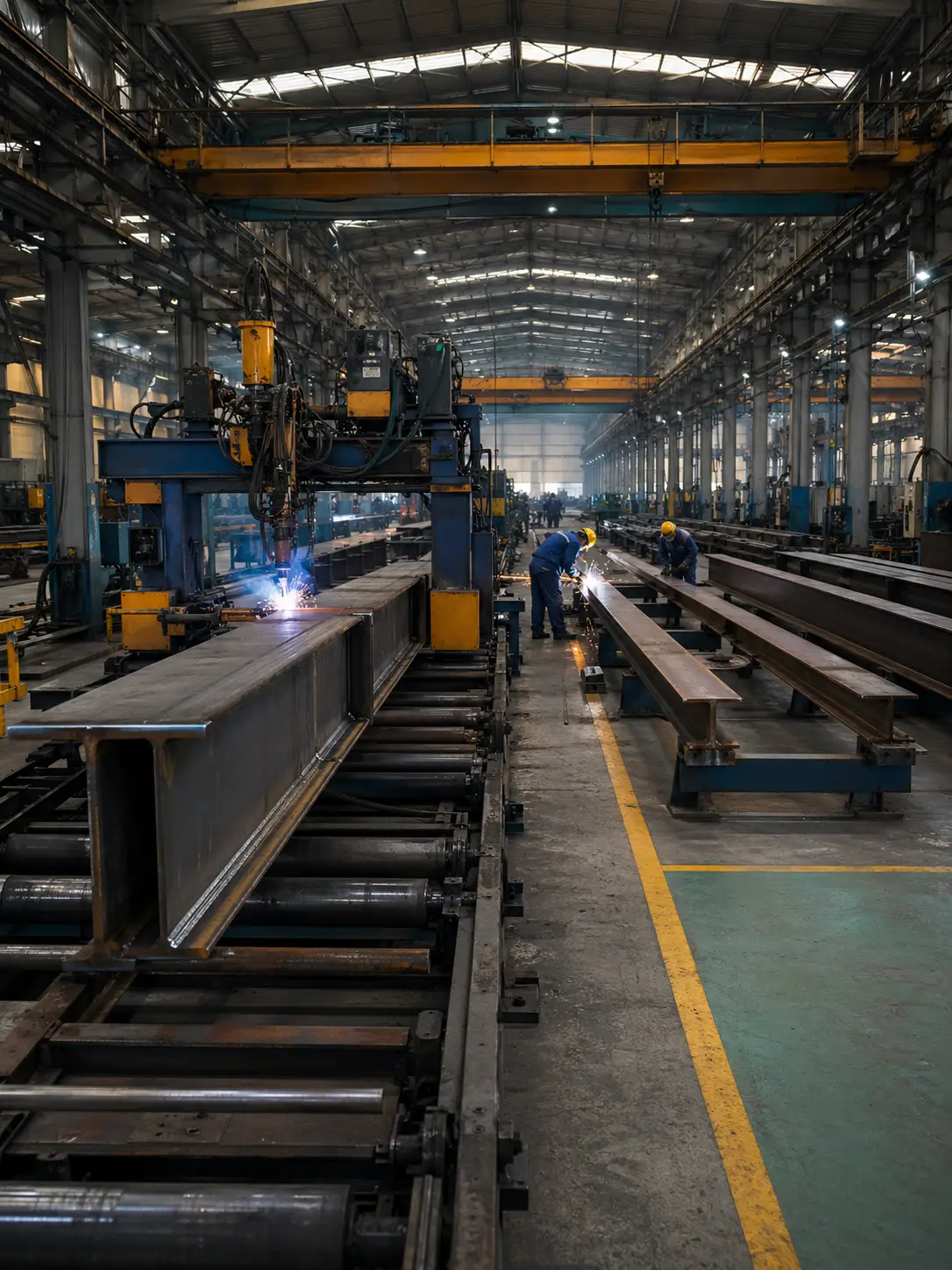
Clear-span, column-free interiors are the trait buyers prioritize first. Removing internal posts keeps a wide floor open, so machinery can turn, livestock pens can be rearranged, and bulk crops can be piled without working around structural columns. This is the requirement that favors steel and post-frame framing: a rigid steel frame can span wide bays without intermediate supports, which is harder and costlier to achieve in load-bearing masonry. How wide that clear span can go is a question of steel building design, with frame depth, bracing, and connections matched to the loads the building carries. KAFA designs and fabricates steel agricultural metal buildings around this open-span requirement, using H-beam and box-section framing produced on its own lines.
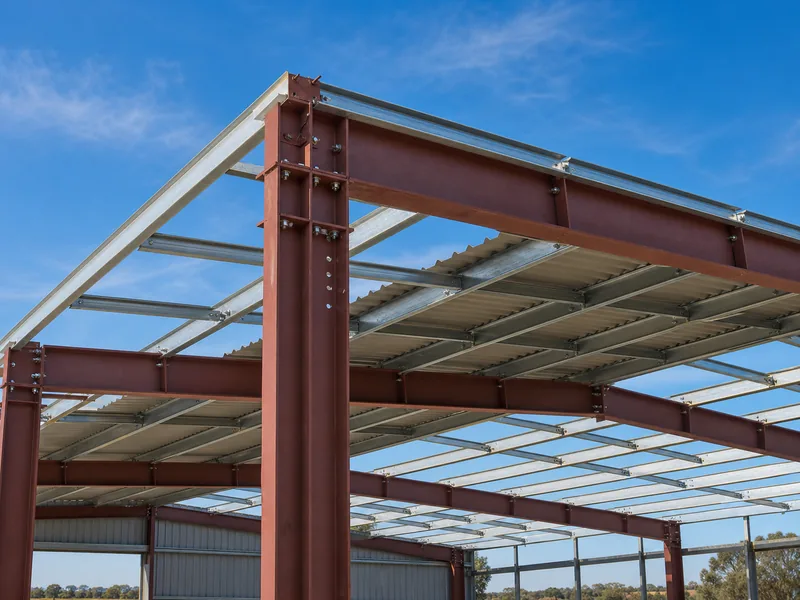
A durable, weather-resistant envelope is the second trait. Agricultural buildings take abuse from manure, moisture, dust, chemicals, and constant temperature swings. Cladding and structure are chosen to resist corrosion and shrug off hard use with low maintenance, rather than for appearance.
Ventilation and moisture control carry more weight here than in most buildings. Animals, stored hay, and fresh produce all release heat and moisture, and trapped humidity causes condensation, spoilage, and respiratory problems in livestock. Ridge vents, sidewall openings, and adjustable curtains are common because air movement is a working requirement, not a comfort upgrade.
Wide, tall openings and room to expand round out the list. Doors sized for combines and grain trailers, eaves high enough to clear a tractor cab, and a frame that can be extended later all reflect a building that has to adapt as the operation grows.
How Agricultural Buildings Differ From Commercial and Residential Buildings
The clearest difference is occupancy: agricultural buildings are designed for animals, crops, and machines, not for people to live or work in all day. That fact ripples through everything else. Because regular human occupancy is low, codes such as the IBC place these buildings in the least demanding group. Requirements for fire separation, exits, insulation, and finishes come in lighter than an office, shop, or home would face.
Design priorities diverge in the same direction. A commercial or residential building spends its budget on comfort, appearance, climate control, and code-driven life-safety systems, while an agricultural building spends it on span, durability, and access. The moment a structure crosses into regular commercial use, it usually loses its agricultural classification and has to meet the stricter rules for that occupancy. A farm store open to customers, or a processing line with employees, is the usual trigger.
That boundary is also the reason to confirm classification before you build. Whether a structure counts as agricultural can change its permit path, the codes it must meet, and in many areas its property-tax treatment, and the exact use class is decided locally. Checking with the local building and zoning office early keeps a project from being designed as one thing and approved as another.
Settling What Counts Before You Build
Start with use, because use is what the definition turns on. If a structure will shelter your own crops, livestock, or equipment and will not house people, run a public business, or process products for sale, it is almost certainly agricultural. Confirm that with your local authority before the drawings are finalized. From there, the build is shaped by the traits that make these buildings useful: a clear, column-free span sized to your machinery, a tough low-maintenance envelope, and ventilation matched to what you store or house. KAFA designs and builds steel agricultural buildings to those priorities. If you are weighing a new barn, store, or livestock shed, you can talk to us about matching the span and layout to how the building will be used.
FAQ
Is a barn an agricultural building?
A barn is the classic example of an agricultural building, as long as it shelters livestock, crops, feed, or equipment rather than serving as a home or a public business. The same barn can lose that status once it is converted to a dwelling, an event venue, or a shop, because the classification follows the current use rather than the original structure.
What is the difference between an agricultural building and a commercial building?
The difference is whether the building supports a farm’s own production or runs a business for the public. An agricultural building stores, shelters, or houses what the farm grows and raises, while a commercial building processes, sells, or serves customers, which brings stricter code, fire-safety, and accessibility requirements. A structure that does both, such as an on-site farm shop, is usually treated as commercial for the part open to customers.
Do agricultural buildings need a building permit?
Most agricultural buildings still need some form of permit or approval, even though they often qualify for lighter code requirements or local exemptions. Rules vary widely by county and state, and many areas tie exemptions to farm size, land use, or setback distances, so the reliable step is to check with the local building and zoning office before construction.
Does an agricultural building have to be made of steel?
No single material is required, and timber, masonry, fabric, and steel all appear in agricultural buildings. Steel and post-frame systems are popular for larger structures because they deliver wide clear spans, fast erection, and a durable low-maintenance envelope, but a small timber field shelter is no less agricultural by definition.
Further Reading
- IBC Appendix C, Group U Agricultural Buildings (ICC) — International Code Council. The code section that classifies agricultural buildings and lists the structures, including barns, silos, greenhouses, and stables, treated as Group U occupancies.
- ASABE Standards, American Society of Agricultural and Biological Engineers — Engineering standards body. Consensus standards for agricultural structures, including post-frame building design and farmstead facilities, for when an agricultural building moves from definition to design.
- On-Farm Construction, University of New Hampshire Extension — Land-grant university extension. Practical planning guidance covering permits, zoning, siting, foundations, and building design for farm structures.