




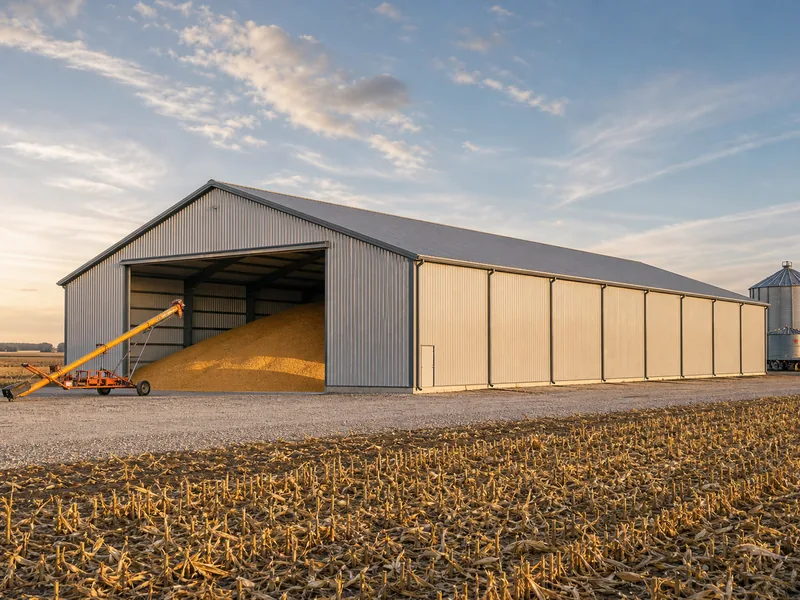
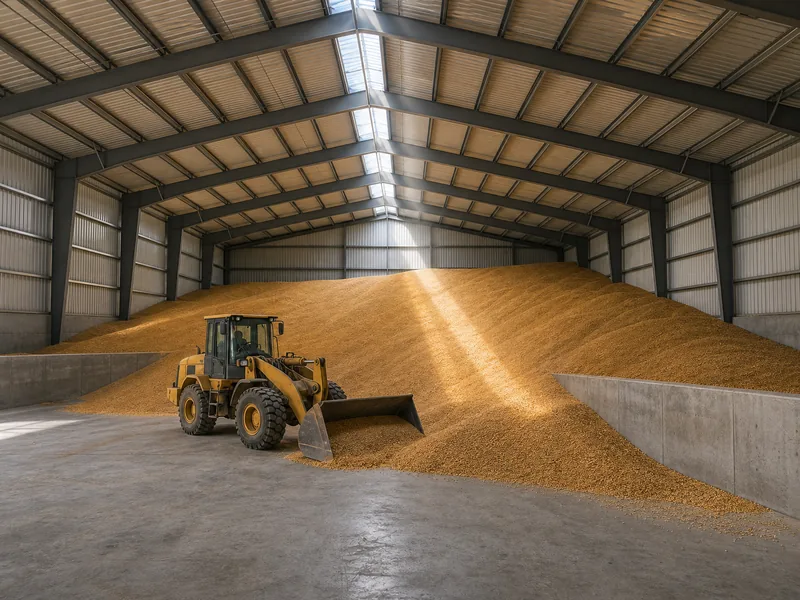
A grain storage building is a horizontal, walk-in structure that holds harvested grain in bulk on a clear floor, rather than in a tall sealed bin or silo. Farms, cooperatives, and agribusinesses use these buildings to hold corn, wheat, soybeans, and other crops after harvest. Storing on-farm lets them market on their own timeline instead of selling into the field-side low. This guide covers the main building types, why steel suits grain storage, how to size and design the structure, and what actually moves the cost. It does not cover the internal mechanics of bolted steel silos, grain-drying engineering, or financing math, since each of those is a separate decision worth its own research.
What Counts as a Grain Storage Building
A grain storage building stores grain horizontally inside a clear floor area, which is what separates it from a bin or silo that holds grain in a sealed vertical column. The distinction is practical, not academic: it changes how you load, unload, and aerate the crop, and how much the structure costs for each bushel it holds. A flat storage building lets a loader or conveyor pile grain on a reinforced floor, then pull it back out with a front-end loader or floor sweep. Bins and silos, by contrast, rely on gravity and an unload auger through a center sump. A building also earns its keep between seasons. The same clear span that held grain can hold equipment, inputs, or a repair shop once it is empty, which is one reason many operations build a storage building first and add dedicated bins later.
Main Types of Grain Storage Buildings
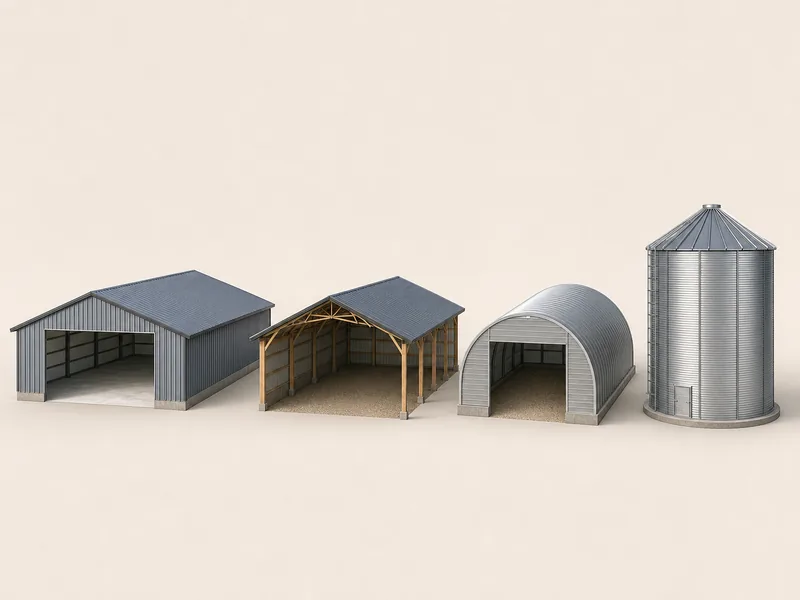
The main types of grain storage buildings differ mostly in how they frame the roof and walls. That framing choice decides your usable width, your pile height, and how easily you can expand. Most operations choose among four options, and the right one depends less on price than on how the grain moves in and out.
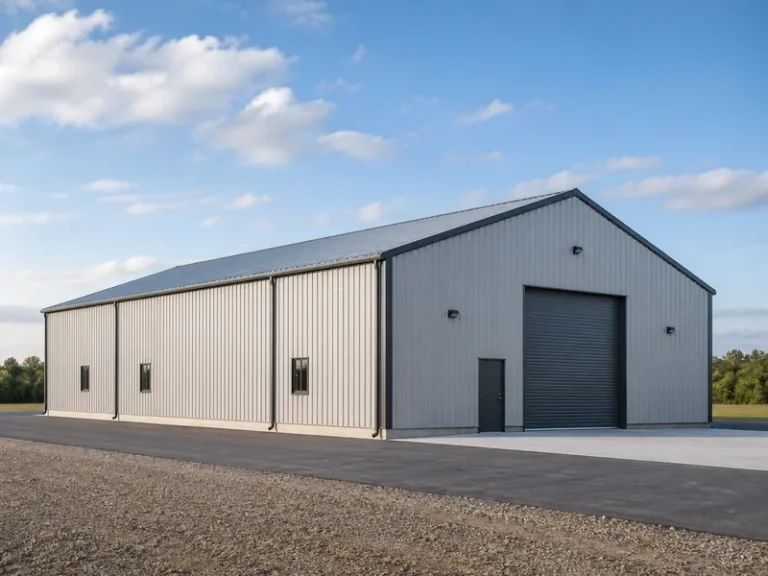
Flat clear-span steel storage buildings
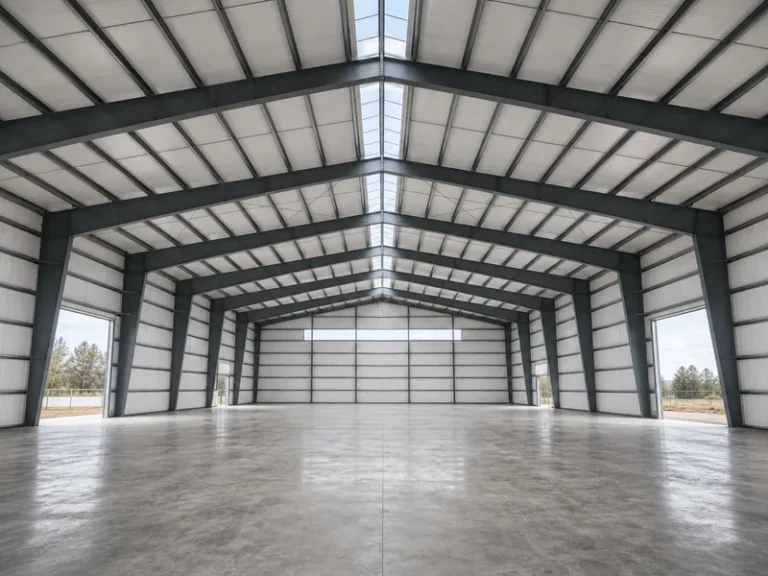
Clear-span steel buildings carry the roof on rigid frames with no interior columns, so the entire floor stays open for piling grain and turning a loader. The open floor is the main reason these dominate new flat storage. A clear span building lets you push grain to the sidewalls and run equipment the length of the structure without working around posts. The trade-off is that wide column-free spans put more demand on the frames and the foundation, especially once a full pile leans on the walls.
Post-frame and pole barns
Post-frame buildings set the roof load on wood or steel posts spaced along the walls, which lowers the entry cost but puts columns in the floor. They fit smaller operations, mixed-use buildings, or budgets that cannot justify a full clear span, and they go up quickly. The columns are the catch, because they interrupt the floor and complicate piling grain tight to the walls.
Arch and Quonset buildings
Arch and Quonset buildings form the walls and roof from one curved steel shell, which sheds snow and resists wind without interior framing. The single-piece shell seals tightly and stands up to harsh weather, making it a simple, durable choice for straight bulk storage. Its limitation is geometry: the curved walls cut into how high you can pile grain near the edges, so usable capacity is lower than the footprint suggests.
Bins and silos when vertical storage fits
Bins and silos make sense when you need long-term sealed storage in a small footprint rather than a walk-in building. They unload by gravity, aerate through a perforated floor, and seal well for holding grain across a year, but they are single-purpose and fixed in shape. Many farms run both: a flat building for harvest-season volume and bins for the grain they intend to hold longest.
| Type | Framing | Typical fit | Main trade-off |
|---|---|---|---|
| Flat clear-span steel | Rigid frames, no interior columns | Large bulk piles, mixed use | Heavier frames and slab for pile load |
| Post-frame / pole barn | Posts spaced along walls | Smaller or budget builds | Columns interrupt the floor |
| Arch / Quonset | One curved steel shell | Snow and wind country, simple bulk | Edge pile height limited by the curve |
| Bin / silo | Vertical steel ring | Long-term sealed, small footprint | Fixed shape, single purpose |
Why Steel Works Well for Grain Storage Buildings
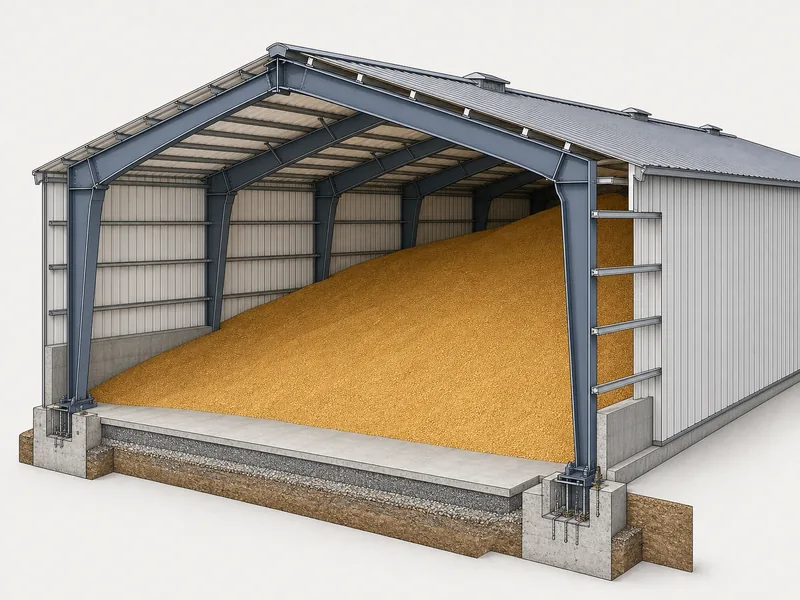
Steel suits grain storage buildings because it spans wide openings without interior posts, carries the lateral push of piled grain, and gives pests and moisture little to work with. Clear-span steel frames commonly reach 150 feet or more across, depending on the design and load requirements. That width allows large uninterrupted storage volumes when capacity, grain load, and site conditions are engineered together. Piled grain pushes outward on the walls with real force. The value of steel is not just the span, but the engineered connection between the frame, the wall girts, and a foundation sized for that lateral load. Steel framing also leaves few cavities for rodents to nest in, and with the right coating it tolerates the condensation cycles of a damp storage season far better than wood.
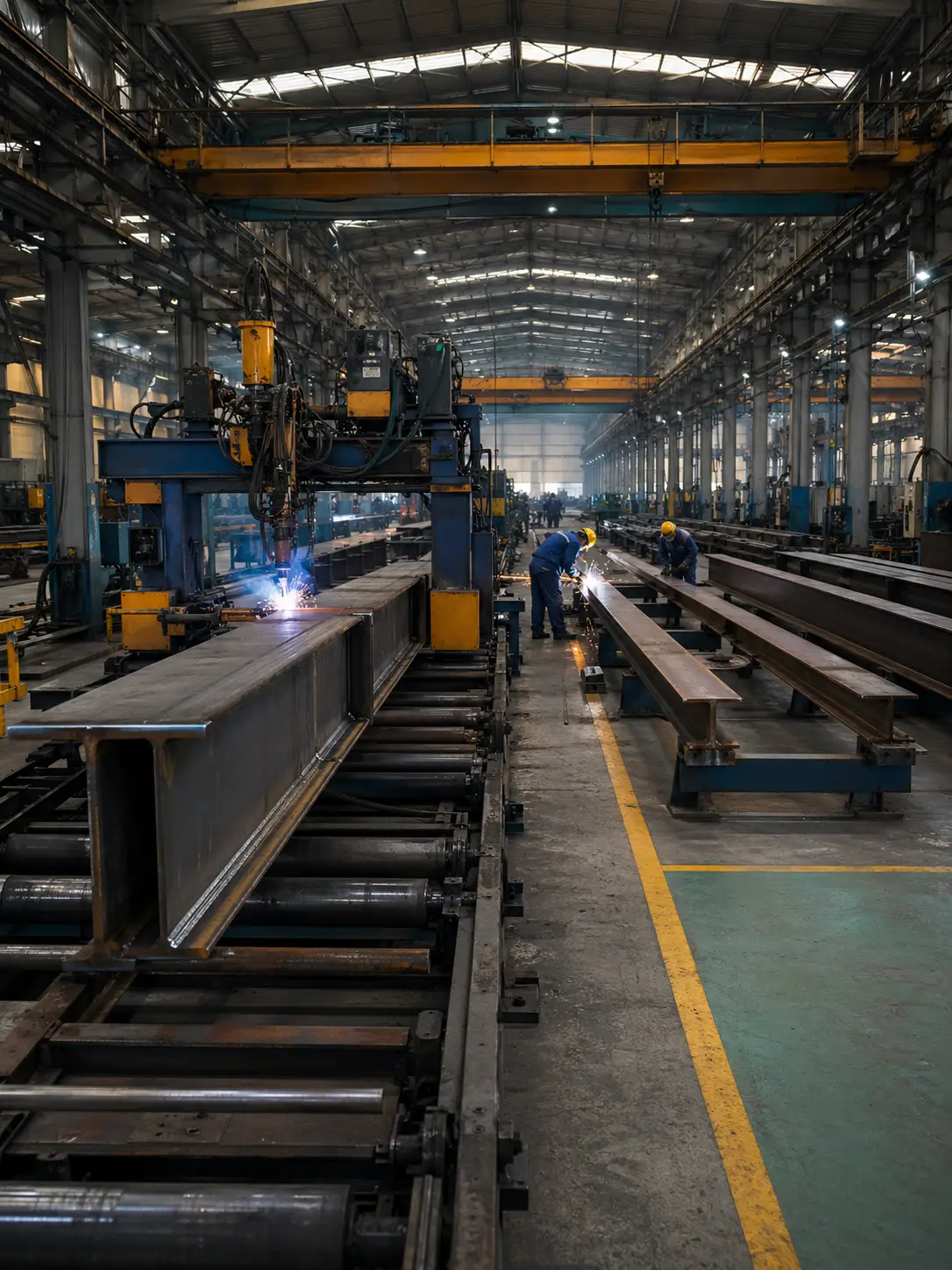
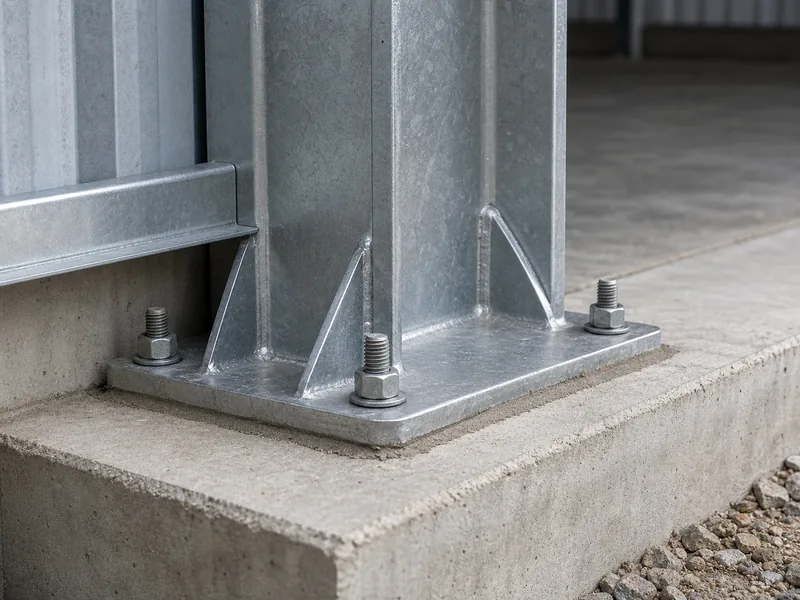
Fabrication quality is what separates a grain storage building that lasts from one that does not, because the members carrying grain load punish a weak weld or an undersized section. KAFA is a steel structure manufacturer that designs, fabricates, and installs both light and heavy steel structures, running dedicated lines for H-beam, box-section, and C/Z-section purlin members under ISO 9001:2015 quality management. Working with an experienced metal building supplier matters most on the frames, purlins, and base connections that take the lateral push of a full pile. The same agricultural logic carries over to other farm structures. A steel structure chicken house wrestles with the same moisture, ventilation, and clear-span questions, just for a different occupant.
Sizing and Capacity Planning for Grain Storage
Sizing a grain storage building starts from the bushels you need to hold and works back to a footprint, because capacity depends on the grain’s bulk density and how high you can safely pile it. A bushel of corn weighs roughly 56 pounds while wheat and soybeans run nearer 60, so the same floor holds a different tonnage depending on the crop. Plan around the densest grain you expect to store. Two variables set usable volume inside a given footprint: sidewall height, which caps how high grain rests against the walls, and the pile’s angle of repose, which fixes the peak in the center. The verification step gets skipped often but should not: confirm the floor and walls are engineered for a full pile, not just the roof and wind loads, before you lock in a width. For how footprint and clear width translate into standard dimensions, our guide to metal building sizes walks through the common spans and where they fit.
Design Factors That Protect Stored Grain
The design factors that protect stored grain are site drainage, the floor, aeration, and monitoring, and together they decide whether the structure can actually keep the crop sound. Site selection comes first, because a well-drained pad keeps groundwater away from the floor. On temporary or ground-contact storage, laying 6-mil or heavier plastic on the floor slows moisture migrating up from the soil. The floor itself should be a reinforced slab sized to the grain and equipment loads by an engineer, rather than a default thickness borrowed from a garage build.
Aeration is the working system inside the building: airflow demand rises with how long you store and whether you also dry grain. Size fans to the longest hold you plan, not the average season. Access shapes the design as much as airflow, since doors sized for the loader or conveyor keep filling and emptying efficient. Sealing the eaves and base joints, where pests and weather work in, protects the pile through a long hold. Monitoring closes the loop, because temperature cables and regular moisture checks catch a developing hot spot before it spreads. Holding grain generally below about 13 to 14 percent moisture, depending on the crop and storage length, is one of the main defenses against mold and spoilage.
What Drives the Cost of a Grain Storage Building
The cost of a grain storage building is driven more by what goes inside and underneath it than by the bare steel shell. Size and clear span set the baseline, because a wider column-free span needs heavier frames. The foundation is what surprises many buyers, since a slab engineered for full grain load costs more than a standard agricultural floor. Add-on systems can materially change the budget, as aeration fans and ducting, receiving pits, conveyors and loadout, and monitoring each add cost in proportion to how automated you want the handling. Site work, regional snow and wind loads, and any insulation or finish round out the budget. Because these variables swing the total so widely, treat any per-square-foot or per-bushel figure as a starting point to confirm with a real quote. Our breakdown of clearspan building cost shows how span and features move the number on column-free structures.
Matching the Building to Your Operation
Choosing a grain storage building is a sequence, not a single spec, and locking the variables in order lets the structure type settle out at the end. Start by fixing capacity and how long you intend to hold grain, since a one-month harvest buffer and a year-round marketing program lead to very different aeration and floor decisions. Next pin down the grain type and the moisture you will store it at, because bulk density sets your footprint while moisture sets how hard the aeration system has to work. Only then weigh handling and site, meaning how grain comes in and goes out and how well the pad drains, before you settle on flat clear-span, post-frame, arch, or a vertical bin. KAFA can engineer the frames, purlins, and base connections to those grain loads once the variables are set. The one step worth taking before any quote is confirming your floor and walls are sized for a full pile, not just the roof above it.
Frequently Asked Questions
How is a grain storage building different from a grain bin or silo?
A grain storage building holds grain horizontally in a walk-in clear-span structure, while a bin or silo holds it in a sealed vertical column unloaded by gravity. The building is easier to load with a loader or conveyor and can store equipment when empty, whereas the bin keeps a smaller footprint and seals more tightly for long-term holding.
Can you store grain in a metal building?
Metal buildings store grain well when the floor and walls are engineered for the lateral pressure of a full pile, not just for roof and wind loads. A clear-span steel building gives an open floor for piling and loader access, but the slab and base connections have to be sized to grain load for it to hold up over time.
What size grain storage building do I need?
Building size follows from the bushels you need to hold and the bulk density of your grain, which back-calculate into a footprint and sidewall height. Plan around the densest crop you expect to store, and confirm the structure is engineered for a full pile before fixing the width.
What moisture level is safe for grain in storage?
Safe storage moisture generally sits below about 13 to 14 percent, depending on the grain and how long you plan to hold it. Drier grain and shorter storage are more forgiving, while longer holds and denser crops need the lower end of that range along with active aeration and monitoring.
How much does a grain storage building cost?
Grain storage building cost is set mostly by size and clear span, the engineered foundation, and add-on systems like aeration and handling, so a single price per bushel tends to mislead. Treat any published figure as a starting point and verify it with a quote built around your own capacity, site, and handling needs.