




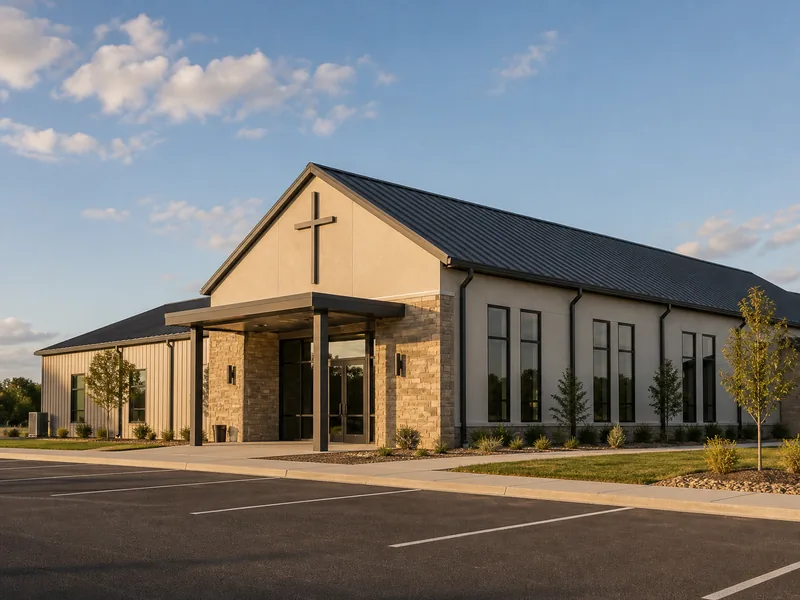
Most church building projects start with the same question and almost no reliable answer: what will this actually cost? Published figures swing from under $60 to more than $400 per square foot, and that spread is useless until you know what is driving it. Three things move the number more than anything else: the construction method, the size of the building, and the finish level you are pricing.
When a congregation compares structure types, steel church buildings can compress the shell schedule while leaving budget for sanctuary and support spaces.
Cost scope note: Compare only numbers with the same scope. A kit price covers the steel package, a shell price adds erection and basic enclosure, and a total project budget can add foundation, site work, utilities, permits, insulation, and interior buildout. Difficult sites or heavier design loads need separate allowances.
This guide gives cost ranges for new church construction in the United States, plus the part most estimates leave out. It does not price a specific renovation, quote local permit fees, or walk through loan underwriting, because those vary too much by property and jurisdiction to estimate from a distance. Treat every range below as a starting point for a real, scoped quote.
What It Costs to Build a Church
A new church typically costs between roughly $50 and $400 per square foot of building, and the construction method accounts for most of that range. A pre-engineered steel building sits at the low end, full masonry with custom architecture at the high end, and wood frame in between. In total-project terms, a 10,000-square-foot traditional church commonly lands somewhere around $1.5 to $3 million, while a comparable steel building can come in well below that.
Those figures exclude several large costs that arrive later: land, site preparation, furnishings, and audio-visual systems. A per-square-foot number that looks cheap is often a shell price, and a number that looks high is often an all-in figure that already folds in land and finishes. Before you compare any two quotes, find out which one you are looking at. The common reason church budgets blow up is comparing a shell price against a turnkey price and assuming the two describe the same building.
Church Building Cost by Construction Type: Metal, Wood, and Masonry
Construction method is the single biggest lever on what a church costs, and it can move the price per square foot by a factor of three or more. The table below shows typical turnkey ranges and the matching total for a roughly 6,000-square-foot, 200-seat church.
| Construction type | Typical cost (turnkey, per sq ft) | ~6,000 sq ft (range applied) | Notes |
|---|---|---|---|
| Pre-engineered metal / steel | ~$50–$150 (bare shell ~$20–$60) | ~$300k–$900k | Lowest cost, fastest to erect |
| Wood frame | ~$100–$200 | ~$600k–$1.2M | Mid-range, familiar to local crews |
| Masonry / architectural | ~$150–$350+ | ~$900k–$2.1M+ | Stone, vaulted ceilings, towers |
*Totals are the per-square-foot range applied to 6,000 sq ft, turnkey and finish-dependent, excluding land and site work. A mid-grade build usually lands in the middle of each range, not at the extremes.*
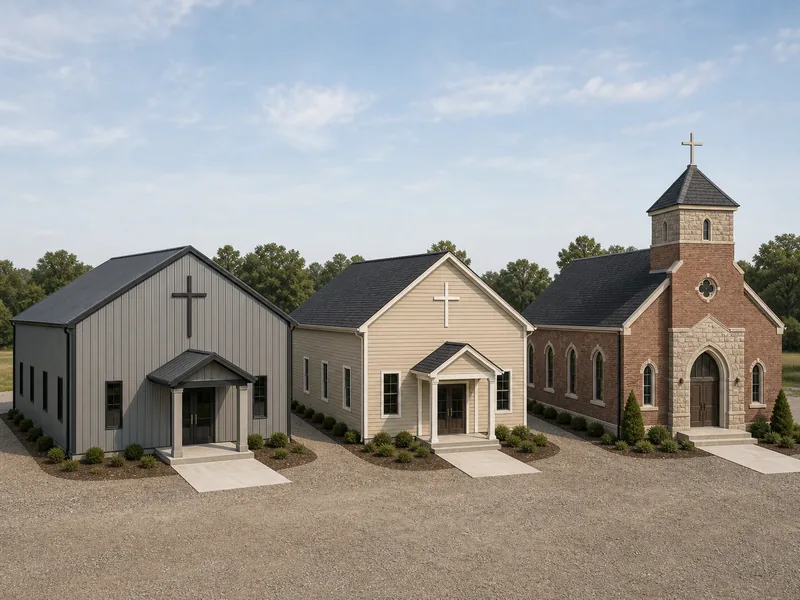
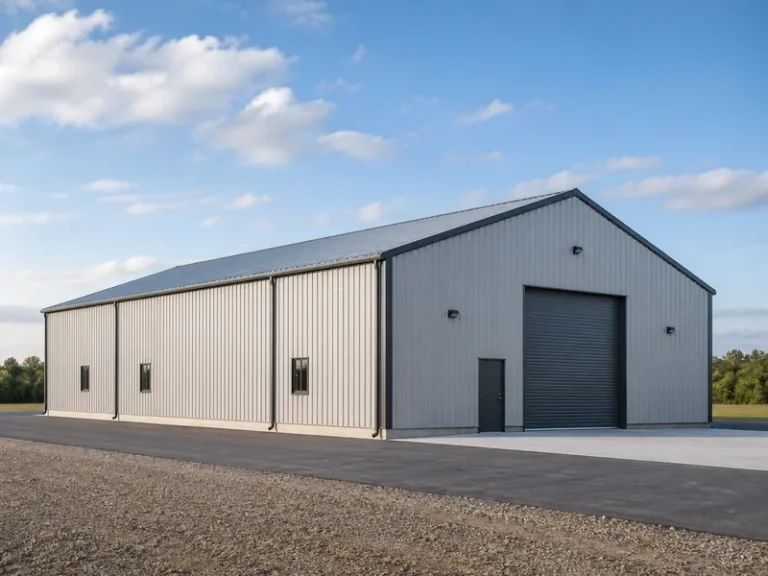
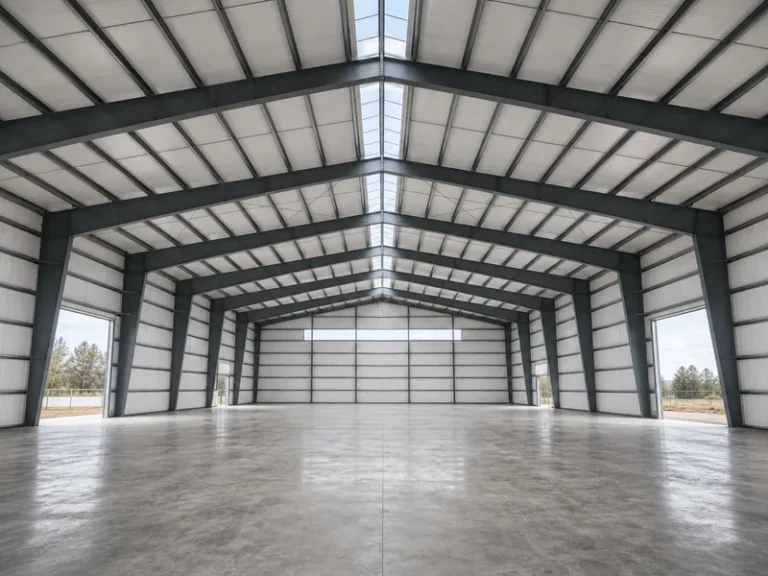
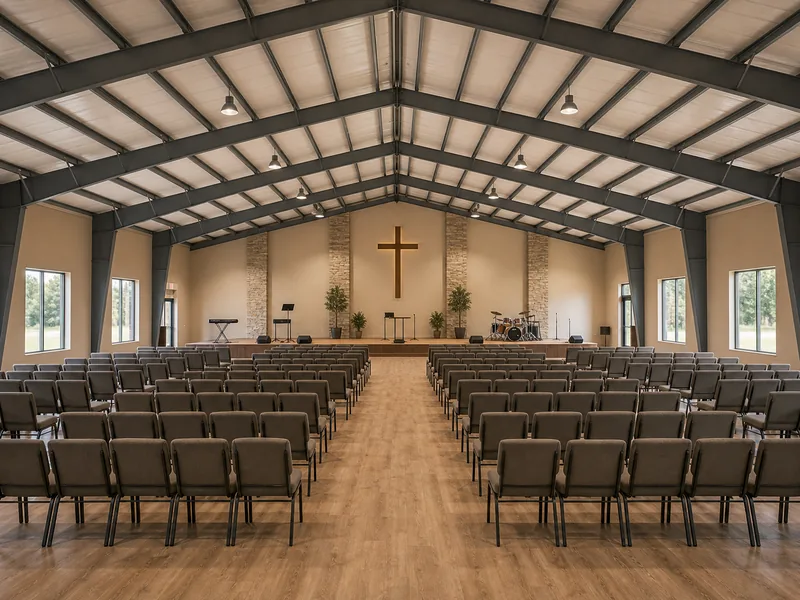
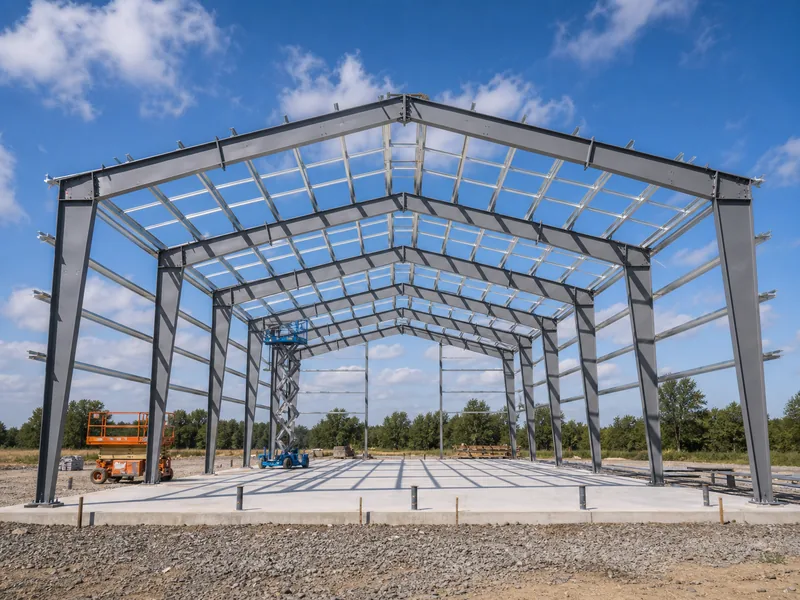
Many building committees assume a “real” church has to be brick or stone, and that assumption can double the budget. A pre-engineered steel frame can carry the same brick, stucco, or stone facade while costing materially less, because the savings come from the structure and the schedule, not the appearance. The frame is engineered and fabricated in a factory and goes up on a far shorter site schedule, so the congregation spends fewer months paying interest on a construction loan. A clear-span steel frame also removes interior columns, which matters more in a sanctuary than almost any other building, because every seat needs a clear line to the platform. That column-free worship hall is where steel justifies its cost, and the clearspan building cost depends mostly on the width you need and your local snow and wind loads.
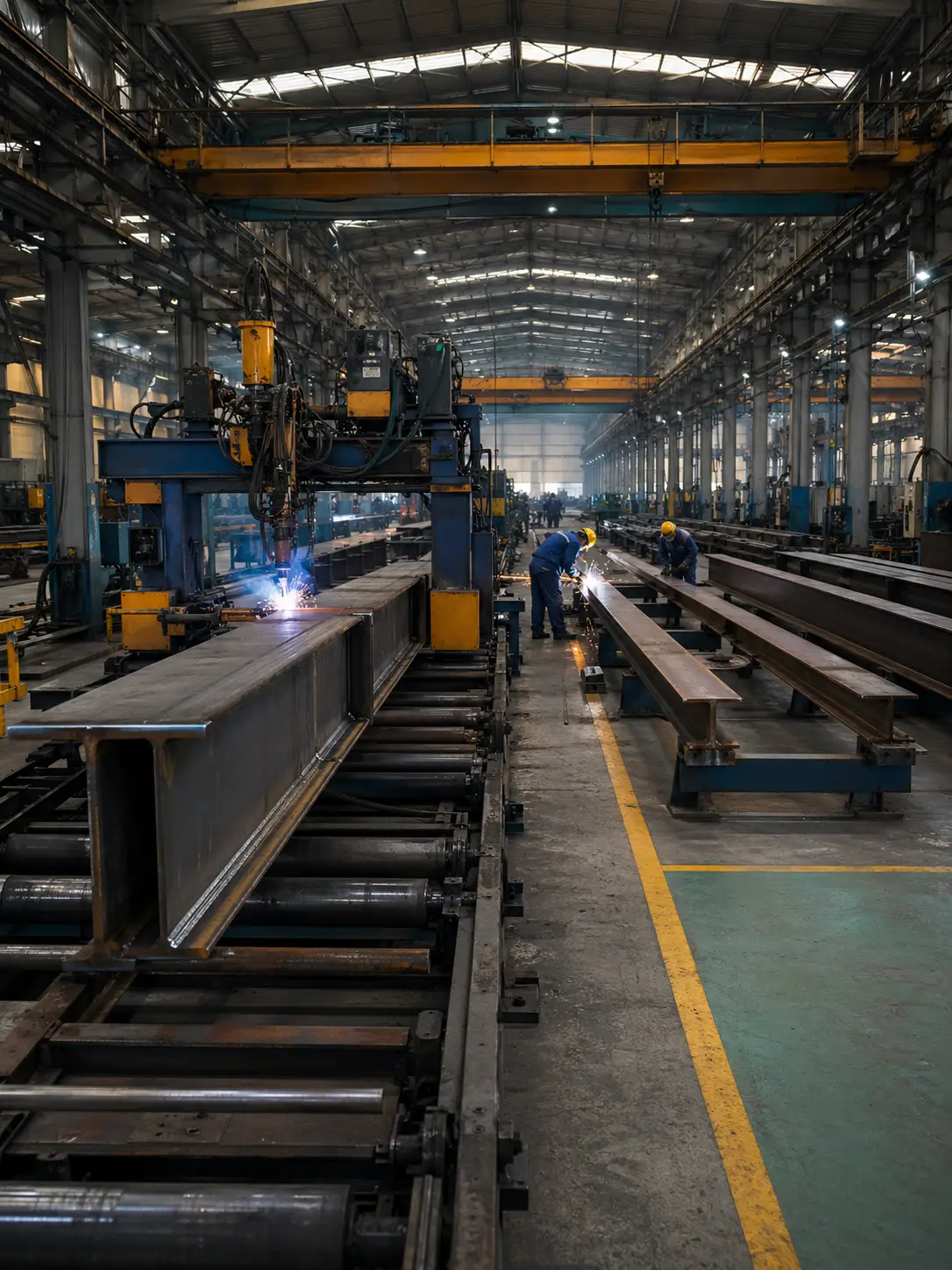
Because the frame is designed and fabricated before it ever reaches the site, working with a metal construction company that handles design, fabrication, and erection under one roof tends to keep the shell portion of the budget predictable, which is the part most committees worry about getting away from them.
Cost to Build a Church by Size and Seating Capacity
Square footage follows seating capacity, and seating capacity is the number a building committee can actually confirm first. Plan for roughly 12 to 18 square feet per seat if you are sizing the worship space alone, and 25 to 40 square feet per person once you add a lobby, restrooms, classrooms, and a fellowship hall. A 200-seat congregation therefore needs anywhere from about 2,500 to 8,000 square feet, depending on how much support space it wants.
| Building size | Rough seating (worship) | Metal / steel turnkey (illustrative) | Typical use |
|---|---|---|---|
| 1,500–3,000 sq ft | ~40–150 | ~$100k–$450k | Church plant or small sanctuary |
| 5,000–8,000 sq ft | ~200–350 | ~$300k–$800k | Growing congregation with support space |
| 12,000+ sq ft | 500+ | ~$600k–$1.5M+ | Full campus, multipurpose |
*Illustrative metal-building figures, finish- and region-dependent, excluding land.*
Larger buildings cost less per square foot than small ones, which catches many first-time builders off guard. The fixed costs of design, mobilization, a single roof, and one slab spread across more area, so a tight little chapel can cost more per foot than a mid-size sanctuary. Matching footprint to capacity is the same sizing exercise that drives metal building sizes in general. At the small end, a 1,500-square-foot footprint is roughly a 30×50 building, and the 30×50 metal building cost is a useful floor when you are budgeting the smallest practical sanctuary. As a quick sanity check, one industry benchmark puts a metal church around $1,000 to $3,500 per seat depending on finish; if your per-seat math lands far outside that, something in the scope is probably off.
Where the Church Budget Goes: Cost Breakdown and Hidden Costs
The steel package is usually less than a third of a metal church’s total budget, which surprises most first-time builders. In a typical metal-church project, the frame runs roughly a quarter to a third of the cost, the foundation and slab another 10 to 14 percent, and the interior buildout 15 to 22 percent. Mechanical, electrical, and plumbing systems together commonly take 20 to 30 percent, and soft costs such as design, engineering, and permitting add another 8 to 12 percent. Treat those shares as approximate; they shift with the building and the finish level.
A per-square-foot quote almost never includes the items that follow, and missing them is how a budget runs short:
- Land and site preparation, including clearing, grading, and bringing in utilities
- Utility connections to the building itself
- The parking lot, paving, and drainage
- Furnishings and fixed seating
- Audio-visual, sound, and streaming systems
- Kitchen equipment and a baptistry
- Signage and landscaping
- Construction-loan interest during the build
- A contingency reserve
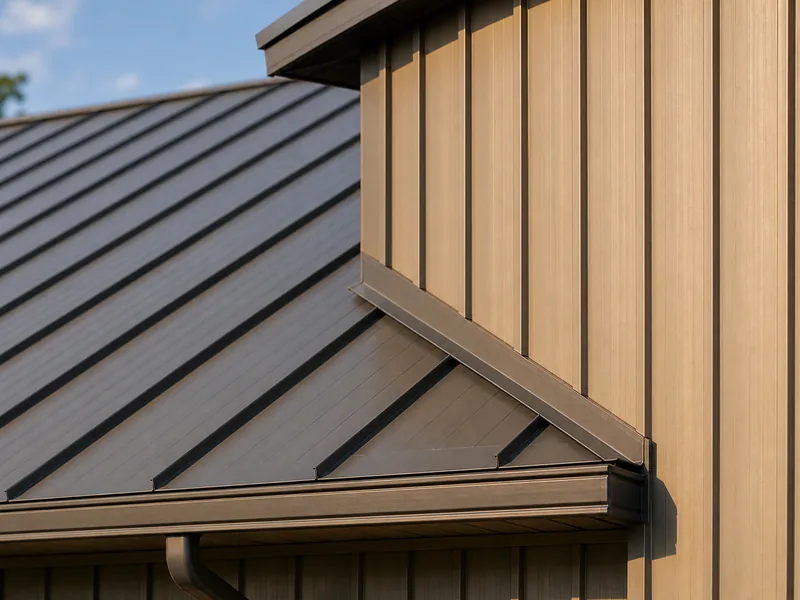
Plan a contingency of 10 to 20 percent, with around 15 percent being a sensible default, because soil conditions, permit requirements, and finish upgrades routinely push the final number above the original bid. One finish decision you can actually control is the roof, and the trade-offs between the options are covered in our guide to types of metal roofs.
Ways to Reduce Church Building Cost Without Cutting Corners
The cheapest way to lower a church budget is to change the shape and phasing of the project, not the quality of the materials. A few levers do most of the work:
- Keep the footprint simple, since a clean rectangle costs less to frame and roof than wings and angled walls.
- Spend on the worship space and keep classrooms, offices, and storage plain.
- Build in phases: get the sanctuary usable first, then add the fellowship hall or education wing once funds allow.
- Use a pre-engineered steel shell and save custom work for the visible facade where people actually see it.
- Negotiate the steel package, ideally when mills are not at peak demand, where buyers commonly see modest savings.
- Insulate well from the start, because a well-insulated steel building keeps heating and cooling costs down for the life of the building.
- Use volunteer labor only where it is safe and unskilled, such as finishing, painting, and cleanup, and never on structure or MEP systems.
The goal is to protect the parts a congregation experiences every week and economize on the parts it does not.
Land, Financing, and the Total Cost of Owning a Church
Land, financing, and decades of operating costs sit outside the construction quote but well inside the real budget. Land commonly accounts for 10 to 20 percent of a total church project, though that share swings hard with location and zoning. Budget for parking early too, because local codes set a minimum number of spaces per seat, and that asphalt is never in the building quote.
On financing, churches typically draw on a few sources: a commercial church loan or mortgage, a denominational or church loan fund, and a capital campaign or fundraising drive. Down payment and terms vary by lender and by the congregation’s finances, so treat any single figure as a starting point for a real conversation. Just as important is the cost that outlasts the loan. Over the decades a building stands, operating and maintenance costs can exceed the original construction cost. That is the long-run case for a durable, low-maintenance, well-insulated structure: the bid is a one-time number, but the utility and upkeep bills repeat year after year. Buying and renovating an existing building can look cheaper on the purchase price, but it often needs significant code and system upgrades and rarely fits a growing congregation’s layout.
Conclusion
The widest part of any church budget is not the building type — it is whether the number you were quoted is a shell or a finished, ready-to-worship space. Before you compare a single pair of quotes, lock one estimate basis. Decide whether you are pricing the bare shell, the turnkey building, or the all-in project including land, parking, and audio-visual, then make every bidder quote that same scope. Confirm finish level and site conditions next, because those two move the final number more than the choice between steel, wood, or masonry ever will.
The steel shell is also the easiest part of the budget to firm up early. As a steel structure manufacturer with in-house design, fabrication, and installation qualifications and ISO 9001:2015 quality management, Qingdao KAFA Fabrication Co., Ltd. can help a building committee verify the structural portion of the estimate — the frame, purlins, and cladding produced on dedicated lines at its Qingdao facility — so that line item is easier to confirm and compare across bids before finishes are layered on top. Get the shell priced to a fixed scope first; once the steel and slab numbers are firm, every other church-building decision becomes a finish-level choice you can actually control.
Frequently Asked Questions
How much does it cost to build a church from scratch?
Building a church from scratch commonly runs from about $50 per square foot for a pre-engineered steel shell to $350 or more per square foot for full masonry construction, before land and site work. For a mid-size church, the total project often falls somewhere between roughly $300,000 and $3 million, with the construction method and finish level driving most of that gap.
How much does it cost to build a small church?
A small church of 1,500 to 3,000 square feet, seating roughly 40 to 150 people, commonly costs from about $100,000 to $450,000 as a turnkey metal building ready for worship, excluding land. Finish level drives that spread: a basic turnkey worship space sits near the bottom, while full interior finishes, audio-visual, and a facade upgrade push toward the top. A bare steel shell costs less than the low end, but it is not yet usable, since the interior, mechanical systems, and finishes still have to be added before anyone can worship in it.
How much does a metal or steel church building cost?
A metal church building typically costs around $50 to $150 per square foot turnkey, with a bare steel shell as low as roughly $20 to $60 per square foot before any interior finishes. Steel is generally the most economical construction method for a church, mainly because factory fabrication and a shorter site schedule cut both labor and financing time.
Is it cheaper to build a new church or buy and renovate an existing building?
Buying and renovating an existing building can have a lower purchase price, but it frequently costs more than expected once code upgrades, mechanical systems, and layout changes are added. A new pre-engineered building usually gives a more predictable total and a floor plan that actually fits the congregation, so the cheaper-looking option is not always cheaper once the scope is fully counted.
How does construction time affect the cost to build a church?
Construction time affects church building cost mainly through financing: the longer a build runs, the more construction-loan interest the congregation pays. A pre-engineered steel building generally has a shorter on-site schedule than wood-frame or masonry, which is one reason it tends to cost less overall. The full project timeline also depends on planning, permitting, and fundraising, which sit outside the construction budget itself.