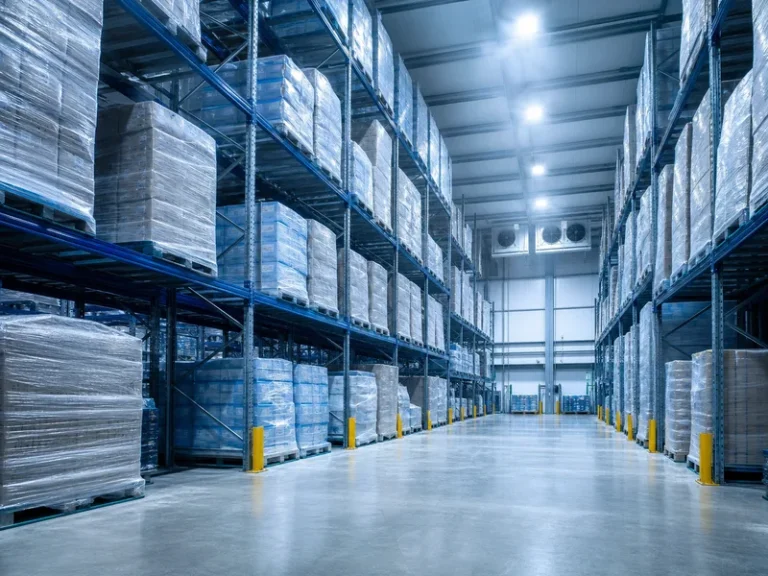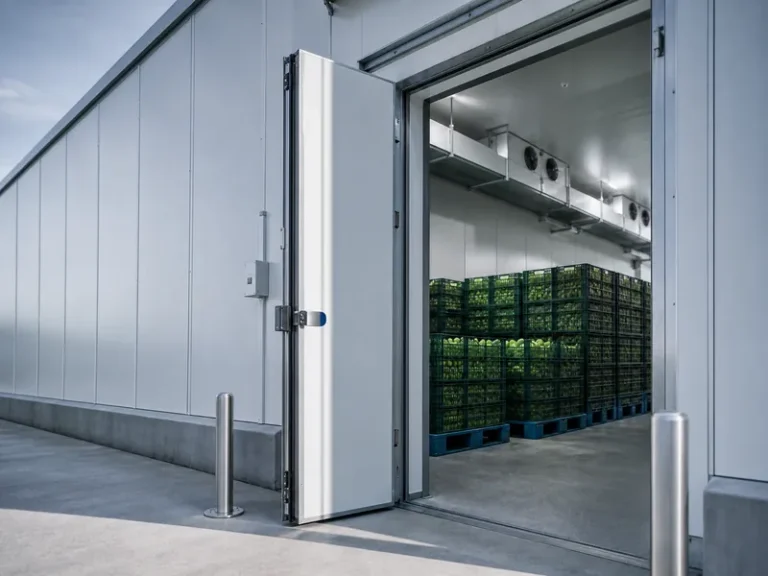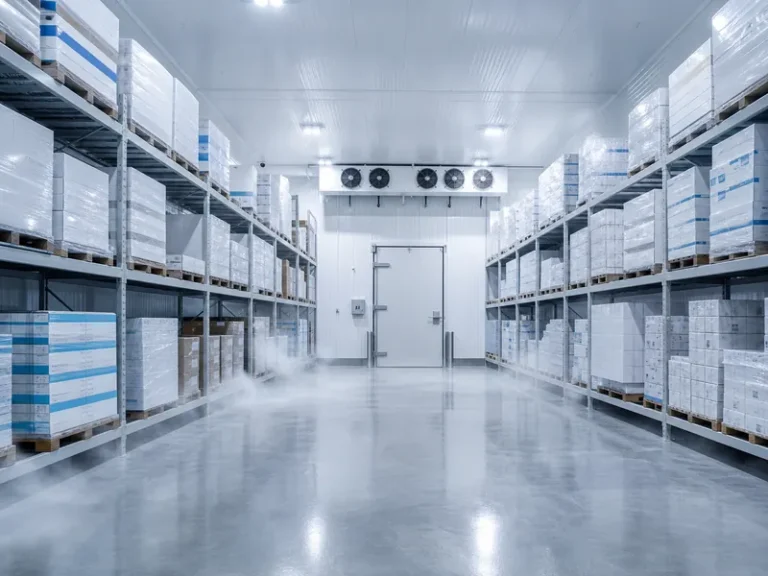





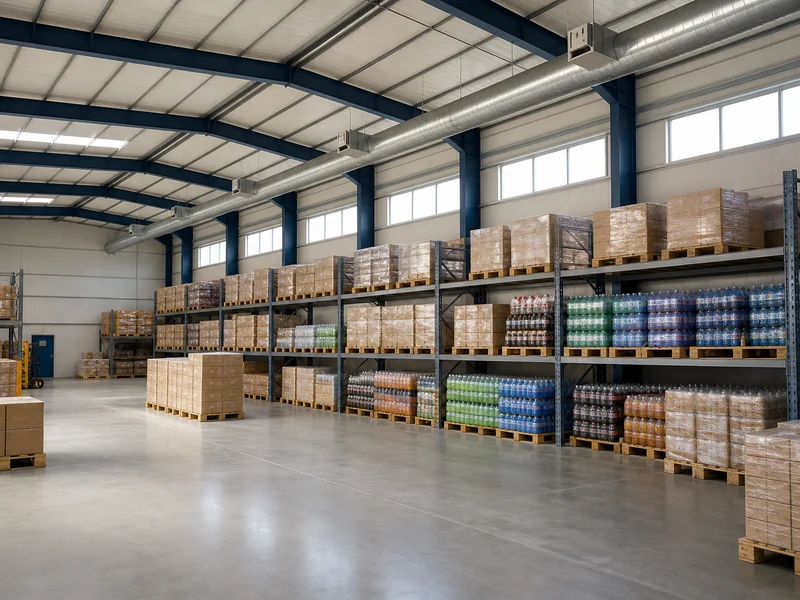
Controlled ambient storage keeps goods at a steady room temperature, typically within the 15–25°C (59–77°F) band, by actively managing heat and moisture instead of letting the inside of the building track the weather outside. It sits between two things people often confuse it with: the bare, unmanaged storage that the word “ambient” usually suggests, and the mechanical cold of a refrigerated or frozen warehouse. The goods involved are sensitive enough to spoil, melt, sweat, or lose shelf life in an uncontrolled shed, yet they would be harmed or needlessly expensive to keep under refrigeration.
This guide covers what the term actually means and how it differs from controlled atmosphere storage, a separate system that shares the same “CA” shorthand. It then places the method against chilled and frozen storage, shows what typically goes inside, and explains what a steel building needs to hold those conditions. It does not get into industrial refrigeration plant or gas-control equipment, which belong to their own topics.
What Controlled Ambient Storage Actually Means
Active control is the defining feature: the building holds a target room-temperature range on purpose, with monitoring and equipment, rather than drifting with the seasons. Most operators run to a setpoint somewhere in the 15–25°C (59–77°F) range, and many also hold relative humidity between roughly 30% and 50% so packaging does not soften and labels do not lift. Plain “ambient” storage, by contrast, is simply whatever the indoor environment happens to be, which in many climates swings well outside that window across a year. Monitoring is part of the definition rather than an extra: data loggers or sensors track the room so an excursion becomes a record to act on, not a surprise found later in damaged stock.
Pharmacy and life-science operations put a sharper number on the same idea. The United States Pharmacopeia defines Controlled Room Temperature (CRT) as 20–25°C (68–77°F), with brief excursions allowed between 15°C and 30°C as long as the mean kinetic temperature stays at or below 25°C. The phrase that carries the weight is “maintained thermostatically,” meaning the range is held by equipment rather than by luck. The exact setpoint and humidity limit come from the product’s own specification, label, or governing standard rather than a single universal figure, which is why two controlled ambient rooms can legitimately run to different targets. Whether the cargo is medicine, chocolate, or electronics, the engineering question is identical: can the enclosure hold its band through a summer afternoon and a winter night. In practice this is a temperature-controlled warehouse building tuned to a room-temperature setpoint instead of a cold one.
Controlled Ambient vs. Controlled Atmosphere: Two Different “CA” Labels
Controlled ambient and controlled atmosphere are not two versions of one method; they control different things for different reasons. Controlled ambient manages temperature and humidity to keep a product near room conditions. Controlled atmosphere (CA) adjusts the gas mix in a sealed room, lowering oxygen and raising carbon dioxide or nitrogen, to slow the respiration of fresh produce such as apples and pears so they ripen far more slowly in storage.
The cargo and the hardware give each one away. A controlled atmosphere room is usually cold as well as gas-tight, fitted with nitrogen generators and CO₂ scrubbers, and built to preserve fruit. A controlled ambient room runs at room temperature and depends on a thermostat and a dehumidifier, not on the oxygen level. If a quote or a floor plan simply says “CA,” confirm which system the vendor means before sizing insulation, sealing, or equipment, because the two lead to very different buildings. Mixing them up is costly in both directions: a gas-tight CA room built for goods that only needed a thermostat, or a simple ambient shell handed produce that needed managed gas to last.
Where It Sits Between Uncontrolled Ambient and Cold Storage
Controlled ambient is the warm end of the temperature-controlled ladder, one rung above doing nothing and several rungs below a freezer. Each step from an unmanaged shed toward a freezer adds equipment, insulation, and running cost, so the aim is to stop at the first rung that genuinely protects the goods. The broader line between a general warehouse and a refrigerated one is its own decision, set out in warehouse versus cold storage.
| Storage tier | Typical band (varies by source) | What it actively controls | Typical goods |
|---|---|---|---|
| Uncontrolled ambient | Tracks outdoor weather | Nothing | Pallets, steel, durable hardware |
| Controlled ambient | 15–25°C (59–77°F), ~30–50% RH | Temperature and humidity | Chocolate, wine, electronics, CRT pharma |
| Chilled / refrigerated | ~0–8°C (32–46°F) | Active cooling | Dairy, fresh meat, many cosmetics |
| Frozen | ≤ -18°C (0°F) and below | Deep cooling | Ice cream, long-hold meat and seafood |
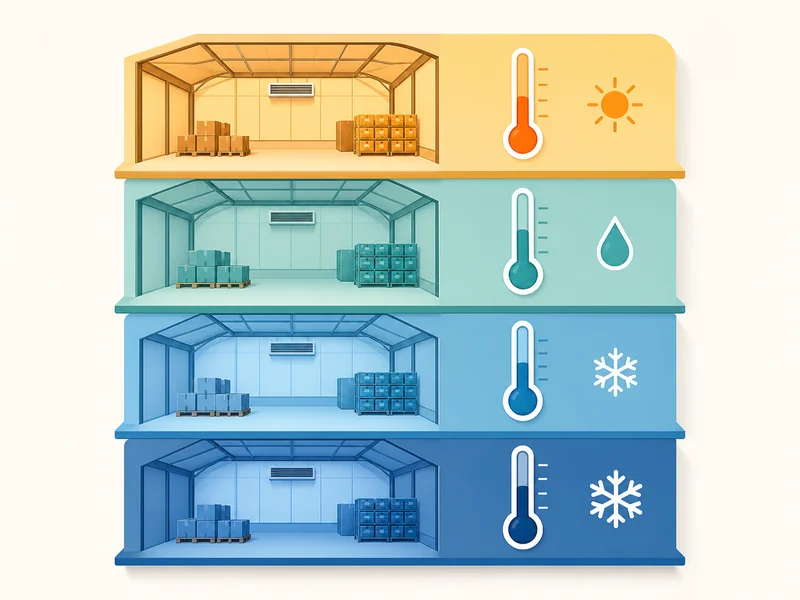
The upgrade trigger is the product’s own tolerance, not a preference for cooler air. Sometimes humidity rather than temperature sets the limit: a hygroscopic powder or a bare steel part may sit comfortably at 22°C yet still need tighter moisture control than an open shed can give. A good that is stable at room temperature but degrades when the building bakes in summer or freezes in winter belongs at the controlled ambient rung. Once safety or shelf life forces it below roughly 8°C, the decision crosses into refrigeration, and the building itself changes, which is the harder shift described in what a cold storage building has to do differently.
What Gets Stored at Controlled Ambient Conditions
The products that suit controlled ambient conditions share one trait: heat or freezing harms them, but refrigeration would waste energy or hurt quality. Chocolate blooms and wine ages badly in a hot shed, and both also dislike a freezer. Coffee, cocoa, canned and shelf-stable food, and grain keep their quality far longer in a steady room than in one that swings twenty degrees between seasons. Electronics, batteries, cosmetics, and nutraceuticals are stored on the same reasoning. Freezing is its own hazard for much of this group, since it cracks bottled liquids, splits emulsions in cosmetics, and drives moisture out of foods, so a freezer is the wrong answer even when it looks like the safer one.
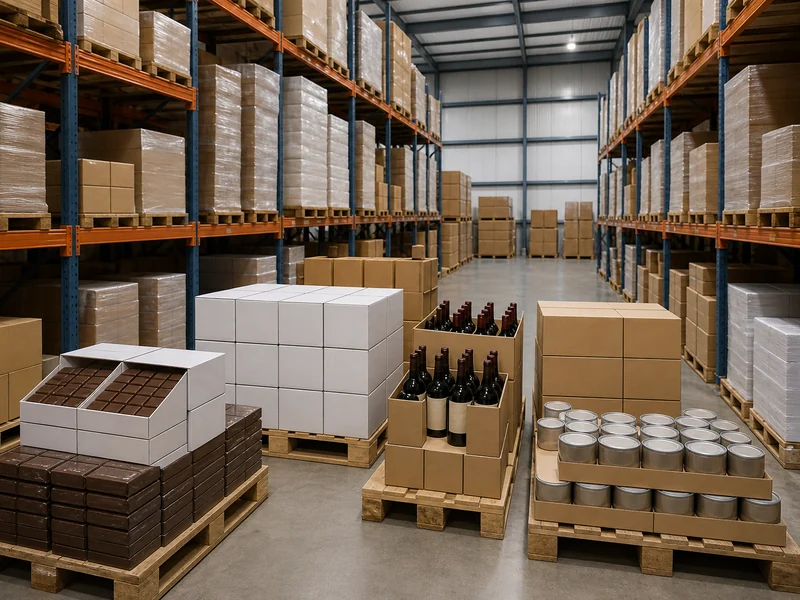
Medicines labeled for room-temperature storage are the strictest members of the group, because the CRT band is a regulated condition rather than a quality preference. Humidity matters as much as temperature for nearly all of them: damp air corrodes contacts, cakes powders, and lifts labels, which is why a controlled ambient room manages moisture and not only the thermostat reading.
How a Steel Building Holds Controlled Ambient Conditions
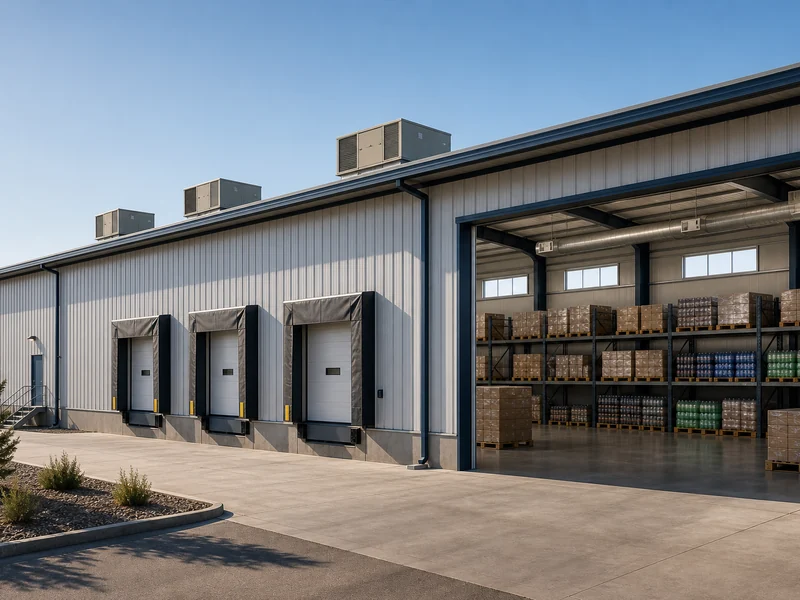
Holding 15–25°C inside a building starts with the envelope and ends with the equipment: a well-insulated, well-sealed steel shell does most of the work, and the HVAC only trims what is left. That order is what separates a controlled ambient building from a refrigerated one. A cold store fights a large gap between inside and outside all year and needs thick insulated panels, a vapor-tight envelope, and industrial refrigeration. A controlled ambient building only has to flatten the seasonal swing around room temperature, so it relies on moderate insulation with conventional heating, cooling, and dehumidification rather than a compressor plant. Even so, the shell makes the band cheap to hold rather than creating it on its own: a validated controlled ambient room still needs active heating, cooling, and dehumidification, plus monitoring against the product’s specification. The contrast with full cold-store practice is laid out in refrigerated warehouse design guidelines.
Four parts of the shell carry the load. Insulation in the roof and walls sets how hard the HVAC has to work, and even a room-temperature target benefits from a continuous layer rather than patchy batts; the options and trade-offs sit in metal building insulation. Air sealing at the eaves, doors, and panel laps keeps humid outdoor air from slipping in and condensing on cooler stock. Humidity control, through ventilation or a dehumidifier, protects the goods that fail on moisture before they fail on heat. And the doors and dock openings, where most heat and moisture trade places, decide how steady the room stays during loading. Because the gap between inside and outside is smaller than a freezer’s, the vapor drive is milder here, yet a humid climate still rewards a sealed envelope and active dehumidification to keep condensation off the stock.
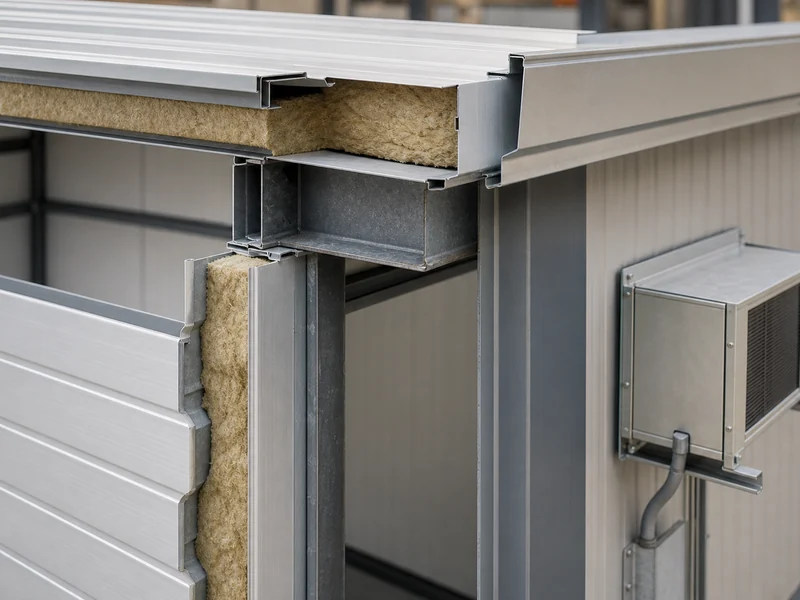
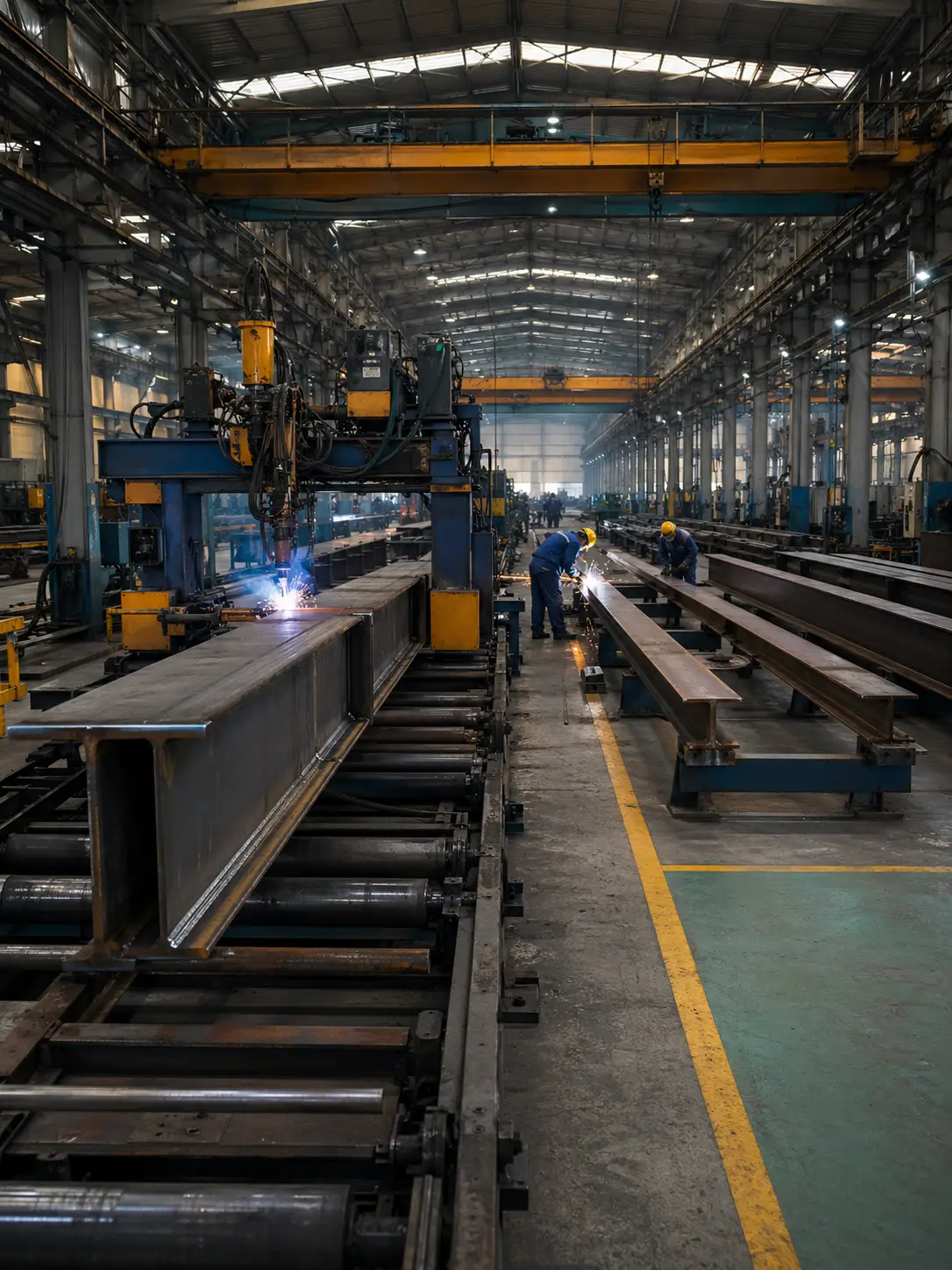
KAFA builds the steel shell that makes this practical: pre-engineered frames, C and Z purlins, and profile steel cladding fabricated to carry continuous insulation and a sealed envelope line. The same approach goes into purpose-built cold storage warehouses, only tuned here to a room-temperature target rather than a freezer load. The frame and cladding can be specified from the start for the insulation depth, sealing, and door layout a controlled ambient room needs, rather than retrofitting a plain shed after the fact. All of it is produced at the company’s 20,000 m² Qingdao facility under ISO 9001:2015 quality management.
Choosing and Holding the Right Band
The decision starts with the product, not the building: confirm the temperature and humidity window the goods actually tolerate, then check whether a steady room-temperature room protects them or whether safety and shelf life force a step down into refrigeration. Only once that window is fixed should the envelope follow, with insulation depth, sealing, humidity control, and door placement sized to hold the band through the worst week of the year. Reverse the order and you either over-build a freezer for goods that needed 20°C, or under-build a shed for goods that needed a controlled ambient envelope and a monitored setpoint.
FAQ
What temperature is controlled ambient storage?
Controlled ambient storage usually targets 15–25°C (59–77°F), held to a setpoint rather than left to drift. Pharmaceutical operations often tighten that to the USP Controlled Room Temperature band of 20–25°C, with limited excursions to 15–30°C as long as the mean kinetic temperature stays at or below 25°C.
Is controlled ambient storage the same as room temperature?
No, and the difference is the word “controlled.” Ordinary room temperature is whatever the building happens to be, which can move far outside a safe window in summer or winter. Controlled ambient holds a chosen range on purpose with monitoring and equipment, which is the reason regulated goods specify it instead of plain ambient space.
What is the difference between controlled ambient and controlled atmosphere storage?
They control different things. Controlled ambient manages temperature and humidity to keep goods near room conditions, while controlled atmosphere (CA) adjusts oxygen, carbon dioxide, and nitrogen in a sealed, usually cold room to slow the ripening of fresh produce. The “CA” abbreviation overlaps, but the equipment and the cargo do not.
Does controlled ambient storage still need insulation and HVAC?
Yes, though far less than a cold store. The envelope flattens the seasonal swing so the equipment only handles the remainder, which means moderate insulation, air sealing, and conventional heating, cooling, and dehumidification rather than industrial refrigeration. Skip the envelope and the HVAC runs constantly and still loses the band on extreme days.
Is controlled ambient storage cheaper to run than cold storage?
Generally yes, because holding a room-temperature band takes much less energy and equipment than maintaining a chilled or frozen one. The size of the gap depends on climate, the building envelope, and how tight a humidity range the goods require, so the saving is real without being a fixed number.
Further Reading
- ASHRAE Standard 55: Thermal Environmental Conditions for Human Occupancy (ASHRAE). The reference standard for the indoor temperature and humidity ranges an HVAC system is designed to hold, which underpins any controlled room-temperature target.
- Insulation (U.S. Department of Energy, Energy Saver). Explains R-value and how the building envelope resists heat flow, the first line of defense in holding a steady internal temperature.
- Temperature and Humidity Requirements in Pharmaceutical Facilities (ISPE, Pharmaceutical Engineering). Sets out the ambient and controlled room-temperature and humidity ranges used in regulated storage, including the ≤25°C average and 30–60% RH bands.