




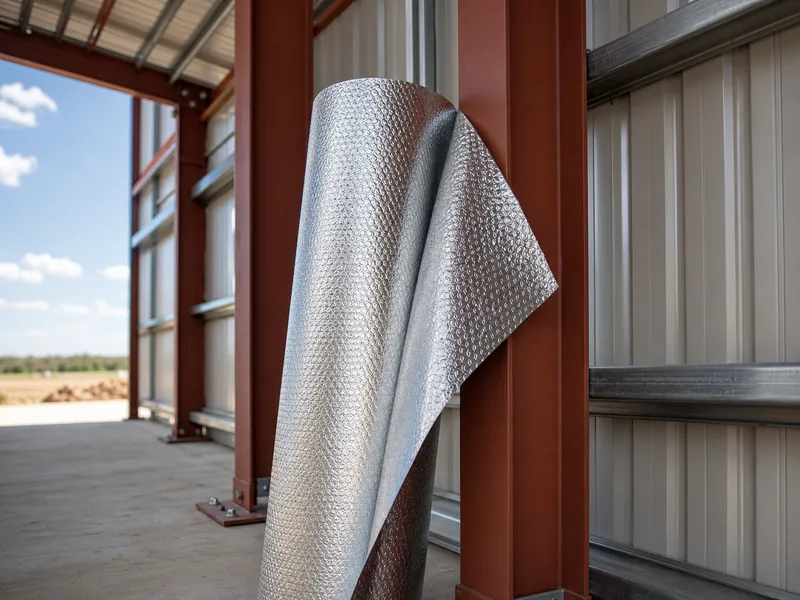
On its own, double bubble insulation carries an R-value of about R-1. That sits well below the R-8, R-17, or R-22 figures stamped on many rolls sold for metal buildings, and the gap is not a misprint. Those higher numbers describe a system, the reflective foil plus a sealed air space facing it, not the quarter-inch material you actually unroll. For anyone insulating a steel building, that difference decides whether double bubble is the right call or only part of the job. The sections below give the real material rating, explain why published R-values disagree, and show what reflective bubble foil does well behind metal panels.
What Double Bubble Insulation Is
Double bubble insulation is a reflective foil product: two layers of air-filled polyethylene bubbles bonded between metalized facings, usually about a quarter inch thick. The two bubble layers give the product its name and separate it from single bubble, which uses one. It is sold either foil-on-both-sides or with one white facing, the white side chosen when the interior stays exposed and an owner wants a finished look. Unlike fiberglass batts or spray foam, it adds almost no mass and almost no thickness, so it works on a different principle. Rather than slowing conductive heat with trapped fibers or foam, its job is to reflect radiant heat and to seal the assembly against moisture. That principle is the reason its R-value reads so low while its marketing reads so high.
The Real R-Value: Material vs. Advertised
The material R-value of double bubble is about R-1, and the larger numbers on a label are system ratings that only hold under specific conditions. A quarter-inch sheet does not have the mass to resist much conductive heat, so the foil itself sits near R-1 to R-2. The advertised R-6, R-17, or R-22 values come from testing the foil together with a sealed air space and a defined direction of heat flow. Change the air space or the heat-flow direction and the rated number changes with it.
The split between material and system ratings is not a loophole; it is how reflective products are rated. Under the U.S. Federal Trade Commission’s R-value Rule, reflective insulation has to be sold with the number of foil sheets, the number and thickness of the air spaces, and the R-value for heat flowing up, down, and horizontally. A bare “R-17” with none of those conditions attached tells a buyer very little. RIMA International, the reflective insulation trade body, puts the realistic assembly range at roughly R-3 to R-21 depending on the size and placement of that air space. For a plain-English primer on what the rating measures before you compare products, see our explainer on what an R-value of insulation really means.
| Rating you see | What it describes | Holds only when |
|---|---|---|
| ~R-1 (material) | The quarter-inch foil sheet by itself | Always; this is the baseline |
| R-3 to R-6 (system) | Foil plus a small sealed air space | A dead air gap faces the foil |
| R-17 to R-22 (advertised) | Multi-layer or woven product plus a larger air space | A defined air space and heat-flow direction, as tested |
What Double Bubble Is Actually Good At
The real value of double bubble shows up in two jobs that have nothing to do with conductive R-value: reflecting radiant heat and controlling moisture. Both depend on how the foil is installed, not on the rating printed on the roll.
Reflecting radiant heat
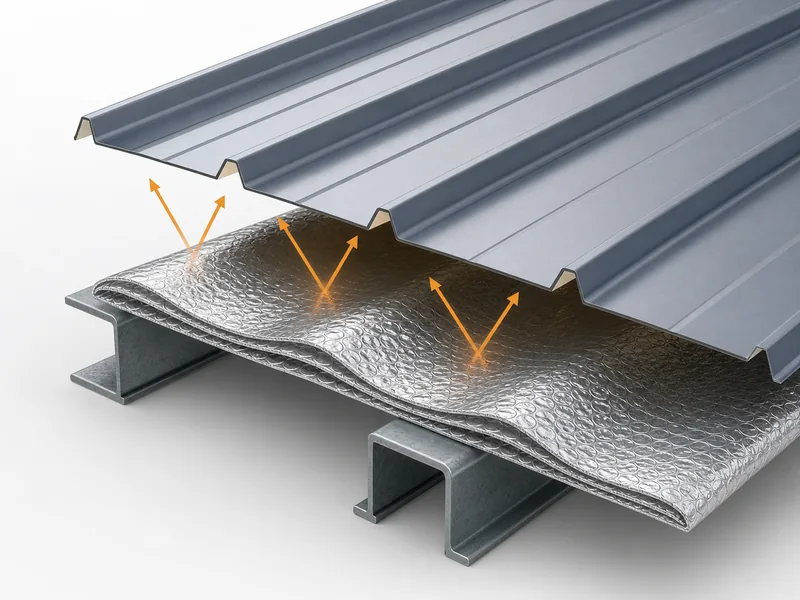
A reflective foil cuts radiant heat only when it faces an open air space, the one condition most rushed installations skip. The U.S. Department of Energy is direct about it: a radiant barrier has no inherent R-value, and its reflective surface has to face an air space to do anything at all. Press the foil flat against the steel panel with no gap and the reflective benefit largely disappears, leaving the bare R-1. Leave at least a one-inch air gap and the foil turns back a large share of the radiant heat coming off a sun-baked roof. The mechanism is low emissivity: a clean aluminum face re-emits very little of the heat it absorbs, so it sends radiant energy back across the gap instead of passing it through to the steel. The payoff is climate-dependent: DOE reports that radiant barriers can trim cooling costs by roughly 5 to 10 percent in hot, sunny climates, with much less effect in cold, heating-driven ones. Dust settling on the foil over time also dulls its reflectivity, so the gap and a clean facing both count.
Acting as a vapor barrier against condensation
Condensation control is where double bubble often justifies its cost in a steel building, because the same foil that reflects heat also stops water vapor. Bare metal panels sweat when warm, humid interior air meets cold steel, and that dripping moisture corrodes fasteners and stains whatever sits below. A sealed double bubble layer, with its seams taped, acts as a continuous vapor barrier that keeps interior moisture off the panel underside. This is why owners who plan to add thicker insulation later still tend to put reflective foil up first. For the full picture on managing moisture in a steel shell, see our guide to the metal building vapor barrier layer.
Installing Double Bubble in a Metal Building
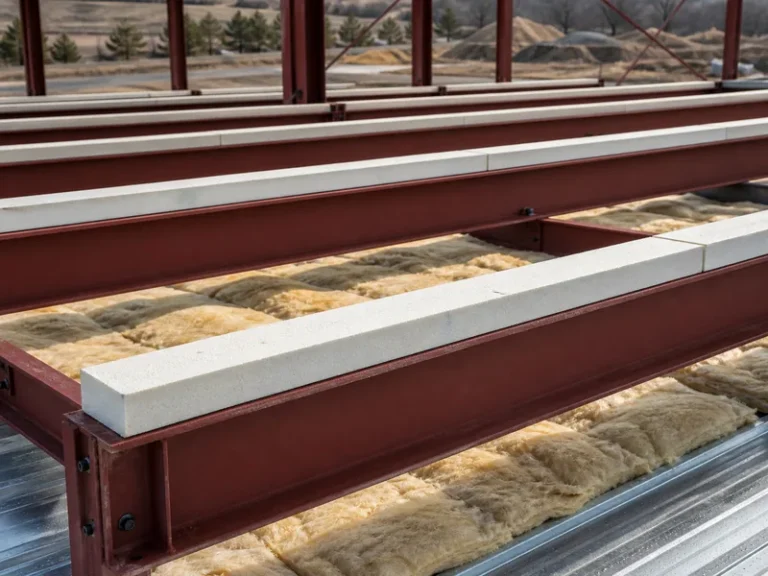
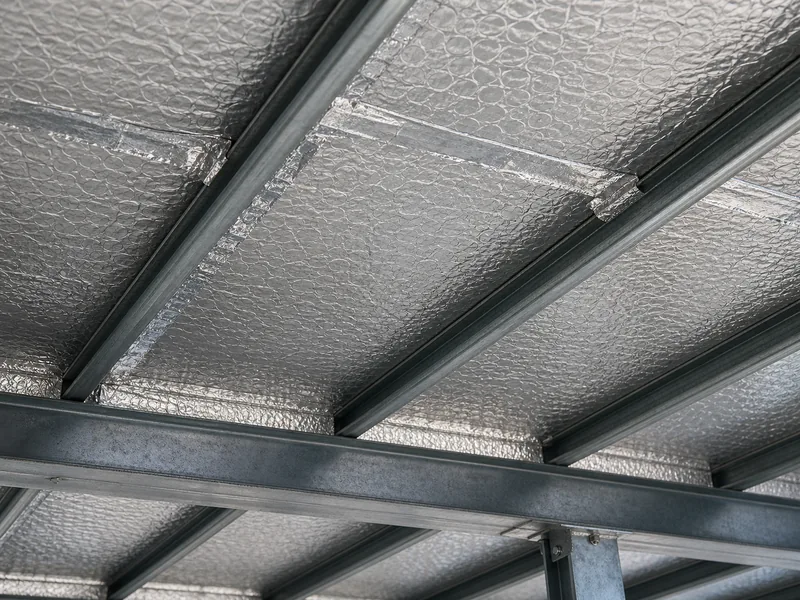
Double bubble goes up over the purlins and girts, directly behind the roof and wall panels, and the framing layout decides whether the all-important air gap survives. On a roof, the foil is laid across the top of the purlins before the metal panels are screwed down. The sheet then drapes slightly between supports and forms a thin air space against the panel. Seams are lapped and sealed with foil tape, and the sheet is held with screws and bearing plates or fastened to the secondary steel. Done this way, the foil serves as both a vapor barrier and a radiant shield in a single pass.

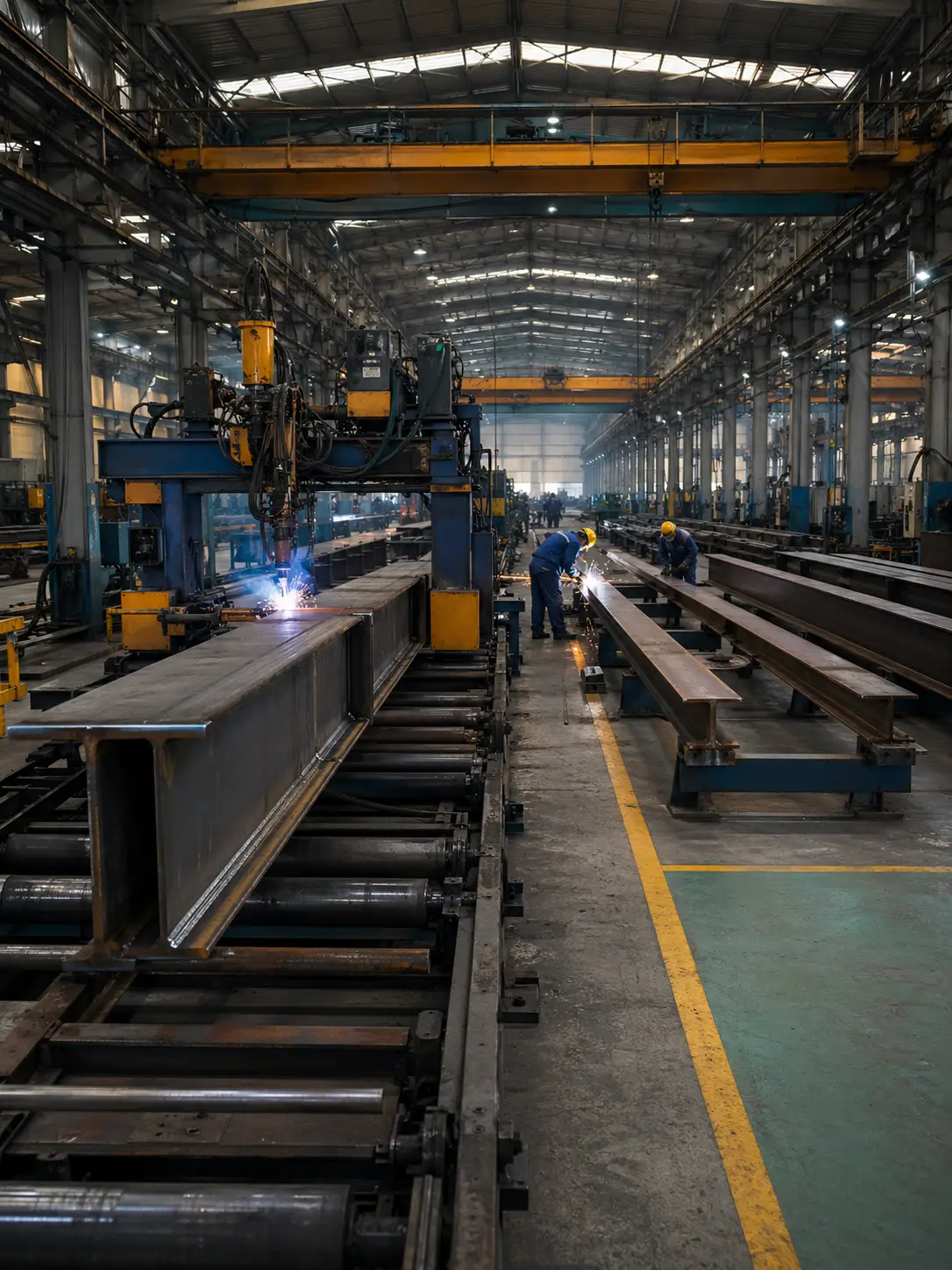
The detail that gets overlooked is the gap itself. If the panel pins the foil tight with no cavity, the assembly drops back to its R-1 material value, and whether that happens depends on how the secondary framing and panel profile fit together. As a steel structure manufacturer, we design the purlin and girt spacing alongside the panel system, which is what keeps a consistent air space behind the cladding across the whole roof. Builders who want to see how those parts interact can review the role of the metal building framing components that carry both the cladding and the foil.
When Double Bubble Is Enough, and When to Add More
Double bubble is enough on its own for an unconditioned, moisture-prone building, but a heated or cooled space needs mass insulation layered behind it. For a carport, a storage barn, an equipment shed, or a workshop in a mild climate, the mix of radiant reflection and condensation control is frequently all the structure needs, and the low cost makes it an easy choice. The honest limit appears the moment you want to hold a temperature. With only R-1 of conductive resistance, the foil cannot keep a heated office or a cooled storeroom comfortable through a real winter or summer. Energy codes reinforce that limit, since a conditioned metal building generally has to meet a prescribed wall and roof R-value that an R-1 layer cannot reach by itself.
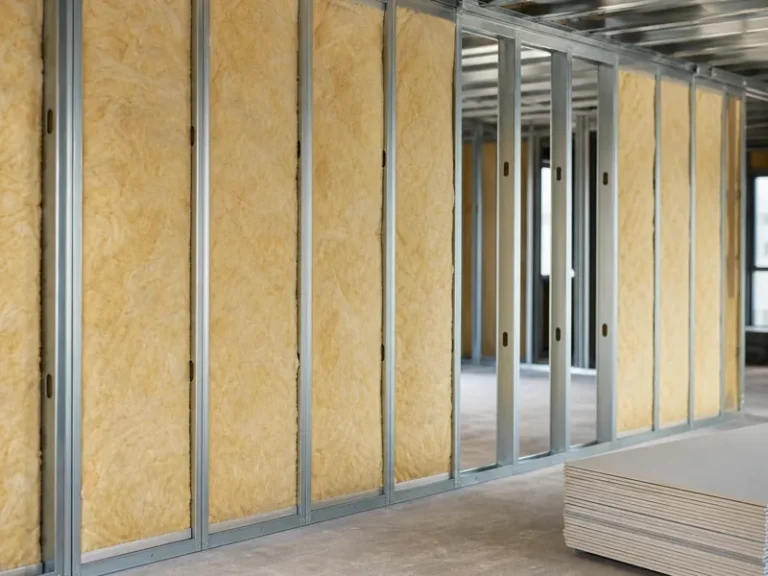
For a conditioned space, double bubble works best as the radiant-and-vapor layer in front of something with real R-value. Fiberglass batts add inexpensive depth, which is why metal building fiberglass insulation stays the default for filling the cavity. Closed-cell spray foam insulation builds the highest R-value per inch and seals air leaks at the same time, at a higher price. Sorting through these layers is the core of any sound plan for metal buildings insulation, and double bubble is usually the first layer rather than the whole answer.

How to Decide for Your Building
The real number, not the label, should drive the decision: double bubble is an R-1 material that behaves like more only when it faces a clean air gap. So the first question is not which brand to buy but whether the building will be conditioned. An unconditioned, humidity-prone structure can often stop at a well-installed, properly gapped foil layer that reflects radiant heat and blocks condensation. A heated or cooled building should treat double bubble as the radiant-and-vapor layer and budget for fiberglass or spray foam behind it to carry the actual thermal load. Set the air gap into the panel-and-purlin detail before the roof goes on, because a properly gapped foil layer performs while a pinned one falls back to R-1.
FAQ
What is the R-value of double bubble insulation?
Double bubble insulation has a material R-value of about R-1. The higher numbers on the package are system ratings measured with the foil plus a sealed air space, not the value of the sheet by itself.
Why is double bubble sold as R-17 or R-22?
Those figures are system R-values that include a sealed air space and a specific direction of heat flow. Federal labeling rules require reflective insulation to state those conditions, so an R-17 claim is only meaningful with the air space and heat-flow direction it was tested under.
Is double bubble insulation enough for a metal building?
Double bubble is enough for an unconditioned building that mainly needs radiant-heat control and condensation protection. A heated or cooled building needs added mass insulation behind it, because R-1 cannot hold an indoor temperature on its own.
Does double bubble stop condensation in a metal building?
Sealed double bubble works as a vapor barrier and sharply reduces condensation on the inside of metal panels. The seams have to be taped and the sheet kept continuous, or humid air will still reach the cold steel at the gaps.
Double bubble vs. fiberglass: which has the higher R-value?
Fiberglass has the higher conductive R-value, adding roughly R-3 or more per inch of thickness, while double bubble sits near R-1. Double bubble leads on radiant reflection and moisture control instead, so the two are often paired rather than used as substitutes.
Further Reading
- U.S. Department of Energy: Radiant Barriers — Federal Energy Saver guidance explaining that a radiant barrier has no inherent R-value, must face an air space to work, and can cut cooling costs by about 5 to 10 percent in hot climates.
- FTC R-value Rule, 16 CFR Part 460 — The federal rule (via Cornell LII) governing how reflective insulation R-values must be disclosed, including the number and thickness of air spaces and the direction of heat flow.
- RIMA International: Reflective Insulation FAQ — The reflective insulation trade body’s technical FAQ, including the realistic R-3 to R-21 assembly range that varies with the air space.