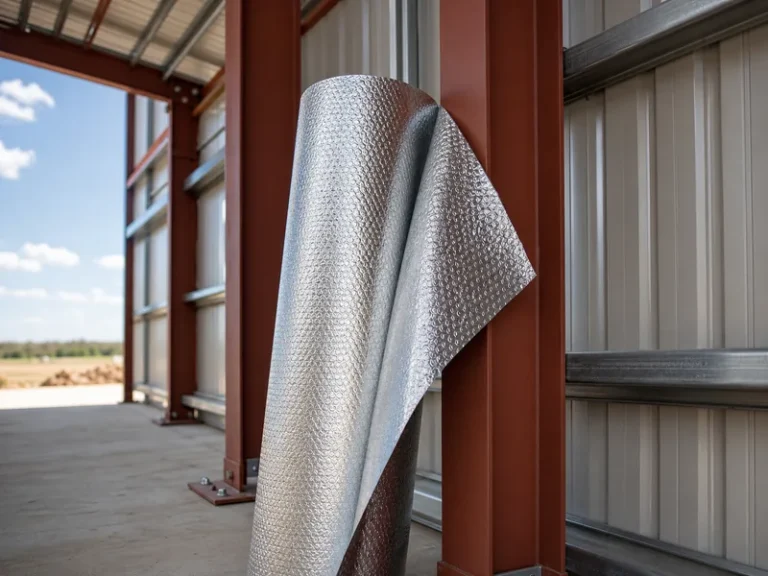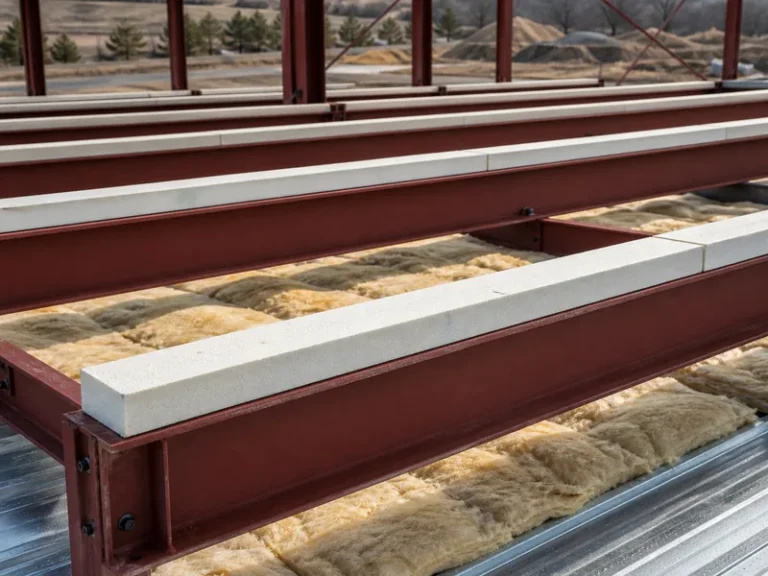
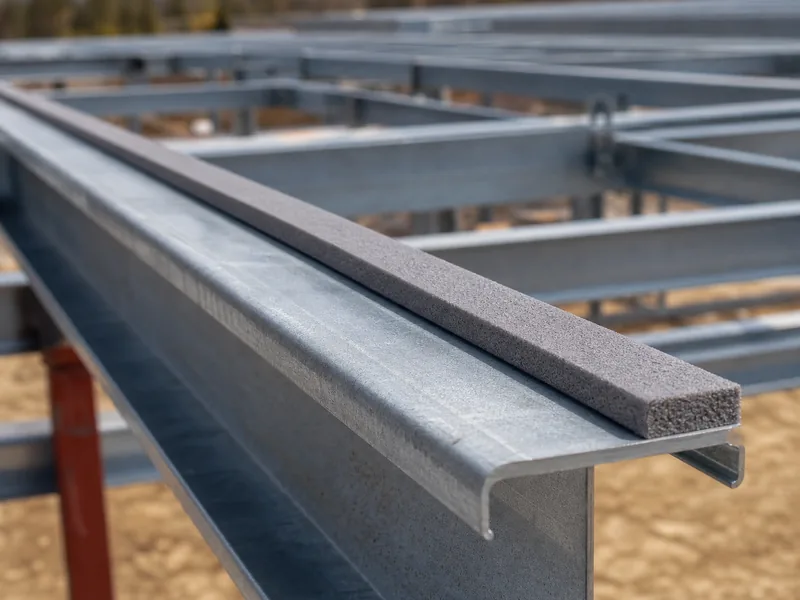
Thermal break tape is a self-adhesive foam strip applied to the outer flange of a metal building’s purlins and girts. Its job is narrow and specific: it interrupts the metal-to-metal contact between the steel framing and the exterior panels. That single interruption cuts the thermal bridge along the framing line and keeps the inside face of the steel warmer, which holds that surface above the dew point and limits condensation. What the tape does not do is add meaningful R-value: a thin strip is a thermal break, not a layer of insulation.
That distinction shapes everything below. This guide covers where the tape goes, the specs that actually matter, how it differs from thermal spacer blocks, how it is installed, and how to decide whether your building needs it. It does not cover full insulation system design or vapor barrier selection; those are separate decisions that the tape supports rather than replaces.
What Thermal Break Tape Is and Where It Goes
Thermal break tape sits at the contact line between the exterior sheeting and the secondary steel, one of the smaller metal building components but one that punches above its size. In a through-fastened metal building, the roof and wall panels screw directly onto the purlins and girts. Without anything between them, the panel and the frame touch along the full length of every member. Steel moves heat readily, so each contact line becomes a continuous path for heat to escape or enter.
The tape goes on the outer flange (the face the panel will be screwed to) and runs the length of the member before the sheeting is attached. On a roof, that means the top flange of each purlin; on the walls, the outer flange of each girt. Because the strip is applied during framing, before panels go up, retrofitting it onto a finished building is impractical without removing cladding. That is part of why it is specified up front rather than added later.
How It Stops Thermal Bridging and Condensation
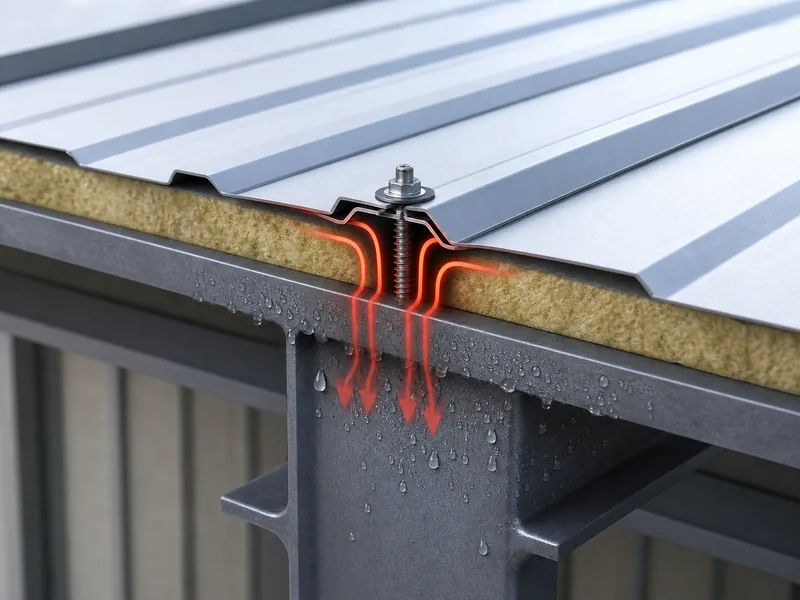
A thermal bridge forms wherever a conductive material crosses the insulated envelope, and in a metal building the framing line is the obvious one. Heat takes the path of least resistance, so even with batt insulation filling the cavity, the spots where panel meets steel let heat skip past the insulation entirely. The result is a colder interior surface at each purlin and girt, and that is where the moisture problem starts.
When the inside face of the steel drops below the dew point of the indoor air, water condenses on it, the same way a cold drink sweats in a humid room. Over time that shows up as drips, rust streaks at the fastener line, mold, or the faint dark lines on a ceiling that installers call ghosting. The tape raises that surface temperature by breaking the conductive contact, which keeps the steel closer to room temperature and pulls it back above the dew point in most conditioned buildings.
How much this matters scales with how the building is used. A conditioned space with people, heaters, or process moisture inside pushes the indoor dew point up, so the cold framing line is far more likely to sweat. An unheated, open shed with little interior moisture load rarely sees the same problem, which is why the tape pays off most in buildings you actually heat or cool.
It helps to be clear about the division of labor here. The tape addresses the contact-point bridge; a metal building vapor barrier controls how much moisture-laden air reaches cold surfaces in the first place. They solve related problems from different angles, and a building in a humid climate usually wants both rather than one standing in for the other.
Thermal Break Tape Specs: Thickness, Width, and R-Value
The specs that matter for thermal break tape are thickness, width, material, and adhesive, not a headline R-value. Most strips are a closed-cell foam (polyethylene or PVC) with an acrylic adhesive backing and a paper or film release liner, sold in rolls and applied in a single continuous run.
- Thickness: commonly 1/8 to 1/4 inch (roughly 3 to 6 mm). Thicker strips break the bridge more effectively but raise the panel slightly off the flange, which the fastener and panel profile have to accommodate.
- Width: chosen to match the flange it covers, often in the 2-to-3-inch range. The strip should cover the contact face without hanging far past the steel.
- Material: closed-cell foam resists water absorption and holds up under the clamping load of a fastened panel.
- Adhesive: acrylic, because it grips smooth, rough, and irregular surfaces, including the ribs of corrugated metal.
The R-value point is where most expectations go wrong. A single strip adds only a fraction of an R-unit (thin closed-cell tapes often land near R-0.2 to R-1, depending on thickness and material), so it does almost nothing for the overall R-value of the assembly. Its value is not in the number; it is in removing a continuous metal contact that would otherwise drag down the effective performance of whatever insulation you do install.
Thermal Break Tape vs. Thermal Spacer Blocks
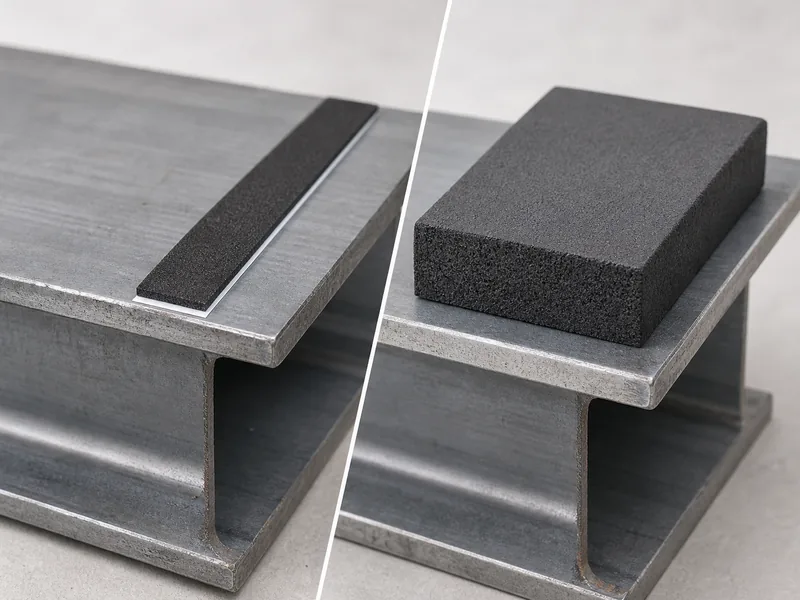
Thermal break tape and thermal spacer blocks both fight bridging at the framing line, but they are sized for different jobs and should not be treated as interchangeable. Tape is a thin strip that restores the contact-point break and helps with condensation. Spacer blocks are thicker, denser pieces set between the panel and the framing to add a measurable layer of continuous insulation across the envelope.
| Thermal break tape | Thermal spacer blocks | |
|---|---|---|
| Form | Thin self-adhesive foam strip | Thicker rigid or semi-rigid block |
| Main job | Break contact-point bridge, limit condensation | Add continuous insulation, lift the assembly U-value |
| R contribution | A fraction of an R-unit | Block materials typically land in the R-4 to R-5 range |
| Where it sits | On the purlin/girt flange | Between panel and framing, often spanning the gap |
| Typical use | Through-fastened panels on secondary steel | Standing seam or through-fastened systems needing continuous insulation |
If the goal is simply to stop the metal-to-metal bridge and keep condensation off the steel, tape does that at low cost. If the goal is to meet a continuous-insulation target across the roof or walls, that calls for thermal blocks for metal buildings instead. The block thickness, compressive strength, and roof system all factor into it, which is a selection process beyond the scope of this page.
The two are not always an either/or choice. Some assemblies run tape at the contact line and still rely on the cavity insulation and a vapor barrier for the bulk of the thermal job, while higher-performance roofs add spacer blocks for continuous coverage on top of everything else. The right combination follows the performance target, not a single product.
Installing Thermal Break Tape: Where and How
Installation is straightforward, but it lives or dies on surface prep and continuity. The flange has to be clean and dry before the strip goes down. If there is oil, dust, or a film of overnight condensation on the steel, the acrylic adhesive will not grab, and a strip that lifts at the edges leaves gaps that reopen the bridge. Wiping the flange and working in dry conditions matters more than the brand of tape.
The practical sequence on site looks like this:
- Confirm the panels are through-fastened to secondary steel, since that is the contact line the tape is meant for.
- Clean and dry the outer flange of each purlin or girt.
- Roll the strip the full length of the member, pressing it down so it bonds evenly with no skipped sections.
- Fasten the panels through the tape as detailed, keeping the screw line on the covered flange.
A few details separate a strip that lasts from one that peels. Run the tape flat without stretching it, since stretched foam tries to recover and pulls at the bond. Keep it unbroken across laps and all the way to member ends rather than leaving short gaps. And set the screw line on the covered flange so the fastener itself passes through the break instead of beside it, where bare steel-on-steel contact would return.
As a steel fabricator, we form the C- and Z-section purlins and girts the tape later bonds to, so the flange condition that decides whether adhesion holds actually starts at the shop; clean, well-profiled steel is easier to tape correctly in the field. Continuity is the recurring failure point: a strip that is skipped at laps or stops short of a member end leaves a live bridge exactly where the fasteners concentrate.
Do You Need Thermal Break Tape?
Whether you need thermal break tape turns on three questions about the building, not on a universal rule. First, is the building conditioned: heated, cooled, or both? An unheated cold-storage shed or open equipment barn rarely fights condensation the same way a workplace does. Second, how big is the temperature and humidity gap your envelope has to manage? Cold climates and humid interiors push framing surfaces toward the dew point faster. Third, are the panels through-fastened directly to the secondary steel, which is the contact line the tape is designed to break?
If the answers point to a conditioned building in a demanding climate with panels fastened straight to the frame, the tape is cheap insurance against condensation at the framing line. If you also need to hit a continuous-insulation target, tape alone will not get you there, and you move into spacer blocks or a broader assembly. Either way, the tape is one piece of how you insulate metal building roofs and walls. It works best decided alongside the cavity insulation and vapor control rather than bolted on as an afterthought. For the full envelope picture, our guide on how to insulate a metal building sets the tape in context.
Energy codes such as ASHRAE 90.1 and the IECC push for continuous insulation across the building envelope, which is part of why bridging at the framing line gets more attention than it used to. Where your project lands against those requirements is a question for your designer, since it can decide whether tape is enough or whether the assembly needs more.
Deciding What Your Building Needs
Thermal break tape is a contact-line fix, not an R-value upgrade. Its role is to keep the purlin and girt line above the dew point so the cavity insulation behind it actually performs. Settle the harder calls first: the cavity insulation, the vapor strategy, and how the panels attach to the frame. Once those are fixed, whether the tape goes in stops being a judgment call and becomes a detail on the drawings.
FAQ
What is thermal break tape made of?
Thermal break tape is usually a closed-cell foam (polyethylene or PVC) with an acrylic adhesive backing and a release liner. The closed-cell structure resists water and holds its shape under the clamping load of a fastened panel, which is why open, absorbent foams are not used for this job.
Does thermal break tape stop condensation?
Thermal break tape reduces condensation at the framing line by keeping the interior face of the steel warmer, but it is not a complete moisture strategy on its own. It works alongside cavity insulation and a vapor barrier; in a humid, conditioned building you generally want all three rather than relying on the tape by itself.
What is the R-value of thermal break tape?
The R-value of a single thermal break strip is low, typically a fraction of an R-unit, depending on thickness and material. The point of the tape is not to add insulation value but to remove the continuous metal-to-metal contact that would otherwise undercut the insulation already in the wall or roof.
Thermal break tape vs. thermal blocks: which do I need?
Choose tape when the goal is to break the contact-point bridge and control condensation on through-fastened panels. Choose thermal spacer blocks when you need a measurable layer of continuous insulation to lift the assembly’s U-value, since blocks are thicker and add real R-value while tape does not.
Where does thermal break tape go on purlins and girts?
Thermal break tape goes on the outer flange of each purlin and girt (the face the panel fastens to) and runs the full length of the member before the sheeting is installed. Skipping sections or stopping short of member ends leaves a live thermal bridge right where the fasteners concentrate.
Further Reading
- U.S. Department of Energy — Insulation and R-values — government primer on how insulation and R-value work, useful for understanding why a low-R thermal break still matters.
- Metal Construction Association — industry association technical resources on metal roof and wall systems and envelope performance.
- ASHRAE — publisher of ASHRAE 90.1, the energy standard behind the continuous-insulation requirements that make framing-line thermal bridges matter.