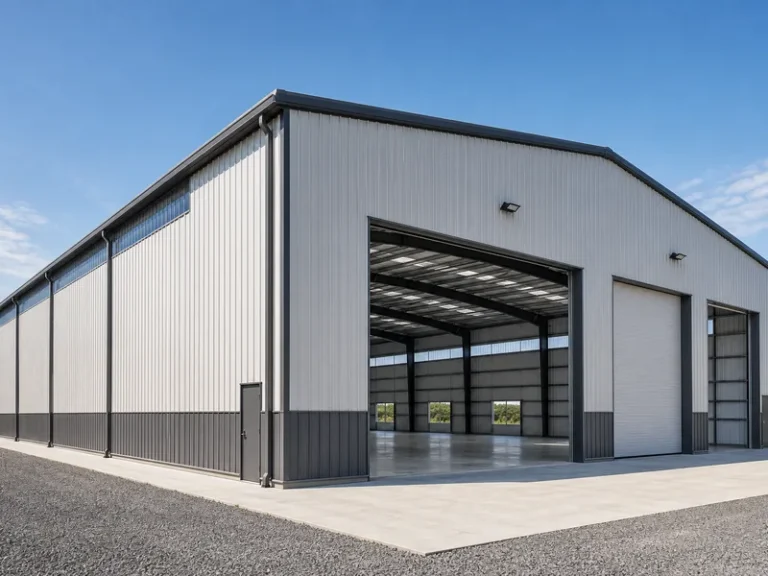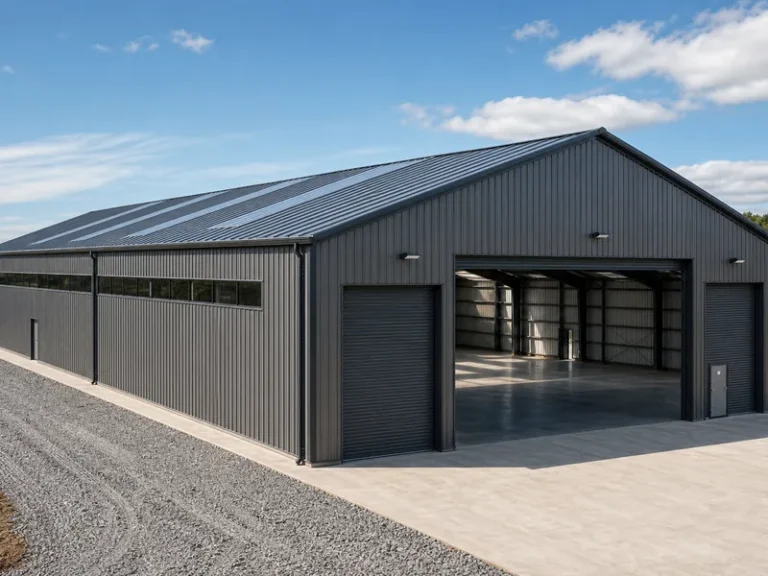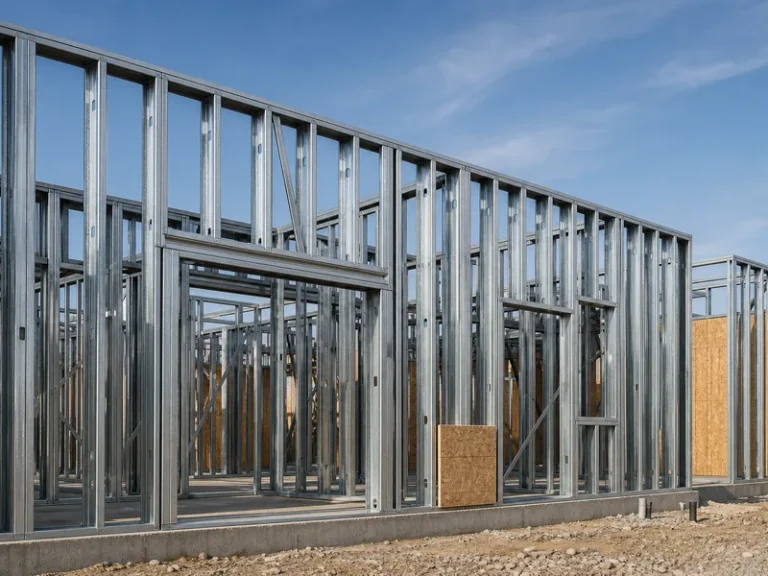





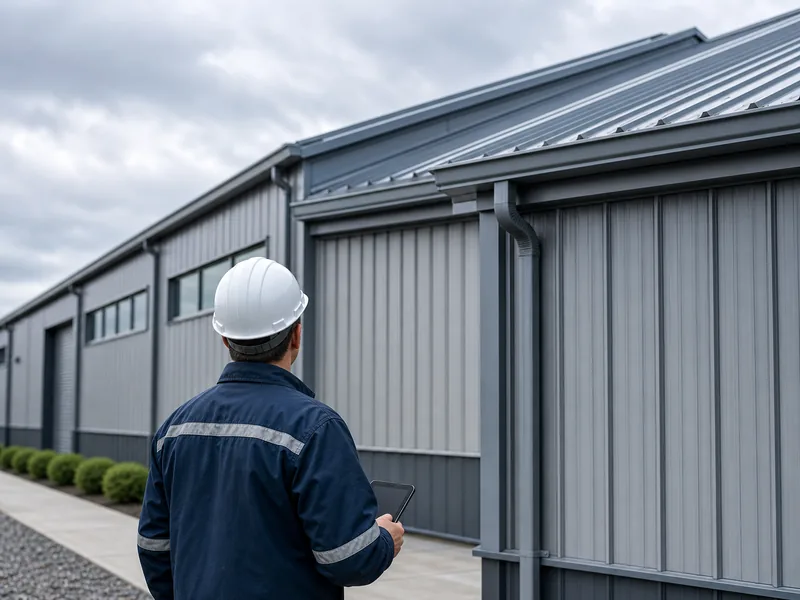
On a steel building, most expensive repairs trace back to deferred upkeep rather than a single dramatic event. A scratched panel that is never touched up, a gutter left clogged, a fastener backing out: each is minor on its own. Left alone, they let water and time turn into corrosion or a structural repair. Many low-rise steel buildings, including pre-engineered metal building systems, are designed for long service when their coatings, fasteners, drainage, and seals are kept up on a schedule. This guide covers how often to inspect a steel building, which components tend to fail first, what an owner or facility team can safely handle, and when to bring in qualified help.
A maintenance checklist should separate structural steel from replaceable metal building components like fasteners, trim, panels, sealants, and accessories.
How often a steel building needs maintenance
Two inspections a year is the working baseline most steel building owners can plan around. The common rhythm is one walkthrough in spring, after winter loading and freeze-thaw, and one in fall before the cold season returns. Each pass is a planned visual walkthrough, and the goal is detection rather than repair: note what has shifted, then schedule the fixes. Buildings on the coast, in humid regions, or near industrial air usually need more frequent checks, often quarterly, because salt and airborne moisture accelerate corrosion. Any severe weather event, whether high wind, hail, or heavy snow, justifies an extra look regardless of the calendar. A new building also benefits from a baseline inspection in its first year, once the frame has been through a full thermal cycle and the initial fasteners have seated. That first pass sets the reference point everything after is measured against.
The idea that metal buildings are “maintenance-free” is the misconception that does the most damage. Low-maintenance is accurate; maintenance-free is not. A building checked twice a year and touched up as needed can stay sound for decades. One left alone for years can show real corrosion and fastener failure well before its coatings should have given out. How consistently it is maintained is one of the biggest levers on how long a metal building lasts, often more decisive than the original grade of steel.
Where corrosion and leaks tend to start first
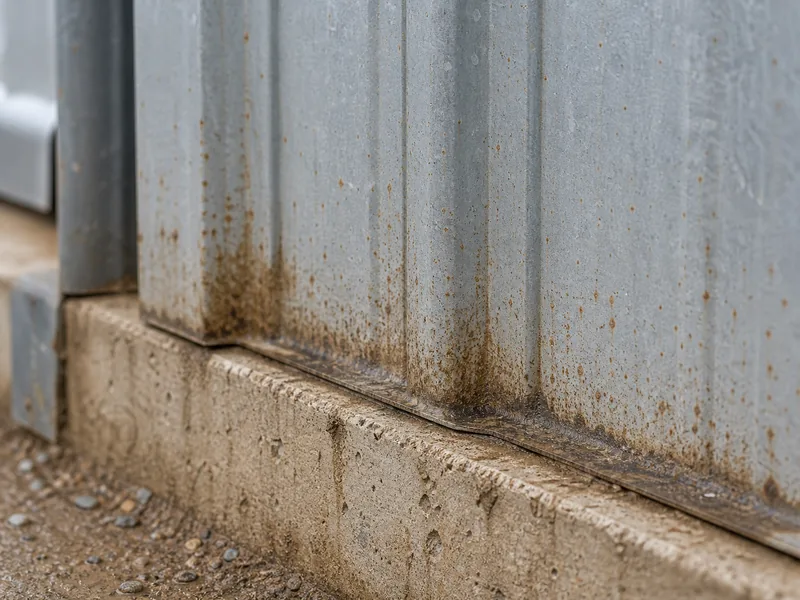
Corrosion on a steel building often starts near the base of the walls, not in the middle of a panel. The lowest 12 to 18 inches of wall sheeting is a common starting zone in splash conditions, where mud kicks up, moisture lingers after rain, and the coating is attacked from below. That band deserves a close look every time. The other reliable trouble spots are fastener washers, sealed joints, and roof penetrations, because each one relies on a flexible material that ages faster than the steel around it. Knowing these points turns a vague “inspect the building” into a short, repeatable route:
- The bottom 12 to 18 inches of every wall, a common corrosion starting zone
- Fastener lines on walls and roof, for backed-out screws and cracked washers
- Roof seams, flashing, and the boots around vents and HVAC curbs
- Gutters, downspouts, and the grade where water leaves the building
- Door tracks, hinges, and weather seals
- The interior face of panels and the insulation, for condensation or staining
Roof, flashing, and penetrations
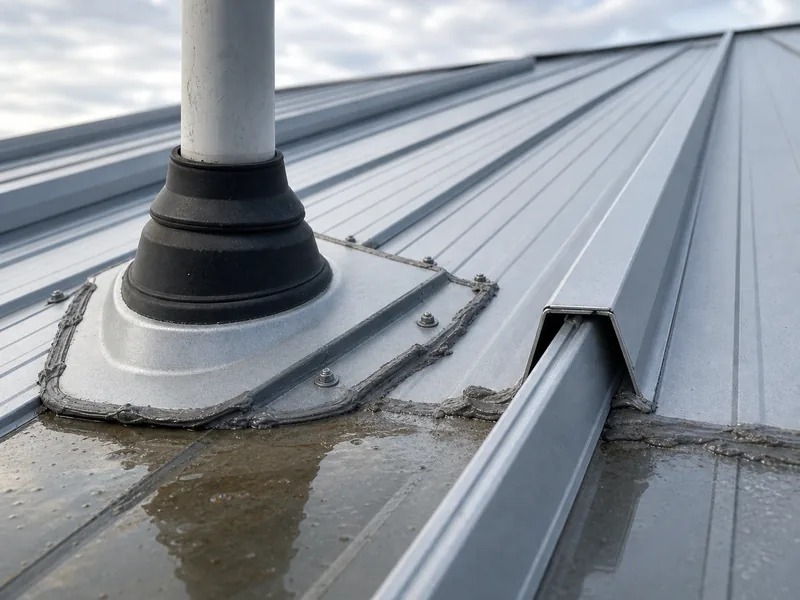
The roof is where deferred maintenance gets expensive fastest, because a small leak feeds water into insulation, fasteners, and framing at the same time. Inspect the panels for ponding, loose or backed-out fasteners, lifted seams, and any debris that traps moisture against the metal. Persistent ponding that does not drain normally points to a low spot or a blocked drain, and standing water is what eventually works its way into the lap seams. Flashing and the boots around vents, stacks, and curbs are the usual leak origins, since the sealant there has a shorter service life than the panel coating. The right checks also depend on the panel profile you have: a standing-seam roof conceals its fasteners and is built to move on its clips, while an exposed-fastener system relies on thousands of gasketed screws. Because the types of metal roofs differ that much, the inspection focus shifts with the system. On standing-seam panels in particular, a clip pinned by debris or a careless repair cannot move freely, and that restraint shows up later as oil-canning or seam stress.
Wall panels, coatings, and rust prevention
The protective coating, not the bare steel, is what an owner is really maintaining on the walls. Once a panel’s finish is scratched, chipped, or chalking, the metal underneath begins to oxidize, so damage should be cleaned, primed, and touched up before rust takes hold. Whether the panels were factory-treated by galvanizing versus painting steel changes how they weather and how a repair should be matched, which is why the original coating specification is useful to keep on file. Periodic rinsing keeps the finish sound; a low-pressure wash a couple of times a year is usually enough, more often in coastal or dusty settings. Factory-applied paint systems can carry warranties measured in decades, but that coverage typically assumes the finish is inspected and cleaned, so neglecting panel care can make a warranty claim harder to support.
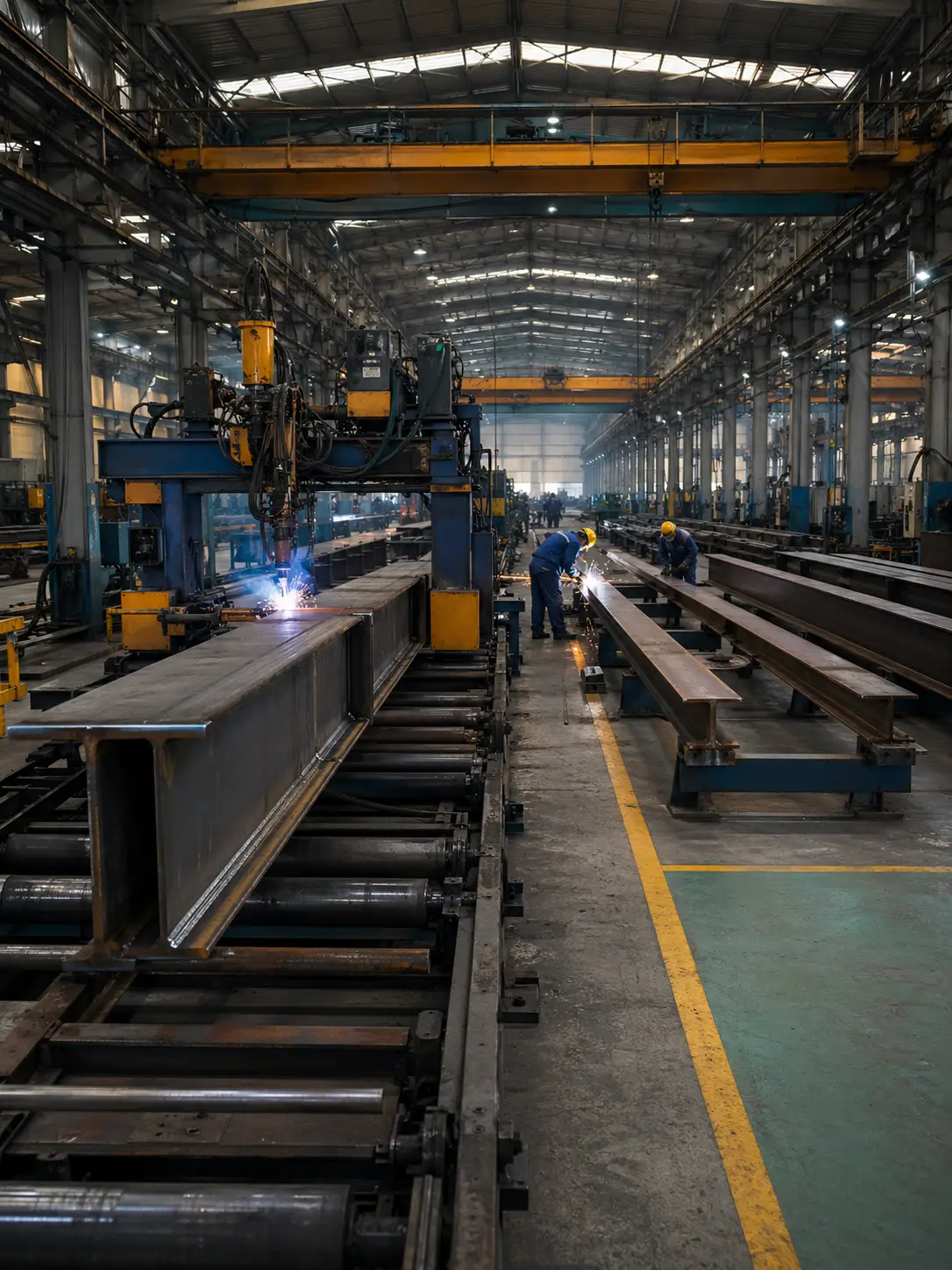
Matching a repair to the original system matters more than reaching for whatever primer is on the shelf. The building’s original project documents and coating specification are the right reference before repainting or ordering replacement panels. As a steel structure manufacturer, Qingdao KAFA Fabrication Co., Ltd. fabricates structural members and panels under documented quality procedures, with dedicated lines for H-beam, box sections, C/Z purlins, and profile steel plate. For the buildings it produces, those fabrication records and the original coating specification are the documents a repair should be verified against.
Fasteners, sealants, and joints
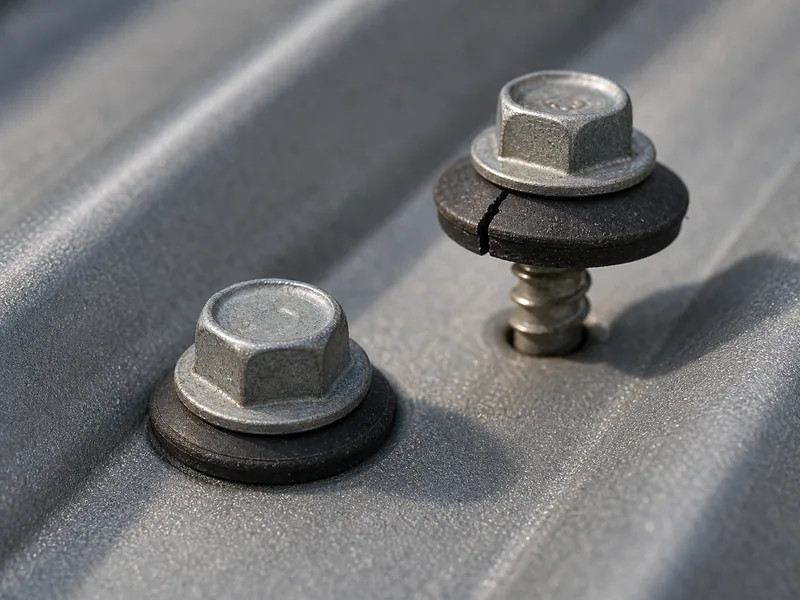
Fasteners back out on their own because steel expands and contracts with temperature, and that daily cycling slowly loosens screws and ages the rubber washers beneath them. Walk the wall and roof lines and look for screws that have lifted, washers that are cracked or missing, and any rust streaking that marks a leak path. Tighten what is loose, but stop short of overtightening, which dimples the panel and breaks the very seal the washer was there to make. When a hole has wallowed out and a screw no longer bites, an oversize-diameter fastener is the correct fix; forcing the old size only widens the hole further. Where fasteners are replaced near the base or in wet zones, use manufacturer-approved fasteners with coatings that match the panel system. Do not mix dissimilar metals without checking compatibility, because the wrong pairing can set up galvanic corrosion in a damp joint. Sealed laps and joints also have a life shorter than the steel. Butyl, silicone, and polyurethane sealants all harden and pull away over time, and a failed bead should be cut out and replaced rather than smeared over with a fresh layer.
Foundation, drainage, and interior moisture
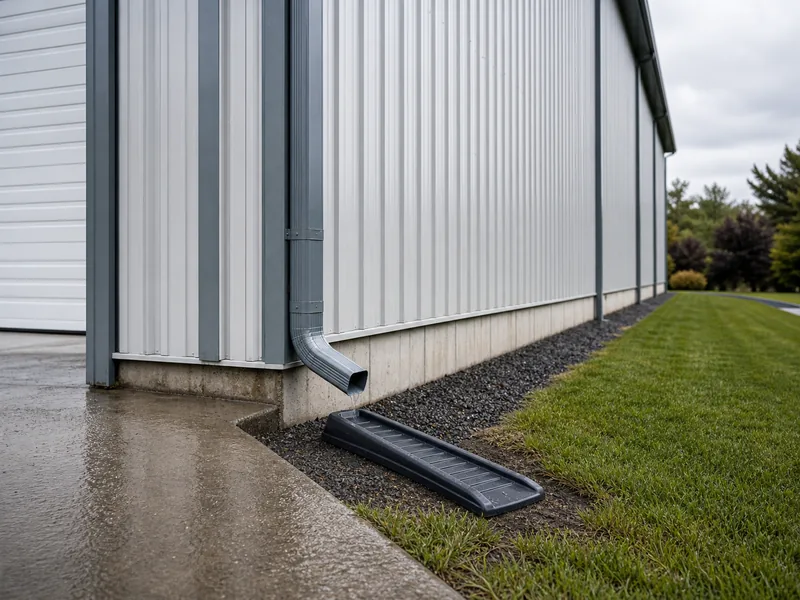
Water management around the base prevents more corrosion than any single panel repair. Grading should carry water away from the foundation, and downspouts should discharge well clear of the slab so runoff never pools against the wall base where corrosion begins. Anchor bolts and column base plates sit right in that splash zone, so they are useful to scrape and checking whenever the wall base is inspected. Light surface staining there may be only a coating-maintenance issue, but pitting, flaking, corroded bolts, or visible section loss is a structural flag, not a touch-up job. Inside, the quieter threat is condensation: gaps in insulation, vapor-barrier damage, or weak ventilation let warm, moist air reach cold steel and drip onto framing. Insulation and airflow belong in the same routine as the panels. Gutters and downspouts only protect the building when they are clear, which makes seasonal debris removal a small task with an outsized payoff.
DIY checks versus a professional inspection
Most routine steel building maintenance is within reach of an owner or in-house facility team, as long as it stays at ground level. Visual inspection from the ground, washing, clearing gutters within safe reach, sealant touch-up, and minor coating repair call for diligence more than specialized skill. Roof access is a different matter, because walking panels, working at height, and tightening roof fasteners carry fall-protection and safety requirements that put them in the hands of trained personnel rather than a casual weekend check. A professional inspection also earns its cost when a walkthrough surfaces something it cannot resolve, such as frame deflection, widespread corrosion, recurring leaks with no traceable source, or storm damage to structural members. The practical dividing line is that ground-level cosmetic and envelope upkeep is do-it-yourself, while roof work, anything touching the load path, and post-storm structural concerns go to a contractor or engineer.
A simple maintenance log turns these scattered checks into a record a warranty claim or an incoming facility manager can actually use. Each entry is useful to capture the same way every time:
- The date and what triggered the check, whether spring, fall, or a specific storm
- A photo of the same wall base and the same roof penetrations, shot from the same spot each season
- Fastener and sealant findings, with the location noted
- Any coating damage or rust, and whether it was touched up
- The person responsible, and whether each item is open or closed
Manufacturers often ask for an inspection history before honoring a coating or structural warranty, and dated photos of the same points make creeping corrosion obvious long before it becomes a repair.
Building a maintenance routine that holds up
A workable steel building maintenance plan is mostly cadence plus attention to the three things that decide how well the structure ages: coating integrity, fastener and seal integrity, and water management. Set the inspection rhythm by exposure first: twice a year for most buildings, and more often for coastal or humid sites. Then walk the same route each time, covering the base of the walls, the roof penetrations, and the drainage, because those are where small lapses compound into corrosion. Before any repaint or panel replacement, check the work against the building’s original coating and fastener specifications so the repair matches the system instead of fighting it. Schedule the next inspection while the last one is still fresh, photograph the same failure points season over season, and escalate frame deflection, spreading corrosion, or an untraceable leak to a qualified inspector instead of watching it for another year.
Frequently asked questions
How often should you inspect a steel building?
Twice a year is the standard most owners follow, timed for spring and fall. Coastal, humid, or industrial sites usually shift to quarterly checks, and any major storm justifies an extra inspection outside that schedule.
Do steel buildings rust?
Steel buildings can rust, but only where the protective coating has been breached and bare metal meets moisture. Intact factory coatings resist corrosion for years, so rust tends to appear at scratches, cut edges, the bottom of wall panels, and around fasteners, which is exactly why those spots lead every inspection.
How long does a steel building last with proper maintenance?
A well-maintained steel building lasts for decades, with the exact service life depending on coating quality, climate, and how consistently it is inspected. Neglect shortens that span quickly, because unaddressed corrosion and leaks compound year over year.
Can you do metal building maintenance yourself?
Most routine metal building maintenance is a do-it-yourself task at ground level: inspecting, washing, clearing reachable gutters, and touching up coatings take diligence more than special equipment. Roof access, work at height, structural concerns, widespread corrosion, or a leak you cannot trace belong with a qualified professional.
How do you prevent rust on metal building panels?
Preventing rust depends on keeping the coating intact and water moving away from the steel. Touch up scratches promptly, rinse the panels periodically, replace failed sealant, and keep the base of the walls clear of splashing mud and standing water.