




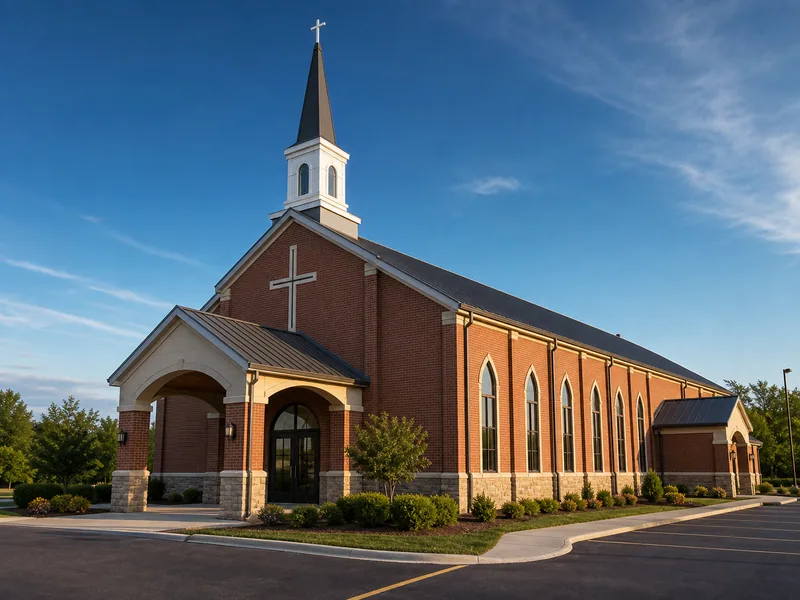
Building a church building is a sequence of decisions, not a single construction event. The order in which a congregation locks those decisions, from needs and budget through site, design, and material, usually matters more to the final result than any one of them on its own. This guide walks pastors and building committees through that sequence, with particular attention to where steel construction changes the timeline and the layout options. It does not attempt a full cost breakdown, and it stops short of the structural load calculations that belong to a licensed engineer.
For congregations comparing shells, steel church buildings can support large gathering spaces while keeping future expansion easier to plan.
Start With Your Congregation’s Needs and a Building Committee
A church building project succeeds or stalls on how clearly the congregation defines what it actually needs before any drawing is commissioned. A common and avoidable cause of mid-project budget shock is scope creep: the list of spaces keeps growing because no one separated requirements from wishes at the start.
Begin by mapping current ministry against where the congregation expects to be in five to ten years, then sort the spaces a new building has to contain:
- A main sanctuary or worship hall
- Education and classroom space
- Offices and administrative areas
- A fellowship hall or multipurpose room
- Restrooms sized for peak attendance
- Parking and site circulation
Form a building committee before, not after, you talk to architects. A committee drawn from active, engaged members across different ministries catches conflicts, the youth program and the parking plan for example, while they are still cheap to fix. Give that committee a single job first: decide which spaces are non-negotiable and which can wait for a later phase. Everything downstream, from budget to foundation size, depends on that list.
Set the Budget and Funding Framework Before Design
Budget and funding belong before design, because a design drawn without a financial ceiling almost always has to be redrawn. A committee that hands an architect a clear envelope gets a buildable plan; one that asks “what would it cost to build this?” gets a wish list it cannot fund.
Work the funding side and the cost side together. On the funding side, most congregations combine cash on hand, member contributions, and a capital campaign that pays in over time; lenders and church-finance advisors can confirm what the congregation can responsibly carry. On the cost side, think in three categories rather than one number: hard costs (the structure and site work), soft costs (design, engineering, permits), and furnishings and equipment. Land typically absorbs a meaningful share of the total budget, often in the range of ten to twenty percent depending on location, and a contingency reserve should be set aside because renovation and site surprises are normal rather than exceptional. The reserve percentage depends on whether you are building new, adding on, or renovating.
Because the line-item numbers move with region, size, and finish level, this guide keeps cost conditional rather than quoting fixed figures. For a structured breakdown of those drivers, see the dedicated guide on the cost to build a church.
Choose the Site and Size the Church Building
Site selection and building size are a single linked decision, because the land has to hold not just the sanctuary but parking, setbacks, and room to expand. A parcel that looks generous on paper can be unbuildable once zoning, drainage, and utility access are accounted for.
Evaluate candidate sites against the factors that actually decide feasibility:
- Zoning and permitted use for a place of worship
- Visibility and road access for weekly attendance
- Parking capacity, which is often tied to seating by local code
- Available utilities, and the cost of bringing them to the site
- Room to add a phase later without buying more land
Sizing follows from seating capacity, not the other way around. Rather than a fixed square-foot-per-person figure, plan the sanctuary around how people will be seated, since fixed pews and flexible chairs change the number significantly. Then add circulation, a lobby or narthex, and the support spaces from your needs list. Land area scales the same way: the more the congregation grows and the more parking local rules require, the more acreage the project consumes. For help translating capacity into footprint, the overview of metal building sizes shows how common spans correspond to usable floor area.
Design the Sanctuary and Supporting Spaces
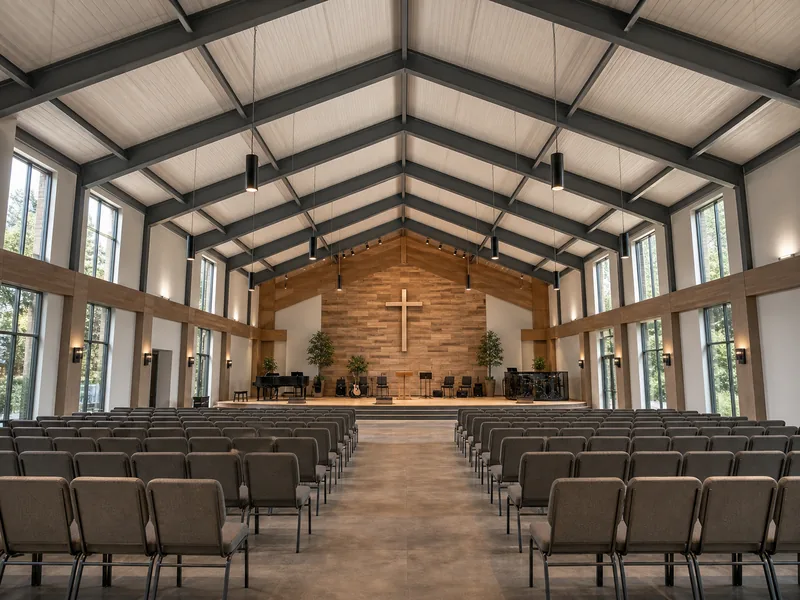
The sanctuary drives a church building’s design, and the supporting spaces are organized around how worshippers move into and out of it. Good church design is less about a signature exterior than about flow: where people gather before a service, how quickly the room fills and empties, and how sound and light behave once everyone is seated.
A column-free worship hall is not only an aesthetic preference. Columns placed in the middle of a wide worship hall block sightlines to the platform and complicate sound reflection, which is why clear-span framing is so common for sanctuaries. The same principle carries over from other large-assembly spaces, as the guide to clear span buildings describes. Design the supporting spaces, the classrooms, offices, and fellowship areas, around that clear core so they can be reconfigured later without touching the structure.
Bring in a licensed architect and structural engineer once the space program is set, and verify the regulatory path early. Local zoning ordinances govern whether and how a place of worship can be built on the site, the International Building Code governs permits and structural safety, and accessibility requirements under the ADA shape entries, restrooms, and seating. Naming these is straightforward; satisfying them is what the design professionals are for.
Choose a Construction Material and Method: Steel, Brick, or Wood
Material choice sets a church building’s span, speed, and long-term maintenance more than its final appearance does. The persistent misconception is that steel means a building that looks like a warehouse. In practice, many congregations now choose a pre-engineered Metal Building system for the structure and finish the exterior with brick veneer, stone, stucco, or a steeple so it reads as a traditional church.
The trade-offs sort out along a few dimensions:
| Dimension | Steel (pre-engineered) | Brick / masonry | Wood frame |
|---|---|---|---|
| Clear span | Long spans without interior columns | Limited; needs supporting walls or piers | Moderate; long spans need engineered members |
| Construction speed | Fast after the foundation is ready; often weeks for framing, depending on size and complexity | Slow; labor-intensive | Moderate |
| Exterior appearance | Any veneer or finish over the frame | Traditional masonry look | Traditional, varies with cladding |
| Maintenance | Low; coatings matter in harsh climates | Low but mortar repointing over time | Higher; vulnerable to moisture and pests |
| Best when | Large, fast, flexible, multipurpose | Strong traditional aesthetic, smaller spans | Smaller buildings, regional preference |
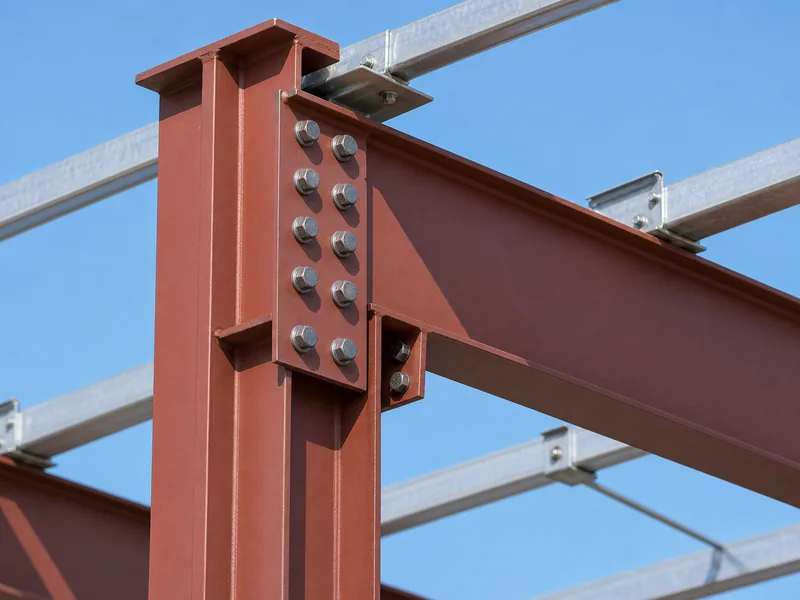
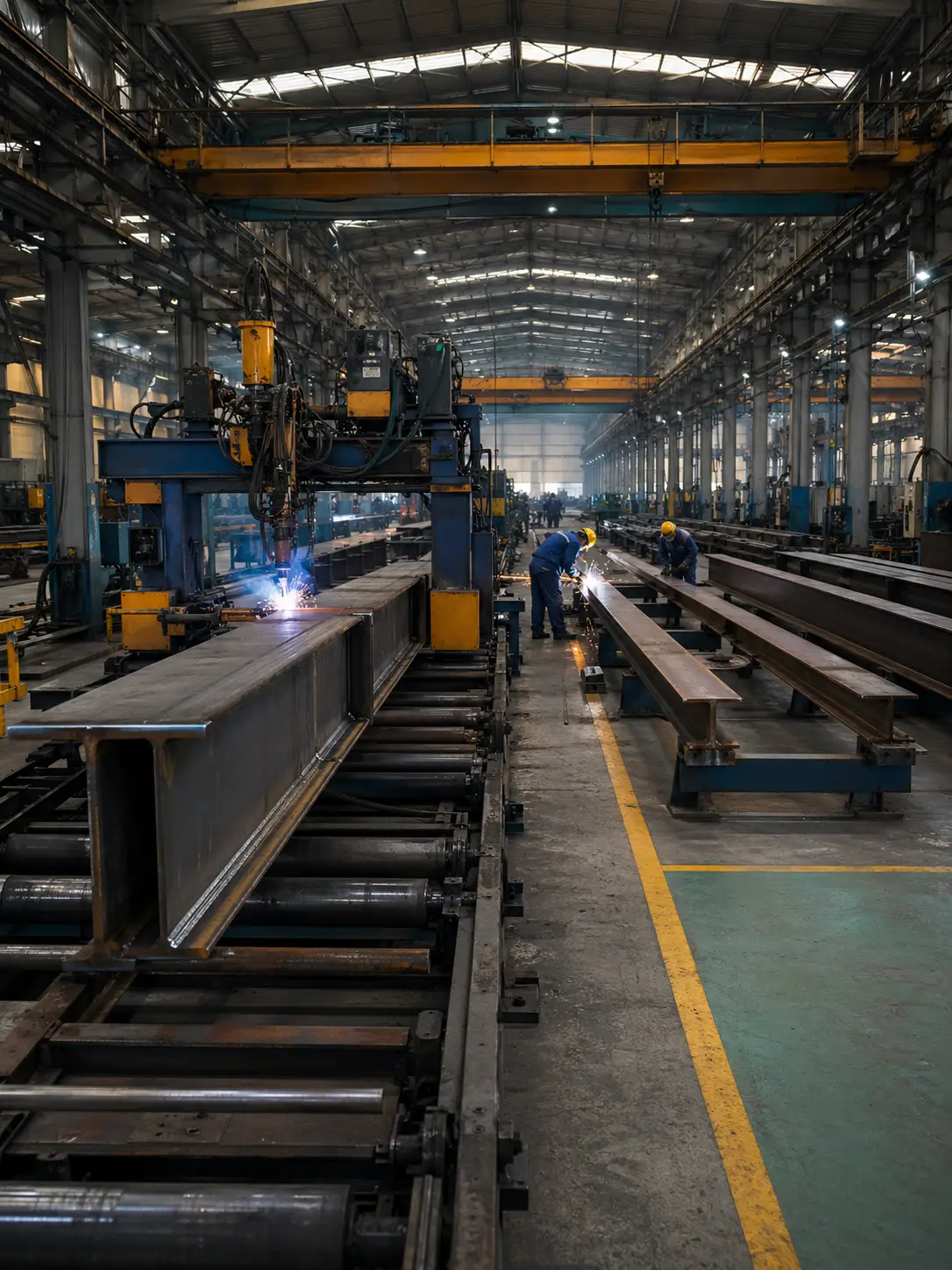
These are planning-level comparisons, not a substitute for a local review of building code, labor availability, and long-term maintenance. Steel has a clear role when a congregation needs a large column-free room, a fast schedule, or a layout that will be reconfigured over time. As a steel structure manufacturer with qualifications for light and heavy steel structure design, fabrication, and installation, KAFA produces the H-beam, box-section, and C/Z-purlin framing those spans rely on, on dedicated lines at its 20,000 m² Qingdao facility under documented quality procedures. Brick and wood remain reasonable choices for smaller buildings or where a specific traditional look outweighs span and speed.
Sequence the Construction From Foundation to Finish
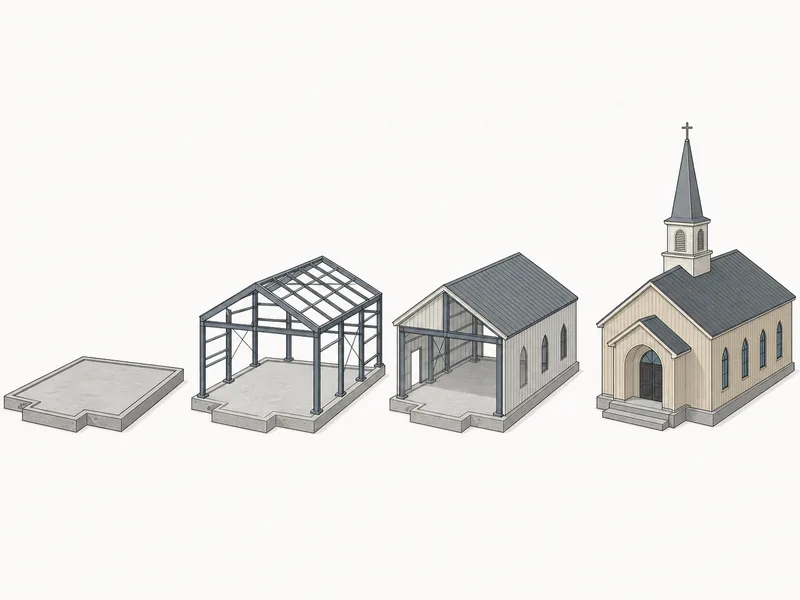
Construction of a steel church building runs on a set of hold points, where dependent work cannot start until the prior step is approved, even though some site and fabrication tasks overlap. Pouring a slab before the drawings are final, for instance, is where avoidable cost enters the project.
- Finalize permit drawings. Approved structural and site drawings are the input to everything that follows, and fabrication is cut from them.
- Site preparation and foundation. Clear and grade the site, then pour a level concrete slab with anchor bolts set to the approved pattern.
- Fabrication. Steel members are cut and welded off-site to the approved specifications while site work proceeds in parallel.
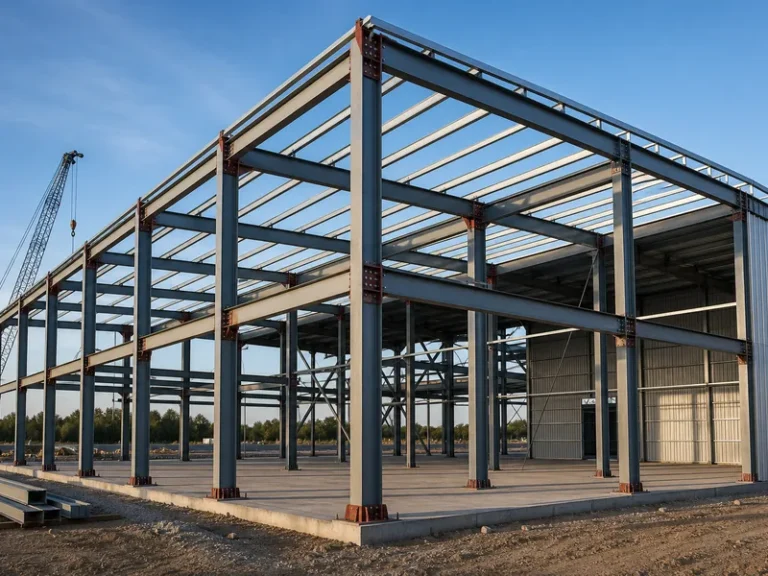
- Erection and framing. Primary columns and beams go up first, followed by secondary framing such as purlins and girts.
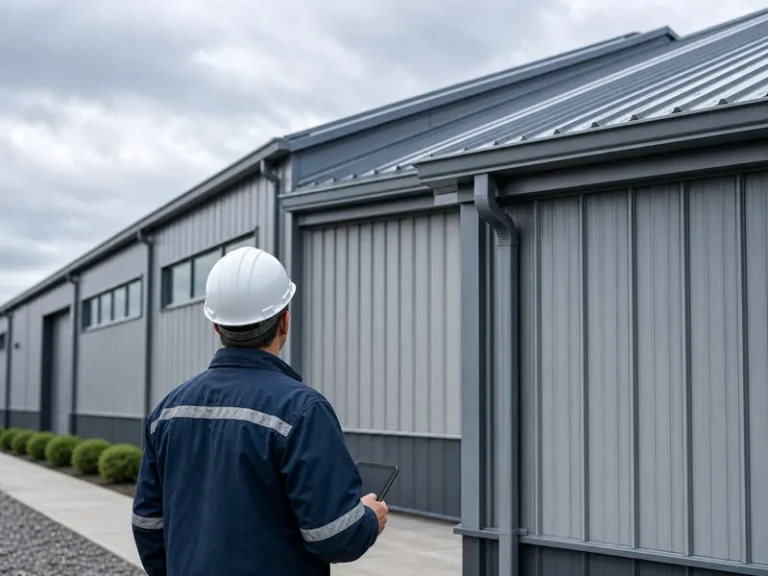
- Sheeting. Wall and roof panels are installed and insulated once the frame is complete.
- Finishing. Doors, windows, interior build-out, MEP rough-in, final connections, inspections, and occupancy closeout complete the project.
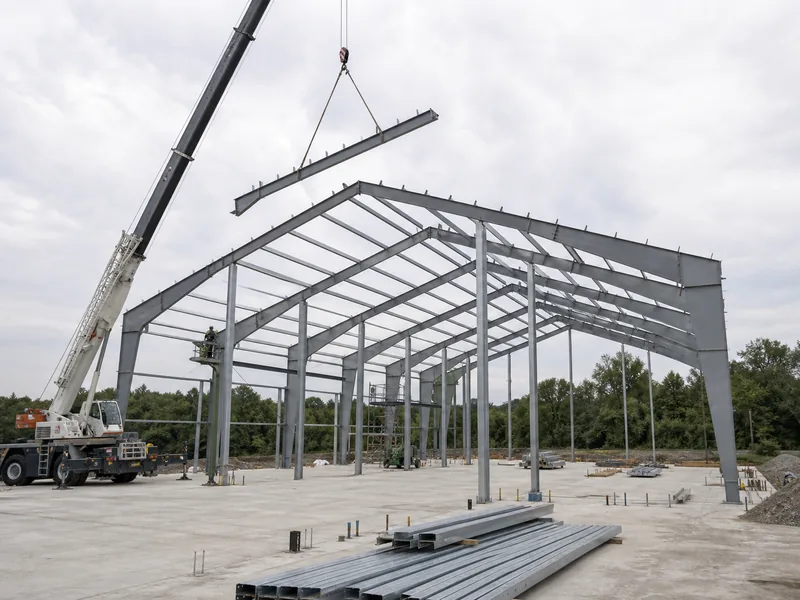
Two phases are important to watch closely. Foundation leveling and anchor-bolt placement come first, because steel columns are fabricated to fixed dimensions, and a slab that is out of level or bolts set off-pattern become field rework that off-site fabrication was meant to avoid. The second is sheeting in humid or coastal locations, where fasteners and panel seams are common corrosion risk points and the place to specify compatible fasteners, sealants, and upgraded coatings. Once the foundation is ready, a steel frame is often erected in a matter of weeks, though the full project from approval to occupancy generally runs months and depends on size, complexity, and weather. The general mechanics of erecting the frame are covered in the guide on how to build a steel building.
Before fabrication begins, a building committee can cut later rework by confirming a short list:
- The required spaces and seating capacity are locked
- The budget envelope and contingency are set
- Site control, zoning, and permitted use are approved
- Permit drawings are final and stamped
- Foundation layout and the anchor-bolt pattern are coordinated with the steel supplier
- Exterior finish and insulation are decided before sheeting starts
Lock the Decisions That Are Hard to Reverse
The most expensive mistakes in church construction are made on paper, before the first steel column arrives. Because a steel church building is fabricated off-site to approved drawings, the needs list, budget ceiling, site constraints, and code path all have to be settled before fabrication starts; changing the span or the footprint after that means re-cutting steel, not just redrawing a plan.
A workable order of confirmation is to lock the required spaces and seating capacity first, then the budget envelope, then site and zoning approval, and only then commission the design and structural engineering. That sequence is what keeps a clear-span sanctuary from being value-engineered into columns halfway through. Verifying every dimension against the approved drawings before any steel is cut is what prevents most field rework, whatever the supplier, and as a steel structure manufacturer KAFA fabricates the H-beam and purlin framing to those approved church drawings.
Frequently Asked Questions
How much does it cost to build a church building?
Church building costs vary widely with region, size, finish level, and whether land is included, so any single figure is only a starting point. Commercial construction is commonly cited in a per-square-foot range that shifts by location, and the structure is only one of three cost categories alongside soft costs and furnishings. The budget section above outlines those drivers and points to a dedicated cost breakdown.
How long does it take to build a church building?
A church building’s construction timeline depends mostly on size, complexity, and weather, with steel framing typically erected in weeks once the foundation is ready. The full path from approved drawings to occupancy generally runs months rather than weeks, and the planning and fundraising stages before construction often take far longer than the build itself.
How big should a church building be for the congregation?
Church building size is driven by seating capacity, circulation, and support spaces rather than a fixed square-foot-per-person rule. Plan the sanctuary around how worshippers will be seated, then add a lobby, restrooms, education, and fellowship space, and confirm parking against local code before settling on a footprint.
Is steel a good choice for a church building?
Steel is well suited to church buildings that need column-free worship space, fast construction, or a flexible multipurpose layout. A pre-engineered steel frame can carry a traditional exterior of brick, stone, or stucco, so choosing steel does not force a congregation to give up the look of a conventional church.
Should we renovate an existing building or build a new church?
Renovating an existing building can be cheaper than building new, but only when the structure, location, and code path already fit the congregation’s needs. When seating capacity, parking, or accessibility fall short, the cost of forcing a renovation to comply can close the gap with new construction, so the choice should be checked against lifecycle cost, code, parking, and accessibility constraints rather than assumed.