




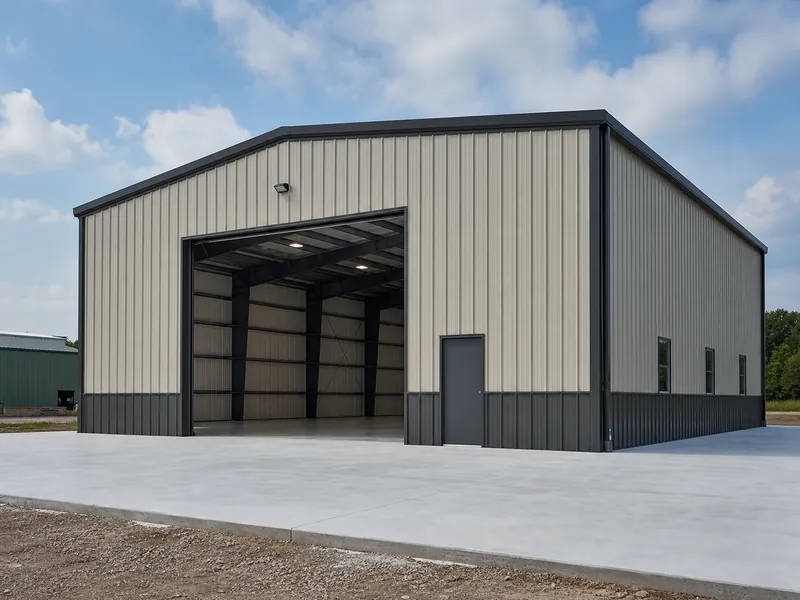
Budgeting for a 40×50 metal building starts with one honest number: a 2,000-square-foot steel shell runs anywhere from about $28,000 as a bare kit to $120,000 fully finished, and that gap is not markup. It is how much of the building someone else has already done for you. A 40×50 sits in the mid-size band of metal steel buildings, big enough for a real workshop or a two-bay warehouse, yet small enough that a single price tag rarely tells the whole story. The sections below break that range into scopes you can actually quote against.
What a 40×50 Steel Building Actually Costs
The cleanest way to read 40×50 pricing is by how complete the building is when the crew leaves. The same 2,000 square feet can be a flat-packed kit on a truck or a finished, insulated, powered space, and the price tracks that finish level far more than it tracks the steel itself.
| Scope | Per sq ft | 40×50 total (2,000 sq ft) | What it covers |
|---|---|---|---|
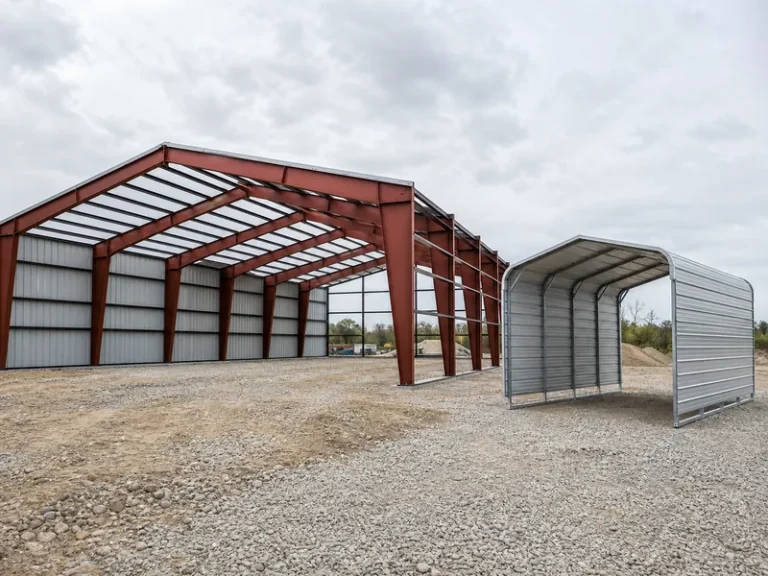
| Kit only (steel shell) | $14–20 | $28,000–40,000 | Rigid frame, purlins, girts, roof and wall sheeting, fasteners, drawings |
| Shell erected, no slab | $18–28 | $36,000–56,000 | Kit plus erection labor |
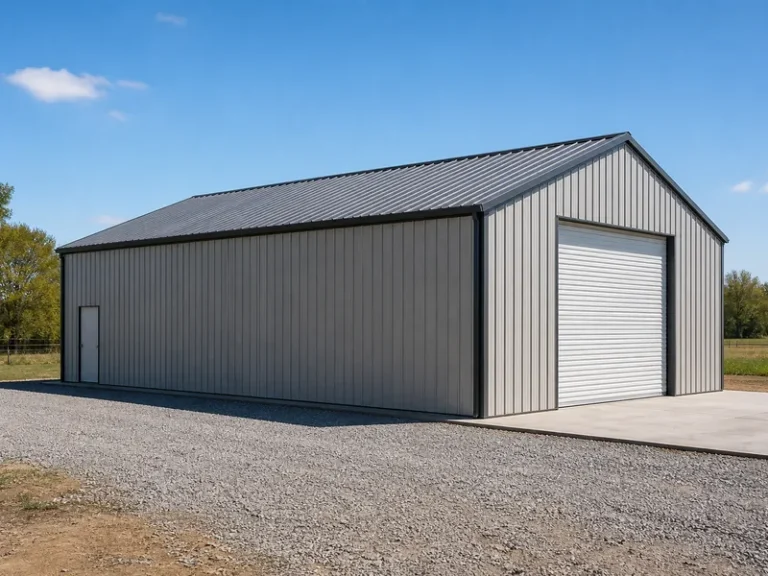
| Turnkey, basic use | $30–45 | $60,000–90,000 | Adds slab, one overhead door, basic power |
| Finished / commercial | $45–60 | $90,000–120,000 | Adds insulation, liner panels, lighting, HVAC |
These ranges reflect recent material and labor costs and move with the steel market, so treat them as planning bands rather than fixed quotes. A bare-bones agricultural kit with no accessories can fall below the kit range; a heavily engineered or fully conditioned build can sit above the finished range.
What a kit price includes — and what it doesn’t.
- *Included:* primary rigid frame, purlins and girts, roof and wall sheeting, fasteners, anchor bolts, and stamped drawings.
- *Excluded:* concrete slab, foundation, delivery, erection labor, insulation, doors and windows beyond framed openings, permits, and interior build-out.
- *Pushes the number up:* high wind, snow, or seismic loads, taller eave heights, a reinforced slab, wide overhead doors, and insulation to a conditioned or commercial standard.
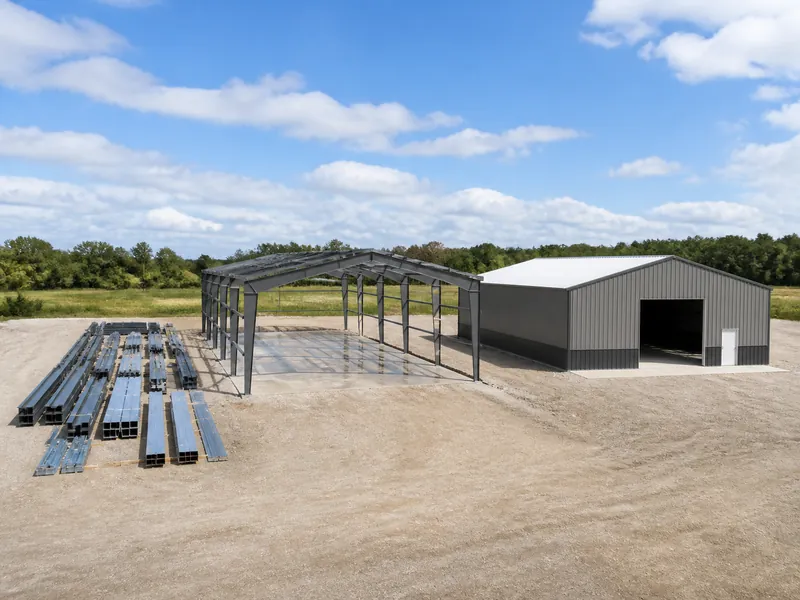
For comparison against neighboring footprints, a narrower 30×50 metal building trims roughly a quarter of the floor and steel, while a 40×80 metal building nearly doubles both. Cost does not scale in a perfectly straight line, but the per-square-foot bands above hold reasonably well across the 40-foot-wide family.
Why the Price You See Online Is Usually Just the Kit
Most advertised 40×50 prices, the $28,000 to $40,000 figures that pull you in, cover the steel kit alone, with nothing poured or erected. That number is real, but it is the start of the budget, not the end of it. By the time a kit is delivered, set on a slab, erected, and closed in, the all-in figure usually lands 1.5 to 2.5 times the kit price.
The confusion is built into how the industry quotes. A manufacturer sells you a shell; a concrete contractor pours the slab; a crew erects the frame; an electrician runs power. Each is a separate line, and a kit page has no reason to show the other three. Reading a kit price as a turnkey price is an expensive trap for first-time buyers, because it sets an anchor $30,000 to $60,000 below what the finished building costs.
Turnkey pricing folds those trades back together. When a quote says $30 to $45 per square foot installed, it already carries the slab, the erection labor, and a basic door and power allowance. The scope is wider and the number is higher, but the two are not in conflict. They answer different questions.
What Drives a 40×50 Building’s Cost Up or Down
Five variables move a 40×50 quote more than any others: eave height, steel gauge, local wind and snow loads, site location, and how much you customize. Each one has a clear mechanism, and each gives you something specific to confirm before you trust an estimate.
- Eave height. Taller walls add steel to every column and more sheeting to every bay. Going from a 12-foot to a 16-foot eave is a real cost step, not a rounding error, so price the height you need for door clearance and storage, not the tallest option offered.
- Steel gauge and frame design. At 40 feet, the frame is almost always a single clear-span rigid frame with no interior columns. That width still needs real engineering, yet a column-free design beats interior posts on usable floor. Heavier gauge and tighter bay spacing add steel weight, which is what you are really paying for.
- Wind, snow, and seismic loads. In high-snow or coastal-wind regions, the engineer sizes heavier frames and closer purlin spacing, and that steel shows up in the quote before any finish does. Two identical-looking 40x50s can differ by thousands based on load zone alone.
- Location. Local labor rates, material freight, and permit fees vary widely by region, and erection crews price by what the local market bears.
- Customization. Extra framed openings, wide overhead doors, windows, and wainscot each add cost in predictable increments. A plain shell is cheap to quote; every opening you cut into it is not.
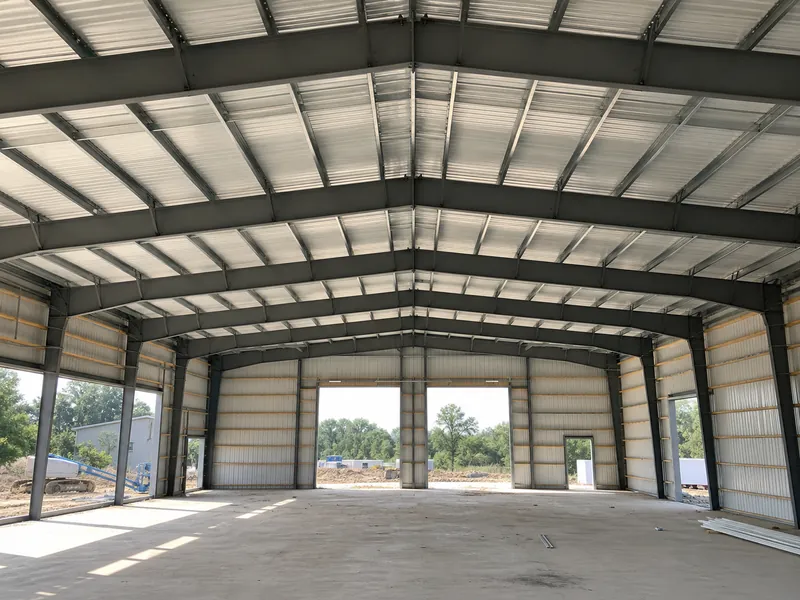
The verification habit that protects your budget: ask any estimate which load zone, eave height, and frame type it assumes. If those three are not stated, the number is a placeholder.
Line-Item Costs Beyond the Steel
Past the steel package, a usable 40×50 building adds a predictable stack of line items: slab, erection, openings, insulation, electrical, permits, and site work. These are where a kit-only budget turns into a turnkey budget, and where overruns tend to hide.
| Line item | Typical range (40×50) | What changes it |
|---|---|---|
| Concrete slab, 4-inch plain | $4–8 / sq ft → $8,000–16,000 | Standard light-use floor |
| Concrete slab, 6-inch reinforced | $10–13 / sq ft → $20,000–26,000 | Forklift or equipment traffic |
| Erection labor | $5–10 / sq ft → $10,000–20,000 | Roughly 30–50% of the kit price |
| Roll-up / sectional door | $900–5,000 each | Size and insulation level |
| Personnel door | $450–850 each | — |
| Windows | $200–700 each | — |
| Insulation, fiberglass | $0.7–2.5 / sq ft of covered area | Walls plus roof |
| Insulation, spray foam | $2.5–7 / sq ft of covered area | Higher R-value, sealed envelope |
| Electrical, basic to commercial | $2–6 / sq ft, or $8,000–20,000 commercial | Load and fixture count |
| Permits and engineering | $550–2,000 typical, up to $7,500+ | Jurisdiction and size |
| Site prep and grading | $3,000–20,000 | Clearing, grading, drainage |
| Delivery | 4–7% of the package price | Distance from the plant |
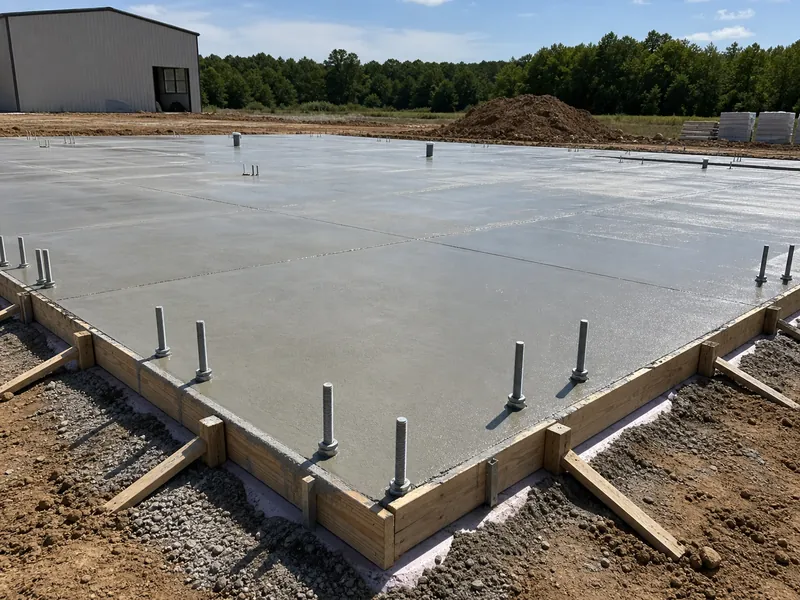
A 6-inch reinforced slab is the line that surprises people: the extra concrete and rebar push it from the plain $4–8 range toward $10–13 per square foot, so the metal building foundation under a working shop can cost more than the steel frame above it. Slab thickness follows what rolls across it, not the building size, which is why the concrete slab cost on a 30×40 build can rival a larger plain pad. Erection is the other swing item; if you are weighing a self-build against a hired crew, the labor to erect a metal building is the figure to confirm first. The pouring and wiring details themselves depend on local code and conditions, and are better confirmed with the trades than estimated from a national average.
Matching Your 40×50 Budget to Its Use
What a 40×50 should cost you depends on what you put in it, because a cold storage barn and a finished commercial space share a frame but little else. The same shell serves very different budgets once the use is fixed.
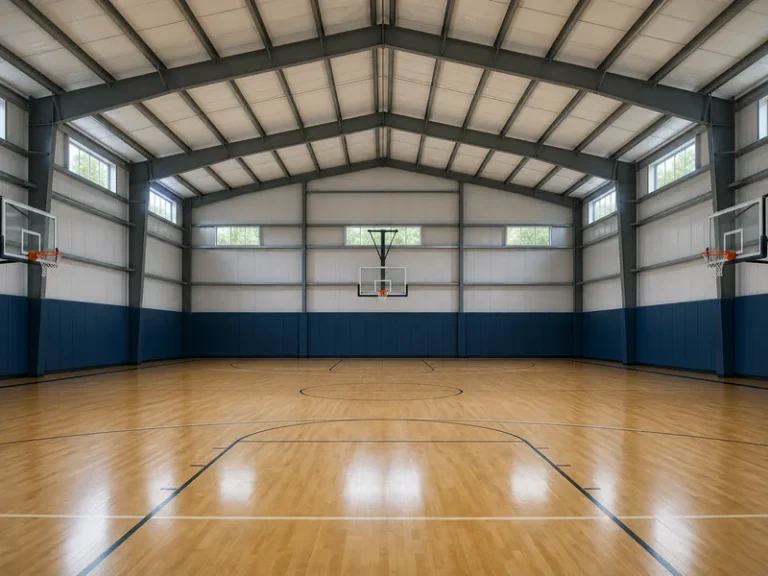
- Workshop or garage. A slab, one or two overhead doors, basic electrical, and light insulation land most personal shops in the $60,000 to $90,000 turnkey band. This is the default 40×50 build and the easiest to price.
- Warehouse or cold storage. Open storage needs the slab and the shell but little finish, so it can stay near the lower turnkey range. Add a reinforced floor for forklifts and the slab line climbs well before the rest does.
- Light commercial. A commercial metal building that serves customers needs conditioned insulation, finished walls, commercial-grade power, and code-driven exits, pushing it into the $90,000 to $120,000 finished band.
- Shop-home or barndominium. Once living space enters the picture, residential finishes apply, and the per-square-foot figure leaves the steel-building bands entirely and follows home-construction costs instead.
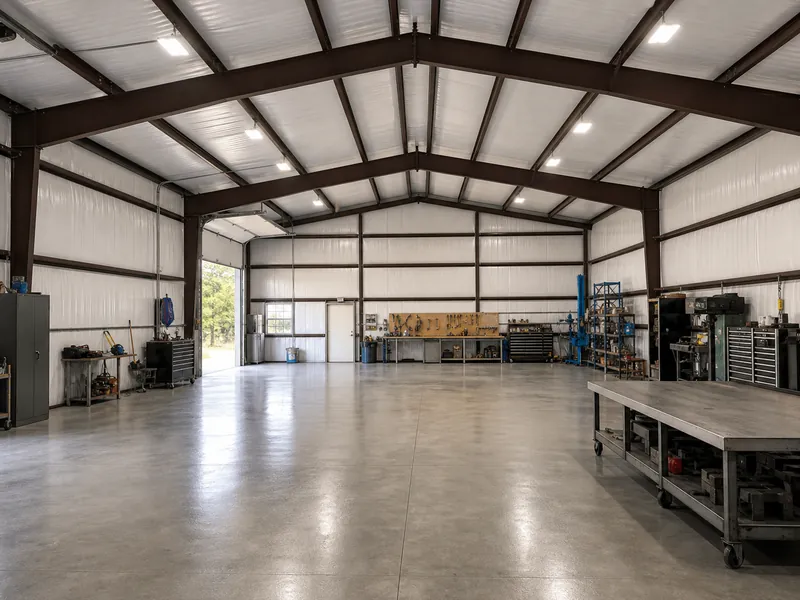
The decision order that keeps this realistic: fix the use first, then the finish level, then the size. A 40×50 sized for a use it will never grow into is a common way to overpay.
How to Get an Accurate 40×50 Quote
An accurate 40×50 quote starts before you call anyone, by deciding which scope you are actually pricing. A kit quote and a turnkey quote for the same building can differ by half, and comparing one vendor’s kit against another’s installed price is how buyers talk themselves into the wrong budget. Decide whether you want steel only, an erected shell, or a finished space, and ask every estimate to price that same scope.
Three inputs let a supplier give you a number instead of a guess: the building’s use and finish level, the local wind and snow loads, and the slab specification the floor will need. With those three settled, you can request a quote that holds every supplier to the same scope, and the numbers stop drifting.
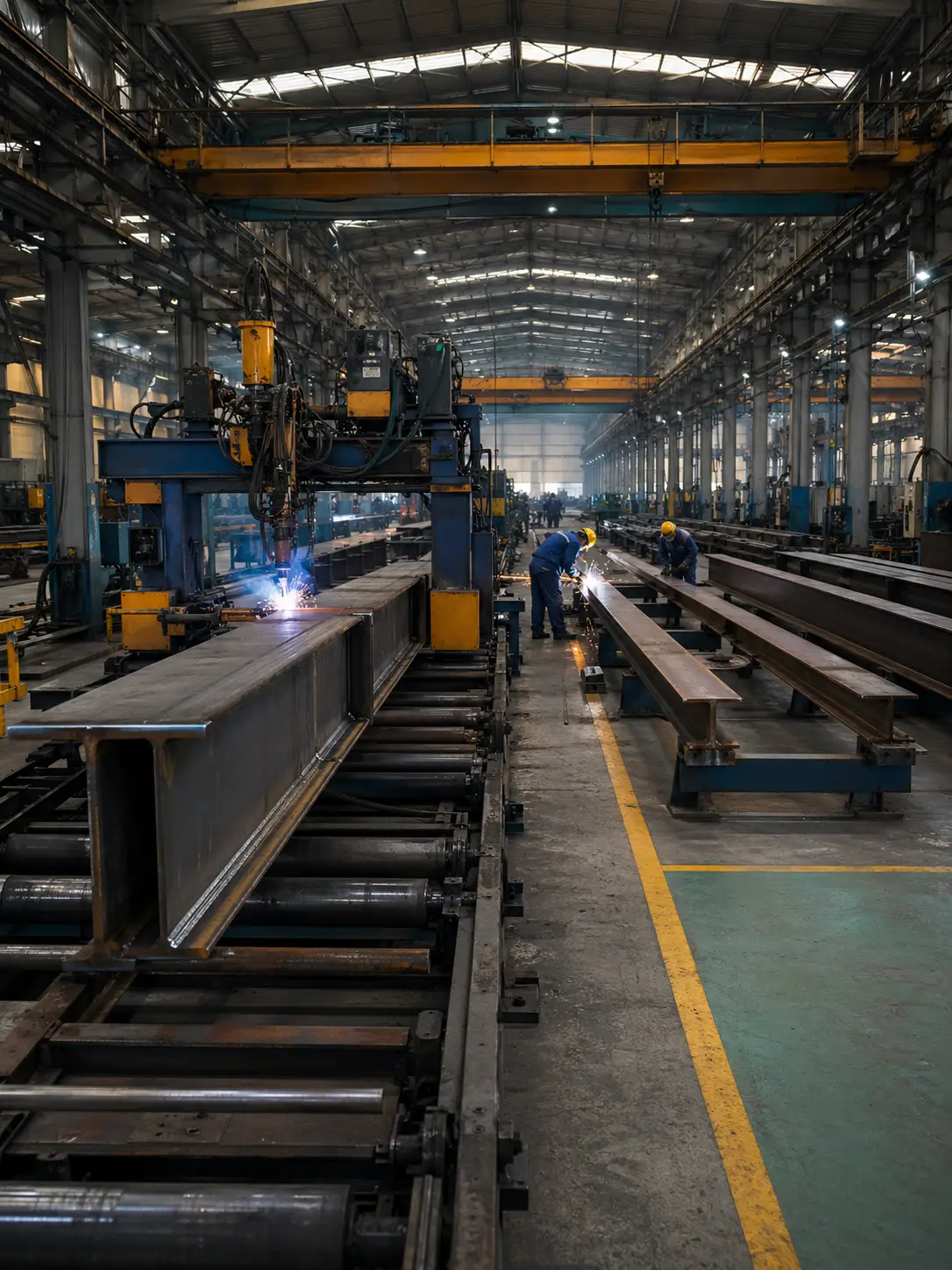
Because the frame, purlins, and cladding all come off the same production lines, a manufacturer that designs, fabricates, and installs in-house can hold one consistent scope across the whole quote. That single source spares you from reconciling a kit price from one vendor with erection labor from another. KAFA, for example, fabricates its rigid frames, purlins, and cladding at a 20,000-square-meter Qingdao plant under an ISO 9001:2015 quality system, which keeps the steel package and its stated scope aligned with what arrives on site. That single-source path is most useful precisely where 40×50 budgets go wrong: at the seam between the kit and everything that turns it into a building.
Conclusion
Three numbers decide whether a 40×50 budget holds: which scope you are pricing, how thick the slab has to be for what rolls across the floor, and how hard local wind and snow loads push the frame. Of the three, scope is the one to settle first, because a kit at $28,000–40,000 and a finished build at $90,000–120,000 are both correct answers to “what does a 40×50 cost” and the difference between them is entirely about what is included.
Once the scope is fixed, the slab specification and the load zone are the two figures most likely to move your final number, and both are answerable before you sign anything. Price the slab and the loads against your actual use, and the 40×50 estimate stops being a guess and starts being a budget you can defend.
Frequently Asked Questions
How much is a 40×50 metal building kit?
A 40×50 steel kit alone typically runs $28,000 to $40,000, or about $14 to $20 per square foot for the frame, purlins, girts, and sheeting. The kit excludes the slab, erection, insulation, and permits, and delivery adds another 4 to 7 percent of the package price. A kit makes sense when you have the crew or skill to erect it yourself; if not, budget erection as a separate line from the start.
What is the cost per square foot for a 40×50 steel building?
A 40×50 runs from about $14 per square foot as a kit to $60 per square foot fully finished, so any single per-square-foot figure is only meaningful once the scope is attached to it. Kit-only sits at $14–20, an erected shell at $18–28, a basic turnkey build at $30–45, and a finished commercial space at $45–60. Quoting one number without a scope is the fastest way to compare two buildings that aren’t actually the same.
How much does a concrete slab for a 40×50 building cost?
A plain 4-inch slab for a 40×50 runs roughly $8,000 to $16,000, while a 6-inch reinforced slab for equipment or forklift traffic climbs to about $20,000 to $26,000. Thickness is driven by the loads crossing the floor, not by the building’s footprint, so confirm the use before pricing the pad. The slab is often the largest single line after the steel itself.
Does a 40×50 building price include installation and delivery?
A kit price almost never includes installation, and usually not delivery either, while a turnkey price includes both by definition. This is the core reason advertised kit numbers look so much lower than finished-building costs. When you compare quotes, check whether each one is a kit or an installed price before you read anything into the figure.
Is a 40×50 metal building cheaper than wood or block construction?
For a clear-span, low-maintenance 2,000-square-foot building, steel is usually cost-competitive and often cheaper to span and maintain than wood or block, though the gap narrows on small, fully finished structures. Steel’s advantage grows with span and with how little interior partitioning you need, which is exactly why 40-foot-wide column-free frames favor it. The honest answer depends on finish level and local material prices, so compare complete, same-scope quotes rather than frame-only costs.
Further Reading
- U.S. Census Bureau Construction Spending — Government construction data source. Use it to monitor broader nonresidential construction spending trends; it does not replace a project-specific steel building quote.
- Metal Building Manufacturers Association — Metal building industry association. Provides background on metal building systems and the scope distinctions between frame, envelope, and finished facility.
- Metal Construction Association — Industry association for metal roof and wall systems. Useful when comparing panel, insulation, and envelope choices that move a 40×50 quote beyond the bare kit.