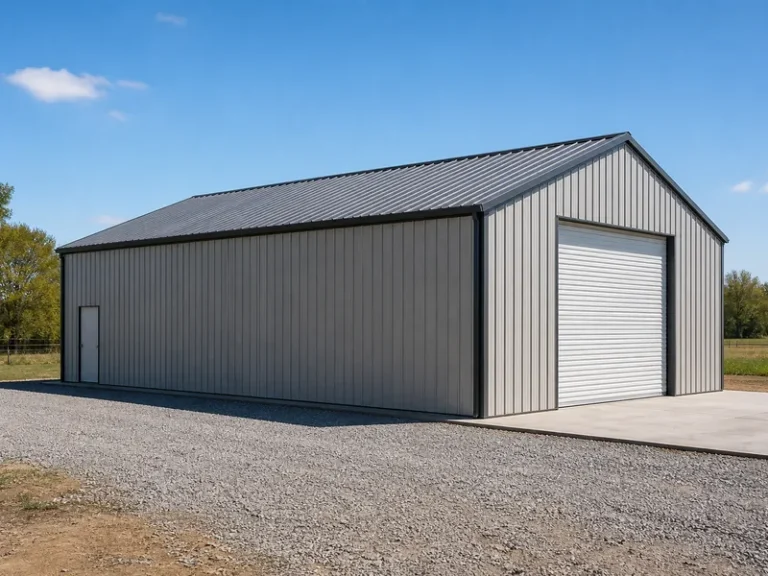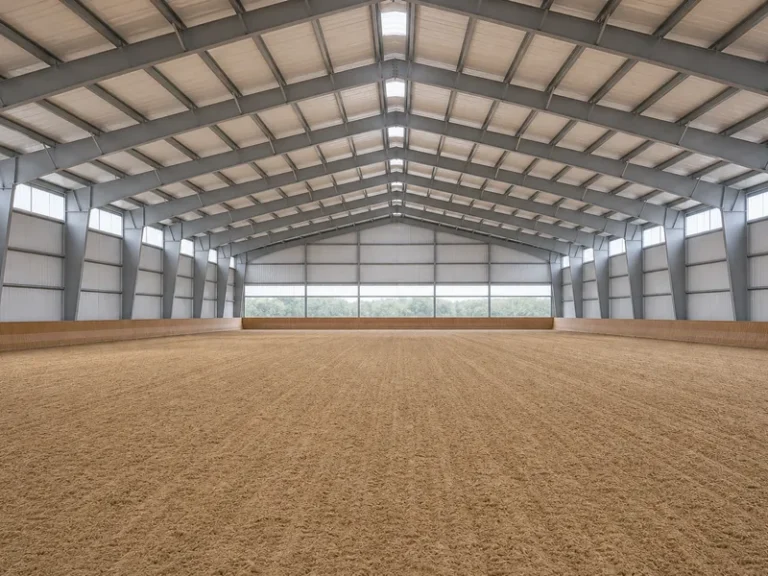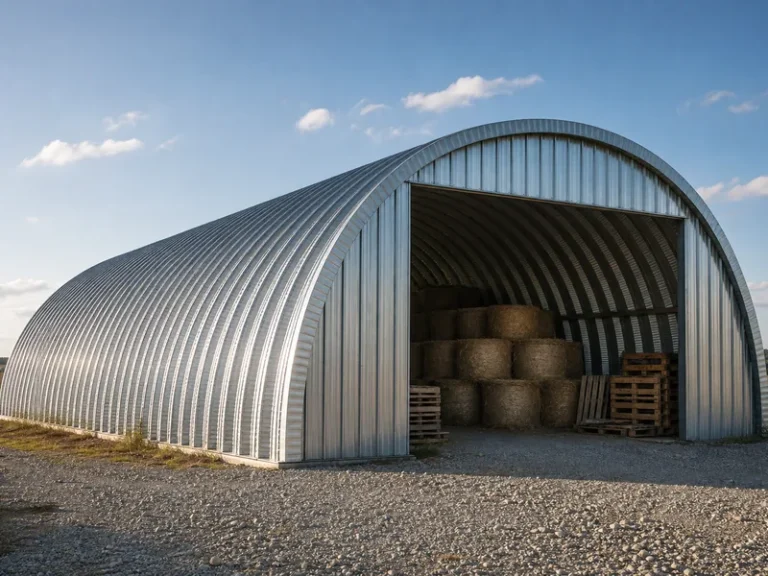





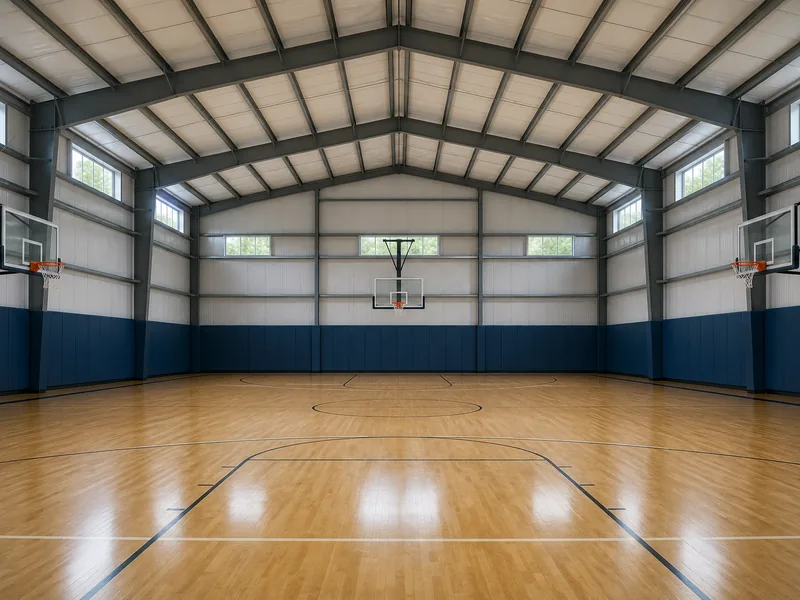
A metal building basketball gym typically runs anywhere from about $15 per square foot as a bare steel shell to $100–$300 per square foot once it becomes a fully finished gymnasium. That spread is not a contradiction. It reflects how much of the building you are actually pricing, and most cost confusion comes from comparing a shell quote against a turnkey one as if they were the same number.
A basketball gym is usually budgeted as one of the commercial metal buildings where clear height, occupancy, and interior finish drive cost.
Cost scope note: Compare only numbers with the same scope. A kit price covers the steel package, a shell price adds erection and basic enclosure, and a total project budget can add foundation, site work, utilities, permits, insulation, and interior buildout. Difficult sites or heavier design loads need separate allowances.
This article covers the cost of the building itself: the steel structure, the foundation, the court space, and the systems that make it usable. It does not cover resurfacing an existing court or pouring a backyard half-court slab, which are far cheaper and unrelated projects. A basketball gym is one of a common uses for pre fabricated metal buildings, and a pre-engineered metal building (PEMB) gives a deep pool of public pricing to work from. Still, every figure below is an industry range, not a quote.
What a Metal Building Basketball Gym Costs Per Square Foot
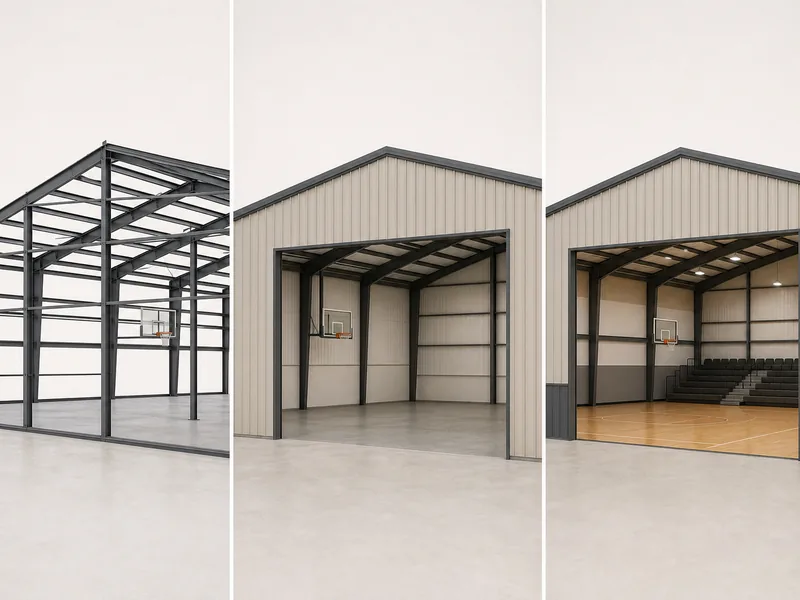
Per-square-foot pricing only makes sense once you fix the cost basis, because three very different “prices” circulate for the same building. A bare steel shell, a functional turnkey court, and a full amenity-rich gymnasium can differ by a factor of five or more on the same footprint. Settling which one you mean before reading any quote is what keeps two bids comparable.
| Cost basis | What it includes | Typical range | Best fit |
|---|---|---|---|
| Bare steel shell | Primary frame, roof, wall sheeting | ~$15–$30 / sq ft | Buyers managing their own foundation and finish-out |
| Functional turnkey court | Shell plus foundation and a basic usable court; flooring, MEP, and finish scope verified separately | Often planned around ~$60–$100 / sq ft | A usable court without full amenities |
| Full gymnasium | Adds HVAC, locker rooms, bleachers, sports flooring | ~$100–$300 / sq ft | Schools, churches, community centers |
The shell figure is the most consistent across suppliers and the often misread. It buys the frame and envelope only, and it excludes the foundation, flooring, and mechanical work that turn a metal box into a gym. Prefabricated shells are sometimes quoted higher, in the $30–$80 per square foot range, because that number can bundle more of the engineered package than a barebones frame, so read every shell quote for what it actually carries. The functional and full-gymnasium ranges are wider because they fold in choices that vary by region, finish level, and amenities, so treat the mid and upper ranges as planning brackets rather than fixed rates. Region accounts for a large part of that turnkey spread, since labor rates, snow and wind loads, and permit requirements all shift by location and feed straight into the installed price. Two otherwise identical buildings can land in different planning brackets because one carries a heavier engineered load or a costlier labor market. If your project is closer to a multi-court community facility than a single court, the broader cost of building a gymnasium is the more honest comparison point.
Cost Breakdown: Where the Budget Actually Goes
Four budget blocks account for most of a basketball gym’s cost: the steel shell, the foundation, the playing surface, and the mechanical systems. Seeing them separately explains why two gyms of identical size can land far apart, and why adding individual per-square-foot figures rarely matches a real turnkey price.
- Steel shell: roughly $15–$25 per square foot for the frame, roof, and wall sheeting on a barebones structure.
- Foundation and slab: roughly $5–$10 per square foot, heavily dependent on soil conditions and site grade.
- Sports flooring: roughly $10–$20 per square foot installed, where the gap between sealed concrete and a maple or synthetic sport floor is large.
- MEP (electrical, HVAC, plumbing): roughly $15–$30 per square foot, driven by climate control and lighting demands.
The four ranges are independent, not line items that simply sum to a total. Soft costs, design, and contingencies sit outside them, which is why a low-end shell near $20 per square foot can finish, for example, near $120 once foundation, flooring, and systems are added. The flooring and mechanical blocks are where budgets often overrun, because a regulation playing surface and code-driven climate control are easy to underestimate at the planning stage.
Flooring and MEP are the two scopes most likely to change the estimate after the shell is priced. A sealed-concrete surface and a shock-absorbing maple system sit at opposite ends of the flooring range and serve very different levels of play. Mechanical cost scales with volume rather than floor area, so the same square footage costs more to condition once clear height raises the cubic space. Design and engineering fees ride on top of all four blocks, which is why a stack of component prices rarely lands on the same total as a turnkey quote.
How Court Size and Clear Height Drive the Steel Cost
Court dimensions and ceiling height move the steel cost more than almost any cosmetic choice, because they dictate the clear span and the frame weight. A regulation full court measures 94 by 50 feet, while high-school courts often run shorter, around 84 by 50 feet, and recreational half-courts need far less. The building has to wrap that playing area with safety run-off, seating, and circulation, so an 80×100 or 100×100 footprint is common, and a usable gym rarely drops below roughly 8,000 square feet.
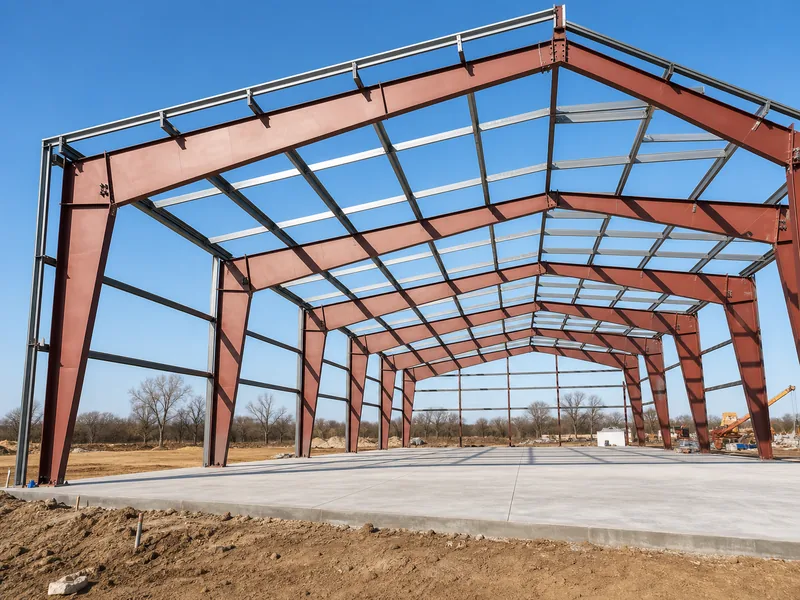
The full-versus-half decision is the biggest size lever a buyer controls. A half-court practice space fits under a much smaller footprint and a lower clear span, pulling both steel tonnage and slab area down with it. A full regulation court with seating, by contrast, commits to the wider column-free span where rigid-frame cost climbs fastest. Settling court count and competition level first lets the frame be sized once rather than redesigned after the budget is set.
Clear height is the variable buyers underestimate most. A basketball gym needs a recommended clear ceiling height of about 23 feet to clear the hoop, backboard, and ball arc. Beyond that, added clear height typically increases frame demand and can add steel tonnage, depending on span, loads, and the lateral system. Column-free space is one reason steel frames are useful for basketball gyms, and clear span buildings carry that load through heavier rigid frames rather than intermediate columns. Taller and wider column-free space pushes the rigid-frame design, and the frame is where the steel budget concentrates.
The per-square-foot ranges above translate into rough footprint budgets. The figures below are planning math derived from those ranges, not quotes, and a functional turnkey court lands between the two columns depending on the flooring, MEP, and finishes included.
| Footprint | Floor area | Shell only (~$15–$30/sq ft) | Full gymnasium (~$100–$300/sq ft) |
|---|---|---|---|
| 80 × 100 | 8,000 sq ft | ~$120,000–$240,000 | ~$800,000–$2.4M |
| 100 × 100 | 10,000 sq ft | ~$150,000–$300,000 | ~$1.0M–$3.0M |
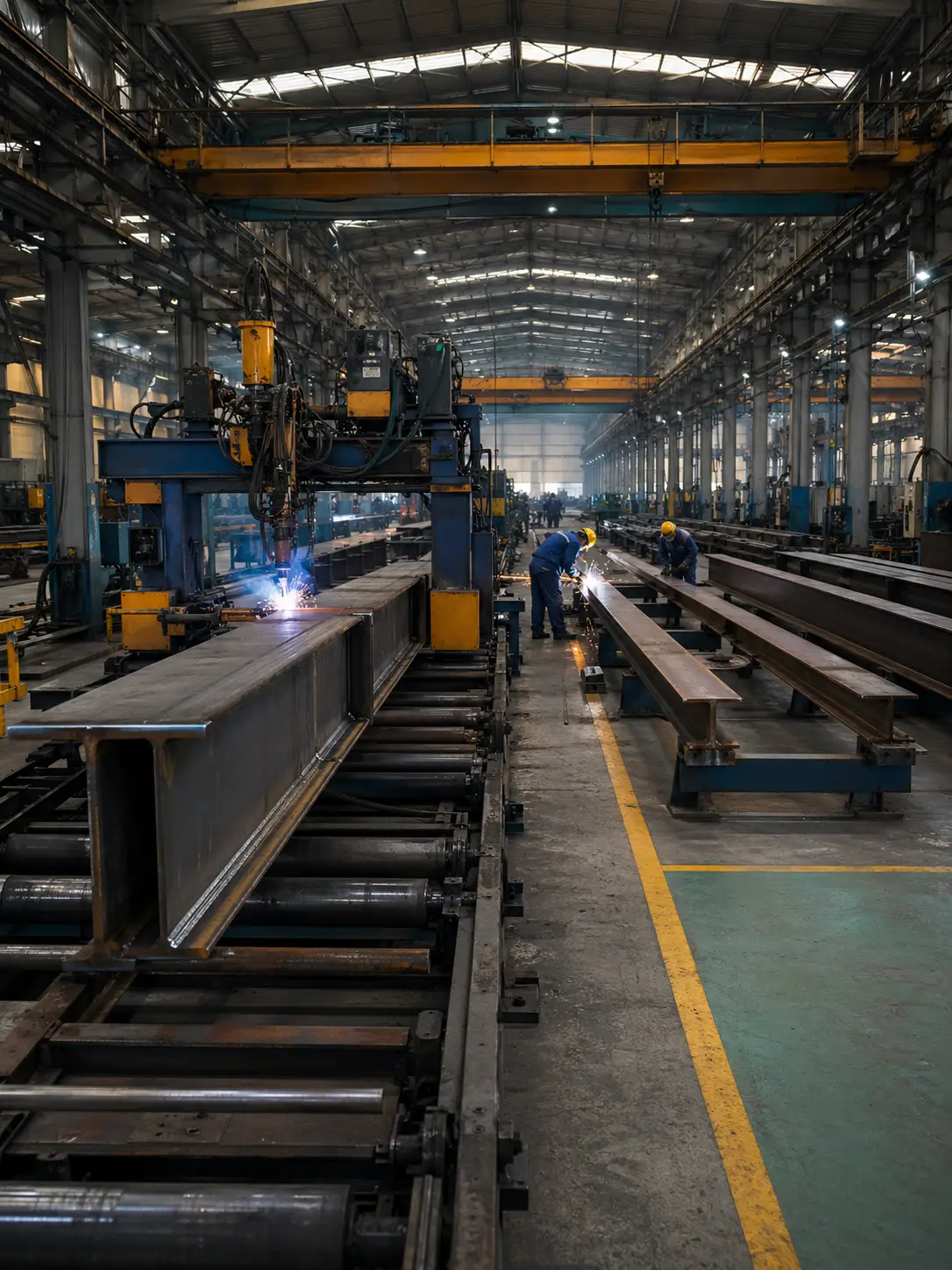
Frame efficiency is also where fabrication quality shows up. We design and produce primary frames, box sections, and C/Z purlins on dedicated lines. Matching member sizes to the actual span and snow or wind load helps reduce unnecessary steel where the loads and code requirements allow. Secondary steel, the purlins and girts that carry the sheeting, is sized to the same loads, so a frame matched to the real span keeps the whole package lean rather than padded. Whether you choose a single full court or a multi-court layout changes the span strategy, and that decision belongs in the budget conversation before any per-square-foot number gets quoted.
Site Prep, Permits, and Add-Ons Beyond the Building
Site work and permits routinely add cost that never appears on a per-square-foot building quote. A clean, level, well-drained site can keep foundation costs near the low end, while poor soil, slope, or fill can push foundation and site-work costs well above the base range before a single steel member arrives. These are real budget lines even though they sit outside the building package. Foundation cost is the line most exposed to the unknown, since soil that needs over-excavation or engineered fill can move the slab well beyond its base range before the frame is even ordered. Permitting adds time as well as fees, and a plan-review cycle that runs for weeks can reshape both the schedule and the financing behind it.
- Site preparation: clearing, grading, drainage, and access, all sensitive to soil and slope.
- Permits and inspections: local building department fees and code review, which vary widely by jurisdiction.
- HVAC and lighting: climate control and sport-grade lighting that scale with volume and clear height.
- Spectator and support spaces: bleachers, locker rooms, restrooms, and concessions.
- ADA accessibility: accessible entries, seating, and restrooms, which may be required for public-use facilities depending on jurisdiction and occupancy classification.
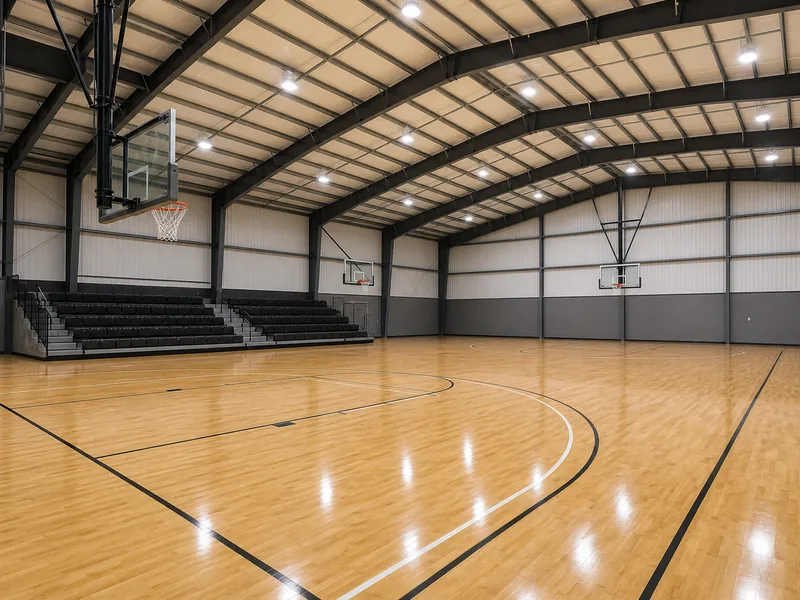
Each add-on answers a usage question, not just a cost question, so decide which ones the gym genuinely needs before pricing them. A practice barn for a single team carries a very different load of amenities than a public venue. For a larger multi-purpose facility with seating tiers and event functions, the broader indoor arena cost discussion captures the amenity-heavy end of this scale better than a single-court budget.
Where to Focus Your Basketball Gym Budget
For a metal building basketball gym, the budget narrows in a clear order: cost basis, court layout, clear height, sports floor, MEP, and site condition. Two quotes built on different bases are not comparable, and most frustration in this market traces back to that mismatch. Comparing bids built on the same basis is what turns a wide public range into a number you can plan around.
When you request a quote, ask the supplier to separate these fields so the numbers stay comparable:
- Frame and envelope: the steel shell itself.
- Foundation and slab: site-dependent, priced apart from the frame.
- Sports floor: sealed concrete, synthetic, or hardwood.
- HVAC and lighting: sized to volume and clear height.
- Restrooms and locker rooms: plumbing-driven support spaces.
- Bleachers, ADA, and site work: spectator, accessibility, and ground costs.
For an 80×100 or 100×100 clear-span court, separate the shell number from the slab, sports floor, MEP, and seating or site work before comparing suppliers. The shell figure tells you frame and envelope cost; the court-ready figure depends on clear height, the sport floor, HVAC, and any public-use amenities. As a manufacturer with design, fabrication, and installation qualifications working under documented quality procedures, we scope each project against those variables, which helps keep quotes comparable as specifications move from planning to design. Treat any early figure as a planning bracket until the court layout, clear height, and finish scope are locked.
Frequently Asked Questions
How much does a metal building basketball gym cost per square foot?
A metal building basketball gym costs roughly $15–$30 per square foot as a bare steel shell and about $100–$300 per square foot as a fully finished gymnasium, with functional turnkey courts planned in between. The right number depends entirely on which cost basis you are pricing.
What size metal building do you need for a full basketball court?
A full regulation court of 94 by 50 feet needs a building large enough to add safety run-off, seating, and circulation around the play area. Footprints such as 80×100 or 100×100 are common, and a usable single-court gym rarely drops below about 8,000 square feet.
How tall does a basketball gym need to be?
A basketball gym needs a recommended clear ceiling height of about 23 feet to clear the hoop, backboard, and ball arc. Greater clear height typically raises frame demand and can add steel tonnage, so it is both a playability requirement and a cost driver.
Why is steel commonly used for basketball gyms?
Steel is commonly used for basketball gyms because a pre-engineered frame can clear a full court without interior columns, which suits the large open span a court needs. Whether it costs less than wood or masonry depends on the span, local labor, fire and code requirements, finishes, and foundation, so steel is often competitive rather than automatically cheaper.
Does the price include sports flooring and HVAC?
Sports flooring and HVAC are included only in turnkey or full-gymnasium pricing, not in a bare shell quote. Because flooring runs roughly $10–$20 per square foot and mechanical systems roughly $15–$30 per square foot, confirming whether a quote includes them is essential before comparing prices.
Can you build a half-court gym for less?
A half-court or practice gym costs noticeably less than a full-court facility because it needs a smaller footprint, a shorter span, and less slab and roof area. The savings are largest when the lower clear span lets the frame use lighter members.