




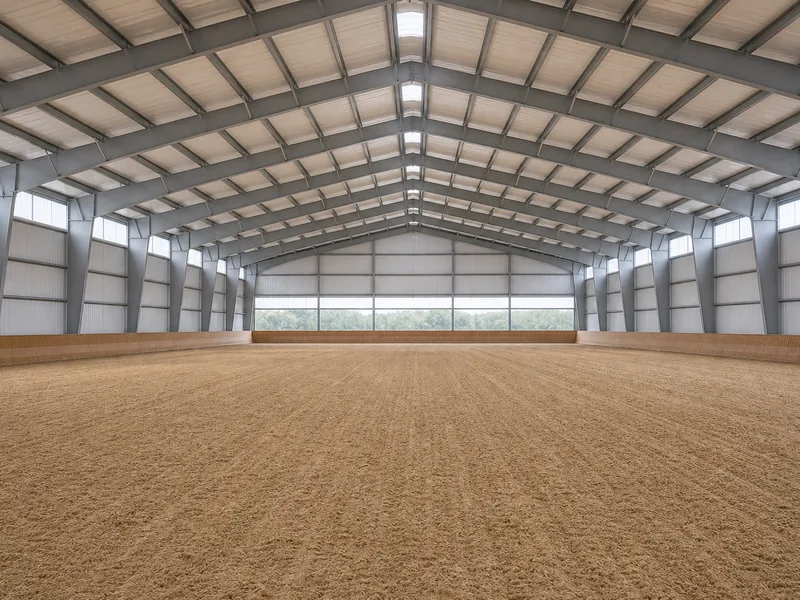
Most indoor riding arenas cost between $150,000 and $500,000 to finish, and the per-square-foot figures floating around the web run anywhere from $20 to $125. Both numbers are technically true, which is exactly why budgeting one is so confusing. A bare steel frame for a 60×120 arena can be quoted at well under $60,000, while the same building — ridden-in, lit, and permitted — can cost several times that. Before any single number means anything, you have to know which cost you are actually looking at.
Indoor arenas usually sit within commercial metal buildings planning because occupancy, clear height, lighting, and enclosure performance all shape the budget.
Cost scope note: Treat the ranges below as scope-specific planning numbers. Kit or shell figures exclude the slab, site work, delivery, permits, insulation, utilities, and interior finish unless the line item says otherwise. Heavy loads, poor soil, tight access, and custom openings can move a quote above the base band.
This guide breaks an indoor arena cost down by the variables that actually move it: size, structure type, footing, site work, and region. It focuses on the building and the site itself, not land purchase, attached stabling, or financing, and it shows where the kit price ends and the real bill begins.
How Much Does an Indoor Arena Cost?
A finished indoor riding arena commonly lands between $150,000 and $500,000, with roughly $325,000 cited as a national average for a complete, turnkey build. On a per-square-foot basis — the way most owners search for indoor riding arena cost per square foot — turnkey projects tend to fall in the $20–$125 range, depending on size, finish level, and where you build. Those figures assume a complete arena: structure, foundation, footing, lighting, drainage, and permits.
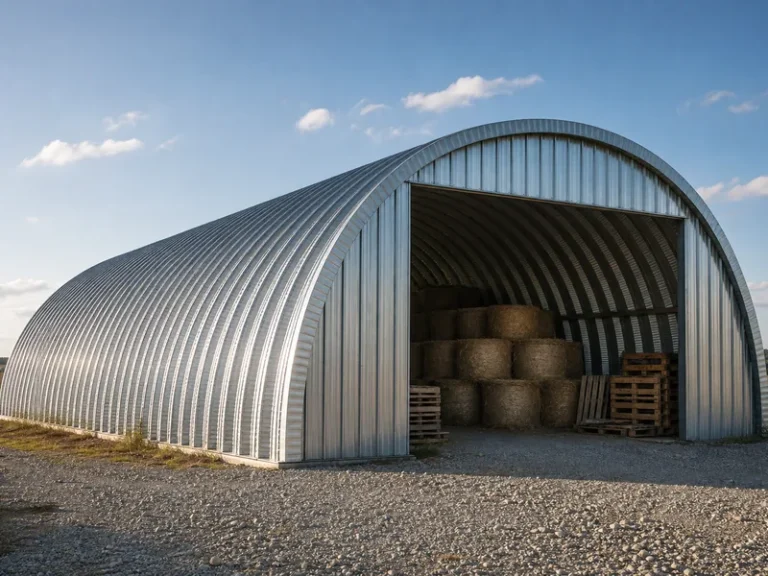
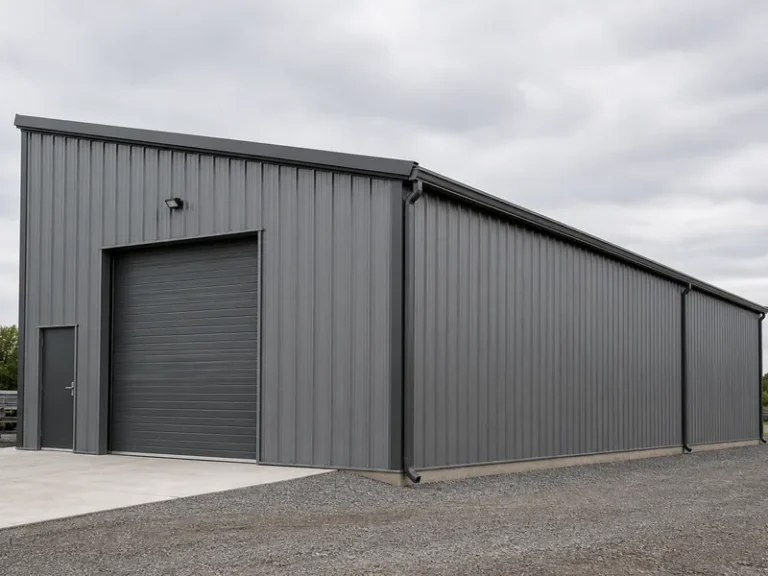
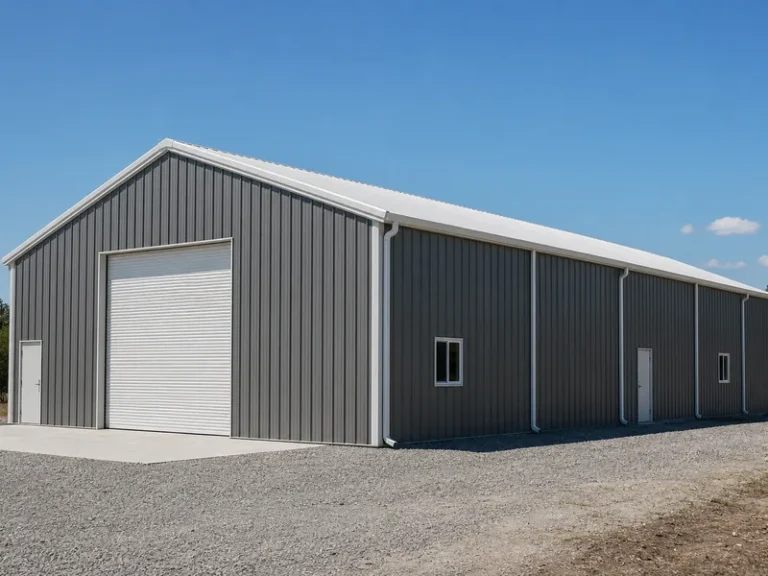
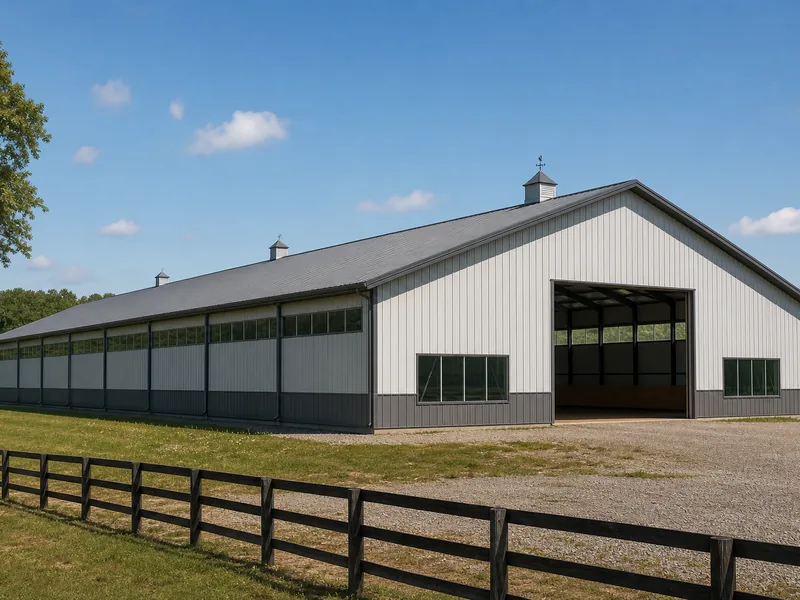
The number that trips people up is the “kit price.” A steel building kit or bare structural shell may be quoted far lower, sometimes around $4–$40 per square foot depending on what the supplier includes, because it covers the frame, roof, and walls — not the floor you ride on or the foundation the columns sit on. Treating that kit quote as the project budget is a common and most expensive planning mistake owners make.
For budgeting, separate three cost scopes from the start: the shell/kit (frame and envelope), the turnkey build (shell plus everything that makes it usable), and the total project budget (turnkey plus land, access, and contingency). Most published per-square-foot numbers switch between these, so always ask a supplier which one their figure includes before you compare quotes.
Indoor Arena Cost by Size
Nothing moves an indoor arena’s price like its footprint, because every added square foot multiplies steel, footing, roofing, and labor at once. The three footprints that dominate real builds are 60×120 (about 7,200 sq ft, enough for one rider and basic flatwork), 80×200 (around 16,000 sq ft, a full dressage court with a safety border), and 100×200 (roughly 20,000 sq ft, used for commercial, multi-discipline, and lesson facilities). Matching the footprint to how you actually ride — not to the largest building you can picture — is the first cost decision important to get right, and a wider look at how footprints scale is covered in metal building sizes.
| Size (ft) | Approx. area | Shell / kit only | Turnkey (finished) | Typical use |
|---|---|---|---|---|
| 60×120 | 7,200 sq ft | $35K–$55K | $150K–$250K | One rider, flatwork, schooling |
| 80×200 | 16,000 sq ft | $60K–$110K | $300K–$450K | Full dressage court |
| 100×200 | 20,000 sq ft | $100K–$200K | $400K–$500K+ | Commercial, multi-discipline |
These ranges assume a steel clear-span structure on a reasonably level site. The shell column reflects the bare frame and envelope; the turnkey column adds footing, lighting, drainage, and permits. Because a clear span removes the interior posts that would otherwise block a riding line, span width carries a cost premium of its own — the same logic that drives general clearspan building cost applies directly to arenas.
Cost by Structure Type — Steel, Fabric, or Wood
Steel, fabric, and wood don’t just build differently; they sit at three different price tiers, and the order has shifted as steel kits have become more standardized. As a rough per-square-foot guide for the structure itself, steel clear-span framing tends to run below traditional wood framing, while tensioned fabric buildings are usually the cheapest envelope of the three. The trade-off is not only price: fabric admits more daylight but insulates poorly, wood carries a traditional look at a maintenance cost, and among fully enclosed rigid-frame options, steel offers the widest clear spans at fairly predictable shell pricing.
| Structure type | Approx. $/sq ft (structure) | Where it fits | Watch-out |
|---|---|---|---|
| Steel clear-span | $20–$40 | Widest spans, year-round use | Insulation and condensation control add cost |
| Fabric / tension | $10–$30 | Budget builds, lots of daylight | Shorter envelope life, weak insulation |
| Wood frame | $30–$50 | Traditional aesthetics | Higher maintenance, span limits |
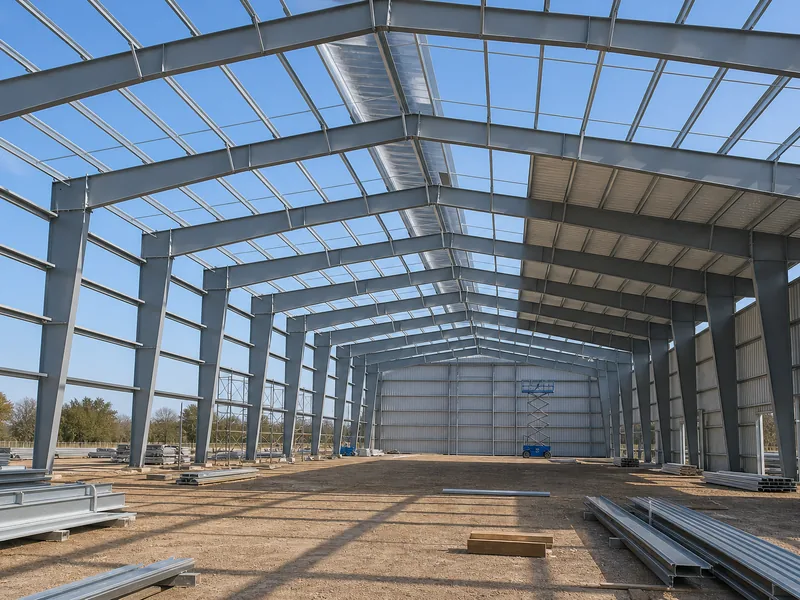
In coastal or high-humidity sites, the fasteners and panel laps can be among the first places corrosion shows up, which is why heavier coatings and careful flashing details push a steel shell above its base rate. The steel envelope is also where customization lives — clearances, door openings, insulation packages, and wall systems — so owners comparing customizable metal buildings can put budget into the spans and openings that matter for riding and skip the ones that don’t. For the structural concept behind these wide, post-free interiors, see clear span buildings.
The Costs That Turn a Shell Into a Finished Arena
On most builds, the structure kit accounts for less than half of the finished bill; the rest is the work that turns a steel box into something you can ride in. These line items usually explain the gap between a kit quote and a finished budget:
- Site prep and grading: $10,000–$50,000, depending on slope, drainage, and how much earth has to move.
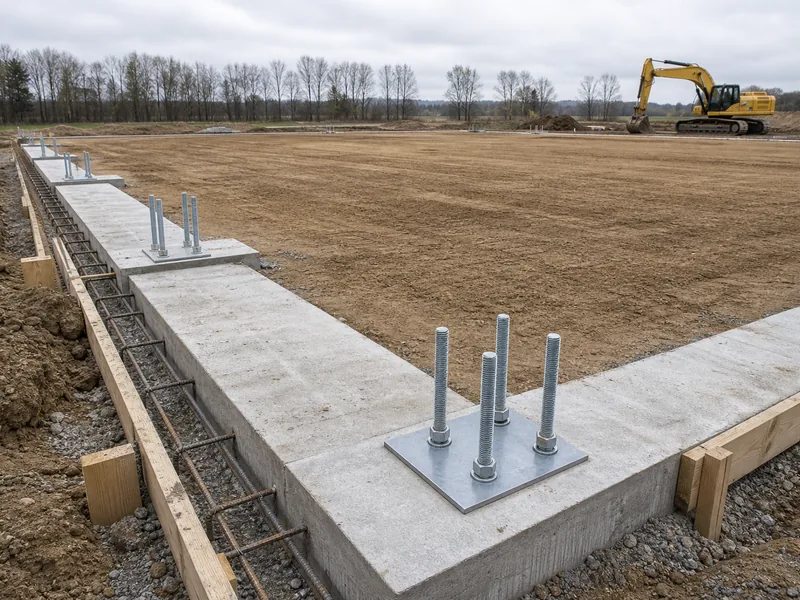
- Foundation: a perimeter footing with anchor pads, typically a five-figure cost that climbs with span and poor soil.
- Footing (the riding surface): roughly $1–$7 per square foot installed, or about $7,000–$50,000 for a 7,200 sq ft arena.
- Lighting and electrical: commonly $5,000–$30,000, set by fixture layout and brightness targets.
- Drainage: $5,000–$20,000 for perimeter drains and water control.
- Permits and engineering: $1,000–$12,000, depending on jurisdiction and design review.
Site prep and foundation
Site preparation is the cost most owners underestimate, because it is invisible in a kit quote and entirely dependent on the land. A flat, well-draining pasture might need only light grading, while a sloped or wooded clay site can absorb tens of thousands before a single column goes up. The foundation then ties the frame to the ground with a perimeter footing and anchor pads sized to the building’s span and local loads.
Footing — the surface you ride on
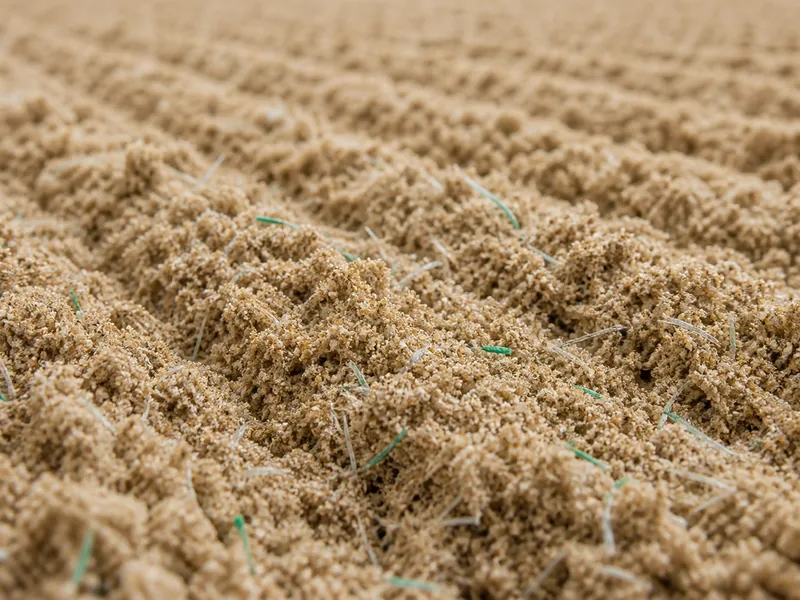
Footing is a recurring cost, not a one-time line item, and the surface you choose sets the replacement schedule. Plain washed sand is cheapest at around $1–$2 per square foot, but plain sand can need more frequent topping or reworking under heavy use. Sand-and-fiber blends, rubber, and engineered branded surfaces cost more per square foot but hold their ride and drainage far longer; for competition footing, freight alone can rival the material cost, because it ships by the truckload.
Lighting, drainage, and permits
Lighting, drainage, and permits are the finishing trio that local conditions price for you. Lighting scales with span and the discipline you ride; drainage depends on the site’s water table and surrounding grade; and permit cost tracks your jurisdiction’s review process. Most projects need some allowance for all three, even if the exact specification varies by site and use, so fold realistic numbers in before treating a kit quote as a budget.
Why Two Same-Size Arenas Land at Different Prices
Under high-load, high-labor, or difficult-site conditions, two arenas with identical footprints can land six figures apart, and the gap usually has little to do with floor area. Regional labor rates, snow and wind engineering, soil conditions, and finish level account for most of the spread. In heavy-snow regions, the frame has to carry far more load, so the same 80×200 footprint can need noticeably more steel in its columns and rafters — that added tonnage, not the square footage, is what moves the price. Structural loads on these buildings are designed against standards such as ASCE 7, and permitting follows the local building code (commonly based on the IBC); both govern what your engineer must account for, even though the exact figures are site-specific.
Before you ask for a quote, lock down the variables that drive these swings so a supplier prices the actual building instead of guessing:
- Soil and slope of your site, which set excavation and foundation work.
- Local snow and wind loads, which set how much steel the frame has to carry.
- Your riding discipline, which sets footing depth and interior clearances.
- Insulation and climate control needs, which scale with year-round use.
- Site access for delivery trucks and erection equipment.
Budgeting for Ongoing Cost and Long-Term Value
Owning an arena costs money every year it stands, and that running cost is easy to leave out of the initial budget. Annual maintenance — footing top-ups, lighting, structural and roof checks, and climate control — commonly runs $5,000–$20,000, depending on how hard the arena is used and the climate it sits in. Footing is the recurring spend that varies most: a cheap surface re-topped every few seasons can can out-cost a pricier surface that holds for a decade.
On resale, an indoor arena rarely returns its full cost. Most owners recover somewhere around half to two-thirds of the build price, with recovery strongest on larger acreage in active equestrian markets and weakest on small suburban lots. That makes an arena a use decision more than an investment one — the same reality that shapes the cost of building a gymnasium and other large-span recreational buildings.
Where to Lock Your Budget First
A reliable way to a realistic indoor arena budget is to decide which cost scope you are actually pricing, then attack the two variables with the widest swing. Start by fixing your scope — shell, turnkey, or total project — because mixing them is what produces the wild $40-to-$125 per-square-foot spread. Then confirm size and structure type, which together set the shell, and get your footing and ground work quoted locally, since those are the line items that often blow past the kit price.
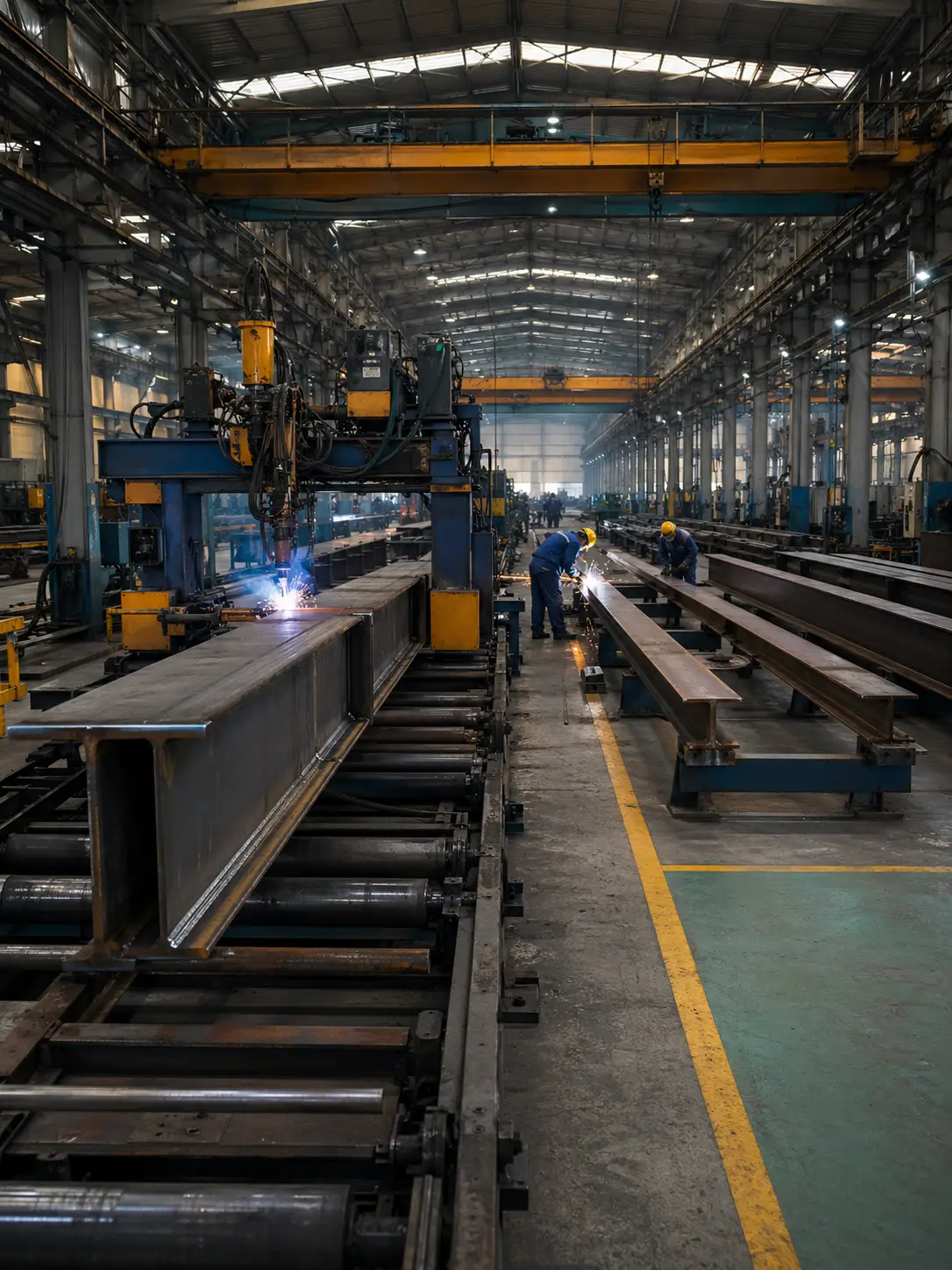
A steel clear-span shell is the one part of the budget a manufacturer can narrow to a firm estimate once your span, loads, openings, and envelope scope are known. As a steel structure manufacturer, Qingdao KAFA Fabrication Co., Ltd. fabricates the rigid frames, box sections, C/Z purlins, and profile steel plate that make up an arena’s shell on dedicated production lines at its 20,000 m² Qingdao facility under documented quality procedures. It holds qualifications for light- and heavy-steel design, fabrication, and installation. Settle your footprint and loads first, price the shell and the site work separately, and the rest of the arena budget becomes far easier to confirm.
Frequently Asked Questions
How much does it cost to build a 100×200 indoor riding arena?
A 100×200 indoor riding arena (about 20,000 sq ft) typically costs $400,000 to $500,000 or more for a finished, turnkey build, while the bare steel shell alone often runs $100,000–$200,000. The gap between the two is footing, foundation, lighting, drainage, and permits, so confirm which scope any quote covers before comparing it.
What size indoor riding arena should I build?
Matching the footprint to your discipline beats building the largest arena you can afford. A 60×120 suits one rider and flatwork, 80×200 fits a full dressage court with a safety border, and 100×200 supports commercial or multi-discipline use. Sizing up when you only school at home is a common way to overspend.
What’s the cheapest way to build an indoor arena?
A tensioned fabric structure or a basic steel clear-span shell on a level, well-draining site is usually the lowest-cost path to a covered riding space. The cost to build an indoor horse arena drops fastest when the site is simple, the footing is modest, and climate control is minimal — not when you cut the structural engineering, which is fixed by your local loads.
Do I need a permit for an indoor riding arena?
Many jurisdictions require a building permit for a structure this size, and engineering review is usually part of it. Permit and engineering costs commonly run $1,000–$12,000, with add-ons for stormwater, electrical, or fire review depending on where you build.
How long does it take to build an indoor arena?
Most indoor arenas take several months from signed contract to first ride, with permitting and steel fabrication lead time driving the schedule more than the erection itself. Site prep, foundation, shell erection, and footing each add their own weeks, so plan the calendar around permit review and kit delivery rather than the day the frame goes up.