




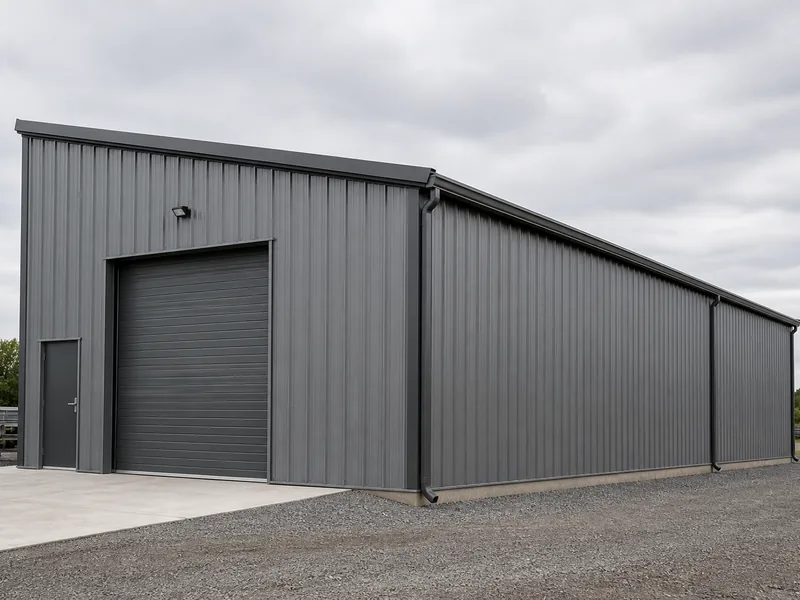
Single slope steel buildings put their entire roof on one tilted plane, running from a tall sidewall down to a shorter one. That single plane is why they show up so often as warehouses, workshops, carports, and lean-to additions: water leaves in one direction, the frame stays simple, and the high wall opens up usable height where it is needed. Before sizing one, a buyer has to settle a short list of variables: the roof pitch, which way the low side drains, whether the building is a lean-to or a freestanding clearspan, and what actually moves the price. The sections below take those in the order the decisions have to be made.
A single-slope layout should be checked during steel building design because drainage direction, bracing, eave height, and wall exposure are linked.
What Is a Single Slope Steel Building?
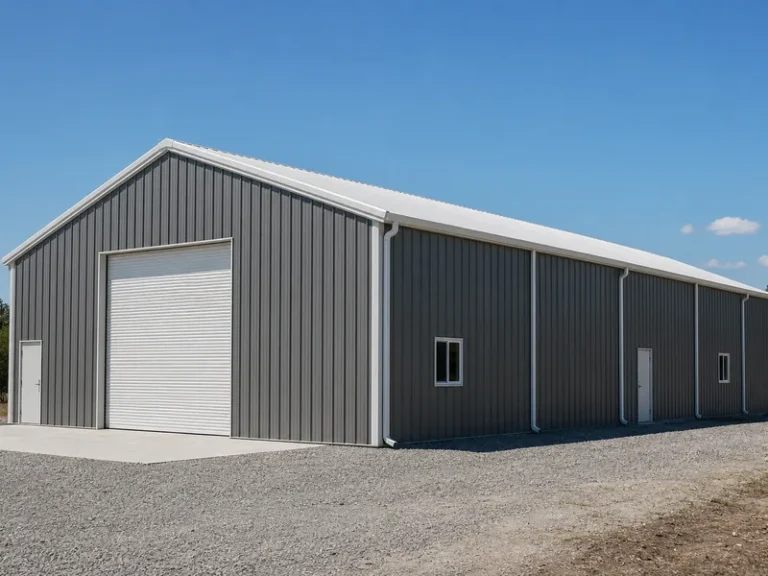
A single slope steel building has one roof plane that pitches in a single direction, from a higher eave on one sidewall to a lower eave on the wall opposite. The same design is sold as a single-pitch, mono-slope, or mono-pitch building, and the steel skeleton underneath is the familiar pre-engineered system: rigid frames or columns carrying purlins and metal panels. Only the roofline changes. Instead of two planes meeting at a ridge, one plane runs the full width of the building.
That geometry suits a specific set of jobs, not one industry. Single slope buildings turn up often as:
- Warehouses and distribution space that want a clear, column-free interior
- Workshops and garages where one tall wall carries racks, lifts, or a mezzanine
- Storage and agricultural buildings that must shed water away from a yard or road
- Lean-to additions attached to an existing wall
- Carports, canopies, and covered walkways
- Studios and home offices after a clean, modern roofline
The common thread is directional drainage paired with a usable height difference between the two walls. Where that combination helps the site, a single slope has a clear role.
Single Slope Roof Pitch, Drainage, and Load
A lower single slope pitch can reduce material in some configurations, but only when the panel system and the snow and drainage requirements allow it. A flatter roof does not make the building structurally weaker, though, because load capacity comes from the frame engineering rather than from the number of roof planes. Pitch controls something more practical instead: where water and snow go, and how quickly they get there. The roof itself is one of several types of metal roofs, set apart by draining on a single plane. Single slope roofs typically sit somewhere between about 1:12 and 6:12, meaning the roof rises one to six inches over every foot of run, though the right figure follows your drainage and snow conditions rather than a fixed rule.
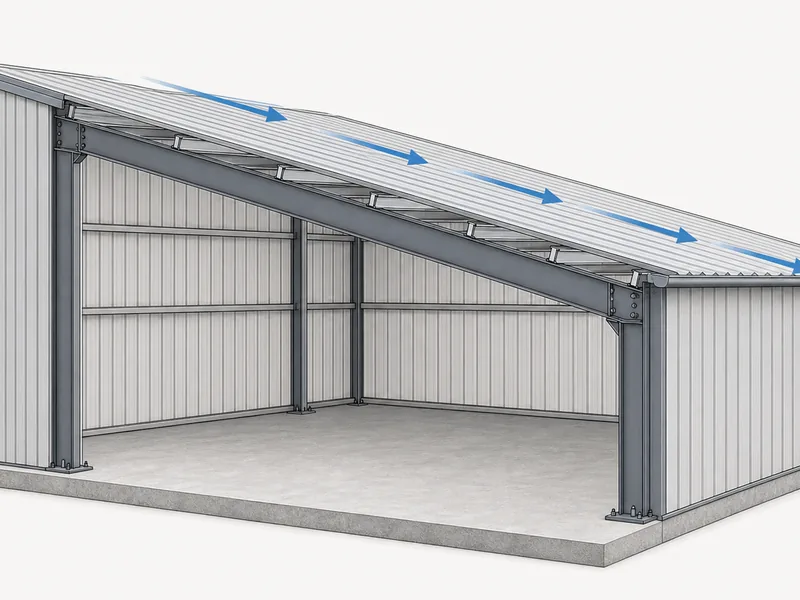
The trap with single slope is going too flat. On a low-pitch roof, the panel laps and the low eave are the first places to watch. Once the slope drops below what the panel system needs to drain, water lingers at the seams instead of running off, and seams are where leaks begin. Snow makes a single slope less forgiving than a gable, because the load and the meltwater both travel to the same low side. Snow and wind loads should be figured against the local building code. In practice, the local code or the IBC governs permitting and the design compliance a project must meet, while ASCE 7 is commonly used to calculate wind, snow, live, and dead loads where it is adopted. The reliable move is to set pitch and panel type against the actual snow region, not a catalog default.
Lean-To vs. Clearspan Single Slope Buildings
The first fork in a single slope project is whether the building leans on something else or stands on its own. That one decision sets the framing, caps the width, and shapes the cost, so it comes before pitch, color, or door layout.
Lean-To Single Slope Buildings
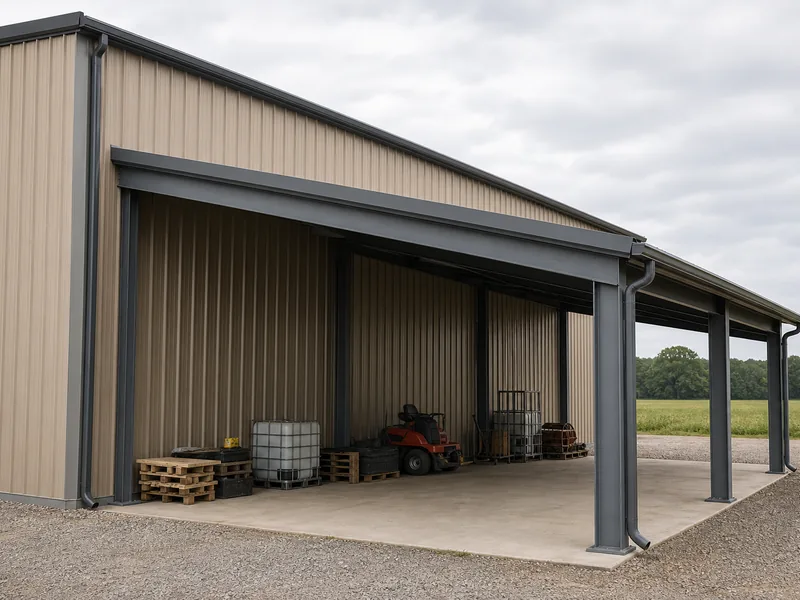
A lean-to single slope building attaches to an existing wall and slopes away from it, borrowing support from the host structure on one side. Lean-tos are often a cost-efficient way to add covered space against a building you already own, whether for storage, equipment shelter, or a loading area, as long as the host structure can carry the added load. That qualifier matters: before a lean-to goes up, the host columns, footings, and wall have to be checked for the added weight and the redirected drainage, because an older frame was not necessarily sized for either.
Clearspan Single Slope Buildings
A clearspan single slope building stands on its own and spans its full width with no interior columns. Clearspan is the choice when the floor has to stay open, such as equipment bays, indoor storage with forklift lanes, or shops that get rearranged often. Width is the governing constraint. Single slope frames are commonly engineered up to roughly 150 feet wide, depending on the loads and the clearspan engineering. Wider spans, though, mean a heavier frame, and they put more of the design onto the pitch and load calculations. When a layout fits inside a narrower span, a dedicated clear span buildings design can stay lighter and less expensive. In practice the fork is quick to settle: if an existing wall can take the load and the goal is extra attached space, a lean-to fits; if the floor has to stay open and column-free, a clearspan does.
Single Slope vs. Gable Roofs: Which Fits the Job
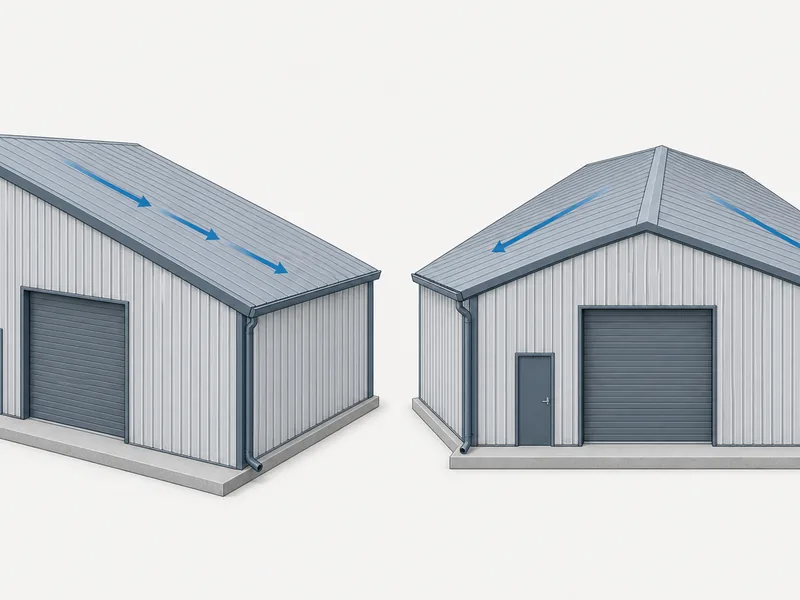
Gable and single slope roofs solve drainage in opposite ways, and the right pick follows the site rather than fashion. A gable splits water to two sides from a center ridge, while a single slope sends all of it one way. The trade-offs line up along a short list of decision factors.
| Decision factor | Single slope | Gable |
|---|---|---|
| Material and framing | Fewer parts, simpler frame, often lower cost for a comparable size | More framing and joints at the ridge |
| Water and snow | All sent to one low side you choose | Split evenly to two sides |
| Interior volume | One tall wall gives extra height on that side | Peak height at the center |
| Solar mounting | One large plane, easy to angle toward the sun; added panel load must sit in the structural design | Two smaller planes at different angles |
| Appearance | Modern, asymmetric | Traditional, symmetrical |
| Best when | Budget-sensitive projects, narrow or attached builds, drainage wanted to one side | Wide symmetrical spans, heavy even snow shedding, matching pitched-roof neighbors |
Reach for a single slope when the budget is sensitive, the building is narrow or attached, or you specifically want water and snow pushed to one side and away from a road, a neighbor, or a yard. Lean toward a gable when the span is wide and symmetrical, snow is heavy enough that shedding it evenly to both sides matters, or the building sits among pitched-roof structures it has to match.
What Drives the Cost of a Single Slope Steel Building
Span width, not the roof shape on its own, moves the price of a single slope building the most. A single slope frame is usually among the more economical pre-engineered options for a comparable size, because it uses fewer parts and simpler framing. That advantage only holds, though, when everything else is equal. Cost tracks a handful of variables more closely than it tracks the slope:
- Clear span and footprint: wider column-free spans need heavier frames, and size drives steel tonnage more than roof style does
- Sidewall height difference: a large gap between the tall and short wall adds wall panel and framing
- Slope direction and drainage: gutters, downspouts, and carrying water to the right place all add scope
- Foundation: the slab or piers are priced by soil and loads, separate from the building itself
- Shell vs. turnkey: a kit price and an installed price are two different numbers
Broad-market metal building references run roughly $15 to $20 per square foot for a bare structural shell, around $18 to $25 for a material kit, and about $24 to $43 installed turnkey. Those are whole-market numbers for metal buildings, not a single slope quote and not a KAFA quote, and they swing with steel prices, size, region, and finish. For a budget you can trust, price the actual configuration instead of a per-foot average. Sizing the footprint first against a metal building sizes reference, then pricing a comparable build such as a 40×80 metal building cost, gives a closer anchor than any national figure.
Customizing and Verifying Your Single Slope Build
Customizing a single slope build starts with three numbers: the clear span, the height of each sidewall, and the direction water should leave the site. Those fix the frame, and everything else, from doors and insulation to panel color and a mezzanine, hangs off them. Because the frame is pre-engineered, it can be sized to the load and span rather than forced into a stock footprint.
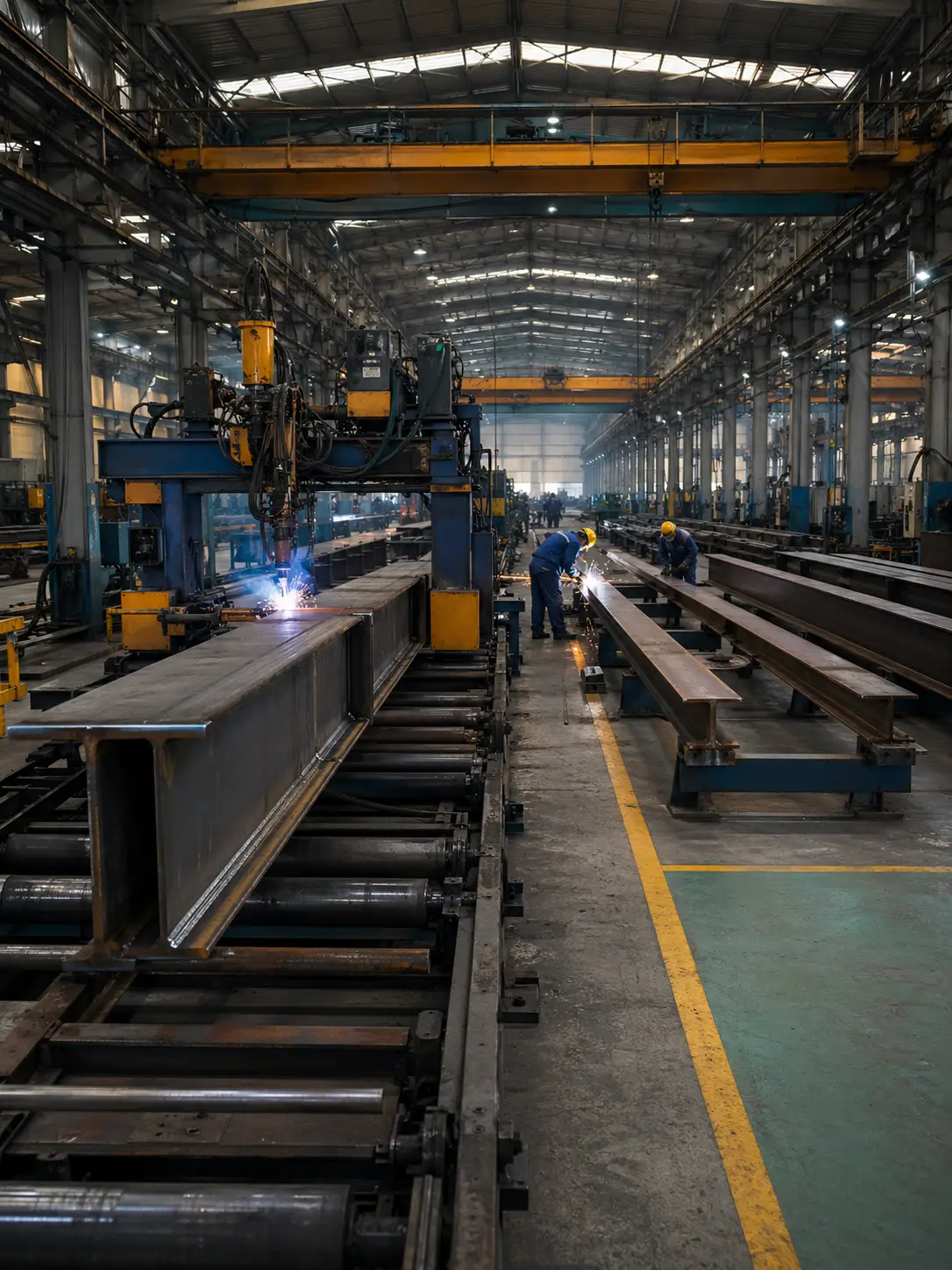
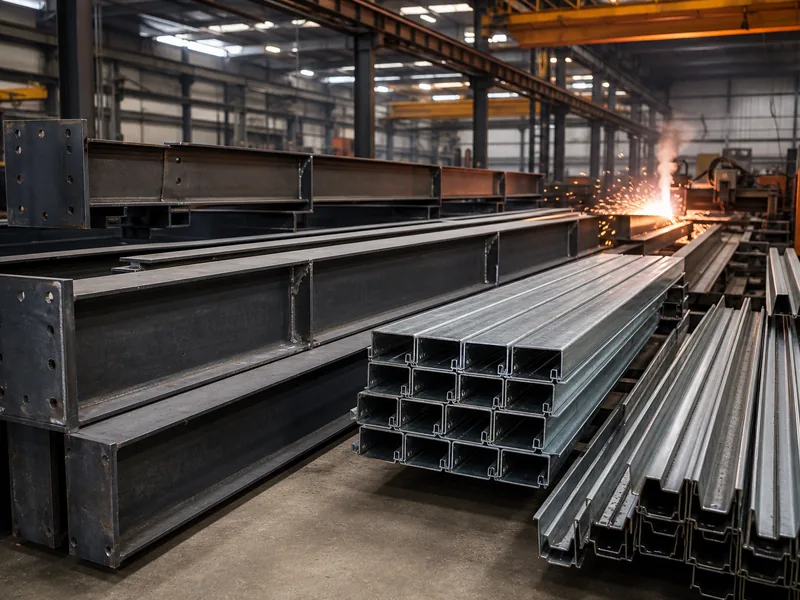
Qingdao KAFA Fabrication Co., Ltd. is a steel structure manufacturer with qualifications for light- and heavy-steel design, fabrication, and installation. Its 20,000 m² Qingdao facility runs dedicated H-beam, box section, C/Z-section purlin, and profile steel plate processing lines under documented quality procedures, the same frame and purlin work a single slope roof depends on. Buyers who want to customize metal building dimensions, wall heights, and openings to a specific site work from that engineering rather than a fixed catalog.
Before a single slope design is locked, a short verification pass prevents the expensive rework:
- Confirm the low side: make sure water and snow drain toward somewhere that can take them, not a driveway, door, or property line
- Check pitch against drainage and snow: verify the slope clears the panel system’s minimum and the local snow load
- Account for added roof loads: solar panels, racking, or hung equipment add weight that has to be carried in the structural design, not assumed
- Re-check any host structure: for a lean-to, confirm the existing frame and footings carry the added load
- Match the span to the use: settle clearspan versus supported framing before sizing anything else
- Get stamped drawings where required: confirm loads against the local code and permit the project where local authorities require it, before fabrication begins
This article does not cover the electrical design of a rooftop solar array or the rebar schedule for a slab. Those depend on your equipment and soil, and they belong with the respective trade.
Choosing the Right Single Slope Configuration
Choosing a single slope configuration is an ordering problem, not a style choice. Decide the easy-to-miss things in sequence. First settle whether the building is a lean-to or a freestanding clearspan, since that caps the width and sets the framing. Next fix the clear span and the two sidewall heights, which size the steel. Then set the pitch and slope direction, which decide where water and snow end up. Cost and roof comparisons fall out of those answers rather than driving them. Settle the low side and the drainage path last, but never skip them, because on a single slope the whole roof commits to one direction, and a wrong call there is the one mistake the geometry will not forgive.
Frequently Asked Questions
What is the minimum pitch for a single slope steel building?
The minimum usable pitch is whatever lets the chosen panel system drain, often around 1:12, but it is set by the panel and the snow load rather than a universal number. Going flatter than the panel allows traps water at the laps. Confirm the minimum with the panel manufacturer and against your snow region before committing to a slope.
Are single slope steel buildings cheaper than gable buildings?
Single slope buildings are usually among the more economical options for a comparable size, because they use fewer parts and simpler framing, but the saving holds only when span, height, and finish match. Span width and foundation move the total far more than roof shape does. Price the full configuration instead of assuming the roof style alone decides the cost.
How wide can a clearspan single slope building be?
Clearspan single slope frames are commonly engineered up to roughly 150 feet wide, with the exact limit depending on the loads and the engineering. Wider spans call for heavier frames, which raises both the steel tonnage and the load the pitch has to manage. Confirm the achievable clear span with the fabricator against your snow and wind loads.
Can you add a single slope lean-to to an existing building?
Adding a single slope lean-to is common, but only after the existing structure is checked for the extra load. The host columns, footings, and wall end up carrying part of the lean-to’s weight and its redirected drainage. Have the existing frame verified before anything is attached to it.