




Warehouse construction materials fall into a handful of groups — a structural steel frame, a concrete foundation and floor slab, metal roofing and wall cladding, secondary framing, and insulation — and the right combination depends on the loads you carry, your local climate, what you store, and your budget. No single material wins on every project. A high-bay distribution center, a refrigerated food store, and a small parts depot draw from the same menu in very different proportions. This guide maps the materials by where they sit in the building, then walks through how to match each choice to your site and your goods.
The main material groups in a warehouse build
Most warehouses are built from five material groups, each tied to a part of the structure. Reading them as a system rather than a shopping list makes trade-offs easier to see, because a choice in one group changes the demands on another.
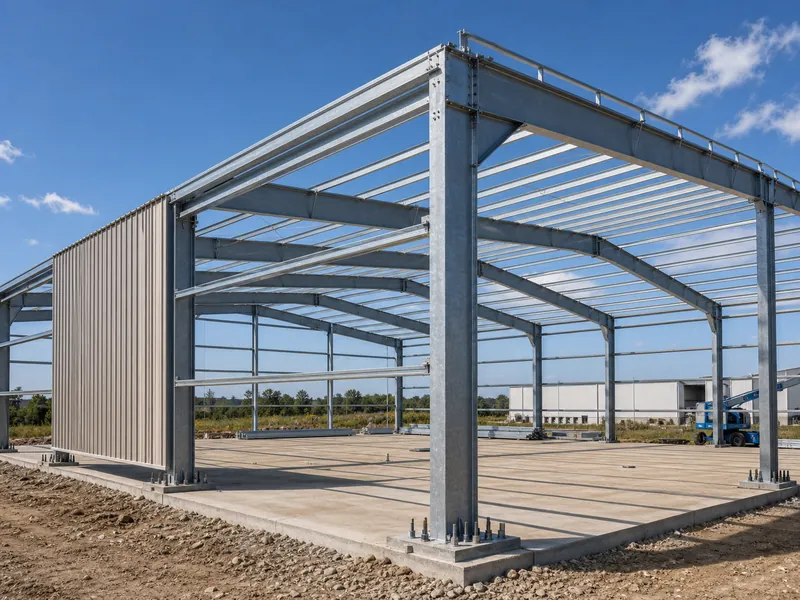
- Primary frame: the load-bearing skeleton, usually a steel rigid frame of columns and rafters that carries roof, wind, and snow loads down to the foundation.
- Secondary framing: purlins on the roof and girts on the walls, which span between frames and give the cladding something to attach to.
- Building envelope: the metal roofing and wall cladding that keep weather out, plus any insulation behind them.
- Foundation and floor: the concrete footings under each column and the slab your racking and forklifts run on.
- Connections and hardware: anchor bolts, base plates, bracing, and fasteners that hold the whole assembly together.
A heavier frame lets you space columns farther apart for clear-span, column-free aisles; a thicker slab handles taller racking; better cladding and insulation cut energy use. Each group is covered below in the order you would actually specify it.
Structural steel: the warehouse frame
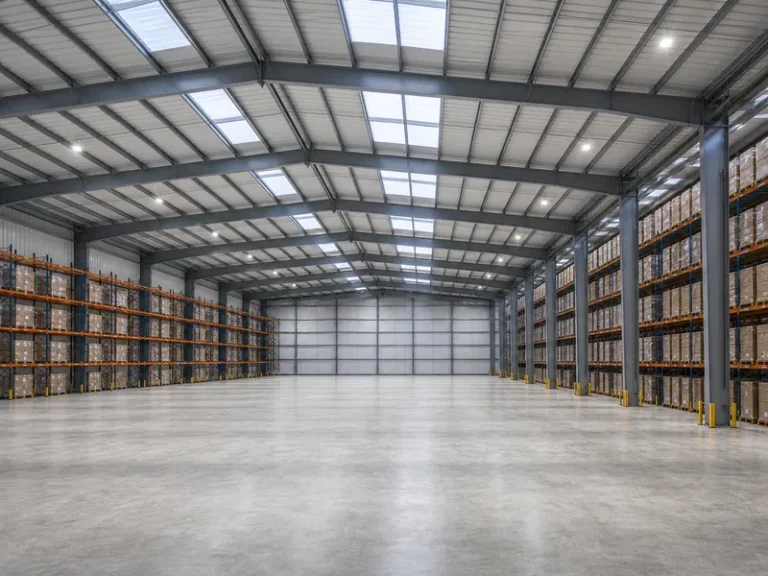
Structural steel is the default primary frame for warehouses because it spans long distances with a high strength-to-weight ratio and leaves the floor open. A steel rigid frame can clear-span well past 100 feet without interior columns, which keeps aisles, racking layouts, and truck movement flexible — something masonry or timber struggles to match at that scale. Steel is also dimensionally predictable, pest- and rot-proof, and highly recyclable at end of life.
The frame itself is a small family of parts. Hot-rolled columns and rafters, often H-section or built-up box sections, form the main frames; lighter cold-formed C- and Z-section purlins and girts run between them; anchor bolts and base plates tie the columns to the concrete; and diagonal bracing or rigid connections resist wind and seismic loads. Bay spacing often runs around 20–30 feet as a planning starting point, but the working grid follows your loads, span, rack layout, bracing, and door openings, together with local design loads, rather than a fixed rule. These metal building components are usually fabricated and pre-punched in the shop, then bolted together on site, which is part of why steel goes up quickly.
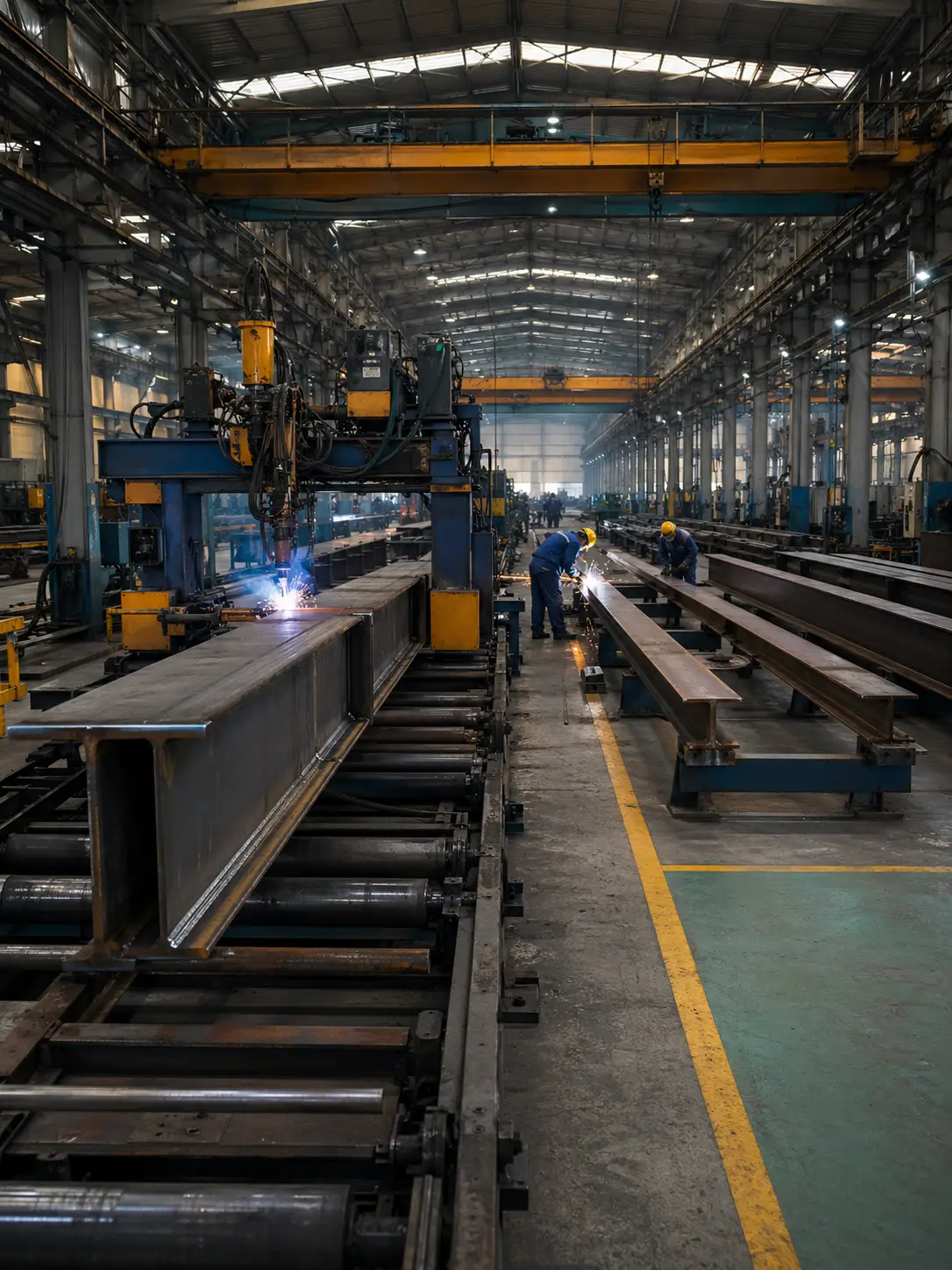
Fabrication quality matters as much as the section sizes. As a steel structure manufacturer, Qingdao KAFA Fabrication Co., Ltd. runs dedicated lines for H-beam, box-section, and C/Z-section purlin production under an ISO 9001:2015 quality system, covering the same component families that make up a warehouse frame. Consistent welds, hole patterns, and pre-punched connections from the shop reduce field fit-up problems, which is where much erection delay comes from. For a look at the system as a whole, see our overview of steel warehouse buildings.
Roofing and wall cladding materials
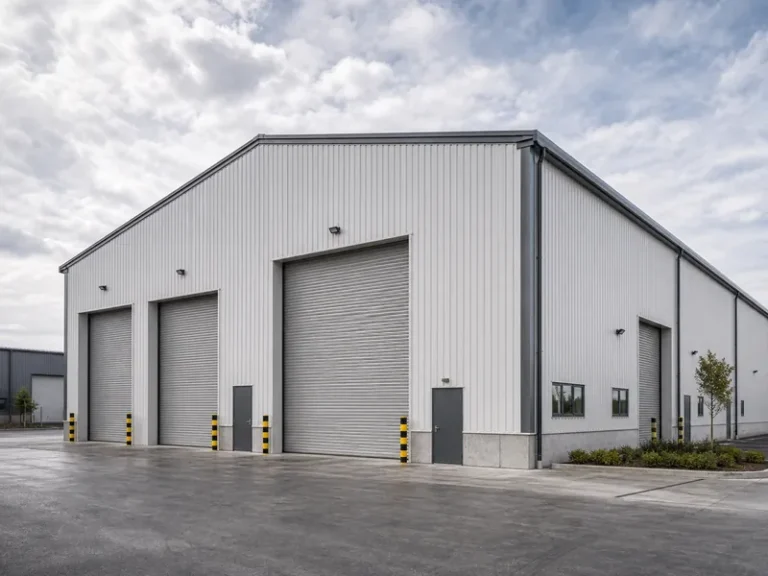
Roofing and wall cladding are where most warehouses meet weather, and the choice turns on span, corrosion exposure, and how much leaks over decades would cost you. The envelope is usually steel panel, so the main decision is panel profile and coating rather than a different material altogether.
Standing seam metal roofs hide their fasteners and let panels move with temperature, so they tend to leak less over a long service life and are the stronger choice for low-slope warehouse roofs. Screw-down corrugated or R-panel costs less and installs faster, which suits walls and budget-driven roofs, though exposed fasteners are the parts to watch as they age. Metal roofs are commonly cited at roughly 40–70 years of service depending on panel and coating, long relative to membrane roofs.
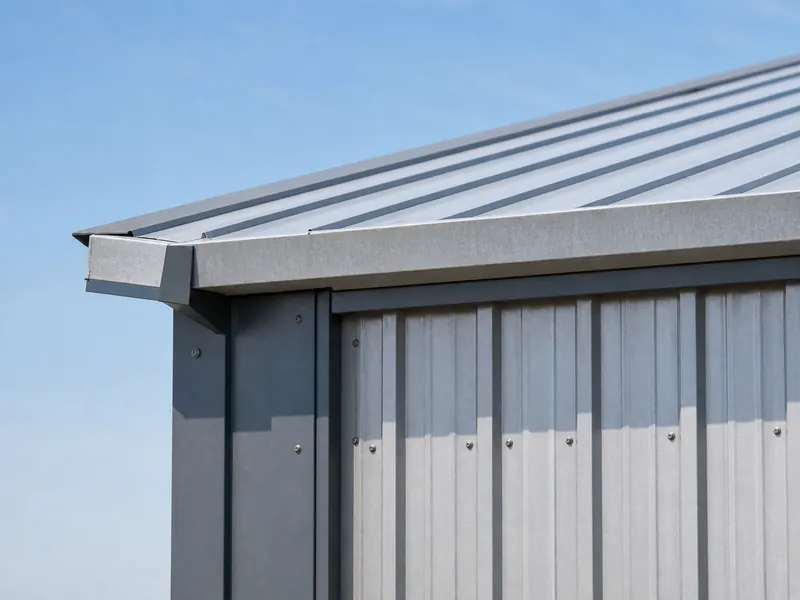
Coating is the corrosion story. Most warehouse panels are galvanized or Galvalume (zinc-aluminum) coated steel, often with a factory paint finish; the heavier the metallic coating, such as a G90-class galvanizing, the longer it resists rust. In coastal, high-humidity, or chemically aggressive settings, the fasteners and panel seams fail first, so heavier coatings, or stainless cladding in the harshest cases, are the safer specification. Panel thickness typically sits in the 22–26 gauge range, with heavier gauges where wind loads or spans demand them.
Concrete foundations and floors
Concrete does two jobs in a warehouse: it anchors the steel frame and it carries everything that moves across the floor. Under each column sits a footing or pier that spreads the frame’s point loads into the ground, and how deep and wide depends on soil bearing capacity, which a geotechnical report confirms rather than a rule of thumb.
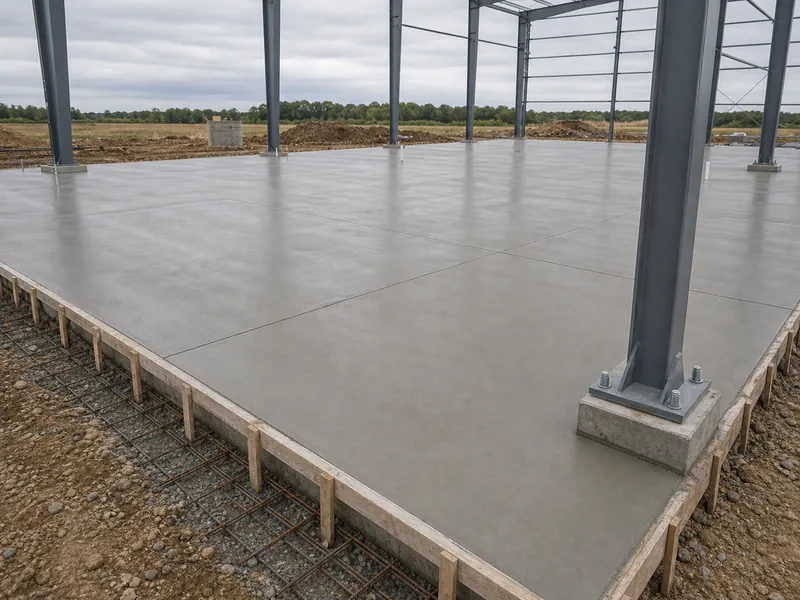
The floor slab is easy to under-build. A warehouse slab is sized by the racking leg loads and forklift wheel loads it must carry, not by floor area. Figures like 3,000–4,000+ psi concrete and 5–8 inches of thickness are typical examples rather than a design spec, because joint layout, reinforcement, subgrade soil, and an engineer’s load calculation govern the final slab. Under-speccing it is a frequent and expensive mistake. Cracking and joint spalling under forklift traffic are hard to fix once the building is occupied. Polished concrete adds abrasion resistance and a low-dust surface that can serve for decades, and the slab’s thermal mass helps steady interior temperatures. Foundation engineering runs deeper than a materials overview, and the slab and footing design follow from your loads and soil; both tie directly into warehouse building design.
Insulation and envelope materials
Insulation determines whether a steel shell stays usable and energy-efficient, and the target R-value follows your climate and what you store. Bare metal conducts heat readily, so an uninsulated warehouse swings with the outdoor temperature and sweats with condensation.
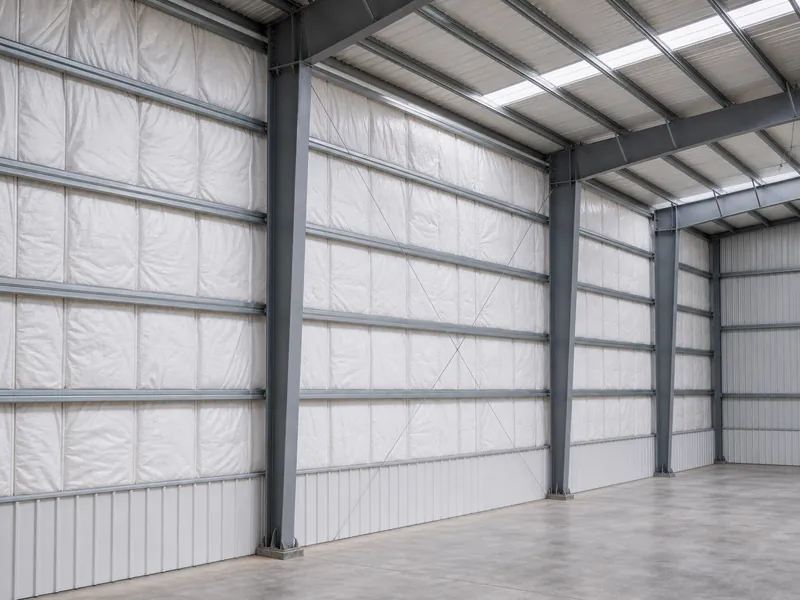
Two systems dominate. Faced fiberglass blanket insulation, laid over the purlins and girts before the panels go on, is the economical baseline at roughly R-3 to R-4 per inch of thickness. Insulated metal panels (IMPs), a foam core bonded between two steel skins, deliver more R-value per inch in a single product and suit temperature-controlled and cold-storage work, where the envelope does heavy lifting. The U.S. Department of Energy publishes recommended R-values by climate zone, but that guidance is broad and oriented toward homes. A commercial warehouse should set its final insulation by the applicable energy code, its use and climate, condensation risk, and the envelope system rather than a single residential number. Vapor control and tight seams are the details to get right, because condensation inside the assembly shortens the life of both insulation and steel. Choosing and detailing metal building insulation early, before the cladding is ordered, avoids costly retrofits.
Steel vs. concrete vs. wood — and how to choose
For most distribution and industrial warehouses, a steel frame with a concrete floor is the common default, and the open question is where concrete or wood should take a larger role. The three materials sit at different points on cost, span, durability, and maintenance, so the call follows your span, fire-separation needs, budget, build speed, local labor, durability targets, and occupancy rather than a single “best” answer.
| Material | Best at | Limits | Typical fit |
|---|---|---|---|
| Structural steel | Long clear-spans, fast erection, low maintenance, recyclable | Needs coating for corrosion; fire protection for rated assemblies | Frame of most warehouses; large column-free floors |
| Concrete | Fire resistance, mass, durability under heavy load | Higher cost, slower to build, heavy foundations | Floors, footings, tilt-up walls, fire-sensitive storage |
| Wood | Low upfront cost on short spans, easy to work | Limited span, fire and pest risk, higher upkeep | Small, light-duty, or specialty storage only |
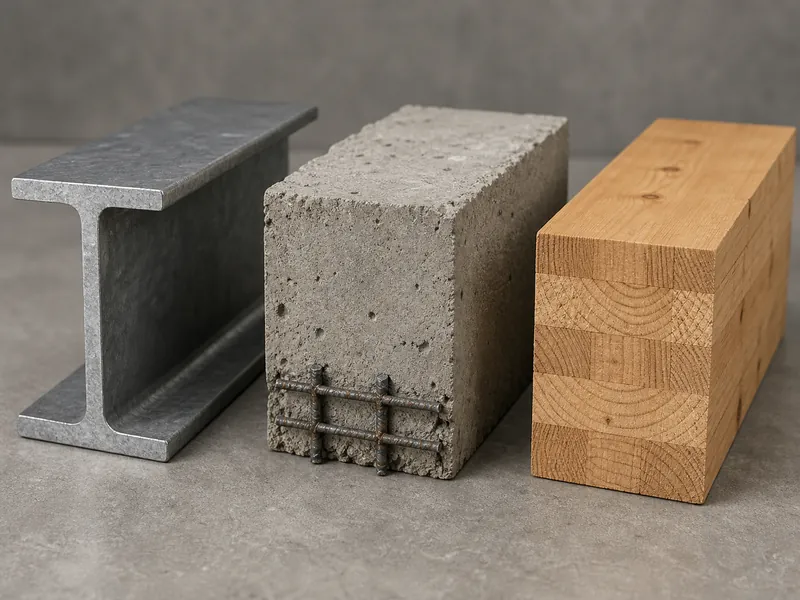
In practice the materials combine rather than compete: steel carries the roof and walls, concrete forms the slab and footings, and tilt-up concrete walls can wrap a steel roof structure where fire separation or security matters. Wood rarely scales to a working warehouse on its own and is usually limited to small or special-use buildings. For a head-to-head on the framing decision itself, see steel vs wood frame building. Material choice drives the budget more than almost any other early decision, so model it against your cost to build a warehouse before locking the structural system.
Conclusion
Specifying warehouse materials is an ordering problem: settle the structural system and slab first, because the loads and clear-span you need set the steel frame and the concrete floor, and those two carry the largest share of cost and risk. With the frame and slab fixed, let your stored goods drive the envelope, choosing standing seam and heavier coatings where corrosion or leaks would hurt, and insulated metal panels where temperature control matters. Verify the corrosion environment and wind load last, since those decide coating weight and panel gauge rather than the structural system itself. If you want a material specification matched to your loads, climate, and goods, you can request a quote with your dimensions and site conditions in hand.
FAQ
What materials is a warehouse made of?
A warehouse is built from a structural steel frame, a concrete foundation and floor slab, metal roofing and wall cladding, secondary framing of purlins and girts, and insulation. The frame carries the loads, the slab carries the racking and traffic, and the envelope and insulation manage weather and temperature. Smaller or specialty buildings may substitute masonry or timber for parts of the frame, but the steel-and-concrete combination covers most working warehouses.
Is steel or concrete better for a warehouse?
Steel and concrete usually work together rather than as an either/or, with steel as the frame and concrete as the floor and footings. Steel wins on clear-span, speed, and weight; concrete wins on fire resistance, mass, and floor durability. Give concrete a larger structural role, such as tilt-up walls, when fire separation, security, or very heavy loads outweigh its higher cost and slower build.
What is the best roofing material for a warehouse?
A standing seam metal roof is the strongest default for warehouses because its concealed fasteners and floating panels resist leaks over a long service life. Screw-down corrugated or R-panel costs less and installs faster but relies on exposed fasteners that need watching as they age. In corrosive or coastal settings, step up the coating weight or panel grade rather than changing the profile alone.
What gauge metal panels are used for warehouse walls and roofs?
Warehouse wall and roof panels typically fall in the 22–26 gauge range, with the heavier, lower-number gauges used where wind loads or panel spans are higher. Gauge is only half the specification, since the metallic coating, such as G90-class galvanizing or Galvalume, sets how long the panel resists corrosion. Match both to your wind exposure and local environment rather than to a single default.
How thick should a warehouse concrete floor slab be?
A warehouse floor slab is sized by the racking and forklift loads it carries, and commonly runs 5–8 inches of 3,000–4,000+ psi concrete, thicker under heavy racking. Floor area does not set the thickness; point loads from rack legs and wheel loads do. Because cracking under traffic is hard to repair after occupancy, confirm the slab design against your actual loads before pouring.
Further Reading
- American Galvanizers Association — Hot-Dip Galvanizing — Industry association resource on zinc coatings; supports the corrosion-protection and coating-weight guidance for steel cladding and framing.
- Metal Building Manufacturers Association (MBMA) — Trade association for metal building systems; background on the steel framing systems used for warehouse structures.
- U.S. Department of Energy — Insulation (Energy Saver) — Government guidance on insulation and recommended R-values by climate zone; general background, with commercial specs set by energy code.