




How many mobile homes fit on an acre usually lands between five and eight, with the realistic range stretching from four to ten. That spread exists because the count is set by zoning, lot-size rules, setbacks, and shared infrastructure, not by the homes themselves. A frequent mistake is dividing 43,560 square feet by a lot size and treating the result as the answer, which ignores the roads, utilities, and buffers every site has to give up. The sections below cover what fixes the number on a given parcel and how to estimate it before you buy land or file for permits.
One terminology note first: homes built to the federal HUD Code after June 15, 1976 are technically “manufactured homes,” while “mobile home” is the older everyday term. Both are used here, since most searches and many local ordinances still say mobile home.
How Many Mobile Homes Fit on One Acre?
A standard acre holds roughly five to eight manufactured homes in a sewered park once roads, setbacks, parking, and utilities are accounted for, with the outer range from four to ten. That five-to-eight figure is a planning starting point, not a legal allowance: local zoning, road width, fire access, open space, and septic or well rules can pull it lower or override it. Denser layouts of small single-section units can reach ten or more, but that usually trades away privacy, parking comfort, and easy emergency access.
Start with the arithmetic, because it explains why the answer is a band and not a single figure. One acre is 43,560 square feet. Take away about 25 to 30 percent for internal drives, utility easements, and common areas, and roughly 30,000 to 32,000 square feet is left for actual home sites. Divide that by a typical park lot near 5,000 square feet and the result is close to six homes; tighter single-wide lots around 3,500 square feet push the count toward eight or nine.
This is the difference between gross density and net density. Gross density divides the whole parcel by the lot size and overstates capacity. Net density subtracts the land a site can never use for homes first, then divides. Planning departments and lenders look at net density, so that is the number to estimate early.
Zoning and Lot Size Set the Legal Cap
Local zoning, not the size of the homes, sets the legal ceiling on how many units an acre can hold. A parcel zoned for a manufactured home park supports far more units than the same acre in a single-family residential or agricultural district, where one home per lot is the norm. The zoning classification is the first thing to confirm, because no layout can exceed the density the code allows.
Within a park zone, the minimum lot or pad size does the rest of the work. Ordinances commonly require 3,000 to 6,000 square feet per unit, though some jurisdictions allow pads as small as 2,500 square feet or demand 8,000 or more. A smaller minimum lot raises the cap; a larger one lowers it. Many park ordinances also state the density ceiling directly, often capping units at around seven per acre. Where the base zoning is too restrictive, a density variance or conditional use permit is sometimes available, though approval depends on infrastructure, traffic, and neighborhood review rather than on the owner’s preferred unit count.
Mobile Home Park Zoning vs Single Lots
A designated park or manufactured home subdivision is what makes higher density legal in the first place. In that setting, shared roads and central utilities let lots shrink toward the 3,000 to 5,000 square foot range. On a single rural or residential lot, the calculation flips: zoning often expects one home per lot, and minimum parcel sizes of a quarter acre to a full acre per home are common. Some counties require even more where wells and septic systems are involved.
Density by State: A Few Examples
Density figures vary by state and county, so treat published numbers as starting points and confirm them against the local code. Reported typical ranges run roughly six to eight units per acre in parts of Texas and North Carolina. Florida often sits at five to seven, lower along hurricane-exposed coasts, while parts of Georgia reach seven to nine, with some rural counties allowing more. These are illustrative; the binding number is always the one in your jurisdiction’s ordinance, not a state average.
Setbacks, Spacing, and Roads: Why Net Density Is Lower Than Gross
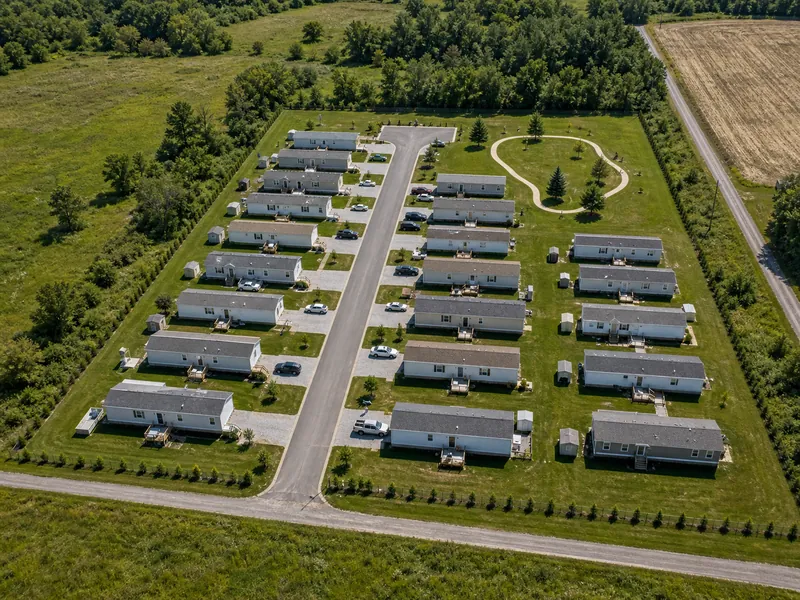
Net density falls below gross density because roads, easements, and shared areas claim a fixed share of every parcel before any home is placed. Internal drives and utility corridors alone often consume 20 to 35 percent of the land. On top of that, codes require spacing between units, commonly 10 to 15 feet, plus setbacks of roughly 10 to 25 feet from property lines and access roads. Those clearances exist for fire access and livability, and they cannot be designed away.
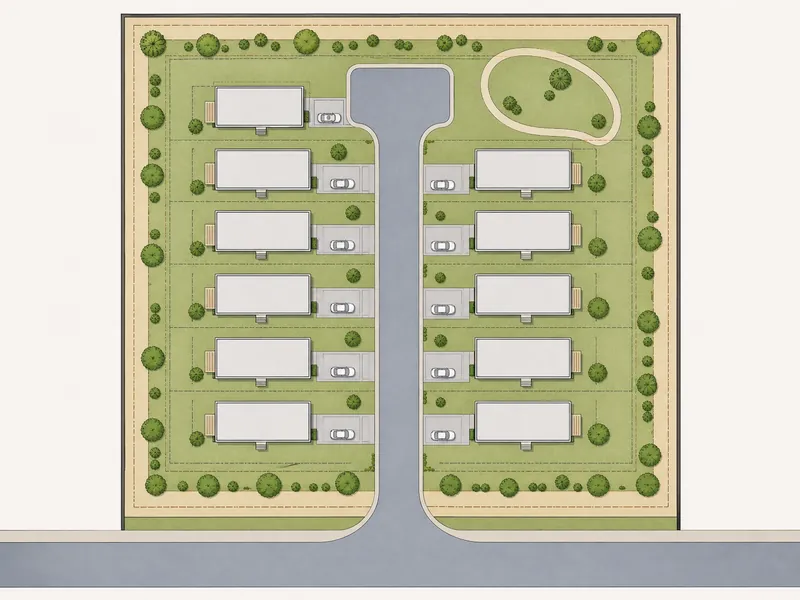
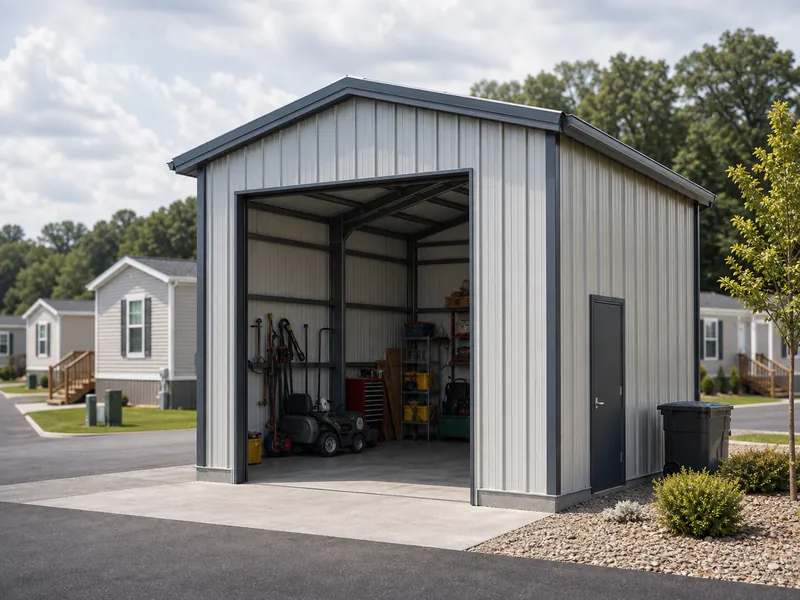
Beyond roads and utilities, most planned communities also reserve land for shared buildings: a clubhouse or leasing office, plus on-site storage and maintenance space. Those accessory structures trim the acreage left for home pads even further, which is part of why net density sits well under the raw lot math.
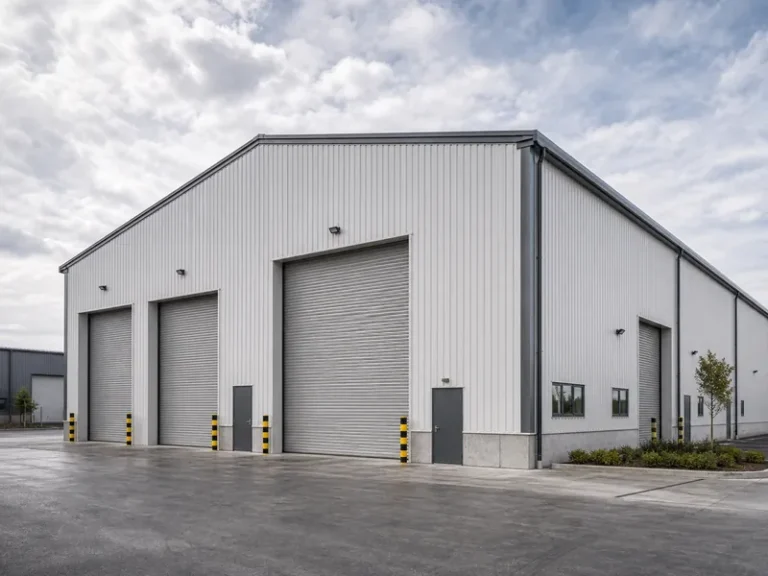
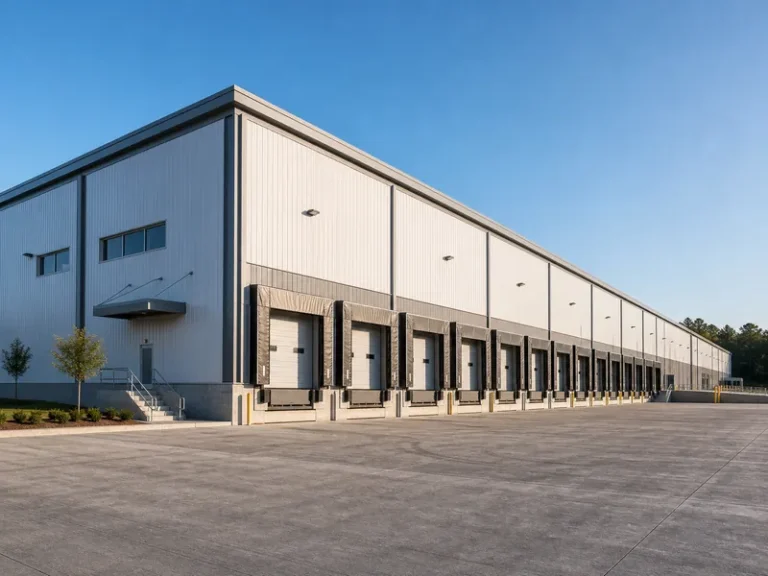
Such support buildings are frequently steel-framed, since a clear-span shell goes up quickly and keeps the interior open. A metal warehouse building suits equipment and bulk storage, while a community center or rental office is essentially a commercial steel building. Siting them takes the same groundwork as building a warehouse: access, drainage, and setbacks. The footprint discipline behind good warehouse building design keeps these structures compact, so more of the parcel stays open for homes.
Single-Wide vs Double-Wide: How Unit Type Changes the Count
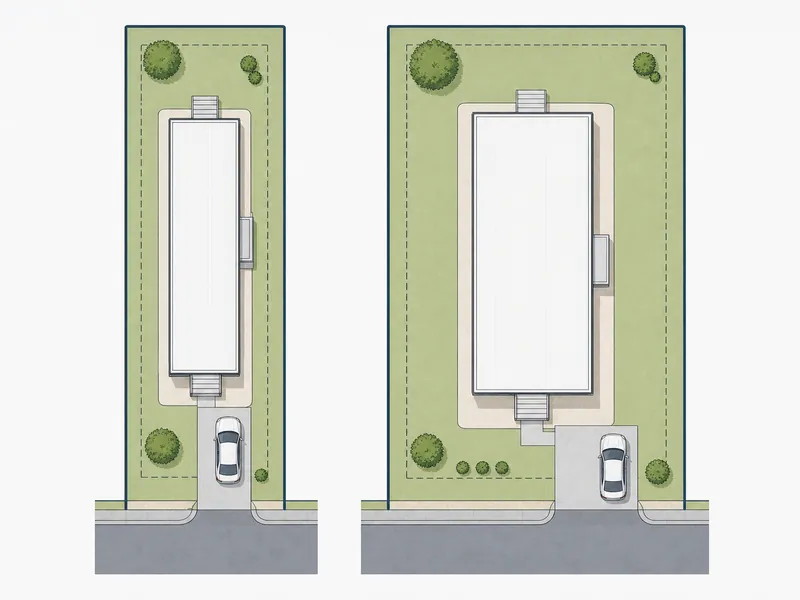
Home width drives the count, because a single-wide unit needs far less pad than a double- or triple-section home. The wider the unit and the parking and yard it requires, the fewer fit on the same usable acre.
| Home type | Typical floor area | Lot with setbacks and parking | Net homes per acre |
|---|---|---|---|
| Single-wide | 600–1,200 sq ft | 3,000–4,000 sq ft | about 8–10 |
| Double-wide | 1,000–2,400 sq ft | 6,000–8,000 sq ft | about 3–6 |
| Triple- / multi-section | 2,000–3,000+ sq ft | 8,000–12,000 sq ft | about 2–4 |
The figures assume the same net acre of roughly 30,000 buildable square feet used earlier, which keeps the counts consistent with the gross-versus-net math. A park built entirely of single-wides can legitimately reach the upper end of the per-acre range, while a community of double-wides will sit near the middle and a triple-wide layout near the bottom. Mixing unit types is common, so the practical density for a real site usually lands between these rows rather than on any single one.
Utilities: Public Sewer vs Septic and Well
Public sewer and water raise achievable density, while septic-and-well sites push it sharply down. With municipal connections, lots can stay small and a park can approach its zoned cap. The moment a site depends on on-lot septic, lot size is governed by the drain field rather than the zoning minimum.
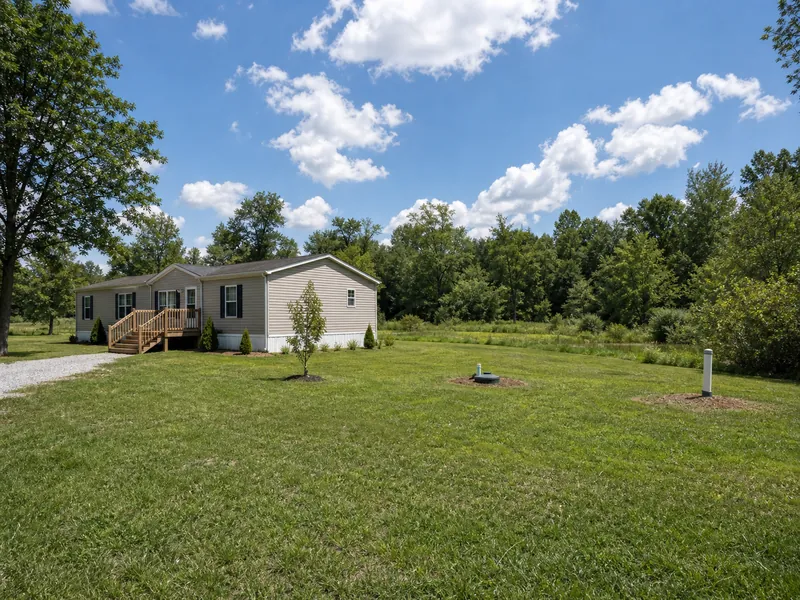
A septic system needs room. A single drain field can take 5,000 to 10,000 square feet or more once required separations from wells, structures, and property lines are added. That alone can hold a rural parcel to one or two homes regardless of what the density table suggests. As a rough guide, some areas allow a manufactured home on half an acre where public water plus septic is available, and require a full acre where there is no public water. Confirm the figure with the county health department, since septic capacity is a site-specific determination, not a zoning one.
Conclusion
The number of mobile homes an acre can hold is decided by constraints in a fixed order, so work through them in that order rather than starting from a target count. Confirm the zoning classification and any stated density cap first, because that is the hard ceiling. Next check the minimum lot or pad size and the required setbacks and spacing, which convert the cap into a realistic net figure. Last, verify utilities, since a septic-dependent site can fall to one or two homes no matter what the zoning allows. Legal density is set by the jurisdiction and the site’s own constraints, not by gross acreage alone. Lock those three down and the per-acre count falls out of them, usually in that five-to-eight band for a sewered park and far lower for a rural septic lot. This article covers density and lot planning, not septic engineering or the full ordinance of any one jurisdiction, both of which need a local professional before you commit to a site.
FAQ
How many mobile homes can fit on 2 acres?
Two acres typically supports about 10 to 16 manufactured homes in a sewered park, scaling from the five-to-eight-per-acre range. The count is not always a clean doubling, because a larger parcel can share one entrance road and one set of amenities across more lots, which slightly improves net density compared with a single acre.
How many mobile homes can you put on 1 acre with a septic system?
A single acre on septic usually supports just one to two homes, far below park density. The drain field and its required separations from wells, structures, and lot lines can claim 5,000 to 10,000 square feet per system, which caps the lot count well before zoning does.
What is the minimum lot size for a mobile home?
Minimum lot size depends on whether the home sits in a park or on its own parcel. Inside a manufactured home park, ordinances commonly require 3,000 to 6,000 square feet per pad, with some allowing 2,500 or requiring 8,000 or more. On a standalone rural or residential lot, expect a quarter acre to a full acre per home, and sometimes more where septic and wells are required.
Does the HUD Code limit how many homes per acre?
No, the federal HUD Code does not set density. It governs how a manufactured home is built and inspected for safety, and every manufactured home produced after June 15, 1976 must be certified to those standards (24 CFR Part 3280). How many of those homes fit on an acre is decided entirely by local zoning and lot rules.
Can you put two mobile homes on one lot?
Usually not in standard single-family residential zoning, which expects one dwelling per lot. Some agricultural districts, special manufactured home zones, or accessory dwelling unit allowances permit a second home, but that requires checking the specific local ordinance rather than assuming it.
Further Reading
- U.S. Census Bureau — Manufactured Housing Survey — Federal data on the size, type, and price of new manufactured homes, which supports the single-wide versus double-wide footprint figures used above.
- American Planning Association — Regulation of Mobile Home Subdivisions (PAS Report) — A planning-standards reference on subdivision density (about five to eight units per acre in sewered areas), lot widths, and setbacks; useful as a baseline, with the caveat that it is a historical PAS report.
- Sonoma County, California — Standards for Mobile Home Parks — A working example of how a local government ties park density to the underlying zoning map and sets parking and lot requirements.