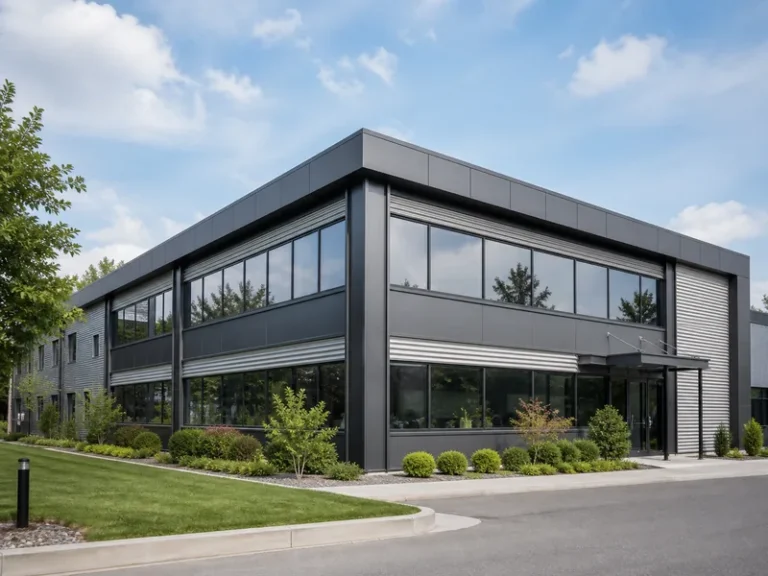





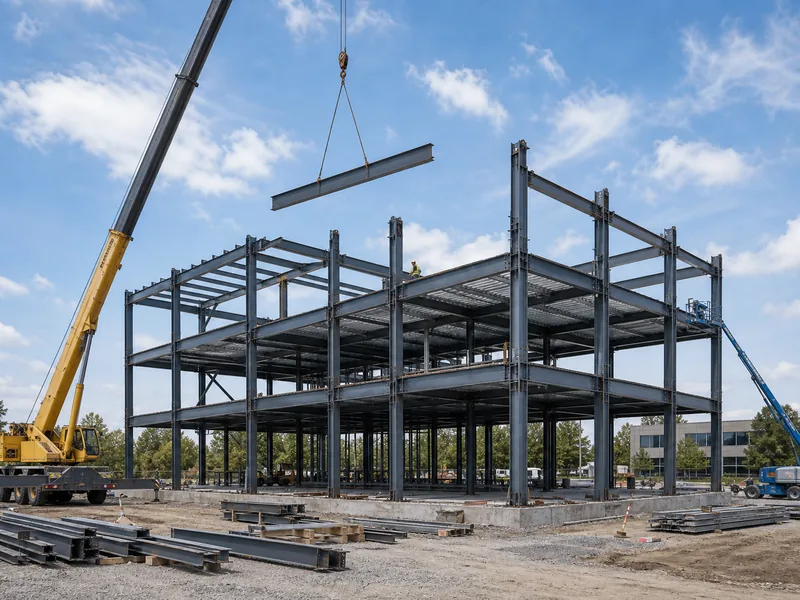
Most ground-up office buildings take about 8 to 18 months to construct, and once you count design and permitting, the full timeline from first sketch to move-in usually runs 12 to 24 months. A steel or prefabricated structure can shrink the structural phase to a matter of weeks, but front-end approvals and the interior fit-out are what actually set the calendar.
This article focuses on the schedule rather than the budget or the building’s lifespan, which are separate questions. It breaks the timeline into its real phases and shows how floor count, design complexity, and permitting speed move the dates.
How long does it take to build an office building?
Which number you should plan around depends on which clock you are counting. The construction clock, from breaking ground to substantial completion, runs about 8 to 18 months for a typical office. The full project clock, from the first design meeting to a certificate of occupancy, usually adds another five to twelve months of design and permitting on top. That is why owners who quote only the construction figure are often caught short.
Floor count is the clearest predictor within those ranges. A single-story or two-story office commonly lands in the 8-to-12-month construction range. A mid-rise or high-rise stretches to 18 months or more, since each added floor brings more MEP coordination, vertical transportation, and inspection cycles. Footprint pushes the same direction: a small shell under 5,000 square feet can finish in well under a year, while a 20,000-plus-square-foot program routinely runs past two years once the interior is complete. Construction method changes the structural phase more than the total. Timeline and budget also move together, so it helps to read a schedule and the office building costs side by side rather than locking one before the other.
The phases of an office building build — and how long each takes
An office building moves through seven recognizable phases, and the front-end usually decides whether the back-end runs on time. Pre-construction and design happen before any dirt moves, and they routinely take longer than owners expect, because that is when scope, budget, and drawings get locked.
The table below gives the typical duration for each phase and what tends to stretch it. Treat the ranges as planning bands, not promises; a complex jurisdiction or a heavily customized fit-out can move any single row.
| Phase | Typical duration | What drives or delays it |
|---|---|---|
| Pre-construction (feasibility, budget, team) | 3–6 months | Financing, site selection, scope changes |
| Design development | 2–4 months | Building complexity, custom MEP, revisions |
| Permitting & bidding | 1–3 months | Jurisdiction speed, zoning, contractor selection |
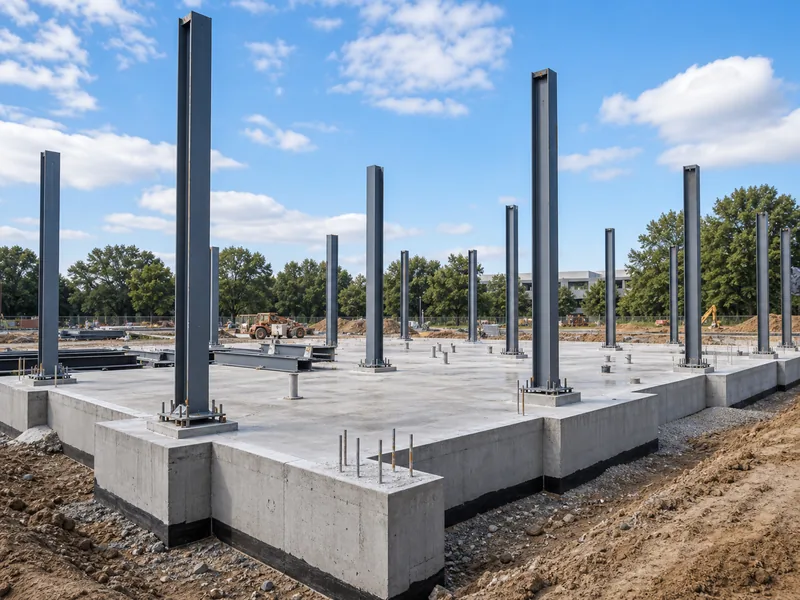
| Site prep & foundation | 1–3 months | Soil conditions, weather, foundation curing |
| Structural frame & envelope | 2–5 months | Building height, framing method, panel lead times |
| MEP & interior fit-out | 3–6 months | Tenant requirements, finishes, equipment |
| Inspection & closeout | 1–2 months | Inspection backlog, punch-list items |
Permitting deserves its own note because it runs partly in parallel with design. A streamlined urban office permit can clear in about four to six weeks, while a project facing zoning hearings or environmental review can wait several months. A reliable way to protect the whole schedule is to map the full metal building construction sequence early, so long-lead steps like permitting and foundation work are scheduled rather than discovered late. For a step-by-step view of the build itself, the guide to build an office building covers the sequence in more detail.
What makes one office building take longer than another
Two offices of the same square footage can finish months apart, and the gap usually traces back to a short list of variables. Knowing which ones apply to your project tells you where to add schedule buffer.
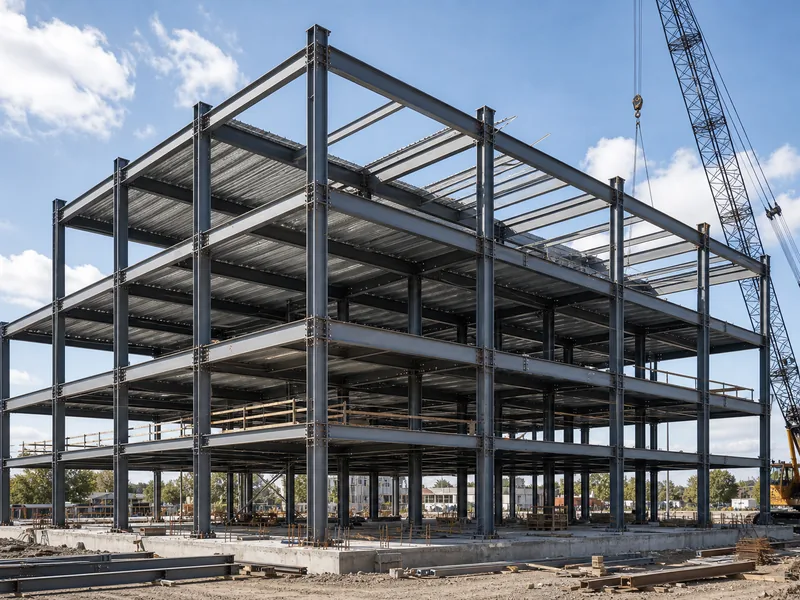
- Size and floor count — Each added floor multiplies MEP runs, elevator work, and inspection passes, so height adds time faster than footprint does.
- Design complexity — A standard open-plan office with drop ceilings moves faster than custom executive suites, built-in millwork, or lab and server spaces that need heavy MEP coordination.
- Permitting jurisdiction — The same drawings can clear in weeks in one city and sit for months in another, which is often the least controllable variable.
- Site and weather — Poor soil, sloped lots, and winter pours slow the foundation, and a delayed foundation delays everything stacked on top of it.
- Long-lead materials and labor — Switchgear, HVAC units, elevators, and curtain wall carry lead times measured in months, and a busy market stretches them further, so a late order or a short-staffed crew can become the critical path.
- Change orders — Mid-project scope changes are a frequent self-inflicted delay; each one ripples through procurement and trade sequencing.
The same phase logic governs other large structures, which is why a parallel question like how long it takes to build a church lands on similar ranges driven by the same front-end variables.
How steel and prefab construction shorten the schedule
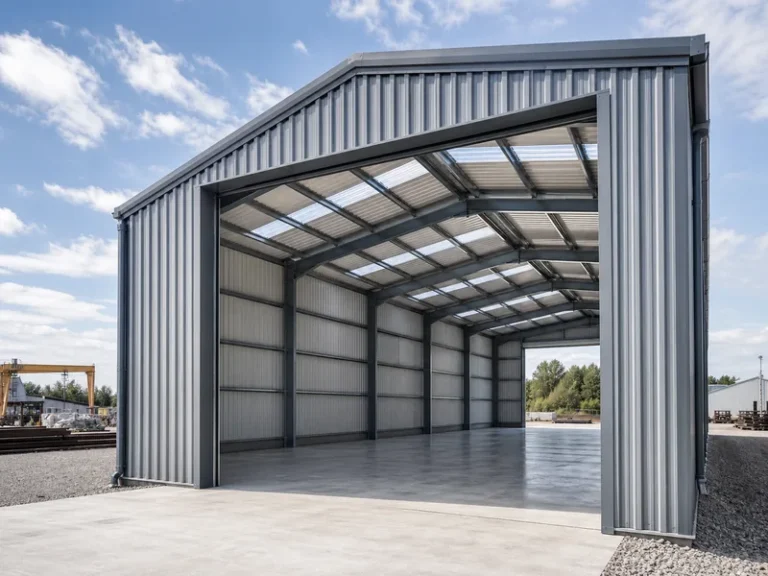
Steel and pre-engineered construction compress the schedule mainly by letting work happen in parallel rather than in sequence. While the rigid-frame components are fabricated in a plant, the site can be cleared, graded, and poured at the same time, so the metal building foundation cures while the steel is still in production. Concrete construction cannot overlap as cleanly, because much of it can only proceed once the previous pour has set.
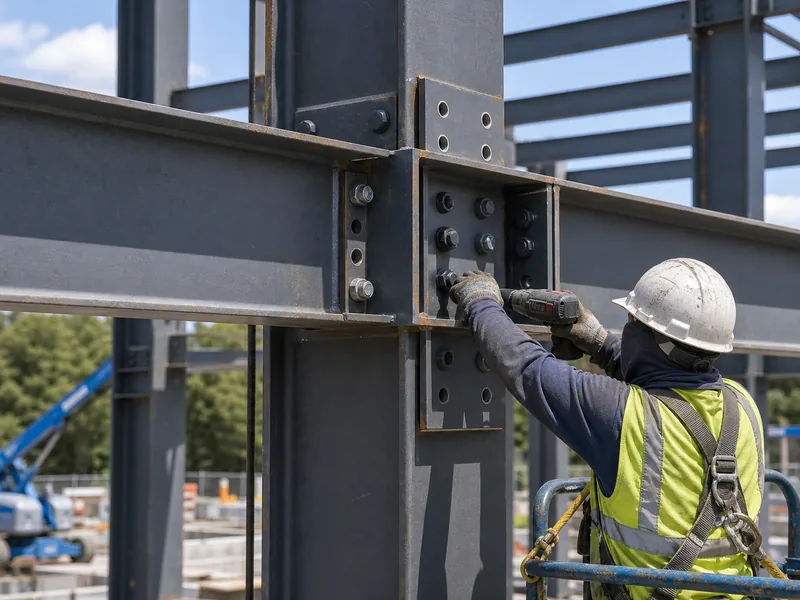
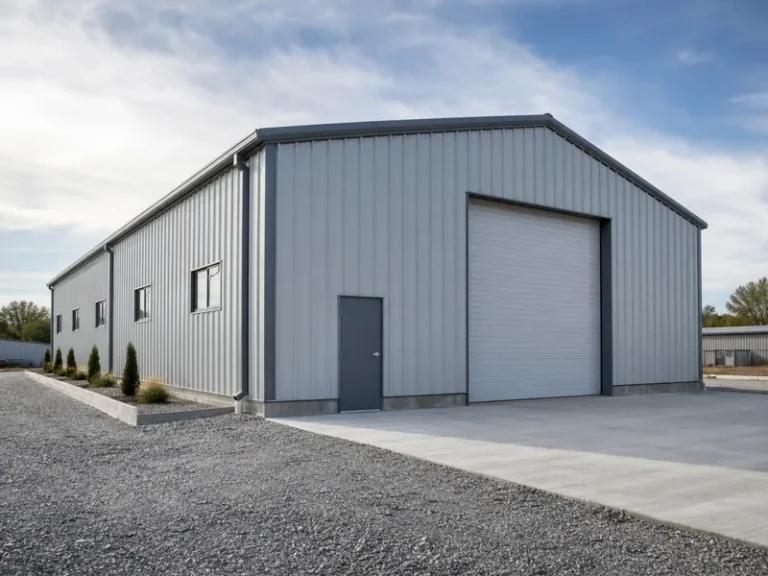
The on-site speed is real but specific. A pre-engineered clear-span frame arrives pre-punched and bolts together with no field welding. A small frame can be erected in days, and a single-story shell in the 5,000-to-10,000-square-foot range typically goes up in two to four weeks once the foundation is ready. Because the frame and panels close in quickly, the build also spends less time exposed to weather delays. The Metal Building Manufacturers Association reports that the shell of a metal building can be completed in 30 to 50 percent less time than competing framing systems.
Here is the qualification that most timelines skip: that speed applies to the structural shell, not to a finished, occupiable office. Prefabricated systems such as metal office building kits can stand a weather-tight, column-free frame in weeks, but the building still needs the same permitting, MEP rough-in, interior fit-out, and inspections as any other office. The frame stops being the bottleneck; the front-end and the fit-out take over.
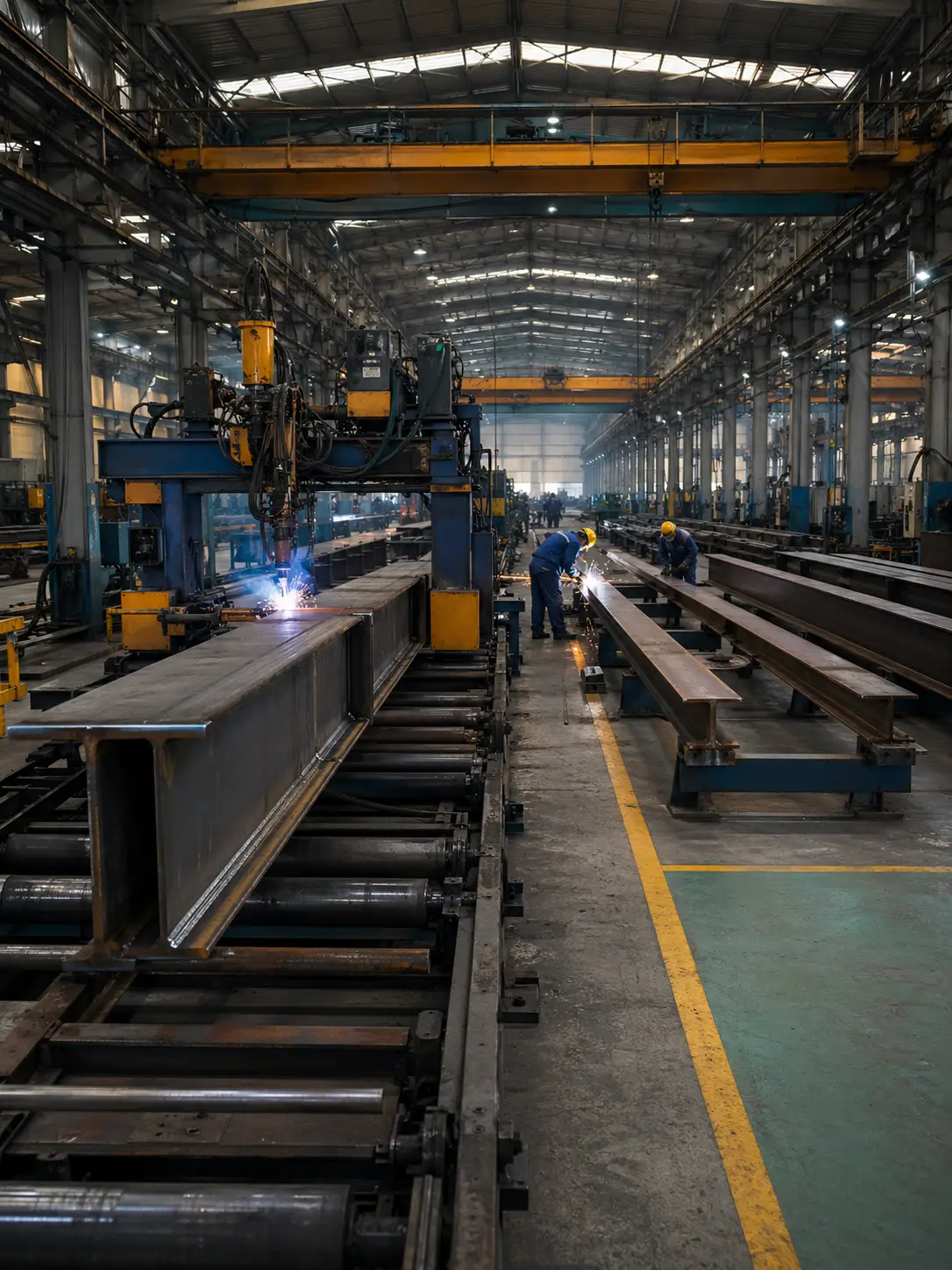
That parallel workflow depends on fabrication quality, which is where manufacturing capacity matters. As a steel structure manufacturer, KAFA produces H-beam, box-section, and C/Z-purlin components on dedicated lines at a 20,000-square-meter facility under ISO 9001:2015 quality management. That capacity lets the framing be detailed and built while site work proceeds rather than after it.
How to keep an office building project on schedule
The schedule is won or lost in the first few decisions, so the actions that protect it happen before erection ever starts.
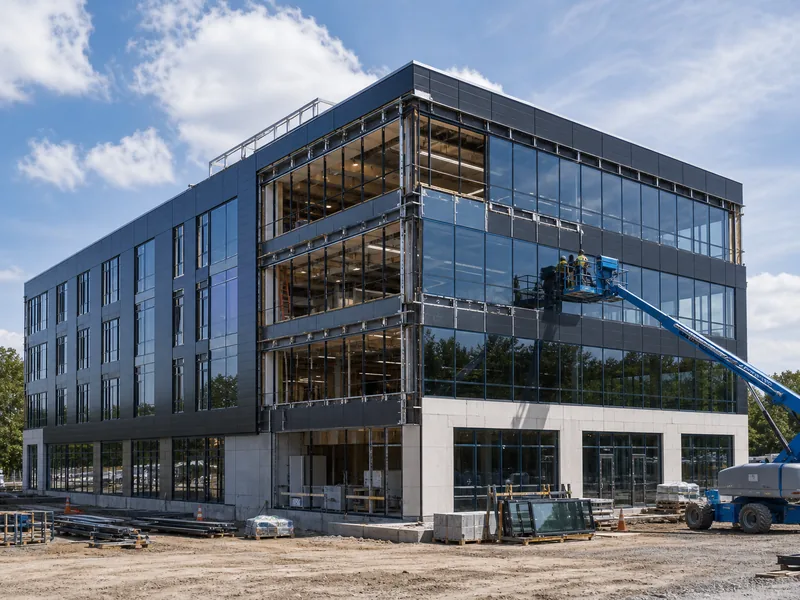
- Freeze the design early. Late changes are the usual source of overruns; locking the floor plan and MEP scope before permitting keeps change orders out of the critical path.
- Start permitting during engineering. Submitting for approvals while the structure is being detailed lets the slowest external clock run in parallel instead of after design.
- Order long-lead items first. Elevators, switchgear, and HVAC should be specified and ordered early, because their lead times often exceed the framing schedule.
- Use prefabrication where it fits. A pre-engineered frame and panelized envelope remove weeks of field labor and weather exposure from the structural phase.
- Hold one schedule with critical-path visibility. A single coordinated schedule, owned by one party, catches a slipping foundation or a late material order before it cascades.
Conclusion
The realistic answer is 8 to 18 months of construction for most offices, and 12 to 24 months once design and permitting are counted. A steel frame can trim weeks off the structural phase, but not the rest. The dates that decide whether you actually hit those ranges are a frozen design and an issued permit, not erection speed. Lock the drawings, submit for approvals early, and place long-lead orders before the foundation cures; once those are moving, a pre-engineered structure is the part of the schedule you can most reliably compress. For a buildable timeline tied to a specific footprint and floor count, request a quote with your site and program details.
FAQ
Can you build an office building faster with a steel or prefab system?
Yes, but mainly in the structural phase. A pre-engineered steel frame can be erected in days to a few weeks, which removes weeks from the schedule compared with cast-in-place concrete. Permitting, MEP rough-in, and interior fit-out run on the same clock regardless of framing method, so the total project savings are real but smaller than the shell numbers alone suggest.
How long does it take to get a permit for an office building?
A straightforward office permit clears in about four to six weeks in jurisdictions with streamlined review. Projects that trigger zoning variances, traffic studies, or environmental review can wait several months, and that wait is often the least predictable part of the timeline. Submitting during the design phase keeps it off the critical path.
What part of an office building timeline takes the longest?
The front-end and the fit-out, not the frame. Pre-construction and design routinely take three to six months and two to four months respectively, and interior fit-out adds another three to six, while the structural shell may go up in weeks. Owners who only schedule the construction phase tend to underestimate the total.
Does a multi-story office take much longer than a single-story?
Yes. A single- or two-story office typically falls in the 8-to-12-month construction range, while a mid- or high-rise stretches to 18 months or more. Each added floor multiplies MEP runs, adds elevator and stair cores, and creates more inspection cycles, so height adds time faster than additional ground-floor area.
How long does the steel frame itself take to erect?
A small clear-span frame can be stood in two to three days. A single-story shell of 5,000 to 10,000 square feet typically erects in two to four weeks once the foundation has cured. Bolt-together connections and pre-punched members let a small crew assemble primary and secondary framing quickly, with roof and wall panels following close behind.
Further Reading
- Metal Building Manufacturers Association (MBMA) — industry association; its resources document how a metal building shell can be completed in 30–50% less time than competing framing systems.
- International Code Council (ICC) — develops the building codes behind permitting and inspections, the approval steps that gate an office building schedule.
- Associated General Contractors of America (AGC) — national construction association with resources on commercial project delivery methods and scheduling.