




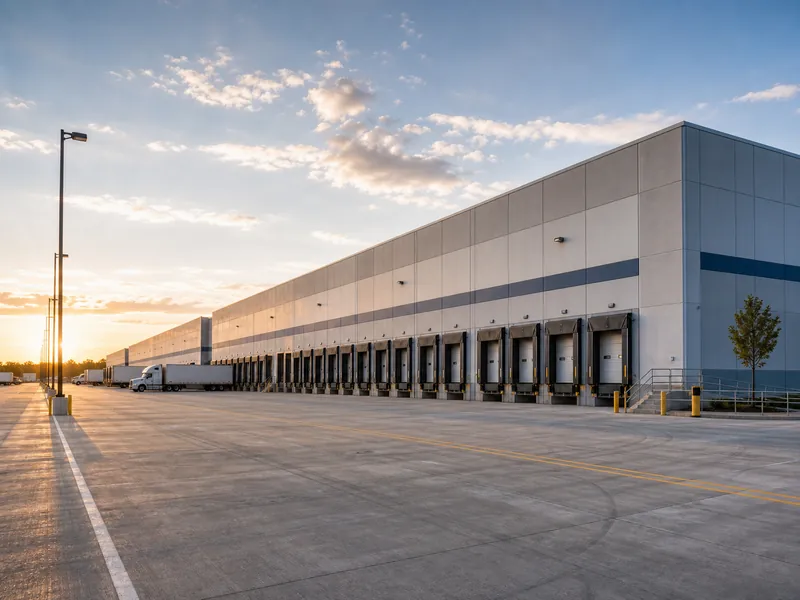
Renting warehouse space in the U.S. averages about $9 per square foot per year, with quoted rates running from under $5 in rural and secondary markets to more than $20 in coastal logistics hubs. That headline figure is only the base rent, though. The rate a landlord advertises rarely matches what hits your monthly invoice, because most warehouse leases stack property taxes, insurance, and maintenance on top of it. This guide pulls the base rate apart from the all-in cost so you can budget the number you will actually pay, not the one in the listing.
A quick boundary first: the figures below describe standard dry, ambient warehouse and distribution space. Refrigerated, flex, and heavy-manufacturing space price on a different curve, and local quotes always beat national averages once you are ready to sign.
What Warehouse Space Actually Rents For
The national average asking rent for warehouse space sits near $9 per square foot per year, up from roughly $7.50 two years earlier. Recent industrial market reports put in-place rents in the $8.40 to $9.10 range nationally, so $9 is a reasonable planning anchor for ambient space before any market or size adjustment. The full spread is wide: rural and tier-2 markets can quote under $5, while supply-constrained coastal hubs push past $20.
Smaller spaces cost more per square foot, not less. In recent industrial market reports, warehouses under 100,000 square feet average around $9.50 per square foot in annual asking rent, roughly 31% above the $7.25 typical of space over 100,000 square feet. Both are base-rent benchmarks before NNN charges, and a national average is a planning figure rather than a quote for your building. The gap is structural: fixed building costs spread across less area, smaller tenants sign shorter terms, and a 5,000-square-foot user has less negotiating leverage than a regional distributor taking a half-million square feet. If you are still settling on a footprint, matching your rack layout and throughput to a realistic envelope is its own exercise, and our guide to typical warehouse sizing walks through how square footage maps to actual storage capacity.
What Pushes the Rate Up or Down
Location moves warehouse rent more than any other single variable. Coastal and supply-constrained markets near major ports run well into the teens per square foot, while inland secondary markets can dip below $6 for comparable space. Two buildings with identical specs can differ by two or three times based purely on the metro and the submarket’s proximity to highways, ports, and labor.
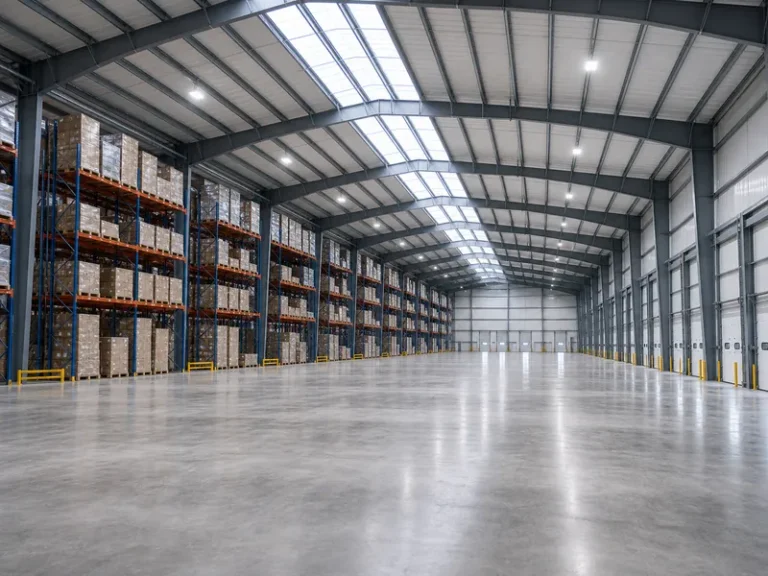
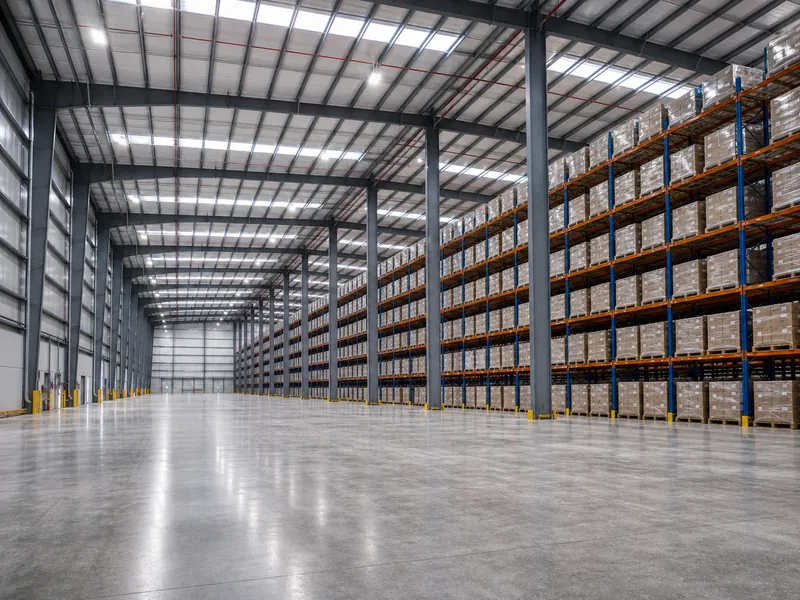
Building specifications come next. A modern distribution center with 32-foot or taller clear heights and wide, column-free bays usually rents higher than an older, low-clearance building, because vertical cube and clear-span floor area let a tenant store far more on the same footprint. Clear height is only one driver, though. Building class and age, dock count, available power, and lease term all move the rate too. Measured per pallet position rather than per square foot, the higher-rate building is often the cheaper one. Specialized space changes the math again: a cold storage warehouse carries refrigeration, insulation, and power loads that lift its rent well above dry storage.
Market timing rounds it out. Industrial vacancy has been climbing toward and past 7% nationally after years near record lows, and rising vacancy hands tenants more leverage on free rent, improvement allowances, and escalation caps than they had a few years ago.
Base Rent vs. the All-In Number: How NNN Leases Work
Most warehouse space is leased on a triple net (NNN) basis, which means the quoted rate is a starting point rather than the total. Under NNN, the tenant pays base rent plus a pro-rata share of three pass-through costs: property taxes, building insurance, and common area maintenance (CAM). Those operating expenses typically add $1.50 to $3.00 or more per square foot per year, so an “$8.50 NNN” quote often becomes $11 or more once the nets are loaded in.
A gross lease, which bundles most operating costs into one rate, shows up far less often in industrial deals. When you do see one, read what it actually includes, because “modified gross” can leave utilities or interior maintenance on the tenant.
What the base rent and CAM usually cover:
- The building shell, roof, and structural frame
- Primary electrical service, loading docks, and dock equipment
- Property taxes and the building’s structural insurance
- Common-area items: parking lots, exterior lighting, landscaping, and snow removal
What usually stays on the tenant:
- Utilities: power, gas, water, and sewer
- Interior maintenance, racking, and material-handling systems
- Security, telecom, and the tenant’s own contents insurance
Working Out Your All-In Monthly Cost
Your all-in cost is base rent plus operating expenses, multiplied by your square footage and divided by twelve. The table below runs that calculation across three common sizes at representative rates. Treat the rates as illustrative, since your own market and lease will shift them, but the method holds regardless of the numbers.
| Warehouse size | Base rent ($/sq ft/yr) | NNN add-on ($/sq ft/yr) | All-in ($/sq ft/yr) | Annual cost | Monthly cost |
|---|---|---|---|---|---|
| 10,000 sq ft (small) | $9.00 | $2.50 | $11.50 | $115,000 | $9,583 |
| 50,000 sq ft (mid) | $8.00 | $2.50 | $10.50 | $525,000 | $43,750 |
| 100,000 sq ft (large) | $7.25 | $2.25 | $9.50 | $950,000 | $79,167 |
Two patterns matter for your own estimate. The per-square-foot base rent falls as the building gets larger, and the all-in rate is one to three dollars above whatever base figure a broker leads with. Run your real target footprint through the same three columns before you compare any two listings, because a lower base rate with a heavier NNN load can end up costing more than a higher base rate with light operating expenses.
Costs the Per-Square-Foot Quote Leaves Out
Several real costs never appear in the headline per-square-foot rate. Budgeting only against base rent is the easiest way to underestimate a lease, and the gaps add up fast on a multi-year term:
- Security deposit: usually one to three months of rent due at signing
- Annual escalation: base rent typically steps up 2% to 5% each year, compounding over the term
- Utilities: power, gas, water, and sewer commonly run $0.50 to $2.00 per square foot per year on top of rent
- Tenant improvements: office build-out, lighting, or dock upgrades, partly offset by any improvement allowance you negotiate
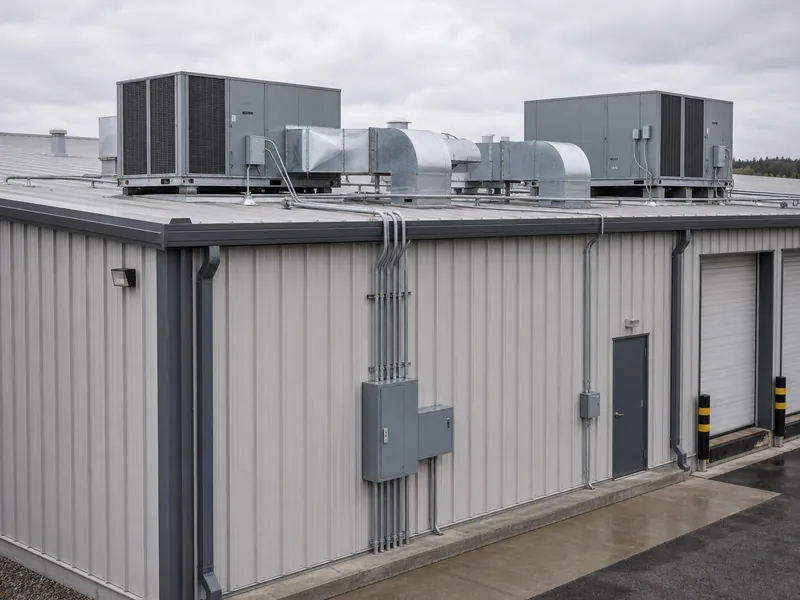
- Power and systems upgrades: an older building with thin electrical service can require costly upgrades before it fits modern operations
One verification step prevents most surprises: ask the landlord for the building’s operating-expense reconciliation history. A few years of CAM, tax, and insurance actuals tell you whether that $2.50 estimate is stable or trending up, which matters far more over a five-year term than the base rate itself.
Renting vs. Owning a Steel Warehouse
For most tenants, renting stays the better call, and only at a stable, long-term scale does the math start to favor owning. Lease payments climb every year with escalation and leave no asset behind, so a company settled into a fixed, long-term footprint eventually pays enough rent to question whether it should hold the building instead. There is no universal break-even. It depends on your occupancy volume, how long you expect to stay, local land and construction costs, and your cost of capital. Past a certain scale and tenure, though, owning a metal warehouse can pencil out better than renewing a lease indefinitely.
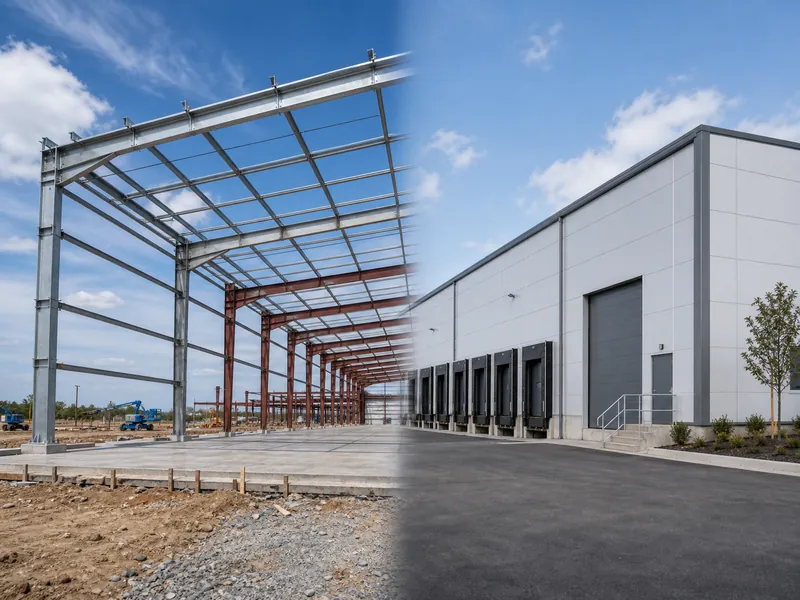
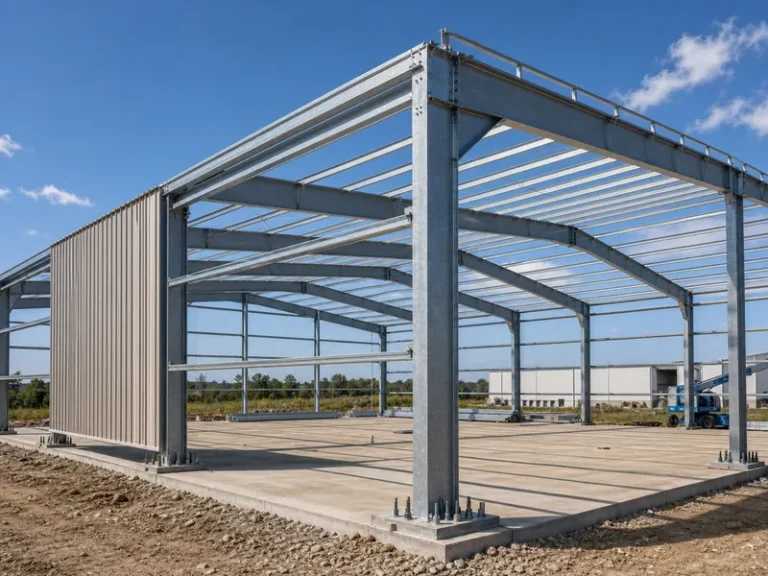
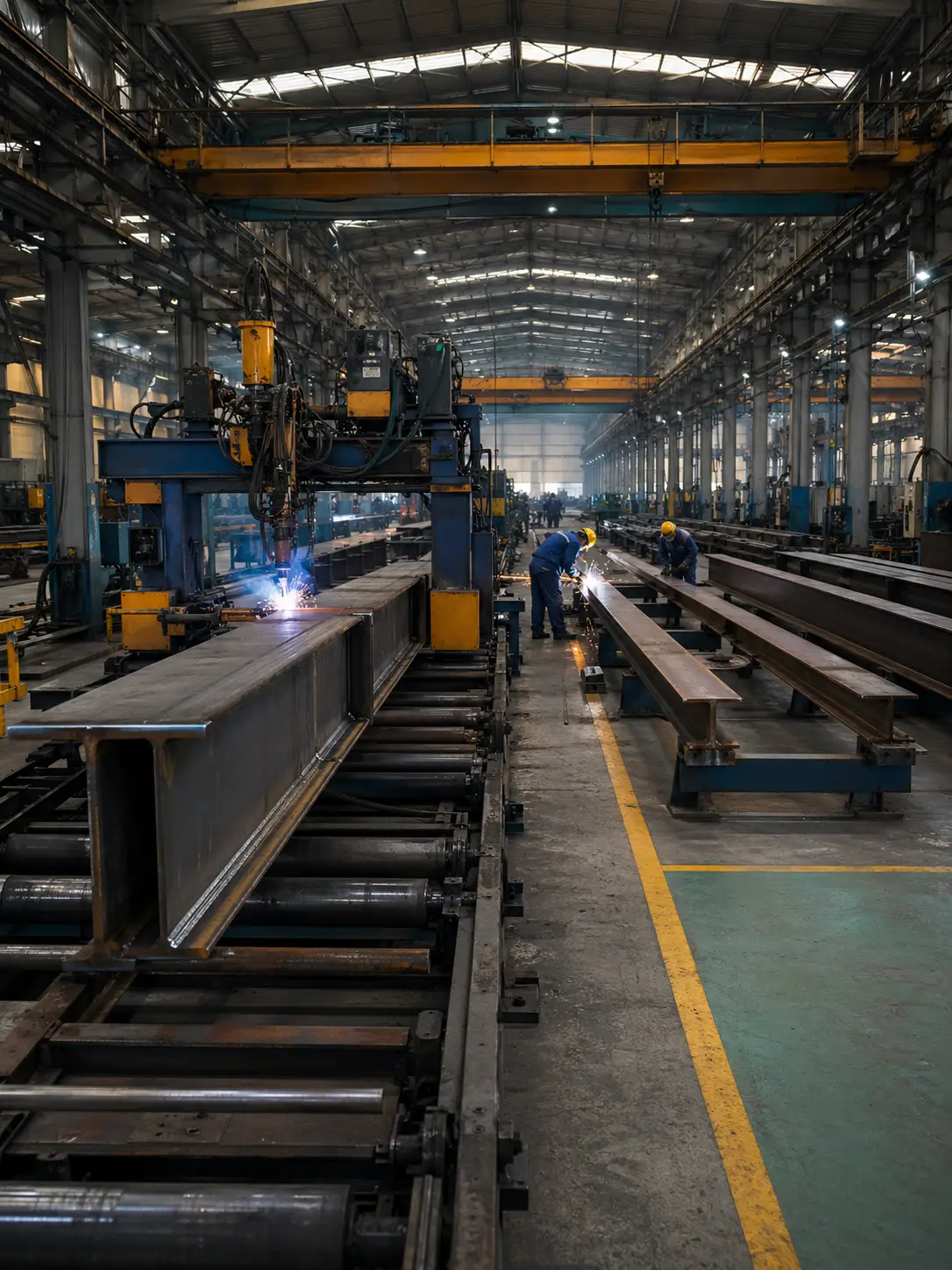
Ownership also buys control that no lease offers: clear heights, bay spacing, dock count, and crane or mezzanine provisions built to your operation rather than inherited from a previous tenant. A pre-engineered steel building is the usual route, since the frame, purlins, and cladding are fabricated to spec and erected quickly. As a steel structure manufacturer that designs and fabricates light and heavy steel buildings, Qingdao KAFA Fabrication produces warehouse frames on dedicated H-beam, box-section, and purlin lines, so the structure can be sized to the exact footprint and loading an owner-occupier needs.
Whether owning beats renting in your case is a budgeting exercise, not a slogan. Compare your projected all-in rent over the years you plan to operate against the cost to build a warehouse plus land, and weigh the durability and low-maintenance profile covered in the advantages of a steel warehouse. If the numbers point toward owning, you can request a quote on a building sized to your layout.
Budgeting the All-In Cost
The number to budget around is the all-in occupancy cost, not the base rent a listing advertises. Two variables drive most of the uncertainty in that figure: the local market rate, which can triple between an inland secondary metro and a coastal port submarket, and the lease structure, where NNN pass-throughs add a dollar or more per square foot that the headline rate hides. Get the operating-expense estimate in writing, model the escalation across your full term rather than year one, and you will be comparing real all-in costs instead of broker headline rates.
FAQ
How much does it cost to rent a small warehouse?
A small warehouse rents at a higher per-square-foot rate than a large one, generally $9.50 and up for space under 100,000 square feet. A 10,000-square-foot unit at an $11.50 all-in rate works out to roughly $115,000 a year, or about $9,583 a month. Very small co-warehousing or flex units under a few thousand square feet are often priced as flat monthly fees rather than by the square foot.
Why does smaller warehouse space cost more per square foot?
Smaller space carries a premium because fixed building costs spread across less area, leases run shorter, and small tenants have less negotiating leverage. The same finishing, dock, and structural costs get divided over fewer square feet, so the rate per square foot rises even though the total bill is lower.
What is a triple net (NNN) lease?
A triple net lease has the tenant pay base rent plus property taxes, building insurance, and common area maintenance. Those three “nets” typically add $1.50 to $3.00 per square foot per year, which is why an NNN quote always lands above the base rate once expenses are loaded in.
What is the difference between base rent and total occupancy cost?
Base rent is the landlord’s advertised per-square-foot rate; total occupancy cost is everything you actually pay to use the space. Occupancy cost adds NNN charges, utilities, the amortized deposit, escalation, and any improvement spend, and it typically runs one to three dollars per square foot above base rent.
Is it cheaper to rent or build a warehouse?
Renting is cheaper in the short term and for uncertain footprints, while building or owning tends to win at scale and over long tenures. The break-even depends on your volume, how many years you will occupy the space, local land and construction costs, and your cost of capital, so the decision is best made by modeling projected rent against an ownership estimate rather than by a rule of thumb.
Does location really change the price that much?
Location is the single largest factor in warehouse rent, swinging quoted rates from under $5 to more than $20 per square foot for comparable space. Proximity to ports, highways, and dense labor markets drives coastal and primary-market rates into the teens, while inland secondary markets stay well below the national average.
Further Reading
- CommercialEdge National Industrial Report — CommercialEdge (via CommercialCafe). Monthly national industrial in-place rents and vacancy data, the type of source behind the roughly $9-per-square-foot averages used here.
- Cushman & Wakefield U.S. MarketBeat — Cushman & Wakefield. Quarterly industrial supply, demand, and pricing reports by national sector and individual metro, useful for checking your own market’s rate.
- NAIOP Research & Publications — NAIOP, the Commercial Real Estate Development Association. Industrial space demand forecasts and warehouse design references behind the clear-height and building-class drivers discussed above.