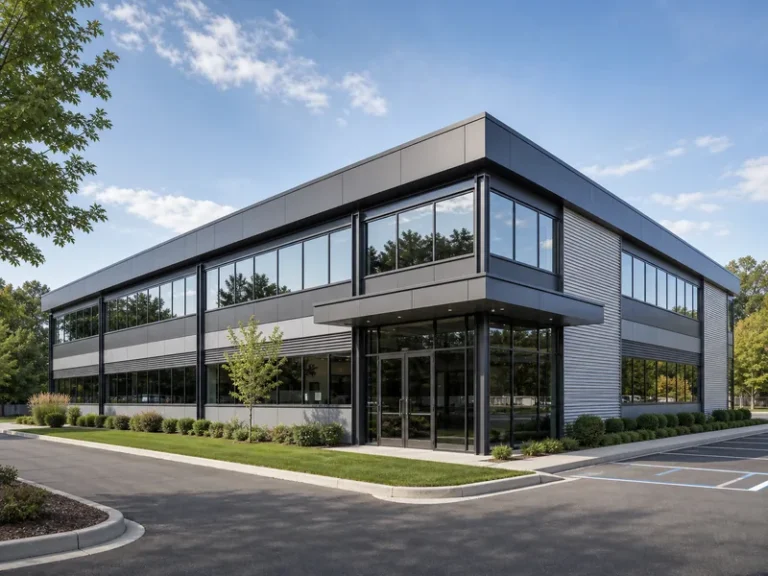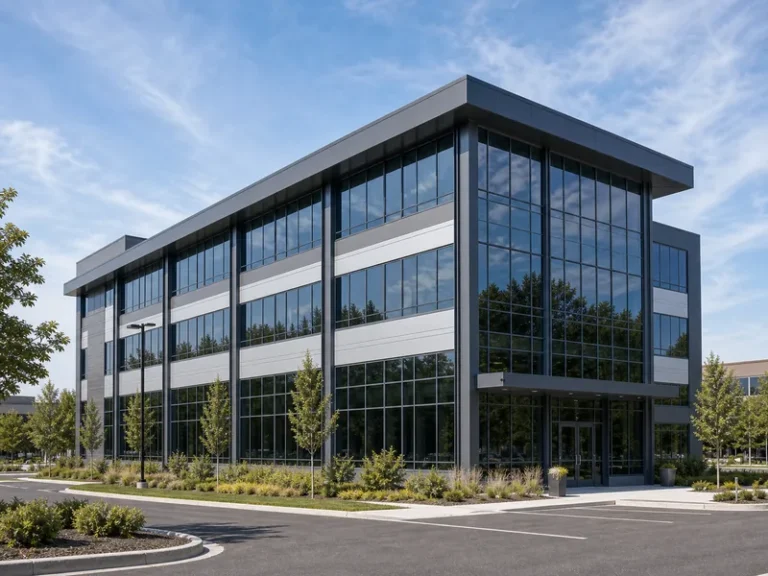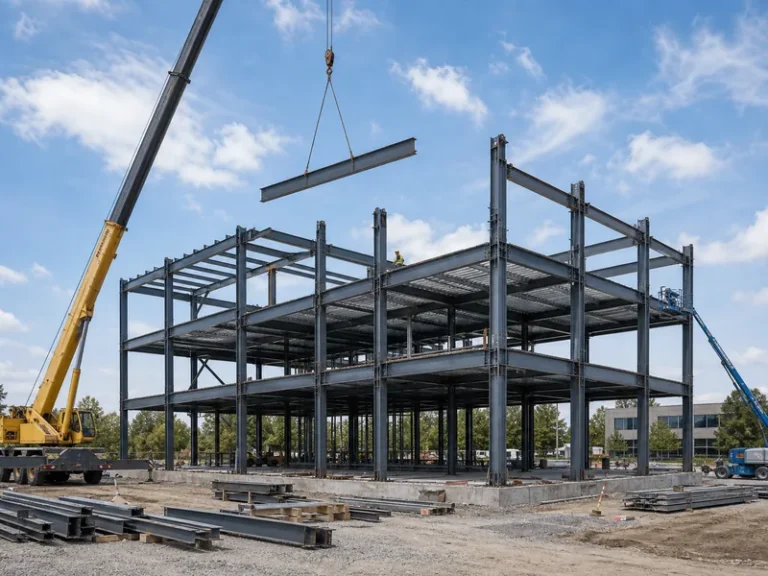





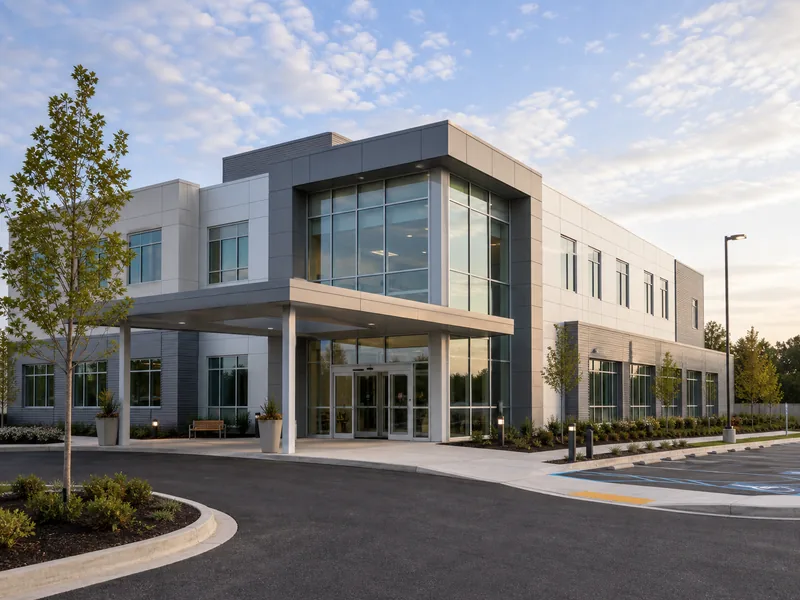
A medical office building costs roughly $350 to $650 per square foot to build in the United States, but that single figure hides the decision most owners need to make. The number is two layers of one total, not two costs to stack. The structural shell — foundation, frame, roof, and exterior — runs about $200 to $350 per square foot. The clinical build-out that turns that shell into exam rooms, labs, and treatment space accounts for the remaining $150 to $300. The shell is the predictable part. The build-out, with its specialized plumbing, air handling, and medical-grade finishes, is where the medical premium sits. Separating the two turns a square-foot estimate into a budget you can defend.
These ranges cover ground-up construction of an outpatient medical office building, built with standard mechanical, electrical, and plumbing (MEP). That includes the exam-based clinics, dental and specialty practices, and multi-tenant suites that make up most of the market. Higher-acuity space such as imaging suites and ambulatory surgery centers runs well above them, and a full hospital is a different budget entirely. The ranges also exclude land, financing, and the medical equipment itself, all covered below.
What a medical office building costs per square foot
A medical office building typically costs $350 to $650 per square foot to build, with the spread driven mostly by how clinical the interior has to be. A basic set of exam rooms, a reception area, and standard MEP sits near the bottom of that band; a practice that needs heavy plumbing, lead shielding, or surgical-grade air handling climbs toward the top. A non-clinical office shell finishes for noticeably less per square foot, which is why general office building costs make a poor proxy once medical systems enter the picture.
That per-square-foot number is a planning tool, not a quote. The same 8,000-square-foot building can land at $2.8 million or $5.2 million depending on specialty, region, and finish level, so use the range as a starting band and tighten it once the clinical program is defined.
A cost scope note: what the per-square-foot number covers
Every range in this guide is a construction cost: the base building plus the interior build-out. That covers structure, envelope, partitions, installed MEP — including medical gas piping where a procedure suite needs it — and finishes, with general contractor and design fees folded into those trades. The shell and build-out figures above are two slices of that same number, so do not add them to the all-in facility-type figures in the next section. A per-square-foot construction cost still leaves out several large items owners routinely forget:
- Land, site acquisition, and brokerage or legal fees
- Site work and offsite improvements such as grading, utilities, parking, and stormwater
- Permitting, entitlements, and impact fees
- Financing and carrying costs
- Furniture, fixtures, and tenant-supplied equipment (FF&E)
- Movable medical equipment, where a single imaging or X-ray unit can range from $20,000 to over $100,000
Design and architectural fees usually add 3% to 12% of construction cost, and a contingency of 5% to 10% of the budget is standard on healthcare work, because change orders are common once inspections begin.
Medical office cost by facility type
Facility type moves medical office cost more than almost any other single variable, from about $350 per square foot for a basic family practice to $900 or more for an ambulatory surgery center. Each figure below is an all-in construction range — shell and build-out together. Every row assumes standard regional labor, shifting up in high-cost metros and down in lower-cost ones.
| Facility type | Typical cost (per sq ft) | What drives the range |
|---|---|---|
| Family / general practice | $350–$500 | Exam rooms, reception, standard MEP |
| Dental / orthodontic | $400–$600 | Chair plumbing, suction and compressed air, sterilization |
| Urgent care / walk-in | $500–$650 | Extended-hours systems, triage, small lab, possible X-ray |
| Imaging / diagnostic | $600–$800 | Lead or RF shielding, equipment-specific structure |
| Ambulatory surgery center | $650–$900+ | OR pressurization, medical gas, infection control |
| Multi-tenant MOB | $250–$350 shell, +$150–$250 build-out | Shared cores, tenant-specific fit-outs |
A multi-tenant medical office building is the one case where shell and build-out are usually priced, and contracted, separately: the developer builds the shell and each tenant funds its own interior. Reading those two numbers together keeps a per-tenant budget honest.
Shell vs build-out: where the medical premium lives
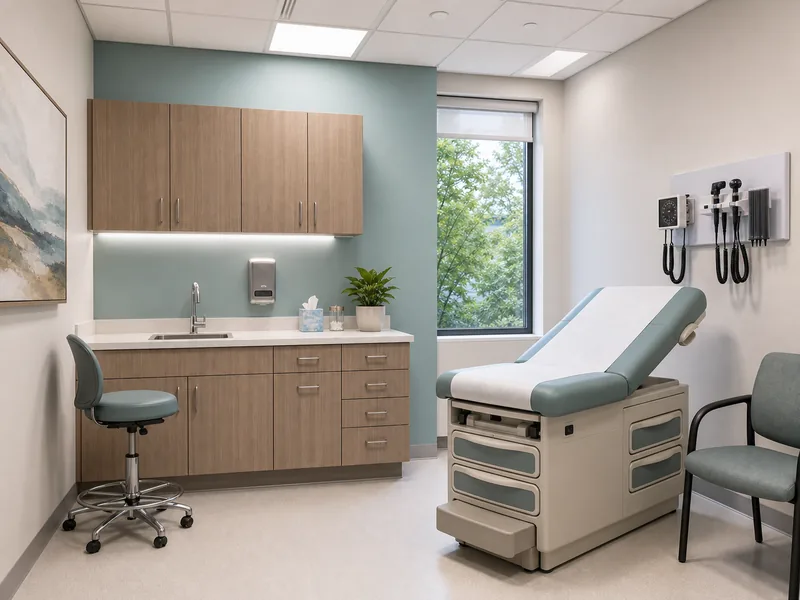
The structural shell of a medical office runs about $200 to $350 per square foot, while the clinical build-out adds another $150 to $300, and the medical premium lives almost entirely in that second number. A bare two-story shell is not far in cost from any other commercial building of the same size; published square-foot models for a small two-story medical base building have long sat near the low end of that shell range. What pushes the total up is everything inside: dense MEP, redundant air handling, medical-grade flooring and wall protection, and the casework a clinical workflow demands.
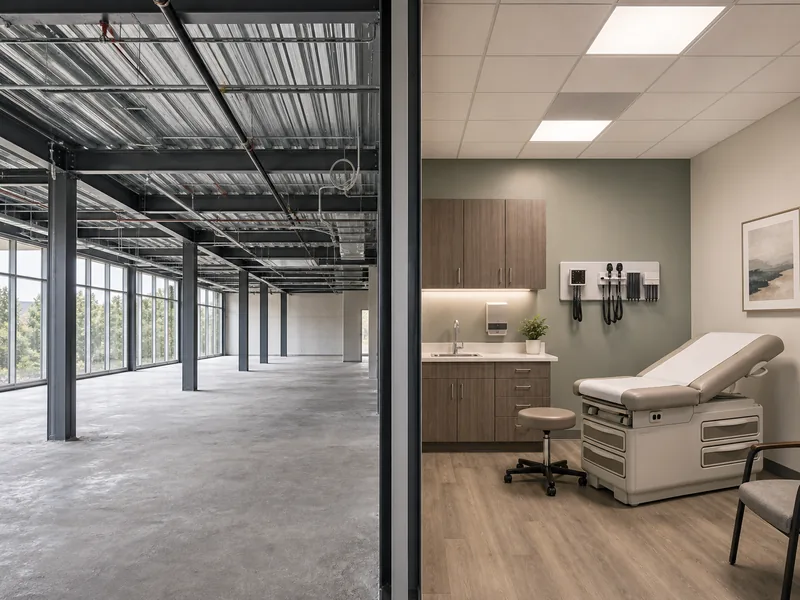
The split matters because the two layers behave differently. A shell is geometry and structure, so it prices predictably and is easy to value-engineer. A build-out is program-driven and tends to grow as clinical requirements firm up. Owners who commit the shell early and leave realistic room in the build-out budget are the ones who avoid mid-project surprises.
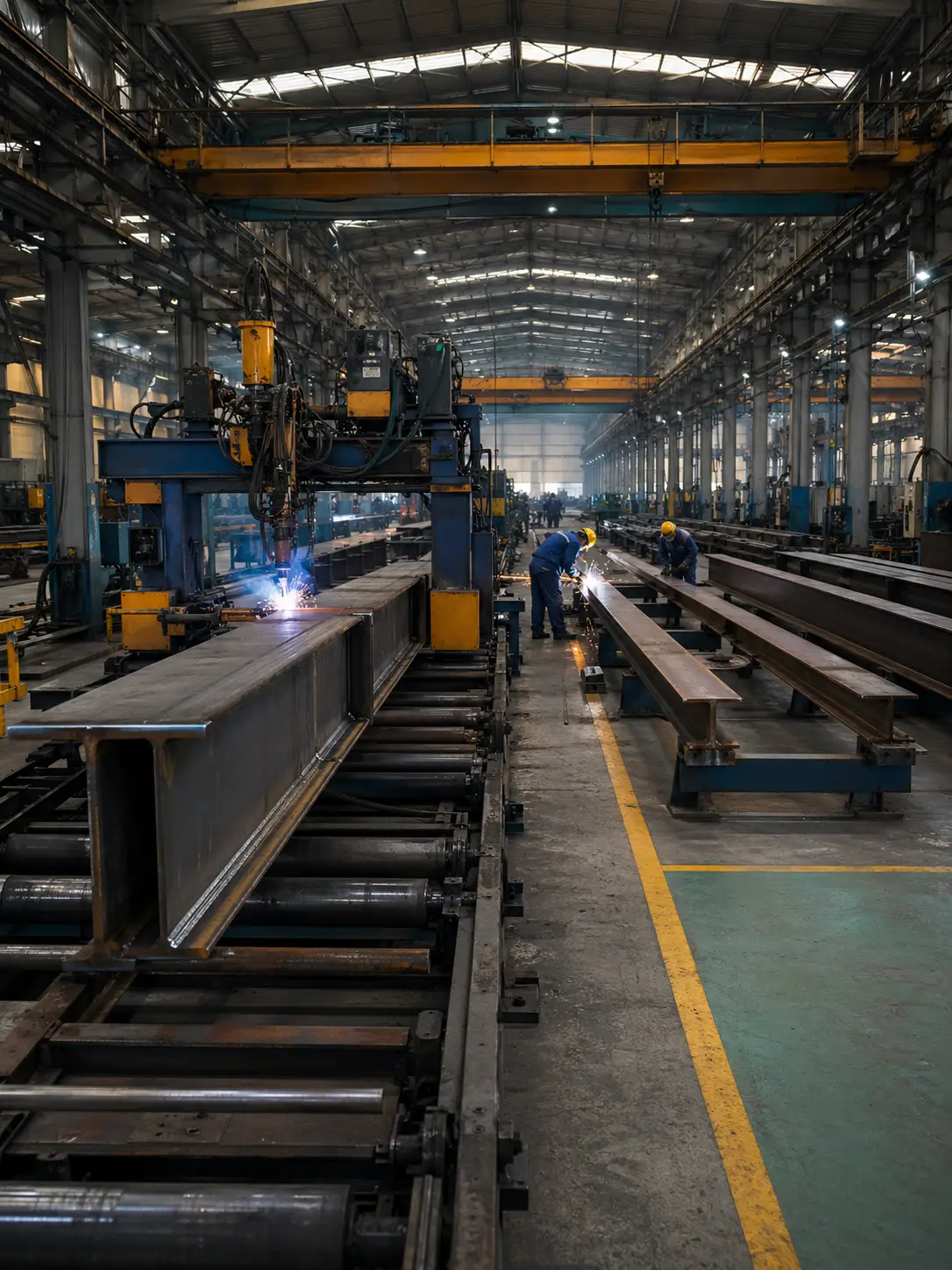
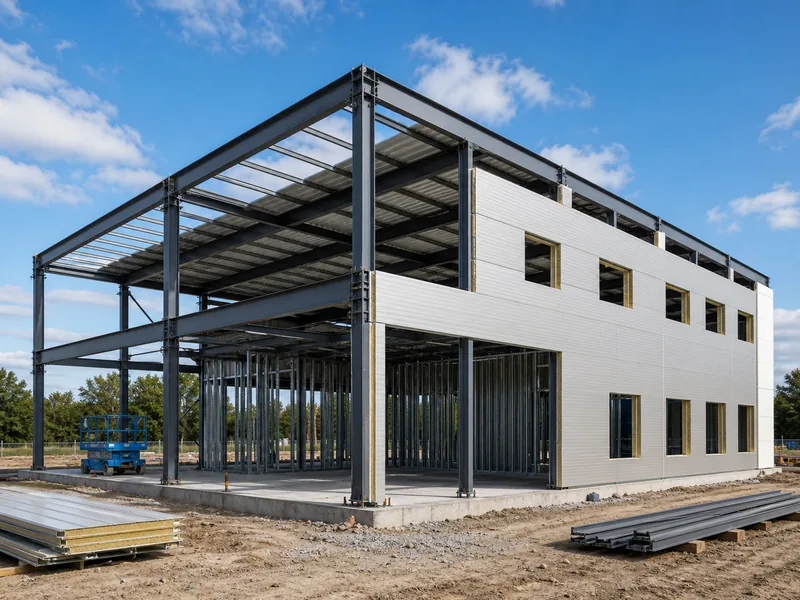
The shell is also the layer a steel fabricator controls. A pre-engineered steel frame for a prefab office building gives a clear-span, column-free floor plate that adapts cleanly to exam-room layouts, and it ships on a fixed fabrication schedule rather than a weather-dependent one. Qingdao KAFA Fabrication, as a steel structure manufacturer, fabricates the H-beam and box-section frame, purlins, and cladding for that shell on dedicated production lines. The clinical fit-out, medical equipment, and healthcare compliance stay with the specialist contractor and design team. Owners weighing structural options can start on the engineering side with steel building design before pricing the interior, since a clinic is one of the more demanding commercial steel buildings to fit out.
What drives medical office building cost up
Specialized mechanical, electrical, and plumbing systems are the largest reason a medical office costs more than a standard office of the same size. Exam and procedure rooms need more air changes, dedicated circuits, far more plumbing than an open office plan, and medical gas in some cases. That MEP work alone can run $30 to $70 per square foot across the trades. Several other drivers are worth checking against your own program:
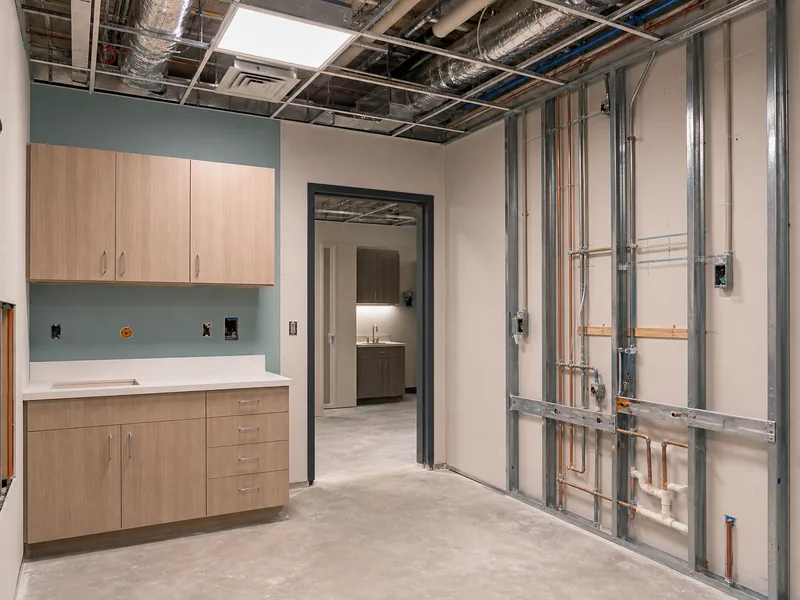
- Healthcare codes and infection control. Outpatient facilities follow design and construction standards that govern finishes, air handling, and room separations, adding cost a standard office never carries.
- Equipment integration. Imaging shielding, surgical air, and equipment-specific structural support must be designed in from the start, not retrofitted.
- Region and labor. Dense, high-demand metros run materially higher than smaller markets for the same building, and nonresidential construction costs have stayed elevated as labor and MEP scopes remained tight.
- Permitting and approvals. Converting retail or general office space to clinical use can require costly system upgrades and long approval timelines before occupancy is allowed.
For context, full hospitals and acute-care facilities cost more again. National square-foot models place a three-story hospital well above typical medical office ranges, so it helps to keep medical office and hospital budgets in separate boxes.
How to keep medical office building cost under control
Most of the savings on a medical office come from decisions made before construction starts, not from value-engineering finishes afterward. The most reliable levers concern scope and sequence:
- Fix the estimating basis first. Decide whether your number is shell-only, fully built-out, or a total project budget including land and equipment, and hold every later estimate to that same basis.
- Separate the shell from the build-out. A predictable shell, often a pre-engineered steel frame, lets you commit the structural budget while clinical scope is still firming up, and it can shorten the schedule because fabrication runs in parallel with site work.
- Coordinate MEP early. Bringing mechanical and electrical input in during design rather than after is where design-build delivery tends to save 10% to 15% and heads off the change orders that inflate medical projects.
- Match the build-out to the specialty. Avoid buying surgery-center systems for a practice that only needs exam rooms.
Schedule is part of cost. A clinic shell-and-fit-out commonly takes 10 to 14 months, and imaging or surgical work can run longer. If timing is a constraint, look at what it takes to build an office building and how long an office build realistically takes before you commit to an opening date.
Where the budget actually moves
Three numbers carry most of the budget risk on a medical office: the build-out intensity your specialty requires, your metro’s labor market, and the MEP scope hiding inside the word “standard.” The shell, by contrast, is the part you can price with confidence early. Before comparing bids, decide which basis your $350-to-$650 figure represents — shell, built-out, or total project — and make every estimate answer to it. A clinic budget falls apart when a shell price and a fully fitted price get compared as if they were the same scope. Keeping those two layers labeled is the difference between a planning number and a real one.
FAQ
How much does it cost to build a medical office building per square foot?
Most medical office buildings cost $350 to $650 per square foot to build, with imaging and surgery centers reaching $800 to $900 or more. The low end assumes standard exam-room MEP; the high end reflects shielding, medical gas, or surgical air handling. Published square-foot cost models are useful for a first pass, but a local contractor’s number for your specialty will always be tighter.
What is the difference between shell cost and build-out (TI) cost?
Shell cost covers the base building — foundation, structure, envelope, and roof — at roughly $200 to $350 per square foot. Build-out, also called tenant improvement or TI, covers the clinical interior at $150 to $300. In a multi-tenant medical office building, the developer usually pays for the shell and each practice funds its own TI, which is why the two are quoted separately.
Why does a medical office cost more than a regular office?
A medical office costs more because of its MEP systems, not its structure. Exam and procedure rooms need more air changes, more plumbing, dedicated power, and sometimes medical gas, and healthcare codes govern finishes and room separations a standard office never has to meet. The structural shells of the two buildings can be nearly identical in price.
Does a prefab steel structure lower medical office building cost?
A prefab steel structure mainly affects the shell layer, where it makes cost and schedule more predictable rather than dramatically cheaper. A pre-engineered frame ships on a fixed fabrication timeline and gives a column-free floor plate that adapts to clinical layouts. It does not change the clinical build-out, and the MEP and finishes that drive the medical premium are the same regardless of frame type.
What is not included in a per-square-foot medical office estimate?
A per-square-foot construction estimate excludes land, site work, permitting, financing, furniture, and the medical equipment itself. It also typically excludes design fees beyond what is folded into construction, which add another 3% to 12%. For a realistic total project budget, add those soft costs plus a 5% to 10% contingency on top of the construction number.
How much does a small medical clinic cost in total?
A small medical clinic of about 5,000 square feet typically costs $2.0 million to $2.75 million for construction at $400 to $550 per square foot, before land and equipment. Add FF&E, medical equipment, soft costs, and contingency, and the all-in figure runs meaningfully higher. Square footage and specialty move this number the most.
Further Reading
- RSMeans Square Foot Cost Models — Medical Office — Gordian / RSMeans. Published per-square-foot models for medical office base buildings; a neutral benchmark for the shell and base-building ranges used in this guide.
- Turner Building Cost Index — Turner Construction. Quarterly index of nonresidential construction cost trends; the basis for the note that medical construction costs have stayed elevated recently.
- Guidelines for Design and Construction — Facility Guidelines Institute (FGI). The widely adopted design and construction standard for outpatient and hospital facilities; explains many of the code-driven requirements that push medical build-out cost above a standard office.