




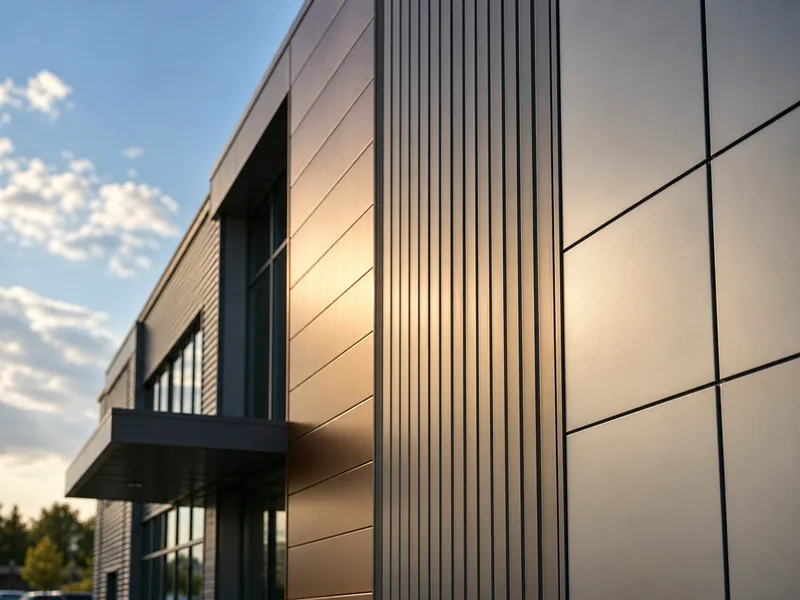
Metal cladding is the non-loadbearing outer skin of metal panels fixed to a building’s frame to keep weather out and give the exterior its finished surface. It wraps the walls and, on most steel buildings, the roof as well, sitting on top of the structure instead of holding the structure up. This guide covers what cladding is made from, the panel systems you will meet, and the variables that decide which one suits a given wall.
The short version: cladding is a protective and architectural layer, not a structural one. The longer version is where the choices live, because steel, aluminum, zinc, and copper behave differently, and a flat architectural panel and a ribbed agricultural sheet solve different problems on the same building.
How Metal Cladding Works on a Building
A building’s frame carries the loads, while the cladding handles what the frame does not: wind-driven rain, sunlight, temperature swings, and the look of the finished wall. The panels fasten to the secondary steel, meaning the girts that run horizontally across the columns and the purlins that span the roof. Because the cladding is non-structural, an owner can recladd or change the exterior finish years later without disturbing the frame underneath.
That non-loadbearing role drives much of the selection logic further down. The panel only has to carry its own weight plus the wind and snow pressing on its face, so thin coated sheet does a job that would be impossible for it as a beam.
One naming point clears up a lot of confusion. In residential work, the same panels are usually called siding; in commercial and industrial steel construction, cladding is the standard term, and it covers both wall and roof panels rather than walls alone. If you are weighing wall products specifically, the trade-offs in steel siding options overlap heavily with what follows here.
Cladding Materials: Steel, Aluminum, Zinc, and Copper
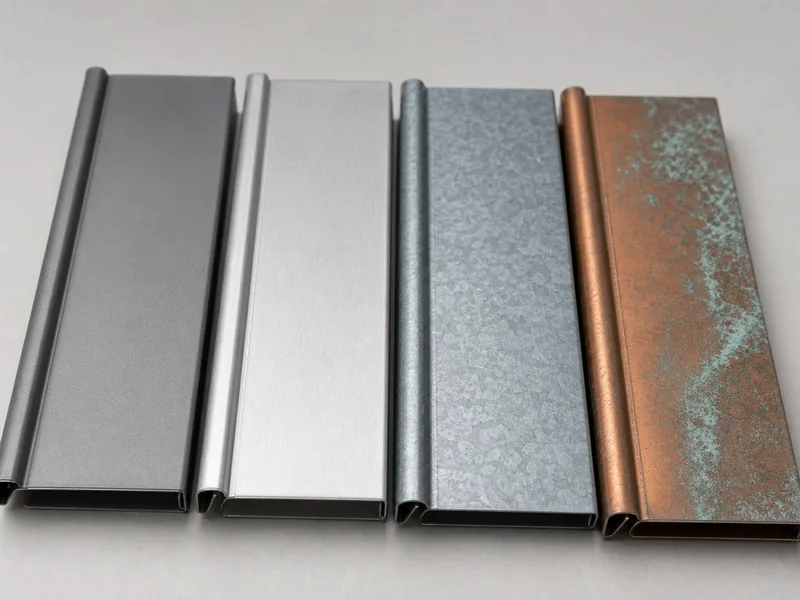
Four metals account for almost all architectural and industrial cladding, and they rank roughly from least to most expensive in this order:
- Steel is the cheapest and most widely used of the four. It is heavier than the others and relies on a metallic or painted coating to resist rust, so the coating, not the steel, sets its corrosion life.
- Aluminum is light, naturally corrosion-resistant, and easy to form, which suits coastal sites and complex shapes; its weakness is that it dents easily and moves a lot with temperature.
- Zinc weathers to a stable patina and has a mild self-healing surface that closes minor scratches over time, which is part of why it holds up in marine air.
- Copper lasts for generations and is fully recyclable, developing its familiar green patina over decades rather than years, at the highest material cost of the group.
Mixing those metals on one wall invites a specific problem. When dissimilar metals touch in the presence of moisture, the contact points corrode galvanically, so aluminum fasteners against copper, or plain steel screws through aluminum, are a detailing mistake. Matching the fastener and flashing metal to the panel, or isolating them, is the detail that keeps a wall from streaking and failing at the screws.
Types of Metal Cladding Panels and Systems
Metal cladding panels are easiest to sort along two axes at once: how they fasten, and whether they carry insulation. Reading both axes together is how a vague “metal panel” turns into a specific product you can specify.
Single-Skin Panels: Exposed vs. Concealed Fastener
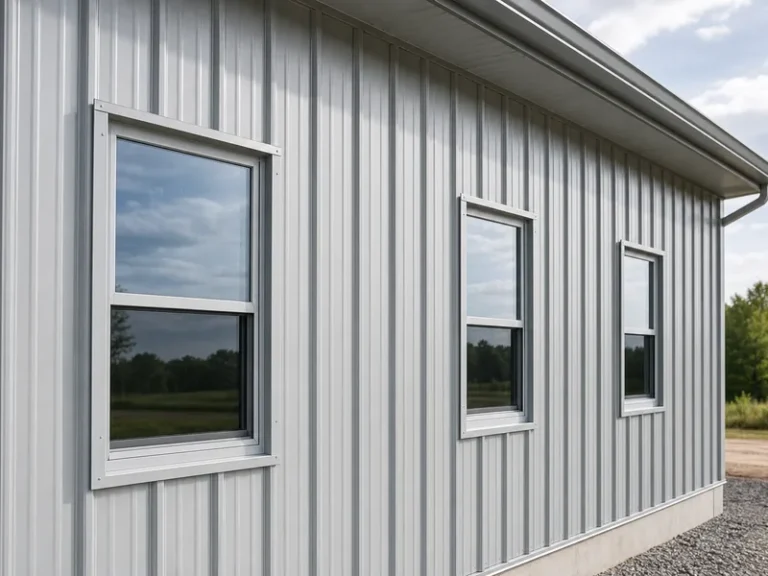
Single-skin panels are one layer of profiled metal, split by how the fasteners show. Exposed-fastener panels, including the corrugated and R-panel profiles common on workshops and barns, screw straight through the face, which makes them economical and fast. The trade-off is that the rubber washer under each screw head is the actual weather seal and the first part to age, so re-torquing or swapping washers is a normal mid-life task on that system. Concealed-fastener panels hide the clips behind the next panel, giving a cleaner face and fewer penetrations through the waterproof plane, at a higher cost.
Standing Seam
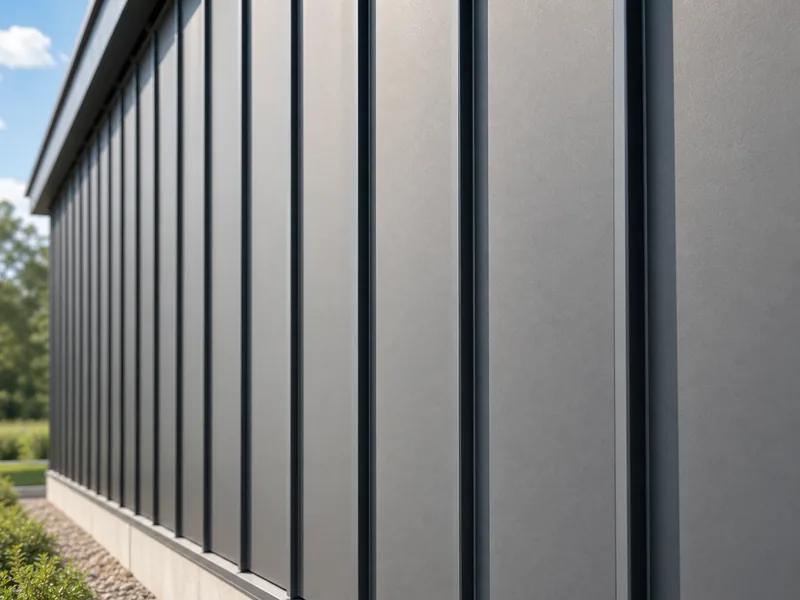
Standing seam is a concealed-fastener system whose vertical ribs are folded together above the water line, which is why it performs on low roof slopes where lapped panels would leak. The panels clip to the structure so they can expand and contract freely, a detail that matters more with aluminum than steel. The same profile shows up on walls for a crisp vertical look, and it is the system behind many architectural metal roofs; the mechanics carry over directly from a standing seam metal roof.
Insulated Metal Panels (IMPs)
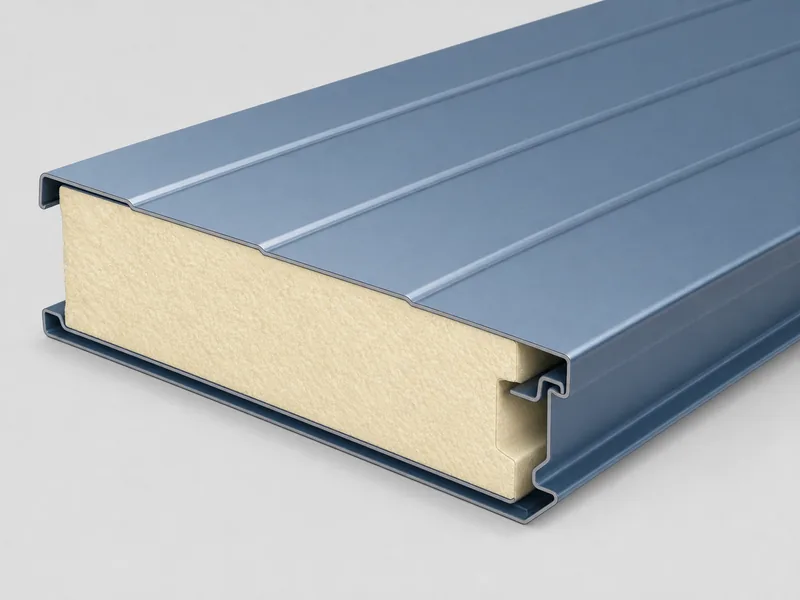
Insulated metal panels sandwich a rigid foam core between two metal skins, combining the weather skin and the insulation in one factory-made unit. A single IMP can deliver a high R-value in one thickness, with the exact value set by the core depth, and it installs in one pass instead of layering panels, insulation, and a liner on site. That built-in thermal layer is why IMPs dominate cold storage and conditioned warehouses; for buildings that insulate behind a single skin instead, the options for metal building insulation handle the same job in separate layers.
Metal Composite Material (MCM)
Metal composite material bonds two thin metal sheets, usually aluminum, to a solid core to make a flat, rigid panel that stays dead flat across large faces. That flatness is its selling point for façades, but the core is the catch: many cores are partly combustible, which moves the fire question (below) to the front of the selection for tall or occupied buildings.
Coatings, Gauge, and Finishes
The coating on a steel or aluminum panel is its corrosion and color system, not just its paint, and it usually wears out before the metal does. Galvalume and galvanized are metallic coatings bonded to steel at the mill; over that, a paint finish adds color and UV resistance. Premium PVDF finishes, sold as Kynar or Hylar, hold color and resist chalking far longer than the cheaper polyester and silicone-modified polyester finishes. That gap shows up as a wall that fades evenly versus one that looks tired in a decade. Because the finish carries the long-term appearance, comparing coating systems is closely tied to the older question of galvanizing vs painting steel.
Gauge describes the sheet thickness, and a lower gauge number means thicker metal. Steel wall panels often fall in the 24 to 26 gauge range, with lighter 29 gauge used for some liner and budget panels, though the right gauge depends on the span between supports, the exposure, and the panel profile. Thickness also governs a cosmetic issue: wide flat faces in thin steel or aluminum show oil-canning, the gentle waviness visible across a panel in raking light. Tighter ribs, striations, or a heavier gauge hide it, which is why flat architectural panels get specified with more care than ribbed industrial sheet.
How Cladding Performs Against Weather, Wind, and Fire
Cladding performance breaks into three demands that pull a design in different directions: shedding water, resisting wind, and behaving safely in a fire. Treating them as separate checks keeps a panel choice from passing one demand and failing another.
Water control depends on the profile and the seams more than the metal. Lapped, exposed-fastener panels rely on slope and gaskets to drain, while folded standing-seam joints carry water over the fastener entirely, which is why slope dictates the system as much as taste does.
Wind is the load easiest to underestimate on cladding. Codes treat panels and their fasteners as “components and cladding,” and the suction at a building’s edges and corners runs higher than across the broad wall, so the fastening pattern tightens in exactly those zones. Getting that zoning wrong is a common cause of panels peeling at a corner in a storm while the field of the wall holds.
Fire is the demand that has reshaped façade selection. Panels with combustible cores, including some MCM and the foam in IMPs, are tested as full wall assemblies rather than as single materials, because the assembly governs how flame spreads up a building. That is the point of an assembly test like NFPA 285: a flat, attractive composite panel is not automatically the safe choice on a tall or occupied building.
Where Metal Cladding Is Used
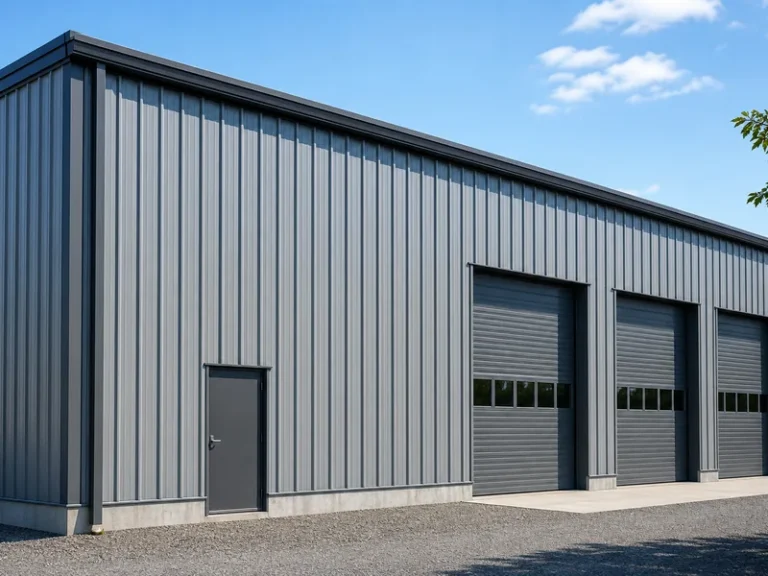
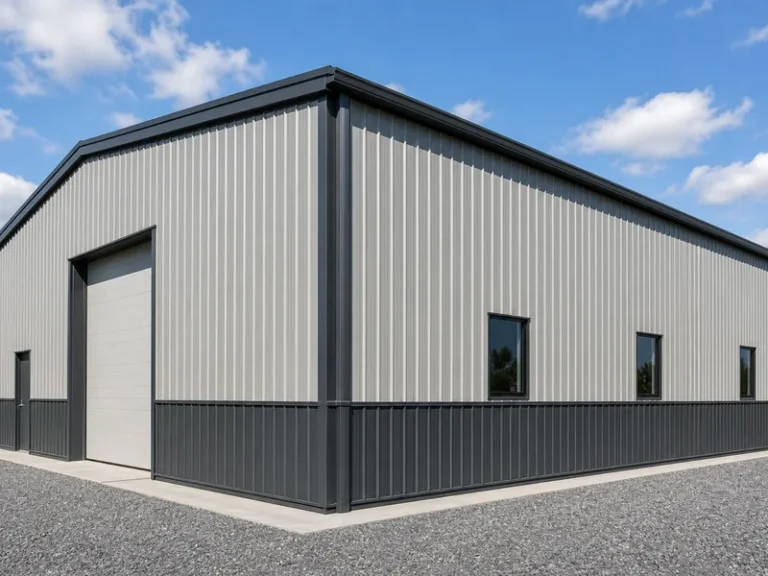
Metal cladding shows up anywhere a building needs a durable, low-maintenance exterior that goes up quickly, from warehouses, factories, and farm buildings to retail boxes and the accent walls of offices and homes. On a pre-engineered steel building, the wall and roof panels are supplied and detailed alongside the frame as pre engineered metal building components. That keeps the cladding, girts, and structure matched from the start rather than reconciled on site.
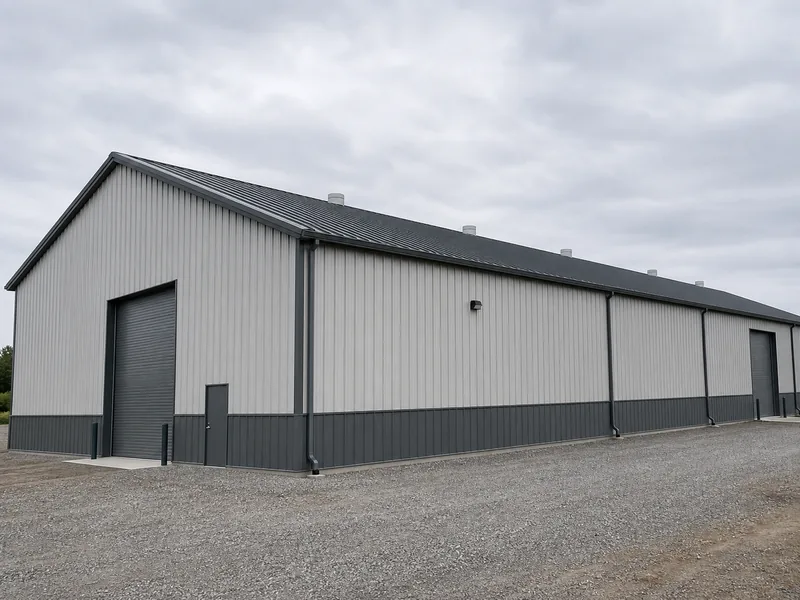
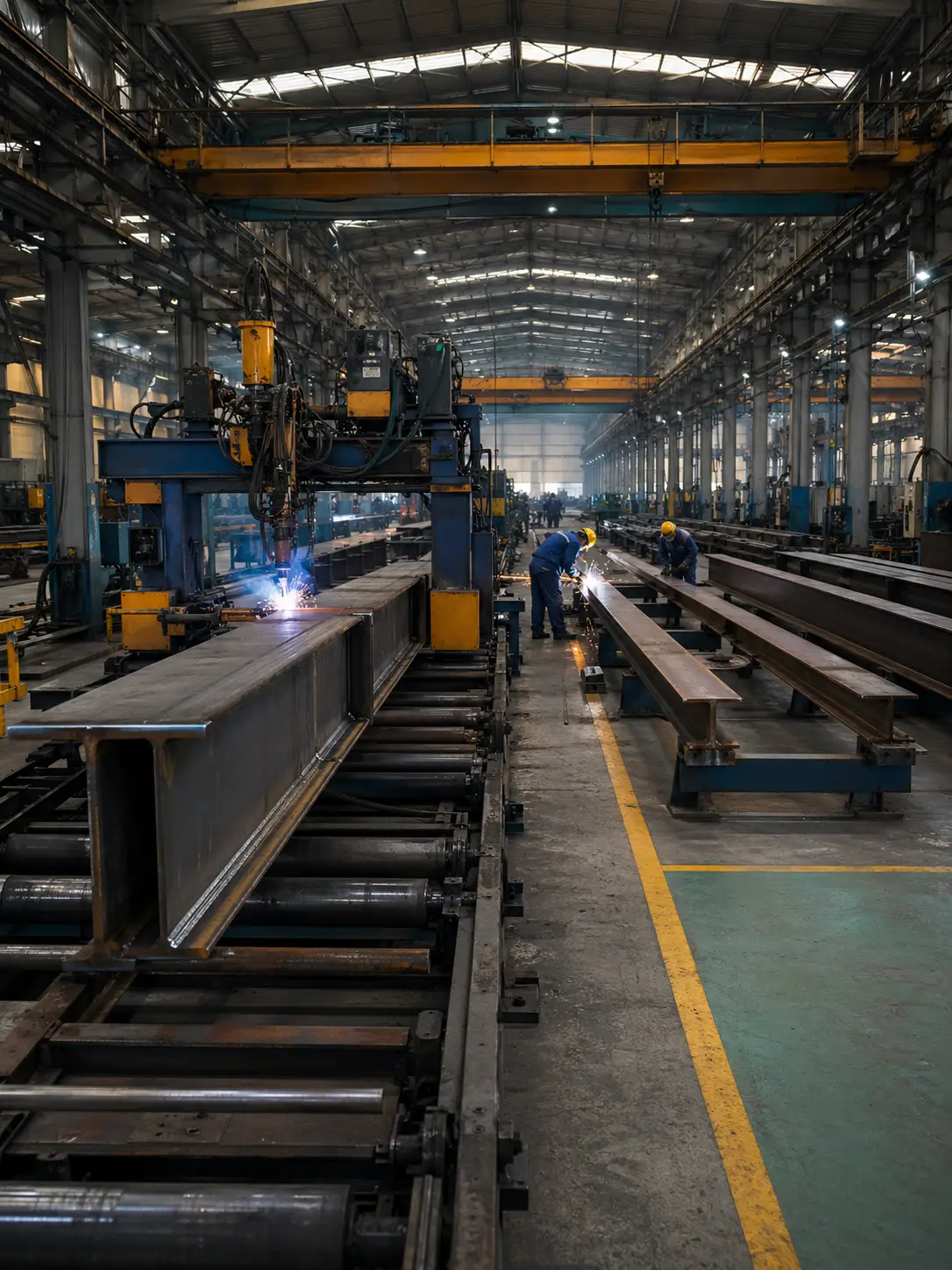
That single-source path is where a fabricator’s scope matters. KAFA, for example, runs in-house C/Z purlin and profile steel plate lines, so the secondary steel the cladding fastens to and the panels themselves come from one shop. For a defined building, that means you can request a quote covering the frame and cladding together rather than as separate trades.
Conclusion
Choosing metal cladding works best from the outside conditions inward, not from a favorite panel outward. Start with the environment and whether the wall has to insulate: a conditioned or cold building points toward IMPs or a single skin backed by insulation, while an unconditioned shed can run bare single-skin panels. Settle the system next, since slope, the look you want, and the maintenance you will tolerate decide between exposed-fastener, concealed-fastener, and standing-seam profiles. Only then lock in the material, coating, and gauge, matched to corrosion exposure and budget.
Three checks are the ones owners overlook: keep dissimilar metals apart so the fasteners do not corrode, tighten the fastening at edges and corners where wind suction peaks, and confirm the fire path if the panel core is combustible. Settle those, and a coated steel or aluminum skin will keep shedding water and carrying wind decades after the color choice has gone out of fashion.
FAQ
What is metal cladding made of?
Most metal cladding is made from steel, aluminum, zinc, or copper, with steel the usual low-cost default and copper the most expensive. The steel or aluminum substrate is almost always factory-coated, with Galvalume, galvanized, or a painted PVDF finish, so the visible surface is a coating system applied to the metal rather than bare metal on its own.
What is the difference between cladding and siding?
Cladding and siding both name a non-loadbearing exterior skin, and the words overlap in everyday use. Siding usually points to residential wall covering, while cladding is the broader construction term on commercial and industrial work and extends to roof panels, not only walls.
How long does metal cladding last?
Metal cladding commonly lasts about 40 to 60 years, well beyond vinyl or wood, with the exact figure depending on the metal, the coating, and the maintenance. The coating typically fails before the metal does, so a recoat near the warranty horizon, rather than full replacement, is the usual mid-life event.
Is metal cladding load-bearing?
Metal cladding is not load-bearing; it hangs on the structural frame and secondary steel and carries only its own weight plus the wind and snow acting on its face. Even so, the panels still add their own dead weight to the frame, which the structural engineer accounts for when sizing the girts and purlins they hang from.
Does metal cladding need insulation?
Metal cladding by itself provides almost no thermal resistance, so any conditioned building needs insulation behind single-skin panels or an insulated panel that builds it in. Bare metal also reaches the dew point readily, which makes an insulation and vapor-control layer matter as much for condensation control as for energy bills.
Further Reading
- Metal Construction Association — Insulated Metal Panels — Industry association overview of metal wall and roof panel systems, including the IMP construction described above.
- ASCE — Wind Loads for Components and Cladding (ASCE 7-22) — How the structural code treats panels and fasteners as components and cladding, and why edge and corner zones carry higher wind pressure.
- NFPA 285 — Fire Test for Exterior Wall Assemblies — The standard fire test for exterior wall assemblies that contain combustible components, relevant to MCM and foam-core panel selection.