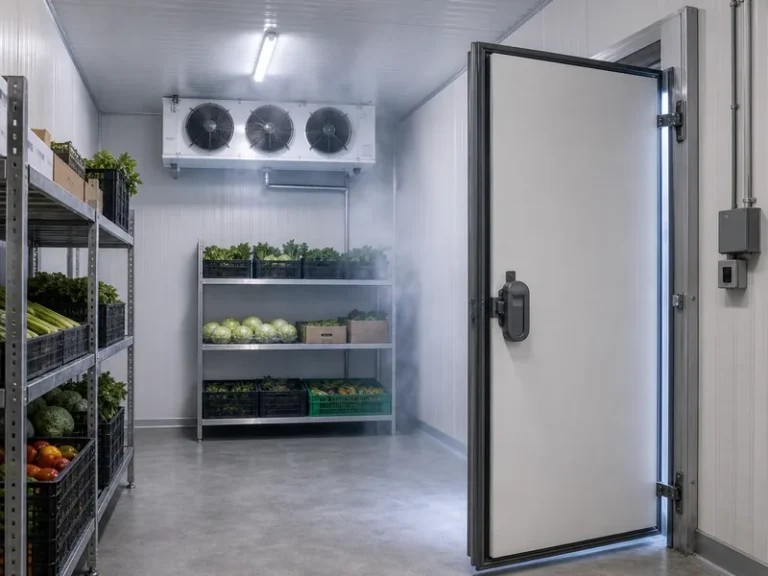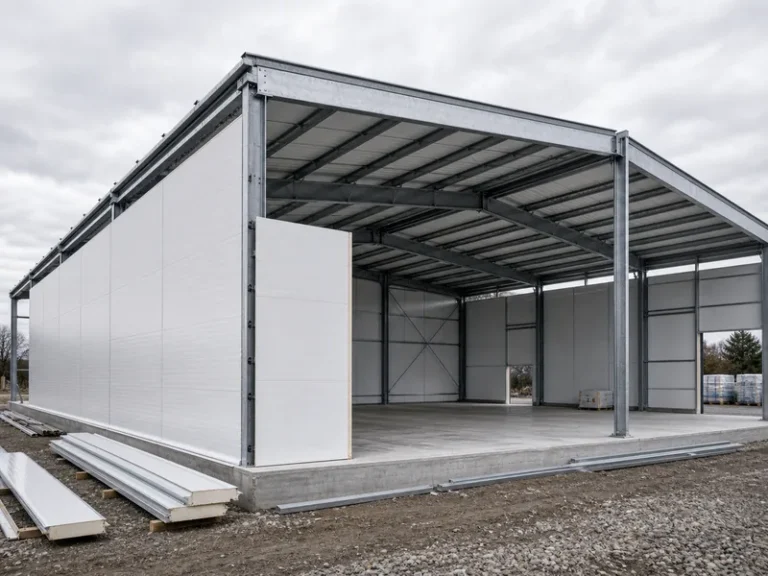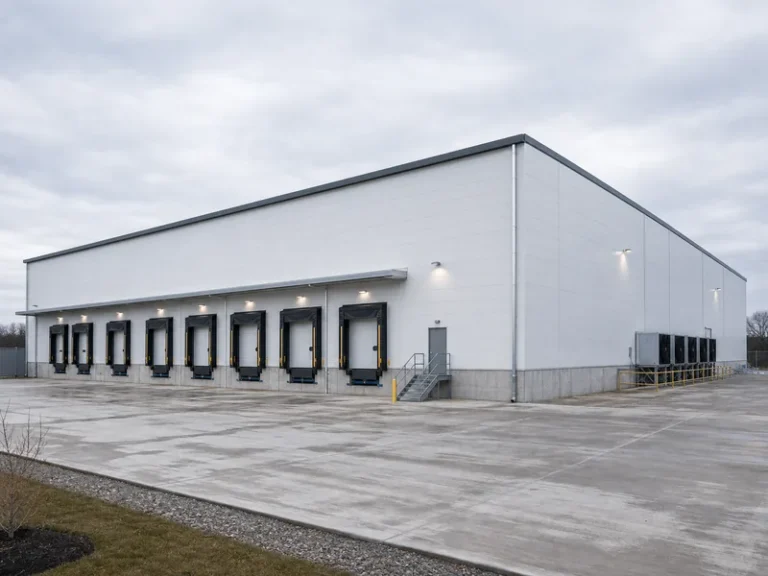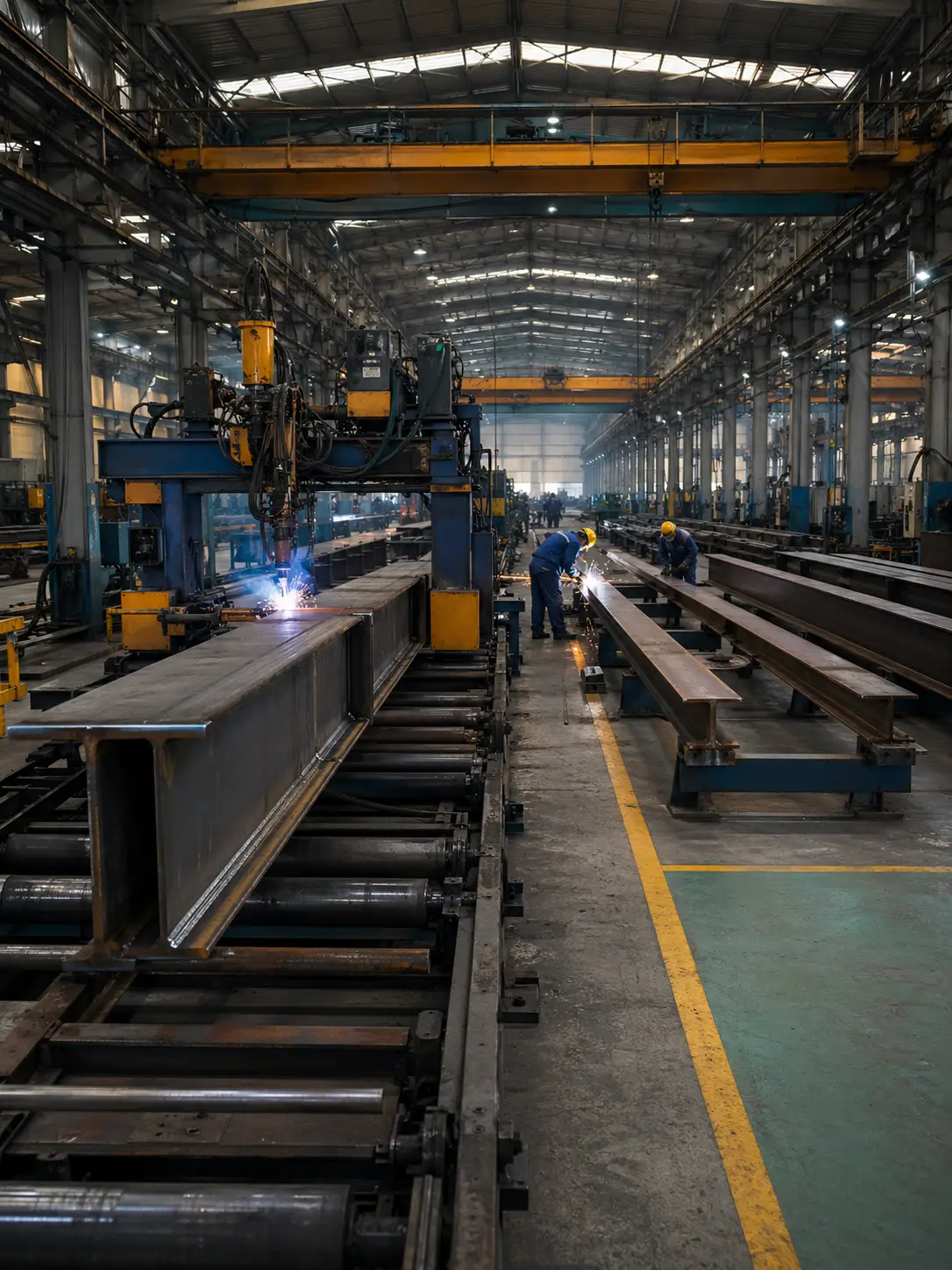





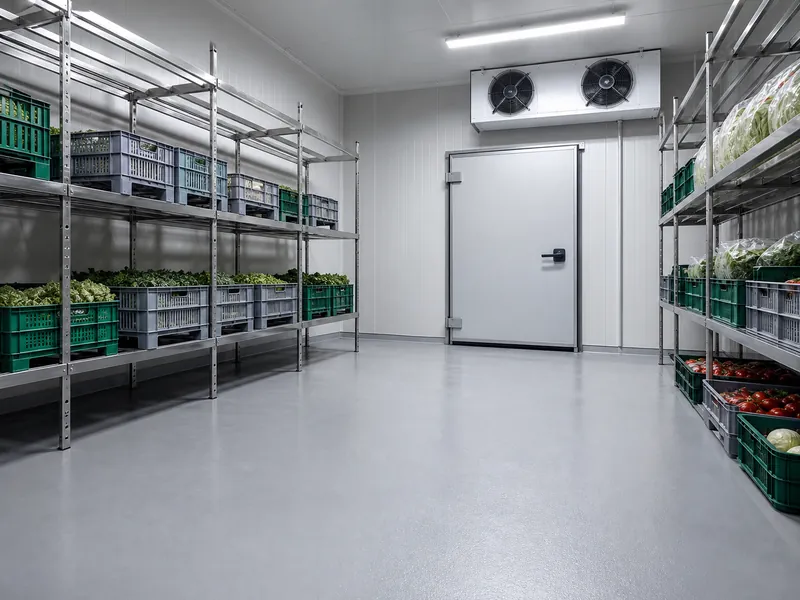
The best flooring for a coolroom is the one that matches its temperature band, traffic, and hygiene demands. For most chillers running between roughly 0°C and 10°C, that points to a sealed or polyurethane-coated concrete slab — not the heavily insulated floor build-up a freezer needs. Picking a coolroom floor is really two decisions stacked together: whether the slab underneath has to be insulated, and which surface finish goes on top. Get the first wrong and the room sweats, heaves, or wastes energy; get the second wrong and the floor cracks, turns slippery, or fails a hygiene audit. This guide walks both decisions in the order an installer actually makes them.
Does a Coolroom Need an Insulated Floor?
A coolroom held above freezing usually does not need an insulated floor, while a walk-in freezer almost always does. The dividing line is the storage temperature, not the word on the door. U.S. federal energy-conservation standards draw the same line: a walk-in cooler is refrigerated space above 32°F, and a walk-in freezer is space at or below it. Freezer floors are expected to reach about R-28 to hold the cold in and keep the ground stable, while coolers face no equivalent floor-insulation mandate.
What matters for a chiller is what sits beneath the slab. A coolroom poured on grade — slab directly on the ground, with no parking, basement, or heated room below — can often run on the existing concrete with only a sealed or coated surface, because the earth itself buffers the temperature. Put that same room on an upper floor or above a warm space and the calculation changes. Now floor insulation and a vapor barrier matter, because heat and moisture migrate up through the deck. If you are not sure how insulation values translate into floor build-up, it helps to know what an R-value means before you specify thickness.
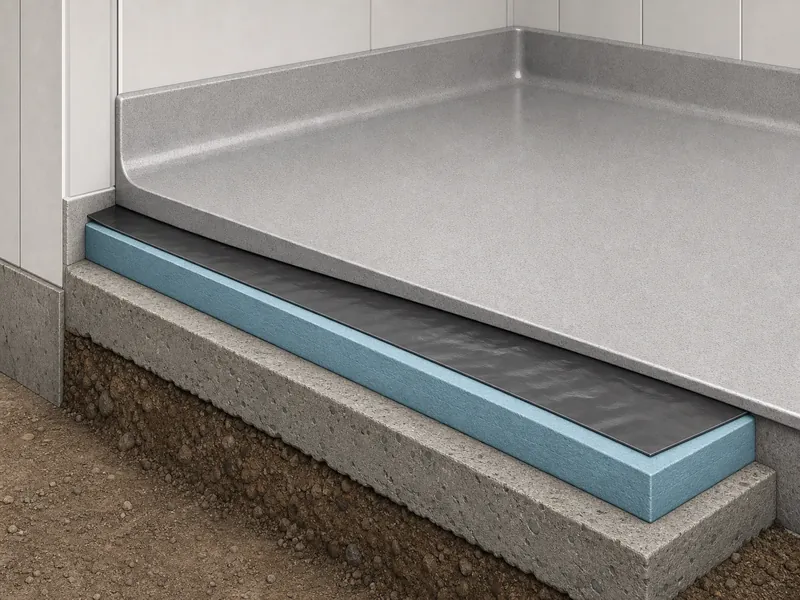
The base layer in either case is concrete. A flat, properly cured concrete slab is what every coolroom finish relies on — whether that finish is a thin seal coat in a small chiller or a full insulated build-up under a freezer in large cold storage.
Coolroom Flooring Options Compared
Four surface finishes cover the large majority of coolroom floors: polyurethane concrete, epoxy resin, PVC or vinyl, and metal plate laid over insulation. Each trades temperature tolerance, load capacity, hygiene, and cost differently, so the right pick follows from how cold and how busy the room is.
Polyurethane (PU) concrete
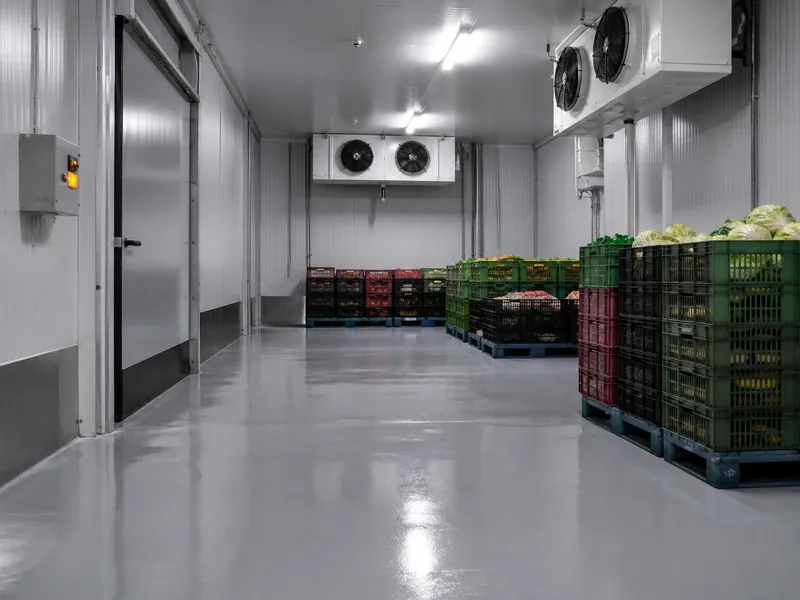
Polyurethane concrete is the most forgiving finish across a wide temperature range, which is why it dominates demanding cold rooms. It expands and contracts at almost the same rate as the slab beneath it. That is what lets it resist the hairline cracking that opens up when hot washdown water hits a cold floor. PU concrete (sometimes specified as PU screed) takes forklift traffic, tolerates thermal shock, and can be laid thick enough to absorb impact — the default where one floor has to do everything.
Epoxy resin
Epoxy resin suits chillers that hold a steady temperature rather than swinging through freeze-thaw cycles. It bonds hard, cleans easily, and costs less than PU concrete, but it is less tolerant of thermal shock. In a room that cycles between cold storage and hot cleaning, epoxy is more likely to debond or craze over time. It is a sound choice for a stable-temperature coolroom, less so for a blast freezer or a room washed down with very hot water.
PVC and vinyl
PVC and vinyl flooring fits warmer chillers and light-duty rooms where forklifts never enter. These are quick to lay and easy to keep clean, but the seams must be heat-welded to stay watertight. The material also loses its advantage as temperatures drop toward sub-zero. Think small back-of-house coolrooms and display chillers rather than industrial cold stores.
Stainless steel or aluminium plate
Metal plate over insulation suits heavy, relocatable, or hygiene-critical units. Aluminium or galvanized checker plate shrugs off impact and carries heavy point loads, and the tread pattern adds grip. It is also the typical floor inside prefabricated walk-in panels. The trade-off is cost, plus the need to detail joints so liquids cannot get under the plate.
| Finish | Best for | Temperature fit | Traffic / load | Hygiene & slip | Relative cost |
|---|---|---|---|---|---|
| Polyurethane concrete | Most cold rooms, big temperature swings | Wide, including sub-zero | Heavy, forklifts | High; grit and coving easily added | Mid to high |
| Epoxy resin | Steady-temperature chillers | Moderate, stable temps | Moderate to heavy | High; add aggregate for grip | Mid |
| PVC / vinyl | Warmer chillers, light duty | Narrow, warmer rooms | Light foot traffic | Easy-clean; seams must be welded | Low to mid |
| Metal plate over insulation | Heavy or relocatable units | Wide | Heavy, impact | Tread pattern aids grip | High |
How Temperature and Load Drive the Choice
Temperature band and traffic weight narrow the coolroom flooring shortlist faster than any other variable. Start with the temperature. A chiller at 2–8°C can run almost any of the four finishes; a room pushing toward or below freezing rules out vinyl and points toward PU concrete or insulated metal plate that survive the cold and the freeze-thaw stress.
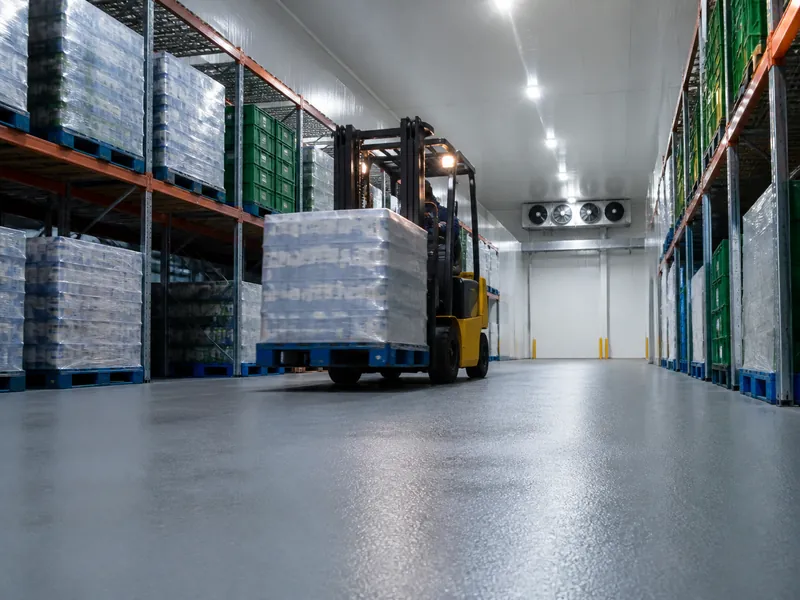
Then layer in load. Foot traffic only — staff carrying stock — keeps the options open and the cost down. Add four-wheeled carts and you need a finish and substrate rated for rolling loads. Bring in pallet jacks or forklifts and the slab, insulation, and topping all have to be rated for heavy point loads. This is where a thin vinyl or a lightly bonded epoxy fails early and PU concrete or reinforced plate pays off. Load ratings vary widely by build-up, so confirm the rated capacity of the whole floor system with the supplier, not the finish alone.
Moisture, Slip Resistance, and Hygiene
Condensation makes a cold, wet floor the most likely slip hazard in any coolroom. Cold surfaces pull moisture out of warm air every time the door opens, so slip resistance has to be built in — by broadcasting aggregate into resin floors or relying on the tread of metal plate. Slips, trips, and falls on working surfaces are a leading cause of workplace injury, so a deliberately textured cold-room floor is a safety decision, not a finish preference.
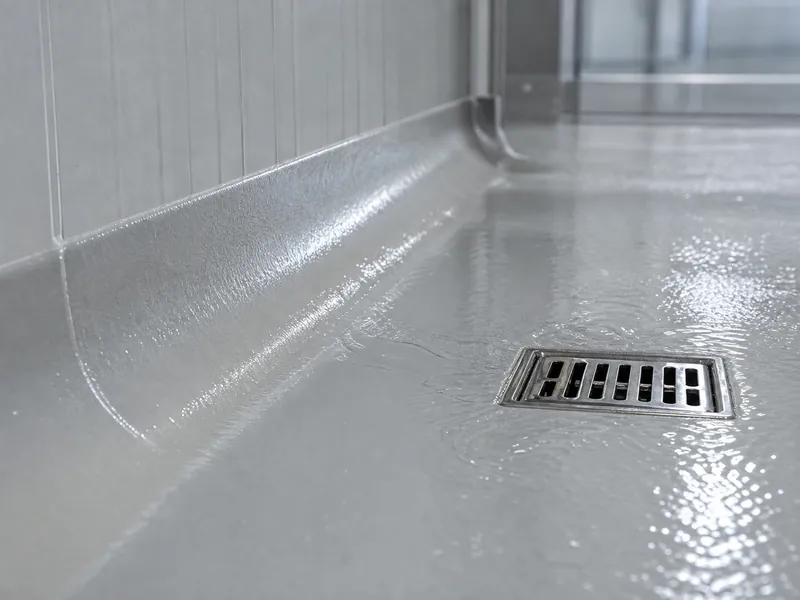
Moisture also has to be stopped from below. A vapor barrier under the slab keeps ground moisture from wicking up and condensing inside the insulation. Coving — a curved, sealed joint where the floor meets the wall — stops water and debris collecting in the corner and keeps the room washable. Where a room is regularly washed down or sheds defrost water, the floor also needs a gentle fall toward a drain so liquid clears instead of freezing in place. In food and pharmaceutical rooms, that detail is often what passes or fails a hygiene inspection. Many recurring common coolroom problems trace back to moisture that was never managed at the floor.
Installing Coolroom Flooring Without Costly Mistakes
Installation temperature, not just material choice, decides whether a coolroom floor cures properly and lasts. Resin floors are fussy about the temperature they are laid at. Polyurethane systems generally need the slab at or above about 40°F, and epoxy wants it warmer still. Below that range, a methyl methacrylate (MMA) system is often the only finish that will cure, which is why retrofits in a room that cannot be fully warmed lean on MMA despite its strong odour. Laying epoxy in a cold room without warming it first is a common way to end up with a floor that never fully hardens.
The substrate has to be ready before any finish goes down: a clean, sound, level slab with the right moisture content. It also needs breaker strips or thermal breaks at the perimeter, so cold does not bridge through to the warm side and cause condensation — the same thermal-bridging problem that proper metal building insulation is designed to stop. Freezers carry one more failure mode a chiller rarely faces. Under a room held well below zero, the ground itself can freeze and heave the slab over time, so sub-floor heating or a ventilated void belongs in the design from the start. Planning these layers up front is part of sound refrigerated warehouse design, and far cheaper than re-pouring a heaved floor later.
Choosing the Right Coolroom Floor
Choosing a coolroom floor works best in one order: fix the temperature band, decide whether the slab needs insulation, then match the surface to traffic and hygiene. A standard above-freezing chiller on grade usually lands on a sealed or PU-coated slab. A freezer, or a room over a warm space, needs the insulated build-up and the R-value to match. Heavy or relocatable units lean toward metal plate. Only after those calls does cost sensibly break the tie between, say, epoxy and PU concrete.
The floor is also where the building structure and the finish meet, so the two have to be coordinated early. As a steel cold-store builder, KAFA designs and fabricates the structure, slab interface, and insulated envelope, so the flooring contractor inherits a flat, thermally sound base. The resin or plate topcoat itself is a specialist finish laid afterward. Settle the temperature, the insulation, and the load path first, and the surface choice becomes the easy part.
FAQ
Does a coolroom need a floor at all?
A coolroom needs a sound floor, but not always a separate insulated one. A chiller poured on grade with nothing heated below can often run on a sealed or coated concrete slab. A freezer, or a room above a warm space, needs a built-up insulated floor to control heat loss and condensation.
Is polyurethane or epoxy better for a cold room?
Polyurethane concrete is the better all-rounder for cold rooms that see temperature swings or hot washdowns, because it resists thermal shock and moves with the slab. Epoxy is a sound, lower-cost choice for chillers held at a steady temperature, but it is more prone to cracking where the floor cycles between cold and hot.
What R-value does a freezer floor need?
A walk-in freezer floor is generally expected to reach about R-28 under U.S. federal energy-conservation standards. Coolers above freezing have no equivalent floor-insulation requirement, so a chiller can often skip the insulated build-up a freezer must have.
Can coolroom flooring be installed in cold weather?
Resin coolroom floors can be installed cold, but only with the right system. Polyurethane needs the surface at roughly 40°F or above, and epoxy warmer still. Below that, an MMA-based floor is usually the only one that will cure, which makes it the go-to for retrofits in rooms that cannot be fully warmed.
What flooring won’t crack in a coolroom?
Polyurethane concrete is the finish least likely to crack in a coolroom, because it expands and contracts with the slab and tolerates thermal shock. Plain untreated concrete and tile are the most likely to fail, as they degrade and crack at low temperatures and under freeze-thaw stress.
Further Reading
- U.S. Department of Energy — Walk-In Coolers and Walk-In Freezers — Government / energy standard. Defines cooler vs freezer by temperature and sets the federal floor-insulation expectation referenced above.
- ASHRAE — Technical Resources — Industry body. Refrigeration handbook and HVAC&R standards behind cold-room temperature and moisture design.
- OSHA — Walking-Working Surfaces — Government / safety. Backs the slip-resistance and fall-prevention case for textured cold-room floors.