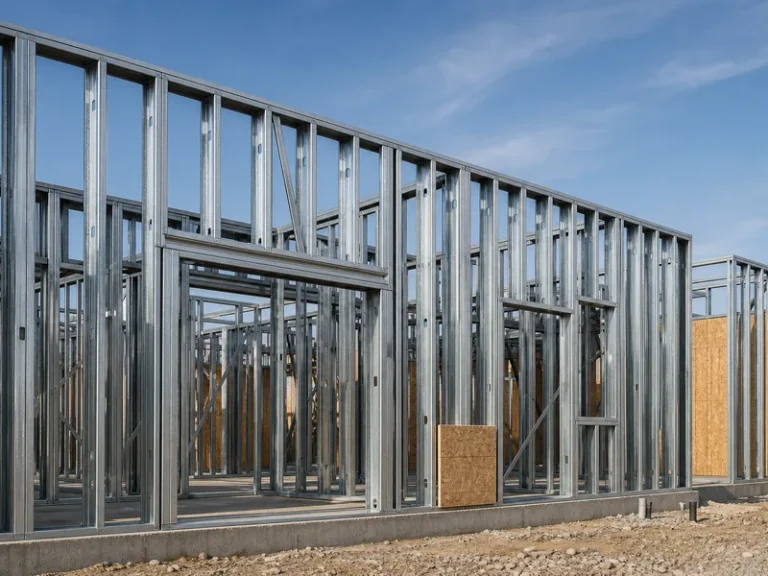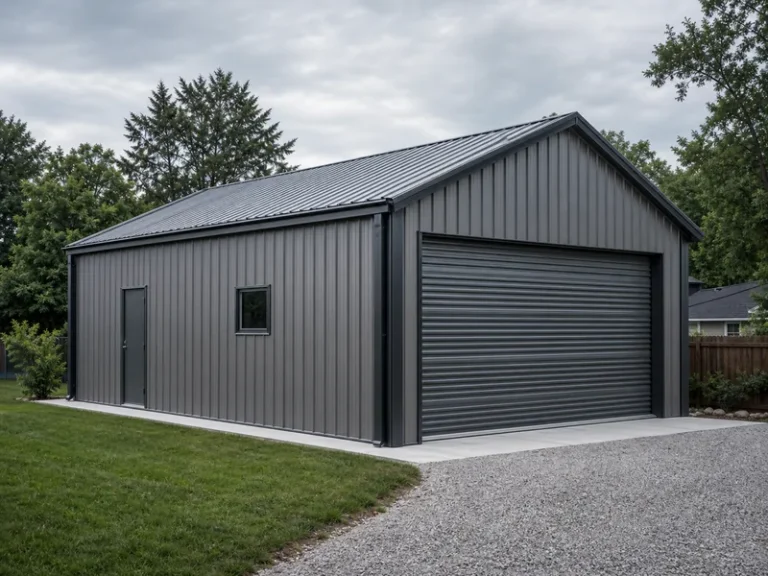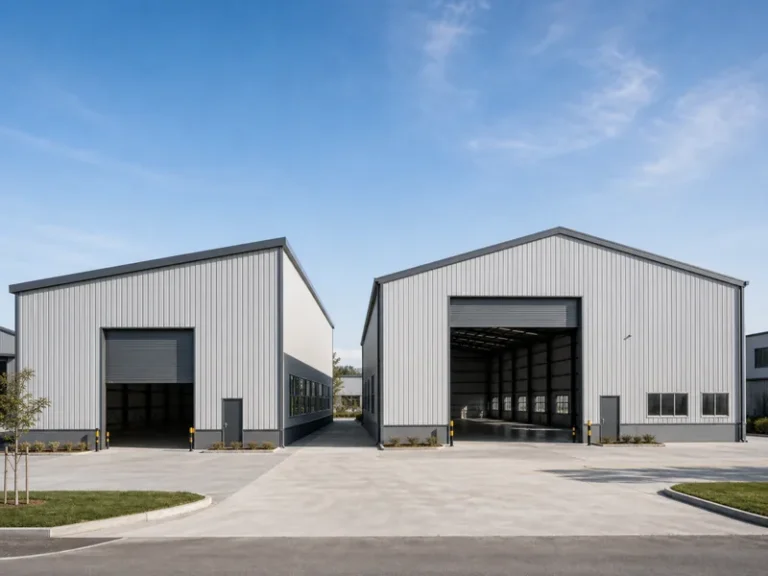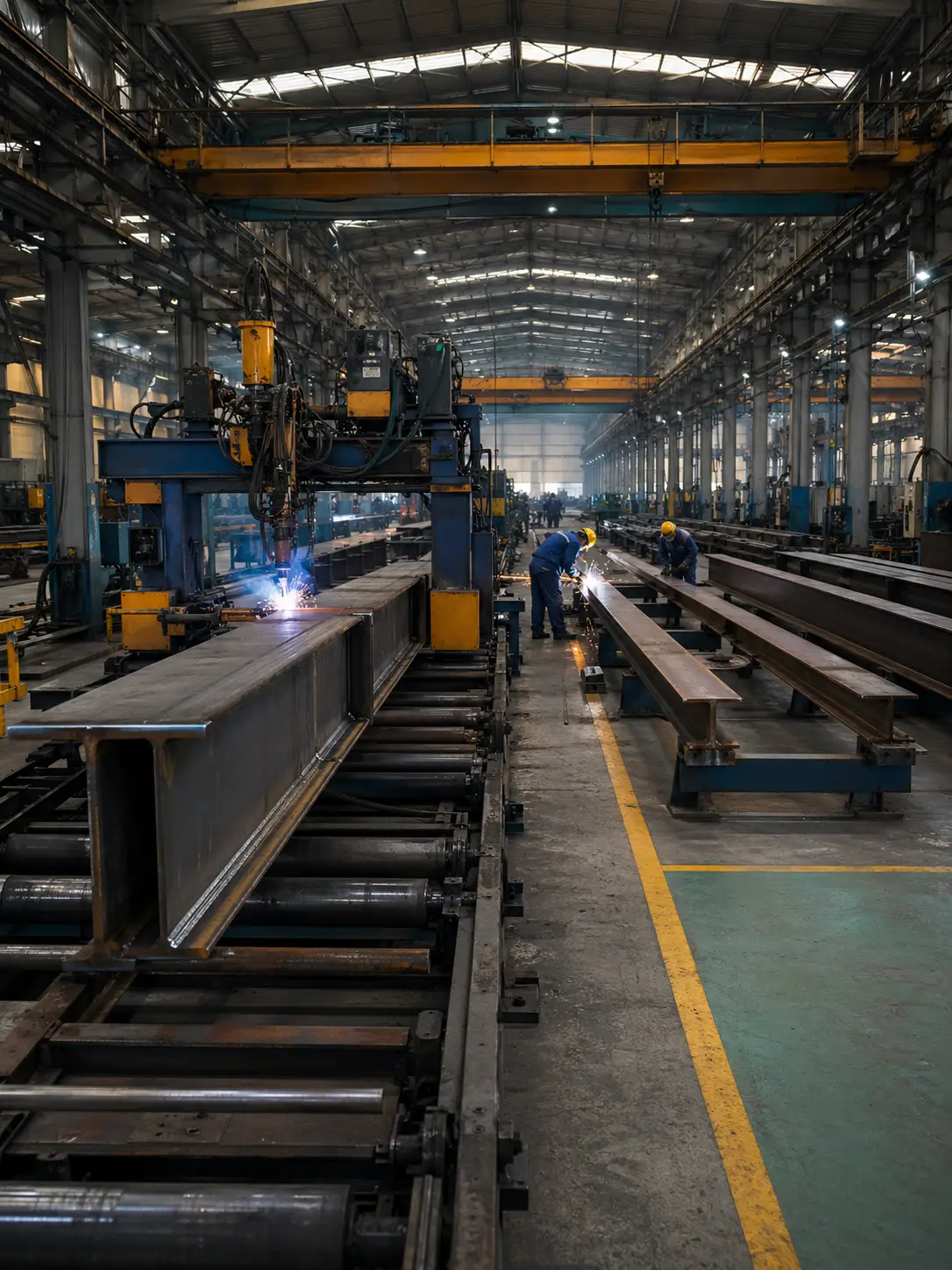





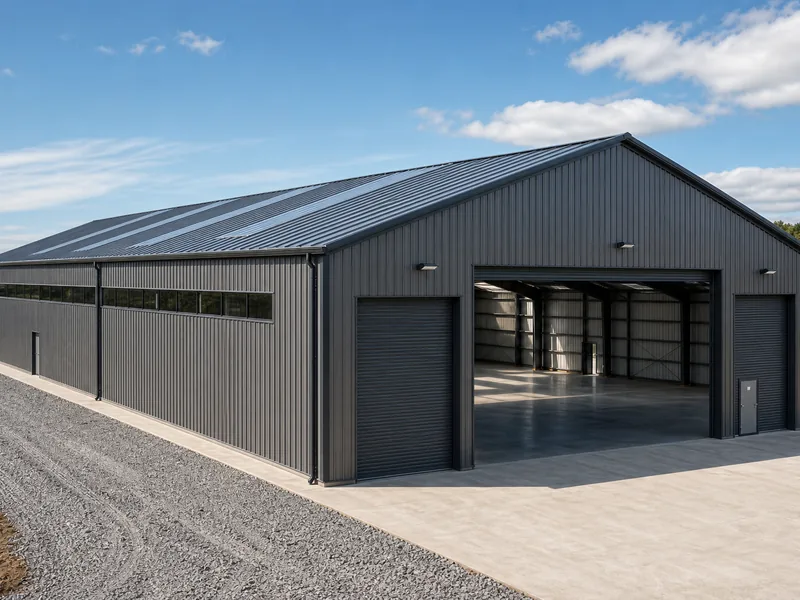
Steel buildings are pre-engineered framing systems where the columns, rafters, and secondary members are sized and fabricated in a plant, then bolted together on site. That single fact, that most of the work happens before anything reaches the ground, sits behind almost every benefit people associate with steel. Those gains show up as lower build time, wide column-free interiors, predictable durability, and a recyclable material at the end of the line. The advantages of steel buildings are strongest when span, schedule, and lifecycle maintenance drive the project, and each one still comes with a condition that decides how much you actually gain.
Many benefits show up only when steel building design is handled as a complete system rather than a frame, panel, and foundation quoted separately.
This article focuses on those benefits and where they hold up, not on line-item pricing or step-by-step erection. It also names the trade-offs, because a building decision made on advantages alone tends to ignore the conditions that change the math. Coating specifics, insulation detailing, and exact load figures belong in their own dedicated guides; here they appear only where they affect whether a benefit holds for your project.
Steel buildings, at a glance:
- Faster builds from pre-engineered, factory-cut components
- Wide column-free spans for open, adaptable floor space
- Decades of service with low, coating-dependent upkeep
- Non-combustible framing that still needs code-based fire protection
- A recyclable structure at the end of its life
- The strongest value on large or long-span projects
How Pre-Engineering Lowers Cost and Build Time
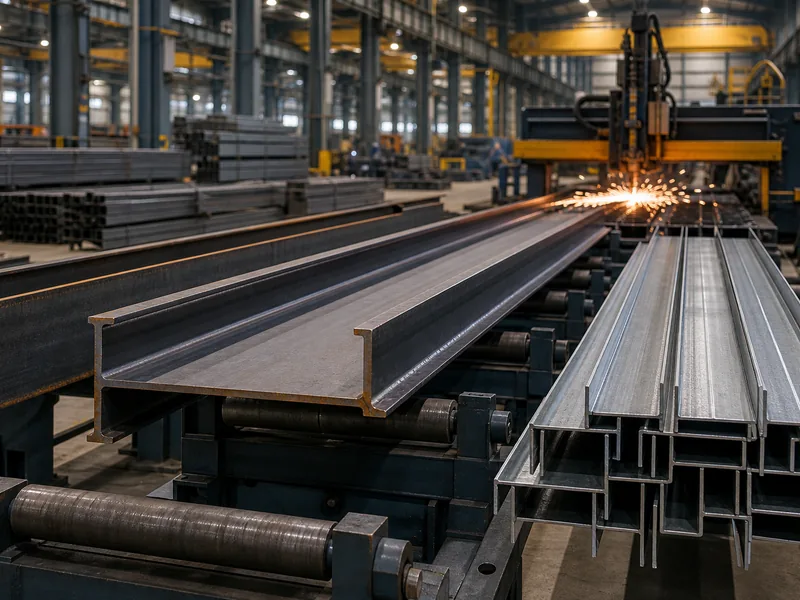
Pre-engineering moves most of the fabrication off the job site, which is where the cost and schedule savings actually come from. When H-beams, purlins, and panels arrive cut, punched, and ready to assemble, the field crew spends its hours bolting a kit together instead of measuring, cutting, and waiting on trades. Less field labor, less on-site waste, and a shorter schedule all push in the same direction.
How large that saving is changes widely between projects, which is why the percentage figures you see online rarely agree. The gap between steel and conventional construction is driven by:
- Building size and span, since steel’s efficiency grows with scale
- Whether you are pricing the shell only or a turnkey, finished building
- Local labor rates and how fast the crew can erect the frame
- Region, foundation work, and code-driven design loads
Scale is what flips the conclusion. On large, long-span structures the per-square-foot economics usually favor steel; on a small, simple build the up-front engineering and tooling can erase the advantage, and a conventional approach may price out lower. Treat any single cost-savings percentage as a starting question, not a quote, and confirm it against your own size, finish level, and region before you rely on it.
Column-Free Spans and Design Flexibility
A high strength-to-weight ratio lets steel frames carry loads across wide bays without interior columns. That is the structural reason steel dominates warehouses, workshops, arenas, and hangars: the material is strong enough that a clear-span frame can cover large widths while keeping the floor open. How wide you can go is a design outcome rather than a fixed number, but for many commercial and industrial layouts steel supports wider clear-span designs than conventional wood framing, subject to engineering.
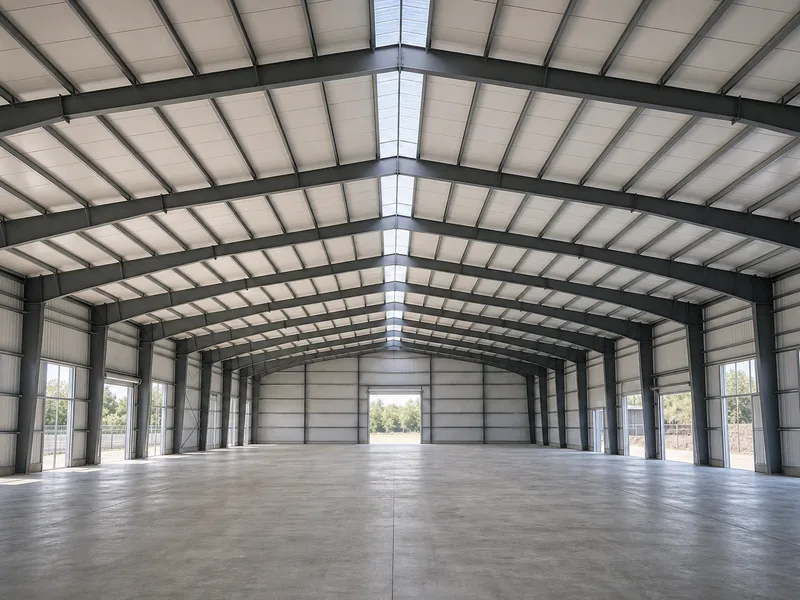
Open floor area is worth more than it first looks. Column-free space lets you reconfigure racking, production lines, or seating without working around structure, and it makes future expansion straightforward, since a pre-engineered frame can usually be extended at the gable end. The same frame also accepts cranes, mezzanines, and heavy roof loads when they are designed in from the start.
Start with the widest bay and the loads it must carry, then let that drive the frame type. The distinction matters most when you are weighing a single open span against a multi-bay layout, and the differences across types of metal buildings are the right next comparison.
Durability and Low Maintenance of Steel Frames
Steel frames resist rot, insect damage, and warping, but their low-maintenance reputation still rests on the coating system. The structural steel itself does not feed termites, absorb moisture, or sag with age the way wood can, which is why a properly designed steel building holds its shape and load capacity for decades. That durability is a property of the frame; the upkeep you will or won’t do is a property of the finish.
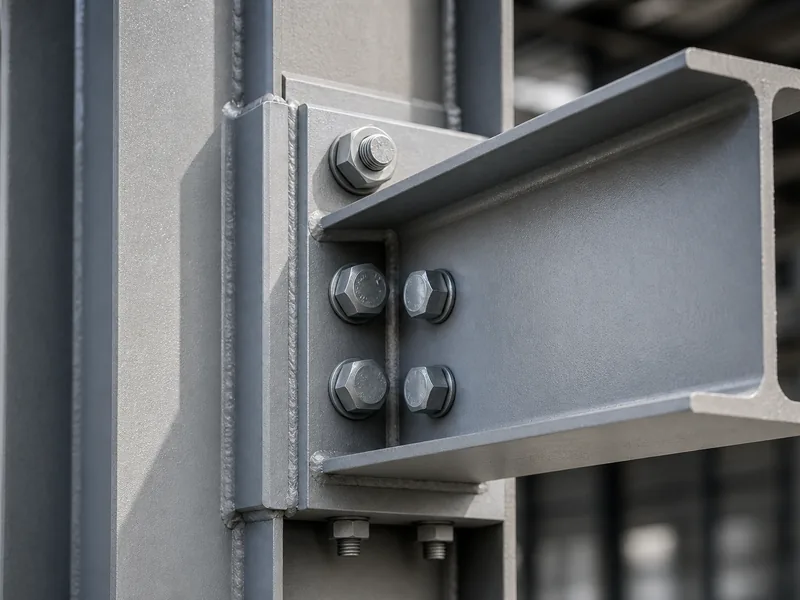
Corrosion is where that reputation is won or lost. Bare steel rusts when it meets moisture, so longevity depends on the protective coating and to the fasteners and seams that see water first. On a coastal or high-humidity site, the connections, flashing, and panel laps are what you inspect first, not the main members. Galvanizing and paint systems solve this in different ways and at different price points, and the choice between galvanizing vs painting steel is useful to make deliberately rather than defaulting.
Fabrication quality feeds directly into how little maintenance a building needs. Tight tolerances on H-beams, box sections, and C and Z purlins mean connections seat correctly and coatings stay intact instead of cracking at forced joints. A manufacturer that runs dedicated lines for those members under an ISO 9001:2015 quality system, as Qingdao KAFA Fabrication does, can support that process consistency. Buyers should still confirm coating specifications in the project documents for their own climate.
Fire and Weather Performance, Designed to Code
Steel does not burn, yet it loses strength at the temperatures a building fire can reach. Non-combustibility matters here: steel adds no fuel and does not spread flame. What marketing pages skip is that fire resistance is not a property of the bare material. Fire-resistance ratings depend on the protected member or assembly, the floor and wall construction, the occupancy, and the applicable code, so load-bearing steel usually needs applied fire protection sized to the project. How that protection is specified is covered under steel building fire protection.
Weather performance works the same way: the capability is real, but it is a design result, not an inherent guarantee. Engineers size a steel building to handle high winds, heavy snow, and seismic loads by designing it to the loads your site faces under standards like ASCE 7 and the IBC. The wind speed or snow load a frame can take is set by that engineering, which is why a single mph figure means little without the design behind it. Matching the frame to local conditions is the point of steel building wind load analysis.
So treat non-combustible and weather-resistant as starting properties that still have to be engineered. A frame is only as fire-safe and storm-ready as the protection and load design specified for it.
Sustainability and Recyclable Steel
Recyclability is the core of steel’s environmental case. Steel can be melted and reformed repeatedly without losing quality, so scrap can be remelted into new steel products, including structural steel, depending on the recycling and production route. The American Iron and Steel Institute frames this as a closed loop, and it is the most defensible green claim steel can make.
Recycled content itself depends on how the steel was made. According to the World Steel Association, the electric arc furnace route runs largely on recycled scrap, while the basic oxygen furnace route uses a smaller share. The recycled percentage in a given product tracks the production method rather than a fixed industry number. Steel framing can also contribute toward green building certifications such as LEED, though the credit comes from documented project performance, not from the material alone. If sustainability targets matter to your project, ask for the production route and any environmental documentation rather than assuming a headline recycling figure applies.
Where Steel Pays Off and Where It May Not
Steel buildings usually deliver the strongest value on large, long-span, or fast-track projects, and less on small, simple ones. The same properties that make steel efficient at scale, prefabrication and a high strength-to-weight ratio, carry fixed engineering and tooling costs that a small building cannot spread thin. Knowing where the advantage fades matters as much as knowing where it is strong.
The table below is directional; actual results vary by design, region, and procurement model.
| Factor | Steel frame | Wood frame | Concrete / tilt-up |
|---|---|---|---|
| Clear-span width | Very wide, column-free | Limited in conventional framing | Moderate, heavier members |
| Build speed | Fast, pre-engineered | Moderate | Slower, needs cure time |
| Maintenance | Low, coating-dependent | Higher, rot and pests | Low, crack-dependent |
| Fire behavior | Non-combustible, needs protection | Combustible | Non-combustible |
| End-of-life recovery | High, remelted | Limited | Low |
| Cost on small builds | Often less favorable | Often favorable | Varies by design |
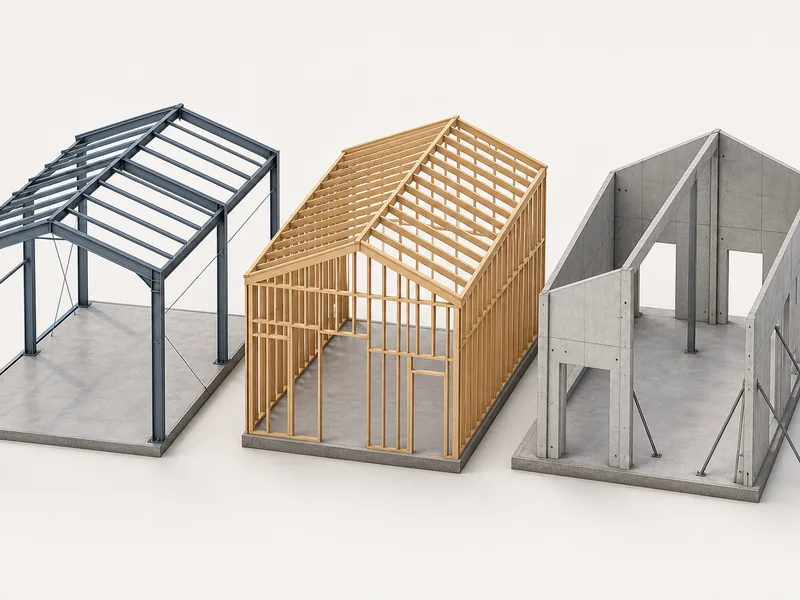
Two trade-offs deserve naming. First, thermal behavior: steel conducts heat, so an uninsulated frame can bridge temperature and invite condensation, which makes the insulation detailing, not the steel, the thing that determines comfort and energy cost. Second, the small-project economics above, where a modest shed or a tight infill lot may suit wood better. Steel is the strong default for industrial, agricultural, commercial, and warehouse work that needs span, speed, or load capacity; it is a weaker default for the smallest, simplest structures.
Conclusion
The benefits of steel buildings come down to scale and span: the larger and more open the structure, the more its prefabrication, clear-span capacity, and lifecycle durability outweigh the up-front engineering cost. Before you commit, lock the one estimating basis you will compare on, shell or turnkey, and verify the three things that strongly influence outcomes: the design loads for your site, the coating system for your climate, and the insulation detailing for your use.
Coordinating those checks through one qualified manufacturer, rather than three separate parties, can make them easier to close out. Buyers comparing complete metal building packages from a fabricator like Qingdao KAFA Fabrication can confirm how the framing, purlins, and coatings are specified for their loads and climate before the frame is cut and released for production. That confirmation is where a steel building’s advantages are won or lost.
Frequently Asked Questions
Are steel buildings cheaper than wood or concrete?
Cost depends on size, span, and finish level rather than on material alone. Steel tends to win on large, long-span buildings where prefabrication and reduced field labor pay off, while small, simple structures can price out lower in wood. Compare on the same basis, shell or turnkey, before drawing a conclusion.
How long do steel buildings last?
A properly coated and maintained steel building can serve for decades because the frame does not rot, warp, or feed insects. Lifespan is set by the protective coating, the design loads, and routine inspection of seams and fasteners, not by the steel reaching a fixed expiry. Warranty terms vary by manufacturer and should be read alongside the coating spec.
Do steel buildings rust?
Bare steel rusts where it meets moisture, which is why protective coatings and detailing matter. A galvanized or properly painted frame resists corrosion for a long service life, with the fasteners, seams, and flashing being the first places to check in humid or coastal sites. Rust is a coating-and-maintenance outcome, not an unavoidable property of the building.
Are steel buildings fire-resistant?
Steel is non-combustible, so it adds no fuel and does not spread flame. It does lose strength at fire temperatures, so load-bearing members usually need applied fire protection sized to the building’s code and occupancy. Fire performance has to be engineered, not assumed.
Are steel buildings energy efficient in hot or cold climates?
Energy performance depends on insulation, not on the frame by itself. Because steel conducts heat, an uninsulated building can bridge temperature and risk condensation, while a properly insulated assembly with the right vapor control performs well in both hot and cold climates. Specify the insulation and detailing for your climate rather than relying on the structure alone.
Further Reading
- Finishes, Coatings, and Fire Protection — American Institute of Steel Construction (AISC), on structural steel’s fire behavior and protection.
- Sustainability — American Iron and Steel Institute (AISI), on steel recyclability and circular use.
- Average Recycled Steel Content of a Steel Product — World Steel Association, on how recycled content varies by production route.