




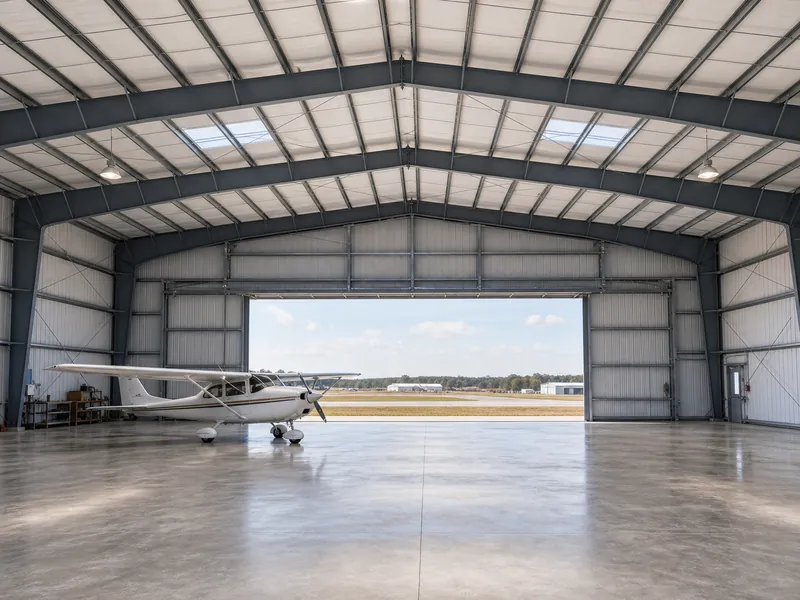
For most hangars, steel is the practical default, and the reason is geometry before it is anything else. A rigid steel frame clears the width an aircraft needs without dropping posts into the floor, while a wood-framed building runs into span limits long before it reaches the same opening. Wood still has a place: small private hangars for a single light aircraft, where the span is modest and the owner wants the look and warmth of timber. But once you are housing a twin, a turboprop, or several aircraft, the choice usually turns on four hangar-specific factors — the clear span your widest wingspan demands, the door opening, the fire-protection class the building falls under, and the wind and snow loads at your field. This comparison covers rigid structural frames, steel against wood and heavy timber, and not fabric or membrane hangars, which are a different decision. If you want the full build sequence rather than just the material question, the companion guide to airplane hangar construction covers it; here the focus is the frame itself.
Clear Span Is the First Constraint, Not an Afterthought
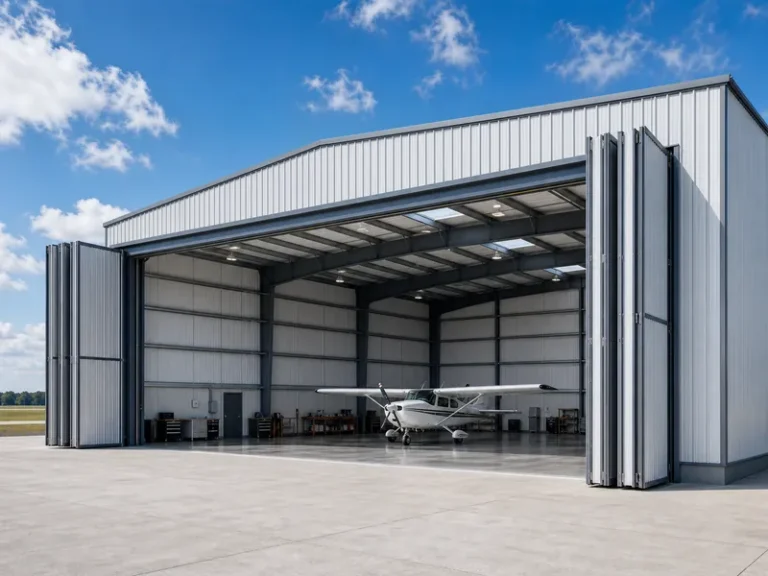
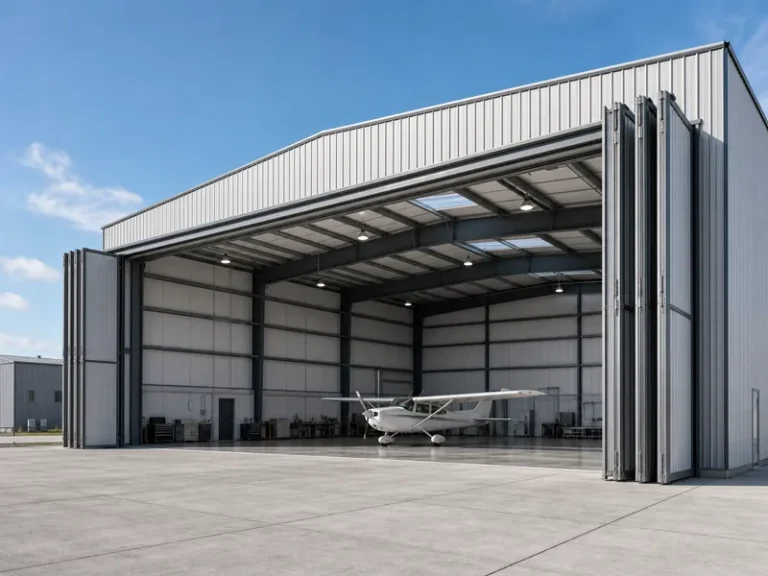
The width an aircraft needs without an interior column decides whether a hangar works at all. A clear span is the distance a frame crosses with no posts in between, and it is the single specification that usually rules wood out first. Engineered steel rigid frames are routinely built to clear spans well past 100 feet, commonly cited up to roughly 200 to 300 feet for larger aviation buildings, with no interior columns. Steel’s strength-to-weight ratio lets a tapered rigid frame carry the load out to the eaves and down the end walls. A wood or timber frame can be engineered for clear span too, but in practice it is capped much lower. Builders who specialize in timber hangars acknowledge that an unobstructed wood opening on the order of 100 by 80 feet is difficult to reach, and beyond modest widths a wood structure starts needing interior posts or heavy supplemental bracing that eat into the floor.
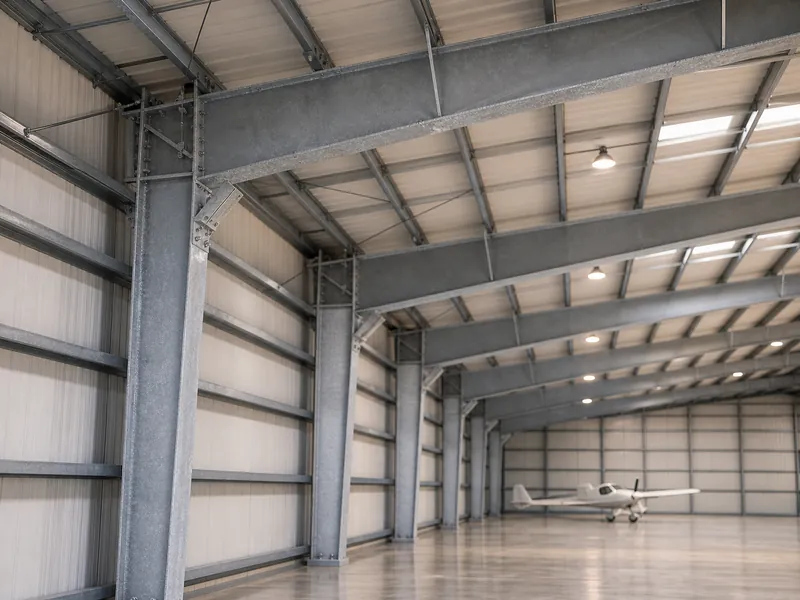
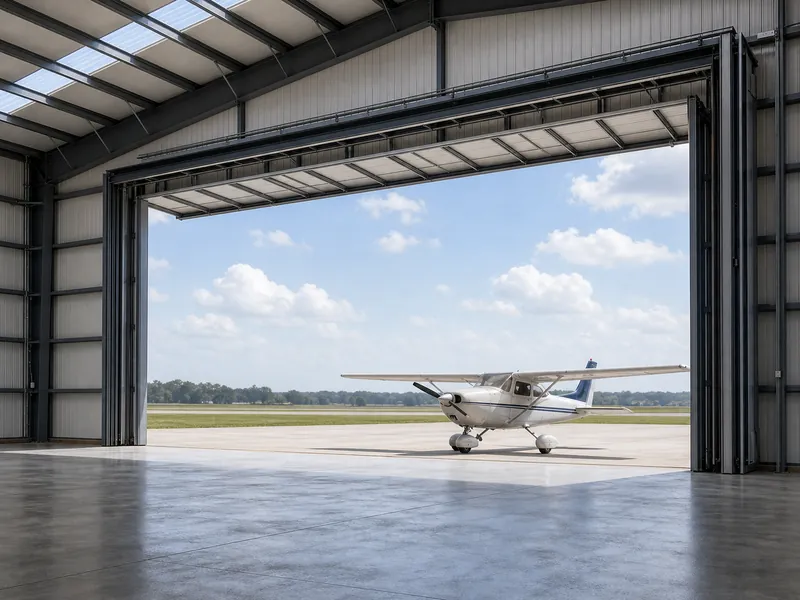
That floor is the whole point of a hangar. An interior column an aircraft has to taxi around is not a minor inconvenience; it dictates how you position the aircraft and whether a wingtip clears on the way in. This is also why the door, not the building width, usually sets the structural problem. The widest clear opening in a metal airplane hangar is the door, and the frame above and beside that opening has to carry roof load across a span with no wall below it to help. Steel handles that header condition with predictable, repeatable detailing; wood gets awkward and expensive at the same opening. If your aircraft’s wingspan and tail height fit comfortably inside a modest building, wood is on the table. If they do not, the span question has already answered the material question for you.
Fire Behavior: Non-Combustible Is Not the Same as Fireproof
Steel is non-combustible and wood is combustible, but that headline hides the nuance that matters in a hangar. Steel will not add fuel to a fire, a real advantage where flammable liquids and fuel vapors are present. What steel does do is lose strength as it heats: structural steel begins to soften well before it melts, and in a hot, fuel-fed fire an unprotected frame can deflect or fail without ever igniting. Heavy timber behaves differently. It burns, but a large solid or glue-laminated member chars on the outside at a fairly predictable rate while the core keeps much of its load capacity for a time. Neither material is “fireproof,” and treating either one as such is how owners get the fire-protection requirements wrong.
For hangars, the requirement rarely rides on the frame anyway. NFPA 409, the standard that governs aircraft hangars, sorts them into groups by size and use and drives the fire-suppression system — foam, water, or a combination — largely on that classification rather than on whether the frame is steel or wood. A large hangar can be required to carry a suppression system regardless of frame material, so the fire conversation is usually about the system NFPA 409 mandates and the steel building fire protection detailing around it, not a simple “steel wins” checkbox. Where steel pulls ahead is the combination: it adds no fuel, and it integrates cleanly with the rated assemblies and suppression a hangar of any size already has to install.
Wind, Snow, and the Loads Your Field Actually Sees
Both materials are designed to the same load code, so the honest comparison is how much structure each needs to get there. A steel or wood hangar in the United States is engineered to ASCE 7, which sets the wind, snow, and seismic loads for the building’s location. There is no single wind number that applies everywhere, and any “rated to 170 mph” claim only means something tied to a specific design, exposure category, and code edition. The useful difference is that an engineered steel frame reaches a given wind or snow rating with a lighter, more repeatable structure, while a wood frame typically needs more depth, more connections, and more bracing to satisfy the same coastal wind or northern snow demand.
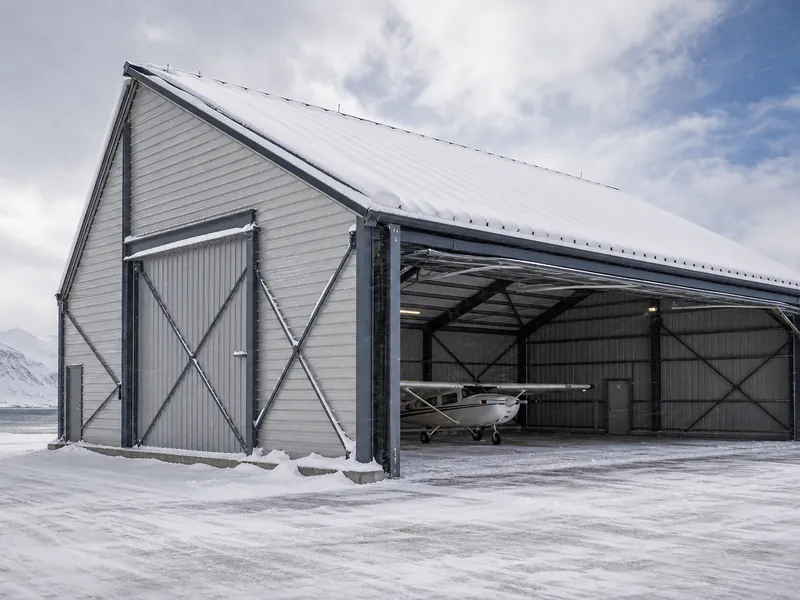
That extra wood structure is not free, and it competes for the same space and budget as the clear span. In a high-wind coastal county or a heavy-snow region, the bracing a wood hangar needs to carry the local wind load can pull it back toward the interior-column problem the owner was trying to avoid. Steel’s advantage here is not immunity to wind or snow, because nothing is immune. It is that steel carries those loads efficiently across the long spans a hangar already requires, instead of fighting the span and the load at the same time.
Maintenance, Corrosion, and the Condensation Nobody Plans For
The maintenance gap between the two materials is real, but the corrosion that actually threatens a hangar is not the one most owners worry about. Steel resists rot and pests outright, while wood needs ongoing protection against moisture, fungal decay, and termites; a wood frame that gets wet and stays wet loses capacity in a way a coated steel frame does not. Steel is not maintenance-free either. A galvanized or properly coated frame holds up for decades, but a deep scratch through the coating in a humid environment will start surface rust that wants attention.
The corrosion that bites a hangar, though, is usually condensation, and it reaches the aircraft before the frame. On a clear night a steel roof deck radiates heat and drops below the dew point, and the moisture that forms there can drip onto avionics and control surfaces below. That is a climate-control and ventilation problem, not a frame-metal problem, which is why metal building insulation and vapor control matter more to an aircraft’s longevity than whether the studs are wood or the purlins are steel. A wood building is not automatically drier; it simply hides moisture in places that are harder to inspect. Either way the fix is the same — insulate the envelope, manage the vapor drive, and ventilate — and it belongs in the budget from the start rather than discovered after the first winter.
What the Material Decision Does to Cost
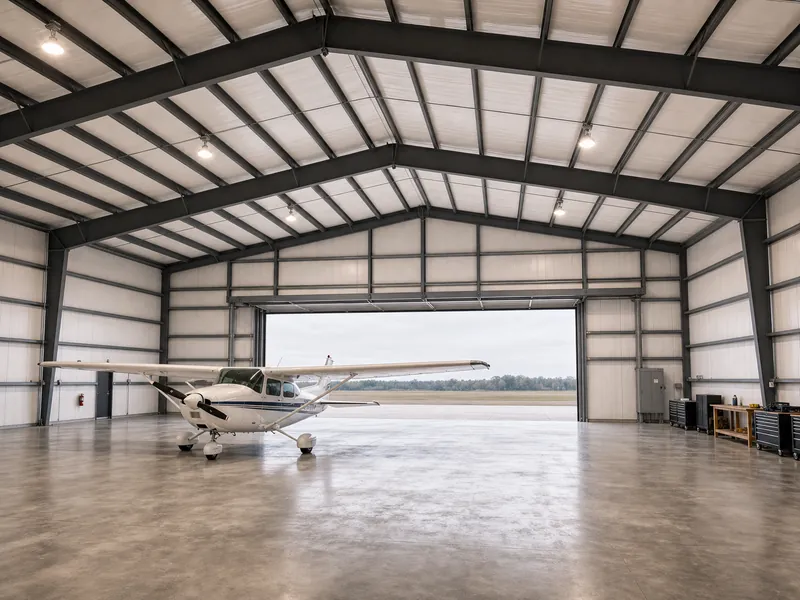
Frame material is one slice of a hangar’s cost, and usually not the slice that decides the budget. As a rough shell figure, steel hangar framing and cladding tend to land lower per square foot than an equivalent engineered timber frame, and timber craftsmanship at hangar scale gets expensive quickly. But those shell numbers exclude the items that actually dominate a hangar build: the door, the metal building foundation and slab sized for concentrated wheel and jack loads, any NFPA 409 fire-suppression system, and permits. A full turnkey hangar runs well above the bare shell rate once those are in, which is why the frame material moves the total less than owners expect. For the full breakdown of shell, door, foundation, and systems, the cost to build a hangar guide separates them out.
Where the material does move long-term cost is upkeep. Steel’s lower maintenance burden and longer service life compound over the decades you own the building: a well-maintained steel frame is commonly cited at 50-plus years, against roughly 20 to 30 years before a wood structure needs major structural attention, depending on moisture exposure and treatment. A premium timber hangar can absolutely last if it is detailed and maintained well. The point is that wood asks for that maintenance, while steel mostly asks to be inspected and left alone.
When Steel, When Wood: Making the Call
Wood fits a narrow but real slice of hangar projects: small, private hangars for a single light aircraft, where the clear span is modest, the owner values the appearance and feel of timber, and the budget can absorb the premium that hangar-grade timber framing carries. For those buildings the span limits never bind, fire classification may stay in the lighter NFPA 409 groups depending on the hangar’s size and use, and the warmth of wood is a genuine benefit. This is the same logic that governs the broader steel vs wood frame building decision, narrowed to the hangar case.
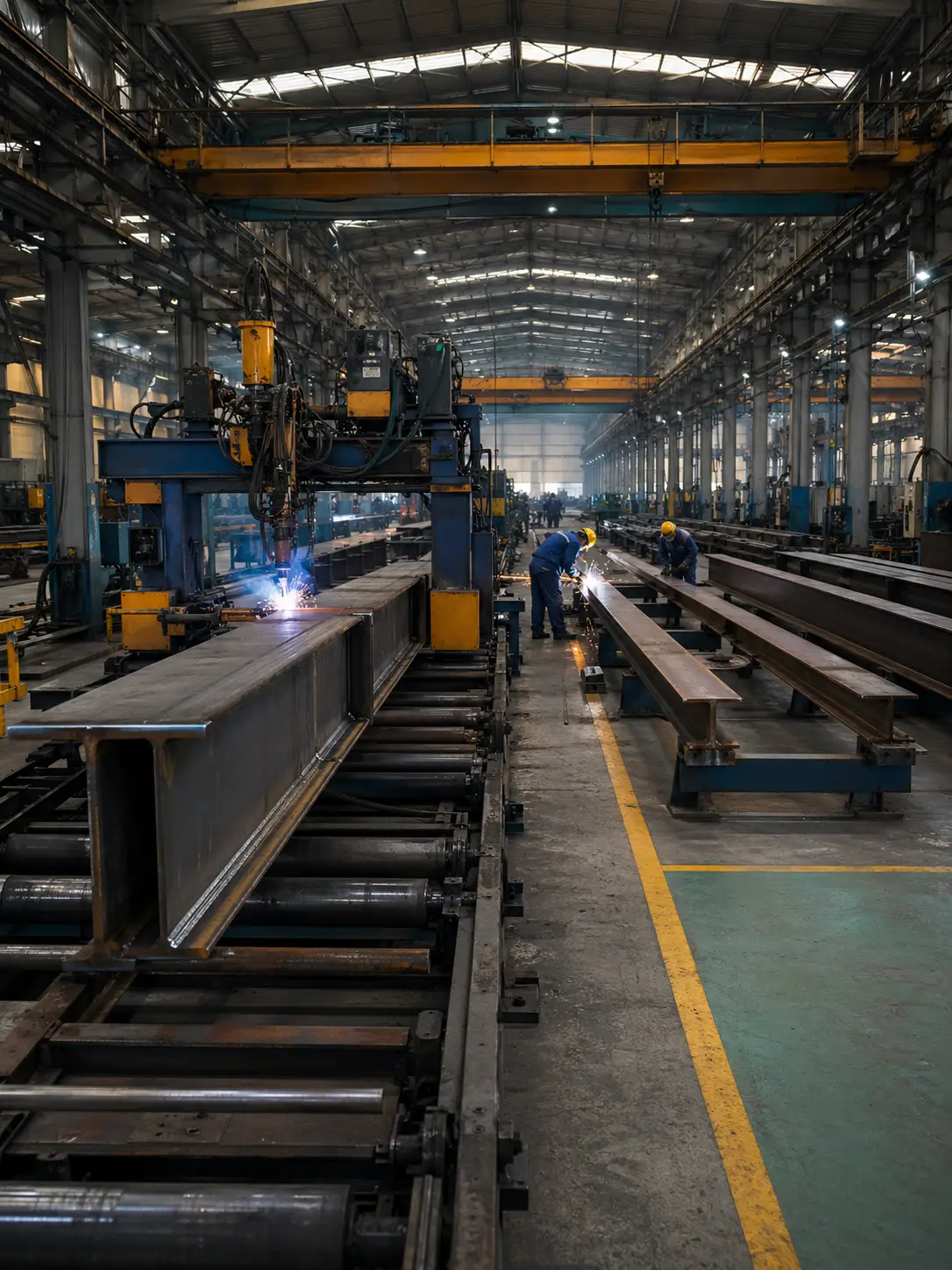
Steel is the better answer everywhere else, and everywhere else is most hangars. Multi-aircraft hangars, maintenance hangars, anything housing a twin or turboprop, and any building in a high-wind or heavy-snow location all push toward the wide clear spans, efficient load paths, and clean integration with fire suppression that steel delivers. KAFA fabricates clear-span steel hangar frames — H-beam and box-section rigid frames designed, fabricated, and installed to the building’s loads — for this range of projects. So the deciding question is not which material is better in the abstract. It is whether your widest wingspan, your door opening, and your field’s wind and snow loads fit inside what wood can do. When they do, wood is a fair choice; when they do not, steel is not the upgrade, it is the requirement. If you are sizing a specific aircraft and field, request a quote with your wingspan and door opening and the frame follows from there.
FAQ
Is a wood hangar cheaper than a steel hangar?
At the bare frame level a small wood hangar can look cheaper, but the door, foundation, and any NFPA 409 suppression cost about the same regardless of frame, so the total gap narrows quickly. Over the building’s life, steel’s lower upkeep usually closes whatever gap is left.
Can a wood frame achieve a true clear span for a hangar?
Engineered timber can reach a clear span for modest widths, but it gets expensive and impractical past roughly 60 to 100 feet depending on the timber system, where interior posts or heavy bracing usually return. That practical ceiling is why wood suits single-aircraft hangars more than wide multi-aircraft buildings.
Does a steel hangar rust?
A galvanized or coated steel frame resists rust for decades, but a breached coating in a humid or coastal site will start surface corrosion. The maintenance task is inspecting and touching up the coating, not replacing structure, which is what separates surface rust from structural loss.
Do I need a fire-suppression system in a wood or steel hangar?
NFPA 409 sets suppression requirements by hangar group — driven by size and use — not by frame material, so a large hangar may need foam or water suppression whether it is steel or wood. Smaller single-aircraft hangars can fall into lighter groups with reduced requirements, so confirm your group with the local authority before design.
Further Reading
- NFPA 409: Standard on Aircraft Hangars — National Fire Protection Association. The standard that classifies hangars by group and sets the fire-suppression requirements referenced above, independent of frame material.
- ASCE/SEI 7: Minimum Design Loads and Associated Criteria for Buildings and Other Structures — American Society of Civil Engineers. The load standard that sets the wind, snow, and seismic demands both steel and wood hangars are engineered to meet.
- American Wood Council — Publisher of the National Design Specification (NDS) for Wood Construction, the design basis for the timber-frame option weighed throughout this comparison.