




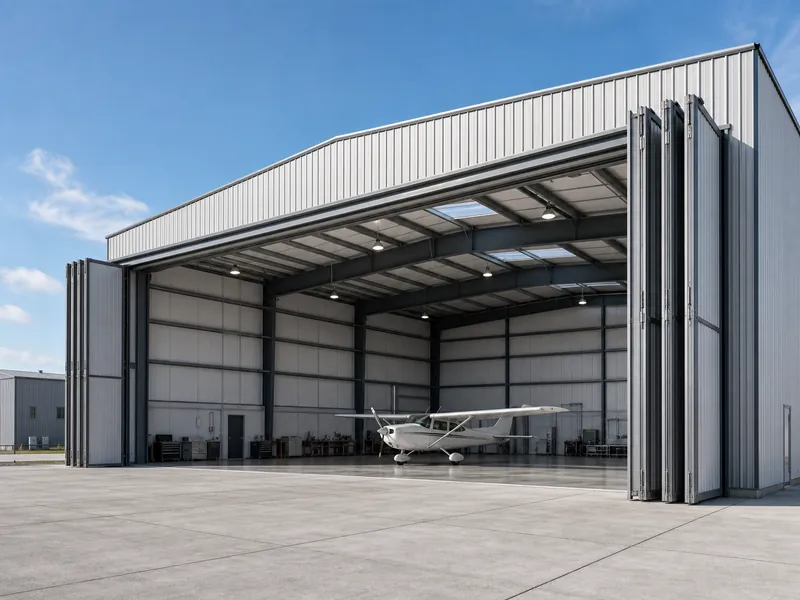
Most owners pricing a steel hangar want one number, but the answer is a range that depends on how finished the building is. A turnkey aircraft hangar, meaning the steel building plus an engineered slab, a hangar door, basic power, and site work, generally runs about $50 to $150 per square foot. The steel kit on its own, with no foundation and no erection, is far less: roughly $15 to $35 per square foot. In whole-project terms, a common 60×60 private hangar lands around $200,000 to $430,000 turnkey, while a small 40×40 starts near $90,000 and a 100×100 multi-aircraft building can pass $1 million. That spread is wide because a hangar’s price is set less by floor area than by clear span, door size, and the loads it has to carry.
What a Hangar Costs per Square Foot
A single per-square-foot figure only means something once you say what scope it covers. Three numbers get quoted in the market, and mixing them is how a budget goes wrong from the start:
- Kit or shell only, about $15 to $35 per sq ft. This is the primary rigid frame, the secondary framing of purlins and girts, and the roof and wall sheeting, delivered to site. No slab, no erection, and no door hardware beyond the framed opening. Arch-frame kits sit at the low end; wide clear-span rigid frames with tall eave heights sit at the top.
- Erected shell, about $25 to $45 per sq ft. The kit plus the labor to erect it, still without a finished floor or interior. Erection labor alone commonly adds $8 to $15 per sq ft, and the labor cost to erect a metal building moves with crane access, site conditions, and crew availability.
- Turnkey, about $50 to $150 per sq ft. The building plus an engineered slab, a hangar door, basic electrical and lighting, and site work. A bare rural single-aircraft hangar sits near the floor; an insulated corporate hangar on a coastal or high-snow site sits near the ceiling.
The error to avoid is reading a $20-per-sq-ft kit ad and budgeting the whole project at that rate. The kit is usually a third to a half of the finished cost. Decide which scope you are actually buying before you compare any two quotes.
Hangar Cost by Size
Footprint sets the baseline, and the table below uses one consistent basis, turnkey total project cost excluding land, so the rows stay comparable. Each range works out to roughly $55 to $125 per sq ft, the turnkey band from the section above.
| Hangar size | Floor area | Typical aircraft | Turnkey project cost |
|---|---|---|---|
| 40×40 | 1,600 sq ft | One light single | $90,000 – $200,000 |
| 50×50 | 2,500 sq ft | High-wing single or light twin | $140,000 – $310,000 |
| 60×60 | 3,600 sq ft | Twin or light turboprop | $200,000 – $430,000 |
| 80×80 | 6,400 sq ft | Turboprop or small jet | $350,000 – $760,000 |
| 100×100 | 10,000 sq ft | Multi-aircraft or light corporate jet | $550,000 – $1,150,000 |
Two buildings with the same area can still price differently. A T-hangar shared by several light aircraft spreads the structure across owners and is the cheapest way to shelter a single plane. A box hangar built around one wide clear-span opening costs more per square foot than its area suggests, because the wing has to clear the door with nothing in the way. If your footprint is closer to a standard rectangle, the per-square-foot logic behind a 40×80 metal building carries straight over to a hangar of similar dimensions.
What Drives Hangar Cost
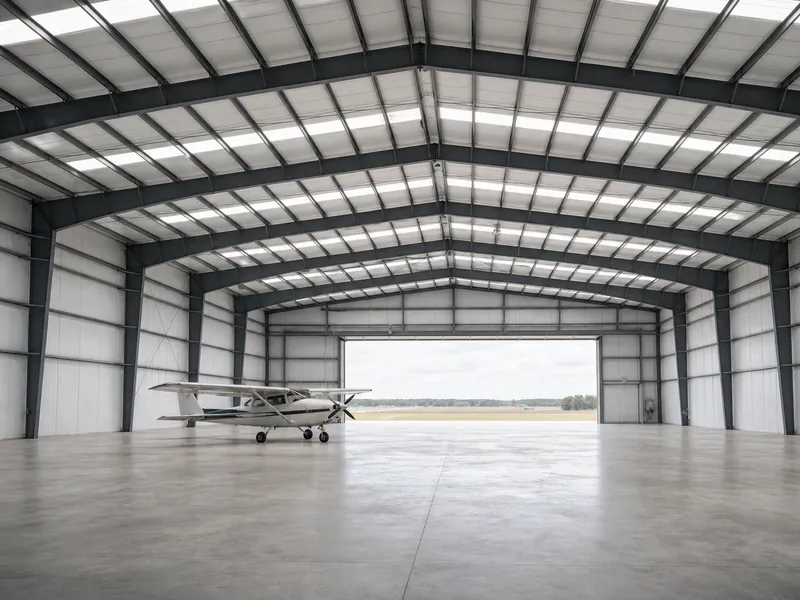
Clear span is the main reason two hangars of equal size quote differently. A hangar needs a column-free interior so a wingspan can move in and out, and a wide clear-span building puts every roof load onto rigid frames at the walls instead of sharing it with interior columns. That drives steel tonnage up faster than floor area alone, so a 100-foot column-free span carries more steel per square foot than an 80-foot one. The frames grow heavier again as eave height rises to clear a tall tail.
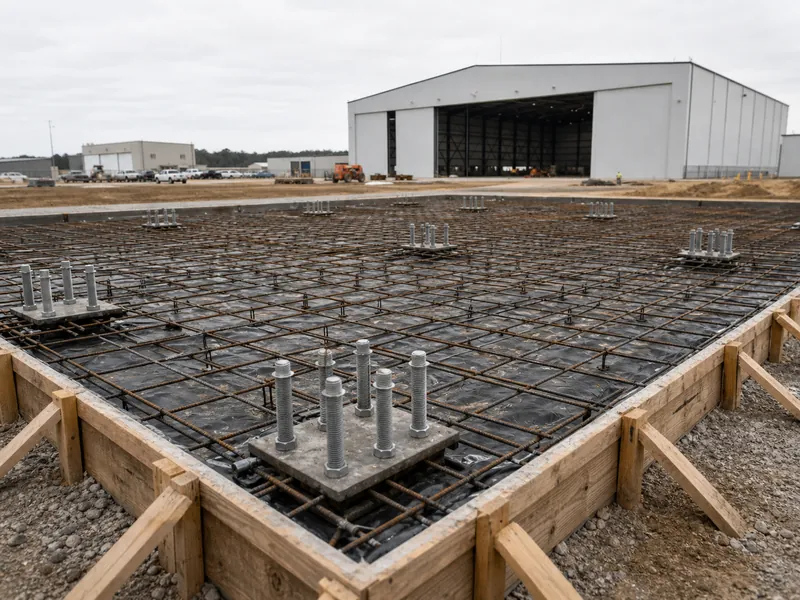
The concrete slab is the next major line. An aircraft hangar floor carries point loads from landing gear and, during maintenance, from rolling jacks and equipment, so the slab is usually thicker and more heavily reinforced than a light commercial floor, around $7 to $12 per sq ft. A metal building foundation sized for a loaded twin is not the same pour as one for a single piston aircraft, and getting that engineering right up front avoids cracking and re-pours later.
Insulation, climate control, and finishes are where scope expands without anyone deciding it should. Metal building insulation runs about $2 to $6 per sq ft depending on whether you use single-layer blanket or insulated panel, and heating a hangar in a cold climate adds equipment on top. Electrical and lighting on a finished hangar commonly land around 10 to 20 percent of the build, far less on a bare shell. Site work such as grading, the apron, and utility runs varies so much by lot that it has to be priced locally, not estimated from a per-square-foot rule.
Hangar Doors and How They Change the Budget
The hangar door is the one big-ticket item a standard metal building does not have, and it can swing a budget by tens of thousands of dollars. A bifold or hydraulic one-piece door commonly runs $12,000 to $45,000 or more, climbing with clear width from a 40-foot opening to 80 feet and up. Sliding doors are cheaper, roughly $8,000 to $32,000 across the same widths, and an electric operator adds a few thousand on top.
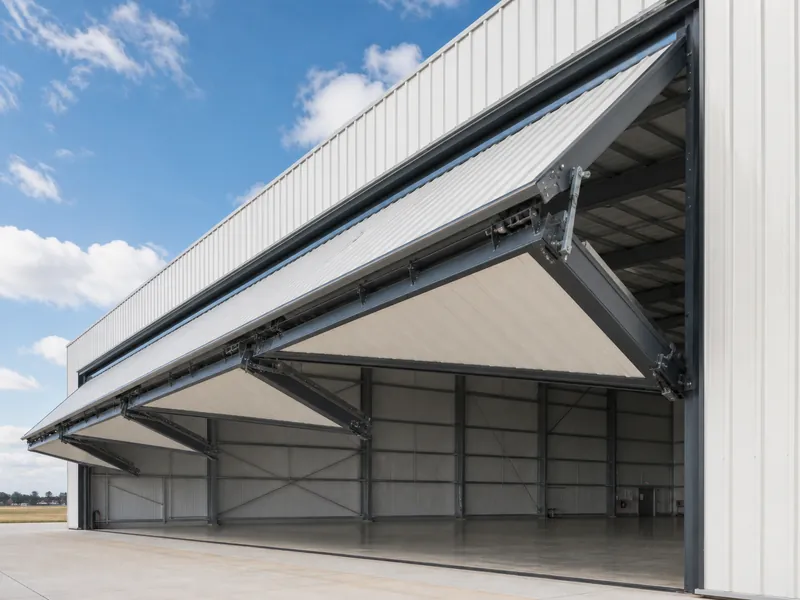
The sticker price is only half of it. A wide door opening also changes the steel around it, because the header spanning the opening and the jamb columns beside it carry more load and grow heavier. That is why two 60×60 hangars can differ by $30,000 on the door line alone: one owner chose a full-width bifold for a tail-dragger with a high rudder, the other accepted a narrower sliding door. Settle the door type and clear opening early, since it feeds straight back into the frame design.
Permits, Codes, and Fire Protection
Regulatory steps add real cost and time, and a hangar carries a few that an ordinary shop does not. A structure near an active airport may also need an FAA airspace review through Form 7460-1, the Notice of Proposed Construction or Alteration, depending on the site’s location, height, and proximity to the runway. Airport authorities or ground leases may require that review before they sign off. Local building permits follow the International Building Code, which classifies the hangar’s occupancy and construction type.
Fire protection is the step large hangars underestimate. NFPA 409, the Standard on Aircraft Hangars, sorts hangars into groups by size and construction and sets the fire-protection level for each. For a larger or higher-risk building, that can mean a foam or other suppression system, a major line item that runs into six figures on the largest hangars. The 2022 edition added risk-based and performance-based alternatives to the older blanket foam requirement, so the suppression approach depends on the hangar group and the local fire marshal rather than a fixed rule. Permitting and engineering together commonly add a few percent of project cost, more when airspace review or suppression is in play.
What a Hangar Quote Should Include
A hangar quote is only comparable when you know exactly what it covers, so read every bid against the same scope checklist. The kit-versus-turnkey gap is where surprises hide, since a low number often means shell only, with the slab, door, electrical, and site work quoted separately or left out. Before comparing prices, confirm that each quote states the frame type and clear span, the door type and clear opening, the slab spec, the insulation system, and which of the permit, site work, and utility costs are inside the number versus excluded.
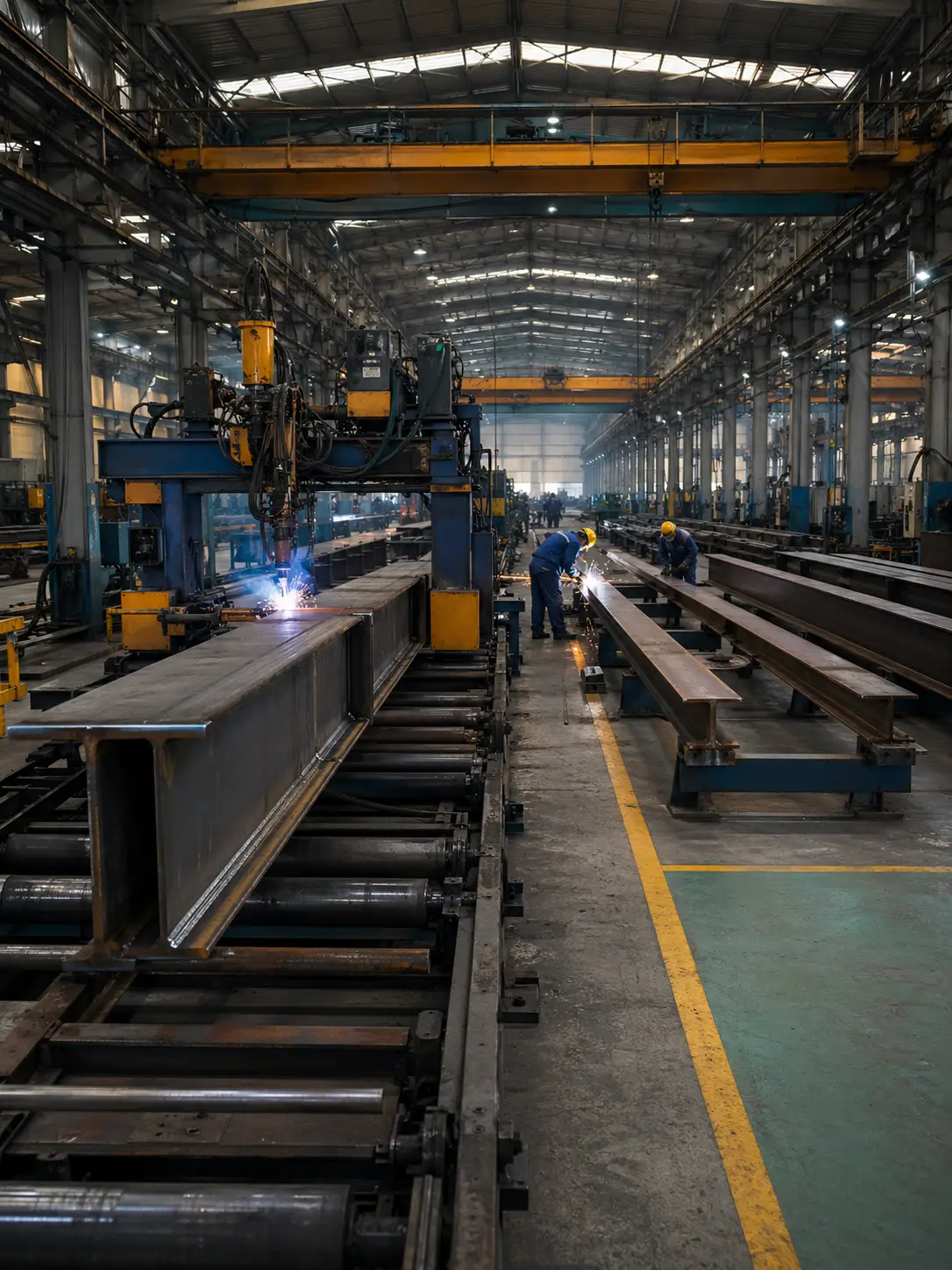
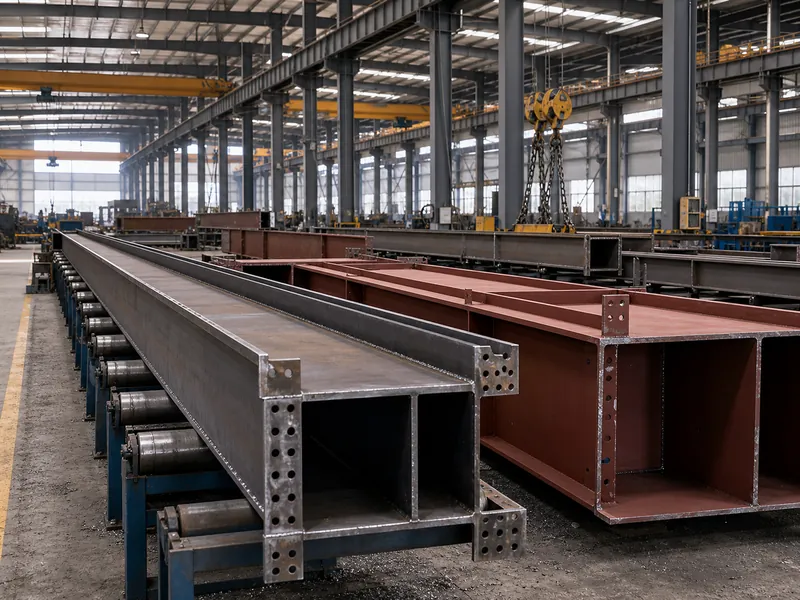
Steel aircraft hangar buildings live or die on the frame, and a wide column-free span is only as good as the fabrication behind it. KAFA fabricates the primary frame, the H-beam and box-section columns and rafters, plus C/Z-section purlins for clear-span hangars, at its 20,000 m² Qingdao facility under ISO 9001:2015 quality management. The frame is the part of the building a buyer should tie to a real spec rather than a round per-square-foot rate. Add a contingency of 10 to 15 percent of hard cost for the change orders that surface once the slab is poured and the door is sized, and you have a budget you can defend.
Conclusion
Three lines move a hangar budget more than any per-square-foot average: the hangar door and its clear opening, the steel in a wide column-free span, and fire suppression once the building is large enough to trigger it under NFPA 409. Set your estimate to a scope before anything else, deciding whether you are pricing a kit, an erected shell, or a turnkey building, and hold every quote to that same line. From there, size the door and span to the actual aircraft, get the slab engineered for its point loads, and check the fire-protection group early so it is not a late surprise. When you are ready to turn a footprint into a real number, request a quote with your aircraft dimensions, clear-span and door requirements, and site location so the frame and slab can be specified rather than guessed.
FAQ
How much does it cost to build a 60×60 hangar?
A 60×60 turnkey hangar generally runs about $200,000 to $430,000, or roughly $56 to $119 per square foot, including the slab, a standard hangar door, basic power, and site work. The kit alone for that footprint is far less, closer to $55,000 to $125,000, which is why the door, slab, and finish level decide where in the range a project lands.
Is a concrete slab included in a hangar kit price?
A steel hangar kit price almost never includes the concrete slab. The kit covers the frame, purlins, and sheeting, while the engineered slab is a separate pour at roughly $7 to $12 per sq ft, more for the thicker reinforced floors that carry aircraft point loads. Always confirm whether a quoted number is kit-only or turnkey before comparing it to another bid.
What is the cheapest type of hangar to build?
A T-hangar shared among several light aircraft is the lowest cost per aircraft, because the structure and one roof are spread across multiple bays and owners. For a single owner, a modest box hangar with a sliding door rather than a wide bifold keeps both the door line and the frame around it lighter, which is where most of the savings sit.
How much does a hangar door cost?
A bifold or hydraulic hangar door commonly adds $12,000 to $45,000 or more, rising with clear width and door type, while a sliding door runs roughly $8,000 to $32,000. Beyond the door itself, a wider opening adds steel to the header and jamb columns, so the clear width affects both the door price and the frame price.
Do you need a permit to build a hangar?
A building permit is required, and a hangar near an active airport may also need an FAA airspace review through Form 7460-1, depending on the location and height. Permits follow the International Building Code for occupancy and construction type, and larger hangars may trigger fire-suppression requirements under NFPA 409, so budget a few percent of project cost for permitting and engineering.
Further Reading
- NFPA 409, Standard on Aircraft Hangars — National Fire Protection Association. Defines hangar groups by size and construction and sets the fire-protection level, which is what drives suppression cost on larger hangars.
- International Code Council (IBC) — publisher of the International Building Code, which classifies a hangar’s occupancy and construction type and governs the local building permit.
- ASCE 7, Minimum Design Loads and Associated Criteria — American Society of Civil Engineers. The wind and snow load standard behind a hangar’s frame design, and the reason the same building costs more in high-wind or high-snow regions.