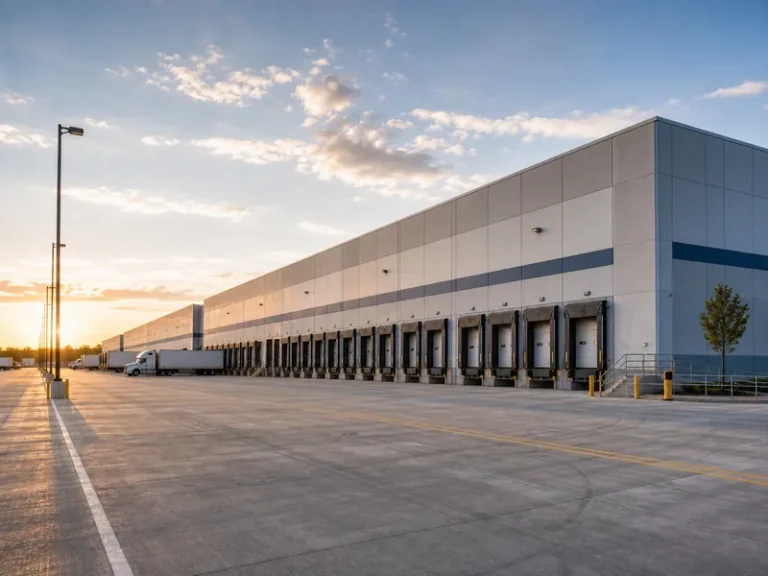





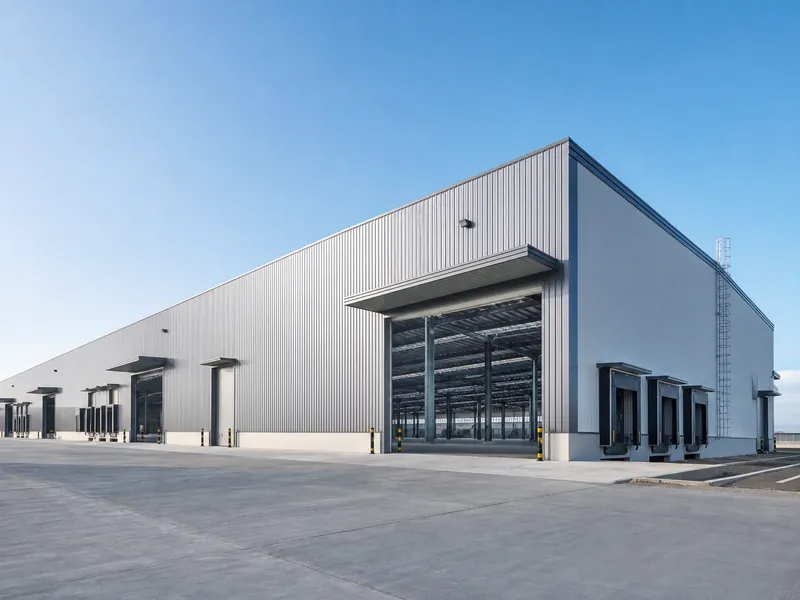
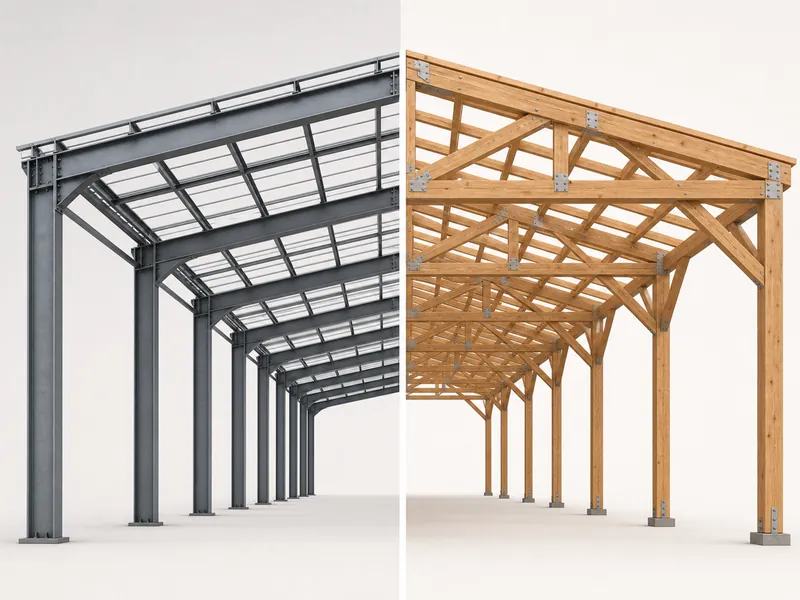
For most mid-size and large warehouses, steel is usually the lower-risk call, and the choice tends to settle on three things: the clear span you need, your fire and insurance position, and how you weigh a lower upfront price against decades of operating cost. Wood keeps a real but narrow place, mainly small, low-span storage where the starting budget has to stay low and the site is dry. A 30-foot pole barn and a 120-foot column-free distribution building are not the same decision. This guide compares the two materials the way a warehouse gets specified, dimension by dimension: span first, then cost over time, fire and code, climate durability, and build speed. Anywhere you are planning a true industrial warehouse rather than a backyard shed, span and fire tend to point toward steel before cost ever enters the room.
How Clear Span Decides the Warehouse Frame First
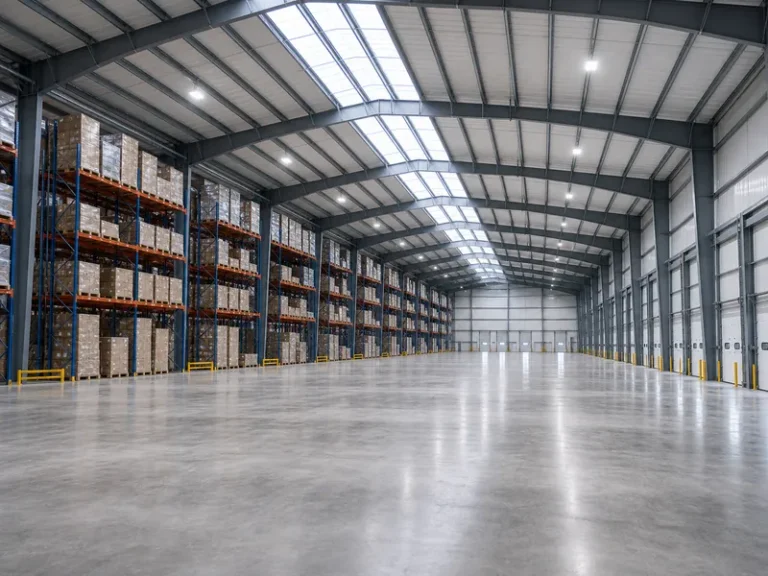
Clear span is the first specification to settle, because steel’s strength-to-weight ratio lets a rigid frame cross spans on the order of 80 to 150 feet with no interior columns. Conventional wood framing needs intermediate posts or engineered trusses well before that. A warehouse is bought for the floor it gives you, and every interior column is a column a forklift has to drive around and a rack run that has to stop and restart. That is why operators paying for throughput specify column-free steel even when the first quote looks higher: on the floor, each post you add to a wood structure costs an aisle and a rack bay.
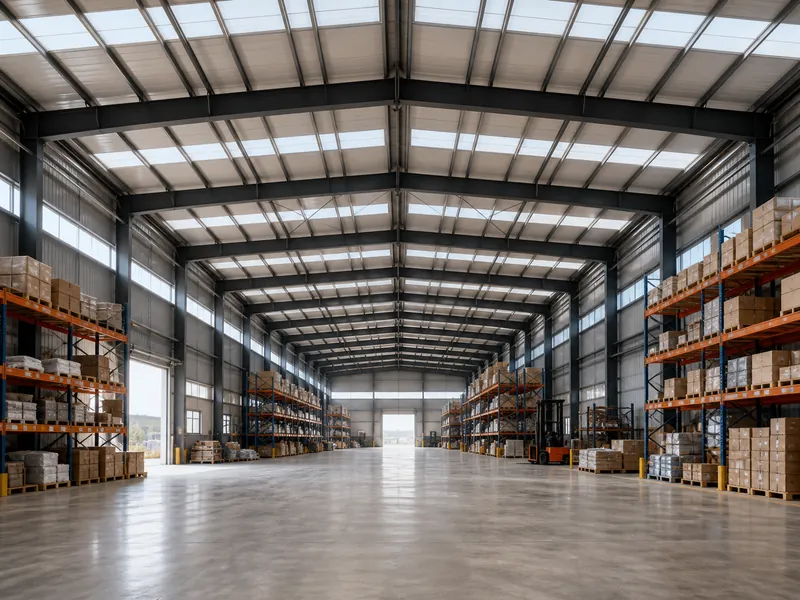
Wood is not disqualified, it is just bounded. Glued-laminated timber can stretch toward longer spans, but the cost climbs fast as the span grows, which erodes wood’s main advantage exactly where warehouses need reach. For a small storage building with a modest span, dimensional lumber and trusses do the job at a lower price. Size the span and column layout you actually need before you compare anything else, because that one number rules options in or out.
This is a warehouse-scale question. If you are weighing the two materials at house or small-building scale, the trade-offs shift, and the broader comparison in steel vs wood frame building is the better starting point, since span is not the deciding variable at that size.
Upfront Price vs Lifecycle Cost for the Shell
Wood usually wins the upfront quote and steel usually wins the decade, so an honest cost comparison depends on how long you intend to own and run the building. In many markets, wood framing carries a lower upfront material and labor cost, and crews experienced with wood are easy to find and schedule. Steel’s argument is a lifecycle one: less money lost to rot and decay repair, lower routine maintenance, a longer service life, and often lower insurance once the structure is non-combustible.
Be skeptical of the per-square-foot figures that fill comparison pages. Published numbers for both materials disagree so widely that a single quoted dollar figure tells you almost nothing until you price your own span, specification, and region. A useful estimate comes from a real shell quote against your drawings, not from an averaged headline number, and the full set of variables that move it is covered in cost to build a warehouse. The variable to fix in your own head first is the ownership horizon: a building you will sell in five years rewards a low upfront price, while one you will operate for thirty rewards durability and low maintenance.
Fire Behavior, Insurance, and Building Code Type
Steel is non-combustible and wood is not, but that single fact decides less about warehouse fire safety than the construction type your building is required to meet and how each frame behaves once a fire is already burning. Steel adds no fuel to a fire, so building codes treat steel framing as non-combustible construction, which is often required for larger or higher-hazard occupancies and can lower insurance premiums over the life of the building.
The part most comparison pages skip is the part an engineer would tell you: non-combustible is not the same as fireproof. Unprotected structural steel loses strength as it heats and can deform or sag in a sustained fire, which is why many warehouse occupancies still call for rated fireproofing, sprinklers, or both, depending on size and contents. Choosing steel does not remove the fire question, it changes it into a design question about protection, and the options for that are the subject of steel building fire protection. Wood, for its part, is not a single fire story: light wood framing is the real liability, while heavy timber chars at a predictable rate and can hold load longer than thin members. So confirm the construction type your occupancy and size trigger with the local authority, then ask your insurer to price both frames rather than assuming the rating.
Moisture, Pests, and Humid-Site Durability
Wood and steel fail in opposite ways, and your site’s moisture decides which failure mode you are signing up for. Wood absorbs moisture, so it can rot, warp, and swell, and termites and decay attack first at sill plates, ground contact, and any wall that stays wet; in humid or coastal regions that means sealing, treatment, and inspection on a schedule. Steel does none of that, it will not rot, warp, or feed insects, and it stays dimensionally stable for the life of the frame.
Steel has its own two watch items, and naming them is more useful than pretending it has none. The protective coating and the fasteners and panel laps are where corrosion starts in salt air or washdown environments, so those details, not the frame itself, are what you inspect on a humid coastal site. The other item is thermal: steel conducts heat, so framing members can form thermal bridges and sweat with condensation unless the assembly is insulated and detailed for it. That is a solvable design item rather than a flaw, and getting it right is what metal building insulation is for. The practical contrast is simple. On a wet site, the first thing to check on a wood building is the base plate and the lower wall; on a steel building it is the fasteners and coating. Knowing which to watch keeps small problems off the roof.
Build Speed and Room to Expand
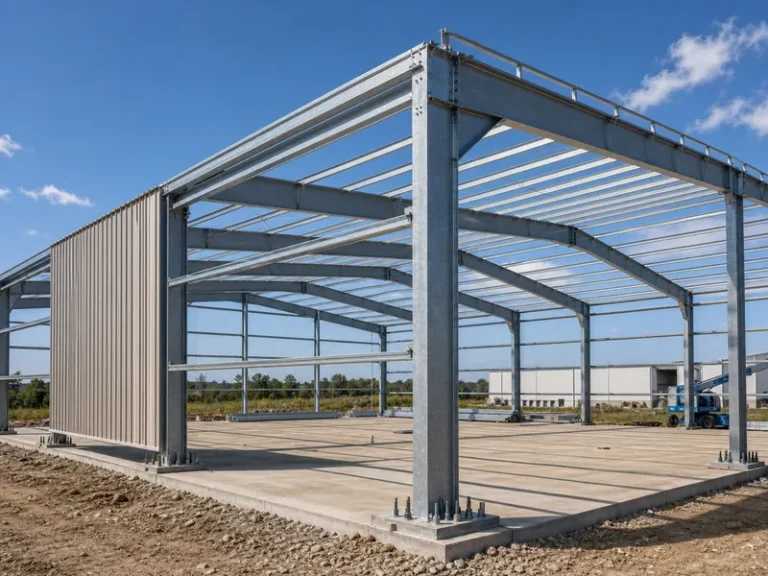
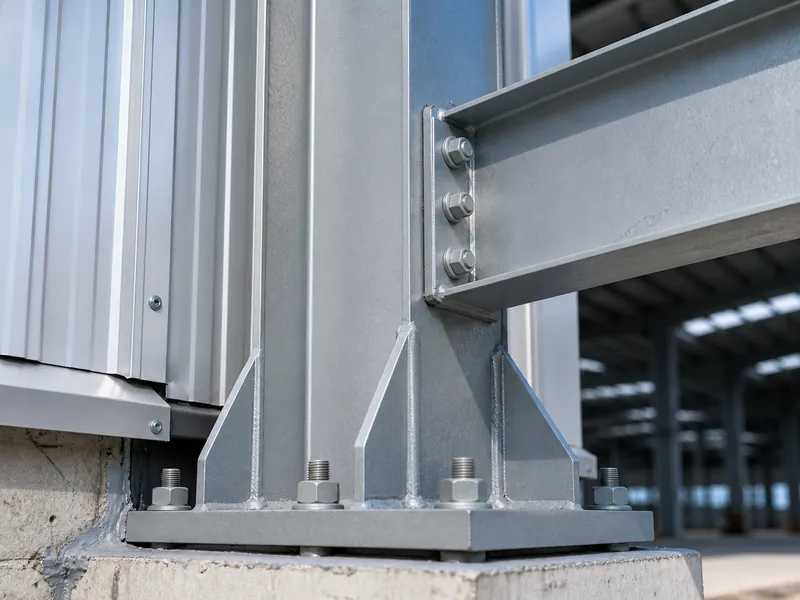
Pre-engineered steel warehouses go up faster and extend more cleanly than wood, which matters most when your timeline or your future footprint is uncertain. The components are fabricated and punched in the shop and bolted up on site, so there is less field cutting, fewer weather delays, and a schedule that holds. Adding bays later means extending the frame line along the same module rather than cutting into finished structure, which is a real advantage for a business that expects to grow.
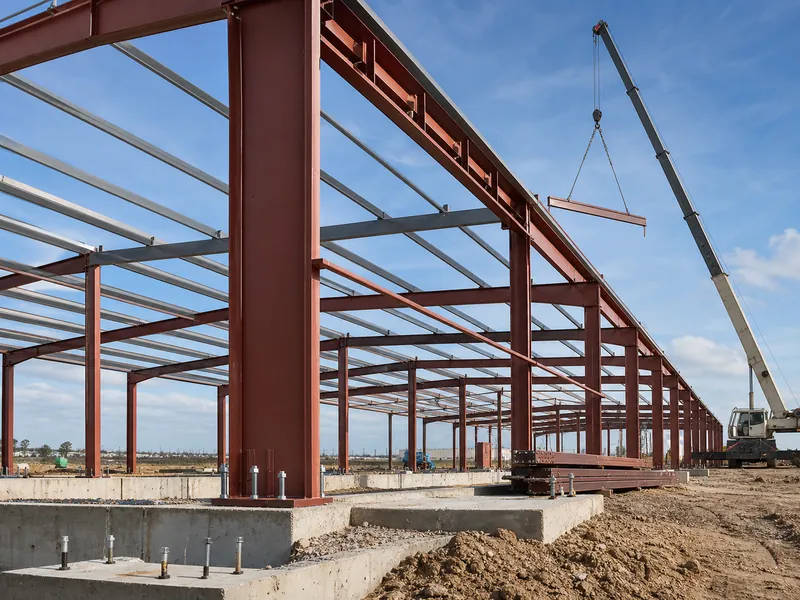
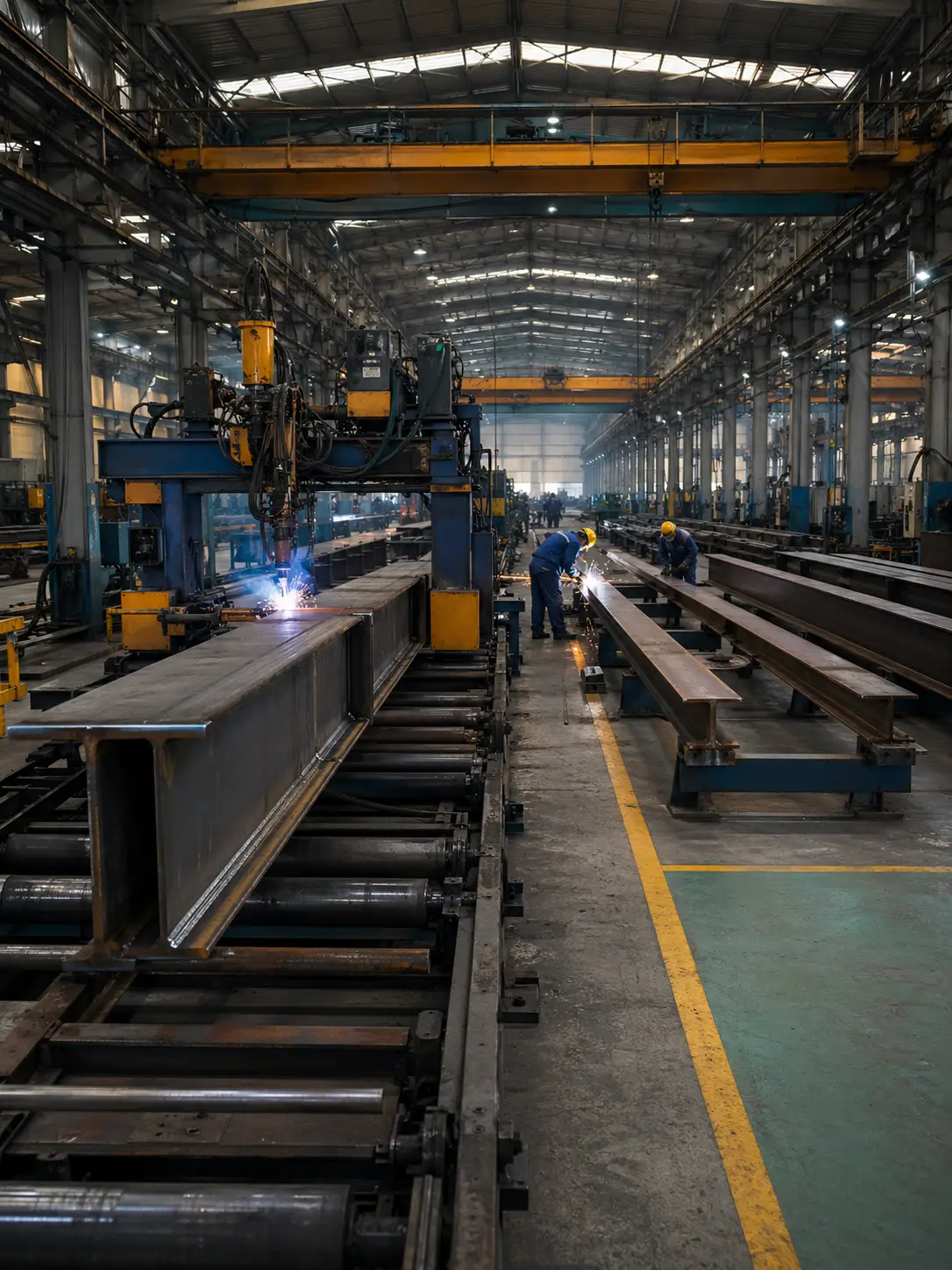
That predictability starts in the shop. KAFA fabricates H-beam, box-section, and C and Z purlins on dedicated lines under ISO 9001:2015 quality management, which supports coordinated fabrication of the primary and secondary steel for a warehouse frame. Shop fabrication of repeating members is a large part of why steel schedules are easier to plan around than field-built wood. Wood keeps an edge for small, simple modifications and for trades that are familiar everywhere, but at warehouse span its assembly is slower and more field-dependent, and large expansions are messier to tie in. If you want the warehouse-specific gains laid out on their own, the advantages of a steel warehouse cover speed, span, and durability together.
Matching the Frame to How You’ll Use the Warehouse
Choose steel when the warehouse must span wide, last for decades, meet a non-combustible construction type, or grow later. Choose wood only when the building is small, low-span, budget-first, and on a dry site with a short ownership horizon. Most genuine industrial and distribution use lands on steel for exactly the reasons above: large column-free floors for racking and machinery, durability against weather and pests, a non-combustible structure for fire-sensitive or high-value inventory, and a frame that extends as the operation grows. That is why most industrial steel buildings end up specified this way. Wood holds its niche where the building is genuinely small and the budget, not the span, is the binding constraint.
| If your warehouse… | Lean toward |
|---|---|
| Needs a wide column-free floor for racking or machinery | Steel |
| Must meet a non-combustible construction type or lower insurance | Steel |
| Sits in a humid, coastal, or pest-heavy climate | Steel |
| Will likely be expanded later | Steel |
| Is small and low-span on a dry site with a short hold | Wood can work |
Before you commit either way, do three things in order: lock the clear span your operation requires, confirm the construction type your occupancy and size trigger with the local authority, and have both frames priced by a fabricator and an insurer so the lifecycle picture is real rather than assumed. For a true industrial warehouse, the span and fire requirements usually settle on steel before lifecycle cost even decides it. If your span and occupancy point that way, you can request a quote on a frame engineered to your bay spacing and your local snow and wind loads.
FAQ
Is a metal warehouse cheaper than a wood one?
Wood is usually cheaper to build and steel is usually cheaper to own, so the answer flips with your ownership horizon. For a small, low-span building you will hold briefly, wood’s lower upfront cost can win; for a large warehouse you will operate for decades, steel’s lower maintenance, longer life, and often lower insurance typically close and then reverse the gap. The per-square-foot figures published online vary too widely to use as a rule, so price your own span and region instead of trusting an averaged number.
Do metal warehouses last longer than wood ones?
Steel warehouses generally outlast wood ones because steel does not rot, warp, or feed termites, while wood needs sealing, inspection, and periodic repair to reach a long service life. Published lifespans for steel commonly run several decades with basic maintenance, and wood often faces major structural renovation sooner, though both depend heavily on climate, coating or treatment, and upkeep. In humid or coastal regions the gap widens unless the wood frame is carefully detailed and maintained.
Are steel warehouses more fire-resistant than wood?
Steel is non-combustible and adds no fuel to a fire, which is why codes treat it as a non-combustible construction type and insurers often price it lower, but non-combustible is not the same as fireproof. Unprotected structural steel loses strength in a sustained fire, so many warehouse occupancies still require rated fireproofing, sprinklers, or both. Heavy timber, by contrast, chars predictably and can hold load longer than thin light-gauge framing, so confirm the rating your occupancy and size demand rather than assuming either material is safe by default.
Can a wood warehouse match a steel clear span?
Conventional wood framing usually cannot match steel at large clear spans without intermediate columns or costly engineered timber. Standard dimensional framing tops out well short of the 80-to-150-foot column-free bays a rigid steel frame reaches, and glued-laminated timber that approaches those spans erases wood’s upfront price advantage. For wide, column-free warehouse floors built for racking and forklift traffic, steel is the practical choice.
Further Reading
- SteelConstruction.info — The Steel Construction Information System — BCSA and SCI industry resource. Background on structural steel performance and fire behavior, including why unprotected steel still needs fire design even though it is non-combustible.
- APA – The Engineered Wood Association — wood industry technical body. Reference for engineered wood products such as glued-laminated timber and structural panels and their span and structural capabilities, for the wood side of the comparison.
- International Code Council (IBC) — publisher of the International Building Code. Use it to confirm the construction type and fire requirements your warehouse occupancy and size trigger before choosing a frame.