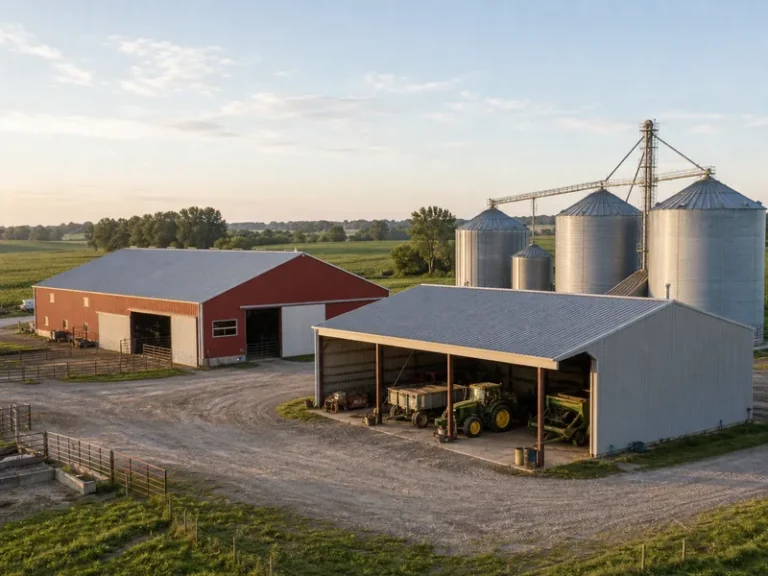





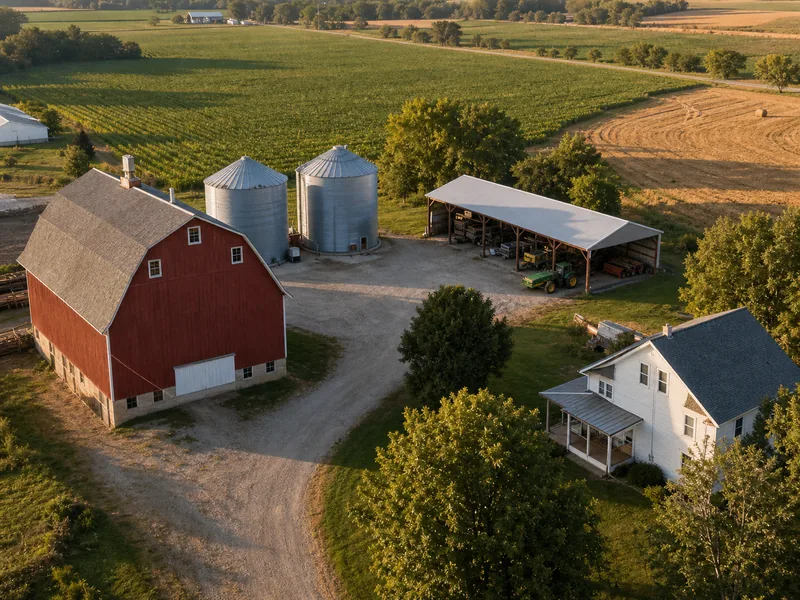
A working farm is rarely a single building. It is a cluster of single-purpose structures, each built around one job: housing animals, storing crops and feed, sheltering equipment, handling what the farm produces, and supporting the people who run it. Walk almost any mixed farm and you will find a barn, some form of grain or feed storage, a machine shed, and a house, with smaller structures added to fit the operation. This guide groups the buildings you will find on a farm by what they do, so you can see which ones a given operation needs and which it can skip. It sorts the common structures by purpose rather than by price or frame type, keeping the focus on what each building does and when an operation needs it.
What Counts as a Farm Building?
A farm building is any structure on agricultural land built to support production — sheltering livestock, storing crops, feed, or equipment, or housing on-farm work — rather than serving only as a place to live. The farmhouse is the exception that proves the rule: it is a residence, yet it still counts as part of the farmstead, the cluster of buildings and yards that form the working core of the property. Older terms like “outbuildings” cover the same idea — every shed, barn, and store that supports the land around the house. The buildings rarely stand alone, either — they share a network of yards, lanes, and lots that move animals, feed, and machinery between them. Where a structure sits can matter almost as much as what it is.
Which buildings appear, and how many, depends on what the operation produces and how big it is. A row-crop grain farm leans on storage and equipment buildings, while a dairy or poultry operation leans on animal housing and handling space. A hobby farm might get by with one barn and a shed; a large commercial farm runs a dozen specialized structures. This guide stays at that level — what each building is for and when it earns its place in the yard. It does not cover how to pour foundations, secure permits, or budget a build, since those vary with location, soil, and design.
Livestock Housing: Barns, Coops, and Shelters
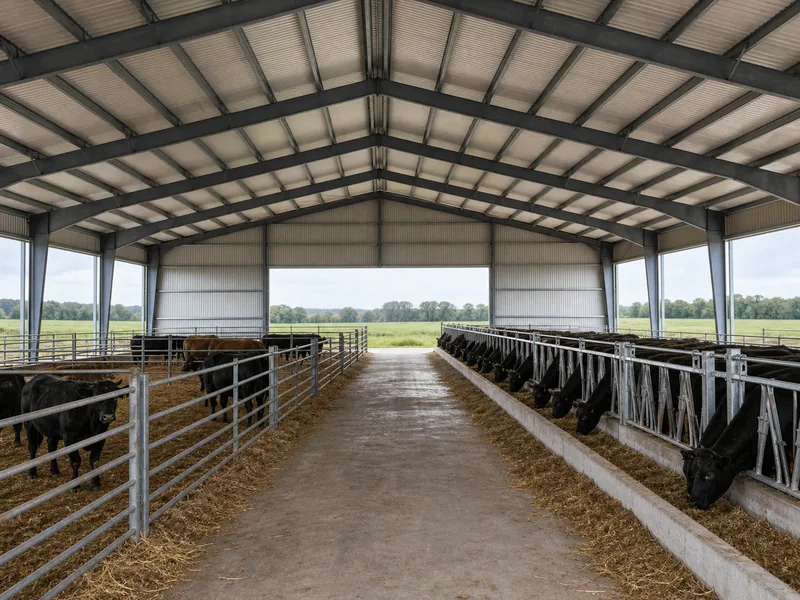
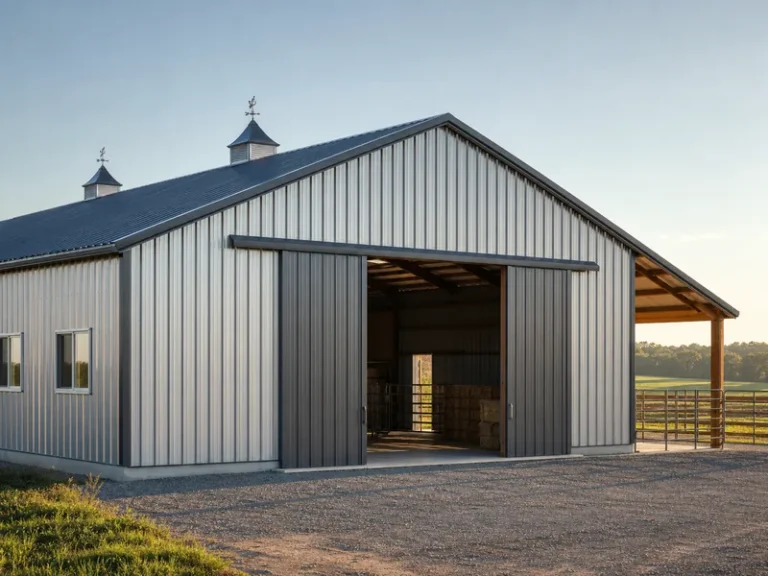
Buildings that house animals are usually the largest and most specialized structures on a livestock farm, because each species needs its own space, ventilation, and access for feeding and cleaning. The classic example is the barn — a large, enclosed building that shelters animals and very often doubles as hay, feed, and equipment storage under one roof. From there, housing tends to specialize by animal:
- Cattle barns and free-stall barns give dairy and beef herds room to rest, feed, and be milked or sorted, often with open sides for airflow.
- Poultry houses and chicken coops keep birds safe from predators and weather; on many farms this is a purpose-built steel chicken house with controlled ventilation and easy-clean surfaces.
- Brooder houses are heated shelters for young, vulnerable animals — chicks, piglets, lambs — that cannot yet regulate their own temperature.
- Stables house horses in individual stalls, while hog barns and sheep or goat sheds follow the same logic for their species.
Good ventilation is the difference between a healthy animal building and a problem one. Tight, poorly aired housing lets ammonia and humidity build up from manure and breath, which irritates lungs and invites respiratory disease. So these buildings are either left open for natural airflow or sealed and run on fans with proper air inlets. That requirement also shapes the frame: animal barns are frequently built with wide, column-free interiors so pens, feed alleys, and equipment can be arranged and rearranged without working around posts.
Crop and Feed Storage: Silos, Granaries, and Sheds
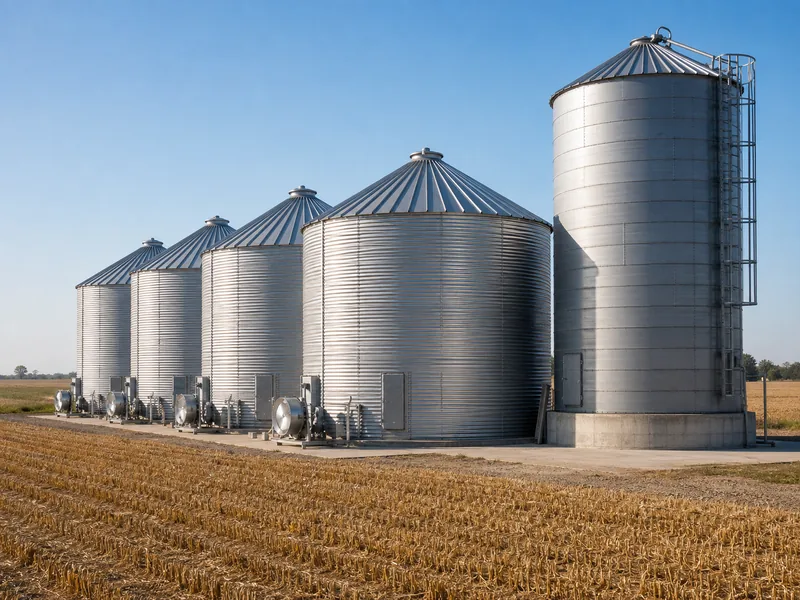
Storage buildings keep harvested crops and animal feed dry, ventilated, and protected from pests between harvest and use, and the right one depends on whether you are holding dry grain, moist silage, or baled hay. The names get mixed up, so it helps to separate them:
- Grain bins are the corrugated steel cylinders you see beside many farms, set on a concrete slab and often fitted with aeration fans. They hold dry grain — corn, soybeans, wheat — for short to medium terms.
- Silos are the tall towers, or low bunkers, built mainly for silage: the moist, fermented feed used on dairy and livestock farms. A silo is not a grain bin — one stores wet feed, the other stores dry grain, and they need different handling systems.
- Granaries are older enclosed buildings for loose or bagged grain, built tight with few openings to keep rodents out.
- Hay barns and hay sheds are covered, airy structures that keep baled hay off the ground and out of the rain.
- Root cellars hold fruit and vegetables in a cool, stable environment; at production scale, an insulated cold storage building does the same job for crops headed to market.
Moisture is the failure mode all of these guard against — grain that goes in damp heats and spoils, and hay baled wet can mold or even combust. For bulk grain specifically, larger operations move beyond simple bins to a dedicated grain storage building that combines drying, handling, and high-volume storage in one footprint.
Equipment, Workshop, and Input Buildings
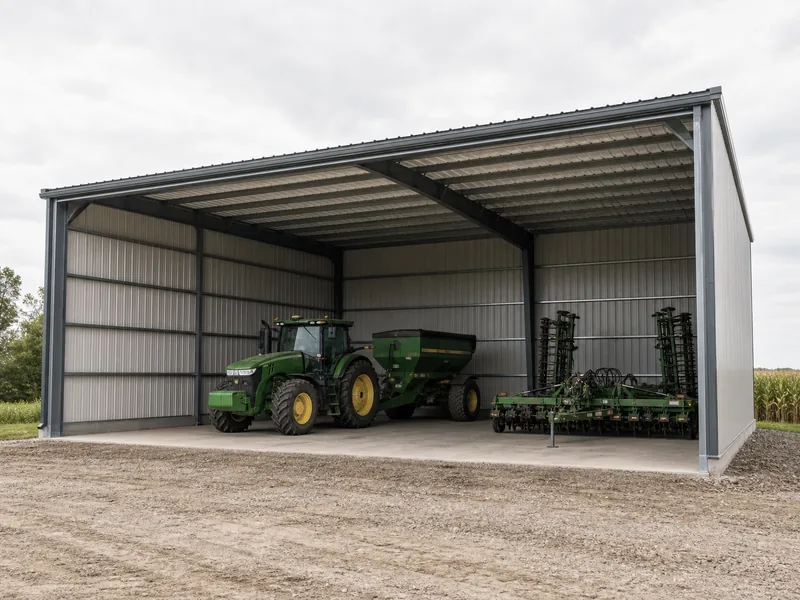
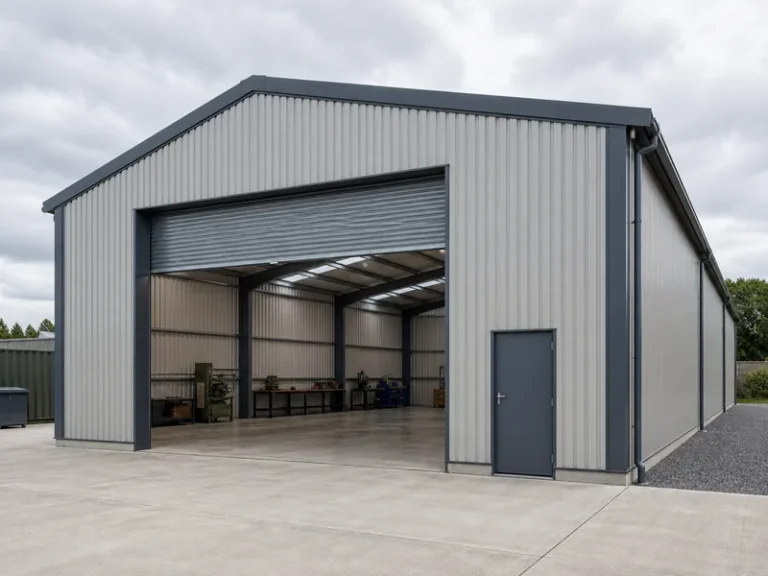
Machinery and tools need their own buildings, both to shelter them from weather and to give room to service them on site. The workhorse here is the machine shed, or implement shed — an open or partly enclosed building sized to park tractors, combines, balers, and their attachments. Because that equipment is large and moved often, these sheds are usually built clear-span, with tall, wide door openings and generous eave height the first dimensions to settle.
Around the machine shed sit the smaller, more specialized spaces:
- Farm workshops hold the bench, tools, and welding gear where repairs and fabrication happen; on many farms this is a standalone metal building workshop kept apart from clean storage.
- Fuel and maintenance sheds store diesel, gasoline, oils, and lubricants in a ventilated, organized space, set away from other buildings for fire safety.
- General storage sheds take the overflow — fencing, irrigation parts, seed, and small inputs that need a roof but not climate control.
- Chemical or input stores keep fertilizer and crop-protection products contained and ventilated, usually separated from people and animals.
Processing, Support, and Specialty Structures
Beyond housing and storage, most farms carry a handful of buildings where products get handled or where people and overflow needs are managed. Which of these a farm builds turns largely on whether it sells raw or processed product — a row-crop operation may need none of them, while a market garden or a dairy needs several. These are smaller and more operation-specific, but they round out the farmstead:
- Milk houses and dairy parlors give dairy farms a clean, cooled space to milk and hold milk, kept separate from the animal barn for hygiene.
- Packing and grading sheds are where produce is washed, sorted, and boxed before it leaves the farm.
- Grain dryers pull moisture out of grain before it goes into storage, protecting it from spoilage.
- Greenhouses and hoop houses create a controlled environment for seedlings and high-value plants.
- Manure and compost stores — and, on larger operations, an anaerobic digester — contain waste for nutrient management and biosecurity.
- Farm offices hold records, scheduling, and paperwork, while the farmhouse anchors the people who run it all.
Which Buildings Your Farm Actually Needs
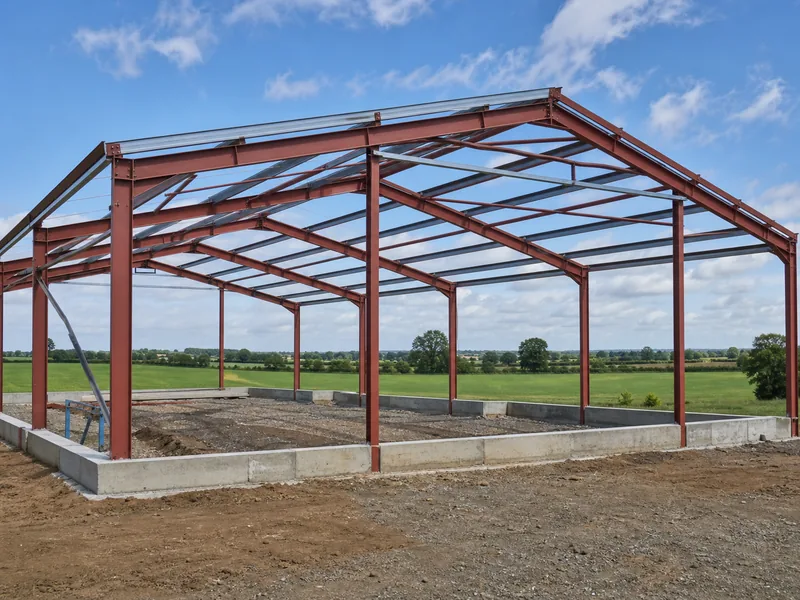
You do not need every structure on this list — only the ones your output demands. They tend to come in a clear order: first shelter for the animals or crops you produce, then dry storage for what you harvest, then covered space for the equipment you own, and finally the support buildings — processing, workshop, office — that make daily work efficient. Three variables set both the list and the size of each building: what you produce, your scale, and your climate.
Material is the next decision, and it is where many of these buildings now overlap. Barns, machine sheds, poultry houses, and workshops are commonly built today as steel farm buildings, because a column-free steel frame spans wide, resists rot and pests, and adapts as the operation changes. How those structures are sorted by frame and material is its own subject, and the breakdown of farm building types covers it. When budget is the question, steel agricultural building prices gets into the numbers this guide leaves out.
Many farms also stretch one building across several jobs before adding another — a barn that stores hay and shelters a few animals, or a shed that parks equipment and doubles as a workshop. That habit keeps the building count and the budget down in the early years.
Start by listing what your farm produces and stores this season. That inventory — not a catalog of building styles — should decide which structures go up first.
FAQ
What buildings does a small farm need to start?
Most small farms begin with three: a barn or shelter for animals or hay, a dry storage building for feed and harvested crops, and a machine shed or workshop for equipment. Everything beyond that is added as the operation’s output and headcount grow.
What is the difference between a barn and a shed?
A barn is an enclosed, multi-use building that shelters animals and often stores hay, feed, or machinery, while a shed is usually a simpler, single-purpose structure — frequently open-sided — built to cover one thing such as equipment or hay. Enclosure and number of jobs are the practical dividing lines.
Is a grain bin the same as a silo?
No — a grain bin holds dry grain such as corn or soybeans, usually in a corrugated steel cylinder with aeration, while a silo traditionally stores silage, the moist fermented feed used mainly on dairy and livestock farms. Choosing the wrong one means the wrong moisture control and handling system.
Are farm buildings made of steel or wood?
Both are common, but many modern farm buildings use steel frames because they span wide, column-free interiors, shrug off rot and insects, and carry the snow and wind loads that large open structures face. Wood still appears in smaller, traditional, or lightly loaded buildings.
Where should farm buildings be placed on the property?
Placement follows daily workflow and biosecurity: feed storage sits near the livestock barns it serves, equipment sheds sit near field access, and animal housing is set back from the residence with room for ventilation and manure handling. A layout that matches the daily route cuts the distance walked and driven every day.
Further Reading
- USDA Farmers Home Administration Farm Building Plans — U.S. National Agricultural Library. A government archive of floor plans for farm buildings and farmstead houses, useful for seeing how the structures in this guide were historically laid out.
- Housing and Space Guidelines for Livestock — University of New Hampshire Extension. Sets out minimum space, housing types, and ventilation needs by species, behind the livestock-housing section above.
- The Difference Between Grain Bins and Silos — Illinois Farm Bureau Partners. Explains why grain bins (dry grain) and silos (silage) are not interchangeable, supporting the storage section.