




Cold chain management in a pharmacy keeps temperature-sensitive medicines inside their approved range at every step, from the loading dock to the patient. Most products fall into a few bands: refrigerated stock at 2–8°C (36–46°F) such as vaccines, insulin, and many biologics; frozen stock near −20°C; ultra-cold products around −70°C, including some mRNA vaccines held between −60°C and −80°C; and a large group kept at controlled room temperature, commonly 20–25°C. A break in any of these ranges (a temperature excursion) can cut a drug’s potency before anyone sees a problem, so the chain is run as a system rather than a single fridge.
This guide covers how that system is managed and where a purpose-built cold store fits inside it. It does not set the exact temperature, hold time, or record-retention period for any specific drug; those come from the product label and the regulations in force where you operate.
What Cold Chain Management Means in a Pharmacy
Cold chain management in a pharmacy is the discipline of holding every temperature-sensitive medicine inside its labeled range from the moment stock arrives until it is dispensed or shipped onward. The pharmacy is one node in a longer chain that starts at the manufacturer and passes through distributors and carriers, but it is the node where a single unattended weekend or a propped-open door can undo everything upstream.
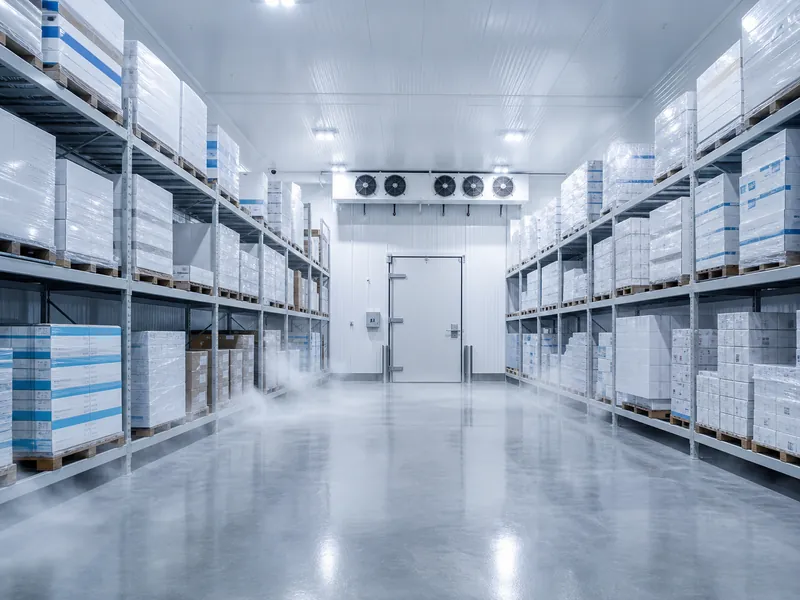
Two settings sit under the same heading and pull in different directions. A community or hospital pharmacy mostly manages receiving, refrigerated storage, and dispensing across a handful of units. A distribution or manufacturing operation manages bulk volumes, multiple temperature zones, and onward transport, which is closer to what cold storage facilities are used for at industrial scale. The management principles are shared (keep the product in band, prove it stayed there, and act fast when it does not), but the equipment and the failure modes scale up sharply between the two.
The decision a pharmacy actually has to make is not whether to refrigerate, but how much margin to build in. A unit that holds 2–8°C on a mild afternoon is not the same as one that holds it through a heatwave, a delivery surge, and a power blip in the same week.
Temperature Bands Pharmaceutical Products Require
Most temperature-sensitive medicines belong to one of four storage bands, and the band is set by the product label, not by what equipment happens to be free. Sorting products into distinct bands, rather than one vague idea of “cold,” stops a 2–8°C vaccine from being parked in a −20°C freezer because both get loosely called the same thing.
| Storage band | Typical range | Example product types | Typical role |
|---|---|---|---|
| Controlled room temperature | ~20–25°C | Many tablets, some liquids | Bulk shelf stock, definition varies by label |
| Refrigerated | 2–8°C (36–46°F) | Most vaccines, insulin, many biologics | The core “cold chain” band |
| Frozen | around −20°C | Selected vaccines and biologics | Longer-term frozen hold |
| Ultra-cold | around −70°C (−60 to −80°C) | Some mRNA vaccines, selected biologics | Specialist ultra-low storage |
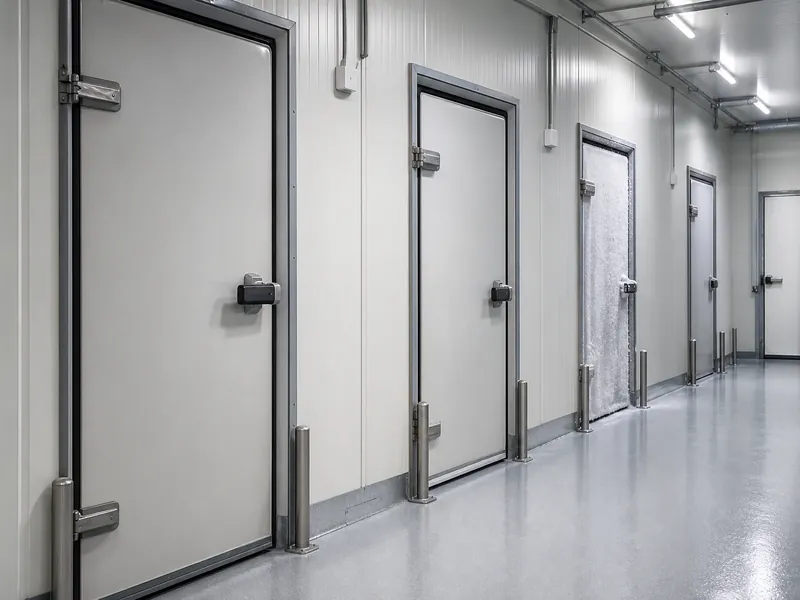
A narrower group of advanced therapies, certain cell and gene therapies, is held cryogenically at −150°C or below in liquid nitrogen vapor, which is specialist infrastructure most pharmacies never handle directly. For everyday practice, the refrigerated 2–8°C band carries the largest share of risk because it holds the most products and sits closest to ambient, where small equipment faults push stock out of range quickly. Confirm each product’s band against its label before storage, because controlled room temperature and frozen definitions in particular shift between manufacturers.
The Fixed Storage Node: What a Compliant Cold Store Must Hold
The fixed storage node is the one link in a pharmacy cold chain that cannot be improvised, because a building’s temperature stability is set long before the first pallet arrives. Packaging and transport can be upgraded between shipments; a cold room that cannot hold its band has to be rebuilt or re-engineered, which is why facility decisions deserve more scrutiny than they usually get.
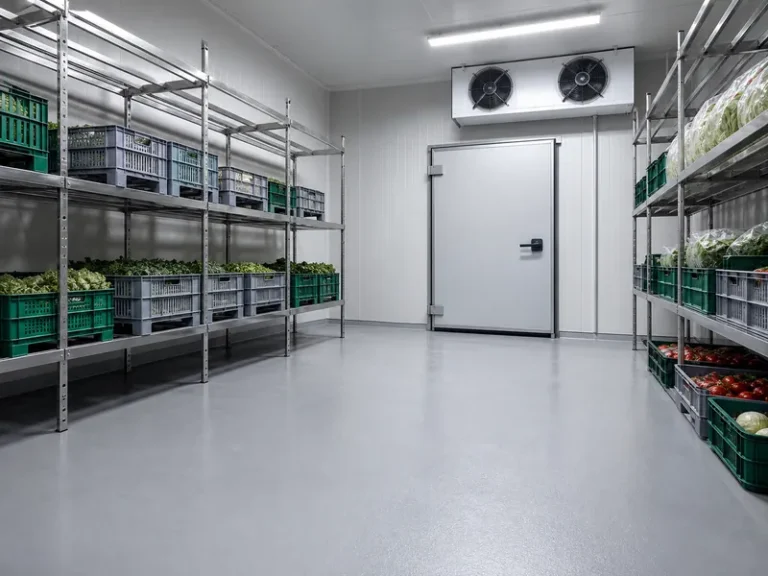
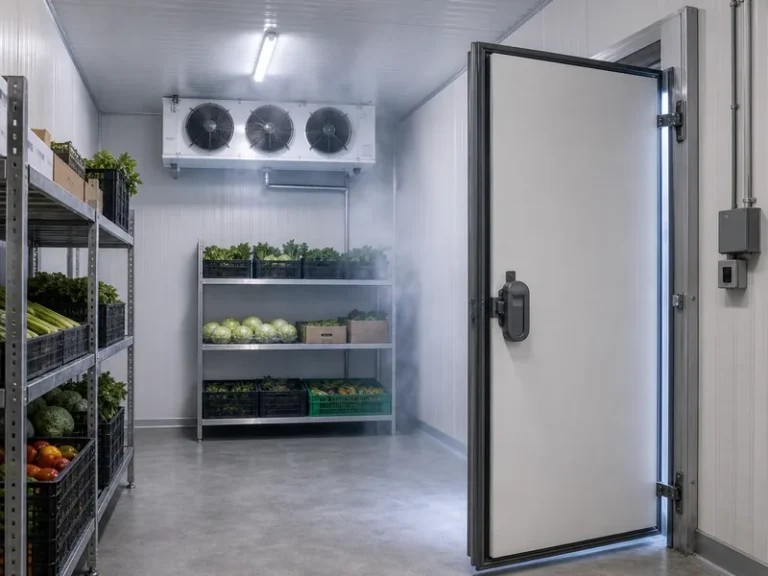
A domestic or bar-style refrigerator is not acceptable for pharmaceutical stock, because its compartment temperature swings every time the door opens or the compressor cycles. Purpose-built pharmaceutical refrigeration holds a tighter band and, at facility scale, layers in several things a household unit never has:
- Temperature mapping and qualification: the space is profiled at its warmest and coldest points, with doors and traffic working as they will in use, so monitoring later sits where excursions actually start.
- Redundant refrigeration and backup power: a second compressor and a generator or comparable supply help hold the band through a unit failure or an outage, which matters most for high-value or irreplaceable stock.
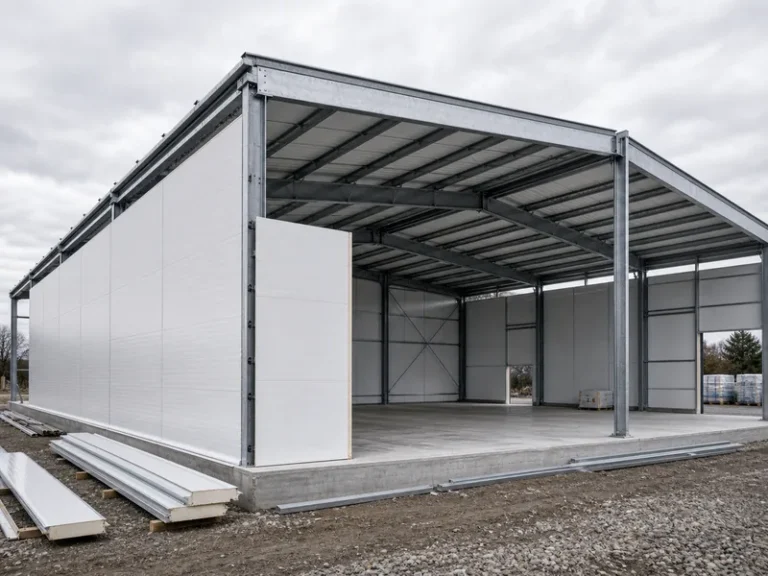
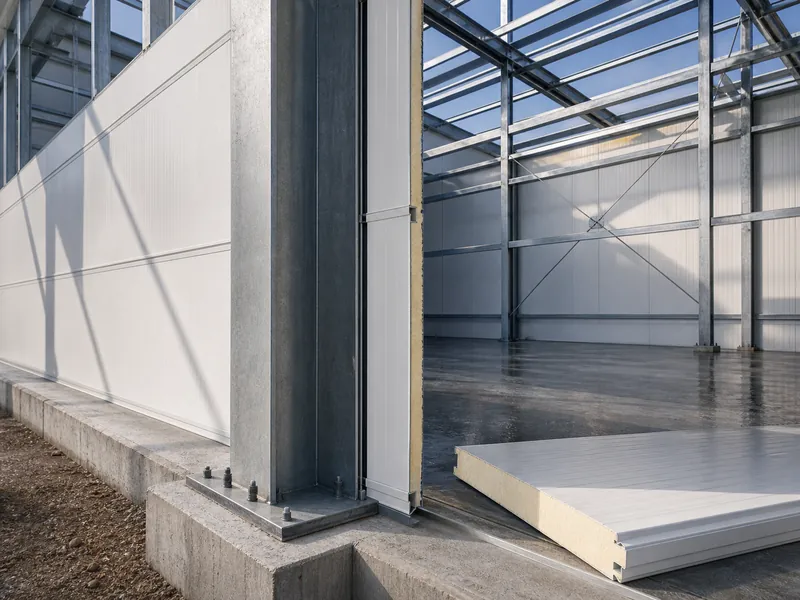
- An insulated, sealed envelope: continuous insulation and vapor control hold the load down and keep condensation out of the structure, the same logic behind sound metal building insulation taken to a tighter tolerance.
- Zoning and controlled access: separate rooms or chambers for 2–8°C, −20°C, and ultra-cold, with airlocks or dock seals so loading does not flood a cold zone with warm air.
The failure that catches operators out is rarely the headline compressor; it is the dead band around defrost cycles, door openings, and a single point of monitoring placed in the easy middle of a room. Getting the building right is a structural and refrigeration problem, and the deeper parameters belong with refrigerated warehouse design guidelines rather than this overview. For operators specifying a new facility, it pays to start from cold storage buildings for sale that are engineered as pharmaceutical cold stores from the frame out, rather than converting a dry warehouse after the fact. Qingdao KAFA Fabrication builds the steel structure and insulated envelope for cold stores of this kind, designed, fabricated, and installed from a 20,000 m² facility under ISO 9001:2015 quality management.
Monitoring and Documentation That Proves the Chain Held
Monitoring exists to produce evidence, not reassurance: a compliant pharmacy can show a continuous temperature record for every storage unit, with alarms set to trigger before a product leaves its band. A reading no one logged is, for audit purposes, a reading that never happened.
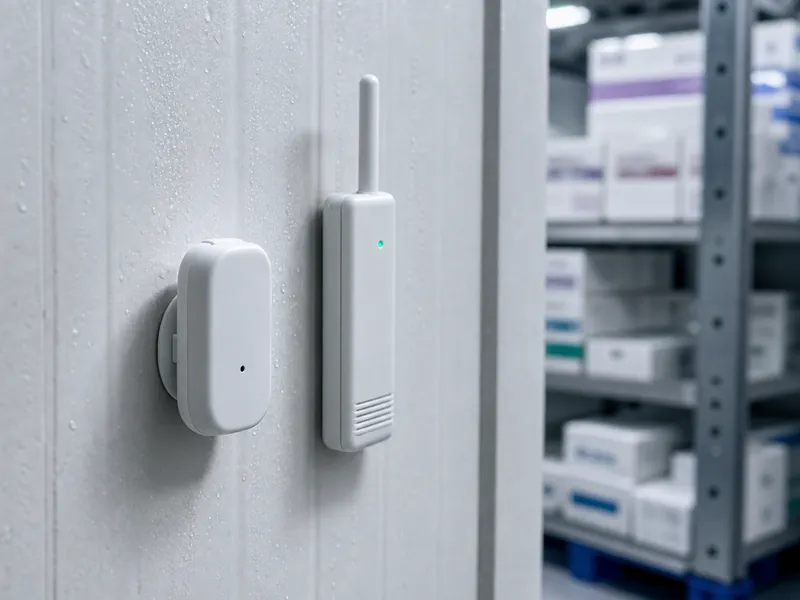
Three monitoring tools cover most needs, and they stack rather than compete. Passive data loggers travel with a shipment and are downloaded on arrival to confirm the trip stayed in range. Real-time sensors send live readings and alarms over cellular or network links, so a night-time excursion triggers a call instead of a Monday-morning discovery. Stationary monitors watch fixed units continuously. Many pharmacy regulators also require staff to record current and minimum/maximum temperatures by hand, often twice daily and retained for several years, though the exact frequency and retention period vary by jurisdiction.
The detail that separates a record from a defensible record is sensor placement. Probes belong at the warmest and coldest mapped points, not the convenient center, and that placement is the direct payoff of the qualification done when the room was commissioned. Running this monitoring around the clock has a real energy and maintenance footprint, which feeds into cold storage operating costs over the life of a facility. That running cost is still smaller than discovering a failure only after the product is already compromised.
Handling a Temperature Excursion
A temperature excursion is any reading outside a product’s labeled range, and the response is a defined sequence rather than an instinct to throw stock away. The reflex to bin a whole fridge after an alarm usually destroys product that stability data would have cleared, so the discipline is to slow down for five steps before deciding anything.
- Isolate and quarantine the affected stock so it cannot be dispensed while its status is unknown.
- Record the deviation: what, when, how far out of range, and for how long.
- Assess the impact against the manufacturer’s stability data, which often allows brief, defined excursions without loss of potency.
- Get a quality decision on release or rejection, rather than leaving the call to whoever found the alarm.
- Run corrective and preventive action (CAPA) so the same defrost fault or door habit does not repeat next month.
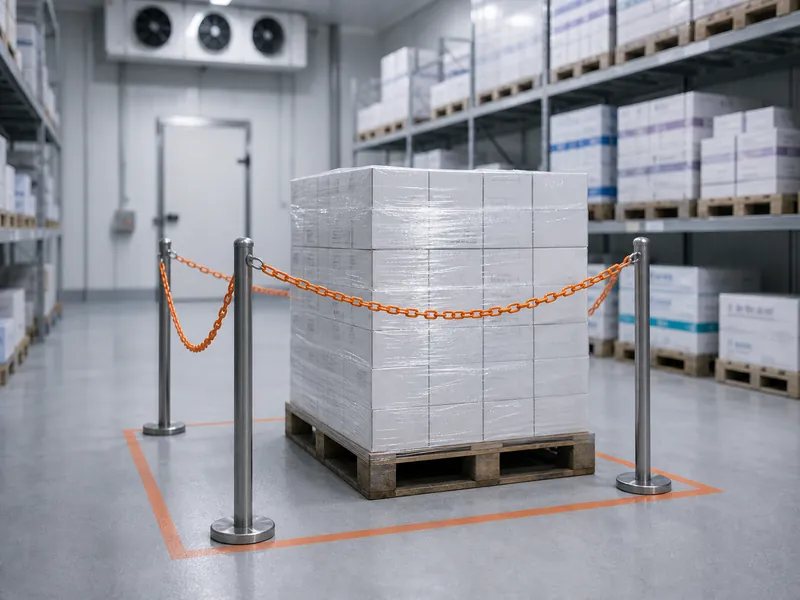
What gets missed is that “how far and how long” matters as much as “out of range at all.” A few minutes warm during a restock is not the same event as a weekend at room temperature, and the stability data is the only reliable way to tell the two apart. Real-time alerts matter here because intervening during an excursion often saves the product that a next-morning discovery would have lost.
The Regulatory Framework Behind Pharmacy Cold Chain
Pharmacy cold chain rules come from several overlapping authorities, and none of them publish a single universal number a pharmacy can memorize. What they share is a common demand: keep products within their labeled range, prove it with records, and validate the systems that produce those records.
In the European framework, Good Distribution Practice (GDP) sets expectations for temperature mapping of storage areas, validated transport, and detailed record-keeping. In the United States, the FDA requires products to be held within labeled conditions under current Good Manufacturing and distribution practice, with the documentation rules that implies. The World Health Organization’s model guidance for storing and transporting time- and temperature-sensitive pharmaceutical products is widely used as a reference where local rules are thinner. The United States Pharmacopeia addresses storage and distribution in general chapters such as <1079>. Below all of these, local pharmacy regulators set the day-to-day rules on equipment, recording frequency, and how long logs are kept.
Each named framework points to an actual document and should be used that way, not as a source of exact figures to quote from memory. The thresholds, hold times, and retention periods that govern a given pharmacy depend on its jurisdiction and its products, and they should be read from the regulation in force rather than from any single guide.
Sequencing the Pharmacy Cold Chain
A reliable pharmacy cold chain is built in a fixed order, and skipping the first step leaves the later ones impossible to fix cleanly. Start by classifying every product into its temperature band, because that decides how many zones and what equipment the operation actually needs. Then qualify the fixed storage node (mapping, redundant refrigeration, and a sealed envelope), since that is the part that cannot be patched between shipments. Only then do monitoring, manual records, and an excursion SOP have something stable to sit on.
The building is the anchor because it is the hardest link to change after the fact. Packaging, sensors, and procedures can all be upgraded next quarter, but a cold store that was never mapped or never given backup power will keep producing excursions until it is re-engineered. Get the temperature bands and the fixed node right first, and the rest of the cold chain becomes record-keeping rather than firefighting.
FAQ
What temperature is the pharmaceutical cold chain?
The pharmaceutical cold chain spans several bands rather than one temperature. Refrigerated products sit at 2–8°C, frozen products near −20°C, and ultra-cold products around −70°C, while a large share of medicines stay at controlled room temperature near 20–25°C. The band for any given product is set by its label.
Can a pharmacy use a household refrigerator for vaccines?
A household or bar refrigerator is not suitable for vaccine or pharmaceutical storage. Its temperature swings each time the door opens or the compressor cycles, which pushes stock out of the 2–8°C band more often than a purpose-built pharmaceutical unit does. Dedicated refrigeration with stable temperature control is the expected standard.
What counts as a temperature excursion?
A temperature excursion is any period when stored product reads outside its labeled range. Severity depends on how far out of range and for how long, so a brief warm spell during restocking is assessed differently from a multi-day failure. The manufacturer’s stability data, not a blanket rule, decides whether the product can still be released.
How is a cold storage facility qualified for pharmaceuticals?
A pharmaceutical cold store is qualified by temperature mapping before use, with the space profiled at its warmest and coldest points under realistic door and traffic conditions. Monitoring sensors are then placed at those points, and redundant refrigeration plus backup power are verified so the facility can hold its band through a unit failure or outage.
How long must pharmacy temperature records be kept?
Pharmacy temperature records are typically retained for a period set by local regulation, often several years, but the exact requirement varies by jurisdiction. Many regulators also require current and minimum/maximum readings to be logged at a set frequency, commonly twice daily. Confirm both the retention period and the logging frequency against the rules where the pharmacy operates.
Further Reading
- CDC — Vaccine Storage and Handling — U.S. government clinical guidance. Supports the storage-unit, monitoring, and excursion points for the 2–8°C vaccine cold chain; note it is U.S.-focused and vaccine-specific.
- WHO — Model guidance for the storage and transport of time- and temperature-sensitive pharmaceutical products (TRS 961, Annex 9) — World Health Organization standard. Backs the storage-and-transport and temperature-mapping principles used as a global reference where local rules are thinner.
- European Commission — EudraLex Volume 4 (EU GMP/GDP guidelines) — EU regulatory framework. Source for the Good Distribution Practice expectations on mapping, validation, and record-keeping cited above; applies to the EU and differs from other jurisdictions.