Most building insulation falls into six delivery forms: blanket batts and rolls, loose-fill, rigid foam board, spray foam, reflective and radiant barriers, and panel or structural systems. Each one earns a place in specific parts of a building rather than working everywhere equally well. A draped fiberglass blanket suits a metal building’s walls and roof; rigid board belongs on a continuous layer or a foundation; spray foam goes where an air seal matters more than first cost. The right pick is rarely the highest R-value on the label. It follows the assembly, the climate, the fire and moisture demands, and the budget, roughly in that order.
This page maps the major types so the material-specific guides have a frame to sit in. It stays at the level of types and selection. Step-by-step installation, R-value math, and single-material deep dives live in their own articles.
How Insulation Types Are Actually Sorted
Insulation gets sorted along two different axes, the form it takes and the material it is made from, and confusing the two is the main reason product comparisons feel contradictory. Form describes how the product is delivered and where it can physically go: a batt fills a stud or purlin cavity, a board makes a continuous layer, a sprayed foam conforms to whatever it hits. Material describes what does the insulating — glass fiber, mineral wool, cellulose, or a plastic foam — and that sets the R-value per inch, the fire behavior, and how the product handles moisture.
A fiberglass batt and a fiberglass board share a material but behave differently by form; a fiberglass batt and a mineral-wool batt share a form but differ on fire resistance and density. The number most buyers reach for first, the R-value of insulation, measures resistance to heat flow per inch, but it ranks materials on only one axis. Two assemblies at the same nominal R-value can perform differently once air leakage, thermal bridging through framing, and installation quality are counted. The useful question is not which type has the highest R-value, but which form and material fit the assembly while still reaching the R-value the code and climate require.
The Main Building Insulation Types and Their Typical Uses
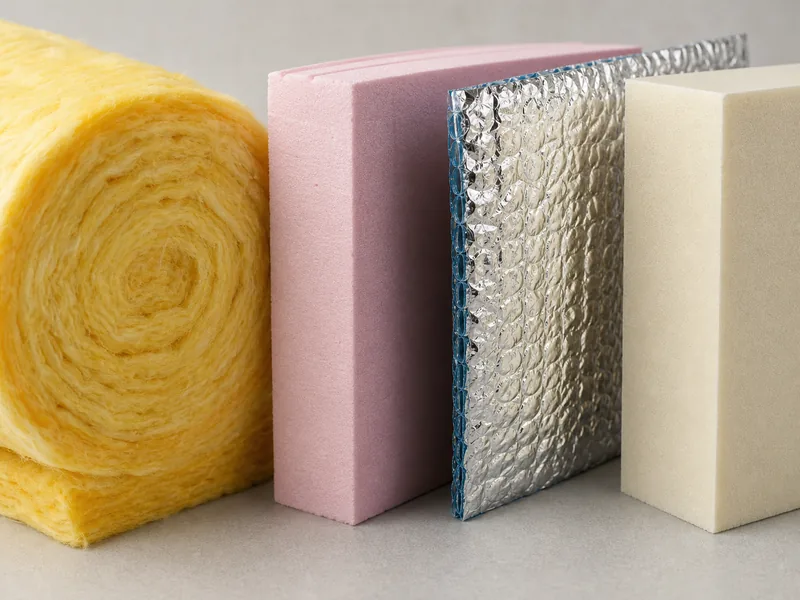
Six delivery forms cover almost every building insulation product sold, and each has a place where it outperforms the others. The R-values below are per-inch ranges; the total an assembly reaches depends on thickness and how cleanly it is installed.
Blanket Insulation: Batts and Rolls
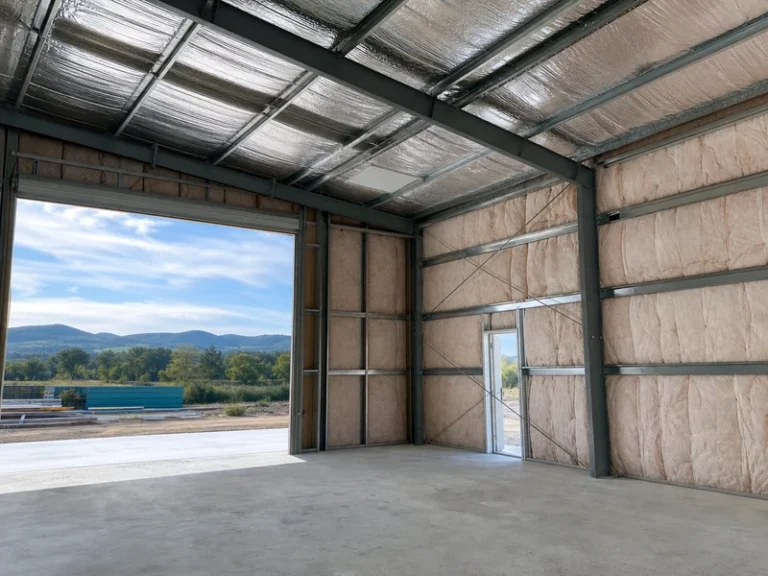
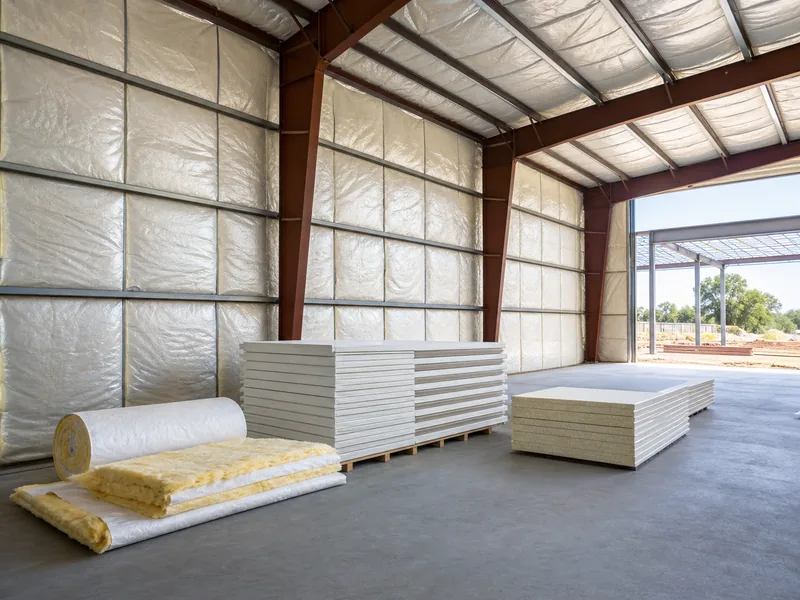
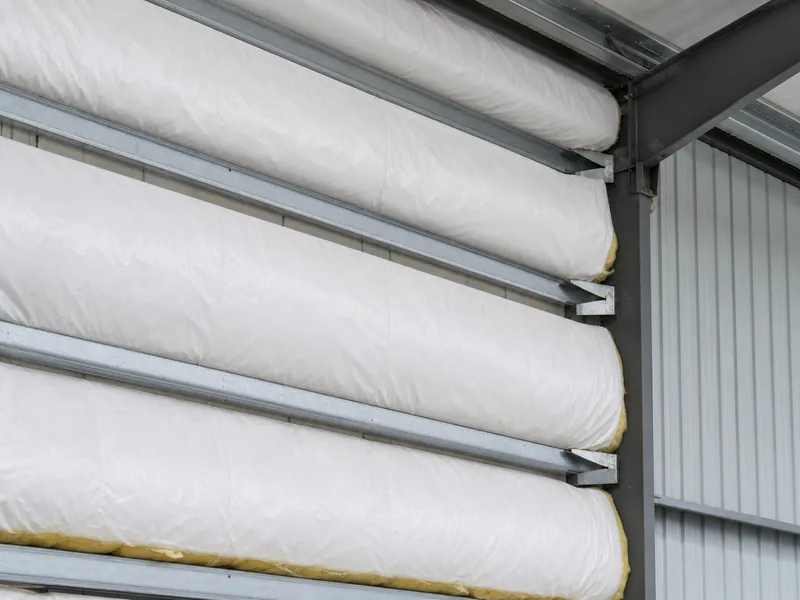
Blanket insulation is the faced or unfaced fiberglass and mineral-wool batt or roll that fills framed cavities, and it remains the default lining for metal building walls and roofs. Fiberglass runs roughly R-2.9 to R-3.8 per inch; mineral wool sits near R-3.0 to R-3.5 and adds a fire and sound advantage because it is naturally non-combustible. In a steel building the blanket is usually a laminated, vapor-faced roll draped over the purlins and girts before the panels go on. That faced construction is why fiberglass insulation in a metal building is specified as a system rather than loose batt. The watch-out is compression: a batt crushed at a purlin gives up much of its rated R-value at exactly the line where heat escapes.
Loose-Fill and Blown-In Insulation
Loose-fill is fiberglass or cellulose blown into cavities and across horizontal surfaces, and it reaches places a batt cannot. Cellulose, made largely from recycled newsprint at around 82 to 85 percent recycled content, carries about R-3.1 to R-3.7 per inch and packs into irregular spaces and existing closed walls. It can settle and will absorb water if a leak goes unmanaged, so it fits vented attics and retrofit cavities far better than the exposed roof line of a metal building.
Rigid Foam Board
Rigid foam board is a plastic-foam panel that creates a continuous insulating layer over or under framing. Expanded polystyrene (EPS) runs about R-3.6 to R-4.2 per inch, extruded polystyrene (XPS) about R-5, and polyisocyanurate (polyiso) about R-5.6 to R-7 — the highest of the common boards. Board is the standard way to break a thermal bridge, because it lies in an unbroken plane across the framing instead of stopping at each member. Two cautions come with foam. Boards lose a little R-value as their blowing agent ages, a drift that mostly settles within the first couple of years. Polyiso also derates in cold temperatures, so a roof board sized for a cold climate has to count that drop.
Spray Foam Insulation
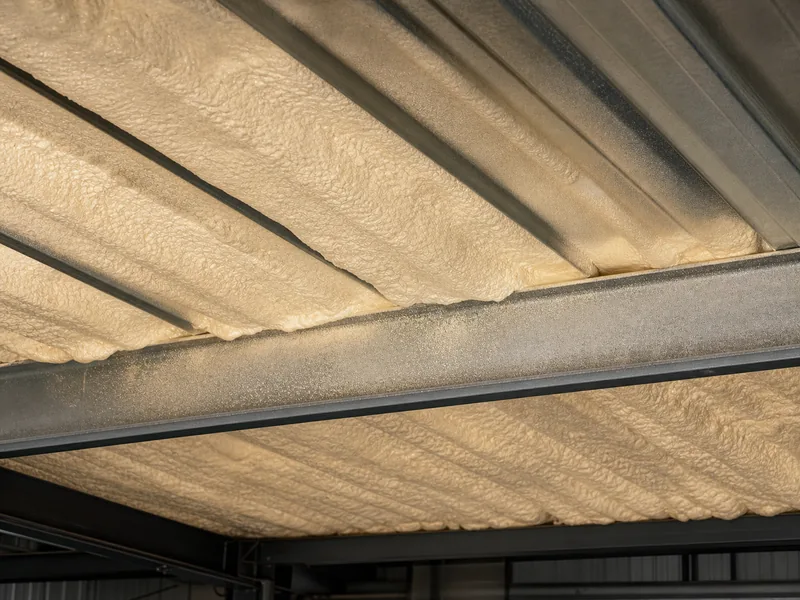
Spray foam is a liquid polyurethane that expands and cures in place, sealing the cavity as it insulates. Closed-cell foam reaches about R-6 to R-7 per inch and doubles as an air barrier and, at depth, a vapor retarder; open-cell is lighter and lower, near R-3.5 per inch, and stays vapor-open. Sprayed to the underside of metal roof and wall panels, closed-cell spray foam insulation is one of the more dependable ways to control condensation on steel, which is part of why owners accept its higher cost. It needs a thermal or ignition barrier in occupied space, since the cured foam ignites near 700°F.
Reflective and Radiant Barriers
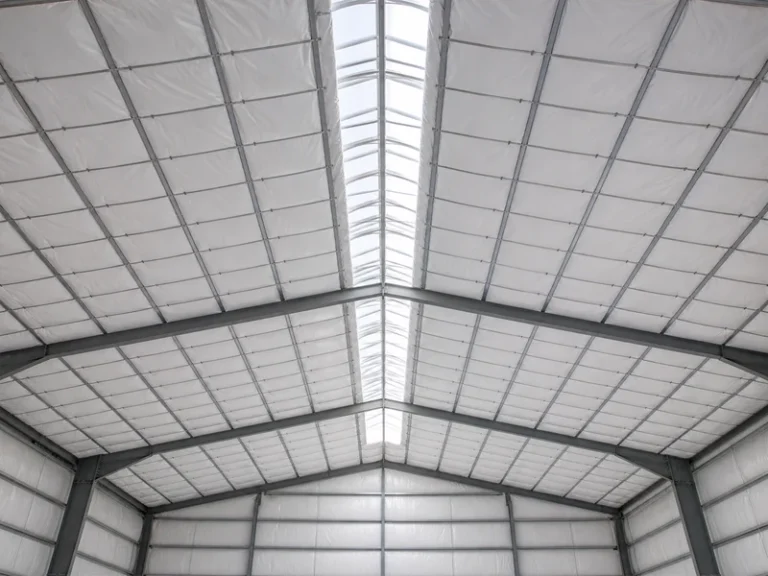
Reflective insulation works by reflecting radiant heat rather than slowing conduction, so it is rated by what it does in an assembly, not by a single R-value per inch. A foil facing or a foil-faced bubble layer aimed at an air space cuts cooling load most in hot, sunny climates, where it can trim cooling costs on the order of 5 to 10 percent. Under a metal roof it serves as a radiant control layer, but in a cold climate it supplements cavity insulation rather than replacing it.
Panel and Structural Systems
Panel systems build the insulation into the structure instead of adding it to a frame. Structural insulated panels (SIPs) sandwich a foam core between facings and can cut heating and cooling energy by about 12 to 14 percent against stick framing. Insulated metal panels do the same for steel buildings, carrying a foam core between two steel skins so the wall arrives insulated, air-sealed, and finished in one piece. These cost more up front and demand tighter detailing, but they remove the field labor of layering blanket, barrier, and panel separately.
| Insulation type | Typical R-value per inch | Form | Best fit | Main watch-out |
|---|---|---|---|---|
| Fiberglass / mineral-wool blanket | R-2.9–3.8 (mineral wool R-3.0–3.5) | Faced batts and rolls | Metal building walls and roofs, framed cavities | Compression at framing kills rated R-value |
| Loose-fill / blown-in | Cellulose R-3.1–3.7 | Blown fiber | Attics, irregular and existing cavities | Settles; absorbs water if unmanaged |
| Rigid foam board | EPS R-3.6–4.2; XPS ~R-5; polyiso R-5.6–7 | Continuous panel | Continuous layers, roofs, foundations, thermal breaks | Thermal drift; polyiso derates when cold |
| Spray foam | Closed-cell ~R-6–7; open-cell ~R-3.5 | Foamed-in-place | Condensation control, sealing irregular gaps | Cost; needs thermal/ignition barrier |
| Reflective / radiant barrier | Rated by assembly, not per inch | Foil / foil-bubble | Radiant control under hot-climate roofs | A supplement, not a cold-climate substitute |
| Panel systems (SIPs, IMPs) | Foam-core dependent | Structural panel | New-build envelopes, steel buildings | Higher first cost; detailing-sensitive |
What Actually Drives the Choice Beyond R-Value
Choosing a type starts with the assembly and the climate, not with whichever R-value number reads highest on the bag. Depth is the first constraint: a six-inch cavity caps how much R-value any material can deliver there, so a high-per-inch foam earns its premium mainly where space is tight and every inch counts. Air sealing is the second — fiber insulations slow conduction but let air move, while foams and well-detailed boards add an air barrier, and air leakage often loses more heat than a modest R-value gap.
Moisture is the third, and it is where metal buildings differ from wood-framed ones. A steel panel can drop below the dew point and sweat, so the assembly needs a plan for vapor and condensation before the type is locked — the same decision a metal building vapor barrier turns on. Fire and code set the outer limits. Glass fiber and mineral wool are non-combustible and clear most assemblies without added protection; foams need a thermal barrier in occupied space; and the climate zone fixes a minimum R-value the type has to reach within the available depth.
Cost ranks all of this, but the honest target is the cheapest type that still meets depth, air, moisture, and fire, not the lowest sticker price on its own. The reason this order matters is that, installed correctly and air-sealed, most types perform close to their rating. The shortfall that shows up in a finished building is usually an installation or assembly gap, not a material one.
Insulation Types That Suit Steel and Metal Buildings
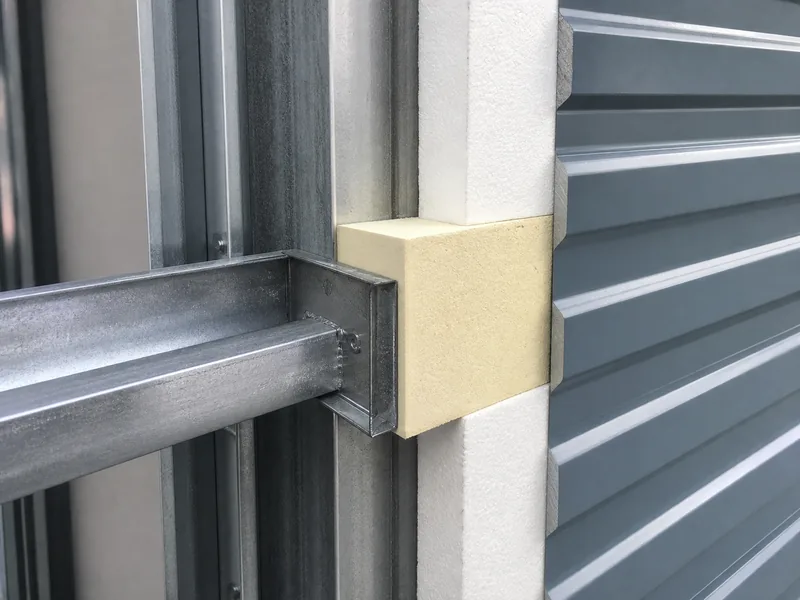
Steel framing conducts heat far more readily than wood, so the types that suit a metal building are the ones that break the thermal path and control condensation at the panel line. A bare purlin or girt acts as a thermal bridge — heat shortcuts straight through the metal, and a blanket compressed against that line surrenders R-value where it matters most. The common answers are a thermal block, a rigid spacer that lifts the insulation off the metal, and a continuous layer of board or closed-cell foam that crosses the framing rather than stopping at it. That is also why faced blanket, rigid board, reflective layers, and spray foam dominate steel-building specs while loose-fill rarely appears.
Condensation is the second driver. When a panel’s inside face falls below the dew point, it sweats. The remedy is an insulation-and-vapor strategy that keeps humid interior air off the cold steel: a faced blanket with sealed laps, or closed-cell foam sprayed straight to the panel. Buildings that run cold or humid raise the stakes further: a cold storage building pushes both R-value and continuous vapor control to the top of the list, where no single insulation type does the whole job alone.
As a steel structure manufacturer, KAFA specifies these systems as part of the building envelope rather than as an afterthought, matching the insulation form to the purlin layout and the panel system on each frame. For the full menu of metal buildings insulation options across walls, roof, and openings, plus the field sequence for fitting them, the cluster pillar collects the assemblies in one place.
Choosing a Type Without Overpaying for It
The fastest way to land on the right insulation type is to fix the building’s constraints before comparing any product. Settle the assembly depth, the climate zone’s minimum R-value, and the fire and moisture demands first, because those four decide which forms are even eligible. Then pick the form that fits the cavity and the air-sealing job: board or spray foam where a continuous layer or a tight seal matters, blanket where a framed cavity does the work. Only then weigh materials on R-value per inch and cost.
The line item that should not be cut to save money is condensation and air control at the panel. A thermal bridge or a sweating panel undoes the R-value you paid for long before the insulation itself fails. Match the type to the assembly rather than the assembly to the cheapest type, and the building keeps the performance the label promised.
FAQ
Which building insulation type has the highest R-value per inch?
Closed-cell spray foam and polyisocyanurate board carry the highest R-value per inch among common building insulation, around R-6 to R-7 at the upper end. That density pays off where cavity depth is limited; in a deep cavity, a cheaper fiber insulation can reach the same total R-value for less money.
What is the cheapest insulation type?
Fiberglass blanket is generally the lowest-cost building insulation per unit of R-value, which is why it lines most metal building walls and roofs. The cheapest material is only the cheapest solution when it also meets the assembly’s air-sealing and moisture needs without forcing extra layers.
Which insulation type is best for a metal building?
Faced fiberglass blanket and closed-cell spray foam are the two types best suited to most metal buildings, because both answer the panel-line condensation and thermal bridging that define steel envelopes. Blanket wins on cost for walls and roofs; closed-cell foam wins where condensation control or a tight air seal leads the requirement.
Is batt or spray foam insulation better?
Neither is universally better; they solve different problems. Batt is cheaper and fills framed cavities well, while spray foam adds an air seal and condensation control that batt cannot, at a higher price, so the choice follows whether sealing or budget leads the decision.
Does a higher R-value always mean better insulation?
A higher R-value does not always mean better real-world performance, because air leakage, thermal bridging, and poor installation can erase a nominal advantage. A correctly installed and air-sealed assembly at a moderate R-value often beats a higher-rated one that was fitted carelessly.
Further Reading
- U.S. DOE Energy Saver — Types of Insulation — U.S. Department of Energy. The federal reference for insulation by form and where each type is installed; supports the form-based map used here.
- U.S. DOE Energy Saver — Insulation Materials — U.S. Department of Energy. Backs the R-value-per-inch ranges and material properties cited for each type.
- NAIMA Insulation Institute — North American Insulation Manufacturers Association. Industry source on fiber-insulation fire behavior, recycled content, and commercial selection criteria.