


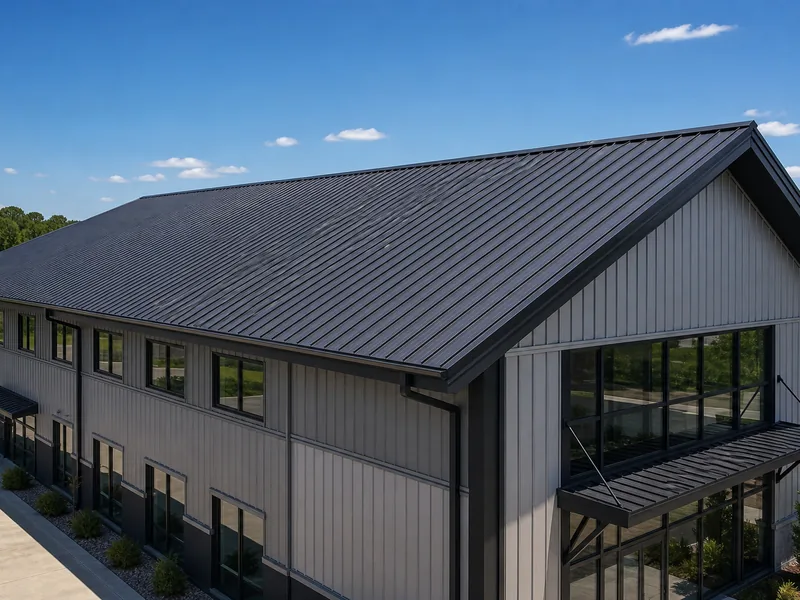
Picking a metal roof color follows a clear order. Settle the paint system and panel first, let your climate and roof orientation set how light or dark to go, narrow the shade to your walls and surroundings, then confirm it on a full-size panel before the order is fabricated. On a steel building that order matters even more than on a house. The roof is one large coil-coated plane that reads as a single block of color from the road, and its color is locked in at the factory the moment the panels are coated. Get the sequence right and the roof looks deliberate for decades. Start from a favorite swatch instead, and you can end up with a shade that fades unevenly, fights the wall panels, or drives up cooling bills in summer.
What Choosing a Roof Color Really Decides
A roof color sets three things at once: how much solar heat the building absorbs, how the finish ages over the next few decades, and whether the roof reads as part of the building or as an afterthought. None of those is purely cosmetic, so the color is a decision to settle early rather than treat as a last-minute finish.
Heat behavior is the measurable part. Lighter colors reflect more sunlight and keep the roof surface cooler, while darker colors absorb more and run hotter. Longevity is the part buyers tend to overlook. A color only stays right if the coating under it resists fading and chalking, and that resistance varies with the paint system and how bold the shade is. The third factor is coordination, since on a metal building the roof shares the sightline with painted wall panels and trim that have to live with it.
Start With the Panel and Paint System, Not the Shade
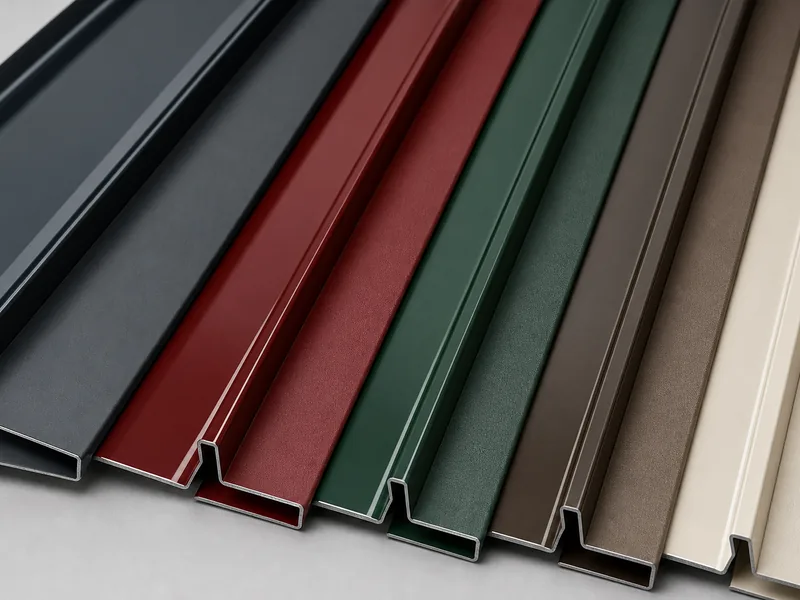
The panel profile and paint system decide which colors you can actually order and how well that color survives the sun, so they belong ahead of any swatch. Metal roof panels are coil-coated, meaning the paint is applied to the steel coil at the mill before the panels are formed. Each coating class comes with its own palette and its own aging behavior.
Three systems cover most projects. PVDF, sold under names like Kynar 500 and Hylar 5000, holds color and gloss the longest and offers the widest range, including metallic and vivid shades. Its film is softer, so it forms cleanly but scratches more easily. Silicone-modified polyester (SMP) is a solid step down in fade and chalk resistance but a harder, more scratch-resistant film, with a more limited palette. Polyester is the budget tier and chalks or fades soonest. These same factory finishes also determine your options for metal building paint on the walls and trim, so the system you choose here carries across the whole envelope.
| Paint system | Fade and chalk resistance | Color range | Relative cost | Notes |
|---|---|---|---|---|
| PVDF (Kynar 500 / Hylar 5000) | Highest | Widest, includes metallics and vivid shades | Highest, roughly 15–35% over SMP | Softer film, very formable, scratches more easily |
| SMP (silicone-modified polyester) | Good | Moderate, fewer vivid options | Mid | Harder and more scratch-resistant; dark colors can fade or chalk earlier |
| Polyester | Lowest | Limited | Lowest | Budget panels; chalks or fades soonest |
There is a field-tested reason this order pays off. The same deep red or charcoal that looks crisp on day one will show chalk and fade years sooner in SMP than in PVDF, because dark pigments sit under more UV stress. That is why bold and dark colors are usually specified in PVDF when the budget allows, and why it helps to read the actual finish warranty rather than the headline number. Manufacturers commonly publish finish warranties around 40 years for PVDF and 30 years for SMP. The covered terms differ by color and by maker, so those numbers are a starting point, not a guarantee.
Let Climate and Reflectance Set the Light-or-Dark Band
Climate and roof orientation narrow your choice to a light or dark band well before you pick an exact shade, because color changes how much solar heat the roof reflects. The U.S. Department of Energy notes that white roofs reflect roughly 60 to 90 percent of sunlight, while darker “cool-colored” finishes reflect about 30 to 60 percent, and standard dark roofs less again.
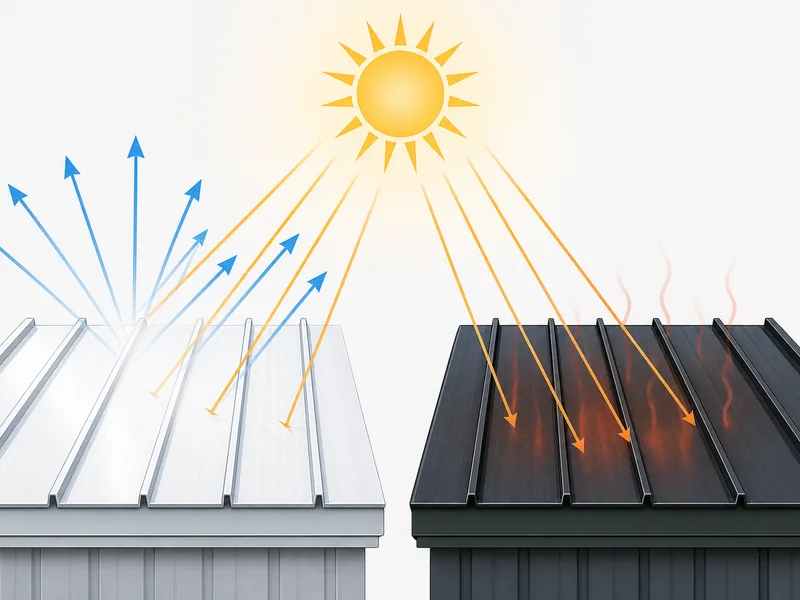
In a hot, sunny climate, a lighter or reflective color cuts the cooling load. Reflective cool roofs can trim total cooling costs by roughly 7 to 15 percent versus dark roofs, depending on insulation, climate, and how the building is used. In a cold or snowy region the calculation softens, since a darker roof absorbs more warmth and the reflectance penalty matters less. Reflectance is measured by the Solar Reflectance Index (SRI), which combines solar reflectance and thermal emittance into a 0–100 scale under ASTM E1980; higher is cooler.
Two points keep this from being a simple “go light” rule. First, cool-pigment technology lets some darker colors reflect more near-infrared than ordinary dark paint. You can run a deep shade and still get respectable reflectance, but check the SRI rather than trust the swatch. Independent figures are easiest to compare through a ratings body rather than a brochure, since the older ENERGY STAR roof-products label was retired in 2022. Second, reflectance scales with roof area. On a low-slope, clear-span steel building the roof is a huge share of the heat-gain surface, so the color decision moves more energy than it would on a small pitched house. Pair the color choice with the right metal building insulation and treat both as part of the building’s overall energy efficiency rather than a standalone aesthetic call.
Coordinate the Roof With Walls, Trim, and Surroundings
On a steel building the roof color rarely stands alone, since the roof, wall panels, and trim are usually coated and ordered together as one palette. A roof shade that looks great in isolation can clash once it sits above a contrasting wall color or a busy line of gutters, fascia, and gable trim.
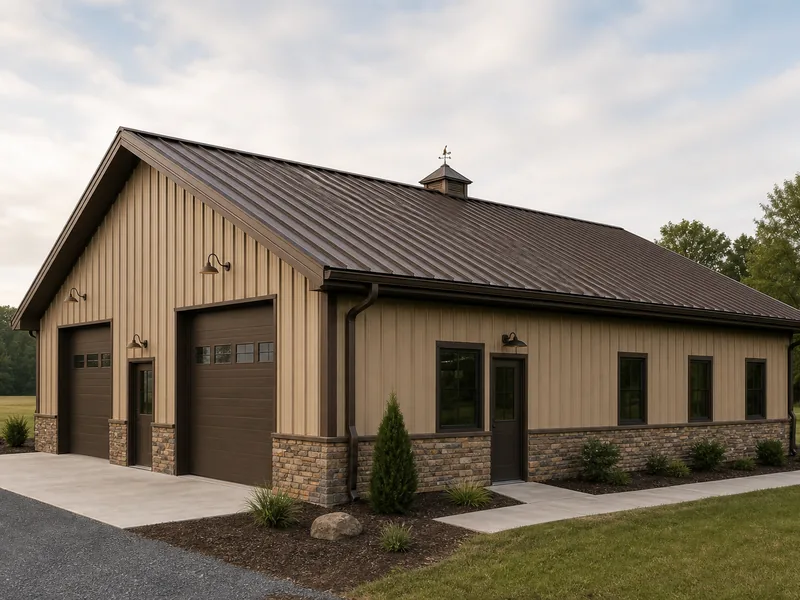
Work from the whole envelope outward. Decide whether you want the roof to contrast with the walls or blend into them, then carry that decision through the trim so the building reads as one design rather than three. Pull cues from the setting as well: neighboring buildings, a company’s brand colors, and the landscape all push toward certain families. Rural and agricultural buildings often land on earth tones, greens, and traditional reds for that reason. Choosing roof and wall shades from the same family is the simplest way to keep a building looking intentional, and most manufacturers publish coordinated colors for metal buildings for exactly that purpose. For commercial sites, check any zoning rules, business-park standards, or covenant restrictions before ordering, because some limit both colors and gloss levels.
Account for Panel Profile, Finish, and Light
The same color number looks different from one panel to the next, because profile, gloss level, and daylight all change how the surface reads. A standing seam roof carries tall raised ribs that throw shadow lines, so it reads deeper and more textured than the same color on an exposed-fastener or corrugated panel. If you are still weighing panel options, the broader trade-offs sit in our guides to the types of metal roofs and to the standing seam metal roof profile specifically.
Finish gloss shifts the look again. A glossier finish brightens the color and bounces more light, but it also shows surface imperfections, while a matte or low-gloss finish softens the shade and hides minor dirt and waviness. That waviness has a name: oil canning, the slight visible ripple that can show up in the flat areas of metal panels. It stands out most on broad, dark, glossy planes and fades fastest under lighter, matte finishes. Daylight is the last variable: a color that looks warm at midday can turn flat and gray under an overcast sky or at dusk, so judge any candidate at more than one time of day.
Confirm the Color on a Full-Size Sample Before You Order
Confirm any shortlisted color on a full-size painted panel before the order is placed, because coil-coated panels are colored at the factory and cannot be repainted to match later without losing the finish warranty. A small chip held at arm’s length is close to useless for a roof; it cannot show how the color behaves across a large plane or how the profile and gloss change it.
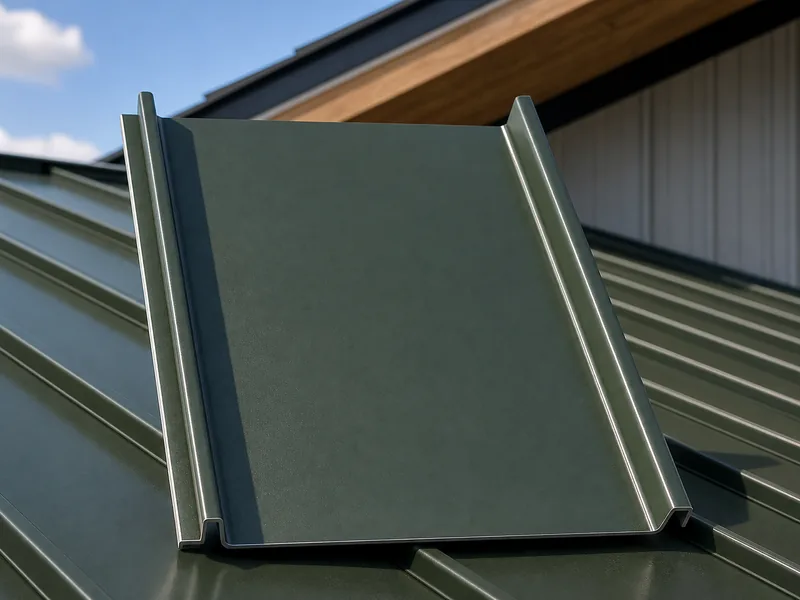
Ask for a sample in the same paint system and the same steel gauge you intend to buy. Look at it on site, laid at the actual roof slope and orientation, in both morning and afternoon light. Color visualizers and printed cards are fine for a first pass to throw out the obvious misses, but they are a screening tool, not a decision. This step carries extra weight with a manufacturer-built envelope. Because KAFA coil-coats roof and wall panels to the selected system while producing the building, the color signed off on that sample is the color that ships.
Conclusion
The dependable way through a metal roof color decision is to move in order rather than start from a favorite shade. Settle the paint system first so the color will hold. Lean toward PVDF where deep or vivid colors and long fade warranties matter, and toward SMP where the budget leads and the palette stays moderate. Let your climate set the light-or-dark band, and check the SRI if cooling load is a real concern on a large roof. Then narrow the shade to your wall panels, trim, and site, and prove it on a full-size panel in real daylight before anything is fabricated. Since the panels are coil-coated to the chosen system as the building is produced, the sample you approve is the roof you get, which is the one step in this process to slow down on. If you are scoping panels and a coordinated envelope for a new steel building, you can request a quote with your shortlisted colors and paint system noted.
FAQ
What color metal roof is best?
No single color is best, but mid-tone neutrals such as charcoal, bronze, and warm gray are the safest all-rounders because they hide dirt, suit most architecture, and hold their resale appeal. Gray and charcoal make up a large share of metal roof installs for that reason. The strongest choice still depends on your climate, your walls, and any local color rules.
Does the color of a metal roof affect the temperature inside?
Roof color affects how much solar heat the roof absorbs, which can shift attic and top-floor temperatures, though insulation and ventilation usually have more influence on the rooms below. On a sunny day a dark metal roof surface can run dozens of degrees hotter than a reflective one, so the color matters most on poorly insulated or large, low-slope buildings.
Do dark metal roofs fade faster than light ones?
Dark colors show fade and chalking more visibly than light ones, and the effect is stronger on lower-grade coatings like SMP and polyester than on PVDF. Certain pigments, especially some reds, are inherently more fade-prone, which is why bold dark shades are the ones where paying up for a PVDF finish makes the biggest difference.
What is the most energy-efficient metal roof color?
Light, reflective colors such as white, light gray, and beige are the most energy-efficient in hot, sunny climates, where reflective roofs can cut cooling costs by roughly 7 to 15 percent versus dark roofs. In cold climates that advantage shrinks, and a cool-pigment darker color with a verified SRI can be a reasonable middle path.
Can you change a metal roof’s color after it is installed?
You can field-paint an installed metal roof, but a field coating rarely matches the durability of the original factory coil coating and can void the finish warranty. It also needs periodic recoating, so choosing the right color before fabrication is the more economical path over the life of the roof.
Further Reading
- ENERGY STAR – Cool Roofs, U.S. EPA and DOE program. Explains solar reflectance and thermal emittance and how reflective roofing lowers cooling load, supporting the climate and reflectance guidance above.
- U.S. Department of Energy, Energy Saver – Cool Roofs, federal energy agency. Source for the reflectance ranges of white versus “cool-colored” dark roofs cited here.
- Cool Roof Rating Council (CRRC), nonprofit ratings body. Publishes independent solar reflectance and SRI ratings for specific roofing products, useful for comparing colors by measured performance instead of appearance.