






Office building classification sorts commercial office space into three tiers, Class A, Class B, and Class C, based on how a building competes for tenants in its own market. What sets the classes apart is a mix of location, age, finishes, building systems, amenities, and rent, rather than a single score. The system traces back to the Building Owners and Managers Association (BOMA), and it stays deliberately relative: the same building can rank Class A in a small market and Class B in a larger one. Reading the tiers correctly helps tenants, investors, and owners match a building to a real decision instead of a label.
What Office Building Classification Actually Means
Office classification is a relative quality rating, not a legal grade stamped on a permit. BOMA is the reference behind the terminology, and it describes the tiers as a subjective quality rating of how well a building competes for tenants. The framework sets out two reference points. The metropolitan base is used inside a single market, and the international base helps investors compare buildings across markets. Even so, BOMA frames the system rather than scoring or certifying individual buildings. Neither base produces a fixed number, so a leasing broker, an appraiser, and an owner can each label the same property a little differently, and all three labels can be defensible.
That relativity is the part newcomers miss. Class is judged against the local stock, so a polished suburban building may carry a Class A label in its town yet sit a tier lower beside the towers of a central business district. Markets also drift, which is why a building can slip from A to B without anything physical changing except the competition around it.
It also helps to separate market class from building-code classification. When a code official talks about an office, they mean an occupancy group under the International Building Code, where offices fall under Business (Group B) and the rules govern life safety and egress. Market class and code occupancy answer different questions, and a building keeps its Group B occupancy whether it leases as Class A or Class C.
What Determines an Office Building’s Class
Six factors do most of the work in placing a building in a class, and rent is mostly the visible result of the other five. BOMA names the same set of relative measures that brokers apply on the ground:
- Location and accessibility. Proximity to a central business district, transit, and highways. A prime address can lift a building a full tier on its own.
- Age and condition. Newer stock shows fewer deferred-maintenance flags. Class A is generally under about 10 years old, Class B often runs a decade or two, and Class C is typically 20-plus years with visible wear. Those bands are rules of thumb that vary by market, not fixed cutoffs, and they track systems and upkeep more closely than raw office building lifespan.
- Finishes. Lobby, flooring, and curtain-wall quality signal the tier before a tenant reads a spec sheet.
- Building systems. Elevators, HVAC, electrical capacity, and structured cabling. Dated systems cap a building’s class even when the address is strong.
- Amenities and parking. On-site food, fitness, conferencing, security, and the parking ratio.
- Management and tenant profile. Professional management and an established tenant roster reinforce the rating the hardware earns.
In practice, location and systems set the ceiling, while finishes and management decide where inside that ceiling a building lands. A weak system stack is the easiest factor to overlook, because it is expensive to fix later and it holds a building below the class its address would otherwise support.
Class A, B, and C Office Buildings and Their Typical Tenants
Each class targets a different tenant, and the label is shorthand for the experience and rent that tenant should expect. The three tiers describe a spectrum, and some large markets add a Class A+ or Trophy tier for a handful of landmark towers.

Class A Office Buildings
Class A buildings are the premier space in a market, commanding the highest rents and the most prestige-driven tenants. They sit in prime locations, carry recent or fully modernized systems, and show high-quality finishes from the lobby up. Typical occupants are flagship corporate offices, law and finance firms, and headquarters that treat the address as part of their brand. The class rewards owners with pricing power, which is why new construction usually aims here.
Class B Office Buildings
Class B buildings serve the broad middle of the market, with average rents and space that is sound but not flashy. They tend to be a decade or two old, with functional systems, fair finishes, and decent management. Tenants are often established small and mid-size businesses and regional firms that want a credible address without Class A rent. Well-located Class B stock also draws investors, because a building with good bones can be upgraded toward Class A.
Class C Office Buildings
Class C buildings compete on price, offering functional space at below-average rents in less central locations. They are usually 20-plus years old, with dated systems and finishes that often need real work. Occupants are cost-driven tenants, smaller local businesses, and users who need plain space near a particular area. For investors, Class C is a value or redevelopment play, where the upside comes from repositioning rather than from current rent.
Class A vs. B vs. C, Side by Side
A side-by-side view shows how the same six factors shift across the three tiers.
| Factor | Class A | Class B | Class C |
|---|---|---|---|
| Location | Prime CBD or top submarket | Good, not premier | Secondary, less central |
| Typical age (rule of thumb) | Under ~10 years, or fully modernized | ~10–20 years | ~20+ years |
| Finishes and systems | Premier finishes, current systems | Functional and sound | Dated, often needing upgrades |
| Amenities and parking | Full amenity set, ample parking | Moderate | Limited |
| Rent (relative to market) | Highest in market | Around market average | Below market average |
| Typical tenant | Flagship, finance, law, HQ | Established SMB, regional firms | Cost-driven, value tenants |
| Upgrade potential | Already at the top; focus on retention | Often repositionable toward Class A | Redevelopment or deep retrofit |
Read down a column to picture a whole tier, and read across a row to see which single factor would move a building up or down. The age and rent rows are relative to the local market, so the same numbers do not transfer between a small metro and a major one.

How Building Class Connects to the Structure and Shell
Class is set partly by decisions locked in before a building opens, inside the frame and shell that finishes can never fully overcome. Structure sets a ceiling rather than a class on its own: a strong frame supports the spans, flexibility, and retrofit potential a higher tier needs, but the rating still turns on location, management, and rent. Finishes and management can be refreshed, while the floor plate, the column grid, and the floor-to-floor height are expensive to change once the steel is up. Three structural choices do the most to support a higher class:
- Floor plate and column grid. Long clear spans and wide column-free bays give tenants flexible, efficient floor plates, which Class A users expect and Class C buildings rarely offer.
- Clear height and floor-to-floor. Generous floor-to-floor height leaves room for modern HVAC, raised floors, and ceiling services without cramping the usable space.
- System capacity and expandability. Risers and structural allowances for added mechanical, electrical, and plumbing (MEP) capacity let a building keep pace as systems age, so it holds its class instead of slipping as newer stock arrives.
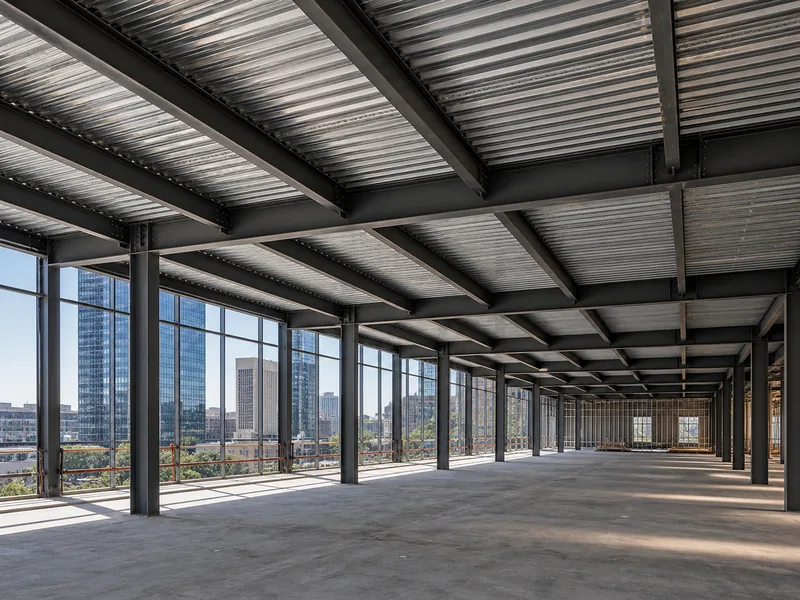
Decisions made early in steel building design set this ceiling, since the frame and clear height are fixed long before a tenant signs. Those targets are what shape a steel office building from the frame out, where long clear spans and adequate clear height create the open, column-free floor plates that higher tiers reward. A steel structure manufacturer such as KAFA designs, fabricates, and installs light and heavy steel, and frames offices to those clear-span and floor-plate targets. Even then, the class a building ultimately holds still depends on the market around it.
Choosing the Right Class for a Lease, Purchase, or Build
Choosing a class starts from the goal behind the lease, purchase, or build, since Class A is not automatically the right answer. A tenant weighs prestige and recruiting against rent, and a cost-driven team often gets better value in well-run Class B space than in a Class A tower it will not fully use. The decision is about fit, not about reaching for the top tier.

Investors read the classes as risk-and-return profiles. Class A tends toward lower yield and steadier tenants, while Class C carries more risk and more upside from repositioning. The rent differences across tiers feed directly into office building costs and the income a building can support, so class and underwriting move together.
Owners and developers face the decision from the other side, since they set the class by what they build. Teams that build an office building to a defined class can size the structure, systems, and amenities to that target from the start. Owners of aging Class B stock can instead plan upgrades that lift a sound building back up a tier. Either path depends on matching the physical building to the class the market will recognize.
Reading Class as a Decision, Not a Grade
Office classification works best as a decision tool, not a trophy. Fix the market and the budget first, because both reset what each tier means and what it costs. Then name the target class the use actually needs, since a cost-driven back office gains little from Class A rent. Only after that does the physical checklist matter: confirm the floor plate, clear height, system capacity, and column-free spans that let a building hold its class in daily use rather than only on paper. A building earns and keeps its standing through those fundamentals, which is why the structure under the finishes deserves a look long before the lobby does.
FAQ
What is a Class A office building?
A Class A office building is the highest-tier space in its market, with a prime location, current or well-updated systems, premium finishes, and the highest rents. BOMA frames it as the building that competes for premier tenants at rents above the average for the area. The rating is market-relative, so a Class A property in a mid-size city may rate a tier lower in a major metro.
Who decides an office building’s class?
No single authority assigns the class. Brokers, appraisers, owners, and investors apply BOMA’s general framework to the local market, which is why two professionals can label the same building differently. The rating reflects market consensus rather than a certificate or a code official’s stamp.
Can a building change its class over time?
A building can move between classes, usually downward as it ages and its systems fall behind newer stock. Well-located Class B buildings can also move up through renovation and system upgrades, a repositioning that depends on the structure and location being sound. A drop can happen with no physical change at all, since rising competition alone lowers a building’s relative standing.
Is a Class A office always the best choice?
Class A is not always the best choice, because the premium rent buys prestige and amenities a tenant may never use. Cost-driven users often find better value in well-run Class B space, while investors sometimes target Class C for redevelopment upside. The best class is the one that matches the budget and the intended use.
Does office building classification follow building codes?
Office classification does not follow building codes. Market class is a commercial-real-estate quality rating, while building codes assign an occupancy group, Business (Group B) under the International Building Code, that governs life safety. A building keeps its code occupancy no matter whether it leases as Class A, B, or C.
Further Reading
- BOMA International — Building Class Definitions — Building Owners and Managers Association. The source framework behind Class A, B, and C, and the six relative factors used to rate office space.
- U.S. EIA — Commercial Buildings Energy Consumption Survey (CBECS) — U.S. Energy Information Administration. National data on office building size, age, and systems, useful for benchmarking the age and system factors that drive class.
- International Code Council (ICC) — publisher of the International Building Code. Explains the Business (Group B) occupancy classification used by code officials, which is separate from market class.