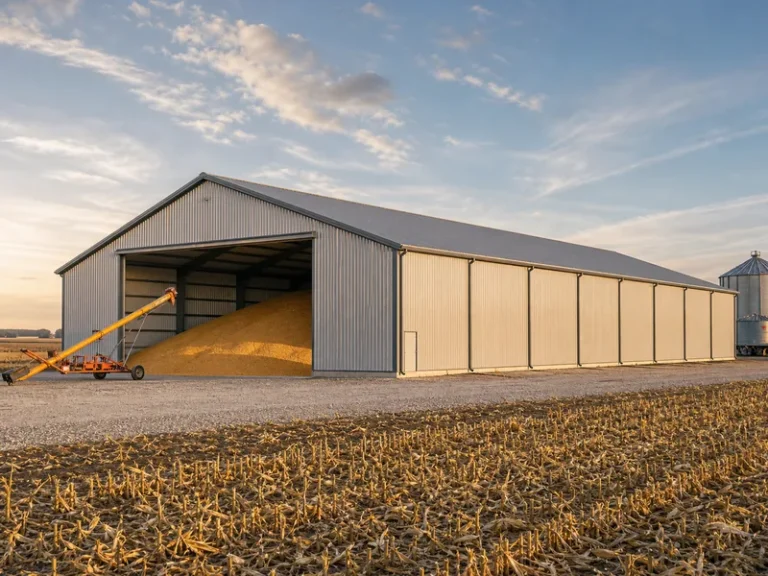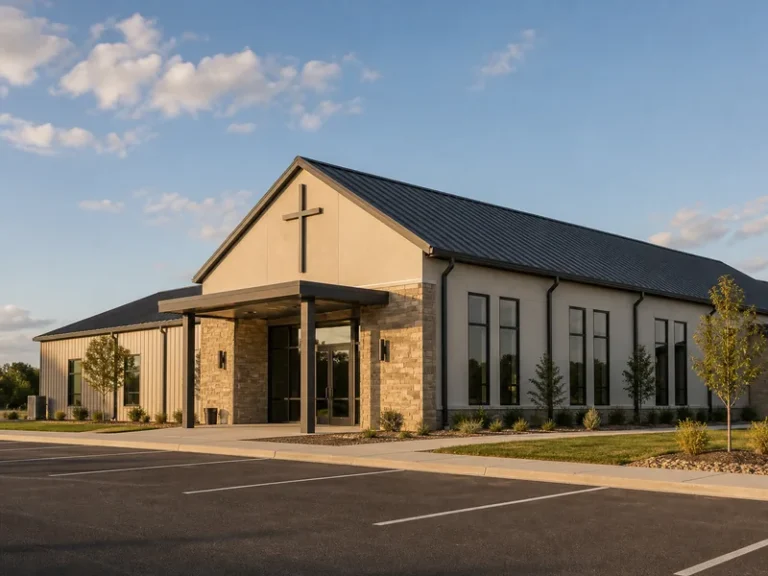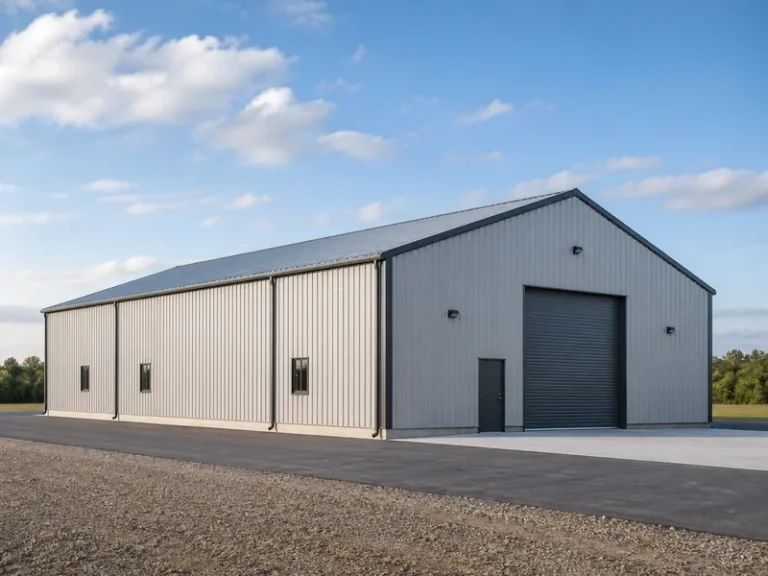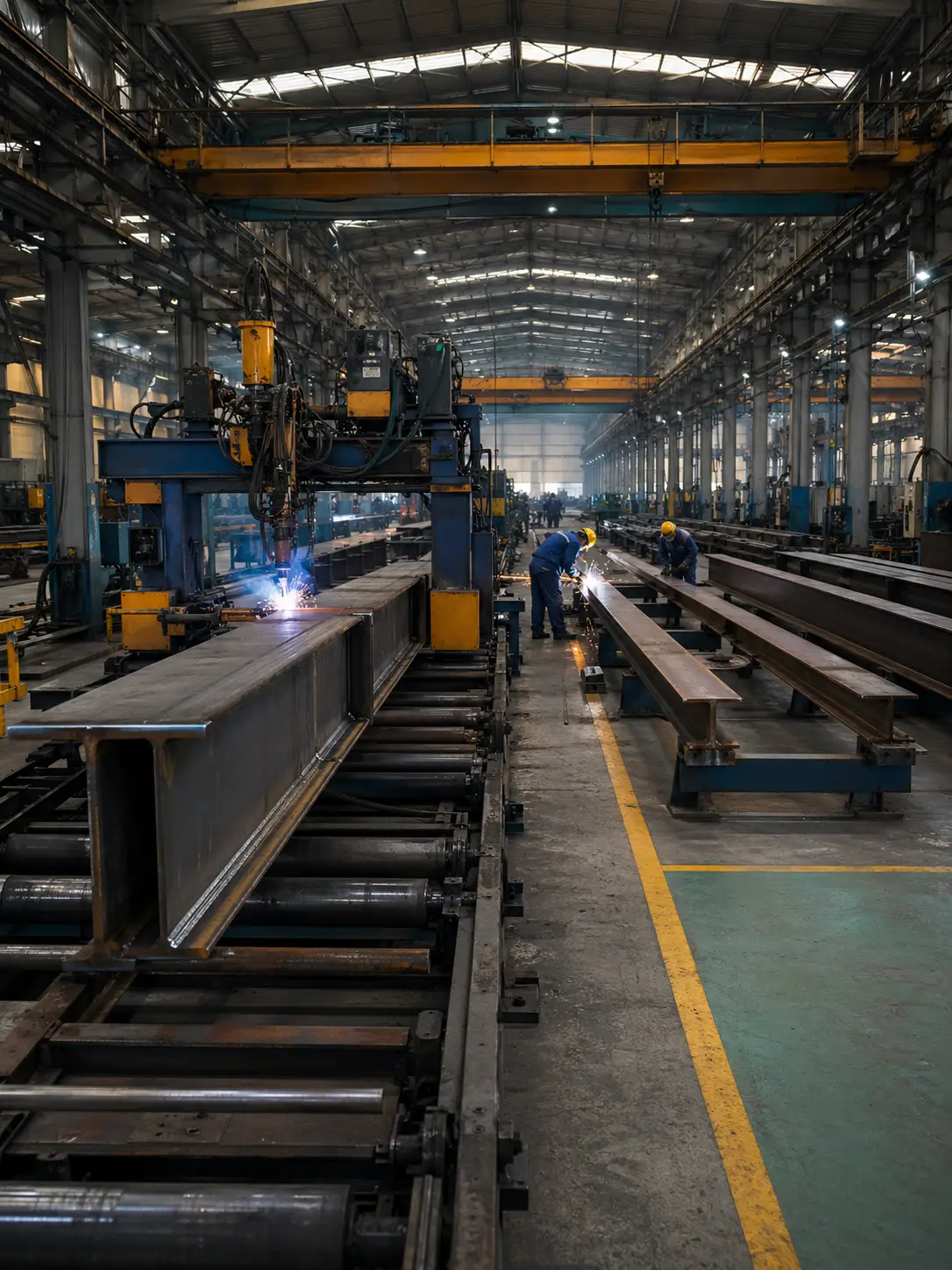





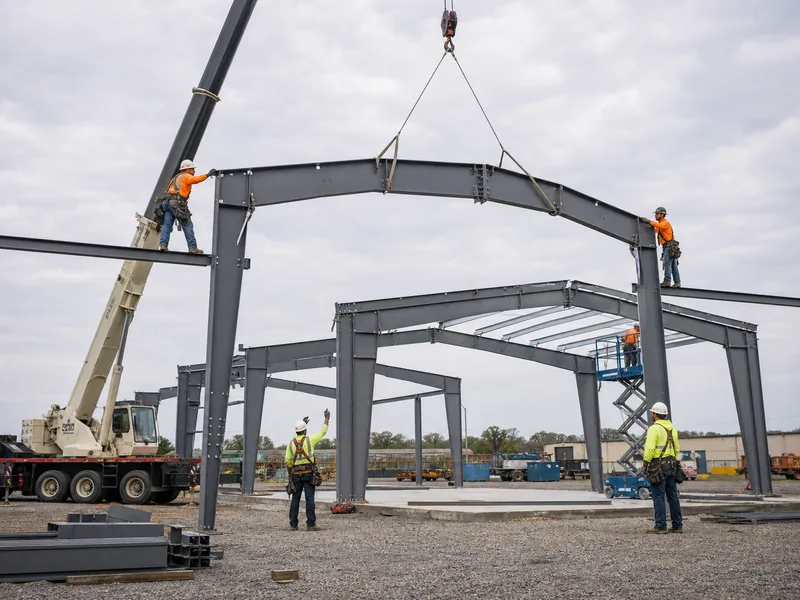
Erection labor for a metal building typically runs between $5 and $10 per square foot, and where a project lands in that range depends on its size, design, and location. That number matters because erection labor is only one slice of the budget. It pays a crew to assemble and raise the steel shell, not to pour the slab, run wiring, or finish the interior. Most cost confusion comes from reading an erection quote as the whole project price. This guide breaks down what that per-square-foot figure includes, the variables that move it, and how to check a quote before you sign it.
What Erection Labor Actually Costs per Square Foot
Professional crews generally charge $5 to $10 per square foot to erect a metal building, with simpler pre-engineered kits sitting near the low end and complex designs pushing toward or past the top. Standard prefabricated structures often fall around $4 to $7 per square foot because the parts arrive punched, marked, and ready to bolt together. Custom geometry, extra openings, or taller eave heights commonly run $8 to $12, and the figure can climb higher when a design adds curved roofs or multi-story framing. Translated to a whole building, raising a 40-by-60 (2,400-square-foot) shell tends to land somewhere between roughly $10,600 and $20,200 in labor. That spread shows how wide the range stays even at a single size, so treat any one per-square-foot figure as a starting point to test against your own design, not a fixed rate.
What the Erection Labor Quote Includes, and What It Leaves Out
A crew’s quote covers assembling and raising the steel, including columns, rafters, purlins, bracing, and the roof and wall panels, and it usually stops there. The most common budgeting mistake is reading that figure as the finished-building price, when foundation work, utilities, insulation, and interior finishing are almost always priced on their own.
| Typically included in erection labor | Usually quoted separately |
|---|---|
| Setting columns, rafters, and the primary frame | Site clearing, grading, and leveling |
| Installing purlins, girts, and bracing | Concrete foundation or slab |
| Fastening roof and wall panels | Electrical, plumbing, and HVAC |
| Hanging supplied doors and windows | Insulation and interior finishing |
| Sealing and trimming the shell | Permits, surveys, and engineering stamps |
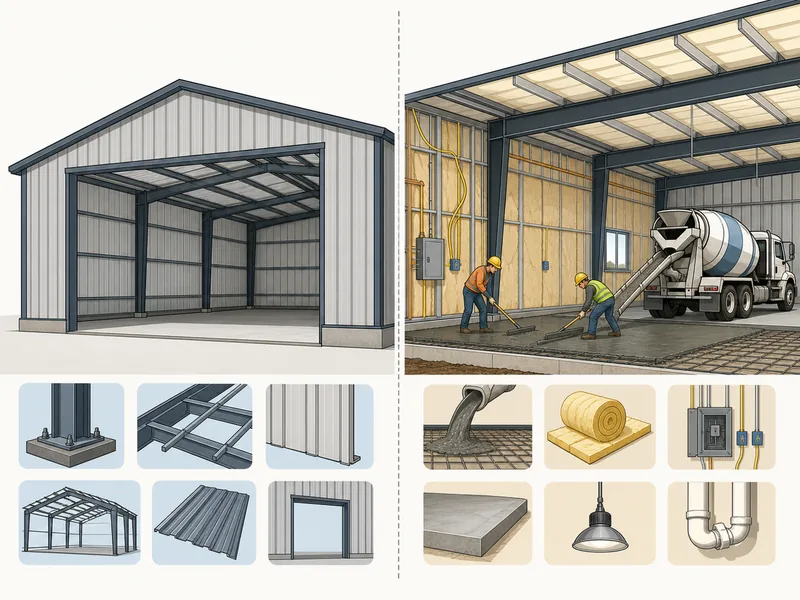
A concrete slab or foundation typically adds $4 to $8 per square foot and is rarely bundled into the labor line. Site preparation such as clearing, grading, and leveling can run anywhere from about $1,000 to $10,000 depending on the lot. Heavy equipment such as a forklift, scissor lift, or crane is often billed separately too, by machine type and rental period rather than by square foot. This article covers erection labor specifically; foundation and interior build-out carry their own pricing logic and belong in separate lines of your budget.
The Variables That Move Your Erection Labor Cost
Five factors explain most of the gap between a low erection bid and a high one: building size, design complexity, location, site conditions, and timing. Size cuts two ways, because larger footprints spread crew mobilization and setup over more square feet, so big buildings often erect for about $5 to $7 per square foot while small ones sit closer to $8 to $10. Design is the next lever, since every added mezzanine, framed opening, or change in roof geometry adds assembly time, and complex designs commonly raise labor by 10 to 20 percent over a plain rectangular shell.
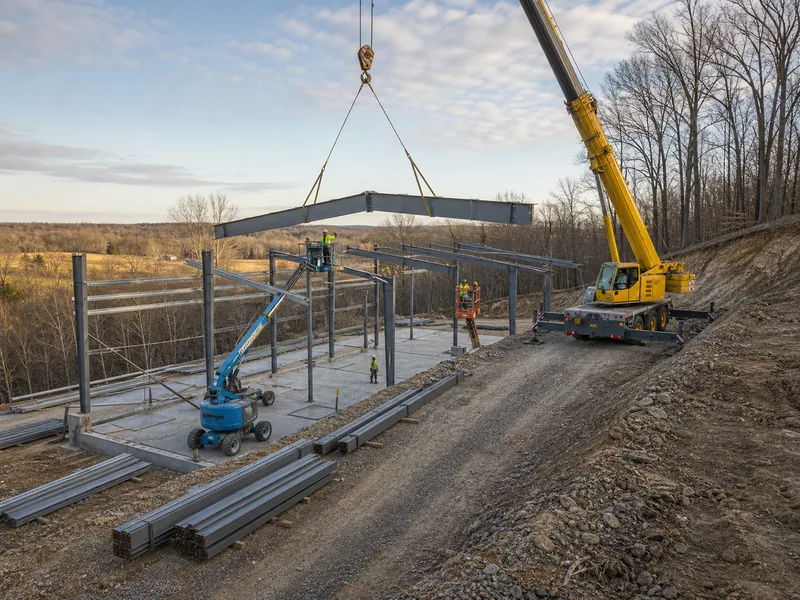
Location moves the rate more than most buyers expect, and some market comparisons show regional labor differences swinging sharply between high-cost metros and rural areas. Because that gap is set by your local market, a local bid should anchor the estimate rather than any national average. Site conditions ride alongside it, because a tight lot with restricted crane access, soft ground, or a slope that needs leveling slows the crew and raises the bill, while a clear, level, drive-up pad keeps it lean. Timing adds a smaller swing, since spring and summer are the busy season for erectors, so off-season scheduling can win more competitive rates.
Crew experience is the variable that rarely shows on a line item but shows up in the schedule. A team that erects pre-engineered metal buildings every week reads the anchor-bolt plan, sequences the frame, and torques connections faster than a general crew learning the system on your job. To verify it, ask a prospective erector how many projects of your size and type they have raised, and whether they have set buildings with your eave height and span before.
Erection Labor Cost by Building Size
Building size shapes the labor bill in two directions at once, because total dollars rise with the footprint while the cost per square foot usually falls. A 30-by-50 shell carries fewer total labor dollars than a 50-by-100, yet the smaller building often costs more per square foot because fixed setup such as mobilizing the crew, staging steel, and positioning lift equipment is spread over less area. To estimate your own number, multiply your square footage by a local rate in the $5 to $10 band, then adjust upward for complex geometry or a difficult site. If you are still settling on dimensions, our guides to metal building sizes and 30×50 metal building cost show how the footprint changes erection labor here. Overall shell and turnkey pricing stay a separate question.
Erection-Only vs. Turnkey: Two Ways Labor Gets Priced
Erection labor shows up in a quote one of two ways, priced on its own or folded into a turnkey number, and comparing the two without aligning the scope is how budgets break. Erection-only pricing pays a crew to raise steel you have already bought; it commonly runs $5 to $18 per square foot for labor alone and excludes the kit, the foundation, and finishing. Turnkey pricing wraps the kit, slab, delivery, and construction into one all-in figure that often lands around $24 to $43 per square foot. A general contractor managing the trades typically adds another 10 to 20 percent for coordination.
| Erection-only | Turnkey / GC-managed | |
|---|---|---|
| What the number buys | Labor to raise owner-supplied steel | Kit, foundation, delivery, and erection |
| Typical range | ~$5–$18 / sq ft (labor only) | ~$24–$43 / sq ft (all-in, bundled) |
| Best when | You sourced the kit and manage the rest | You want one accountable party |
| Watch for | Excluded scope you must cover yourself | Markup and what is bundled |
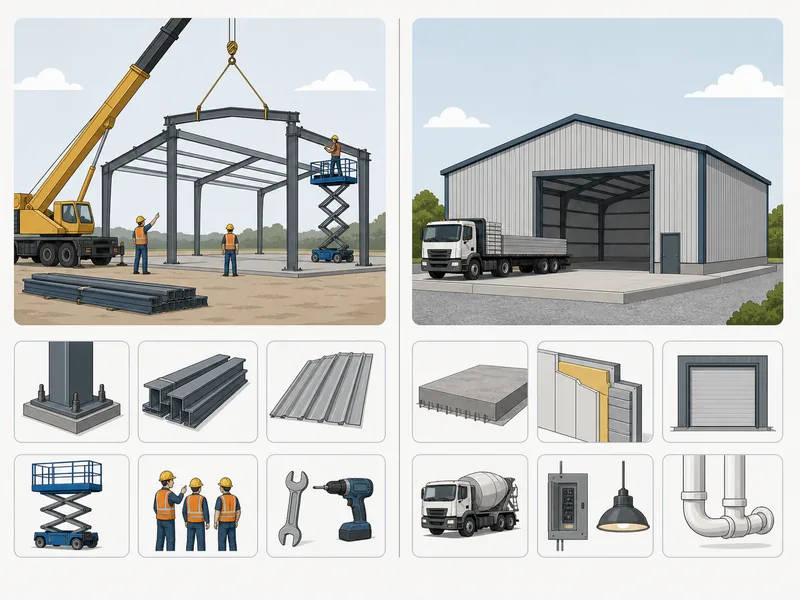
Across either model, the labor line tends to account for roughly 30 to 40 percent of total project cost, though some sources put the broader labor share at 25 to 50 percent depending on how much site and finishing work is counted in. The practical takeaway is to compare quotes on matching scope, because two numbers that look far apart often just include different things. Cost-driven projects such as a clearspan building cost estimate hinge on exactly this distinction between labor-only and all-in pricing.
How to Estimate and Compare Erection Labor Quotes
A reliable erection estimate comes from matching at least three quotes against the same scope, not from a single per-square-foot rule of thumb. Quotes diverge most on what they quietly exclude, so the work is less about finding the lowest number and more about confirming each bid covers the same scope before you compare price. An experienced metal building contractor should be able to walk you through the line items and flag what falls outside erection labor.
Before you compare bids, check that each one answers the same questions:
- Does the price include unloading and staging steel, or only assembly?
- Are framed openings, trim, and panel sealing in the labor figure or extra?
- Who supplies and pays for the forklift, lift, or crane?
- Is anchor-bolt setting or grout under the columns included?
- Which weather or standby days are billable, and how are change orders handled?
The most expensive surprises come from the lines no one quoted, such as a missing crane, a slab that was never in scope, or standby time during a wet week. Pinning these down up front turns three uneven quotes into a real comparison.
Where Erection Labor Savings Actually Come From
Lower erection labor cost comes mostly from removing assembly time, not from hiring the cheapest crew. A plain rectangular footprint with standard eave height and fewer framed openings goes up faster than complex geometry, so design decisions made early are where most savings actually live. Kit quality is the lever buyers underrate: when columns, rafters, purlins, and panels arrive cut, punched, and clearly marked to a correct anchor-bolt layout, the crew bolts rather than fixes, and field rework such as re-drilling, shimming, and chasing mismatched holes drops sharply. DIY erection can trim the labor line on small, simple buildings, but it trades crew speed and equipment for your own time and risk. A stalled raise or a mis-set frame can erase the savings fast.
Conclusion
The hardest part of an erection labor budget is not the headline $5-to-$10 range, but the three things that move it most: design complexity, your site and region, and whether you are pricing erection-only or turnkey. Lock the scope first. Decide whether your number needs to cover labor alone or the whole build, then hold every quote to that same boundary so you are comparing like for like.
Because KAFA designs, fabricates, and installs its steel buildings under ISO 9001:2015 quality management, the anchor-bolt layout, connection details, and member marks that drive field hours can be aligned and checked before field work begins. That coordination makes an erection estimate easier to verify against the actual frame. If you are sizing a labor budget now, start by fixing your design and your pricing model; from there, the per-square-foot range becomes a figure you can check rather than guess.
Frequently Asked Questions
How much does labor cost to erect a metal building per square foot?
Erection labor typically runs $5 to $10 per square foot, with simple pre-engineered kits near the low end and complex or small buildings higher. The rate covers raising the steel shell only, and it shifts with size, design, location, and site access.
Do I need to hire a professional, or can I erect a metal building myself?
Professional crews make sense for most buildings above a small, simple kit, because they bring the equipment, sequencing, and speed that keep a raise on schedule. DIY erection can lower the labor line on compact, straightforward structures, but it trades crew efficiency for your time and the risk of a mis-set frame.
What percentage of the total cost is erection labor?
Erection labor generally accounts for about 30 to 40 percent of total project cost, though broader estimates range from 25 to 50 percent depending on how much site and finishing work is counted. The share rises on complex designs and falls on large, simple buildings.
Does erection labor include the foundation and concrete slab?
Foundation and slab work are almost always priced separately from erection labor, typically adding $4 to $8 per square foot. Erection covers assembling and raising the steel frame and panels, not concrete, utilities, or interior finishing.
Is erection-only cheaper than a turnkey steel building?
Erection-only looks cheaper because the number is smaller, but it only buys labor to raise steel you already own, leaving the kit, foundation, and finishing on you. A turnkey price is larger because it bundles those scopes, so the two are only comparable once you align what each one includes.