




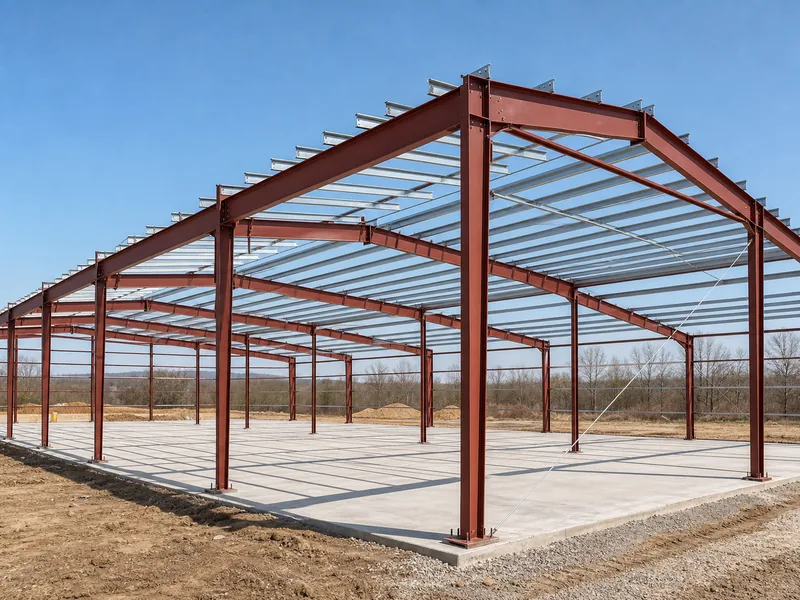
Red iron buildings are pre-engineered steel structures whose frames are cut, welded, and coated in a factory long before they reach your site. The name points to the rust-inhibiting red oxide primer on the steel, not to a special grade of iron. That distinction matters more than it sounds, because it changes how you compare bids, plan for corrosion, and decide whether red iron is even the right framing for your project.
This guide covers what the frame is made of, how red iron compares with tube steel and cold-formed framing, what moves the price, the sizes where it pays off, and the site details most likely to cause rework. It does not walk through step-by-step erection, foundation reinforcement design, or local permitting line by line. Those depend on your engineer of record and your jurisdiction, and they belong in stamped drawings rather than a buyer’s guide.
What Red Iron Buildings Actually Are (and What “Red Iron” Means)
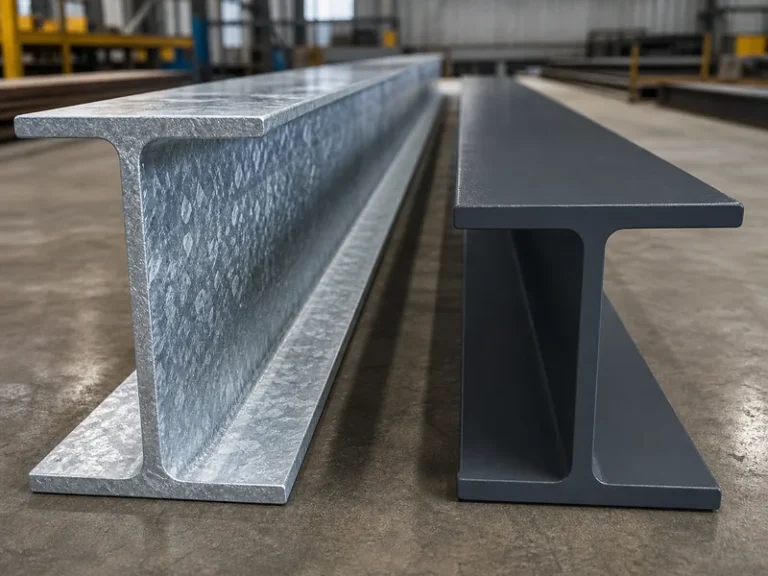
“Red iron” describes structural steel wearing a red oxide primer, which is why two buildings with identical framing can look completely different before they are painted. The color comes from the iron oxide in the primer, a coating applied at the mill or fabrication shop to slow rust while the steel is stored, shipped, and stood up. It is a base coat with a job to do, not a finish and not a separate metal.
The frame underneath is ordinary hot-rolled structural steel, shaped into the tapered I-beam columns and rafters of a rigid-frame pre-engineered metal building (PEMB). Calling it “red iron” is shorthand for that whole system, and it sits alongside tube-steel and cold-formed options within the broader family of types of metal buildings. Treating the color as a material grade is a common misunderstanding buyers bring to the table.
Because the structure is steel, it is non-combustible and will not feed a fire the way timber framing does, and it is not vulnerable to termites or rot. Those are real advantages over wood, but they describe the steel, not the primer. The primer only buys time against corrosion, which is why the rest of this guide keeps returning to coatings and maintenance.
The Red Iron Frame: Primary and Secondary Steel Members
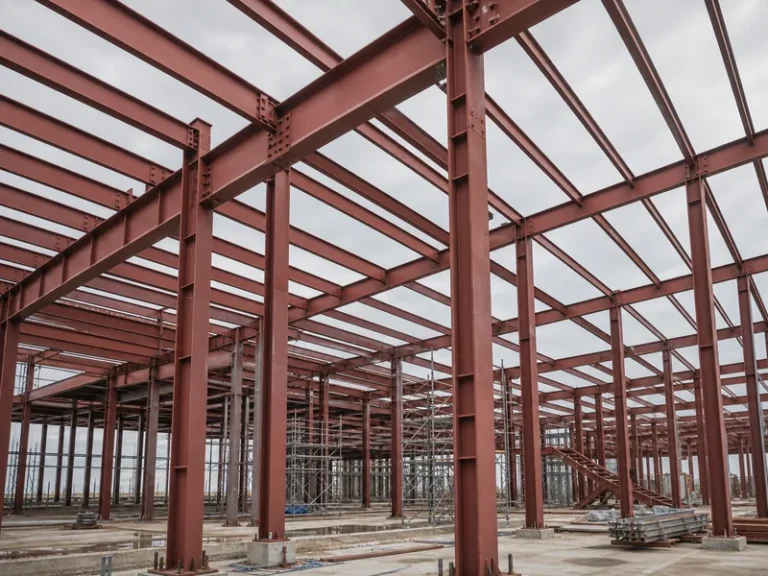
A red iron frame divides its work between primary members that carry the load and secondary members that hold everything in line. The primary frame is the set of tapered I-beam columns and rafters, usually welded into rigid bents that march down the length of the building. Everything else hangs off that skeleton.
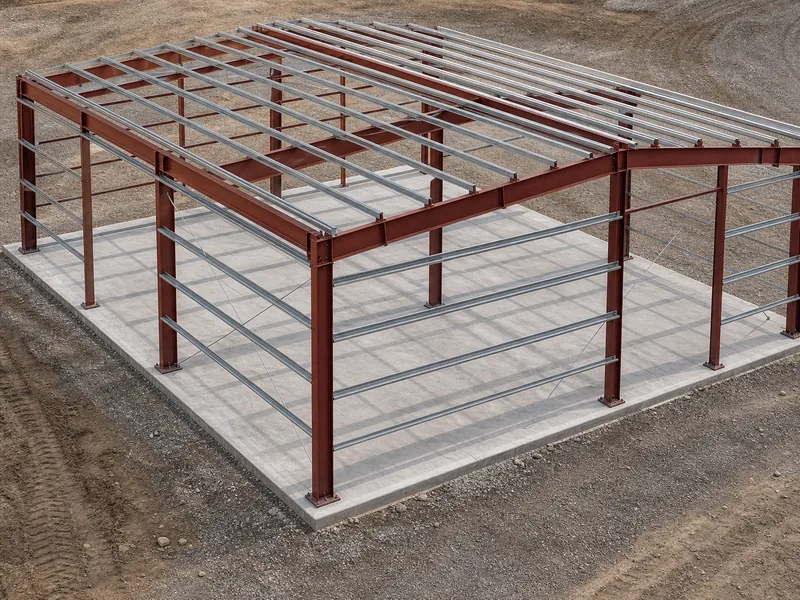
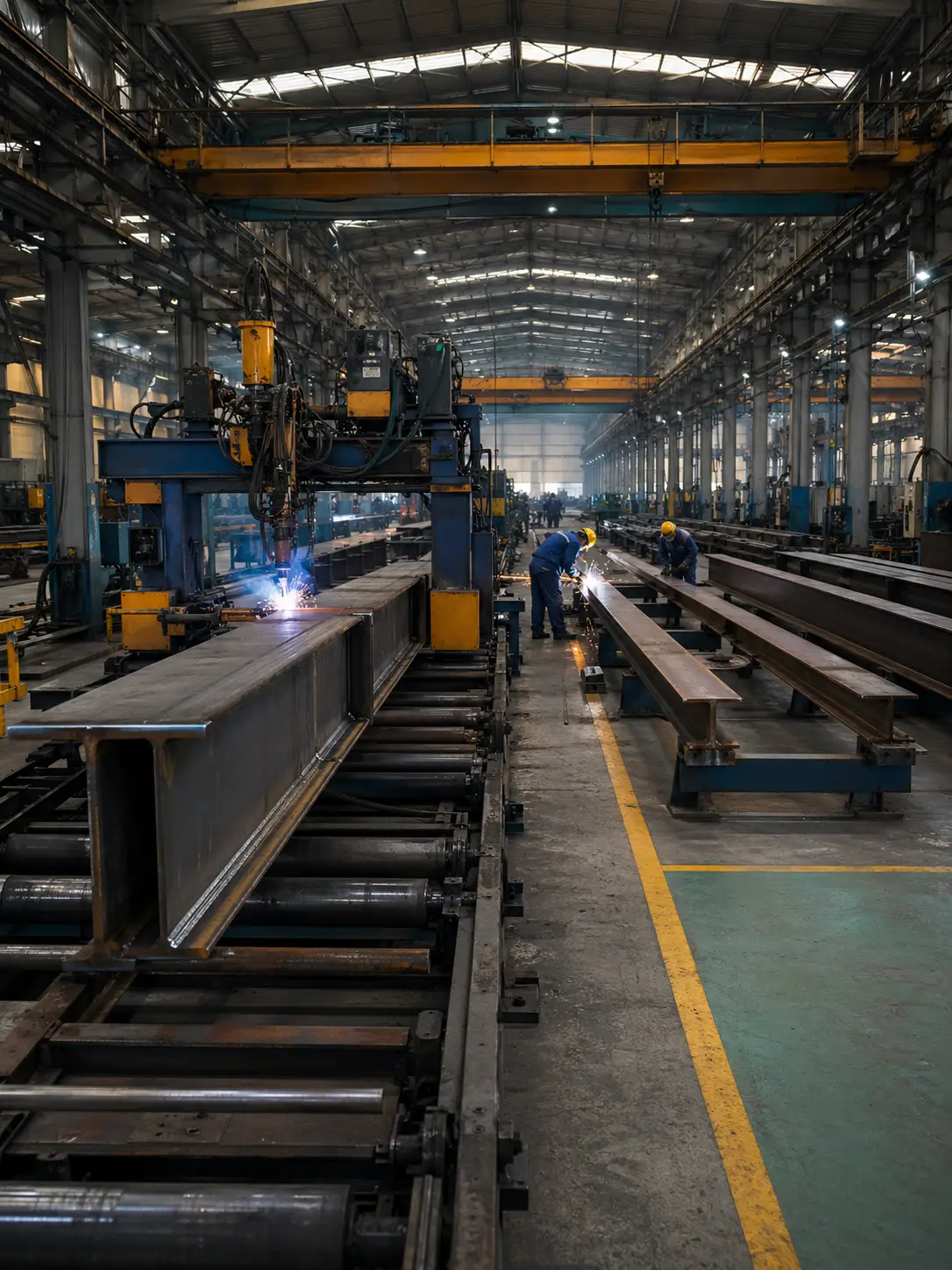
The secondary frame is where the purlins and girts live: lighter members that span between the main frames, support the roof and wall panels, and brace the primary steel against buckling. Panels, fasteners, and trim then close the building in. This two-tier logic is why a manufacturer’s production lines matter; at our Qingdao facility, dedicated lines for H-beam and box-section members, C- and Z-section purlins, and profiled steel plate map directly onto that primary-and-secondary split.
Rigid frames are what give red iron its signature clear span, carrying loads out to the perimeter columns so the interior stays open. Spans into the hundreds of feet are achievable on engineered red iron, with wide-span examples reaching roughly the 300-foot range. The practical limit still depends on snow and wind loads, eave height, and budget. Roof pitch is adjustable as well, commonly starting around a low 1:12 slope and steepening where drainage or appearance calls for it.
Red Iron vs. Tube Steel, Cold-Formed, and Galvanized Framing
The choice between red iron, tube steel, and cold-formed framing comes down to span, load, and how long the structure has to carry weight without interior columns. Rather than listing each system’s virtues in isolation, it helps to compare them on the few dimensions that actually decide the job.
| Decision factor | Red iron (I-beam) | Tube steel | Cold-formed (light-gauge) |
|---|---|---|---|
| Clear span without columns | Largest clear-span potential when engineered for the load; examples toward ~300 ft | Moderate; typically capped near 100–150 ft | Shortest; best for small spans |
| Heavy / long-term loads | Best suited to heavier industrial loads among these options | Good for light to moderate loads | Light-duty, smaller structures |
| Weight, shipping, erection | Heaviest; often needs cranes and skilled crews | Lighter, simpler to handle | Lightest, easiest to assemble |
| Best fit | Warehouses, workshops, hangars | Garages, carports, smaller shops | Sheds, partitions, small builds |
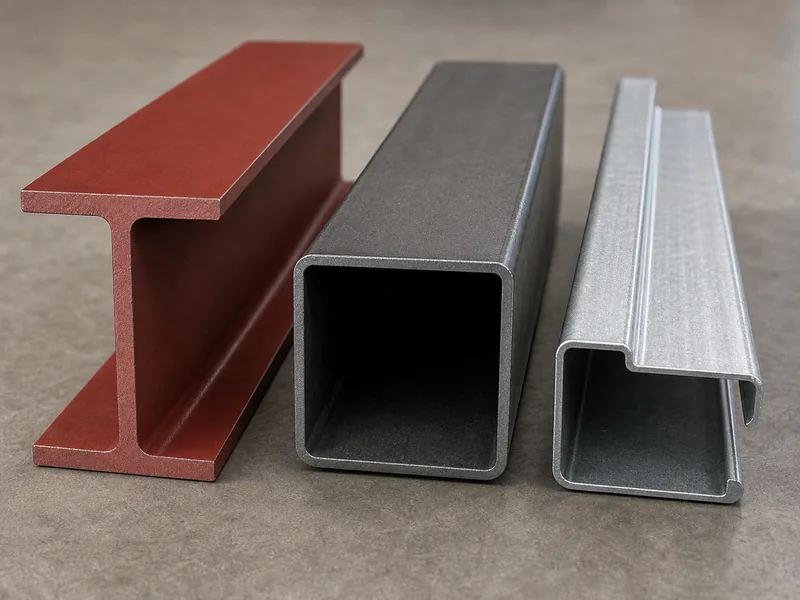
Red iron is the stronger choice where the building is wide, tall, or loaded hard, though that strength comes with added weight. The thicker I-beams are heavier than tube sections, so freight, handling, and erection usually cost more and lean on cranes and experienced crews. For a modest garage or carport, tube or light-gauge framing often reaches the same goal for less.
Corrosion protection is its own decision, and it is where the “red” in red iron earns a second look. Red oxide primer is a coating that still needs a topcoat and periodic upkeep, which is a different strategy from hot-dip galvanizing that bonds a sacrificial zinc layer to the steel. The trade-offs between coated and galvanized framing are worth understanding on their own terms, and the comparison of galvanizing vs painting steel lays out where each approach holds up.
What Drives the Cost of a Red Iron Building
The price of a red iron building is driven less by the steel itself than by the size, the frame configuration, and everything that happens on site after the kit arrives. Framing materials for a red iron kit commonly land in roughly the $8–$17 per square foot range in the U.S. market, and that figure shifts with steel prices, span, eave height, and how much secondary framing the design needs. Quoting a single number without those variables is how budgets go wrong.
A useful habit is to break the estimate into parts rather than chase one headline price:
- Frame and kit — the engineered steel package; unit cost per square foot tends to fall as the building gets larger.
- Foundation — a separate line item driven by slab thickness, soil, and frost depth, not by the steel order.
- Erection labor — varies with span, crane needs, and regional wage rates, which differ sharply by location.
- Insulation — a major lever on both comfort and price, with system choice (batts, spray foam, or panels) swinging the cost widely.
- Permits and site work — local fees, access, grading, and utilities that have nothing to do with the frame.
Scale generally works in your favor on the steel: across published size ranges, the cost per square foot trends downward as footprint grows, because fixed engineering and setup costs spread over more area. The practical move is to decide early which number you are tracking, a bare shell price or a turnkey installed price, so that competing quotes describe the same scope.
Common Sizes and Where Red Iron Fits Best
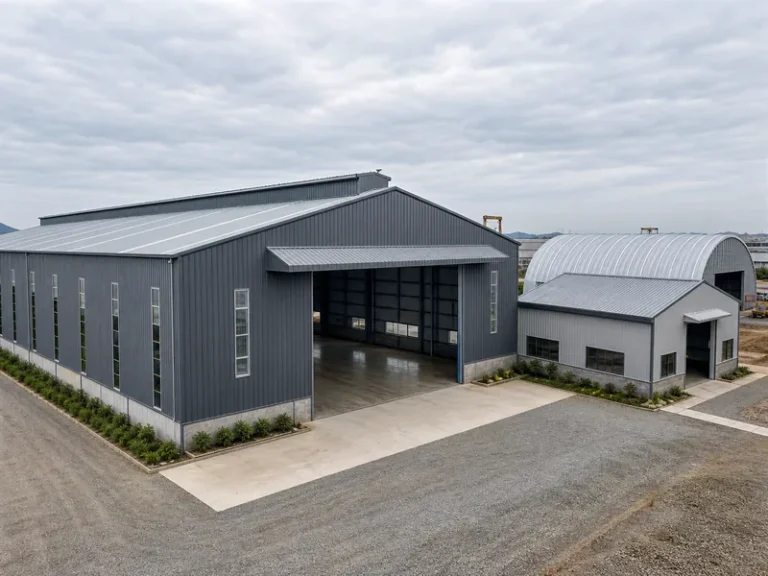
Red iron earns its cost on wide, column-free buildings, which is why warehouses, workshops, and aircraft hangars show up far more often than backyard sheds. Below roughly 30 feet of width, the heavier I-beam frame and crane-based erection often cost more than a lighter system would for the same enclosed space. The economics improve as the building gets wider, taller, and more heavily loaded.
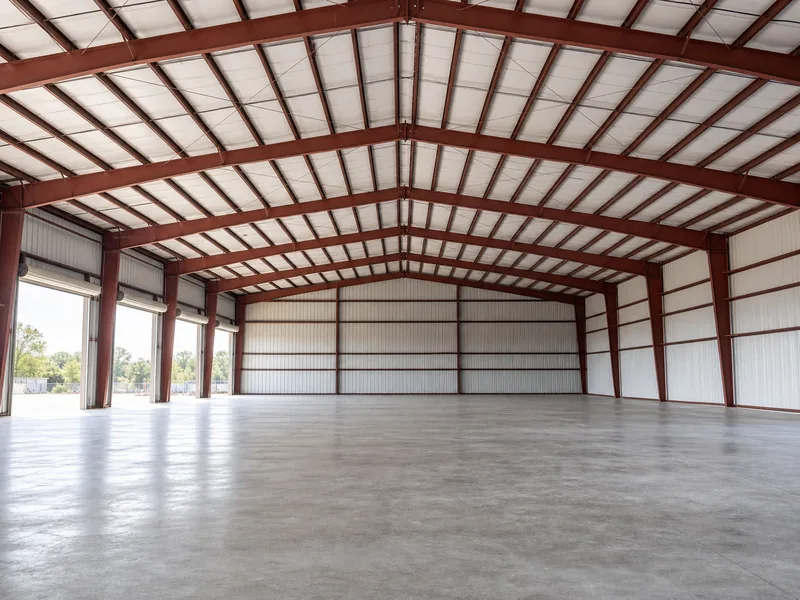
For working through specific footprints and how width, length, and eave height interact, a dedicated breakdown of metal building sizes is more useful than memorizing example dimensions. The pattern to keep in mind is that red iron rewards scale. The same frame logic that feels like overkill on a small garage becomes the practical choice on a distribution center, a manufacturing bay, a riding arena, or an agricultural storage building that has to stay open inside.
Foundations, Corrosion, and the Details That Cause Rework
Common red iron rework risks cluster around three details: anchor bolts set in the wrong place, corrosion that started at the primer, and condensation the insulation never addressed. Each one is inexpensive to prevent up front but costly to fix once the frame is standing, so they deserve a check before the crew arrives, not after.
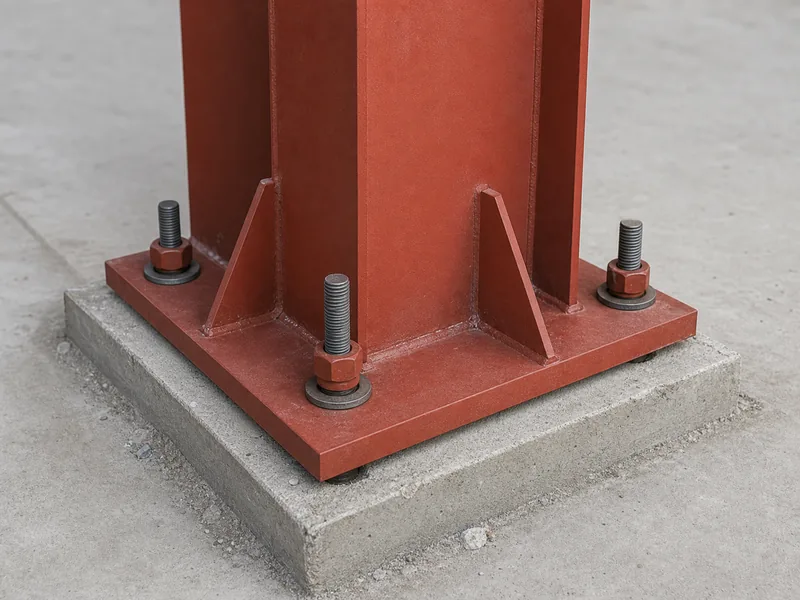
Anchorage comes first because the frame is only as good as what holds it down. Confirm that the anchor-bolt layout in the field matches the stamped drawings before the slab cures, since a misplaced bolt pattern can stall an entire erection day. Structural and load design should follow the applicable building code, such as the IBC, along with recognized steel and load standards like AISC and ASCE 7. A reputable fabricator works to those references, not around them.
Corrosion is the detail the name almost guarantees people underestimate. Red oxide primer protects the steel in transit and storage, but it is a starting layer, and bare spots, shipping scuffs, and field cuts need touch-up before a topcoat goes on. In coastal or high-humidity sites, fasteners, panel seams, and any scratched primer are the first places to inspect and re-coat, because that is where rust typically begins.
Condensation is the quiet one. Steel conducts heat readily, so without a planned vapor barrier and insulation strategy, warm interior air meets cold steel and drips onto whatever is stored below. That makes insulation and coating scope worth settling alongside the frame, not after it, though the right specification still depends on your climate, use, and engineer’s documents. As a steel structure manufacturer with light and heavy steel design, fabrication, and installation qualifications under ISO 9001:2015 quality management, we can discuss those choices early.
Choosing a Red Iron Building: What to Lock Down First
Choosing a red iron building works best as a sequence: pin down the clear span and loads first, then compare framing types, and only then lock the foundation and corrosion-protection scope. Settling the span and load case early tells you whether red iron’s strength is worth its weight, or whether a lighter tube or cold-formed system would serve the same building for less. Get that order backward, and you end up re-pricing the whole project every time a requirement shifts.
Once the frame type is settled, decide whether you are budgeting a bare shell or a turnkey building, and hold every quote to that same scope so the comparison stays honest. From there, the foundation, the coating plan beyond the red primer, and the insulation strategy are the variables most likely to move both cost and long-term durability. As metal building manufacturers with in-house design, fabrication, and installation capability, we can review those span, load, and coating decisions against your project documents. The sequence is what keeps a red iron decision from unraveling: lock the span and loads, then the framing type, then the protection scope that decides how long the building lasts.
Frequently Asked Questions
Does red iron rust?
Red iron resists rust far better than bare steel, but the red oxide primer is a base coat, not a permanent shield. It protects the frame during shipping and erection and buys time afterward. Field cuts, scuffs, and seams still need touch-up and a topcoat, especially in coastal or high-humidity conditions where corrosion starts at the details.
How long do red iron buildings last?
A well-maintained red iron building can last several decades or more, with service lives commonly cited in the 50-year range and sometimes well beyond. The figure depends on the design, the coating system over the primer, and routine inspection; a frame that is protected and checked outlives one that is left to weather.
Is red iron the same as structural steel?
Red iron is structural steel; the term refers to the red oxide primer on the steel, not to a different metal. When someone compares “red iron versus steel,” they usually mean red iron versus a different framing format such as tube steel or cold-formed members, not a different material.
How much does a red iron building cost per square foot?
Red iron framing materials commonly fall in roughly the $8–$17 per square foot range in the U.S. market, and the installed or turnkey cost climbs well beyond that once foundation, insulation, erection labor, and permits are added. Because those variables move with size, region, and configuration, a reliable number comes from a scoped quote rather than a single industry average.
Do red iron buildings need interior columns?
Red iron buildings are often designed for clear-span interiors, using rigid frames that carry loads out to the perimeter so interior columns can be reduced or removed. Whether a building goes fully column-free depends on its span, loads, eave height, and budget. That clear-span capability is still a big reason red iron shows up in warehouses, hangars, and other uses that need open floor space.