




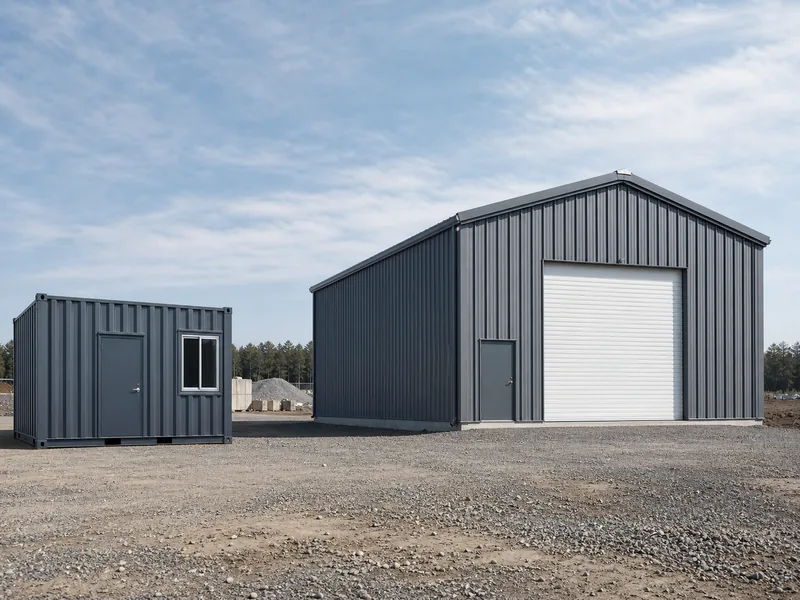
Both a container building and a steel building are made of steel, which is exactly why they get compared and exactly why the comparison is easy to get wrong. A shipping container is a sealed box engineered to stack on a cargo ship. A steel building is a frame engineered to enclose space. That difference in purpose drives every practical trade-off that follows: what each costs once it is finished, how much usable room you get, how hard it is to keep dry and warm, how long it lasts, and how easily it gets permitted. This guide compares the two for workshops, storage, offices, and similar working structures. It does not work through the interior styling of a finished container home or the step-by-step of a container conversion.
What Sets a Container Building Apart From a Steel Building
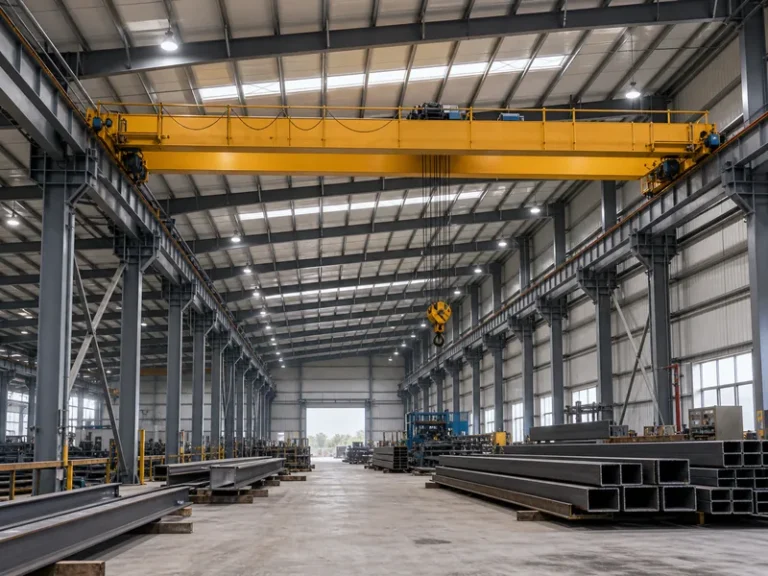
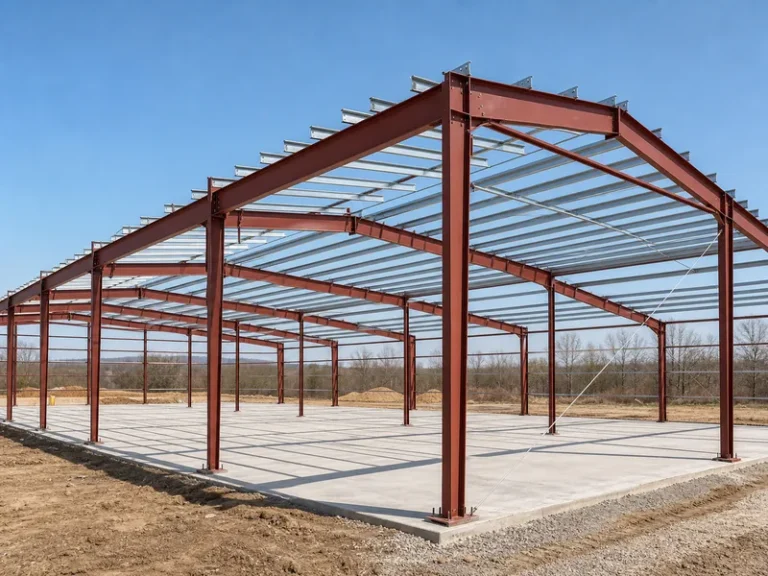
A container building reuses a shipping container’s own steel walls as the structure, while a steel building is a frame engineered and fabricated to carry the loads of a specific design. A container is a monocoque box, meaning its strength comes from the corrugated walls, roof, and floor working together as one shell. That is why it is strong stacked on a ship, but structural cuts for doors or windows interrupt that load path and call for engineered reinforcement. An engineered steel building is one of several types of metal buildings built from sized members, including H-section columns and rafters, box sections, and C or Z purlins. Because the primary frame carries the major loads, wall openings are easier to plan, though they still have to coordinate with girts, bracing, cladding, and code review.
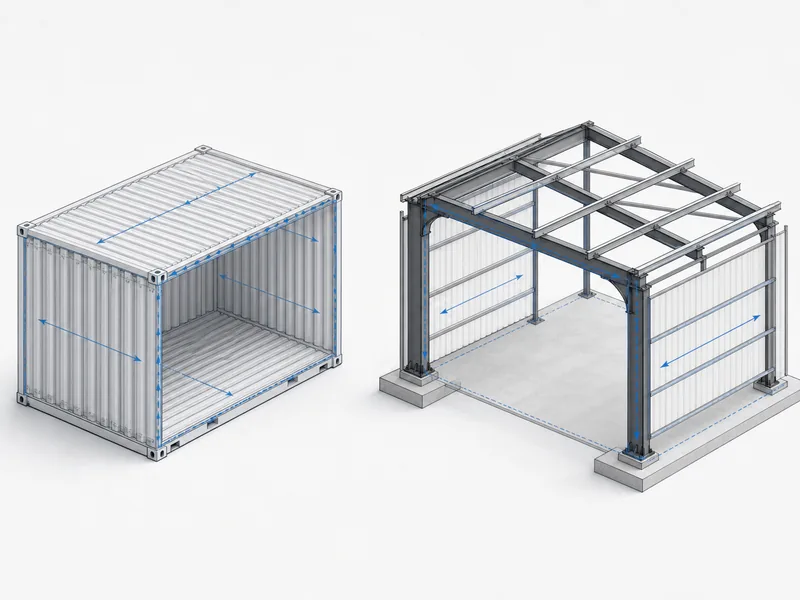
That distinction is not academic. It decides whether you are buying a finished shape you must design around, or a structure designed around the space you need. Every trade-off below follows from it.
The Cost Comparison: Why Containers Aren’t Automatically Cheaper
Cost favors a container only at the smallest footprints, and the advantage narrows or reverses once the box is cut, insulated, and finished into usable space. An empty container has a low sticker price because it already has walls, a roof, and a floor. Below a few hundred square feet, a single box can be genuinely competitive with a small engineered building. The mistake is comparing an empty container against a finished steel building.
The number that matters is cost per finished, usable square foot, and that is where containers lose ground as they grow. Every opening cut for a door or window removes load-carrying steel and has to be framed back with welded reinforcement. Multi-container layouts add welding, cranes, and the removal of shared walls. The sealed shell also needs more expensive insulation than a framed wall. None of those line items appear in the price of the box itself. Exact figures swing with your size, finish level, region, and how many openings you cut. The only reliable comparison is a finished quote for your project, set against a mid-size metal building cost for the same usable area rather than a bare-container price. Request finished quotes from metal building companies for your exact size and finish, because the comparison only holds when both are priced as completed space.
Usable Interior Space and Clear Span
Interior space is where the two diverge most, because a container’s width and height are fixed at the factory while a steel frame is sized to the span you need. A standard container gives you about 7 feet 8 inches of interior width and roughly 7 feet 10 inches of height before any insulation. Those fixed dimensions often make standard vehicle access, forklift circulation, or taller racking impractical without major modification. Adding insulation only tightens those numbers.
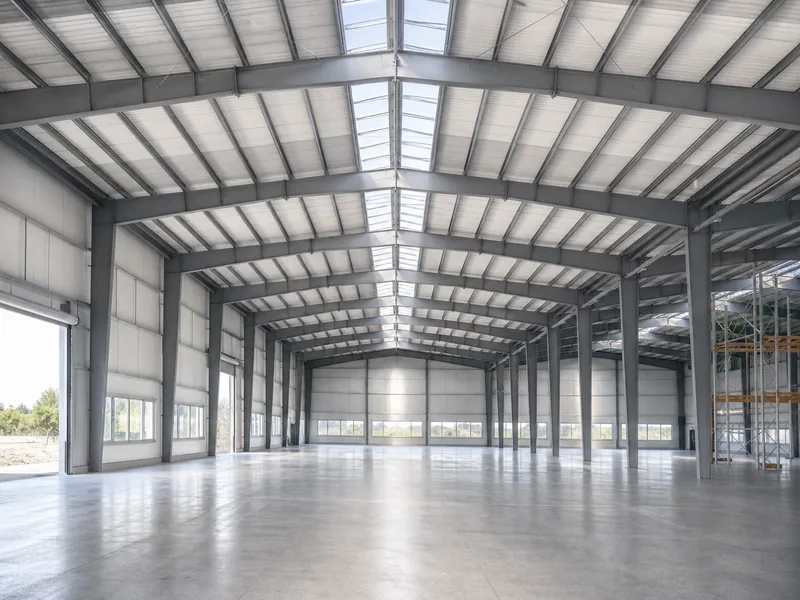
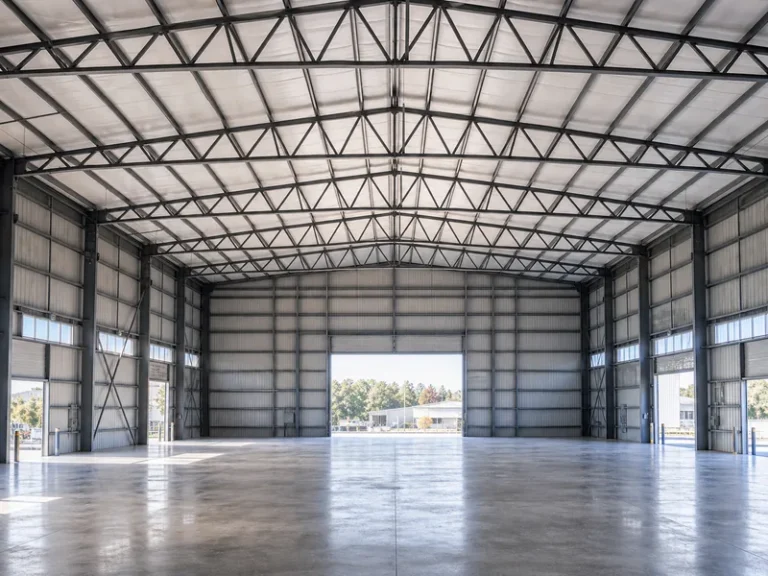
A steel building is not bound by those fixed dimensions. Because the frame carries the load, the interior can be designed as a clear span building or a low-column layout, sized far wider than any container when the span, load, and budget support it. That makes room for equipment, vehicles, or a production line. The practical test is simple: write down the widest and tallest thing that has to fit and move inside, then check it against a container’s fixed dimensions before anything else. If it does not fit the box, no amount of finishing will make it fit, and the decision is effectively made.
Insulation, Condensation, and Climate Control
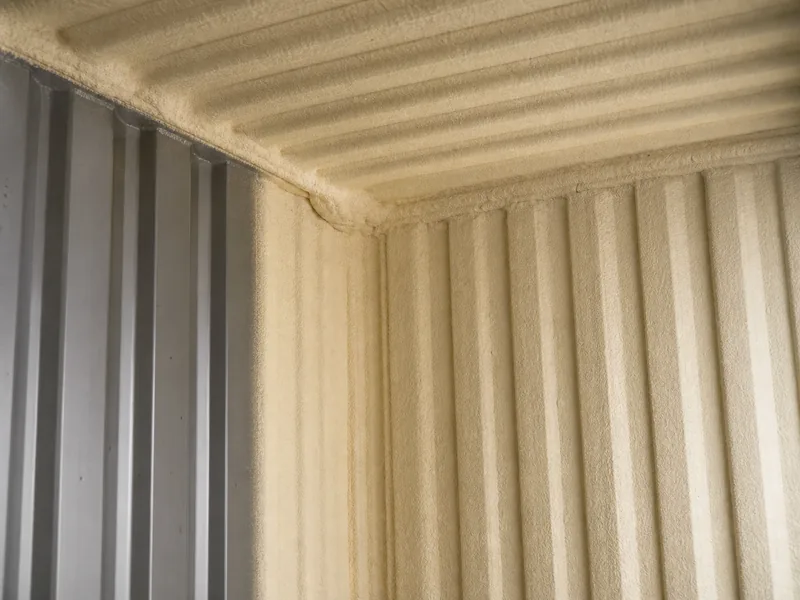
Condensation, not cold, is the climate problem that defines container insulation, because warm interior air meeting a bare steel shell sweats and corrodes the box from the inside. On a container, the practical answer is usually closed-cell spray foam bonded directly to the walls and ceiling, which costs more per square foot than the fiberglass batts a framed steel-building wall is built to hold. Skip it in a humid or swing-temperature climate and condensation can appear quickly, leading to rust and moisture damage if it is not controlled.
A steel building manages the same risk more easily because its walls are framed cavities, so standard, well-understood insulation, vapor-control, and ventilation details apply at lower cost and carry a known R-value. The risk is easier to control, not absent, since poor insulation or air sealing can still let a steel building sweat. The variable that decides how much this matters is your climate zone. In a mild, dry climate the gap is smaller; in a humid or cold one it widens quickly. Price the insulation as part of the building rather than as an afterthought, because on a container it is one of the larger finishing costs, not a detail.
Lifespan, Corrosion Protection, and Resale Value
Lifespan tracks coatings more than the steel itself: a maintained container lasts roughly 25 to 30 years, while a coated steel building commonly reaches 40 to 60 years or more. A container’s original coating is removed wherever it is cut or welded, so the places to watch are the cut edges and the floor frame, where bare steel starts to rust. An engineered building is specified for its service life from the start, and how the steel is protected, whether galvanizing or painting steel, is chosen for the climate it will stand in.
Resale follows the same logic. A standard engineered building may be easier to appraise or reuse as a recognized structure on its own foundation, while a heavily modified container can face a narrower resale market because the cuts are specific to one owner’s plan. The verification action for either option is to ask what the coating system is and how cut or welded areas are protected, because that answer predicts maintenance cost more reliably than the age of the steel does.
Permits, Codes, and Choosing by Use Case
Permitting often decides the question before cost does, because many jurisdictions treat a container as alternative construction even though engineered metal buildings are already accepted in many commercial, industrial, and agricultural areas. In U.S. jurisdictions that have adopted the relevant provisions, the 2021 International Building Code added language addressing intermodal shipping containers, which has made approval more predictable than it once was. Even so, local zoning still restricts or prohibits containers in places where a metal building is allowed. Confirm your jurisdiction’s stance before you commit, because a denial can erase the cost advantage or force a redesign.
With cost, space, and approval in view, the use case usually points clearly one way. A container tends to win when the job is small, temporary, or has to move:
- Short-term or relocatable storage and site offices
- Very small footprints under a few hundred square feet
- Secure, lockable storage where portability matters more than open space
A steel building tends to win when the space has to be open, insulated, or permanent:
- Workshops, warehouses, and equipment storage that need clear, column-free interiors
- Heated or cooled working space in a demanding climate
- Long-term structures where lifespan and resale value carry weight
The two are not always mutually exclusive: a small, movable storage container can serve as a temporary or adjacent annex to a steel building without changing the main structure.
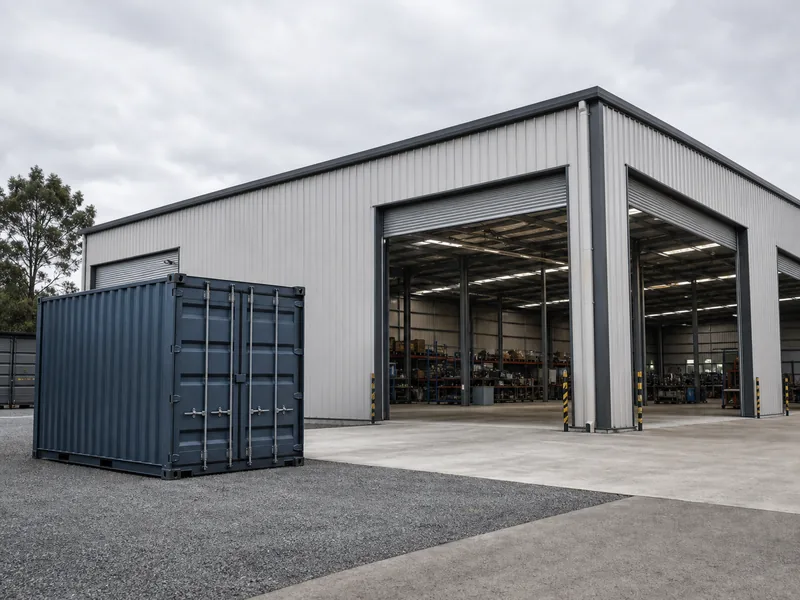
The table below summarizes which way each decision factor tends to point.
| Decision factor | Tends to favor a container | Tends to favor a steel building | Key condition to verify |
|---|---|---|---|
| Footprint | Under a few hundred sq ft | Larger, growing, or open areas | Widest and tallest item that must fit |
| Finished cost per usable sq ft | Tiny, lightly finished spaces | Most finished, full-size spaces | Quote both as completed space |
| Interior span | Not required | Wide, column-free required | Required clear width and height |
| Climate and insulation | Mild, dry, unheated | Humid, cold, or conditioned | Climate zone and use of heat or AC |
| Permitting | Where containers are allowed | Where metal buildings are accepted | Local zoning and IBC adoption |
| Portability | Must relocate later | Stays put | Whether the site is permanent |
Choosing the Right Building for Your Site
The right choice follows the constraint that is hardest to change, not the lowest sticker price. Work the decision in order. First fix the clear width and height you need, because that alone often rules a container in or out. Then weigh your climate and how much condensation control the structure will need. Then check what your jurisdiction will actually permit. Only then compare finished cost for the same usable space. A container earns its place for small, portable, or temporary needs, while an engineered steel building is usually the stronger choice wherever open span, insulation, and a long service life decide the outcome.
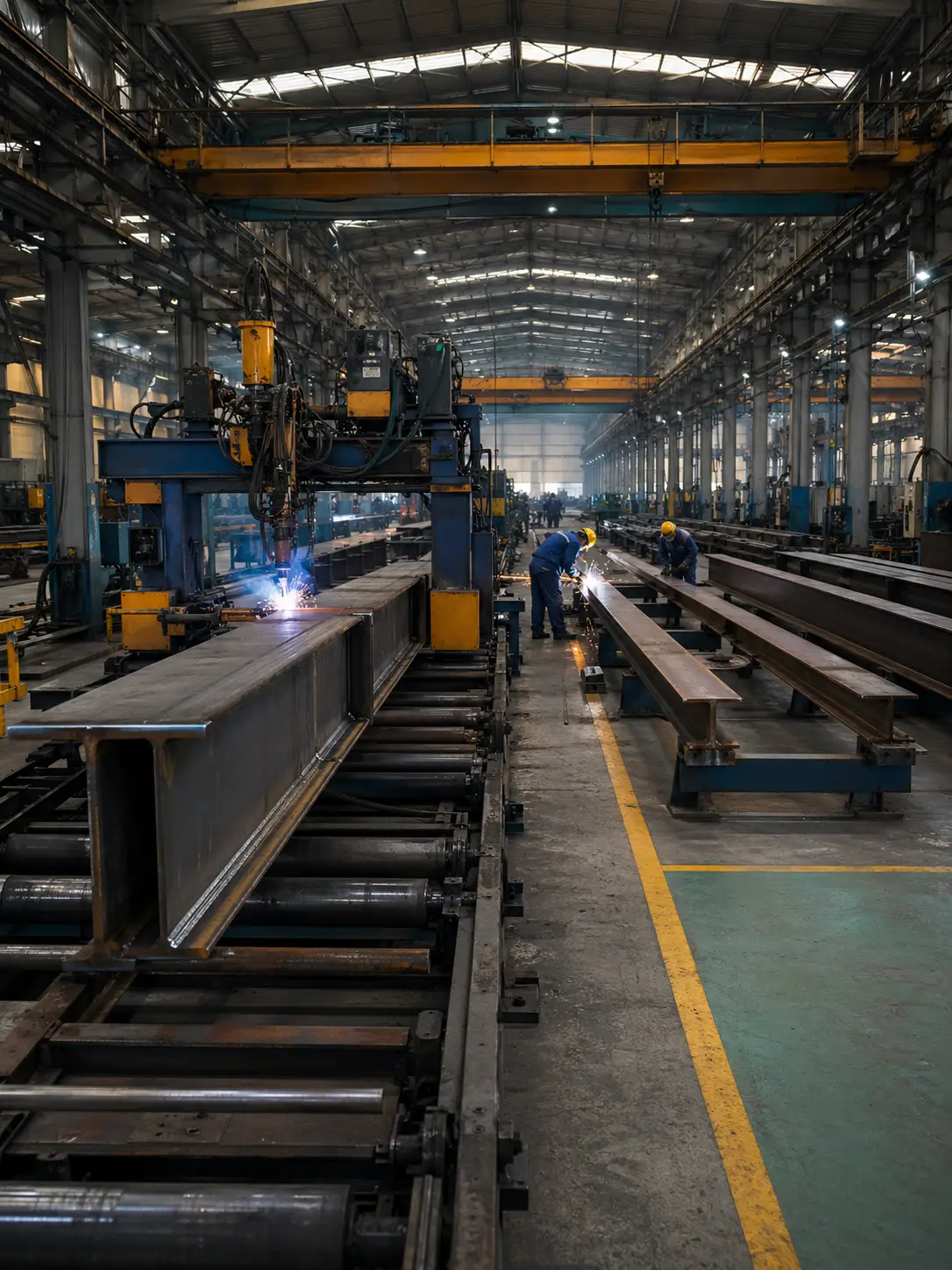
For the steel-building side of that comparison, KAFA designs, fabricates, and installs light and heavy steel structures based on project design requirements. Its 20,000-square-meter Qingdao facility runs dedicated lines for H-section beams, box sections, C and Z purlins, and profile steel plate processing under ISO 9001:2015 quality management. Where a project needs a clear-span workshop or warehouse rather than a row of boxes, that is the structure to price against the container option.
Frequently Asked Questions
Are container buildings cheaper than steel buildings?
Container buildings are cheaper only at the smallest, lightly finished footprints, and the cost advantage narrows or reverses as finished area grows. An empty container has a low sticker price, but cutting, reinforcing, insulating, and joining boxes adds cost that an engineered building prices in from the start. Compare finished cost per usable square foot, not box price against a finished building.
How long does a container building last compared to a steel building?
A maintained container building lasts roughly 25 to 30 years, while a coated steel building commonly reaches 40 to 60 years or more. Both numbers depend on the coating system and upkeep, not on the steel alone, and on a container the cut edges and floor frame are where corrosion starts.
Can you insulate a shipping container building effectively?
Insulating a container is effective but requires controlling condensation on the steel shell, usually with closed-cell spray foam bonded to the walls and ceiling. That approach costs more per square foot than the standard batt insulation a framed steel-building wall is designed to hold, and the gap widens in humid or cold climates.
Are shipping containers harder to permit than steel buildings?
Shipping containers are often harder to permit because many jurisdictions classify them as alternative construction. Where the relevant IBC provisions have been adopted, the 2021 International Building Code now addresses intermodal containers, but local zoning may still restrict or prohibit a container where an engineered metal building is allowed, so confirm your jurisdiction’s rules before committing.
When is a container building the better choice?
A container building is the better choice when the need is small, temporary, or has to relocate. Secure storage, short-term site offices, and footprints under a few hundred square feet all suit a container, while open, insulated, or permanent space points toward an engineered steel building.